



| Contents |
|---|
Introduction
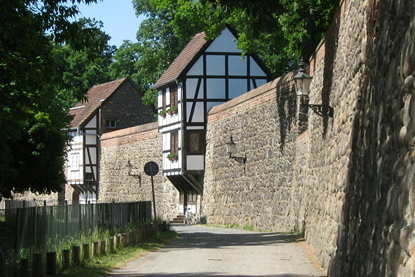
Located on the shores of Lake Tollensesee, Neubrandenburg (pop. 64,000) has a rich medieval heritage of red-brick Gothic gabled architecture. One of its major attraction is its well-preserved circular medieval town wall, with its four Brick Gothic town gates. This defensive structure is punctuated by four original town gates, which have given Neubrandenburg its nickname, the "Stadt der vier Tore" (City of the Four Gates).
Interesting Facts about Neubrandenburg
- Neubrandenburg is famed for its almost completely preserved 2.3 km Brick Gothic city wall and four monumental medieval gates, giving it the nickname “City of Four Gates”.
- The city stands on the shores of Lake Tollense (Tollensesee) and forms an urban centre of the Mecklenburg Lakeland region.
- Its Brick Gothic heritage includes the Concert Church of St Mary (Marienkirche), a rebuilt church now serving as an acclaimed concert hall and home to the Neubrandenburg Philharmonic.
- Since 2011, Neubrandenburg has been the capital of the Mecklenburgische Seenplatte district and is the third-largest city in Mecklenburg-Vorpommern.
- The Treptow Gate, the tallest of the four gates at nearly 32 metres, has housed museum exhibitions since the 19th century.
- Founded in 1248 by the Margrave of Brandenburg, the town passed to Mecklenburg in 1292 and later served as capital of the small duchy of Mecklenburg-Stargard (1352–1471).
- During the Thirty Years’ War, events at Neubrandenburg became infamous enough that “New Brandenburg!” was reportedly used as a battlefield cry for “no prisoners” by Swedish forces later in the conflict.
- Near the end of the Second World War, about 80% of the old town was destroyed by fire as Soviet troops advanced, with extensive post-war reconstruction thereafter.
- The city hosted large POW camps during the war—Stalag II-A and Oflag II-E/67—followed by a Soviet NKVD special camp on the same site from 1945 to 1948.
- Neubrandenburg features a well-developed network of more than 200 km of cycling and hiking trails around the Tollense basin, reflecting its glacially formed landscapes.
History
Neubrandenburg's origins trace back to the mid-13th century when the Margrave of Brandenburg founded the city in 1248 as a strategic fortified outpost. The settlement was deliberately named after the older city of Brandenburg and was positioned at the intersection of vital trade routes connecting Schwerin and Güstrow with the road from Stralsund to Berlin. By 1292, the city and its surrounding territory had passed to Mecklenburg, and from 1352 to 1471, it served as the capital of the duchy of Mecklenburg-Stargard. During this golden period, the city flourished as a prosperous trade centre, particularly renowned for its weaving industry and function as a regional market hub.
The city's fortunes dramatically declined during the devastating Thirty Years' War (1618-1648), when it became a battleground between Swedish and Imperial Catholic League forces. The conflict left an indelible mark on military history when Catholic forces massacred surrendering Swedish and Scottish soldiers in 1631, leading to the Swedish army's adoption of a "no prisoners" policy with the battle cry "New Brandenburg!" Following the war, Neubrandenburg faced further catastrophes including bankruptcy in 1665, and two great conflagrations in 1679 and 1737 that destroyed hundreds of buildings. The city's struggles continued through the Napoleonic wars, though it began to recover in the second half of the 19th century when railway connections to Berlin were established in 1864.
The 20th century brought both triumph and tragedy to Neubrandenburg. During the Second World War, the city housed prisoner-of-war camps for Allied forces and suffered catastrophic destruction when 80% of the old town was burned down by the Red Army in 1945, destroying the City Hall, Grand Ducal Palace, and St. Mary's Church. Under East German rule from 1952 to 1990, Neubrandenburg was designated as a district capital and embodied the vision of a "Socialist city," with its population growing from 20,000 to 90,000 through industrialisation and the construction of large housing estates. Following German reunification in 1990, the city faced significant challenges including unemployment and emigration, though its population has stabilised at around 65,000, and many historic buildings have been carefully renovated, including St. Mary's Church, which now serves as a concert hall.
Main Attractions
City Walls & Gates
City Walls
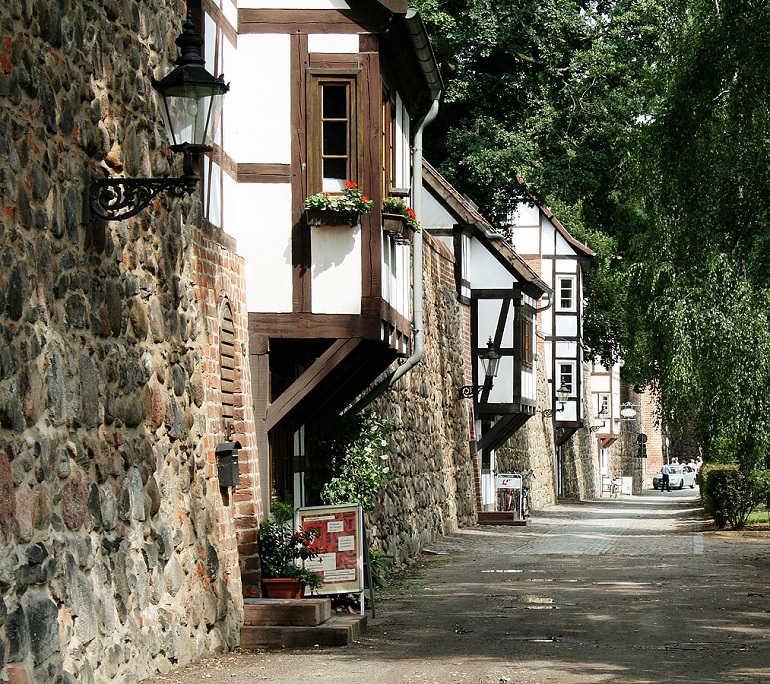
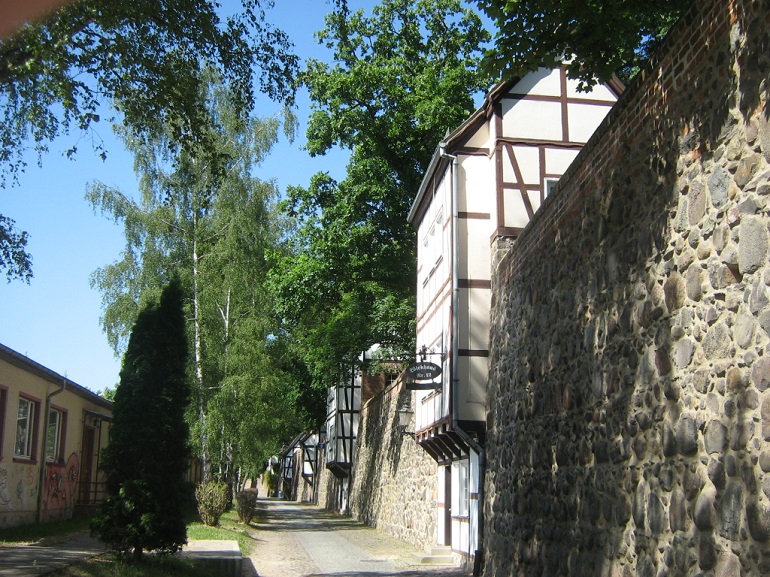
The city walls of Neubrandenburg are some of the best-preserved medieval fortifications in Northern Germany, encircling the historic city centre with an imposing ring of red brick. Originally constructed in the 13th and 14th centuries, these formidable walls stretch for nearly two and a half kilometres and are punctuated by twenty-four charming Wiekhäuser (small defensive towers) as well as the four majestic city gates. Today, visitors can stroll alongside or atop parts of the wall, gaining a unique perspective of the town’s architectural heritage and centuries-old security measures. The walls offer an atmospheric journey through history, enveloping the centre of Neubrandenburg in a sense of medieval grandeur while providing picturesque views of both city and surrounding landscape.
Treptower Tor
Treptower Tor stands as the most imposing and architecturally significant of Neubrandenburg’s four city gates. Dating from the late 13th century, its intricate brickwork and soaring spires make it a highlight for admirers of Gothic design. Historically, the gate served as the principal entrance from the direction of Berlin and was crucial for the town’s defence and trade. Today, Treptower Tor is admired not only for its monumental façade, but also for the way it symbolises the city’s strength and rich Hanseatic past. Whether viewed up close or from a distance along the city walls, Treptower Tor is an essential stop for anyone exploring Neubrandenburg’s historical heart.
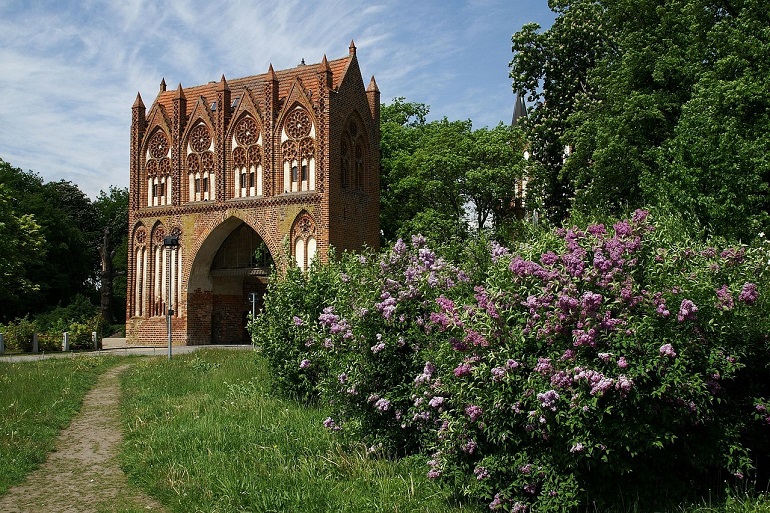
Friedländer Tor
Friedländer Tor is a prime example of North German brick Gothic architecture and one of Neubrandenburg's most recognisable historical structures. Dating from the 14th century, this imposing city gate once formed a vital part of the town’s medieval fortifications. Visitors are captivated by its impressive façade and finely detailed masonry. The gate is open to the public at all times, offering a unique opportunity to experience a piece of Hanseatic heritage day or night. It is an excellent starting point for exploring the city's historic walls or embarking on a leisurely walk through the old town. Families and children will find the site both accessible and engaging.
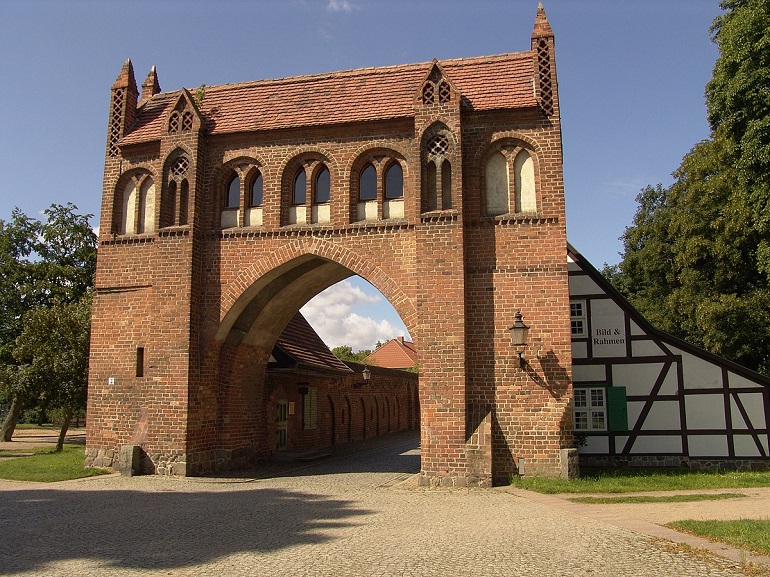
Stargarder Tor
Stargarder Tor stands as another spectacular reminder of Neubrandenburg’s fortified past. Bearing elaborate brickwork and beautiful decorative elements, this city gate is open around the clock and provides striking views both during the day and when illuminated at night. It invites visitors to learn about the region’s medieval defences and serves as a gateway for walks around the remnants of the city wall. Easily accessible and suitable for children, Stargarder Tor is a recommended stop for those seeking atmospheric photographs and historic exploration.
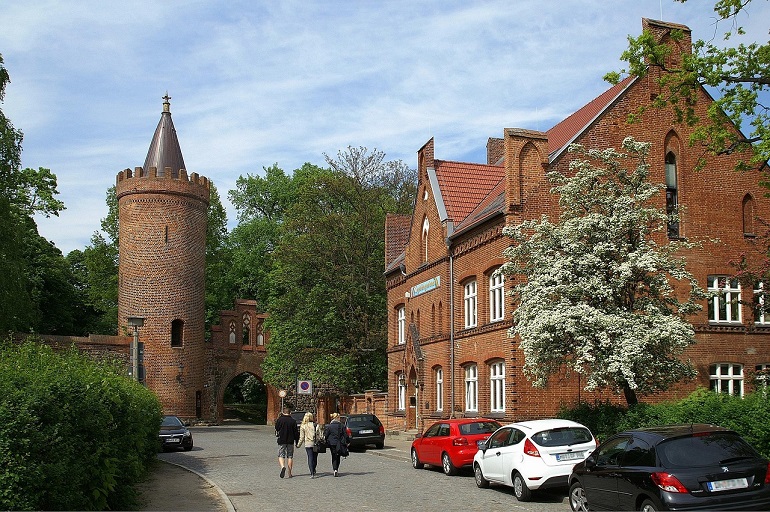
Fangelturm
Fangelturm is a historic tower that was once integrated into Neubrandenburg's city wall, serving over time as both a defensive structure and a prison. Today, visitors are drawn to its robust stonework and the sense of history emanating from its weathered walls. The tower is open to the public Wednesday to Sunday, offering insights into the town’s civic history and providing a family-friendly environment for learning about Neubrandenburg’s medieval legacy.
Natural Attractions
Kulturpark Neubrandenburg
Kulturpark Neubrandenburg serves as the city’s green heart, offering a range of recreational opportunities along the scenic shores of Lake Tollensesee. This expansive park is perfect for picnics, hiking, and informal sports, supported by amenities such as skateboarding areas, volleyball courts, and playgrounds for children. Dogs are welcome and the park is equipped with wheelchair-accessible entrances and parking lots, making it suitable for visitors of all ages and abilities. Its open atmosphere and well-maintained paths encourage relaxed strolls, family gatherings, and outdoor activities year-round.
Behmshöhe
Behmshöhe delights outdoor enthusiasts with its observation deck commanding panoramic views over the city and surrounding countryside. As a popular hiking destination, Behmshöhe is revered for its tranquil atmosphere and well-marked trails, attracting both casual walkers and determined ramblers. The site is open daily, with accessibility for families and children, and offers a rewarding summit for those keen to see Neubrandenburg from above.
Landschaftsgarten Brodaer Teiche
Landschaftsgarten Brodaer Teiche invites visitors to explore its peaceful ponds and landscaping, located just to the south-west of Neubrandenburg. This state park is rich in biodiversity and ideal for relaxing nature walks, birdwatching, and picnics among the trees. Accessible to everyone, including those with mobility issues, and welcoming to dogs, the park is a wonderful spot for quiet reflection and gentle exercise, appealing particularly to families seeking a break from urban activity.
Augustabad
Augustabad is a picturesque lake shore swimming area, highly rated for its clean waters and pleasant grassy banks. Enjoyed by locals and tourists alike, it is accessible twenty-four hours a day, with wheelchair-friendly infrastructure for both entrance and parking. The calm water and safe conditions make Augustabad a favourite destination for summer relaxation or a quick swim, with plenty of space for everyone to enjoy the natural beauty of Mecklenburg-Vorpommern.
Strandbad Broda
Strandbad Broda offers another excellent option for swimming, sunbathing, and lakefront activities on Seestraße. The gentle slope into the lake makes it safe for children and ideal for a casual dip, while the surrounding area provides ample space for picnics or lounging. Strandbad Broda is open around the clock and is fully accessible, making it convenient for everyone, including families and those with mobility challenges.
Nonnenhof
Nonnenhof is a tranquil wildlife refuge located just outside Neubrandenburg, specialising in family-friendly hiking trails and outdoor relaxation. It is a popular destination for walkers, birdwatchers, and picnickers, providing a safe haven for local species and an immersive nature experience. Dogs are permitted, and the paths are suitable for children, making Nonnenhof a delightful choice for a half-day excursion into nature.
Top Museums
Kunstsammlung Neubrandenburg (Neubrandenburg Art Collection)
Regarded as one of the four main art museums in Mecklenburg-Western Pomerania, the Kunstsammlung Neubrandenburg was founded in 1982 as a municipal institution and boasts a diverse collection of around 6,000 works, ranging from paintings and graphic art to sculpture. Since 2003, the museum has been based in a beautifully restored 18th-century timber-framed house in the heart of Neubrandenburg, complemented by a modern extension.
The museum’s 400-square-metre exhibition space is segmented between special temporary shows and a permanent collection, which allows visitors to experience contemporary and classical art in varying thematic arrangements. Particular focus is given to contextualising artistic trends and providing transparent, comprehensible displays. The museum is well known for its ability to present works in a way that highlights both individual artistic voices and broader movements. Here, visitors can experience both well-established artists and emerging talent within Mecklenburg-Vorpommern, making it an essential stop for enthusiasts of visual culture.
Regionalmuseum Neubrandenburg
Founded in 1872, the Regionalmuseum is among the oldest cultural history museums in the area and was established by the Neubrandenburger Museumsverein. The museum’s scope extends well beyond the city limits, serving as a centre for documenting the history of Neubrandenburg and the wider region.
Initially located in the historic Treptower Tor tower, the museum now operates at several sites, most notably the former Franciscan monastery—the city’s oldest building. Here, extensive permanent and temporary exhibitions offer an in-depth look at Neubrandenburg’s and Mecklenburg-Strelitz's urban developments, archaeological finds, and cultural evolution from the earliest settlements through to the present era.
A particular highlight is the museum’s ethnological holdings, including one of the largest collections of South Seas artefacts in Mecklenburg-Vorpommern, assembled by the physician Bernhard Funk. Other exhibitions cover topics such as the architectural beauty and diversity of regional brick Gothic, with a dedicated display in the tower of the city’s converted concert church. The museum is also known for scholarly publications and monographs, fostering local historical research and education.
Versicherungs-Museum (Insurance Museum)
This highly specialised and likely the smallest insurance museum in the world is tucked away in a slender, three-storey Wiekhaus, a historical building embedded in the old city walls near the centre of Neubrandenburg. The museum is operated by the Mecklenburgische Insurance, which was founded in the city in 1797.
The lovingly curated exhibits provide an engaging journey through 225 years of insurance company history, illustrating the general development of insurance from its earliest days to the present. Accessible displays include work equipment dating from the 1950s and 1960s, such as dictation devices and mechanical calculators, as well as information panels, documents, and photographs that collectively narrate the story of both the firm and the insurance sector in Germany.
Additional features include themed storytelling sessions for children and a welcoming, personal environment, making it a unique cultural stop when visiting Neubrandenburg.
Local Cuisine
Local specialities include Mecklenburgischer Rippenbraten, a succulent pork roast often served with red cabbage and potatoes, and Tüffel un Plum, a comforting dish of potatoes and plums reflecting the region’s rustic character. Fish lovers will find lake delicacies such as gebratener Zander (fried pike-perch) especially noteworthy, while the hearty Mecklenburgische Kartoffelsuppe warms travellers on cooler days. No visit is complete without sampling Rote Grütze, a sweet berry pudding typical of northern Germany, often enjoyed with cream or vanilla sauce. Together, these dishes offer an authentic flavour of Mecklenburg’s rich culinary tradition.
Getting There
By train Neubrandenburg is well connected by regional and long-distance services, with direct trains running from larger German cities such as Berlin, Rostock and Stralsund, making it a convenient option for travellers coming from various parts of the country. The central station is located close to the town centre, providing easy onward access.
By coach or bus Long-distance coaches link Neubrandenburg with major urban centres, offering an alternative for those who prefer road travel, while regional buses serve the surrounding towns and villages, making it accessible even from smaller communities in Mecklenburg-Vorpommern and neighbouring states.
By car Travelling by car provides the greatest flexibility, with the town easily reached via the A20 motorway, which runs across northern Germany, and well-maintained regional roads that connect Neubrandenburg to nearby cities; parking options are available both in and around the centre for visitors arriving by vehicle.


