



| Contents |
|---|
Introduction
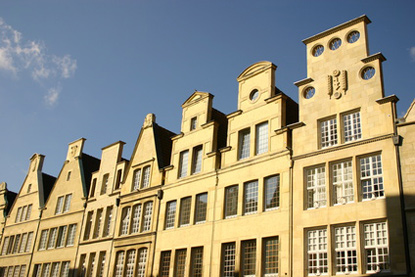
Münster (pop. 320,000) is an independent city with a vibrant student community. Its traditional architecture has strong Dutch/Flemish undertones. Founded in 793 CE, the city serves as both an important administrative centre and one of Germany's most bicycle-friendly urban areas, with over 500,000 bicycles for its population and an extensive network of cycling paths. The historic city centre, largely rebuilt after World War II bombing, features the Gothic St. Paul's Cathedral, the Renaissance-era town hall where the Peace of Westphalia was signed in 1648, and the distinctive Prinzipalmarkt with its gabled merchant houses and covered walkways. Home to the University of Münster, founded in 1780 and now hosting around 45,000 students, the city maintains a youthful atmosphere whilst preserving its role as a regional economic hub for insurance, technology, and service industries. The city's location on the Münstersche Aa river and its proximity to the Dutch border makes it an accessible base for exploring both the Westphalian countryside and neighbouring regions.
Interesting Facts about Münster
- Münster is famously known as Germany's “Bicycle Capital,” with estimates suggesting there are more bicycles than residents.
- The historic city witnessed the signing of the Peace of Westphalia in 1648, effectively ending the Thirty Years' War and shaping European history.
- Three iron cages hang from the tower of St Lambert’s Church, relics that once displayed the bodies of the defeated Anabaptist leaders after their radical 16th-century uprising.
- Münster is home to an extraordinary 16th-century astronomical clock in St Paul’s Cathedral that not only tells the time, but also shows lunar phases and the date of Easter.
- Founded in 793 by the missionary Ludger, Münster has been a major religious, educational, and economic centre for over 1,200 years.
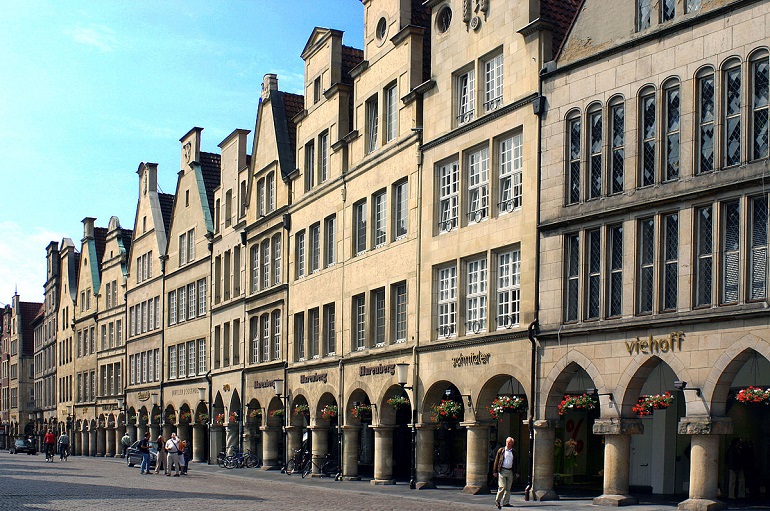
- The picturesque Prinzipalmarkt, Münster's main shopping street, boasts 48 historic gabled merchant houses and a 14th-century Gothic town hall where the Peace of Westphalia treaties were signed.
- Münster was heavily bombed during World War II but was meticulously rebuilt, blending its medieval heritage with modern architecture.
- The city hosts Germany's only museum dedicated solely to the graphic works of Pablo Picasso, the Pablo Picasso Museum of Graphic Art.
- Münster enjoys a youthful atmosphere thanks to the renowned University of Münster, one of Germany’s largest, with over 50,000 students.
- The “Botanischer Garten Münster” is a botanical garden dating back to 1803, offering a green oasis in the heart of the city.
History
Medieval Origins and Early Development
Münster's history traces back to 793 CE, when Charlemagne sent the Frisian missionary Liudger (later canonised) to convert the Saxons and evangelise the Münsterland. Liudger founded a monastery (monasterium) at Mimigernaford, meaning "ford over the Aa river," from which Münster derives its name. The city was strategically positioned at the crossroads of important trade routes, with Liudger building his church and cloister on the right bank of the river on a height called the Horsteberg. In 805, Liudger travelled to Rome to be ordained as the first bishop of Münster, and he founded a school in 797 that later became the Cathedral School, with Gymnasium Paulinum tracing its history back to this institution. The first cathedral was completed by 850, and the combination of ford, crossroad, marketplace, episcopal administrative centre, library and school established Münster as an important centre. In 1040, Heinrich III became the first king of Germany to visit Münster, whilst the city received its town charter in 1170.
Religious Upheaval and International Significance
During the Middle Ages, the Prince-Bishopric of Münster became a leading member of the Hanseatic League, enjoying particular economic prosperity in the 14th and 15th centuries through its favourable position on long-distance trade routes and its wool trade with England. The city's most dramatic chapter occurred in 1534 when radical Anabaptists, led by Jan Matthys and John of Leiden (Jan Beukels), seized control during the Protestant Reformation and established their "New Jerusalem". These religious extremists claimed all property, burned all books except the Bible, expelled or executed dissenters, and even required citizens to be naked in preparation for Christ's Second Coming. The Anabaptist reign ended bloodily in 1535 when Bishop Franz von Waldeck and his Imperial allies recaptured the town after a lengthy siege on 24 July. The remaining Anabaptists were tortured to death, and their corpses were displayed in iron cages that still hang from the tower of St. Lambert's Church today as a grim reminder of this period. Münster gained international prominence in 1648 when it served as one of the sites for negotiating the Peace of Westphalia, which ended both the Thirty Years' War and the Eighty Years' War, guaranteeing the future of the prince-bishop and ensuring the area remained exclusively Roman Catholic.
Modern Transformation and Educational Centre
The 18th century marked Münster's transformation into a modern city under the architectural vision of Johann Conrad Schlaun, who created the baroque Schloss Münster and designed the Promenade, a circular tree-lined path that replaced the city's fortification walls. The University of Münster was established in 1780 by Franz von Fürstenberg, becoming one of Germany's most significant educational institutions. However, Münster's political fortunes fluctuated dramatically: it was conquered by Prussia in 1802 during the Napoleonic Wars, became part of the Grand Duchy of Berg (1806-1811) and the French Empire's Lippe department (1811-1813), before returning to Prussian control. In 1816, Münster became the capital of the new Prussian province of Westphalia. The city's harbour began operations in 1899 when connected to the Dortmund-Ems Canal, enhancing its commercial importance. Following extensive bombing during World War II, the Old Town underwent comprehensive historical reconstruction after 1945, with new architectural landmarks including the municipal theatre (1956), municipal library (1993) and diocesan library (2005). Today, Münster houses approximately 55,000 students across eight universities and has evolved from an administrative centre into the economic, scientific and service industry hub of a region with 1.5 million inhabitants.
Main Attractions
Schloss Münster
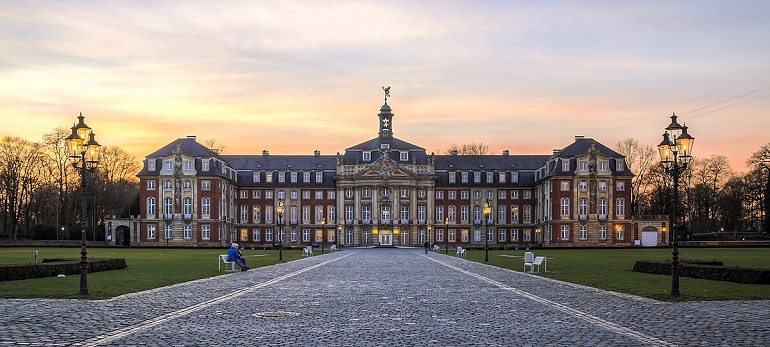
Originally constructed between 1767 and 1787 as a residence for the final Prince-Bishop of Münster, Maximilian Friedrich von Königsegg-Rothenfels, the Schloss Münster is a prime example of late Baroque architecture. Designed by the architect Johann Conrad Schlaun, its facade is built from the region's characteristic pale Baumberg sandstone, featuring a prominent central projection and coat of arms. Although severely damaged during the Second World War, the building was meticulously reconstructed and now serves as the administrative centre and main building for the University of Münster. Its formal gardens and the large square in front of it are frequently used for public events, including parts of the biannual "Turnier der Sieger" equestrian show. The Schloss represents a significant blend of the city's aristocratic past and its current identity as a major university town.
Rathausplatz Münster
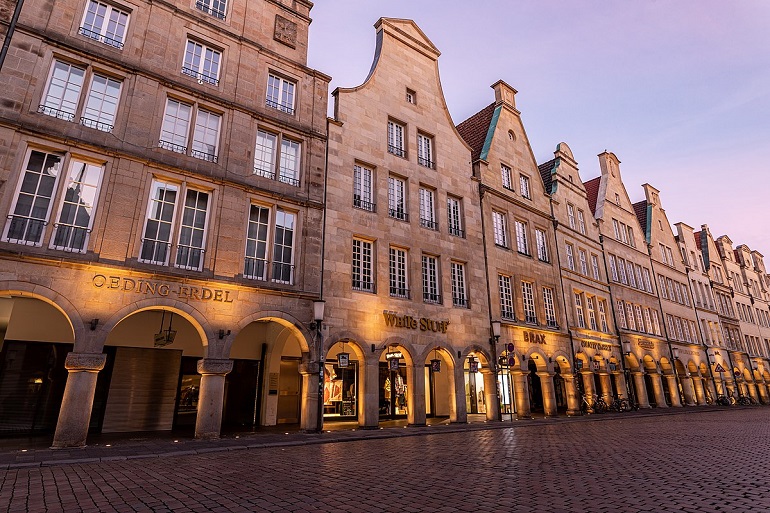
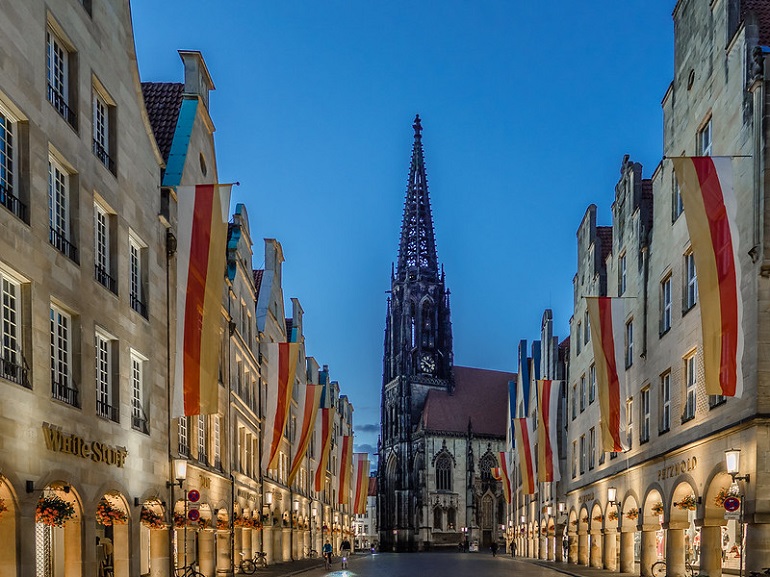
The Rathausplatz, also known as Prinzipalmarkt, is Münster's central and most historically significant square. It is dominated by the historic Town Hall (Rathaus), a fine example of Gothic architecture with a highly ornate facade. This building contains the Friedenssaal (Hall of Peace), where the Peace of Westphalia was negotiated and signed in 1648, ending the Thirty Years' War. The square is framed by a distinctive row of restored gabled merchants' houses, many of which feature sheltered arcades at ground level housing various shops and cafes. The cohesive architectural style, a result of careful post-war reconstruction, creates a unique historical atmosphere. The square remains the commercial and social heart of the city, hosting markets and civic events, and serves as a natural starting point for exploring the old town.
St. Lamberti
St. Lamberti is a late Gothic hall church located at the northern end of the Prinzipalmarkt. While its architecture is notable, the church is most famous for the three iron cages that have been suspended from its steeple since 1536. These cages once held the remains of the leaders of the Anabaptist rebellion, a radical Protestant sect that controlled Münster in 1534-35. The cages serve as a stark and permanent reminder of this turbulent episode in the city's religious history. The church itself features a tall, slender tower that offers views over the city, and its interior contains impressive stained glass. A unique tradition associated with the church is the Tower Warden (Türmerin), who climbs the steeple each night (except Tuesdays) to sound a horn, continuing a centuries-old practice.
Münster Cathedral (St. Paulus Dom)
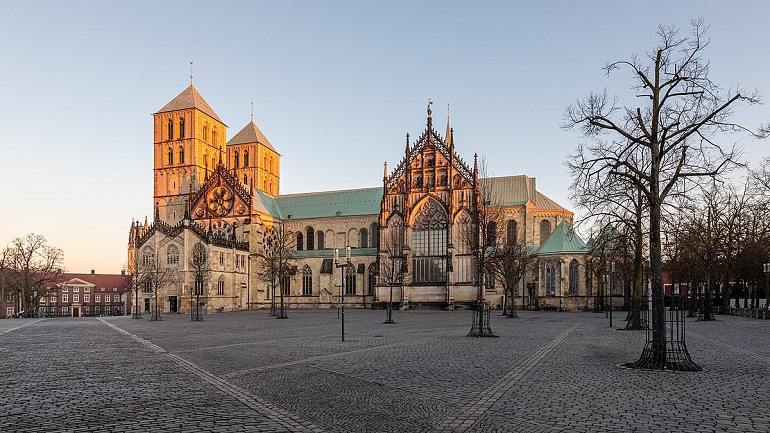
Münster Cathedral, officially known as St. Paulus Dom, was constructed from 1225 to 1264 on the site of earlier cathedrals, making it the third succesive cathedral in the city. Its architecture is a blend of Romanesque and Gothic styles, with the western part (westwerk) retaining Romanesque features from the late 12th century, while the main body of the building was completed in Gothic style by the mid-13th century. The cathedral was damaged and restored following the Anabaptist rebellion in the 16th century. After suffering severe damage in the Second World War, the cathedral was reconstructed between 1946 and 1956, largely restoring its medieval appearance but with a redesigned altar area and a modern western wall. Notable architectural elements include its twin Romanesque towers, the late Gothic vaulted nave, and a modern west façade with round windows.
Liebfrauen-Überwasserkirche
Dating primarily to the 14th century, the Liebfrauen-Überwasserkirche is a significant Gothic hall church whose name, "Überwasser" (Over the Water), refers to its historical position across the small river Aa from the original cathedral precinct. The church is distinguished by its slightly leaning tower and its spacious, light-filled interior, which features simple tile floors, slender columns, and a large organ. Having undergone restoration following war damage, it offers a serene and contemplative atmosphere that stands in contrast to the busier city centre churches. Its proximity to both the cathedral and the university buildings ties it closely to the ecclesiastical and academic life of Münster, and it remains an active parish church.
Schleuse Münster
The Schleuse Münster is a functional waterway lock located on the Dortmund-Ems Canal, a significant transport artery connecting the Ruhr industrial region to the North Sea. The lock system is a practical demonstration of German engineering, designed to raise and lower vessels over a water level difference of approximately seven metres. Visitors can observe the process firsthand as commercial barges and leisure boats navigate through the lock chamber. The site includes both the original lock from 1899 and a newer, larger lock built to accommodate modern ships, offering a direct comparison between historical and contemporary engineering. The area features well-maintained towpaths popular for cycling and walking, providing a unique attraction that combines industrial heritage with recreational activity.
Top Museums
LWL-Museum für Kunst und Kultur
This central institution is a cultural cornerstone, housing over a thousand years of art history from the Middle Ages to the present day. The vast collection spans more than 350,000 works—including paintings, sculptures, photographs, coins, and rare books—and is renowned for its impressive medieval Westphalian art, alongside Renaissance, Baroque, and contemporary pieces. The museum’s modern architecture and engaging temporary exhibitions ensure repeat visits reveal new artistic perspectives.
Kunstmuseum Pablo Picasso Münster
As Germany’s only Picasso museum, this renowned institution in the heart of the old town offers an unparalleled journey through Picasso's lithographic oeuvre, displaying over 800 works. Temporary exhibitions highlight his artistic circle, including pieces by Braque, Chagall, and Matisse, making it an essential stop for lovers of 20th-century art.
Freilichtmuseum Mühlenhof
This atmospheric open-air museum transports visitors back in time with some thirty authentic half-timbered buildings from the 17th to 19th centuries, offering a hands-on glimpse into Westphalian rural traditions. Frequent live performances and family-friendly activities add to the immersive historical experience amidst scenic surroundings.
Stadtmuseum Münster
Dedicated to the storied past of Münster itself, this museum brings the city’s history to life through interactive exhibits, engaging displays, and an extensive collection of artefacts. It is particularly commendable for those wishing to understand the cultural and political forces that shaped Münster across the centuries.
Museum für Lackkunst
Unique on a global scale, this museum celebrates the elaborate artistry of lacquer work with a collection spanning over 2,000 years and three continents (East Asia, Europe, and the Islamic world). Now partially integrated into the LWL-Museum, it continues to offer visitors a fascinating look at decorative arts, with highlights ranging from delicately painted Japanese objects to ornate European pieces.
Geological-Paleontological Museum Münster
Ideal for natural history enthusiasts, this family-friendly venue presents a detailed exploration of the Earth’s past, featuring impressive fossils, minerals, and large dinosaur skeletons—a particular favourite among younger visitors.
Westphalian Horse Museum
Offering an intriguing window into the history and cultural significance of horses in Westphalia, this interactive museum located within Münster’s Allwetterzoo is perfect for families. Its well-curated exhibits and hands-on activities appeal to both children and adults.
Domschatz (Cathedral Treasury) Münster
The cathedral treasury presents one of the richest displays of ecclesiastical art in Europe, centred on goldwork, fabrics, and liturgical treasures stretching from the eleventh to twentieth centuries. Its engaging displays provide a glimpse into Münster’s religious and artistic heritage.
Bible Museum Münster
This specialist museum, run by the university’s theology faculty, features remarkable early manuscripts and objects related to Bible history, showcasing not only religious artefacts but also the craft and transmission of texts over centuries—a niche but impactful collection for those interested in the history of the written word.
Lepramuseum Münster
A distinctive historical site, the Lepramuseum sheds light on the medical and social history of leprosy in Münster, poignantly located in a former medieval leprosarium. Its exhibits combine empathy and scholarship, making it a memorable destination for those seeking Münster’s lesser-known stories.
Kunsthalle Münster
This contemporary art space is dedicated to promoting cutting-edge visual art and regularly hosts temporary exhibitions from emerging and established artists. Its avant-garde programming complements the city’s broad artistic landscape.
Museum KG ZiBoMo Münster Wolbeck
Celebrating the lively traditions of carnival ('Karneval') in the Wolbeck district, this fun and colourful museum is especially popular with families and those looking to experience Münster's local customs through costumes, floats, and humorous displays.
Shopping
Münster's city centre offers an extensive pedestrian-friendly shopping experience anchored by four main streets: the historic Prinzipalmarkt with its medieval arcades housing elegant designer shops, exclusive jewellers, and independent boutiques; Salzstraße, the city's oldest trade route featuring fashion stores, leather goods shops, and small cafés; Ludgeristraße, one of Germany's top ten most attractive shopping miles containing numerous department stores an Arkaden shopping centre with over 40 stores; and the modern Stubengasse with the Hansecarré complex. The city centre operates as one connected pedestrian zone, with shops typically open Monday to Saturday until 7 PM (larger department stores until 8 PM). Regular weekly markets take place on Wednesdays and Saturdays from 7 AM to 2:30 PM on Domplatz, offering fresh produce, flowers, and local specialities. During winter months, six Christmas markets with approximately 300 stalls transform the city centre into a festive shopping destination.
Nature in and around Münster
Natural attractions in and around Münster include the Aasee, an artificial lake covering approximately 0.4 square kilometres that provides a 5.7-kilometre circuit for walking and cycling while also functioning as a flood-control and urban-cooling reservoir; the Botanischer Garten Münster, a 4.6-hectare university-maintained garden showcasing over 8,000 plant species across 23 themed sections and ten greenhouses, including a historic orangery; the Rieselfelder Münster nature reserve, a former sewage irrigation wetland now recognised as a Ramsar site and EU bird sanctuary featuring shallow basins, reed-bed trails and observation towers; the Wolbecker Tiergarten, one of the region’s oldest forests spanning 288 hectares with a 6.2-kilometre nature trail and interpretive stations on local flora and fauna; and urban green spaces such as Südpark and Düesberg Park, both offering open lawns, playgrounds and paved paths for leisure activities within the city.
Botanical Garden of the University of Münster
Founded in 1803, the Botanical Garden is situated directly behind the Schloss Münster and functions as a scientific institution for the university as well as a public park. Covering approximately 4.6 hectares, it contains around 8,000 plant species from around the world. The garden is organised into various themed sections, including a comprehensive alpine garden, a medicinal plant section, moorland and heath landscapes, and a sensory garden. A major feature is its complex of ten interconnected glasshouses, which maintain different climatic conditions to house collections of tropical and subtropical plants, cacti, and flora from the Canary Islands. The garden is used for research and teaching but is also a valued public space, offering clearly marked paths and quiet benches for visitors seeking a peaceful retreat.
Schloss Park
The expansive Schloss Park, or Schlosspark, functions as a green link between the Schloss Münster and the wider recreational area around the Aasee lake. Designed in the style of an English landscape garden, it features wide, open lawns, mature and varied tree specimens, and informal gravel pathways suitable for walking and jogging. Its layout encourages leisurely activities, with ample space for picnics, relaxation, and informal games. The park's well-maintained grounds and open character make it a popular destination for students, families, and local residents, particularly during warmer months. It provides a significant natural corridor within the city, seamlessly connecting the formal grounds of the university with other green spaces.
Südpark
As one of Münster's largest and oldest public parks, Südpark provides a substantial green space for recreation and relaxation south of the city centre. Established in the late 19th century, its design incorporates a variety of landscapes, including dense wooded areas, open meadows, and a small lake, creating diverse habitats and experiences for visitors. An extensive network of paths makes the park ideal for walking, jogging, and cycling. It is well-equipped with facilities, including multiple children's playgrounds, slides built into the landscape, public tennis courts, and table tennis tables. The park's size and variety make it a popular destination for families planning a day out, individuals seeking exercise, and dog owners, as dogs are permitted throughout.
Wienburgpark (Nordpark)
Located in the northern part of the city, Wienburgpark, commonly called Nordpark, is a versatile community park designed to cater to a wide range of activities. It is particularly family-oriented, featuring a large playground, picnic tables, and ample open space. For sports enthusiasts, the park includes dedicated facilities for basketball, beach volleyball, and skateboarding, making it a social hub for younger residents. A designated dog park area allows pets to be exercised off-leash, catering specifically to dog owners. The park successfully combines structured recreational areas with more natural, open green spaces, serving as an important social and leisure venue for the surrounding neighbourhoods.
Local Cuisine
Visitors should seek out specialities such as Münsterländer Töttchen, a savoury ragout that once made use of butchers’ leftovers but is now typically prepared with veal and veal tongue, as well as the robust peppered beef stew known locally as Pfefferpotthast. The region is also famous for its distinctive Westphalian ham on the bone and the dense, dark pumpernickel bread, often enjoyed with local cheeses and farm-fresh produce. Meals are usually accompanied by a variety of regional beers, with breweries like Pinkus Müller offering traditional options. These dishes exemplify the down-to-earth, filling, and comforting flavours that define Münster’s food culture and make it a delight for any traveller.
Getting There & Around
By train Münster is well connected by rail, with direct trains operating from major German and European cities. The city’s main station, Münster Hauptbahnhof, is conveniently located in the city centre, and regular Intercity and regional services connect it to Hamburg, Cologne, Berlin, Amsterdam and more. The train journey from Hamburg or Cologne takes around two hours, and about three hours from Berlin or Amsterdam. International trains from cities like Brussels and Liège also run regularly, although a change is typically needed along the route.
By coach or bus Coach travel is a convenient option, with various companies providing regular connections from many European cities to Münster’s central bus station. Long-distance coaches often offer amenities such as air conditioning, Wi-Fi and power outlets. The number of direct routes available can vary, so it’s advisable to check current timetables in advance. Local and regional buses also serve Münster from other towns within the region.
By car Münster is easily accessible by car via the A1 and A43 motorways, linking the city directly with routes from Hamburg, Frankfurt, Amsterdam and the Ruhr area. The drive from major cities such as Hamburg or Amsterdam typically takes about three hours, and there are well-signposted parking and Park+Ride facilities around the city for visitors who wish to leave their vehicle and travel into the centre by bus.
Best Time to Visit
The optimal time to visit Münster is during the late spring and summer months, specifically from May through September, when the city truly comes alive with pleasant weather and vibrant outdoor activities. During this period, temperatures range between 20°C and 25°C (68°F to 77°F), creating ideal conditions for exploring the city's extensive network of cycling paths - a must-do experience in Germany's renowned "bicycle capital." The warmer months also coincide with the departure of many university students for summer holidays, resulting in a more peaceful atmosphere throughout the charming historic centre, particularly on weekends. Late spring is especially delightful as the city's parks and gardens burst into bloom, whilst early autumn offers the added spectacle of colourful foliage along the famous promenade that encircles the old town. Although Münster can be visited year-round, winter months tend to be rather grey and wet, with frequent rainfall and limited sunshine, making outdoor sightseeing less appealing despite the festive charm of the Christmas markets that transform the Prinzipalmarkt into a magical winter wonderland.
| Travel destinations in North Rhine-Westphalia | ||||||||||||||
|---|---|---|---|---|---|---|---|---|---|---|---|---|---|---|
|
|
|
|
| ||||||||||
|
|
|
|
| ||||||||||
|
| |||||||||||||


