



| Contents |
|---|
Introduction
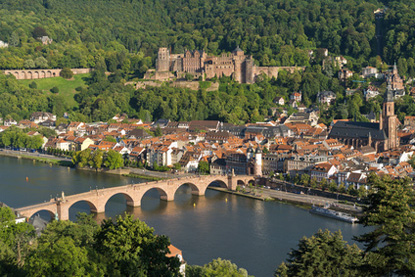
Heidelberg (pop. 160,000), a picturesque city in southwestern Germany, is renowned for its romantic charm and rich history. Situated along the Neckar River and surrounded by lush forests, this city of approximately 163,000 inhabitants is home to Germany's oldest university, founded in 1386. The city's skyline is dominated by the iconic Heidelberg Castle, a magnificent ruin perched atop a hill overlooking the Old Town. Heidelberg's well-preserved medieval and Baroque architecture, including the Old Bridge and the Church of the Holy Spirit, attracts millions of visitors annually. Beyond its historical appeal, Heidelberg is a thriving centre of science and research, hosting numerous internationally acclaimed institutes and research-based companies. The city's vibrant cultural scene, coupled with its picturesque setting, makes it a popular destination for tourists and students alike.
Interesting Facts about Heidelberg
- Heidelberg University, established in 1386, is Germany's oldest and ranks among Europe's most prestigious academic institutions.
- The city's iconic Heidelberg Tun, a colossal 18th-century wine barrel in the castle cellar, holds 219,000 litres – the world's largest of its kind.
- Heidelberg miraculously escaped Second World War bombing, preserving its Baroque architecture while most German cities faced heavy destruction.
- The historic Studentenkarzer (student prison) at Heidelberg University displays centuries-old graffiti left by incarcerated scholars as a rite of passage.
- Mark Twain immortalised Heidelberg's romantic landscapes and student culture in his 1880 travel memoir A Tramp Abroad.
- Heidelberg's 18th-century Alte Brücke (Old Bridge) features a bronze monkey statue said to bring good luck to honest travellers.
- The Philosophenweg (Philosophers' Walk) offers panoramic views that inspired Goethe and other Romantic-era thinkers.
- Heidelberg Man, a 600,000-year-old jawbone discovered locally in 1907, represents one of Europe's earliest human fossils.
- With average temperatures of 11°C, Heidelberg enjoys Germany's mildest climate, supporting Mediterranean flora like fig and almond trees.
- The city housed NATO's European headquarters from 1952 until 2013 following its post-war occupation by American forces.
History
Heidelberg's history stretches back to ancient times, with the first settlements in the area dating to Roman and Celtic periods. The city was officially founded in 1196, though the area called Bergheim was mentioned in documents as early as 769 CE. Heidelberg truly began to flourish in the 13th century when the castle and town were planned and built together. The founding of Heidelberg University in 1386—the oldest university in Germany—marked the beginning of the city's heyday as the capital of the Electoral Palatinate.
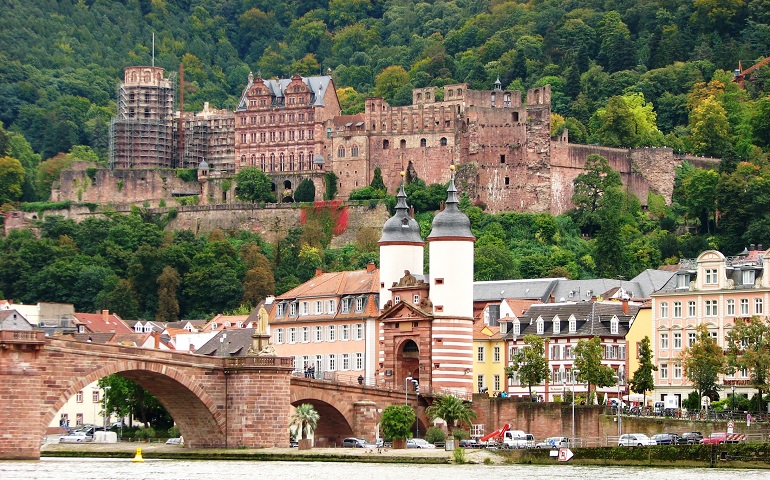
The castle, which sits nearly 300 feet above the town, has a tumultuous history. Its earliest structures date back to the 13th century, with Prince Elector Ruprecht III making it a regal residence in the early 15th century. Throughout its history, the castle suffered multiple catastrophes: a lightning bolt destroyed the upper castle in 1537, it was ravaged during the Thirty Years' War in 1622, and French troops caused extensive damage during the Nine Years' War (1688-1697). After another lightning strike in 1764, the castle was permanently abandoned, with locals using stones from the ruins to build their houses until Count Charles de Graimberg began conservation efforts in 1800.
Following the destruction in the late 17th century, Heidelberg was rebuilt in the Baroque style whilst retaining its medieval layout. The 19th century saw Heidelberg become a popular destination for poets and philosophers such as Friedrich Hölderlin and Joseph von Eichendorff, who helped establish it as the "City of Romanticism." After World War II, Heidelberg was taken by American forces without major destruction and became the headquarters for US Army in Europe. The city has continued to evolve, with the development of the university campus at "Neuenheimer Feld" in 1951 cementing its reputation as a city of science, and more recently, the creation of the Bahnstadt district, the world's largest passive house settlement.
Main Attractions
Heidelberg Castle (Heidelberger Schloss)
Perched majestically on the hillside overlooking the city, Heidelberg Castle is one of Germany's most famous Renaissance structures. Though now in ruins, the castle remains an impressive sight with its red sandstone walls contrasting against the green forests of Königstuhl hill. The castle's history spans over 700 years, having been partially rebuilt several times after lightning strikes, fires and wars.
The castle courtyard can be visited free of charge, while entry to the ruins requires an admission fee. Inside the castle grounds, you'll find architectural masterpieces from the Renaissance period including Gläserner Saalbau, Ottheinrichsbau and Friedrichsbau, each representing different periods and styles of construction. The ornate façade of the Ottheinrich Building is particularly noteworthy, featuring intricate sculptures of figures from the Bible and Roman mythology.
One of the castle's most famous attractions is the Great Wine Barrel (Heidelberg Tun), the world's largest wine barrel, which holds over 220,000 litres of wine and features a wooden dance floor on top. Built in 1751, this enormous oak barrel stands seven metres high and eight and a half metres wide, though it has rarely been used for its intended purpose of storing wine.
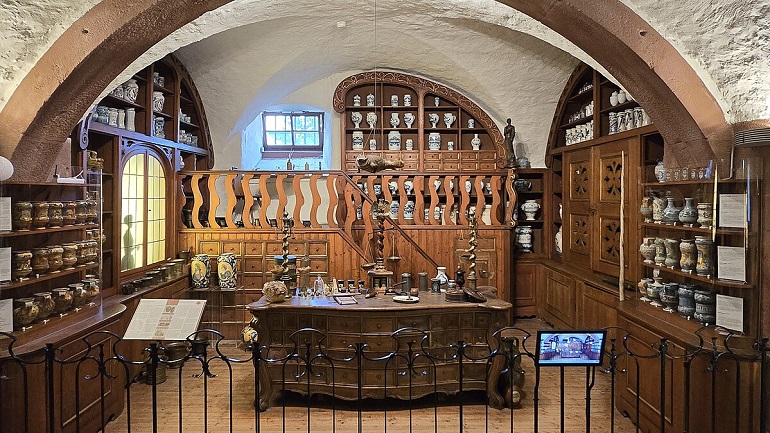
The castle's terrace and gardens offer spectacular views of the Neckar River and the old town, making it an ideal spot for photography. The German Apothecary Museum (Deutsches Apothekenmuseum) is also housed within the castle, displaying a fascinating collection of pharmaceutical artefacts from the 17th to 19th centuries.
The castle can be reached on foot via the Burgweg (a 10-minute climb) or by taking the mountain railway from Kornmarkt. The funicular railway offers a convenient and scenic route to the castle, particularly appealing for those who prefer to avoid the uphill walk. Guided tours of the castle are available in multiple languages and provide detailed insights into its rich history and architectural significance.

Old Town (Altstadt) and Hauptstraße
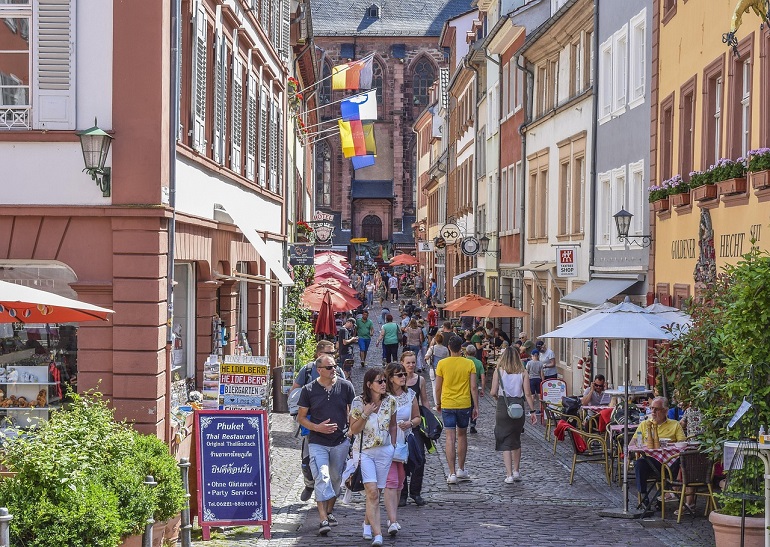
Heidelberg's charming Old Town is centred around Hauptstraße, one of the longest pedestrian shopping streets in Europe, stretching approximately 1.6 kilometres from Bismarckplatz to Karlstor. This narrow main street and its surrounding alleyways showcase beautifully preserved medieval architecture and Renaissance buildings that miraculously survived the bombings of World War II.
The Altstadt is home to boutique shops, galleries, cafés and restaurants, offering everything from traditional German cuisine to international fare. Street performers often add to the lively atmosphere, particularly during summer months. Historic landmarks including the Haus zum Ritter, a Renaissance building dating from 1592, stand as testament to the city's prosperous past. This impressive structure was one of the few buildings to survive the devastating fire of 1693 during the Nine Years' War.
The University of Heidelberg, founded in 1386 and the oldest university in Germany, has several historic buildings scattered throughout the Old Town. The Old University (Alte Universität) on Universitätsplatz dates back to the 18th century and houses the University Museum, which tells the story of this venerable institution.
The cobblestone paths and vibrant atmosphere make the Altstadt perfect for leisurely exploration. Small squares like Marktplatz (Market Square) provide pleasant spots to rest and people-watch.
Numerous hidden courtyards and narrow alleyways branch off from Hauptstraße, rewarding curious visitors with unexpected discoveries. The area is particularly enchanting during December when the Christmas market transforms the Old Town into a winter wonderland with wooden stalls selling handicrafts, mulled wine and seasonal treats.
Old Bridge (Alte Brücke)
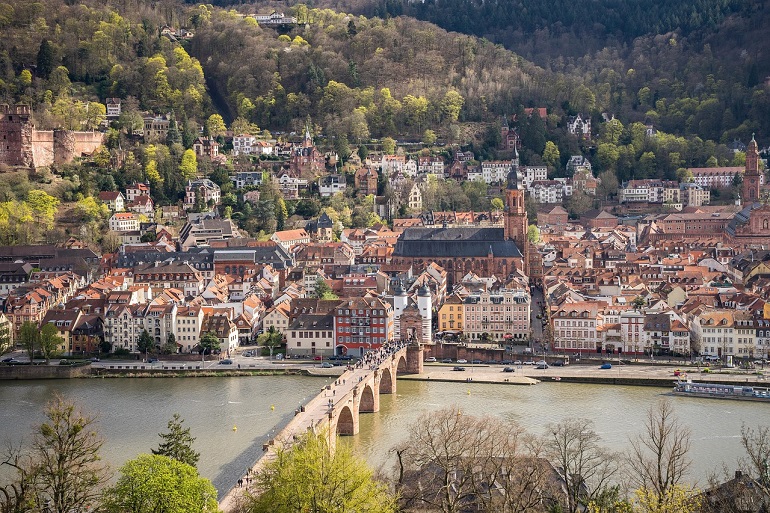
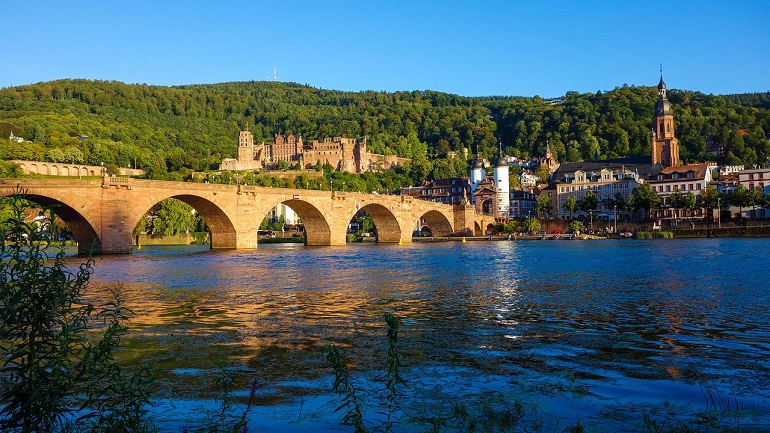
Also known as Karl Theodor Bridge, this iconic sandstone structure spans the Neckar River, connecting the Old Town with the northern bank. Built in the 18th century by Elector Karl Theodor, the bridge replaced a series of wooden predecessors that had been repeatedly destroyed by floods and ice. Completed in 1788, it represents the ninth bridge to stand at this location.
The bridge features two notable sculptures: one of Elector Karl Theodor and another of the Roman goddess Minerva. Perhaps its most famous feature is the Bridge Monkey statue, which visitors can touch for good luck. The current bronze sculpture is a modern recreation of a much older monkey that once stood on the bridge. According to local legend, touching the mirror held by the monkey brings wealth; touching nearby mice ensures fertility; placing your head in its crown guarantees a return to Heidelberg.
The Bridge Gate (Brückentor) on the Altstadt side is an impressive medieval structure that once formed part of the city's fortifications. Its twin towers and central archway create one of Heidelberg's most photographed scenes. The gate houses a small exhibition about the history of the bridge and its significance to the city.
From the bridge, visitors can enjoy panoramic views of the castle, river and surrounding hills. The sight of the castle ruins illuminated at night, reflected in the waters of the Neckar, is particularly magical. Though destroyed near the end of World War II on March 29, 1945, the bridge was meticulously reconstructed and reopened in July 1947, preserving its historical appearance for future generations.
Market Square (Marktplatz)
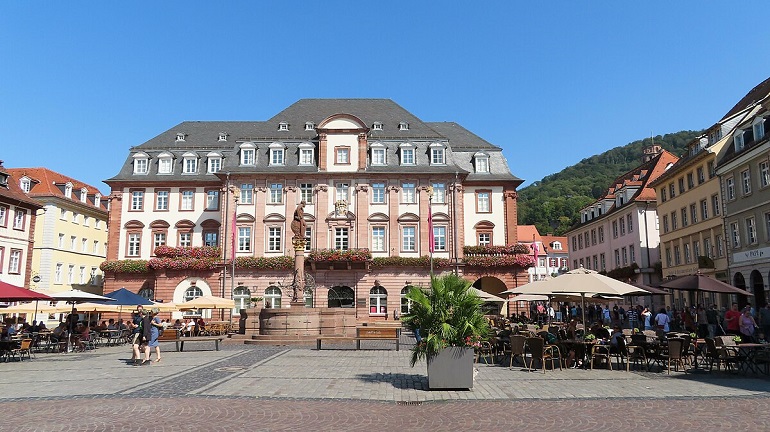
The Marktplatz has been Heidelberg's commercial heart since medieval times. This lively square hosts weekly farmers' markets on Wednesdays and Saturdays where local producers sell fresh fruits, vegetables, flowers and regional specialities.
The Renaissance-style Hotel Zum Ritter St. Georg dominates one side of Marktplatz. Built in 1592 by a Huguenot cloth merchant, it is one of the few buildings that survived Heidelberg's destruction during the Nine Years' War. Its ornate façade reflects both artistic craftsmanship and economic prosperity of its time.
Marktplatz also serves as a central gathering point during festivals such as Heidelberg’s Christmas market when wooden stalls fill the square with festive lights and seasonal goods. Surrounded by cafés and restaurants with outdoor seating options during warmer months, it remains a vibrant hub for both locals and visitors alike.
Church of the Holy Spirit (Heiliggeistkirche)
This early 15th-century church stands prominently in Heidelberg’s Old Town with its 60-metre spire dominating Altstadt’s skyline. Construction began in 1398 and concluded in 1515. Its central location makes it an important landmark within Heidelberg’s historic centre.
The church’s Gothic architecture features impressive ribbed vaulting and large windows that allow natural light to flood its interior. For many years, it was divided by a wall separating Protestant and Catholic congregations—a reflection of Germany’s religious divisions throughout history—until this partition was removed in 1936.
Visitors can climb Heiliggeistkirche’s tower for a modest fee to enjoy panoramic views over Heidelberg’s rooftops and beyond. Inside, highlights include an ornate pulpit from 1561 and modern stained glass windows installed after World War II.

Kornmarkt (Corn Market Square)
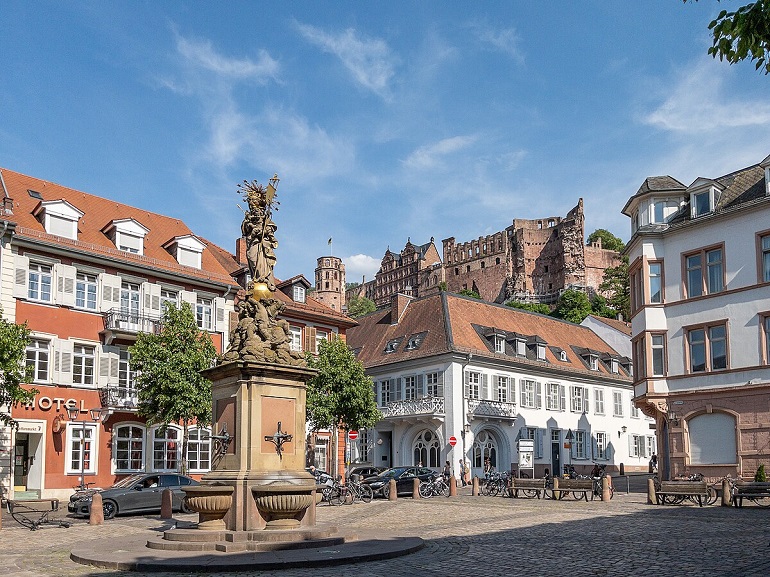
Kornmarkt is one of Heidelberg's most picturesque squares. A central fountain topped by a statue of the Madonna was installed during the Counter-Reformation as part of efforts to re-establish Catholic influence in the predominantly Protestant city. The square is surrounded by traditional pastel-coloured houses that exemplify the Baroque architectural style prevalent after Heidelberg's reconstruction following the Nine Years' War.
From Kornmarkt, visitors can enjoy stunning views of Heidelberg Castle rising in the background, creating one of the most iconic vistas in the city. The square once served as a grain market, hence its name, but today it is primarily a place for relaxation and socialising. Several cafés with outdoor seating provide opportunities to soak in the atmosphere during warmer months.
The lower station of the funicular railway to Heidelberg Castle is located at the edge of Kornmarkt, making this square a natural starting point for many visitors exploring Heidelberg's hillside attractions. During December, Kornmarkt hosts part of Heidelberg's Christmas market, with wooden stalls selling seasonal specialities, handcrafted items and festive treats.
Neckar River Boat Cruises
The Neckar River provides another way to experience Heidelberg’s beauty through boat cruises that operate from April to October. These cruises range from short one-hour tours around Heidelberg to longer journeys exploring scenic stretches of the Neckar Valley.
Cruises pass under landmarks like the Old Bridge while offering unique views of Heidelberg Castle and Altstadt from the water. Some excursions extend to Neckarsteinach—known as "The City of Four Castles"—where visitors can see medieval fortresses perched on hillsides above picturesque villages.
The tranquil river setting reveals vineyards, forests and charming towns along its banks—perfect for those seeking a leisurely exploration beyond Heidelberg itself.
Around Heidelberg
Königstuhl (King's Seat)
The highest point in Heidelberg at 568 metres above sea level, Königstuhl is located on the eastern edge of the Old Town. This mountain peak offers some of the most breathtaking panoramic views in the region. Visitors can take the funicular railway for an easy ascent through three stages: from the Old Town to Heidelberg Castle, from Heidelberg Castle to Molkenkur station, and finally to Königstuhl's summit.
From Königstuhl’s top, visitors can enjoy sweeping views of Heidelberg, the Neckar Valley and even as far as the Rhine plain on clear days. Several walking trails wind through Königstuhl’s surrounding forests, offering peaceful escapes into nature.
The summit area is home to attractions such as Heidelberg Astronomy Observatory and Märchenparadies, a fairy tale-themed amusement park ideal for families with children. For adventure seekers, paragliding is also available from designated launch points on Königstuhl. Restaurants and cafés at or near Königstuhl provide spots to relax while enjoying refreshments alongside scenic views.
Thingstätte
The Thingstätte is an open-air amphitheatre built during the 1930s as part of Nazi propaganda efforts under the "Thingbewegung" movement. Located on Heiligenberg (Saints' Mountain), it was designed to host large gatherings and opened by Joseph Goebbels on June 22, 1935. The amphitheatre could accommodate up to 8,000 spectators on its stone benches.
Constructed using local sandstone, the Thingstätte was built in a style reminiscent of ancient Greek theatres and blends harmoniously with its natural surroundings. The acoustics are remarkably good, allowing speakers to be heard clearly without amplification. Although it fell into disuse after World War II due to its association with Nazi propaganda, it has since been reclaimed as a cultural space.
Today, the Thingstätte is used for occasional events and is particularly popular during Walpurgisnacht (the eve of May 1st), when thousands gather for an unofficial celebration featuring bonfires, music and dancing. The site can be reached via hiking trails from the Philosophers' Walk or from other paths on Heiligenberg. Its location offers impressive views of Heidelberg and its surrounding landscape.
Top Museums
Kurpfälzisches Museum
The Kurpfälzisches Museum, situated in the baroque Palais Morass, offers a comprehensive look into the history, art, and culture of the Palatinate region. The museum's location itself is a historical treat, as the Palais Morass was constructed in 1712 and once housed Johann Philipp von Morass, a rector of Heidelberg University. The museum showcases an extensive collection of paintings, sculptures, and watercolours, featuring works from the late 15th to the 20th century, primarily by regional artists. A highlight is Tilman Riemenschneider's altarpiece of the Twelve Apostles from 1509, a key work of the late Middle Ages. Besides art, the museum delves into the region's past with exhibits covering the Roman Age through the early modern period, giving visitors a fascinating insight into the Palatinate and its capital, Heidelberg.
German Pharmacy Museum (Deutsches Apothekenmuseum)
Located within Heidelberg Castle, the German Pharmacy Museum presents over 20,000 exhibits spanning 2,000 years of medical science and pharmacy history. This museum illustrates the evolution of the apothecary trade from ancient times to the 20th century. The museum has fascinating collections, including rare apothecary workshops and an alchemical laboratory. Visitors can explore beautifully restored pharmacy cabinets and learn about medicinal plants. The collection includes medicines derived from mineral, animal, and plant sources, and also features Italian, Dutch, and German faience earthenware.
Heidelberg University Museum
The Heidelberg University Museum, located in the Old University building, documents the history of Germany's oldest university across three rooms. The first room deals with the era of the Palatine electors from the founding of the university in 1386 to its transfer to Baden in 1803. Pictures and documents describe economic foundations, everyday life, and highlights from research and teaching in the context of the history of the Electoral Palatinate. The second room showcases the 19th century, when Heidelberg became famous for romanticism and natural sciences. Equipment developed by Helmholtz, Kirchhoff, and Bunsen for physical and chemical experiments stands out in particular. The third room covers the 20th century, highlighting the admission of women to the university and how the academic institution fared under the Nazis.

Documentation and Cultural Centre of German Sinti and Roma
The Documentation and Cultural Centre of German Sinti and Roma presents a permanent exhibition about the history and persecution of the Sinti and Roma people. The exhibition aims to promote understanding about the Sinti and Roma Holocaust, with an eternal flame commemorating the over 500,000 Sinti and Roma who were victims. The history is presented in an exhibition space of approximately 700m² on three floors, from their gradual exclusion and disenfranchisement to their systematic extermination in Nazi-occupied Europe.
Carl Bosch Museum
The Carl Bosch Museum charts the life and work of Carl Bosch, a renowned German industrial chemist. The museum is located in Bosch's former villa.
Body Worlds Museum
The Body Worlds Museum uses plastination to display preserved human bodies, revealing intricate anatomical structures. The museum is located in the Altes Hallenbad.
Museum of Ecclesiastical Arts
The Museum of Ecclesiastical Arts is adjacent to the Jesuit church, showcasing ecclesiastical art from the 17th to the 19th century. Artistic religious figures, chalices, monstrances, and magnificent vestments from past centuries are on show. The permanent exhibition presents a collection of liturgical artefacts and religious art treasures, focusing on priceless creations by Augsburg goldsmiths and silversmiths, ecclesiastical robes made of French silk brocade, religious paintings from the 16th to the 19th centuries, and common piety.
Ethnographical Museum
The Ethnographical Museum features arts of Asia, Africa, and Oceania. Established in 1919, this museum houses both permanent and rotating collections of ethnographic objects from Asia, Africa, and the Pacific, offering insights into diverse cultures worldwide.
Local Cuisine
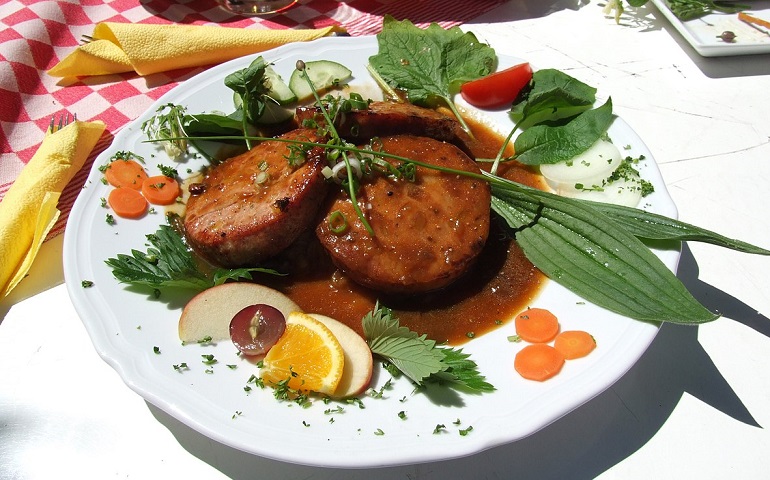
Heidelberg boasts a rich tapestry of traditional German cuisine that reflects both Swabian and Palatinate influences. Visitors should sample the renowned Saumagen (pig's stomach stuffed with pork, potatoes and sometimes chestnuts), a regional delicacy often served with sauerkraut and rye bread. The hearty Maultaschen dumplings and flavourful Leberknödel (liver dumplings) feature prominently on local menus, whilst seasonal specialities include white asparagus (Spargel) celebrated during the Palatinate Spargelzeit festival from April to June. For a quick bite, try the Kartoffelpuffer (potato fritters) with apple sauce or sample the traditional Dampfnudeln, versatile dough balls that appear in both sweet and savoury dishes. Sweet-toothed travellers will delight in Heidelberg's confections, particularly the famous Studentenkuss (student's kiss) – a delectable combination of waffle, nougat and dark chocolate that makes for a perfect souvenir. Traditional establishments like Zum Roten Ochsen (Red Ox Inn), dating back to 1703, offer an authentic dining experience amidst historical surroundings.
Shopping
Heidelberg offers diverse shopping experiences across its retail districts. Hauptstrasse, stretching over a mile through the city centre, is Germany's longest shopping street with pedestrianised sections perfect for window shopping and outdoor cafés. It features high-street brands and independent boutiques ideal for souvenirs and fashion. The city has two popular shopping malls: Darmstadter Hof Centrum, located in a historic listed building near the Old Town with shops like H&M and DM, and Galeria Kaufhof, a department store with two branches offering clothing, footwear, homewares and toys. For independent shops, visit Untere Strasse in the Old Town, known for its vinyl shop Musikzimmer, fashion boutiques and wine shop, or Plock, which runs parallel to Hauptstrasse and hosts more independent retailers. Sofienstrasse is the destination for upmarket clothing shops, while eco-conscious shoppers should visit GOODsHOUSE, which sells recycled and natural material products made under fair trade conditions.
Nature in and around Heidelberg
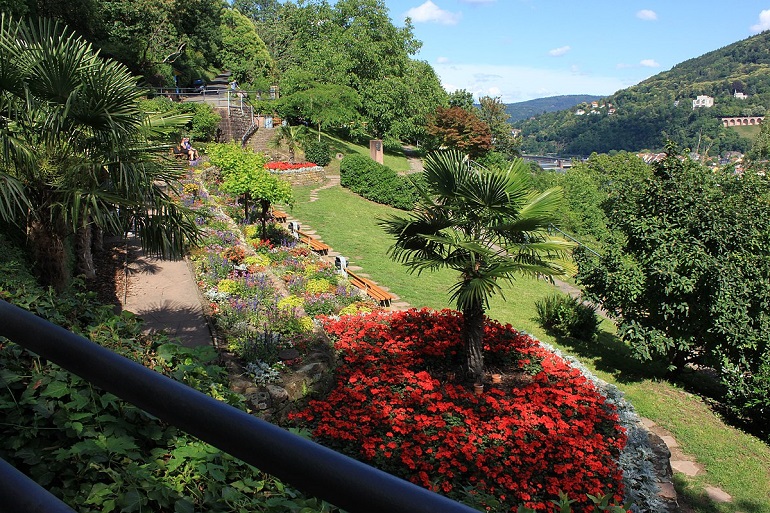
Heidelberg and its surroundings offer a wealth of natural attractions for outdoor enthusiasts. The city is nestled in the Neckar Valley, with the Königstuhl hill providing panoramic views and hosting two special forest paths: the Via Naturae and the Forest Adventure Trail. The Philosophers' Walk, considered one of Europe's most beautiful walkways, meanders along the sunny side of the Heiligenberg, offering stunning vistas of the castle and town. The UNESCO Geo-Nature Park Bergstrasse-Odenwald, spanning 3,500 square kilometres, encompasses the area and features guided tours through the Felsenmeer. Heidelberg's city forest, covering 3,300 hectares, boasts numerous signposted hiking trails leading to attractive vantage points. For those interested in botany, the Botanical Garden of the University of Heidelberg, founded in 1593, serves as a place for research, conservation, and recreation. The Neckar Meadow, a 5-hectare green space along the Neckar River, provides an ideal setting for relaxation and outdoor activities with views of the old town and castle.
Philosophers' Walk (Philosophenweg)
Located on the northern banks of the Neckar River, this famous path earned its name from the many Heidelberg professors and philosophers who enjoyed walking here for its solitude and natural beauty. The path offers spectacular views of the Old Town, Heidelberg Castle and the Neckar River, providing a perspective of the city that can't be found elsewhere.
The Philosophenweg begins in the Neuenheim district and winds its way up Heiligenberg (Saints' Mountain). The southern exposure of this hillside creates a microclimate that is noticeably warmer than the rest of the city, allowing Mediterranean plants like almonds, lemons and cypresses to flourish. In spring, almond trees bloom beautifully along this path.
Gardens and informational plaques along the route provide details about the area's flora and fauna, as well as its historical significance. The tranquil setting inspired famous German poets such as Joseph von Eichendorff and Friedrich Hölderlin, who found creative inspiration in these peaceful surroundings.
For those willing to venture further up Heiligenberg, several historical sites await discovery, including the ruins of St. Michael's Monastery (Michaelskloster) dating from the 11th century and remnants of a Celtic hill fort. The Philosophers' Walk can be accessed via several staircases from the northern end of the Old Bridge, though it involves a relatively steep climb. The effort is well rewarded with increasingly impressive views as you ascend.
Heidelberg Zoo
Established in 1934, Heidelberg Zoo spans approximately 22 hectares and is home to more than 150 animal species from around the world. Located in the Neuenheim district, it combines modern exhibits with historical charm and focuses on conservation and education.
The zoo features animals such as red pandas, Sumatran tigers, Cuban flamingos and Asian elephants. The elephant house is particularly notable for providing a spacious environment for these majestic creatures. The zoo’s layout incorporates natural terrain, creating varied habitats for its residents.
For families with children, Heidelberg Zoo offers attractions such as climbing towers, water playgrounds and "The Ark," a play ship that encourages imaginative play. Educational programmes are regularly conducted to teach visitors about wildlife protection and environmental conservation.
The zoo’s restaurant overlooks the elephant enclosure, allowing visitors to dine while observing these animals in their habitat. Special events such as night tours and themed days focused on specific species or conservation topics are held throughout the year.

Heidelberg Botanical Garden
Founded in 1593, Heidelberg Botanical Garden is one of the oldest botanical gardens in the world. Originally established as a medicinal plant garden for Heidelberg University, it now spans three hectares and serves both as a research facility and a public attraction showcasing diverse plant life from various climatic zones.
The garden includes an impressive greenhouse complex covering 4,000 square metres. These greenhouses recreate environments ranging from tropical rainforests to arid deserts and house exotic plants such as orchids, bromeliads and succulents. The palm house is particularly striking with its towering specimens reaching toward its glass ceiling.
Outdoor areas include themed sections such as a fern canyon, alpine plantation and East Asian perennials garden. The systematic garden arranges plants according to their evolutionary relationships, offering an educational overview of plant taxonomy.
With approximately 5,000 cultivated species—many endangered—the botanical garden plays an important role in conservation efforts. Informative plaques provide details about each plant’s origin and characteristics. While outdoor areas are open year-round, greenhouses have specific visiting hours. Guided tours are available by appointment for those seeking deeper insights into its collections.
Getting There
By train: Heidelberg is excellently connected via Germany's high-speed ICE rail network, with the main station (Hauptbahnhof) located in Weststadt, just a short tram ride from the historic Old Town. The city sits on the Frankfurt-Stuttgart ICE line, making it easily accessible from major European cities including Frankfurt, Munich, Berlin, and Paris, typically requiring one or two connections via Frankfurt.
By coach: Long-distance coaches operated by FlixBus and other intercity bus companies provide an economical alternative, with services running from major European cities directly to Heidelberg's Hauptbahnhof. Journey times are longer than rail travel but offer a budget-friendly option for reaching the city centre.
By car: Heidelberg is conveniently positioned on Germany's motorway network, accessible via the A5 and A656 motorways. From Frankfurt Airport, drivers should take the A3 briefly eastbound before joining the A5 southbound directly to Heidelberg, whilst those arriving via Stuttgart can follow the A8 to Karlsruhe before taking the A5 northbound.
Best Time to Visit
The best time to visit Heidelberg is from late spring to early autumn, specifically from May to September. During this period, the weather is pleasantly warm and ideal for exploring the city's outdoor attractions, such as the famous Heidelberg Castle, Philosopher's Walk, and the Neckar riverfront. The city comes alive with vibrant colours, and open-air cafés are filled with people enjoying the sunshine. Summer months (June to August) are particularly attractive but also the busiest, with numerous festivals and events like the Heidelberg Castle Illuminations featuring spectacular fireworks. For those preferring a quieter visit with fewer tourists, the shoulder seasons of May and September to October offer favourable weather, lower accommodation rates, and a more relaxed experience. Autumn brings a magical change to the landscape with the changing colours of the foliage, which is especially breathtaking along the river and in the surrounding hills.


