



| Contents |
|---|

Introduction
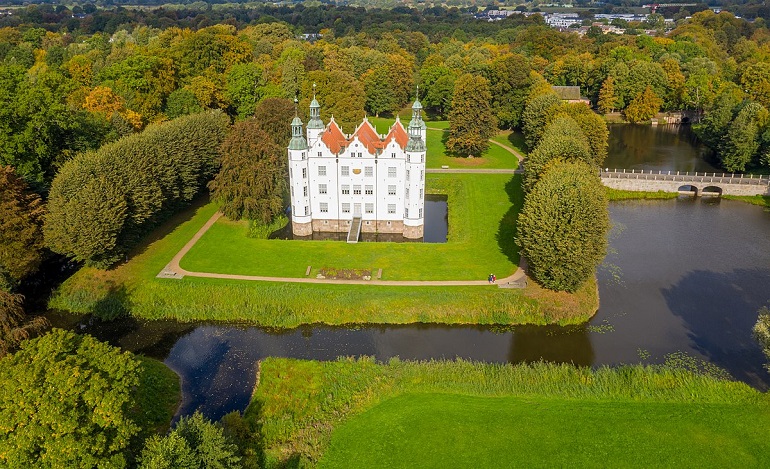
Ahrensburg Castle is one of the Renaissance gems of northern Germany. It was built in 1585 by Daniel Rantzau, a general of the King of Denmark. Acquired in 1759 by Heinrich Carl von Schimmelmann, the castle was remodelled in the baroque tastes of the day.The white-painted brick structure sits on a small island surrounded by a moat and features distinctive stepped gables, decorative stonework, and well-preserved interiors that reflect the lifestyle of North German nobility during the late 16th and early 17th centuries. Today, the castle operates as a museum, displaying period furniture, paintings, and artefacts whilst maintaining its original architectural features including the great hall, residential quarters, and chapel. The surrounding parkland and formal gardens provide additional context for understanding the castle's historical significance as both a defensive structure and aristocratic residence.
Interesting Facts about Ahrensburg Castle
- Ahrensburg Castle was built around 1585 in the Renaissance style by Peter Rantzau, an advisor to the Danish king.
- The castle is surrounded by an artificial moat, designed for aesthetics rather than defence.
- For over 170 years, Ahrensburg Castle was owned by the Rantzau family, followed by seven generations of the Schimmelmann family.
- The castle’s distinctive four corner turrets were not part of its original plan and were added during construction.
- Heinrich Carl von Schimmelmann, a Hamburg merchant, bought the castle in 1759 and transformed its interiors into a late-Baroque court.
- From 1938 onward, Ahrensburg Castle has operated as a museum, providing insights into aristocratic life and local history.
- The castle exhibits beautifully preserved rooms with period furniture, paintings, crystal chandeliers, and Meissen china.
- Its so-called “White Room” is an exquisite Rococo-style space with ornate white stucco and gilded details.
- The castle grounds include a large English landscape park, expanded in the 19th century, ideal for leisurely walks.
- Today, the castle is a cultural landmark, hosting concerts, weddings, and educational programmes for visitors of all ages.
History
Ahrensburg Castle stands as one of Germany's most remarkable Renaissance water castles, constructed around 1585 by Peter Rantzau, an envoy to the Danish King Frederick II. The castle was built on an artificial island surrounded by a moat, representing the short-lived Mehrfachhaus-type of Renaissance mansion where rectangular buildings were doubled or trebled to create impressive architectural statements. Originally designed as a three-wing mansion, the structure's four distinctive corner turrets were added during construction, though these served purely aesthetic rather than defensive purposes. The castle replaced an earlier 13th-century fortified manor called Burg Arnesvelde, which had been demolished by Peter Rantzau after he inherited the property from his brother Daniel, who had received it from the Danish crown in 1567 as compensation for debts.
For seven generations, Ahrensburg remained in the possession of the Rantzau family until financial difficulties forced them to sell the estate in 1759 to Heinrich Carl von Schimmelmann, a wealthy Hamburg merchant. Schimmelmann transformed both the castle and the surrounding village, converting the interior into an elegant late-Baroque court whilst removing outbuildings from the castle's island and filling in the innermost moat. The distinctive white paintwork likely dates from this period, as the castle previously featured unplastered brick walls with sandstone ornaments. Under Ernst von Schimmelmann (1820-1885), significant additions were made including the Marstall (stables), a bridge, gatehouse, and the expansion of the English park to its current size. The final major interior addition came in 1855 with the construction of the ballroom.
The Great Depression of the late 1920s severely affected the Schimmelmann family finances, forcing them to sell the castle in 1932. The Verein Schloss Ahrensburg e.V., supported by the state, local savings bank, and the town of Ahrensburg, took over maintenance of the property, opening the castle museum to the public in 1938. After closure during the Second World War, the museum reopened in 1955 and has since undergone extensive renovations, including recreation of the inner moat in 1960-61 and major restoration work in 1984-86 and again in the 1990s. In 2002, the castle and its six-hectare park were transferred to a private foundation, which has operated without public subsidies since 2007. Today, visitors can explore the castle's magnificently preserved interiors, featuring original Rococo and early Classicist furnishings, wooden panelling, stuccoed ceilings, crystal chandeliers, and Meissen porcelain.
Description
Nestled in the verdant landscapes near Hamburg, Ahrensburg Castle captivates with its pristine white façade, graceful silhouette and enchanting moat. This fairytale castle, a shining example of Renaissance architecture, features a delightful blend of elegance and stately charm that entices visitors from across Europe.
Architectural Highlights
- Four Distinctive Corner Turrets: The castle’s striking towers impart a storybook character and enhance its stately presence.
- Moat and Grounds: Surrounded by water, the castle appears to float, giving it a magical aura. The extensive parklands and gardens provide tranquil spaces for leisurely walks and picturesque views.
- Gabled Roofs and Ornamental Stonework: Renaissance details abound throughout, with finely crafted gables, stone ornaments and carefully restored stuccowork.
Interior Experience
Visitors enter through grand doors onto elegant parquet floors, gliding over them in provided slippers to help preserve the intricate woodwork. The spacious rooms are adorned with precious period furnishings, lavish chandeliers, and impressive collections of art, porcelain and crystal.
- Dining Room: Wood-panelled walls and impressive period furniture create an air of restrained opulence.
- Garden Hall: Bathed in natural light, this hall offers sweeping views of the castle’s lawns, perfect for concerts and celebrations.
- Banqueting Hall: Adorned with Rococo touches and a charming flute clock, it serves as the heart of festivities within the castle.
- Emkendorf Hall: Features a distinguished collection of landscape paintings and “Blue Furniture” from the late 18th century.
- Private Living Quarters: Tastefully furnished bedrooms and sitting rooms evoke the refined, yet intimate, lifestyle of the former aristocratic residents.
Interactive displays and themed rooms bring the stories of former inhabitants and staff to life, with hands-on exhibits that engage all the senses, such as scent stations and historical film clips.

Visitor Amenities
- Museum Galleries: Exhibitions explore social life in past centuries, displaying Meissen porcelain, historical costumes, and artefacts.
- Events and Celebrations: The castle’s vaulted cellars and impressive halls are available for private functions, from weddings to birthday parties.
- Family Activities: Educational activities and interactive tours ensure that visitors of all ages are engaged and entertained.
Gardens and Surroundings
The castle’s parkland stretches over lush lawns dotted with old trees and serene ponds, making it a haven for nature lovers and a picturesque venue for annual events, from medieval fairs to open-air performances. Birdwatchers and photographers alike will find plenty to admire in these peaceful environs.
Getting There
By train Ahrensburg Castle is most conveniently reached from Hamburg by taking a regional train (such as the RB81) to Ahrensburg station, with direct services running frequently and the journey taking around 20 minutes. From the station, it’s about a 15-minute walk to the castle—head southwest along Bahnhofstraße and then turn onto Lübecker Straße until you reach the grounds.
By bus Several local buses serve stops close to Ahrensburg Castle, including those marked ‘Ahrensburg Schloss’ and ‘Ahrensburg, Schloß’, which are only a short walk from the entrance. Check local timetables for routes such as the 569, 469, 669, or 8110 from your departure point; these connect both from within Ahrensburg and from nearby areas, including connections from the regional train.
By car If you’re driving, take the A1 motorway and exit at ‘Ahrensburg’. Follow the signs towards the centre on Lübecker Straße, with Ahrensburg Castle located at Lübecker Str. 1. There is parking available nearby; simply follow local signposting as you approach the castle.
Best Time to Visit
The ideal time to visit Ahrensburg Castle is in late spring or early autumn, when the gardens are in full bloom and the weather is pleasantly mild without the summer crowds. From May through June, temperatures average around 17–23 °C, perfect for leisurely strolls through the Renaissance park and al fresco guided tours, while the castle’s cultural events—such as open-air concerts and medieval markets—begin to pick up momentum. Early September offers similarly comfortable conditions, with slightly cooler evenings and the added bonus of harvest-season ambience at nearby wine festivals. Visiting during these shoulder-season months ensures you’ll enjoy both the full splendour of the castle’s grounds and a calmer, more intimate museum experience.
| Travel destinations in Schleswig-Holstein | |||||||||||
|---|---|---|---|---|---|---|---|---|---|---|---|
|
|
|
| ||||||||
|
|
|
| ||||||||


