



| Contents |
|---|

Introduction
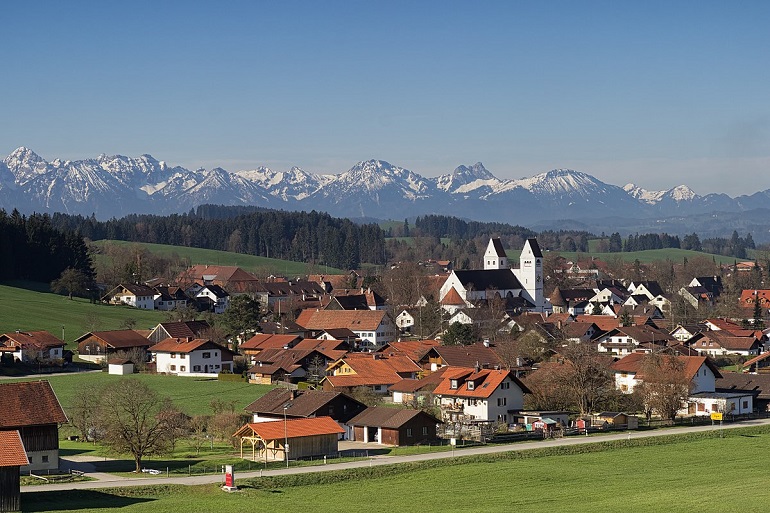
Steingaden (pop. 3000) is a small Bavarian municipality located at the foothills of the Alps. The village is most famous for the UNESCO-listed Wieskirche, an eighteenth-century pilgrimage church renowned for its Rococo art featuring a white an gold interior with a resplendent trompe l'oeil ceiling. Steingaden offers visitors a combination of cultural sites, walking trails, and proximity to well-known destinations such as Neuschwanstein Castle and the larger towns of Füssen and Garmisch-Partenkirchen. The village's origins can be traced back to the founding of Steingaden Abbey in the twelfth century, remnants of which can still be explored today.
Interesting Facts about Steingaden
- Steingaden is world-famous for the Wieskirche, an exquisite Rococo pilgrimage church and UNESCO World Heritage Site located in the village of Wies.
- The Wieskirche was built between 1746 and 1754 by the celebrated Zimmermann brothers after a miracle was reported in 1738 involving a wooden statue of Christ said to shed real tears.
- Steingaden Abbey was founded in 1147 by Welf VI, Margrave of Tuscany, making it a historic site with origins in the 12th century.
- The town lies at the edge of the Bavarian Alps, set amid scenic Alpine foothills and is a gateway between Upper Bavaria and the Allgäu.
- Before secularisation in 1803, Steingaden belonged entirely to its medieval abbey, shaping its culture and architecture for centuries.
- The main cloister of the former abbey survives and can still be visited, offering a glimpse into centuries of monastic history.
- Local legend and tradition place Steingaden on routes between the Romantic Road and the German Alpine Road, making it a popular spot for travellers exploring Southern Germany.
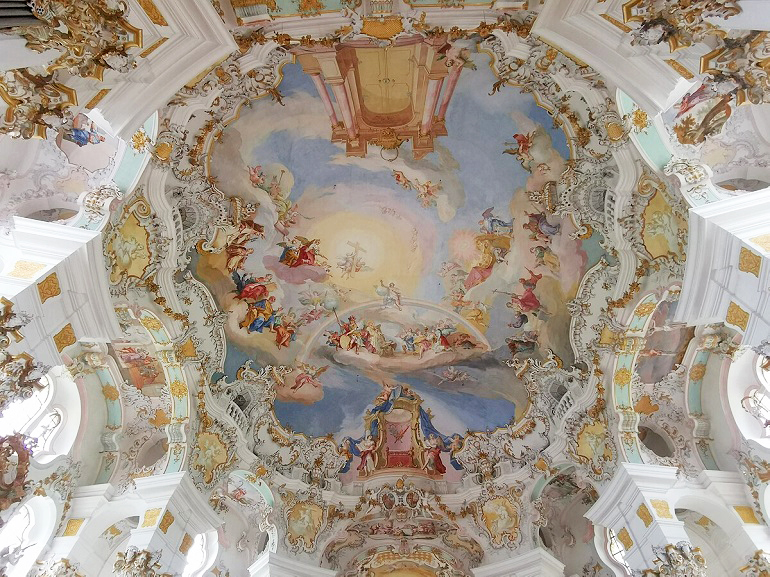
- The Wieskirche’s interior is famous for its lavish white and gold décor and trompe l’oeil ceiling, a masterpiece of Rococo art.
- Steingaden includes several smaller villages, such as Fronreiten, Ilgen, Lauterbach, Riesen, Urspring and Wies, each with their own charm.
- Gretl Braun, the sister of Eva Braun, lived her final years in Steingaden, adding a unique link to modern history.
History
Steingaden's history centres around its abbey, founded in 1147 by Welf VI, third son of Henry the Black, Duke of Bavaria. This Premonstratensian monastery, dedicated to John the Baptist, marked the beginning of organised religious life in the region, with its first monks arriving from Rot an der Rot Abbey. The abbey's Romanesque church was consecrated in 1176, establishing Steingaden as an important religious centre in medieval Bavaria. Welf VI and his son Welf VII were both buried within the abbey grounds, cementing its significance as the final resting place of influential Bavarian nobility. The abbey possessed the oldest known surviving heraldic representation in Germany—a carved sandstone panel of Welf arms dating from about 1193, which may have formed part of their elaborate tomb before its destruction in 1525.
The abbey endured numerous trials throughout its turbulent history, reflecting the broader conflicts that swept through Bavaria. During the German Peasants' War in 1525, the monastery suffered devastating damage when it was looted and burnt by rebellious peasants. The destruction continued during the catastrophic Thirty Years' War, which almost completely obliterated the complex. Reconstruction began under Abbot Augustin Bonenmayr and was completed in 1663 in the early Baroque style. The monastery experienced another transformation between 1470 and 1491 under Abbot Caspar Suiter, when the buildings were refurbished in the Late Gothic style. In the 1740s, the nave received an extravagant Rococo makeover by Johann Georg Bergmüller, creating the stunning interior that visitors admire today. Despite these architectural achievements, the abbey's ambitious building projects and somewhat isolated location led to insurmountable financial difficulties.
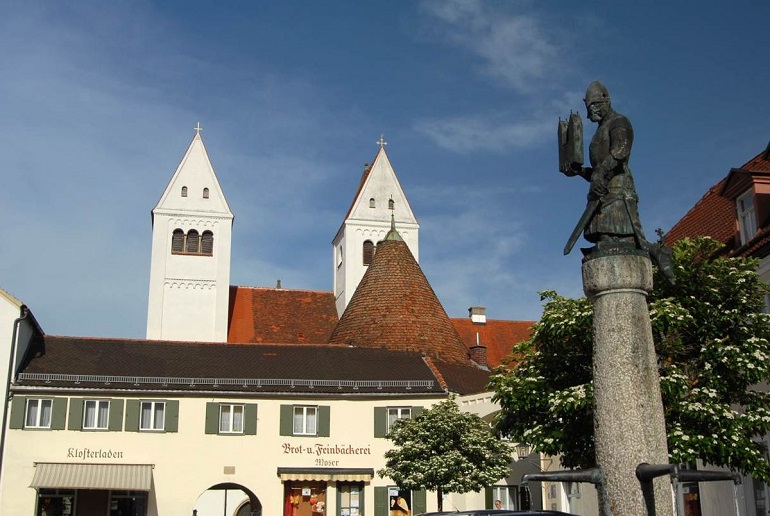
The story of Steingaden took a dramatic turn in 1738 when a miraculous event occurred in the nearby hamlet of Wies—a wooden statue of the Scourged Saviour was reported to have shed tears. This miracle sparked a massive pilgrimage movement, prompting the abbey under Abbot Marinus Mayer to commission the construction of the famous Wieskirche (Pilgrimage Church of Wies) in 1745. Designed by the renowned Zimmermann brothers, this Rococo masterpiece became one of Bavaria's most important pilgrimage destinations and later earned UNESCO World Heritage status in 1983. However, the golden age ended abruptly in 1803 when the abbey was dissolved during Bavaria's secularisation. The monastic buildings were subsequently demolished in 1819, leaving only the Romanesque cloister wing standing. The former abbey church, now known as the Welfenmünster, survived to serve as Steingaden's parish church, preserving the remarkable blend of Romanesque architecture with Baroque and Rococo embellishments that tells the story of this historic Bavarian settlement.
Main Attractions
Pilgrimage Church of Wies (Wieskirche)
The Pilgrimage Church of Wies, one of Germany's most important examples of rococo architecture and a UNESCO World Heritage Site, stands prominently amidst pastures outside the village. Built between 1745 and 1754, the oval church is famed for its ornate stuccowork, elaborate frescoes, and trompe l’oeil ceiling. Its pristine setting and historical role as a pilgrimage destination contribute to its ongoing spiritual significance and cultural value. The church is also notable for the harmony between its architecture and the surrounding landscape of the Bavarian prealps, making it an essential visit for those interested in art, history, and panoramic scenery. Drawbacks may include high visitor numbers, particularly in peak pilgrimage times.
Klostergarten St. Johannes (Monastery Garden)
The Klostergarten St. Johannes is a lovingly restored monastery garden situated adjacent to the historical former Premonstratensian abbey. Redesigned in 2008 as a teaching and meditation garden, it follows traditional monastic principles of healing, nutrition, spirituality, and leisure. The garden features twelve thematic areas focusing on medicinal plants, biblical and symbolic flora, and local wildflowers, all within a tranquil and well-maintained setting. A distinctive gothic stone labyrinth at its centre symbolises a spiritual journey inward. The site is open throughout the year and accessible to all, serving as a place for both quiet reflection and botanical interest. It offers interpretive possibilities for solo explorers or guided visits, though its appeal may lean more towards those with interest in horticulture, spirituality, or contemplative walks.
Steingaden Abbey (Kloster Steingaden)
Steingaden Abbey, founded in 1147, showcases a blend of Romanesque and later Baroque and Rococo influences, reflecting centuries of architectural evolution and regional history. While much of the monastic complex was lost in the 19th century, the Romanesque cloisters remain accessible and are a highlight for visitors interested in medieval ecclesiastical heritage. The accompanying parish church interior is especially notable for its rich rococo decoration, contrasting with the imposing and restrained exterior. Today, the abbey area serves as a landmark and a testament to the region's religious and cultural development, though interpretation mainly relies on self-guided exploration and there are limited facilities compared to other larger historical sites.
Eckberg-Wieskirche Hiking Trail
The Eckberg-Wieskirche Hiking Trail is renowned locally for its scenic views and varied natural landscapes, connecting Steingaden with the iconic Wieskirche. This route is suitable for walkers of all ages and accommodates dogs, and provides elevated outlooks across meadows, forests, and towards the Alps. Highlights include panoramic vistas and opportunities to experience the region’s rural charm. The trail's moderate length and terrain make it accessible for casual hikers, though those with limited mobility may find certain sections challenging, especially outside of summer months due to weather.
Brucker Hof
Brucker Hof is a historical landmark in Steingaden, representative of rural Bavarian heritage. The site offers insight into local agricultural traditions and rural architecture. While it is family-friendly, the main draw is its authenticity and preserved state, appealing especially to those interested in vernacular history and the cultural landscape of the region. Its more understated presentation and limited supporting information may not suit visitors seeking interpretive materials or extensive activities, but it adds to the ensemble of local life experiences on offer.
Schönegger Käse-Alm
This is a traditional cheese shop and dairy located in the centre of Steingaden, specialising in locally produced alpine cheeses. The in-store outlet showcases varieties made according to artisanal methods, reflecting the region’s dairy farming heritage. Visitors can observe parts of the cheesemaking process through a viewing area and taste both fresh and matured cheeses at a dedicated sampling counter. The establishment accepts card payments and provides designated parking to accommodate customers.
Top Museums
Klostermuseum im Pfarrhof Steingaden
Housed in the historic vicarage of the former Steingaden Abbey, this museum delves into more than 650 years of local and monastic history, showcasing artefacts, artworks, and exhibits on the Welf dynasty, the Crusades, and the impact of secularisation. Its collections provide a unique lens on how the abbey shaped Steingaden's development, making it an essential destination for anyone interested in the intertwining stories of faith, art, and society in the region.
Wallfahrtsmuseum at Wieskirche
Located adjacent to the world-renowned Pilgrimage Church of Wies, this museum vividly recounts the history of pilgrimage to the church through devotional items and historical testimonies. It distinguishes itself by contextualising one of Bavaria’s most significant spiritual landmarks, offering insight into centuries of religious tradition and providing an interpretive bridge between the grand artistry of Wieskirche itself and the devotional experiences of pilgrims.
Steingadener Fotomuseum
Presenting a fascinating survey of photo and film cameras spanning over a century, this compact museum appeals to technology enthusiasts and those interested in the evolution of visual culture. Its collection, though niche, offers a delightful contrast to the religious and historical focus of Steingaden's other museums, affording a glimpse into the region's engagement with modernity and everyday memory-making.
Flößermuseum Lechbruck am See
Just a short drive from Steingaden, the Raftmen’s Museum immerses visitors in the world of historic timber rafting on the River Lech. Set in a meticulously restored 17th-century rafters’ house, its atmospheric displays and reconstructions capture the daily life, economic role, and daring adventures of the Lechbruck rafting community—offering a hands-on experience that connects regional traditions with broader Bavarian economic history.
Local Cuisine
Visitors can savour classic Bavarian specialities such as schnitzel, bratwurst, and Weisswurst, often served with fresh Brezen (pretzels) and tangy mustard. The area is particularly known for its dairy delights, with local inns offering cheeses from nearby alpine dairies and comforting dishes like Käsespätzle (cheese noodles). For a sweet ending, the tempting Apfelstrudel and Bavarian cakes found in cafés are an absolute must. Many restaurants pride themselves on using regional ingredients, with some even featuring meat from their own farms, ensuring a taste that is both authentic and deeply connected to Steingaden’s countryside heritage.
Getting There & Around
By train Steingaden does not have its own train station, so the nearest rail stations are Saulgrub or Altenau, which are about a 20–25 minute drive away. Travellers can take a train from Munich to these stations, then continue to Steingaden by taxi or local bus services. Alternatively, you can travel by train to Füssen and then transfer to a regional bus to reach Steingaden, which is along the picturesque Romantic Road.
By coach or bus Direct coach services such as FlixBus operate from Munich central bus station to Steingaden once daily, with the journey taking approximately 1 hour 30 minutes. Buses are comfortable, offer modern amenities, and are a convenient way to reach Steingaden from major Bavarian cities or nearby airports. The main bus station in Steingaden is centrally located for easy onward travel.
By car Reaching Steingaden by car is straightforward and often the easiest method, especially for exploring the scenic surroundings. The town is located just off the A95 motorway, which links Munich to Garmisch-Partenkirchen. Driving allows flexibility with stops along the Romantic Road and the beautiful Bavarian countryside.


