



| Contents |
|---|
Introduction
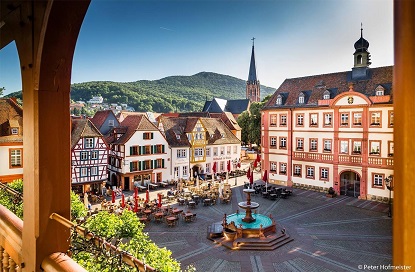
Neustadt an der Weinstraße (pop. 53,000) is a city situated at the heart of the German Wine Route (Deutsche Weinstraße) and serving as the gateway to the Palatinate Forest Nature Park. Founded around 1220 and granted city rights in 1275, Neustadt comprises the historic town centre along with nine surrounding wine villages, making it Germany's second-largest wine-producing municipality by area with approximately 2,000 hectares of vineyards. The city's economy is primarily driven by wine production and tourism, highlighted by the annual German Wine Harvest Festival where the German old town features well-preserved half-timbered houses, the Gothic Stiftskirche collegiate church, and the renowned Hambach Castle, known as the "cradle of German democracy" following the 1832 Hambach Festival.
Interesting Facts about Neustadt an der Weinstrasse
- Neustadt an der Weinstrasse is positioned at the heart of the German Wine Route and is one of the largest winegrowing communities in Germany.
- The town’s name literally means “new town on the wine road”.
- Annual highlights include the German Wine Festival, where the German Wine Queen is crowned and Germany’s largest vintners' parade takes place.
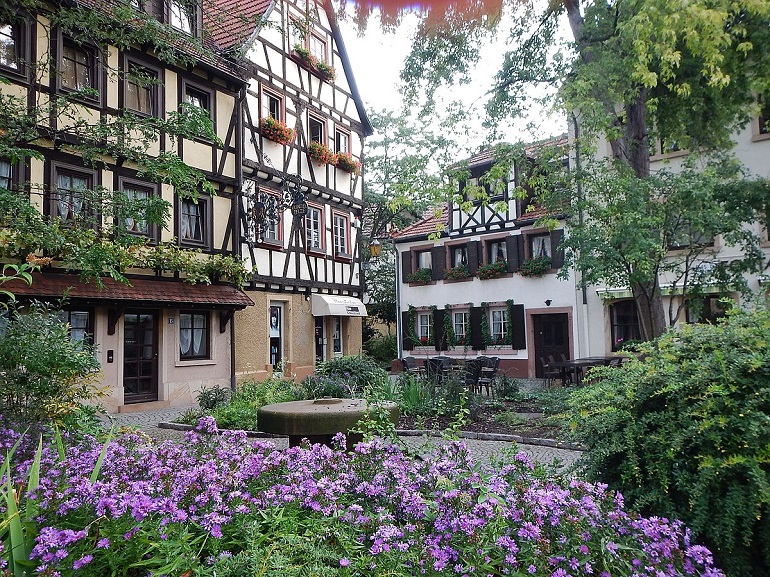
- Neustadt boasts a remarkably well-preserved historic centre, featuring picturesque half-timbered houses, romantic alleys, and a fairy-tale fountain.
- The legendary Elwedritsche Fountain, adorned with mythical Palatine bird creatures, is a distinctive local landmark.
- Hambach Castle near Neustadt symbolises German democracy, as the Hambach Festival of 1832 took place here, championing freedom and unity.
- The town is home to the world’s largest cast iron church bell, located in the Stiftskirche (Collegiate Church), its principal Gothic church.
- Neustadt survived both world wars with minimal damage, preserving its treasures and old town charm.
- The city hosts a vibrant calendar of wine-related events, with festivals nearly every weekend between spring and autumn.
- Hidden beneath its streets, the town commemorates local victims of Nazism with Stolpersteine, small brass “stumbling stones” set in the pavements.
- Neustadt’s railway museum displays historic steam trains, and the Kuckucksbähnel offers heritage train rides through scenic countryside on select days.
- The Market Square serves as the lively hub of Neustadt, surrounded by cafés and historic buildings, hosting markets and seasonal events.

History
Neustadt an der Weinstraße has its origins in the early 13th century, when it was founded around 1220-1230 under the name Nova civitas or Nuwenstat on previously unsettled territory at the mouth of the Speyer Valley. The city's establishment was initiated by a Count Palatine of the Rhine, though historians remain uncertain whether it was Ludwig I (1214-1228) or his son Otto II (1228-1253) who commissioned the foundation. The strategic location offered significant advantages, as the new settlement could control the trade route through the valley towards Kaiserslautern alongside the elevated Wolfsburg Castle, and provided access to connecting routes towards Frankenthal and Speyer. Just decades after its founding, Neustadt received official town rights on 6 April 1275 from King Rudolf of Habsburg, modelled after those granted to Speyer. Between 1338 and 1353, the city achieved particular prominence when it served as one of the electoral residences alongside Heidelberg during a territorial division amongst the Palatinate rulers.
The medieval period saw Neustadt flourish as an administrative centre and commercial hub within the left-bank territories of the Electoral Palatinate. The city was granted market privileges in 1345 and annual fair rights in 1404, cementing its economic importance. During the late Middle Ages, Neustadt was organised into four distinct quarters that reflected the occupations and social status of their inhabitants: the Lauerviertel where tanners worked along the Speyerbach, the Kesselringviertel named after an influential 14th-century family, the Frauenviertel containing ecclesiastical properties under Saint Mary's patronage, and the Judenviertel where the Jewish community resided. The Thirty Years' War (1618-1648) brought significant upheaval, with the city being conquered six times by various forces including Spanish, Swedish, Imperial, and French troops. Unlike many other Palatine towns, however, Neustadt survived the War of the Palatine Succession (1689-1697) relatively unscathed.
The modern era brought dramatic political changes and territorial reorganisation to Neustadt. Following the French Revolution, the entire left bank of the Rhine was occupied by French troops after 1792, and in 1798 Neustadt was integrated into the French state as the administrative seat of a canton in the Donnersberg Department. Napoleon himself passed through the city in 1808 during his return journey from Erfurt to Paris and received a ceremonial welcome. After the Congress of Vienna in 1815, Neustadt initially came under Austrian control before being transferred to the Kingdom of Bavaria in 1816, where it remained until the end of the Second World War as part of the Rhine District (later called the Palatinate). The city played a significant role in German democratic movements when the famous Hambach Festival took place nearby in 1832, drawing 30,000 participants in a demonstration for democracy and national unity. The town's name underwent several changes throughout its history, being called Neustadt an der Haardt for much of the 19th and early 20th centuries before officially becoming Neustadt an der Weinstraße in 1936, briefly reverting to the old name after World War II, and permanently adopting its current name in 1950.
Main Attractions
Historic Old Town
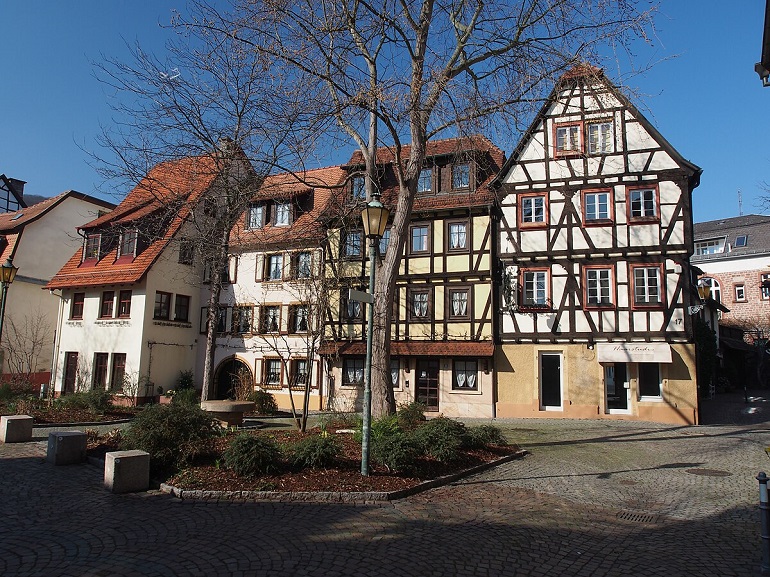
The historic old town of Neustadt an der Weinstrasse is defined by its network of narrow streets lined with half-timbered houses that date back several centuries, providing a cohesive snapshot of medieval urban planning and architecture. These winding thoroughfares reveal numerous courtyards, imaginative fountains and finely restored façades, inviting visitors to explore at a leisurely pace rather than follow a rigid itinerary, and public guided walking tours depart regularly from the Market Square to narrate the town’s eventful past, culminating in a customary tasting of local Palatinate wine in the courtyard of the wine brotherhood.
Market Square (Marktplatz)
The Market Square serves as the civic heart of Neustadt an der Weinstrasse, where the late-Gothic collegiate church, the Renaissance Scheffelhaus and the baroque town hall frame a plaza that hosts a bustling farmers’ market every Tuesday, Thursday and Saturday morning. On these market days, stalls brim with regional produce while wine bars and cafés spill onto the square’s edges, fostering a convivial atmosphere under the shade of mature chestnut trees and beside the ornamental town fountain.
Protestantische Stiftskirche (Collegiate Church)
Rising prominently above the old town, the twin-towered Collegiate Church exemplifies late Gothic architecture and is renowned for its internal dividing wall, which since 1714 separates the Catholic and Protestant halves of the building. This so-called “double church” remains in active use by both denominations and houses one of the world’s largest cast-steel bells, the Imperial Bell, which measures over three metres in diameter and weighs some 4,000 kilograms.
Elwedritsche Fountain
Situated near the Scheffelhaus on the Market Square, the Elwedritsche Fountain celebrates the local folklore of the mischievous forest spirits known as Elwedritsche. The bronze sculpture depicts these mythical creatures grouped around a column, serving as both a reminder of regional legend and a popular meeting point for visitors exploring the old town’s architectural heritage.
Hambach Castle (Hambacher Schloss)
Perched atop a wooded hill to the southwest of the town centre, Hambach Castle commands panoramic views over the Rhine plain and is celebrated as the birthplace of modern German democracy after the Hambach Festival of 1832. Though it houses a museum within its restored walls, the castle’s broader significance lies in its role as a rallying site for freedom and national unity, and its ramparts and terrace remain open for visitors to appreciate the landscape that inspired the historic gathering.
German Wine Route
Neustadt an der Weinstrasse anchors the German Wine Route, a scenic 85-kilometre path that runs through the Palatinate wine region from Bockenheim in the north to Schweigen-Rechtenbach on the French border. Here, the landscape is dominated by gently rolling vineyards, and visitors may follow signposted loops on foot or by bicycle, pausing to sample Rieslings and other varietals at family-run estates that line the route.
Dr. Bürklin-Wolf Winery
Just outside the town proper, the Dr. Bürklin-Wolf estate stands as one of the oldest and most prestigious wineries in the region, renowned for its Rieslings grown on steep, south-facing slopes. Guided tours through the cellars reveal traditional viticultural practices, while tastings introduce the distinct minerality and ageing potential that characterise the estate’s flagship wines.
Weingut Müller-Catoir
Established in the early 19th century, Weingut Müller-Catoir is a family-run winery celebrated for its commitment to biodynamic farming and award-winning white wines. Visitors can join cellar tours to learn about barrel fermentation techniques before sampling a range of bottlings that demonstrate the terroir’s diversity across slate, sandstone and loess soils.
Palatinate Forest and Outdoor Trails
To the west of Neustadt, the Palatinate Forest offers an extensive network of trails that traverse dense woodlands and open ridges, providing opportunities for hiking, mountain biking and nature observation. The renowned Rhein-Neckar lookout points, accessible via well-maintained paths, grant sweeping vistas of the vineyards below and the distant Rhine Valley, particularly striking at sunrise and sunset.
Casimirianum
The Casimirianum, or Casi, stands as a distinctive five-arched hall that once served as a Calvinist theological college from 1578 to 1583, following its foundation by Count Palatine Johann Casimir. This Renaissance-Gothic building, which later became Neustadt’s oldest grammar school, is marked by a Latin inscription above its entrance that reflects the humanist spirit of its era and now functions as a cultural venue for exhibitions and concerts.
König-Ludwig-Pavillon
Perched on the southern slopes above the village of Gimmeldingen, the König-Ludwig-Pavillon was built in the 19th century as a hunting lodge for King Ludwig I of Bavaria and now provides one of the finest vantage points over the northern Palatinate vineyards and the Rhine Plain. A gentle woodland path leads from Neustadt to the pavilion, where a terrace and viewpoint marker guide visitors to the best photo-opportunities.
Weinfest der Mittelhaardt
Held annually in late September and early October, the Weinfest der Mittelhaardt brings together local vintners in the town centre’s streets and squares, offering structured tastings of the new vintage alongside traditional Palatinate cuisine. Parades, music performances and wine judge competitions are scheduled over the festival week, providing an immersive introduction to the region’s winemaking culture.
Top Museums
Stadtmuseum Villa Böhm
Housed in the elegant, late-19th-century Villa Böhm, this museum provides a hands-on journey through almost 800 years of Neustadt’s history. The museum’s exhibitions feature historical artefacts encased in interactive displays—drawers, switches, and panels that invite exploration. Modern digital terminals allow for deeper engagement, presenting local history through image, audio, and text. The villa itself, set amid a tranquil garden, frequently hosts temporary exhibitions and cultural events, making it both a local landmark and a vibrant hub for community life.
Eisenbahnmuseum Neustadt an der Weinstraße
Located in a historic locomotive depot, this museum is dedicated to the legacy of the Palatinate Railway. Spread across approximately 4,000m², visitors can admire over 40 historical railway vehicles, including rare steam locomotives, coaches, and utility wagons. The exhibition places a special focus on southern German state railways, featuring unique artefacts such as original engines from the Palatine Railways and a striking 1942 rotary snow plough. This collection appeals both to families and to railway enthusiasts, providing an evocative insight into the evolution of rail travel in the region.
Otto Dill Museum
The museum devoted to Otto Dill, one of the Palatinate’s most celebrated artists, showcases a comprehensive collection of his paintings, watercolours, and drawings. Known for his expressive animal and landscape depictions, Dill’s dynamic style is well represented here. The space is managed by the Manfred Vetter Foundation, which aims to preserve and present Dill’s creative journey from all periods of his life. Art lovers will appreciate the vibrant energy and character permeating the museum’s display.
Pfälzisches Erlebnis-Bibelmuseum
This unique museum offers an immersive journey into the world and history of the Bible. Divided into sections such as ‘Bibel-Archäologie’, ‘Bibel-Schatzkammer’, and ‘Lernstraße Bibelwelt’, it features archaeological artefacts and replicas that recreate daily life in biblical times, including items like oil lamps, ceramics, jewellery, and ancient tools. The exhibit illustrates the cultural backdrop of the scriptures and highlights their influence on local and international traditions. It is the only museum of its kind in Rhineland-Palatinate.
Weinbaumuseum Herrenhof
Situated in the Herrenhof—the oldest vineyard estate in the Palatinate—the Wine Museum chronicles the technological and cultural evolution of local viticulture. Housed within a former granary and tithe cellar, the museum’s collection includes tools and machinery used in winemaking from the 19th to the mid-20th century. Visitors can follow the process of wine production from vineyard to cellar, discovering historic barrels and cooper’s equipment. The surrounding vineyards and gardens complete the experience, offering a living showcase of the region’s enduring relationship with wine.
Local Cuisine
Nestled amid lush vineyards, Neustadt an der Weinstrasse is renowned for its hearty and flavoursome Palatinate cuisine. Visitors can savour Pfälzer Saumagen, a beloved local dish made from pork and potatoes simmered within a pig’s stomach, as well as Flammkuchen, a crisp flatbread topped with crème fraîche, onions and bacon, reminiscent of a thin, rustic pizza. Another highlight is the comforting Dampfnudel—steamed dumplings with a golden crust, traditionally served either with a savoury potato soup or a sweet vanilla sauce. The region is also famous for its robust Palatinate wines, which perfectly accompany these robust local specialities. Whether dining in a rustic inn or one of the region’s inviting wine taverns, the cuisine here offers a warming taste of Pfälzer hospitality.
Getting There & Around
By train, Neustadt an der Weinstrasse is well connected to the German rail network, with regular regional and long-distance trains arriving at the town’s central station. Services link Neustadt directly to nearby cities such as Mannheim, Karlsruhe, and Stuttgart, making it a convenient option for those travelling from other parts of Germany.
By bus, several intercity bus companies operate routes to Neustadt an der Weinstrasse, providing connections from regional and national destinations. Regional buses also run frequently and stop at various points in the town, making bus travel an accessible alternative.
By car, Neustadt an der Weinstrasse lies close to the A65 and B39 motorways, providing swift access for drivers. The well-maintained highways offer a pleasant journey through the scenic wine country, and there are ample car rental options available in the area for added flexibility.