



| Contents |
|---|
Introduction
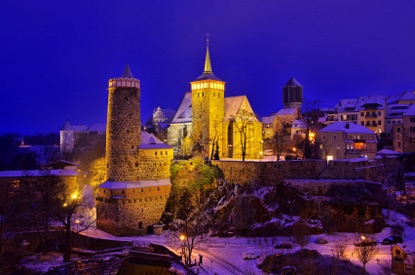
Located on the River Spree in the east of Saxony, Bautzen (pop. 38,000) is a town of significant historical and cultural importance. It serves as the political and cultural centre for the Lusatian Sorbs, a recognised Slavic minority in Germany, resulting in a distinct bilingual character throughout the town (its Sorbian name is Budyšin). Bautzen's well-preserved medieval Old Town is defined by 14 medieval towers, which have earned it the nickname "the City of Towers". Key landmarks include the Ortenburg castle, the multi-denominational St. Peter's Cathedral, and the leaning Reichenturm. Beyond medieval architecture, the town is also noted for the Battle of 1813 in the Napoleonic Wars, for institutions and museums dedicated to Sorbian culture, including the Sorbian Museum, as well as the Bautzen Memorial, which documents the site's use as a political prison during the Nazi and GDR periods.
Interesting Facts about Bautzen
- The Peace of Bautzen was concluded here in 1018 between Henry II of Germany and Bolesław I of Poland, a pivotal early medieval treaty.
- Bautzen is renowned as the political and cultural heart of the Sorbs, a West Slavic minority with bilingual street signage and institutions in the city.
- Roughly five to ten percent of the town’s population is Sorbian, and Sorbian schools, media, and theatres are based here.
- St Peter’s Church has been shared by Catholics and Protestants since 1523 and serves as the Roman Catholic cathedral of the Diocese of Meissen since 1921.
- The city belonged to the Lusatian League (Six Cities’ Alliance) from 1346 to 1815, reflecting its medieval regional clout.
- Ortenburg Castle and the Late Gothic Matthias Tower crown the skyline and recall Bautzen’s fortified past and Hungarian connections to King Matthias Corvinus.
- Bautzen’s Wenceslaus Market is cited as Germany’s oldest Christmas market mentioned in a chronicle.
- Napoleon’s troops defeated Russo-Prussian forces at the Battle of Bautzen in May 1813 during the War of the Sixth Coalition.
- The town’s name officially changed from Budissin to Bautzen in 1868, aligning with German usage.
- Bautzen I and II prisons became infamous in the GDR era, with Bautzen II now preserved as a memorial site.
- The city stands on a granite rise above the River Spree, marking the first larger town along the river’s course.
- The oath of Bautzen’s citizenship around 1530 is regarded as the oldest Sorbian written document, underscoring a deep literary tradition.
- The first printed Sorbian book (1574) and the first complete Sorbian Bible (1728) were produced in Bautzen, cementing its role in Sorbian publishing.
- The Sorbian language here is Upper Sorbian, closer to Czech, while Lower Sorbian around Cottbus is more akin to Polish.
- The city marked its 1000th anniversary in 2002, celebrating a continuous thread of German–Sorbian coexistence.
- An asteroid, 11580 Bautzen, is named in honour of the city, a small celestial nod to its historical significance.
- Climbing towers such as Reichenturm offers sweeping views of the pastel-hued old town and defensive walls.
History
Ancient Origins and Medieval Development
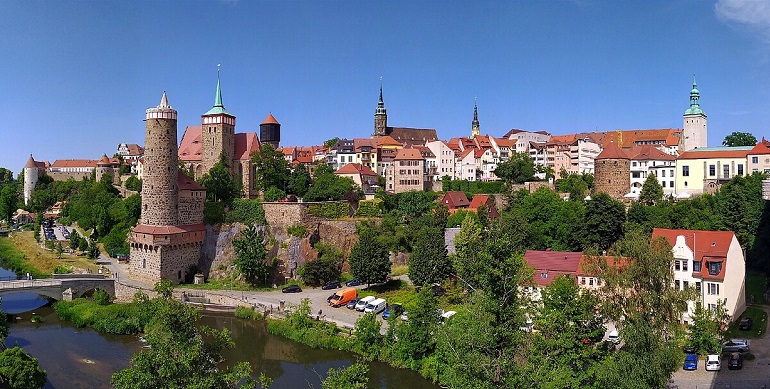
Bautzen, nestled dramatically on granite heights above the River Spree in eastern Saxony, boasts a remarkably rich history stretching back to antiquity. Archaeological evidence reveals that the region was inhabited as early as the late Stone Age, whilst in the 3rd century CE, an eastern Germanic settlement existed on this strategic elevated position. The area truly came to prominence in the 6th century during the migration period when the Sorbs, a West Slavic people, arrived and established their presence. The city was first mentioned in written records in 1002 under the Slavic name Budusin (Upper Sorbian: Budyšin), by chronicler Thietmar von Merseburg. This original Slavic settlement would later become known by its German name Bautzen in 1868, though the Sorbian name persists to this day. The strategic importance of Bautzen was cemented in 1018 when the Peace of Bautzen was concluded there between German king Henry II and Polish king Bolesław I, marking it as a significant diplomatic centre from its earliest documented history.
Shifting Allegiances and Political Evolution
The medieval period saw Bautzen change hands numerous times due to its strategic border location, creating a complex tapestry of political affiliations that shaped its unique character. The city became German in 1033, passing from Polish control to the Margraviate of Meissen, before subsequently falling under Bohemian rule in 1075, which was elevated to the Kingdom of Bohemia in 1198. Brief periods under Brandenburg and Hungarian control punctuated its history before it definitively passed to Saxony in 1635. During this tumultuous period, Bautzen achieved significant autonomous status, becoming a free community around 1250 and earning the right to free elections of its town council in 1391. From 1346 to 1815, the city was a founding member of the prestigious Six Cities' Alliance of Upper Lusatia, alongside Görlitz, Zittau, Löbau, Kamenz, and Lubań, which maintained its own armed forces to protect the economically vital trade routes connecting Warsaw and Dresden that passed through the region. The alliance demonstrated Bautzen's economic importance as a major trading hub in medieval Central Europe.
Wars, Destruction, and Cultural Renaissance
Bautzen's strategic significance made it a frequent target during major European conflicts, resulting in both destruction and historical prominence. The city successfully withstood Hussite sieges in 1429 and 1431, but suffered devastating destruction in 1634 when Swedish troops ravaged the settlement during the Thirty Years' War. The city gave its name to the hard-fought Battle of Bautzen on 20-21 May 1813, where Napoleon's French troops defeated a Russo-Prussian army, and again in April 1945 when German forces briefly recaptured the town from Soviet forces in one of the war's final battles. Between these conflicts, Bautzen experienced significant cultural development, particularly as the political and cultural centre of the Lusatian Sorbs. The unique St. Peter's Church, built between 1220-1497, became simultaneously a Protestant church and Roman Catholic cathedral in 1523, serving both communities in an unprecedented arrangement that continues today. The 19th and early 20th centuries saw major infrastructure developments including the Dresden-Bautzen railway line in 1846 and the establishment of the Sorbian House cultural centre in 1904, cementing Bautzen's role as both a modern transport hub and the heartland of Sorbian cultural preservation.
Main Attractions
Ortenburg Castle
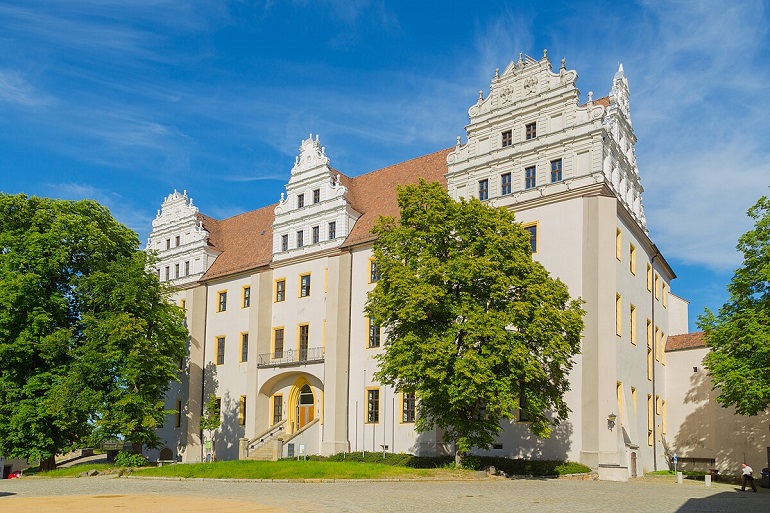
Perched regally on a rocky promontory above the Spree, Ortenburg Castle dominates Bautzen's old town panorama with its late Gothic and Renaissance gables. Commissioned in the late 15th century under the auspices of King Matthias Corvinus's vassals, the castle's gate tower still houses the chapel of St George, whose pointed rib vaults and discreet oriental motifs hint at the era's ambition and artistic exchange. Strolling along the former defensive walls, one can appreciate the castle's transformation from a fortified stronghold to the seat of Saxony's Superior Administration Court, while the Burghof restaurant offers a serene courtyard setting to savour local cuisine. The panoramic views from the high battlements sweep across the old town's jagged rooftops and winding streets, conveying Bautzen's enduring medieval spirit.
Reichenturm (Leaning Tower of Bautzen)
Rising to 56 metres and famously inclined by 1.41 metres towards the north-west, the Reichenturm is Bautzen's most iconic tower. Erected between 1490 and 1492 as part of the town's defensive circuit, its stout base and slender upper stages convey both solidity and elegance. Visitors who ascend the narrow spiral staircase are rewarded by sweeping vistas of the Spree valley, the Old Waterworks and the distant Lusatian Highlands, while interpretive panels on the viewing platform recount the tower's history. The slight tilt only enhances the tower's allure, reinforcing its popular epithet, "Leaning Tower of Bautzen."
Market Square (Hauptmarkt)
At the heart of the old town lies the Hauptmarkt, a spacious market square whose cobbles have witnessed centuries of fairs, proclamations and festive gatherings. Flanked by colourful merchant houses displaying Baroque gables and Renaissance portals, the square retains a timeless ambience even as cafés and specialist shops line its perimeter. Seasonal market stalls still appear beneath fluttering pennants, providing local produce and crafts that echo Bautzen's commercial heritage. At its centre, fountains and statues offer shade and repose, inviting visitors to linger and absorb the living history that unfolds with every passing hour.
Town Hall Tower (Rathausturm)
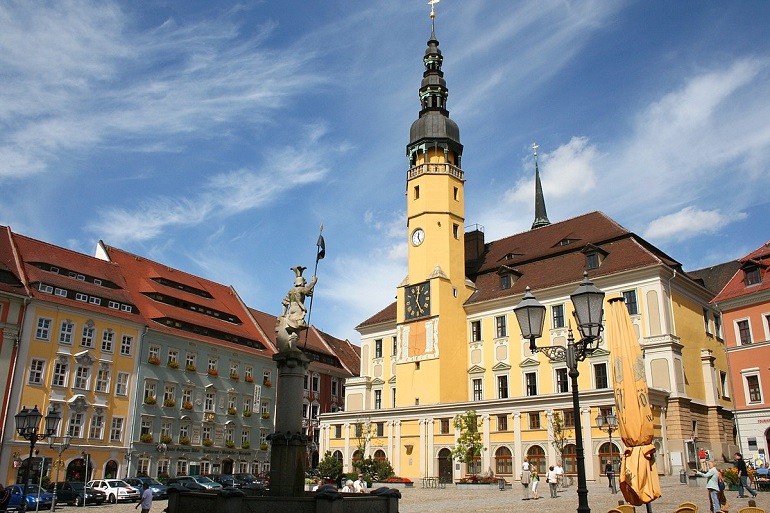
Dominating the Hauptmarkt with its ochre-coloured façade and Baroque cupola, the town hall tower has stood guard since the late 15th century. After a devastating fire in 1634 and subsequent Baroque reconstructions, the current three-storey crowning stage and ornate double staircase date largely from the early 18th century. The tower's clock mechanism and stone gallery remain focal points of civic pride, reminiscent of Bautzen's medieval role as a member of the Lusatian League. From its summit, one surveys the bustling market square below, where timber-framed houses and the slender towers of surrounding churches form an evocative urban tapestry.
Cathedral of St Peter (Dom St. Petri)
The Cathedral of St Peter, a grand example of late Gothic architecture softened by Baroque refurbishments, anchors Bautzen's religious landscape. Its soaring twin steeples and rib-vaulted choir speak to the cathedral's origin in the 15th century, while the richly gilded high altar and intricately carved pulpit attest to later periods of prosperity. Inside, shafts of coloured light filter through tracery-filled windows, illuminating the centuries-old pews and frescoed chapels dedicated to various saints. The cathedral's pipe organ, with its resplendent case, still fills the nave on Sunday mornings, offering an auditory window into the liturgical traditions that have shaped the town.
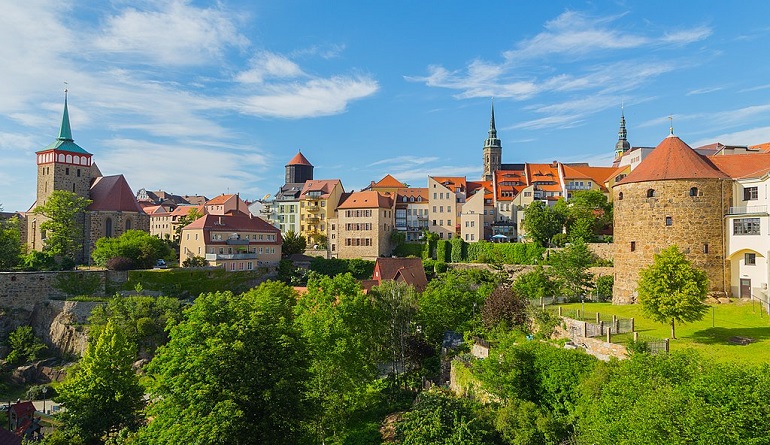
St Michael's Church (Michaeliskirche)
Perched beside the Old Waterworks and emerging from the rock plateau, St Michael's Church is part of Bautzen's emblematic ensemble alongside the technical tower. Begun in 1495 on the foundations of a 1473 chapel, the church's nave and tower were completed by 1520, exhibiting a harmonious blend of late Gothic verticality and understated ornament. Visitors appreciate the graceful vaulting within, decorated bosses and stout buttresses that frame narrow lancet windows. The building's restrained exterior and its dialogue with the adjacent waterworks illustrate Bautzen's medieval ingenuity in melding sacred and civic functions.
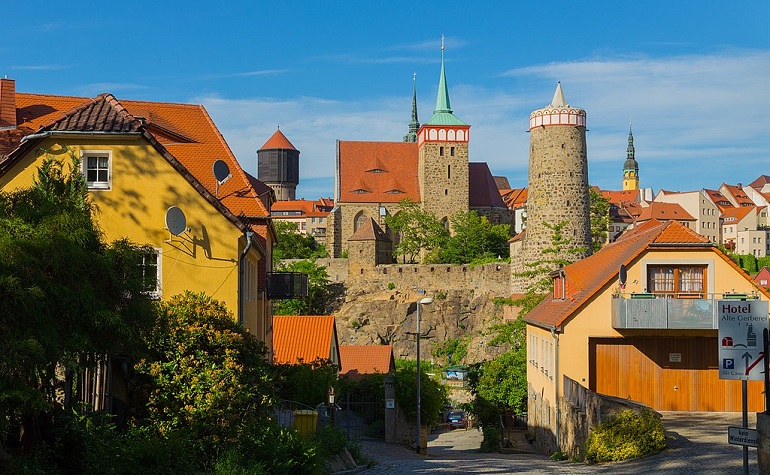
Old Waterworks Tower (Alte Wasserkunst)
The Alte Wasserkunst is one of Bautzen's most distinctive landmarks, situated dramatically near the Mühltor on the southern edge of the Old Town. Originally constructed in 1558, this multifaceted waterworks functioned for over 400 years as the old town's principal water pumping facility, supplying essential drinking water and helping protect the city from fire. Its robust stone tower, rising 47 metres high and fortified with battlements, not only served a practical role but also formed part of the city's medieval defences. Today, visitors can tour the interior, discovering historical pumping mechanisms and displays about water engineering. Climbing 184 steps to the viewing platform rewards guests with one of the area's most splendid panoramas, stretching from the winding lanes of Bautzen to the distant Lusatian Mountains. The site embodies both the technical ingenuity and architectural beauty that characterise the city.
Water Tower (Wasserturm)
Bautzen's Wasserturm, or Water Tower, stands as a testament to the city's rapid expansion during the Industrial Revolution. Erected in 1877 to address the growing need for potable water as the population swelled fourfold, this prominent structure replaced an earlier water delivery system and became an essential part of the town's modern infrastructure. Distinct from the Alte Wasserkunst, the Wasserturm is noteworthy for its brick construction and impressive height, making it a visible point in the cityscape. Although primarily utilitarian, its architectural detailing echoes the town's historical styles, and today the tower is appreciated both as a distinctive urban feature and as part of Bautzen's rich engineering heritage.
Wendish Tower (Wendischer Turm)
Situated on the north-eastern edge of the old town, the round Wendish Tower was raised between 1490 and 1492 as part of Bautzen's outer fortifications. Its robust masonry and discreet arrow slits convey the tower's original martial purpose, while modern conservation has revealed fresher brickwork and interpretive displays on site. Today the top of the tower affords a vantage over the town's fortification circuit and the open countryside beyond, charting Bautzen's strategic position on the Via Regia trade route. The tower's name honours the Slavic Sorbs (Wends) who have long inhabited the region, underscoring the cultural layering that defines Upper Lusatia.
Gerberbastei
The Gerberbastei, a five-storey circular bastion with walls up to 3.5 metres thick, exemplifies the defensive craftsmanship of early 16th-century Bautzen. Originally constructed in 1503 as part of the Gerber (tannery) quarter's perimeter defences, it now serves as an evocative viewpoint perched on the outer ramparts. Its stout, tapered form is punctuated by narrow embrasures, while a walkway along the skyline offers sweeping views over the Spree River and the terracotta roofs of the old town. Today, the Gerberbastei is celebrated in local lore as the "Tannery Bastion," a testament to the artisanal industries that once sustained the town.
Mill Gate (Mühltor)
The gothic Mühltor, or Mill Gate, once regulated water flow for nearby mills and served as a critical entry point on the town's eastern flank. Characterised by its pointed arch and rib-vaulted ceiling, the gatehouse retains fragments of its original portcullis and machicolations. Above the kilned stone arch, a narrow passage allowed sentries to patrol, ensuring the security of both river and roadway. Today, the Mühltor is a haunting reminder of Bautzen's medieval economy, where milling, trade and fortification coexisted in a delicate balance.
Top Museums
Museum Bautzen
As one of the largest and most modern museums in Saxony, the Museum Bautzen holds a collection of around 400,000 items, displayed across 2,400 square metres. The exhibitions are arranged over three floors, guiding visitors through the region's history, the city's past, and its artistic heritage.
The ground floor explores the region's history, from the earliest prehistoric settlements up to daily life in the 19th century.
The first floor delves into the eventful 1,000-year history of Bautzen itself, featuring rare treasures and historic altarpieces.
The second floor is dedicated to significant works of art, spanning from the Renaissance to the present day.
Throughout the museum, interactive displays, as well as audio and video stations, invite visitors to explore and engage with the exhibits in greater detail.
Sorbian Museum (Sorbisches Museum)
Located in the Ortenburg castle complex, the Sorbian Museum is dedicated to the history and culture of the Sorbs, a Slavic minority that has lived in the Lusatia region for over a thousand years. The museum welcomes visitors with the Sorbian greeting "Witajće k nam" (Welcome!) and offers a deep dive into their unique identity. The exhibitions showcase everything from traditional folk costumes and customs to modern Sorbian art and music, providing a comprehensive look at this rich culture.
Bautzen Memorial (Gedenkstätte Bautzen)
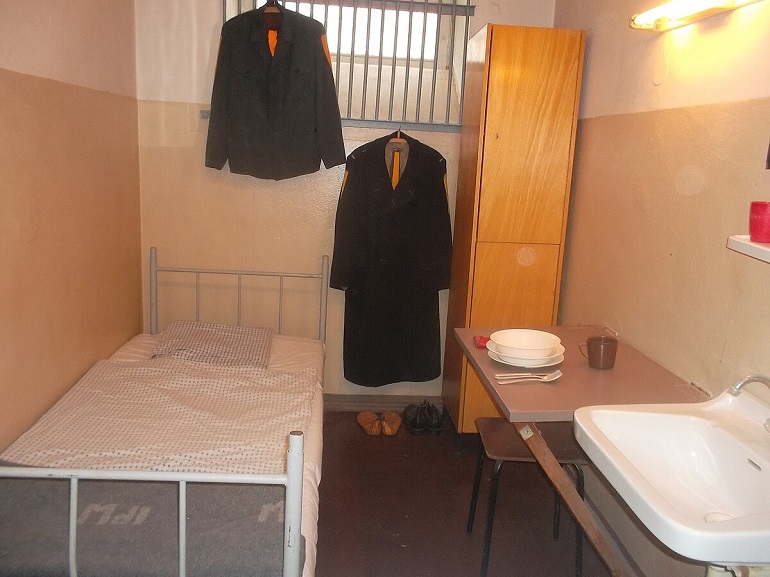
The Bautzen Memorial is situated in the former Stasi prison known as Bautzen II. This site serves as a poignant reminder of political persecution during the 20th century, documenting the use of the Bautzen prisons to silence political opponents under the Nazi regime, the Soviet occupation, and the GDR dictatorship. Visitors can see the original cell block, exercise yards, and prisoner transport vehicles. Permanent exhibitions provide historical context on the Soviet Special Camp and the Stasi prison, with biographical displays offering powerful insights into the lives of the prisoners and the conditions they endured.
Treasury of St. Peter's Cathedral (Domschatzkammer St. Petri)
Housed within the Domstift, a baroque building complex that once served as the bishop's residence, the Treasury of St. Peter's Cathedral showcases 800 years of the region's ecclesiastical history. The collection's oldest and most significant artefact is a portable altar from the Lower Rhine, dating back to around 1220. The treasury itself is located on the first floor, in rooms adorned with historic stucco ceilings, and contains a fascinating collection of religious art and artefacts. St. Peter's Cathedral is itself a major landmark, notable for being one of Germany's oldest and largest "simultaneum" churches, shared by both Catholic and Lutheran congregations since the Reformation in 1530.
Bautz'ner Mustard Museum and Factory Shop
No visit to Bautzen is complete without acknowledging its most famous export: mustard. The Bautz'ner Mustard Museum offers a fascinating look into the history of this world-famous condiment. Visitors can learn about its production and also taste a wide variety of stone-ground mustards, making it a unique culinary and historical experience.
Local Cuisine
Among the highlights is Bautzen’s most famous speciality, Bautz’ner Senf (Bautzen mustard), a beloved condiment known for its savoury sharpness that enhances meats, sausages, and hearty breads. Guests will also find traditional fare such as Quarkkeulchen, small fried potato-and-curd cheese cakes often enjoyed sweet or savoury, alongside Sorbian dishes rooted in centuries-old customs. A visit to the local market or one of Bautzen’s historic taverns provides the perfect setting to savour these unique flavours, complemented by locally brewed beers and regional schnapps.
Getting There
By train Bautzen is on the Dresden–Görlitz line, with frequent regional trains from Dresden Hauptbahnhof via Bischofswerda and direct services from Görlitz; from Berlin, Leipzig or Prague, travel to Dresden by long-distance train and change to a regional service for Bautzen, with the town centre a short walk or local bus ride from the station.
By coach or bus Long-distance coaches typically arrive in Dresden or Görlitz; from either, continue to Bautzen by regional train or a ZVON regional bus, and within Upper Lusatia there are regular bus links connecting Bautzen with towns such as Bischofswerda, Löbau and Hoyerswerda, departing from stops near the railway station.
By car Bautzen sits just off the A4 motorway between Dresden and Görlitz; from Dresden follow the A4 east and exit at Bautzen-West or Bautzen-Ost, from Berlin take the A13 south to join the A4 towards Görlitz, and from Poland approach via Görlitz on the A4 west, with signed car parks around the historic centre.