



| Contents |
|---|

Introduction
Cochem (pop. 5,000) is a small town situated in a curve of the valley of the Moselle renowned for its picturesque medieval old town, half-timbered houses, and the impressive Reichsburg Cochem castle perched on a hill overlooking the river.. It is capital of the district Cochem-Zell, and the smallest district capital in Germany. Cochem is at the heart of a prominent wine-growing region, known particularly for its Riesling, and features steep vineyards that characterise the surrounding landscape. The town's market square, historic town gates, and scenic promenade along the Moselle attract visitors interested in history, architecture, and local wine culture. Cochem is accessible by road and rail, with convenient connections to cities such as Koblenz, Trier, Cologne, and Frankfurt.
Interesting Facts about Cochem
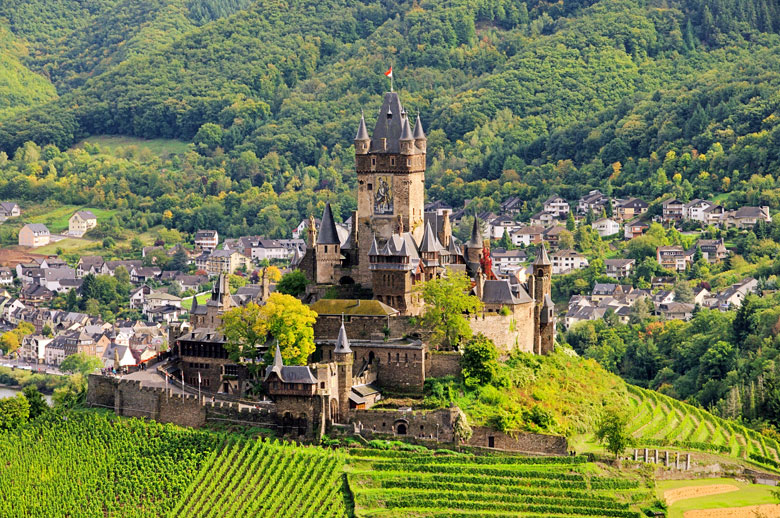
- The majestic Reichsburg Cochem castle stands atop a hill overlooking the town, with origins dating back to the 11th century and a dramatic restoration in the 19th century.
- Cochem is situated in the Mosel Valley, which is famous for some of the world’s steepest vineyards and produces celebrated wines like Riesling.
- The town’s history stretches back to Roman times, and it became an official town in 1334.
- Cochem played a vital role as a trading centre for Rhineland wine since the Romans introduced vineyards to the region.
- During the Second World War, large parts of Cochem’s old town were destroyed, but much has been carefully rebuilt.
- The Bundesbank-Bunker, a Cold War relic, sits buried beneath Cochem and once held a secret reserve of German banknotes to safeguard the economy in case of a crisis.
- Cochem is one of Germany’s smallest district seats, with a population of just over 5,000 people.
- The Cochem chairlift takes visitors to the Pinnerkreuz, providing stunning panoramic views over the Moselle valley, town, and castle.
- The town’s medieval Altstadt features cobblestone lanes and centuries-old timbered houses decorated with ornate carvings and paintings.
- Cochem’s Marktplatz, the central square, is framed by charming historic buildings and hosts regular wine festivals throughout the year.
- The nearby Kaiser-Wilhelm-Tunnel, completed in 1877, was Germany’s longest tunnel for a decade.
History
Early Foundations and Medieval Origins
Cochem's history stretches back to antiquity, with Celtic and Roman settlements preceding the medieval town that exists today. The earliest documented mention of Cochem appears in 866 CE, when it was referred to as "Villa Cuchema" in a document from the nearby Prüm Abbey. The town's name evolved considerably over the centuries, appearing as Cuhckeme and Chuckeme in 893, Cochemo in 1051, Chuchumo in 1056, and eventually settling into its modern form by the 19th century. During this early period, Cochem developed around a hilltop castle built approximately in the year 1000 by Palatinate Count Ezzo. The settlement initially served as little more than a collection of buildings surrounding this strategic fortress, which functioned primarily as a centre for collecting taxes and customs along the vital Moselle River trade route.
Imperial Status and Political Transformations
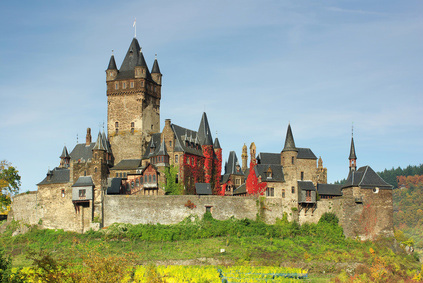
The town's political landscape shifted dramatically throughout the medieval period, reflecting the complex power struggles of the Holy Roman Empire. In 1088, Count-Palatine Hermann von Salm was killed directly in front of the Reichsburg castle during an attempted coup, marking the beginning of the decline of the Counts Palatine's influence over Cochem. By 1151, King Conrad III had seized direct control of the castle, transforming it into an imperial fiefdom and earning it the designation "Reichsburg" (Imperial Castle). However, this imperial status proved temporary when King Adolf of Nassau, facing significant debts, pledged Cochem and its castle to the Archbishop of Trier in 1294. This mortgage was never repaid, and Cochem remained under the control of the Electoral-Trier archbishops until the French Revolutionary occupation in 1794. The town was granted official town rights in 1332, and shortly thereafter, defensive fortifications were constructed that still stand today.
Modern Reconstruction and Contemporary Development

The late 17th century brought devastating destruction when King Louis XIV's troops conquered and destroyed both the town and castle in 1689, leaving the Reichsburg in ruins for nearly two centuries. Cochem's modern appearance largely stems from 19th-century Romantic reconstruction efforts, particularly those of Berlin steel merchant Louis Frédéric Jacques Ravené, who purchased the castle ruins in 1866 and rebuilt the structure between 1869-1877 according to historical plans from 1576. The town's development accelerated with infrastructure improvements, including the completion of the Moselle bridge in 1927 and the subsequent amalgamation of Cochem with the neighbouring fishing villages of Cond and Sehl in 1932. Following assignment to the Kingdom of Prussia in 1815 and later incorporation into the German Empire, Cochem became the administrative centre of a newly created district in 1816. Despite suffering significant damage during the Second World War, when much of the old town was destroyed and the area housed a subcamp of the Natzweiler concentration camp, Cochem has been rebuilt and since 1946 has been part of the state of Rhineland-Palatinate.
Main Attractions

Reichsburg Cochem
Reichsburg Cochem, also known as Cochem Imperial Castle, dominates the skyline from its hilltop position above the Moselle River. Built in 1051, it was destroyed with most of the town by the troops of Louis XIV of France in 1689. The castle wasn't reconstructed until the 19th century. There are guided tours of its historic rooms, as well as dramatic panoramic views of the surrounding valley and town. The castle is open to the public for much of the year.
Cochem’s historic old town (Altstadt)
Cochem’s historic old town (Altstadt) is characterised by cobblestoned lanes, colourful half-timbered houses, and a central market square. The old town retains a medieval atmosphere and includes sights such as the Enderttor city gate and the Marktplatz. Strolling through the old streets, visitors can admire remarkably preserved architecture and vibrant shopfronts, creating a quintessential Moselle Valley small-town experience.
St. Martin Church
The Catholic Church of St. Martin is a prominent landmark in Cochem, located near the Moselle promenade. Although a church has existed on the site since at least 1130, the current structure is a blend of old and new. The oldest surviving part is the late-Gothic "Old Choir," which dates to the mid-15th century. Much of the church was destroyed by bombing in January 1945 and was reconstructed in the 1950s, with its distinctive onion-domed tower being added between 1959 and 1963. Inside, the church features modern stained-glass windows installed in 2009, a reliquary bust of St. Martin said to have been a gift from Emperor Maximilian in 1512, and the "Cochem Madonna," which was recovered from the ruins after the war.
Balduinstor
The Balduinstor is one of Cochem's three surviving medieval city gates. It was named after Archbishop Balduin of Trier, who was responsible for fortifying the town in the 14th century after granting it city rights. The gate served as part of the defensive walls that once protected Cochem and is located near the city cemetery.
The Enderttor
The Enderttor is the most notable of Cochem’s surviving medieval city gates. Built in the 14th century, it once formed a core part of the town’s defences. The gate, with its characteristic tower and former gatekeeper’s apartment, stands as a testament to the town’s strategic importance and architectural heritage.
The historic mustard mill (Historische Senfmühle)
The historic mustard mill (Historische Senfmühle) in Cochem is one of Germany’s oldest operating mustard mills. Visitors can join guided tours to learn about traditional methods of mustard production using original equipment, and sample various types of mustard produced on site. The experience includes explanations about the history of mustard in the region and the opportunity to purchase unique local products.
The Mosel Promenade (Moselpromenade)
The Mosel Promenade (Moselpromenade) runs along the riverbank and links much of the town’s scenic riverfront. This walkway provides pleasant access to cafes, bars, and seating areas, with excellent opportunities for photos of the Moselle and Cochem Castle. Walking the promenade allows visitors to soak in the atmosphere of the town and observe river activity, while offering a different perspective on the architecture of Cochem’s riverside.
The Cochemer Sesselbahn
The Cochemer Sesselbahn is an open-air chair lift providing a route from the town up to the Pinnerkreuz lookout point on the Pinnerberg. The ride offers elevated views over Cochem and the Moselle valley. At the upper station, visitors can make a short walk to the Pinnerkreuz cross and look out over the entire region, including the castle and the river. A small café at the top offers refreshments.
The Pinnerkreuz lookout
The Pinnerkreuz lookout offers one of the best vantage points in Cochem. Accessible by foot or via the Sesselbahn, it provides sweeping views of the Moselle River, the castle, and the old town, making it popular with hikers and photographers. The viewpoint is marked by a large cross and is set amid natural surroundings ideal for walking.
Boat cruises along the Moselle River
Boat cruises along the Moselle River depart regularly from Cochem, offering a chance to view the picturesque landscape and the town from the water. The journeys range in duration and route, typically providing commentary about the region’s history, wine production, and landmarks. These cruises are popular for experiencing the valley’s scenic beauty and vineyards that line the hillsides.
Around Cochem
Winneburg Castle Ruins
The ruins of Winneburg Castle are situated on a ridge in the Endert valley, about 4 kilometres from Cochem. The castle was originally built in the 13th century and was owned by the Lords of Wunnenberg until their line died out in 1637. Like many castles in the region, it was destroyed by French troops in 1689 and was never rebuilt. Today, the preserved remains include the gatehouse, keep, parts of the great hall, and sections of other residential buildings. The site is owned by the town of Cochem and is accessible via a winding path, offering a glimpse into the area's medieval past.
Wild- und Freizeitpark Klotten
Wild- und Freizeitpark Klotten, located just outside Cochem in nearby Klotten, is a combination of amusement park and wildlife park. The park features rides, such as a roller coaster, as well as animal enclosures with species native to the region, birds of prey shows, and a petting zoo. It is particularly suitable for families with children.
Top Museums
Moselland Museum
The Moselland Museum stands as a tribute to the Moselle Valley's rural life and wine-growing traditions during the 1950s and 1960s. Its expansive four-floor exhibition showcases meticulously preserved agricultural tools, a stunning array of vintage tractors, and authentic recreations of village life, including a traditional schoolroom, smithy, and winemaker's home. This museum is especially appealing for those nostalgic about 'the good old days' and for families, as it includes interactive experiences such as a children's quiz adventure and even vintage tractor rentals for a truly unique outing. A bistro on-site also lets visitors savour regional flavours. The museum's evocative displays and hands-on approach make it an unmissable destination for anyone interested in the region’s everyday heritage and technical ingenuity.
Bundesbank Bunker Cochem
The Bundesbank Bunker Cochem offers a truly unusual museum experience, opening the doors to one of the country's best-kept Cold War secrets. Deep beneath a residential neighbourhood, this fortress-like bunker once housed a hidden fortune—billions of Deutsche Marks printed as emergency currency to protect Germany’s economy during times of crisis. Visitors join guided tours that vividly recount the political and economic anxieties of the era, reveal the elaborate security arrangements, and guide you through original vaults, operational rooms, and a climate-controlled environment built to withstand nuclear attack. The museum delivers a gripping narrative of 20th-century European history, making it exceptionally rewarding for those fascinated by recent history, politics, and espionage. As a drawback, the subject may be quite niche, and the guided format is best suited to adults or older children with a keen interest in history.
Historische Senfmühle Dehren
The Historic Mustard Mill in Cochem is both a working mustard factory and a compact museum, offering lively, expert-led tours that take you through centuries of mustard production using restored 19th-century machinery. The digestive journey is as much sensory as educational—visitors can sample a wide variety of gourmet mustards made from historic and innovative recipes, including options enhanced with Riesling, honey, and even exotic spices. Food lovers and those curious about the crafts and foods of the Moselle region will relish this experience. However, it is not a large or expansive museum, so it is ideal for those seeking a brief, flavoursome stop rather than an in-depth gallery.
Weinmuseum Schlagkamp-Desoye
Located a short drive from Cochem in Senheim, the Weinmuseum Schlagkamp-Desoye is a treasure trove for wine enthusiasts. Boasting over 10,000 artefacts, it ranks among the world’s largest collections dedicated to viticulture and barrel-making. The museum provides not only a deep dive into the evolution of winemaking on the Moselle but also personal stories enriched by family heritage, and, often, generous tastings of the estate’s wines. This blend of historical insight and conviviality makes it perfect for those wanting both an educational museum experience and hands-on exposure to Moselle wines. Its rural setting means it is best suited to visitors with more time or those eager to explore beyond Cochem’s immediate city limits.
Archäologiepark Martberg
The Archäologiepark Martberg, perched on a hilltop near Pommern, is a remarkable archaeological museum where Celtic and Roman temples once dominated the landscape. Today, visitors can walk among faithful reconstructions of ancient sanctuaries and settlement houses, explore the sacred geography, and absorb the site’s stories through engaging interpretative panels. The park’s immersive approach offers a striking contrast to Cochem’s more traditional museums—perfect for those with an interest in prehistory, archaeology, or who simply wish to combine their museum visit with spectacular views and fresh air. Access involves a bit of a walk from the village, making it best for adventurous visitors or families with older children.
Local Cuisine
Visitors can indulge in hearty classics such as schnitzel with mushroom cream sauce, the robust butcher's platter (Schlachtplatte) featuring blood sausage, liver sausage, bratwurst, and pork knuckle, and the distinctive local specialty Tresterfleish - pork marinated in grape pomace that's slow-cooked for hours until tender and aromatic. The region's wine culture heavily influences the cuisine, with dishes like Riesling herb soup, Mosel zander wrapped in Riesling vine leaves, and Riesling duck showcasing the marriage of local ingredients with the area's prized white wines. Traditional potato dishes such as Debbekoche (potato bake with cured pork belly) and Tertich (potato purée with sauerkraut) provide hearty sustenance for outdoor enthusiasts exploring the Moselle Valley. The tangy Moselle mustard serves as a perfect accompaniment to local sausages and adds a regional kick to any meal. To complete the authentic Cochem dining experience, visitors should pair their meal with a crisp glass of local Riesling or enjoy a Mosel Kir aperitif made with vineyard peach liqueur and sparkling wine.
Getting There & Around
By train, Cochem is served by the Deutsche Bahn network, with regional express trains connecting the town to Koblenz and Trier along the picturesque Moselle Valley. The station welcomes frequent services, making it easy to reach from larger cities across Germany and neighbouring countries. There are direct local trains from Luxembourg (1h45min), Trier (50min to 1h10min), Koblenz (40 to 55min), Bonn (1h20min), and Cologne (1h45min).
By bus, travellers can access Cochem from major cities such as Koblenz by using regional bus lines, particularly when train connections are less direct. While there is no direct long-distance coach service from every city, buses operate from Koblenz's central station to Cochem, providing an alternative route for those preferring bus travel or travelling from nearby towns.
By car, the fastest route is via the A48 Koblenz-Trier motorway. From the east, take the Kaisersesch exit (No. 4) and follow signs for roughly 12km to reach Cochem. If coming from the west, exit at Ulmen (No. 2) and continue for approximately 23km. Ample parking is available in and around the town centre, allowing easy access for those exploring the region by road.
| Travel destinations in Rhineland-Palatinate | ||||||||||||||
|---|---|---|---|---|---|---|---|---|---|---|---|---|---|---|
|
|
|
|
| ||||||||||
|
|
|
|
| ||||||||||
|
|
| ||||||||||||


