



| Contents |
|---|
Introduction
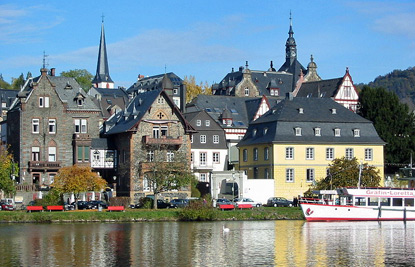
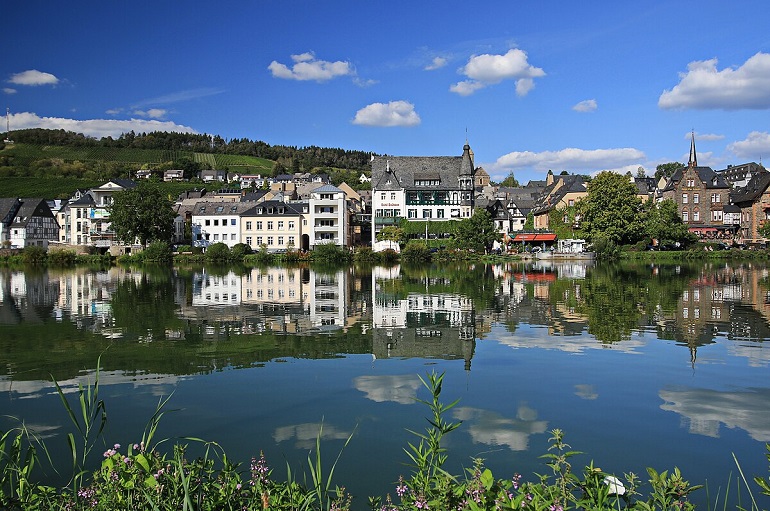
Traben-Trarbach (pop. 5,600) is a peaceful twin town on the banks of the Moselle River renowned for its Art Nouveau villas and its healing spa, the Moseltherme. The town has been an important centre of the wine trade, particularly for Riesling. Visitors can explore well-preserved ruins such as the Grevenburg Castle, as well as several museums focused on local history and viticulture. The area is also popular for its river cruises, hiking, and cycling trails that offer scenic views of the surrounding vineyards and wooded hills. Traben-Trarbach is accessible by train, road, and river, making it a convenient destination for those exploring the Moselle Valley.
Interesting Facts about Traben-Trarbach
- Traben-Trarbach is renowned for its splendid Art Nouveau (Jugendstil) architecture, which flourished around 1900 thanks to affluent wine merchants commissioning unique buildings.
- At the turn of the twentieth century, Traben-Trarbach was the second-largest wine trading city in Europe, surpassed only by Bordeaux.
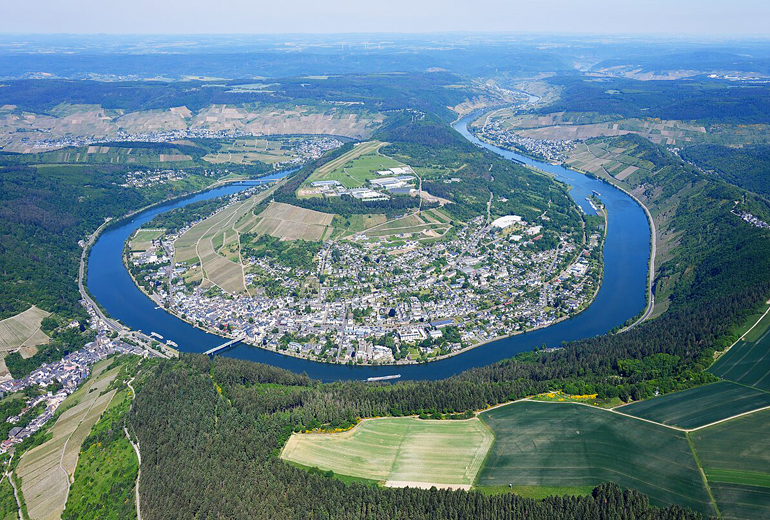
- The town is located on both banks of the picturesque Moselle River and forms a “double city” connected by a bridge designed by Berlin architect Bruno Möhring.
- Grevenburg Castle and the ruins of the mighty Mont Royal fortress—originally built by the French military engineer Vauban—overlook the town, providing glimpses into its strategic importance during the 17th century.
- Traben-Trarbach lies within the “Valley of Dawn” (Tal der Morgenröte), named for its enchanting sunrises that cast a golden glow over the surrounding vineyards and hills.
- The town is a gateway to the renowned Moselle wine region, particularly famous for its world-class Riesling produced on steep, sun-drenched slate slopes.
- Traben and Trarbach were historically separate towns on opposite riverbanks but merged into a single municipality in 1904.
- Despite its medieval origins, much of the old architecture was lost to devastating fires in the 18th and 19th centuries, resulting in today’s dominant Art Nouveau and Historicist styles.
- The Museum Row in Trarbach includes diverse museums such as the Middle Mosel Museum, the House of Icons, the Bicycle Museum, and even a Buddha Museum.
- With approximately 3,135ha, Traben-Trarbach is the largest town by area along the Middle Moselle, much of which is covered in woodland.
History
The origins of Traben-Trarbach stretch back over a millennium, with Traben first documented in 830 when Emperor Louis the Pious, Charlemagne's son, donated the settlement along with all its rights and privileges to the minster at Aachen. Trarbach appeared in historical records later, first mentioned in 1142 and receiving its city charter in 1254, subsequently becoming the seat of government for the powerful Counts of Sponheim until 1437. During the tumultuous 17th century, the area became embroiled in European conflicts when France seized the region during the War of the Reunions in 1683-1684. The French military engineer Vauban constructed the massive Mont-Royal fortress above Traben, with ramparts stretching 30 metres high and 3 kilometres long, capable of housing 12,000 troops. However, following the Treaty of Ryswick in 1697, the French withdrew and demolished this enormous fortification, leaving only the lower foundations visible today.
The two settlements faced numerous challenges throughout their medieval and early modern periods, with devastating fires repeatedly destroying much of their architectural heritage. The most catastrophic blaze occurred in 1857, leaving 1,400 of Trarbach's 1,700 inhabitants homeless and destroying most medieval structures. Following these disasters, the communities rebuilt in the fashionable styles of the era, resulting in the distinctive Belle Époque and Jugendstil architecture that characterises the town today. Many of these elegant buildings were designed by the renowned German architect Bruno Möhring, one of the country's most prominent Art Nouveau architects. The period around 1900 marked the zenith of Traben-Trarbach's prosperity, when it became the second-largest wine trading centre in the world after Bordeaux, thanks partly to its advantageous position as a Protestant enclave on the predominantly Catholic Mosel River and its close ties to Prussia.
In 1898, the first bridge connecting the two communities was constructed according to Bruno Möhring's designs, becoming the first road bridge between Bernkastel and Koblenz. This infrastructure development paved the way for the formal merger of the municipalities in 1904, creating the unified town of Traben-Trarbach. The communities were also pioneers in urban development, becoming among the first municipalities in Germany, alongside Reichenhall, to install electric street lighting from the Edison Company (now AEG) instead of gas lamps. The town survived both world wars with relatively little damage, though the original bridge was destroyed in 1945 during the final days of the Second World War. Further expansion occurred in 1969 when the municipalities of Kautenbach and Wolf were amalgamated with Traben-Trarbach, and the following year, the Verbandsgemeinde of Traben-Trarbach was established.
Main Attractions
Grevenburg Castle Ruins
The Grevenburg Castle Ruins sit atop a hill overlooking Traben-Trarbach and the Moselle River, offering expansive views and a glimpse into the area's medieval past. Built in 1350 and destroyed in 1734, the remnants allow visitors to explore the foundations and some remaining sections, providing context for the many conflicts that shaped the region. The site blends historical interest with natural beauty and is accessible via hiking trails.
Mont Royal Fortress Ruins
Mont Royal Fortress Ruins are the remains of a once-massive Vauban fortress built for Louis XIV in the late 17th century. Now mostly rubble and earthworks, the site offers a network of walking paths with interpretive signage, inviting exploration of its bastions and casemates. The ruins highlight the site's former scale and importance, and the elevated location grants panoramic views of the surrounding valley.
Burgruine Starkenburg (Starkenburg Castle Ruins)
Situated close to Traben-Trarbach, the Starkenburg Castle Ruins date back to the Middle Ages and stand on a hilltop, offering views over the Moselle, vineyards and neighbouring villages. While only partial ruins remain, the site is a popular spot for walks and provides historical context for the local network of fortified sites.
Brückentor (Bridge Gate)
The Brückentor, constructed in 1899 by architect Bruno Möhring, marks the entrance to the Moselle bridge and is a defining landmark of Traben-Trarbach. Designed in a Jugendstil (Art Nouveau) style, it combines decorative elements with historical references and has survived various eras with much of its original structure intact. The gate is an architectural point of interest and serves as a symbolic link between the town's two districts.
Weißer Turm (White Tower)
The Weißer Turm is a historic defensive tower that once formed part of the town's medieval fortifications. It is a well-preserved example of local military architecture, lending insight into historical urban design and defence strategies. The tower provides a picturesque feature within the old town area and is easily accessible on foot.
Kriegerdenkmal am stumpfen Turm (War Memorial at the Blunt Tower)
This war memorial, located at the Blunt Tower, honours the memory of local soldiers who fell in past conflicts. The site combines a historic architectural element—the stumpfen Turm—with commemorative sculpture, and is a point of reflection within the town's historical landscape.
Trabener Marktbrunnen mit Moselblümchen (Market Fountain with Moselle Flowers)
Situated in the marketplace, this decorative fountain features motifs associated with the Moselle region, including stylised flowers. It acts as a central meeting point in Traben, connecting the visitor with the town’s local traditions and daily life.
Unterwelt Traben-Trarbach (Traben-Trarbach Underground)
The Unterwelt consists of a series of subterranean wine cellars and passageways that underlie much of the town. Historically linked to Traben-Trarbach’s winemaking industry, these underground structures can be explored on organised tours, providing an unusual perspective on the town’s commercial and architectural history.
Lauschtour Traben-Trarbach (Audio Walking Tour)
The Lauschtour is a self-guided audio walking route accessible via app, leading visitors to notable sites across Traben-Trarbach while sharing historical and cultural background. This format allows exploration at a personalised pace and offers context without the need for a traditional group tour.
Elfenpfad (Elf Path) Traben-Trarbach
The Elfenpfad is a themed loop trail designed for family-friendly hikes through the local landscape, with markers and stops that appeal especially to children. The route is suitable for walkers of all ages and offers an accessible nature experience close to the town.
Moseltalschanzen Wanderung (Moselle Valley Ramparts Hike)
This hiking route begins and ends in Traben-Trarbach and takes in several vantage points, historical sites and landscape features, including remnants of fortifications. The trail is suitable for families and provides an overview of the region’s scenery along with insight into its defensive history.
Top Museums
Mittelmosel-Museum
Set within a striking baroque villa, the Mittelmosel-Museum immerses visitors in the refined lifestyle of an 18th–19th century patrician family. Spanning over 20 exhibition rooms, the museum boasts furniture, art, and city history across three centuries—highlighted by Roman and Franconian archaeological finds and a celebrated Grevenburg Castle model. Its authenticity, breadth, and architectural charm set it apart as the core repository of Traben-Trarbach’s urban culture. Some areas may be more appealing to history enthusiasts, but the elegant surroundings and diverse artefacts ensure something for most visitors.
Buddha-Museum
Europe's largest Buddha collection finds its home in a grand Art Nouveau former winery. Over 2,000 Buddha statues and Buddhist artefacts from across Asia are displayed in beautifully curated galleries and serene gardens, offering deep insights into Buddhist philosophy and art. The tranquil, meditative atmosphere appeals to those interested in spirituality and artistic diversity alike. The single-topic focus is unique, though some general interest visitors may find the subject less engaging than more eclectic collections.
Haus der Ikonen (House of Icons)
This intimate art museum preserves the legacy of Alexej Saweljew, one of Europe’s foremost modern iconographers. Housing over a hundred brilliantly coloured icons inspired by the Novgorod tradition, the museum not only showcases sacred art, but also illuminates their theological, historical, and technical background. It is especially appealing for those seeking a contemplative experience or with an interest in Eastern Christian art, though its niche focus means it may not captivate every traveller.
Zeitreise-Museum
The Zeitreise-Museum provides a delightfully nostalgic journey through the everyday culture of the 20th century—including evocative displays of restored dolls, dollhouses, antique toys, bicycles, model railways, and a vibrant 1950s setting complete with functioning period technology and a retro bar. The interactive, playful approach distinguishes it from more traditional museums, making it especially appealing for families and those with a taste for nostalgia.
Schuh Styling Museum
Devoted to the surprisingly rich world of shoe care and styling, this museum presents a quirky yet meticulously curated exploration of nearly 350 years of shoeshine history. Highlights include original tools, live demonstrations, rare artefacts, and opportunities to try your hand at shoe shining. The creative concept, interactive exhibits, and family-friendly atmosphere offer something quite different from more conventional museums—though its specialist subject may appeal most to those intrigued by craftsmanship or the oddities of cultural history.
Local Cuisine
The region's taverns and restaurants proudly serve classic Moselle specialities including Weingräwes (succulent pork ribs served with sauerkraut and bacon), Mosel-Wingertspoal (grilled marinated and spiced pork neck), and the hearty Schales (a comforting potato and meat casserole). Fresh river fish such as trout, zander, and pike feature prominently on local menus, reflecting the town's riverside heritage. The area's renowned Riesling wines are not merely an accompaniment but an integral part of the dining experience, often incorporated into sauces and desserts that showcase the region's viticultural excellence. Seasonal dishes like Zwiebelkuchen (onion tart) served with Federweisser (new wine) during autumn provide visitors with authentic tastes of the Moselle Valley's culinary traditions. Many establishments occupy historic buildings with terraces overlooking the river, creating an atmospheric dining experience that perfectly complements the robust, wine-influenced flavours of this picturesque German wine region.
Getting There & Around
By train, Traben-Trarbach can be easily reached via regional trains from Koblenz or Trier, with connections available through Bullay station. The town’s station is within walking distance of the centre, making arrival straightforward for visitors using Deutsche Bahn or other regional train services.
By coach or bus, several regional and intercity buses operate routes connecting Traben-Trarbach to surrounding towns such as Bernkastel-Kues, Trier, and even Frankfurt Airport. The bus station in Traben has regular departures, providing a convenient alternative if you do not wish to travel by rail.
By car, Traben-Trarbach is well connected to the German motorway network, with good road access via the A1 and A61 autobahns, followed by scenic local routes through the Moselle Valley. The town offers parking facilities by the riverbank, ensuring a smooth start to your exploration of the region.
| Travel destinations in Rhineland-Palatinate | ||||||||||||||
|---|---|---|---|---|---|---|---|---|---|---|---|---|---|---|
|
|
|
|
| ||||||||||
|
|
|
|
| ||||||||||
|
|
| ||||||||||||


