



| Contents |
|---|
Introduction
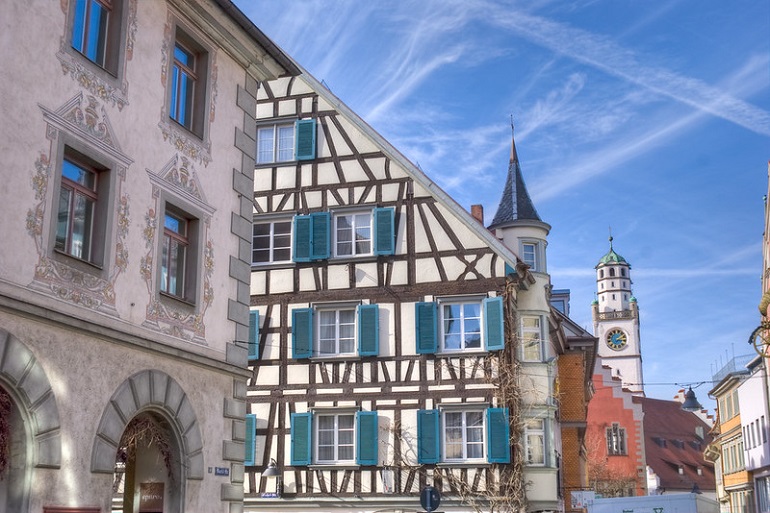
Situated approximately 23 kilometres north of Lake Constance, Ravensburg (pop. 50,000) is renowned for its remarkably well-preserved medieval town centre. First mentioned in historical records in 1088, Ravensburg gained prominence during the Middle Ages as a Free Imperial City and major trading hub, home to the influential "Great Ravensburg Trading Society" which operated trading companies across Europe from around 1380 to 1530. Today, the city is distinguished by its spectacular medieval skyline featuring 17 towers and gates from various historical periods, earning it the nickname "the city of towers and gates". Ravensburg is also internationally recognised as the headquarters of the Ravensburger board game and puzzle company, established here in the late 19th century, which has led to its additional moniker as "the city of games". The historic city centre remains largely intact with its defensive walls, patrician houses, Gothic churches, and medieval trading quarters, making it one of the most attractive and well-preserved medieval cities in southern Germany.
Interesting Facts about Ravensburg
- Ravensburg is often called the "City of Towers and Gates" due to its remarkable 17 surviving medieval gate and wall towers.
- The town was first mentioned in 1088 and became a Free Imperial City of the Holy Roman Empire in 1276.
- Ravensburg was home to the Great Ravensburg Trading Society, one of Europe’s most important commercial organisations in the 14th and 15th centuries, trading paper, linen, and spices across the continent.
- The town hosted one of the first paper mills north of the Alps in 1402, helping establish its economic significance.
- Ravensburg’s historic centre is especially well-preserved, with much of its medieval architecture, including the 51-metre-tall Mehlsack tower and several city gates, still intact today.
- The town avoided significant destruction in the Second World War, leaving its old cityscape largely unharmed.
- After the Thirty Years' War, Ravensburg became known for having a unique parity government, where Catholics and Protestants shared all public offices equally.
- The internationally famous Ravensburger games company, known for its jigsaw puzzles and board games, was founded here in the late 19th century.
- Ravensburg hosts the lively historical festival Rutenfest each July, featuring processions, concerts, and traditional costumes.
- From the Blaserturm tower, visitors can enjoy stunning views stretching to Lake Constance and the Alps on clear days.

History
Ravensburg's origins stretch back to the 11th century, when it emerged as a settlement at the foot of an ancient castle belonging to the powerful Welf dynasty. First mentioned in written records in 1088, the town was founded by the Welfs, a Frankish noble family who later became Dukes of Bavaria and Saxony. The strategic location along the Schussen River, near Lake Constance, proved ideal for trade and settlement. In 1191, through a contract of inheritance, Frederick Barbarossa of the Hohenstaufen family acquired Ravensburg from Welf VI. When the Hohenstaufen line became extinct with Conradin's death in 1268, Ravensburg became imperial property and achieved the prestigious status of Imperial Free City in 1276, granting it considerable autonomy and self-governance.
The medieval period marked Ravensburg's golden age as one of Europe's most important trading centres. Around 1380, the Great Ravensburg Trading Society was established by merchant families from Ravensburg and nearby towns, initially focusing on linen and fustian production. A significant milestone came in 1402 with the opening of one of the first paper mills north of the Alps, making Ravensburg a pioneer in German papermaking. The trading society expanded its reach dramatically, dealing in oriental spices, Mediterranean wines, and Bohemian ores, transforming Ravensburg into an economic powerhouse. The city's wealth is still evident today in its well-preserved medieval architecture, including the distinctive towers and gates that earned it the nickname "the city of towers and gates". The impressive 51-metre Mehlsack tower, built in 1350, stands as one of over a dozen surviving towers that dominated the medieval skyline.
Following the dissolution of the Great Ravensburg Trading Society in 1530, the city entered a period of economic decline that paradoxically helped preserve its medieval character. The devastating Thirty Years' War (1618-1648) brought further hardship, with Swedish troops destroying the old castle. However, the post-war period saw Ravensburg implement a unique "paritetic" government system, equally dividing public offices between Catholics and Protestants - an arrangement that made it one of only four such cities in the Holy Roman Empire. This system was so distinctive that for a time the city had both Catholic and Protestant mayors simultaneously. Ravensburg lost its Imperial Free City status in 1803 and eventually became part of the Kingdom of Württemberg in 1810. The economic stagnation of the 18th and early 19th centuries, whilst limiting growth, proved fortuitous for preservation, leaving the city with an almost completely intact medieval centre that survived even the Second World War unscathed.
Main Attractions
Marienplatz
Marienplatz is the central square and heart of Ravensburg’s Old Town, offering a lively urban atmosphere surrounded by late-Gothic buildings including the Rathaus and traditional shops. The square is the ideal starting point for exploring the city's cobbled lanes and enjoying local markets and events.

Mehlsack Tower
Stands at the southern edge of Ravensburg’s old town and rises to 51 metres. Constructed between 1425 and 1429, its rounded form and white plaster finish earned it the name "Mehlsack", or flour sack. Originally part of the town’s fortifications, it was built to deter assaults from the neighbouring Veitsburg Castle and served as both a granary and a watchtower. Accessible via a broad external staircase from Marktstraße, it offers viewing platforms that afford panoramic vistas over the medieval core of the city and the surrounding countryside. During the summer months, the tower is open for ascent on Sundays from 11:00 to 16:00.
Blaserturm
or Trumpeter’s Tower, is one of the most prominent structures rising above Marienplatz. Erected in the 14th century, it reaches approximately 51 metres in height and originally served as a lookout post where city guards signalled events and the time with trumpet calls. Its interior stairwells retain well-preserved frescoes painted by former guards, and a narrow masonry staircase leads to a viewing platform. From the summit, visitors can enjoy uninterrupted views of the tiled rooftops of the old town and, on clear days, distant panoramas of Lake Constance and the Alps.
Obertor Gate
stands as the oldest surviving city entrance, having been reconstructed in 1431–32. The 42-metre-high tower once housed the so-called “Armsünderglöcklein”, a small bell rung to signal executions in medieval times. On its eastern side, a bridge and moat provided additional defences until the 19th century, while the inner walls remain notably thin to facilitate surveillance of both approaches. Today, visitors can examine the restored battlements and imagine the former drawbridge that once controlled access to the town.
Untertor Gate
or the Lower Gate, was erected in 1363 as part of Ravensburg’s defensive circuit. Standing 36 metres tall, it originally featured machicolations to repel attackers from above and was protected by a moat, drawbridge and outer barbican until the 19th century. The south side still reveals the small postern gate that led to the wooden battlements lining the inside of the city wall. In its heyday, the gate also functioned as a customs checkpoint where duties were collected on goods entering and leaving the free imperial city.
Liebfrauenkirche
or Church of Our Lady, is a Gothic parish church dating from the 14th century and located on Kirchstraße. Its exterior is characterised by pointed arches, ribbed vaults and flying buttresses, while the western façade centres on a large rose window that fills the nave with coloured light. Inside, the vaulted ceiling is supported by slender columns and decorated with altarpieces and frescoes from the 15th to 17th centuries. The church’s excellent acoustics make it a preferred venue for liturgical music concerts during the summer festival season.
Veitsburg Castle
occupies a commanding position atop a wooded hill just south of the old town. First recorded in the 11th century as the ancestral seat of the Welf dynasty, it later passed into Hohenstaufen and imperial ownership. The surviving medieval defensive walls are complemented by a Renaissance palace extension and formal gardens. A well-waymarked trail known as the Philosophenweg leads from the base of the Mehlsack to the castle gate in approximately twenty minutes. The grounds offer extensive views over Ravensburg, Lake Constance and the Swabian countryside and serve as a popular spot for picnics and summer events.
Ravensburger Spieleland
Located a short distance from the town centre, Ravensburger Spieleland is a family-friendly amusement park with a variety of rides, themed areas, and live shows, making it particularly appealing for families with children.
Wildfreigehege Locherholz
Wildfreigehege Locherholz is a woodland wildlife park featuring freely roaming deer, picnic and barbecue facilities, kid-friendly hiking trails, and playgrounds. It offers a relaxed outdoor experience and opportunities for nature observation.
Skatepark Rav
Skatepark Rav provides modern facilities for skateboarding and related sports, and is a popular spot for active visitors and local youth. It is well-equipped and accessible, making it an alternative leisure option in the city.
Top Museums
Kunstmuseum Ravensburg
Celebrated both for its award-winning, sustainable passive house architecture and its formidable collection, this museum spotlights modern and contemporary art sourced largely from the prestigious Selinka Collection. Exhibitions primarily highlight German Expressionism and the CoBrA and SPUR artist groups, while regular temporary exhibitions ensure each visit is fresh and engaging. The thoughtfully designed galleries, comprehensive programmes for all ages, excellent accessibility, and atmospheric setting in a historic part of the city all contribute to a memorable art experience.
Museum Ravensburger
A dynamic and family-friendly destination, this interactive museum delves into the world-famous Ravensburger games and books brand. Visitors of all ages enjoy hands-on exhibits, a chance to design puzzles, and multimedia adventures such as the tiptoi museum rally. The experience is not just about play—it's an engaging exploration of publishing history and the creative processes behind beloved products, with a strong emphasis on education and participation, making it particularly well-suited for families and children.
Wirtschaftsmuseum Ravensburg
Located in one of Ravensburg's historic financial buildings, this museum offers a fascinating journey through the region’s economic and social transformations over the past two centuries. Cleverly themed displays, original artefacts, multimedia exhibits, and immersive storytelling provide in-depth understanding of local developments in industry, agriculture, trade, and everyday life. It’s especially appealing to those interested in history, economics, or societal change, and offers thought-provoking temporary exhibitions on topics like the German tradition of saving.
Local Cuisine
Local specialties include Maultaschen, savoury dumplings filled with meat and spinach, often served in a fragrant broth or pan-fried; and Spätzle, soft egg noodles frequently enjoyed with roasted onions and cheese in the beloved Kässpätzle. Meat lovers should not miss Gaisburger Marsch, a robust stew of beef, potatoes, and Spätzle topped with crispy fried onions, or the tangy Saure Kutteln (sour tripe), a true taste of Swabian homeliness. Pair these with a refreshing Swabian potato salad and sample the distinctive Seele bread, a spelt-based white loaf unique to the region. In local restaurants and traditional Wirtshaus, this genuine, rustic cuisine is best enjoyed with a glass of regional wine or beer, offering a true flavour of Ravensburg hospitality.
Getting There & Around
By train, Ravensburg is well connected and can be reached via the German rail network, with direct routes or connections through major cities such as Ulm or Friedrichshafen. Regular trains serve the station in Ravensburg, making it an accessible option for travellers from various destinations including Munich and further afield in Germany or neighbouring countries.
By coach or bus, long-distance services such as FlixBus offer routes to Ravensburg, often stopping at the central train station. There are coach connections from several German cities, providing a convenient and flexible travel alternative, especially for those who prefer a direct approach or are coming from locations not directly served by train.
By car, Ravensburg lies at the intersection of several key highways. The city is accessible via the A8 (Stuttgart–Munich, exit Ulm-West), A81 (Stuttgart–Singen, exit Stockach), or the A96 (Munich–Lindau, exit Wangen-West). From the motorway, follow the B30, B32, or B33 towards the city, with ample parking available in and around the old town for visitors travelling by car.