



| Contents |
|---|

Introduction
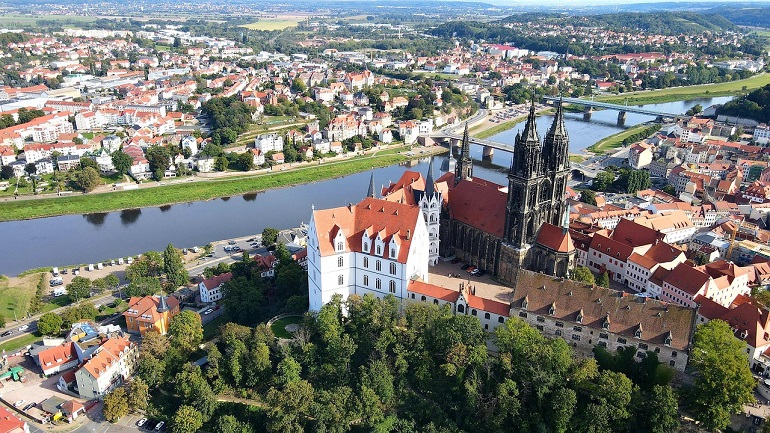
Meissen (pop. 29,000) is a historic town situated on the river Elbe approximately 25 kilometres northwest of Dresden. It served as the first capital of the Margraviate of Meissen. The town is globally renowned for its porcelain manufacture, home to the Meissen Porcelain Factory which has been producing fine china since 1710, making it Europe's first hard-paste porcelain manufacturer. Meissen's compact historic centre features well-preserved Gothic and Renaissance architecture, dominated by the impressive Albrechtsburg castle and the Gothic cathedral, both perched on a hill overlooking the Elbe valley. The town's cobblestone streets, traditional Saxon houses, and numerous museums make it a significant cultural destination, whilst its location in the heart of Saxony's wine-growing region adds to its appeal for visitors seeking both history and regional gastronomy.
Interesting Facts about Meissen
- Meissen is often called the cradle of Saxony, tracing its origins to 929 when King Henry I established a castle above the Elbe.
- The Albrechtsburg in Meissen is regarded as Germany’s first residential castle, built mainly in the late Gothic period between 1471 and 1485.
- Meissen sits about 25 km northwest of Dresden on both banks of the River Elbe.
- The town became a margravial and later electoral centre under the House of Wettin after 1089 and 1423 respectively.
- Meissen Cathedral, beside the Albrechtsburg, is a striking Gothic ensemble whose twin spires were completed in 1909.
- Meissen porcelain was Europe’s first true hard-paste porcelain, with production beginning in 1710.
- The crossed swords trademark of MEISSEN is among the oldest continuously used marks in the world, dating to the early 18th century.
- Alchemist Johann Friedrich Böttger, building on work by Ehrenfried Walther von Tschirnhaus, cracked the recipe for European porcelain in Meissen around 1708.
- From 1710 to 1863, porcelain was actually manufactured inside the Albrechtsburg before operations moved to dedicated premises in town.
- Meissen lies in Saxony’s wine-growing region, pairing historic streets with local wine bars and cellars.
- The town’s medieval old market and the Frauenkirche (Church of Our Lady) tower offer classic views over the red-roofed old town and the Elbe valley.
- Meissen’s population is roughly 28,000 today, reflecting modest growth from about 27,000 in 2011.
- The famous Onion Pattern (Zwiebelmuster) decoration became a hallmark of Meissen porcelain from the 1730s.
- Meissen’s early Slavic roots (Misni) predate its German town charter in 1205, reflecting frontier dynamics east of the Elbe.
- The bishopric of Meissen, founded in 968, was suppressed in 1581 during the Reformation and later re-established with its seat at Bautzen.
History
Medieval Origins and Early History
Meissen's origins can be traced back to 929, when German King Henry I (Heinrich the Fowler) established a wooden fortress on a prominent rock overlooking the River Elbe. The settlement developed on the site of an earlier West Slavic settlement called Misni, inhabited by the Glomacze tribes. By 965, following the division of the vast Marca Geronis, Meissen became the centre of a new margraviate with the primary purpose of controlling the local Slavic population. The town gained considerable religious significance in 968 when it became the seat of the newly created Bishopric of Meissen. However, Meissen faced early challenges, including a brief Polish occupation in 1002 and a devastating Mongol raid in 1241 under Orda Khan, which destroyed much of the town before the Mongols withdrew following Ögedei Khan's death. The town formally received its municipal rights in 1332, marking its transformation from a frontier fortress into a proper medieval town.
Rise to Political Prominence and the Wettin Dynasty
From 1089, Meissen came under the control of the influential House of Wettin, which established a sophisticated administrative structure throughout the 13th century. The town's political importance reached its zenith in 1423 when Meissen became the capital of the Electorate of Saxony, earning it the enduring title of "the cradle of Saxony". This period saw significant architectural developments, including the construction of Meissen Cathedral beginning in 1260 on the same hill as the original castle, creating one of Europe's smallest cathedrals due to space constraints but representing one of the purest examples of Gothic architecture. Between 1471 and 1524, the brothers Ernest and Albert of Wettin commissioned the construction of the late-Gothic Albrechtsburg Castle, which became Germany's first residential palace rather than a defensive fortress. However, Meissen's role as a political centre was relatively short-lived, as the capital was relocated to Dresden in 1464, though the town retained its symbolic significance.
The Porcelain Legacy and Modern Identity
Meissen's most enduring claim to fame emerged in 1710 when Augustus the Strong established Europe's first porcelain manufactory in the unused rooms of Albrechtsburg Castle. This revolutionary development created the foundation for what would become the world-renowned MEISSEN® trademark, distinguished by its crossed blue swords symbol introduced in 1722 and recognised as one of the world's oldest continuously used trademarks. For 153 years, porcelain was manufactured within the Gothic halls of the castle until production moved to a new facility in the Triebischtal valley in 1863. The castle then underwent extensive restoration to return it to its original Gothic appearance, with elaborate murals added from 1873 depicting the history of Meissen, the Wettin dynasty, and the emergence of "white gold". Today, Meissen combines its medieval heritage with its porcelain legacy, maintaining its position in Saxony's wine-growing region whilst preserving its historic old town dominated by the Albrechtsburg Castle and Gothic cathedral.
Main Attractions
Albrechtsburg Castle
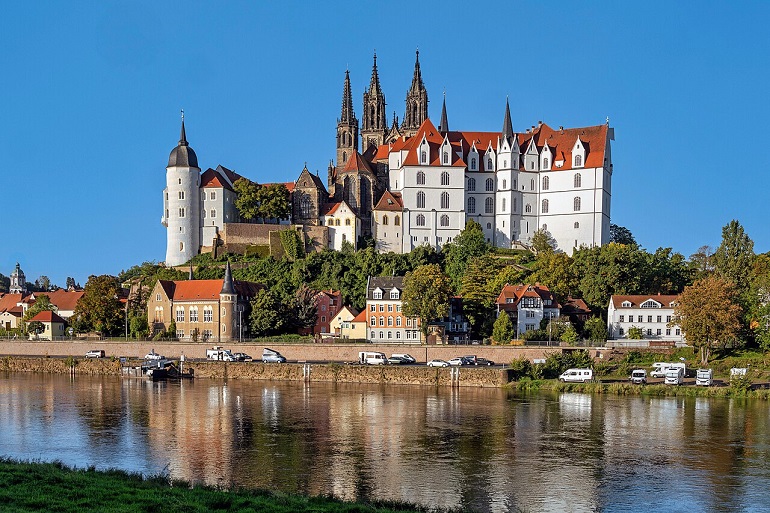
Perched majestically above the Elbe River, Albrechtsburg Castle is widely regarded as Germany’s first residential castle. Built in the late 15th century for the Wettin dynasty, its striking Gothic architecture features ornate tracery windows, arched vaults and a distinctive round tower offering panoramic vistas of the town and river. Visitors can wander through the grand staircase hall, admire period décor and learn of its role as both a princely residence and the birthplace of Meissen porcelain manufacturing. The castle’s terraces and adjoining gardens provide a serene setting to appreciate the surrounding vineyards and medieval skyline.
Meissen Cathedral (Meißner Dom)
Meissen Cathedral soars above the old town on Domplatz, its twin steeples piercing the Saxon sky since their 1909 completion. Constructed between 1260 and 1410, this Gothic masterpiece captivates with its intricately carved stone portals, medieval sculptures and luminous stained-glass windows that filter sunlight into kaleidoscopic hues. Inside, the vaulted ceilings and slender columns draw the eye upwards, evoking the reverence of centuries-old worship whilst offering a panoramic view of Meissen from the churchyard terrace. The cathedral's treasury houses priceless silver chalices and manuscripts, testament to the town's ecclesiastical importance, while regular organ recitals fill the nave with resonant tones. Each step down the narrow side aisles reveals further treasures of artistry and devotion, making the cathedral a pilgrimage for historians and spiritual seekers alike.
Market Square and Old Town (Markt & Altstadt)
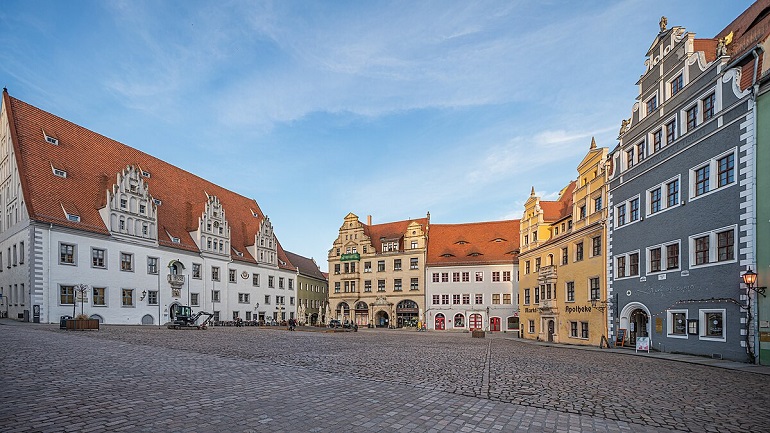
Meissen’s historic Market Square is the beating heart of the old town, framed by pastel-coloured merchant houses and adorned by the elegant Renaissance Altes Rathaus. Here, vivid frescoes and arcaded façades recall the town’s trading prosperity, while the daily market spills forth local produce and crafts. Cobbled lanes branch off to reveal hidden courtyards, medieval fountains and centuries-old inns where Saxon hospitality endures. At dusk, the square’s lantern-lit ambience invites a leisurely promenade, accompanied by the distant tolling of church bells.
Patrician House Meissen (Patrizierhaus Meißen)
Patrizierhaus Meißen, nestled on Webergasse, presents a rare glimpse into the life of Meissen's medieval merchant class. This distinguished patrician residence, with its gabled façade and finely restored timber framing, stands as a testament to the wealth generated by the town's porcelain and wine trades. Inside, elegantly furnished rooms display period furnishings, hand-painted decorative panels and wrought-iron hearths, conjuring the ambience of a bygone era. Guided tours illuminate the social customs, family lineages and mercantile strategies of the patriciate, whilst occasional cultural events and classical concerts animate the historic chambers. Photographers and history enthusiasts alike find the house's labyrinthine corridors and painted ceilings to be an evocative backdrop, capturing the intersection of commerce and culture that shaped Meissen's identity.
Medieval City Walls and Brühl Gate
Encircling Meissen’s historic core, the medieval city walls and surviving gatehouses stand as silent sentinels of bygone defence. Along winding ramparts, remnants of crenellations and arrow slits evoke the town’s strategic past. The Brühl Gate, with its timbered upper storey and stout portcullis recess, offers a vivid glimpse into the fortified medieval streetscape. From this vantage, visitors can trace the contours of the old fortifications and imagine life within the ramparts during the tumultuous eras of Saxon history.
Elbe Riverside and Augustus Bridge
A stroll along the Elbe promenades reveals Meissen’s enchanting riverside charm. Shaded by leafy plane trees, the banks offer benches for pausing to watch paddle-steamers glide past historic quays. Dominating the crossing is the Augustus Bridge, a series of elegant stone arches connecting the old town to the Neustadt district. Built in the early 18th century, this graceful span provides splendid perspectives of the castle silhouette and river reflections, especially at sunrise and sunset when the light gilds the sandstone façades.
Vineyard Terraces and Wine Taverns
Meissen is famed for its steep, terraced vineyards—the northernmost in Germany—where Riesling and Müller-Thurgau grapes flourish on sun-baked slopes. Winding footpaths thread between rows of vines, leading to panoramic outlooks across the Elbe and town skyline. Traditional wine taverns, or Straußwirtschaften, open seasonally in rustic timber-framed houses, offering cellar-door tastings of the region’s crisp, mineral-driven vintages. A vineyard walk followed by a flask of fresh spring water and a glass of local wine creates an unforgettable taste of Saxon viticulture.

Old Town Bridge (Altstadtbrücke)
Altstadtbrücke spans the River Elbe like a ribbon of stone, linking the quaint streets of the old town with the verdant riverbank paths beyond. First constructed in the Middle Ages and rebuilt several times following floods, the bridge today features sturdy stone arches and decorative balustrades that frame striking views of Meissen's skyline, including the cathedral and the castle ruins. At dawn, fishermen perch along its parapets, baiting lines into the gentle current, while at sunset couples pause to admire the reflection of medieval towers dancing on the water's surface. The bridge's convenient proximity to both town car parks and pedestrian promenades makes it a focal point for leisurely strolls, seasonal markets and occasional open-air exhibitions, all set against the backdrop of Saxon heritage.
Saxon Steamship Company Landing Stage (Sächsische Dampfschifffahrt Anlegestelle)
The Saxon Steamship Company Landing Stage stands gracefully on the banks of the River Elbe, offering travellers the opportunity to embark upon a timeless paddle steamer cruise through Saxon countryside. With original steam vessels that once ferried royals and merchants alike, the company's historic fleet sails past rolling vineyards and baroque castles, providing narration of local lore in multiple languages. The embarkation point, easily accessible via the adjacent parking and offering wheelchair access, is mere steps from the town's medieval core, making it a seamless addition to any itinerary. Seasonal sailing schedules ensure that visitors can experience dawn departures to catch the mist rising from the water or sunset voyages with the town's red rooftops glowing in the golden hour. Whether seeking a serene river passage or a photographic vantage of Meissen's skyline, this boat agency provides both comfort and authenticity aboard its time-honoured vessels.
Church of Our Lady (Frauenkirche)
Church of Our Lady, Meißen, known locally as the Frauenkirche, occupies a serene corner of the old town at An der Frauenkirche. Dating back to the late Gothic period, this Protestant church enchants visitors with its slender vaulted ceiling and harmonious proportions. The richly carved wooden altarpiece and pulpit, masterfully crafted in the 17th century, reflect the transition to Renaissance influences, whilst the baroque organ loft resonates with melodic warmth during seasonal concerts. Sunlight streams through high lancet windows, illuminating the simple stone floor and drawing attention to the delicate tracery of the choir stalls. The church's peaceful courtyard offers a quiet respite from the bustling marketplace beyond, inviting contemplation beneath the shade of ancient lime trees.
Ruins of the Holy Cross Monastery (Klosterruine Heilig Kreuz)
Klosterruine Heilig Kreuz, the evocative ruins of the Holy Cross Monastery on Leipziger Straße, transport the visitor back to monastic life of the 13th century. Though roofless, its stone walls still enclose nave and chapter house remnants, their surfaces etched by centuries of weather and worship. Ivy-clad arches frame glimpses of the town below, and original carved capitals hint at the monastery's former grandeur. Informational plaques guide travellers through the spatial layout, explaining the order's spiritual rituals, daily routines and eventual dissolution during the Reformation. With ample signage and a modest visitor centre, the site offers both an educational and atmospheric experience, where the interplay of light and shadow within the skeletal walls provides a poignant reminder of Meissen's layered history.
Top Museums
City Museum Meissen (Stadtmuseum Meißen)
The City Museum Meissen is uniquely housed across three historical venues: the former Franciscan Monastery, the Neo-Gothic House, and the Church of St. Peter and Paul. Together, these present over a thousand years of Meissen’s development, from its medieval roots to the industrial era. Highlights include remarkable artefacts such as the oldest wine press in Saxony and a large Elbe river fishing boat, displayed alongside centuries-old funerary monuments in the cloisters. The museum places special emphasis on Meissen’s renowned ceramic and porcelain traditions, featuring both permanent and temporary exhibitions. Interactive displays and presentations immerse visitors in the city’s identity, blending history, craft, and contemporary life.
Meissen Porcelain Museum (Porzellan-Museum Meißen)
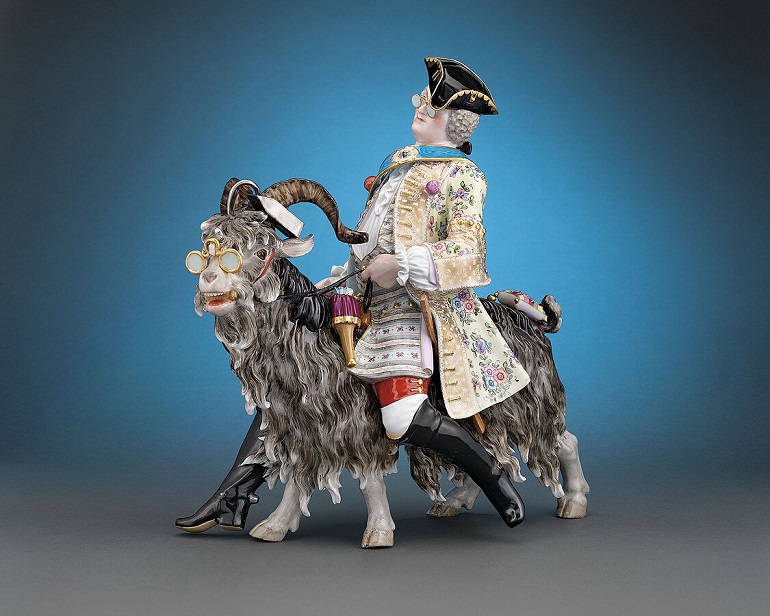
Meissen’s Porcelain Museum offers a deep dive into the art, technique, and history of European porcelain. As part of the “Meissen World of Experience”, the museum showcases around 3,500 masterpieces—ranging from Baroque showpieces like the Swan Service to monumental sculptures and contemporary works. Multimedia exhibits and films illustrate the origins of Meissen porcelain, from the famous experiments of Johann Friedrich Böttger to present-day production. Visitors can watch live demonstrations in the adjacent workshops, witnessing the full process from raw material to finished painted decoration. The museum is designed for family visits, with special tours and activities for children, a well-stocked shop, and a café for refreshments.
Museum unterwegs Meißen e.V.
Museum unterwegs Meißen e.V. (“Museum on the Move”) is a hands-on, educational museum without a fixed site. Instead, it carries history and culture directly to local communities through interactive workshops and exhibitions in schools and public spaces. Its approach is highly experimental and participatory, encouraging children and young people to engage with history, contemporary issues, and environmental themes in a tactile, lively way. This flexible, travelling format makes it especially suitable for families, schools, and anyone seeking an interactive learning experience.
Local Cuisine
Visitors to Meissen can savour hearty specialities such as Saxon Sauerbraten, a marinated pot roast often served with red cabbage and dumplings, or indulge in Meissner Fummel, a delicate, hollow pastry once devised to test the sobriety of coach drivers. Another highlight is Meissner Schwerter Bier, brewed in one of Germany’s oldest private breweries, best enjoyed with rustic fare. To complement the flavours of the region, Meissen is also renowned for its Elbe Valley wines, particularly crisp whites that pair perfectly with local dishes. Together, these tastes offer an authentic glimpse into Saxon hospitality and tradition.
Getting There
By train Meissen is easily reached from Dresden, with regular regional trains connecting the city to Meissen in under an hour, making it a convenient and scenic journey along the Elbe Valley.
By coach or bus Travellers can also opt for regional and long-distance buses, which link Meissen with Dresden and other towns in Saxony, providing an accessible option for reaching the city centre directly.
By car Drivers can take advantage of the well-maintained road network, with the A4 motorway providing access via Dresden and local roads leading directly into Meissen, allowing for a flexible and picturesque trip through the Saxon countryside.