



| Contents |
|---|

Introduction
Ingolstadt (pop. 142,500) is an agreable traditional city on the banks of the River Danube. Known as a major industrial and educational centre, it is home to the headquarters of the car manufacturer Audi and the historic Ingolstadt University, one of the oldest in the region. The city preserves much of its medieval architecture, including sections of the old city wall, Gothic churches, and the impressive Neues Schloss. The city boasts a few fine museums, notably the Bavarian Army Museum and the German Museum of Medical History. Ingolstadt was the setting for the novel Frankenstein by Mary Shelley.
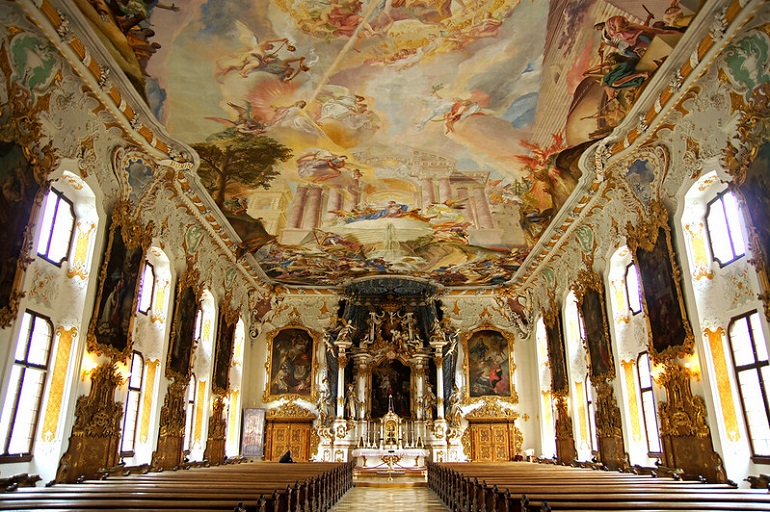
The ceiling of the Asamkirche is the world's largest fresco on a flat surface.
Interesting Facts about Ingolstadt
- Ingolstadt is famously known as the birthplace of Audi, one of Germany’s leading car manufacturers.
- From 1392 to 1447, Ingolstadt was the capital of the Duchy of Bavaria-Ingolstadt within the Holy Roman Empire.
- Ingolstadt is where the Bavarian Beer Purity Law (Reinheitsgebot) was proclaimed in 1516, shaping brewing standards worldwide.
- The first university in Bavaria was established in Ingolstadt in 1472, quickly becoming renowned across Europe.
- Mary Shelley set parts of her famous novel "Frankenstein" in Ingolstadt, particularly referencing its old medical school.
- The city’s medieval fortifications, including the distinctive Kreuztor gate, are among the best preserved in Bavaria.
- Ingolstadt’s Liebfrauenmünster (Church of Our Lady) is the largest Gothic hall church in southern Germany and reputedly required 4,000 trees to build its roof.
- The Illuminati secret society was founded in Ingolstadt in 1776 at the university.
- Ingolstadt served as a Bavarian state fortress for centuries and successfully withstood a Swedish siege during the Thirty Years’ War.
- During World War I, future French president Charles de Gaulle was held as a prisoner of war in the city.
- Ingolstadt is the second largest city in Upper Bavaria and the fifth largest in Bavaria as a whole.
- The “Ingolstädter Weißbierbrauerei” is the oldest brewery in Bavaria, dating back to 1392.

History
Ancient Origins and Medieval Glory
Ingolstadt's rich history stretches back over a millennium, with the city first mentioned in a document by Charlemagne in 806 as "Ingoldes stat"—the place of Ingold. Archaeological evidence suggests settlement in the area dates back to the Bronze Age, but it wasn't until 1250 that Ingolstadt was granted city status. The city's golden age began in 1392 when it became the capital of the Duchy of Bavaria-Ingolstadt, one of three duchies created after Bavaria's division. This elevated status lasted until 1447 when the duchy was absorbed into Bavaria-Landshut following the death of the last duke without an heir. During this period, Duke Ludwig the Bearded commissioned the construction of the impressive New Castle (Neues Schloss) from 1418 onwards, which served as the ducal residence and remains one of the city's most striking landmarks today.
Centre of Learning and Religious Reform
In 1472, Duke Ludwig IX founded Bavaria's first university in Ingolstadt, which quickly became one of Europe's most prestigious centres of learning alongside Prague and Vienna. The University of Ingolstadt played a crucial role in the Counter-Reformation, with notable scholars such as Johann Eck defending Catholic doctrine during the Protestant Reformation. The university attracted students and academics from across the continent before being relocated to Landshut in 1800 and eventually to Munich in 1826, where it became the Ludwig-Maximilians-University. Ingolstadt's significance in Bavarian legal history was cemented in 1516 when Duke William IV wrote and signed the famous Bavarian Reinheitsgebot (Beer Purity Law) within the city. The city's wealth during the medieval period was largely built on the salt trade along the Danube River, which provided a vital commercial link between Bavaria and other regions.
Fortress Town and Modern Renaissance
Throughout the late medieval and early modern periods, Ingolstadt developed into one of Bavaria's most formidable fortress cities. The city's defensive capabilities were tested during the Thirty Years' War when, in 1632, it became the first German fortress to successfully withstand a Swedish siege, though the famous Imperial field marshal Johann Tserclaes, Count of Tilly, died within its walls from wounds sustained in battle. The 19th century saw Ingolstadt transformed into a major Bavarian state fortress under the direction of architect Leo von Klenze, whose neo-classical fortifications, including the Reduit Tilly and various towers, remain preserved today. The city suffered considerable damage during the Second World War through bombing and fighting, but underwent rapid reconstruction and expansion in the post-war period. The influx of over 5,000 refugees and displaced persons, particularly from the Sudetenland, significantly increased the population and contributed to Ingolstadt's modern transformation into a major industrial centre, most notably as the headquarters of Audi.
Main Attractions
Old Town
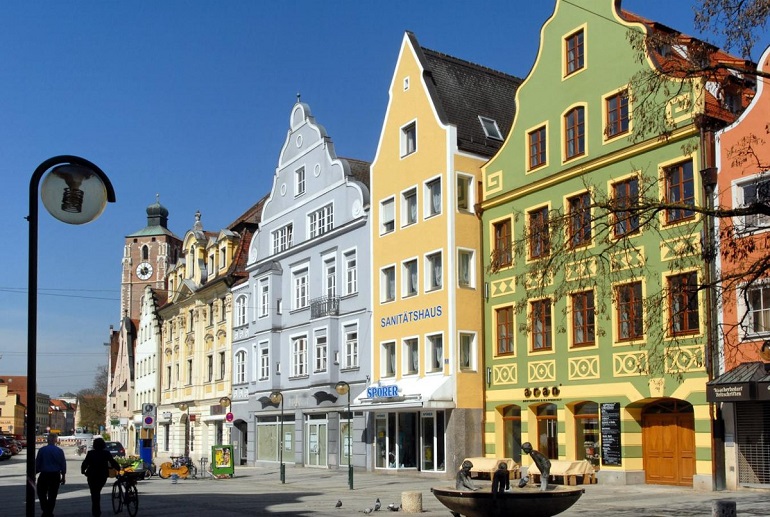
Ingolstadt's Old Town is a well-preserved historic district characterised by a network of narrow streets and lovingly restored gabled merchants' houses. It contains a high concentration of the city's most significant buildings, representing Gothic, Baroque, and neo-classical architectural styles. Key landmarks include the medieval Kreuztor gate, one of the most beautiful of the remaining city gates, the thirteenth-century Old Castle, the New Palace, the Gothic hall church of Liebfrauenmünster, and the Altes Rathaus. The entire district reflects Ingolstadt's history as a ducal residence and a fortified city.
Altes Rathaus
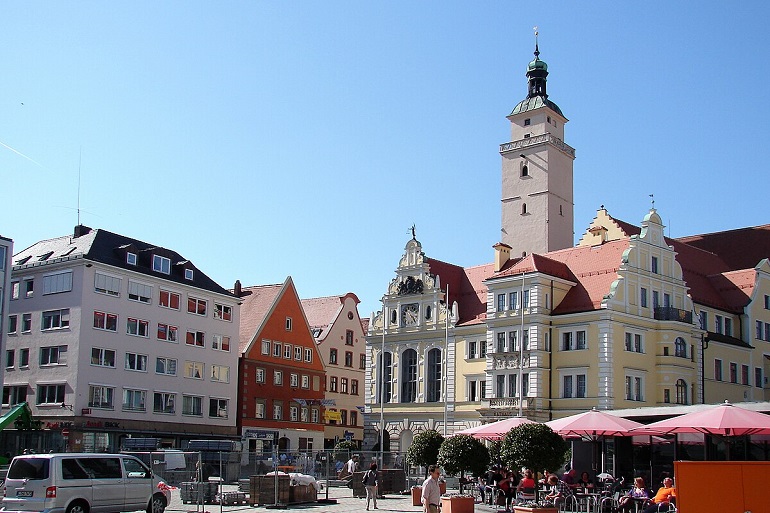
The Altes Rathaus, or Old Town Hall, stands on Rathausplatz and serves as a prominent landmark in the historic city centre. Its current neo-Renaissance form dates from a significant redesign between 1882 and 1884 by the architect Gabriel von Seidl, who unified four separate fourteenth-century buildings into a single cohesive structure. The highly decorative façade is notable for its intricate stonework, oriel windows and steep gables, reflecting the historicist style popular in late nineteenth-century Bavaria. While the building's exterior preserves its historical character, the interior has been adapted for modern administrative use. It houses the office of the Lord Mayor and provides chambers for city council meetings. The adjacent square remains a hub of civic life, frequently hosting markets and public events.
Pfeifturm
Standing 63 metres tall next to St. Moritz Church, the Pfeifturm, or Whistling Tower, is one of Ingolstadt's most recognisable landmarks. Its square base dates from the thirteenth century, while the octagonal upper section and pointed spire were added in the fifteenth century. For centuries, it served as the central watchtower for the city guard, whose duty was to watch for fires and approaching enemies. The tower keeper, or Türmer, lived in the tower and was required to sound a horn every quarter of an hour until the post was abolished in 1938. Today, visitors can climb the 201 steps to the observation deck for panoramic views over the old town, the Danube river, and the surrounding flatlands.
Ingolstadt University
The original University of Ingolstadt was founded in 1472 by Duke Ludwig the Rich and was the first university to be established in Bavaria. Housed in a building known as the Hohe Schule, it was created with faculties of theology, law, medicine, and arts. During the Reformation, the university became a major centre of the Catholic Counter-Reformation under the influence of theologian Johann Eck and was later controlled by the Jesuit order. The university was relocated to Landshut in 1800 by order of the Elector Maximilian IV and was subsequently moved to Munich in 1826, where it continues today as the Ludwig-Maximilians-Universität. A new higher education institution, the WFI – Ingolstadt School of Management, was established in the city in 1989.
Festung Ingolstadt
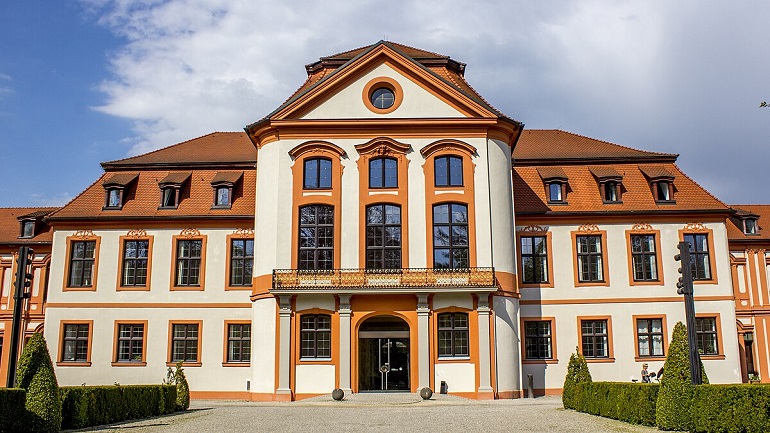
The Festung Ingolstadt is the collective name for the city's extensive fortifications, which evolved from a medieval defensive wall into a major nineteenth-century Royal Bavarian State Fortress. While sections of the medieval wall and gates like the Taschenturm are preserved, the most prominent remains are from the classicist expansion directed by architect Leo von Klenze between 1828 and 1848. This expansion created a formidable ring of defensive works, including imposing forts such as the Fronte Raglovic and Kavaliers like the Turm Triva. On the south bank of the Danube, the Reduit Tilly, a large redoubt, formed a key part of the fortress's bridgehead and now anchors the Klenzepark.
Churches
Asamkirche Maria de Victoria
Constructed between 1732 and 1736, this church is a masterpiece of the late Baroque and Rococo periods, designed and executed by the brothers Cosmas Damian and Egid Quirin Asam. Initially built as an oratory for the Marian Student Congregation, it is a prime example of a Gesamtkunstwerk, or total work of art, where architecture, painting, and sculpture are seamlessly integrated. Its most celebrated feature is the vast, flat ceiling fresco by Cosmas Damian Asam, an allegorical depiction of the Incarnation of Christ that covers over 460 square metres. The high altar was specifically designed to display the Lepanto monstrance, an exceptionally valuable work of goldsmithing from 1708 that commemorates the Christian victory at the Battle of Lepanto.
Pfarrkirche St. Moritz
As the oldest church in Ingolstadt, the Pfarrkirche St. Moritz possesses a core that dates to the thirteenth century, evident in its surviving Romanesque structural elements. The building was later expanded in the Gothic style, with the addition of a high nave that significantly altered its interior proportions. Known locally as the 'Untere Pfarr' (Lower Parish), it stands in contrast to the grander Liebfrauenmünster. Inside, the church contains several notable artworks accumulated over centuries of worship. Adjoined to the church is the Pfeifturm, a slender watchtower that functioned as both the church belfry and the city's primary fire watch post, a role it maintained until the early twentieth century.
Franziskanerbasilika
Founded in 1275 as the monastery church for a Franciscan settlement, this basilica is a significant example of early Gothic architecture in Bavaria. Consistent with the principles of its mendicant order, the exterior is deliberately plain and austere, lacking a prominent tower. The interior, however, reveals a classic Gothic hall church design with high, rib-vaulted ceilings and tall lancet windows. The floor and walls are inlaid with a remarkable collection of medieval and Renaissance memorial slabs, commemorating local nobility, patrons, and professors from Ingolstadt’s former university, including the tomb of the renowned scholar Johannes Eck. In 1964, the church was elevated to the status of a basilica minor by the Pope.
Sebastians' Church
Located on Unterer Graben, the site of the former city moat, the Church of Saint Sebastian was erected in the early eighteenth century. Its construction fulfilled a civic vow made during a plague epidemic, as Saint Sebastian is traditionally invoked for protection against such pestilence. The building, designed by the master builder Franz Keller, is a fine example of Bavarian Baroque architecture, distinguished by a characteristic onion dome. The interior is particularly noted for its elaborate stucco ornamentation, created by artists from the Wessobrunn School, which adorns the vaults and frames the ceiling frescoes. The high altar and side altars are also richly decorated, reflecting the church's role in local devotional life.
Parks
Klenzepark Ingolstadt
This large public park stretches along the southern bank of the Danube, occupying the former glacis—the clear, open field of fire—in front of the nineteenth-century fortress. It was extensively redesigned for the 1992 State Garden Show (Landesgartenschau) and named after the fortress's principal architect, Leo von Klenze. The park masterfully integrates historical military structures, such as the Reduit Tilly and Turm Triva, into its landscape of formal gardens, fountains, and riverside promenades. It serves as a vital green corridor, connecting the historic old town via a footbridge to the south bank, and hosts numerous open-air concerts, festivals, and cultural events throughout the year.
Piuspark Ingolstadt
Situated in the Friedrichshofen quarter, Piuspark is a more traditional municipal park with origins in the nineteenth century. It was initially established as the city's western cemetery (Westfriedhof) before being converted into a public park, a history that accounts for its formal layout, mature tree population, and tranquil atmosphere. Named after Pope Pius IX, the park provides a valuable green space for local residents, featuring open lawns, winding pathways, a children's playground, and a skateboarding area arranged around a central rectangular greensward. Its smaller scale and more contemplative character offer a contrast to the city's larger, event-focused parks.
Nord-Park Ingolstadt
The Nord-Park on Hebbelstraße is a key segment of the green belt that now occupies the former northern glacis of the nineteenth-century fortress. This historical function defines its long, linear character and its position on the periphery of the expanded city centre. The park features an informal landscape of open meadows, woodland trails, and mature trees, making it a popular destination for local residents for walking, jogging, and casual recreation. It connects seamlessly with adjacent green spaces, forming an extensive network of parks that follow the line of the old fortifications and provide ecological corridors within the urban environment.
Baggersee Lake recreational area
This large artificial lake, known simply as the Baggersee (Excavator Lake), was created from a former gravel quarry to the north of the city. It has since been developed into Ingolstadt's primary summer recreational facility, offering a wide range of amenities for visitors. The site includes a designated and supervised swimming zone with a non-swimmer area, extensive lawns for sunbathing, picnic tables, and permanent barbecue pits. For sports enthusiasts, there are beach volleyball courts, tennis facilities, and a circular path of approximately 3.5 kilometres around the lake that is popular for cycling, jogging, and inline skating. A restaurant and kiosk provide refreshments on-site.
Wild Park at the lake
Located adjacent to the Baggersee recreational area, the Wildpark am Baggersee is a wildlife enclosure covering approximately 11 hectares. Established in the early twentieth century and managed by the city, it allows visitors to observe native European animal species in spacious, semi-natural habitats. The park houses populations of red deer, fallow deer, bison, wild boar, and mouflon (wild sheep). It is a particularly popular destination for families with children and serves an educational purpose by promoting awareness of local fauna. The park operates without an entrance fee, ensuring it remains a freely accessible public amenity for all residents and visitors.
Zoo Wasserstern
The Zoo Wasserstern is a small zoological garden on Aloisiweg, run by a non-profit association of aquarium and terrarium enthusiasts founded in 1952. Its community-based origins are reflected in its intimate scale and specialised focus. As its name ("Water Star") suggests, the zoo has a strong collection of aquatic and reptilian life in its aquarium and terrarium houses. It is also home to over one hundred other species, primarily small mammals like meerkats and various primates, as well as a diverse range of exotic birds housed in themed enclosures and aviaries. Its compact size and a petting area with rabbits and guinea pigs make it especially suitable for young children.
Astronomiepark Ingolstadt
Also known as the Planetenpark (Planet Park), this educational trail is situated on the Scherbelberg, a small hill on the grounds of the former fortress that was formed from its demolition rubble. The park features a scale model of the solar system, with the 'sun' located at the hill's highest point. From there, a trail of approximately 1.5 kilometres leads visitors past markers representing each planet, set at proportionally accurate distances. The scale is 1:1 billion for the size of the celestial bodies and 1:2.8 billion for the interplanetary distances, providing a tangible understanding of the solar system's immense scale. Informational panels at each station provide key facts about the planets.
Top Museums
Technology & Motoring
Audi museum mobile
A circular glass-and-steel tower rising 22 metres forms the heart of the Audi Forum. Inside, more than 100 cars and two-wheelers trace the marque’s lineage back to 1899, embracing Horch, DKW, Wanderer and NSU as well as Audi itself. A gently revolving paternoster lift ferries historic vehicles past visitors, while interactive displays explore design, motorsport triumphs and the social backdrop to each era. The result is both a technical showcase and a cultural time-capsule of 20th-century mobility.
History & Society
Bavarian Army Museum (Bayerisches Armeemuseum)
The museum occupies three historic forts:
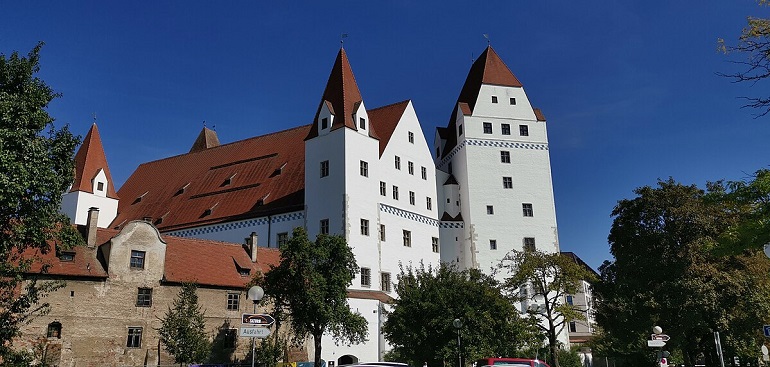
- Neues Schloss – a 15th-century Gothic palace whose vaulted halls host ‘Forms of War 1600–1815’, featuring pike-length armour, siege models and rarities such as a 16th-century conquistador’s outfit and a captured Ottoman campaign tent.
- Reduit Tilly – a riverside bastion converted into one of Europe’s largest First World War displays, complete with trench dioramas and wartime film footage.
- Turm Triva – see Bavarian Police Museum below.
Together they chart conflict from mediaeval mercenaries to the mechanised carnage of 1914–18, always with a Bavarian perspective.
Bavarian Police Museum
Housed in Leo von Klenze’s monumental Turm Triva, this affiliated branch explores law-enforcement history from the 1918–19 Revolution through the Cold War and on to modern protest movements. Authentic uniforms, badges and weaponry line the casemates; standout pieces include two VW Beetle patrol cars, BMW motorcycles and forensic exhibits on the 1972 Munich Olympics. The curators confront darker chapters unflinchingly, examining policing under Nazism and the lessons drawn since.
Stadtmuseum Ingolstadt
Cavalier Hepp, a 1840s fortress outwork, shelters 41 rooms that map Ingolstadt’s story from prehistory to the present. Highlights include a 3,000-year-old amber necklace, finds from the nearby Celtic oppidum at Manching, Gustav Adolf’s grey war-horse from the Thirty Years’ War and a scale model of the town circa 1571. Later galleries trace the university era, Enlightenment Illuminati, industrial boom and the city’s identity as die Schanz – the fortified stronghold that gave locals their nickname. A toy section and separate Bauerngerätemuseum of agricultural tools extend the portrait of daily life.
Science & Medicine
Deutsches Medizinhistorisches Museum
The late-Baroque Alte Anatomie (1723–36) once taught anatomy to Bavaria’s first university; today its frescoed lecture hall introduces a chronological journey through European medicine. A 2020 refit added a modern wing yet preserved period ambience. Upstairs focuses on 18th-century diagnosis and dissection, while the ground floor picks out twenty-one “Starke Dinge” – emblematic objects from ear trumpets to early X-ray tubes. Outside, a physic-garden revives the original hortus medicus, and a café lets visitors linger among medicinal herbs.
Art & Design
Museum für Konkrete Kunst (MKK)
Founded on poet Eugen Gomringer’s collection, the MKK presents non-figurative, rule-based art alongside design classics by the Ulm School and Bauhaus. Until its new riverside home opens in 2025, the museum occupies 18th-century barracks where the interim exhibition In Preparation reveals the often-hidden craft of restoration, complete with an “open lab” for live demonstrations. Expect regularly changing shows that treat concrete art as a living, exploratory discipline.
Lechner Museum
A former Audi press-shop transformed into a minimalist, aluminium-clad hall now celebrates steel sculptor Alf Lechner (1925–2017). The basement long displayed his monumental 51-block installation Eisenmeer WV 588, while the airy upper floor hosts rotating surveys of Lechner’s austere yet poetic manipulation of mass and void. Joint ticketing with the MKK encourages a dialogue between rigorous abstraction and heavy-metal sculpture. For an even grander encounter, the affiliated Skulpturenpark in Obereichstätt sets Lechner’s titanic works against a quarry cliff-face.
Local Cuisine
Among the most beloved dishes are Weißwurst – tender white sausages typically served with sweet mustard and Brezn (pretzel) – and the richly flavoured Schweinshaxe, a roasted pork knuckle accompanied by sauerkraut and potato dumplings. Meat lovers will also find an abundance of roasted sausages and pork roasts, while local bakeries tempt visitors with freshly baked breads and both salty and sweet pretzels. Beer is central to Ingolstadt's food culture, with the city holding a special place in history as the birthplace of the German Beer Purity Law, and varieties such as Dunkel (dark beer) and Weißbier (wheat beer) are especially popular. For those seeking a lighter fare, a classic Bavarian potato salad often accompanies meals, providing a satisfying yet refreshing counterpoint to the robust flavours of the region's cuisine.
Getting There & Around
By train, Ingolstadt is exceptionally well connected, with frequent Deutsche Bahn services linking it directly to major cities such as Munich, Nuremberg, Augsburg, Ulm, and Regensburg. High-speed ICE trains from Munich can bring you to Ingolstadt in as little as 36 minutes, with multiple trains running hourly. Upon arrival at Ingolstadt Hauptbahnhof, travellers can reach the city centre or key sites like Ingolstadt Village using regular local buses or taxis.
By coach or bus, several companies, including FlixBus and BlaBlaCar, operate long-distance services connecting Ingolstadt with various European cities. There are four main bus stations in Ingolstadt, and the city is served by dozens of routes per day. For those coming from nearby cities, check for direct or indirect routes, as the coach is often the most budget-friendly option.
By car, Ingolstadt is easily accessible via the A9 motorway, which runs between Munich and Nuremberg. Drivers should take the Ingolstadt-Süd exit and follow signs toward the city centre; popular local attractions and parking are well signposted from the main roads, making navigation straightforward for visitors.


