Germany Guide  |
|---|
|
| | Top German Cities |
|---|
|
| | Top National Parks |
|---|
|
| | Photos |
|---|
|
| | German States |
|---|
|
| | Europe Guide |
|---|
|
| | Travel Tools |
|---|
|
|
|
|
Highlights of Germany by region
 Reichstag, Berlin. Reichstag, Berlin.
Must-see destinations in Germany
Eupedia is committed to delivering impartial and objective ratings for destinations and attractions featured in its travel guides, employing a set of well-defined criteria. Our evaluation process is comprehensive, comparing sights not only within specific regions or countries but also across European nations. This approach ensures consistency in ratings across all locations, maintaining a uniform standard of assessment.
The rating system is designed to identify and highlight truly exceptional destinations, regardless of their geographical location. As a result, the distribution of highly-rated attractions may not be uniform across regions. Some areas may lack top-tier attractions, while others may boast numerous must-see locations.
Eupedia prioritizes objectivity in its assessments, eschewing a "politically correct" approach that would artificially balance the number of highly-rated attractions across regions. This commitment to unbiased evaluation allows travelers to make informed decisions based on the genuine appeal and significance of each destination, rather than on a predetermined quota system.
By maintaining this rigorous and impartial rating methodology, Eupedia aims to provide travelers with reliable and valuable information to enhance their European travel experiences.
North Germany
| Bückeburg Palace |
|---|

 Bückeburg Palace stands as a magnificent testament to over 700 years of noble history. This Renaissance palace has been in the possession of the family of the Counts of Holstein-Schaumburg, later the Princes of Schaumburg-Lippe, for more than seven centuries and continues to serve as their ancestral seat today. Surrounded by extensive gardens and parks covering more than 80 hectares, the palace complex includes not only the main building with its historic state rooms but also the largest private mausoleum in the world and a Royal Riding School with a tradition dating back 400 years. The palace, which lies in the centre of the town of Bückeburg, draws visitors from far beyond the local area, enchanting them with its blend of architectural styles spanning four centuries, from Renaissance to Baroque and Historicism. |
| Celle |
|---|
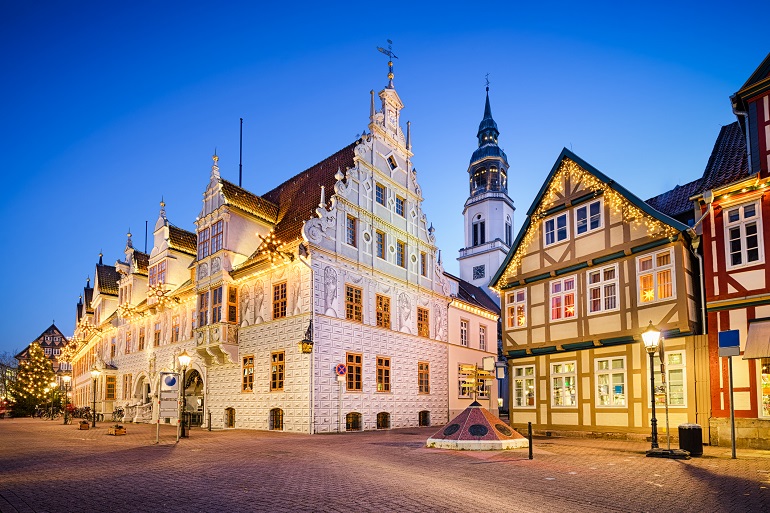
Celle is a historic town in Lower Saxony, Germany, situated on the banks of the River Aller at the southern edge of the Lüneburg Heath. With a population of about 71,000, it is one of the largest Lower Saxon towns between Hanover and Hamburg. The town is renowned for its remarkably preserved Old Town featuring around 450-500 half-timbered houses dating from the 16th to 18th centuries. Celle's most prominent landmark is its ducal palace, which dates back to 1292 and combines Renaissance and Baroque architectural styles. From 1378 to 1705, Celle served as the official residence of the dukes of Brunswick-Lüneburg. Today, the town is known for its cultural offerings, including the Bomann Museum, the Celle Museum of Art (the world's first 24-hour art museum), and the oldest working Baroque theatre in Germany housed within the palace. The town's picturesque setting, rich history, and well-preserved architecture make it a popular destination for both German and international visitors. |
| Goslar ※ |
|---|

Goslar, a thousand-year-old town nestled on the northern edge of the Harz Mountains in Germany, is a UNESCO World Heritage Site renowned for its rich history and well-preserved medieval architecture. Founded in the 10th century, this former imperial city boasts an impressive array of cultural treasures, including approximately 1,500 half-timbered houses dating from the 15th to 19th centuries, the Romanesque Imperial Palace, and the historic Rammelsberg Mine. The old town, largely surrounded by former defensive structures and green spaces, reflects the economic importance of mining in the region, with its layout and buildings showcasing the mutual balance of technical, social, and economic developments over a millennium of historical mining. Visitors to Goslar can explore its charming market square, numerous museums, churches, and the Upper Harz Water Management System, another UNESCO World Heritage Site, making it an ideal destination for those interested in history, culture, and picturesque German towns. |
| Lüneburg |
|---|

Lüneburg (pop. 77,500) is a former Hanseatic city that grew rich on salt mining, beer brewing and trade in the Middle Ages. Today it is a quiet and handsome historic town with stepped gable and timber-framed façades. Its leaning buildings, dislocated by centuries of mining, give the place a unique charm. The compact old town features stepped-gable façades and timber-framed houses, with several buildings showing a characteristic lean due to ground subsidence from centuries of underground salt extraction. |
| Wolfenbüttel |
|---|

Located 12 km south of Braunschweig, Wolfenbüttel is a relaxed historical town filled with half-timbered houses. It is one of the best preserved hsitorical towns in the northern half of Germany along with nearby Goslar and Quedlinburg. With origins dating back to the 10th century and first officially documented in 1118, this picturesque town combines rich history, stunning architecture and a vibrant cultural scene. For some 400 years until 1754, Wolfenbüttel served as the residence of the Dukes of Braunschweig and Lüneburg, with the impressive baroque Schloss Wolfenbüttel standing as testament to this period. The town is particularly renowned for the Herzog August Bibliothek (Duke August Library), founded in 1572 and housing over 900,000 books including rare manuscripts. With approximately 53,000 inhabitants, Wolfenbüttel retains its historical character through several hundred well-preserved half-timbered buildings, many dating back centuries, as the town was largely undamaged during the war. |
| Schwerin |
|---|

 Schwerin, the capital of Mecklenburg-Vorpommern in northeastern Germany, is the state's oldest city, first mentioned in 1018 and granted city rights in 1160. Known as the "Venice of the North", this charming city is built around seven lakes, with Schweriner See being the largest at 63 square kilometres. The city's iconic landmark is the fairy-tale Schwerin Castle, situated on an island in Lake Schwerin, which served as the residence of the Dukes of Mecklenburg for centuries and now houses the state parliament. Since 2024, the castle and surrounding residential buildings have been designated as a UNESCO World Heritage Site. With just under 100,000 residents, Schwerin is Germany's smallest state capital, yet it offers a rich cultural experience through its State Museum with impressive art collections, the Gothic Schwerin Cathedral dating back to the 13th century, and a vibrant calendar of events including the Schlossfestspiele castle theatre festival. |
| Naumburg ※ |
|---|

Naumburg (pop. 33,000) is a charming town known primarily for its imposing cathedral. Built in the 12th century, it is a magnificent example of the transition from Romanesque to Gothic styles. It features some of Germany's oldest stained-glass windows and is unique for having two choirs. The cathedral is also famous for its sculptural works created by the Naumburg Master, a medieval sculptor whose identity remains uncertain but whose work is highly regarded for its naturalism and emotional expression. The Naumburg sculptures include life-sized portraits of important donors, known as the founder figures, such as the Patron Saint Elisabeth and Ekkehard and Uta. The cathedral was inscribed as a UNESCO World Heritage site in 2018. |
| Quedlinburg ※ |
|---|

Quedlinburg, a UNESCO World Heritage site nestled at the northeastern edge of the Harz Mountains in Germany, boasts over 1,000 years of rich history. The medieval town is renowned for its exceptional collection of 2,069 well-preserved half-timbered houses spanning eight centuries, making it one of Germany's largest area monuments covering nearly 90 hectares. The town's skyline is dominated by the Castle Hill ensemble, featuring the Renaissance castle and the Romanesque Collegiate Church of St. Servatius, which houses valuable religious artefacts and serves as the burial site of King Henry the Fowler and Queen Mathilde. Visitors can explore the cobblestone streets of the historic old town, visit numerous museums including the Lyonel Feininger Gallery, and enjoy the surrounding natural beauty of the Harz region, which offers excellent hiking opportunities. The best time to visit is between May and September when the weather is mild, though December is also popular for its enchanting Christmas market set against the backdrop of medieval architecture. |
| Wernigerode |
|---|

Wernigerode, known as "the colourful town of the Harz Mountains," is a picturesque destination located on the northern edge of the Harz Mountains in Germany. This charming town is renowned for its well-preserved historic centre featuring lavishly restored half-timbered houses and cobbled streets. Dominated by the majestic Wernigerode Castle, which was originally a medieval fortress dating back to the 12th century, the town offers visitors a glimpse into 800 years of history. Wernigerode received its town charter in 1229 and developed as a significant trading hub. Today, with a population of over 32,000, it serves as an ideal base for exploring the Harz region, whether by the historic steam-powered Harz Narrow Gauge Railways, hiking trails, or road. The town experiences a temperate oceanic climate, making it suitable for visits year-round, though May to September is considered the best time to visit. |
| Berlin |
|---|
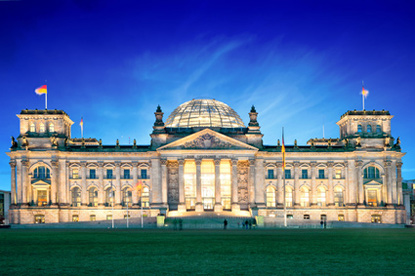
 Berlin, Germany's capital and largest city, is home to 3.9 million residents and stands as the European Union's most populous city (within the city boundaries). Located in eastern Germany along the Spree River, Berlin covers 891 square kilometers, with nearly one-third of its area composed of forests, parks, and waterways. The city seamlessly blends historical landmarks like the Brandenburg Gate, Reichstag building, and remnants of the Berlin Wall with contemporary culture, featuring over 180 museums, a vibrant arts scene, and diverse culinary offerings including 23 Michelin-starred restaurants. Berlin's extensive public transportation network spans 473 kilometers, making it easy to explore both the city's central districts and its leafy suburbs. The city's unique character emerges from its striking contrasts, where historical buildings stand alongside modern architecture, and its role as a hub for technology startups, politics, media, and science contributes to its dynamic atmosphere. |
| Potsdam |
|---|

Potsdam, the capital of the German state of Brandenburg, is a historic city located about 25 kilometres southwest of Berlin's city centre. With over 1,000 years of history, it is renowned for its UNESCO World Heritage sites, which include the Palaces and Parks of Potsdam covering approximately 500 hectares of parkland and encompassing 150 buildings dating from 1730 to 1916. The city served as a residence for Prussian kings and the German Emperor until 1918, and its planning embodied ideas of the Age of Enlightenment through a careful balance of architecture and landscape. Key attractions include Sanssouci Palace, the summer residence of Frederick the Great, the New Palace, Cecilienhof Palace (site of the 1945 Potsdam Conference), and the Dutch Quarter with its 134 distinctive red brick houses. Potsdam also boasts the famous Studio Babelsberg, one of Europe's oldest film studios, earning the city UNESCO Creative City of Film status in 2019. |
Central Germany
|
Monschau |
|---|

Monschau, often referred to as the "Pearl of the Eifel", is a charming historic town located in the Eifel region of western Germany, in the North Rhine-Westphalia state. Situated in the narrow valley of the Rur river, just 2km from the Belgian border, this small resort town boasts a beautifully preserved medieval centre with half-timbered houses and narrow cobblestone streets that have remained largely unchanged for over 300 years. Originally known as Montjoie, the name was changed to Monschau in 1918. The town's history dates back to 1198, with Monschau Castle being built at the end of the 12th century. Once a thriving centre for textile production in the 18th century, Monschau now primarily relies on tourism, welcoming approximately 2 million day visitors annually. With its picturesque setting within the Hohes Venn – Eifel Nature Park, distinctive architecture, and rich cultural heritage, Monschau offers visitors a glimpse into Germany's past whilst providing modern amenities and attractions for all seasons. |
|
Mainz |
|---|

Mainz, the capital of Rhineland-Palatinate, is immediately recognisable by the pink-reddish sandstones of its buildings. Located on the banks of the Rhine River, it boasts a rich heritage dating back to Roman times. As the birthplace of Johannes Gutenberg, inventor of the printing press, Mainz is home to the Gutenberg Museum, which showcases his revolutionary work. The city's skyline is dominated by the Romanesque St. Martin's Cathedral, a testament to its importance as a former prince-bishopric. Mainz is also renowned as Germany's wine capital, with the surrounding Rheinhessen region being the country's largest wine-growing area. Visitors can explore the charming old town with its half-timbered houses, enjoy the Mediterranean flair of the Rhine promenade, and experience the city's famous carnival celebrations, second only to those in Cologne. |
|
Kassel ※ |
|---|

Kassel rewards a visit with a rare mix of world-class art, accessible heritage and generous green space. At Bergpark Wilhelmshöhe, a UNESCO site, hillside fountains lead up to the Hercules monument and wide views across northern Hesse, while the nearby Grimmwelt museum explores the Brothers Grimm’s years in the city. Every five years documenta turns Kassel into a centre of contemporary art, yet its galleries, public sculptures and independent studios mean there is plenty to see between exhibitions. A compact layout and reliable trams help visitors move quickly from the riverside paths of Karlsaue Park to the cafés and shops of the Vorderer Westen, and high-speed rail links place Kassel within easy reach of Frankfurt, Berlin and Hamburg. Together, these qualities make the city a practical and rewarding choice for travellers who enjoy combining culture with time outdoors. |
|
Limburg an der Lahn |
|---|

Limburg an der Lahn is one of the most famous timber-framed towns in Germany. The characteristic white-and-red buildings date from between the 13th and 18th century and include the oldest free-standing house in Germany. The town's most prominent landmark is Limburg Cathedral, a building of late Romanesque and early Gothic design that sits on a rock overlooking the Lahn river and is distinguished by its seven towers. Visitors can also cross the 14th-century stone Lahn Bridge and visit the Diocesan Museum, which contains the cathedral's treasury and other religious art. The town's layout is suitable for exploring on foot. |
| Erfurt |
|---|

Erfurt (pop. 216,000), the capital of Thuringia, is a city known for its well-preserved medieval old town. Once called the "Thuringian Rome", the city is home to numerous notable landmarks including the impressive Erfurt Cathedral and St Severus Church, both located on Cathedral Hill. The Krämerbrücke, a medieval bridge lined with half-timbered houses, is one of the city’s most famous sights. The University of Erfurt, dating back to 1379, was the first university in what is now Germany. C |
| Gotha |
|---|

An attractive historic town, Gotha (pop. 46,000) was the capital of the Duchy of Saxe-Gotha from 1640, the the co-capital of the Duchy of Saxe-Coburg-Gotha from 1826 to 1918. The main sight is the grand, monumental Schloss Friedenstein, the former ducal palace. Erected between 1643 and 1655, it is Germany's oldest baroque palace and houses the oldest surviving baroque theatre in the world. Gotha also has a well-preserved old town, with notable buildings such as the town hall and St. Margaret’s Church. |
| Dresden (※) |
|---|

Dresden is often called the "Florence on the Elbe" due to its stunning Baroque architecture and rich artistic heritage. Despite suffering devastating destruction during World War II, Dresden has risen from the ashes to reclaim its position as one of Europe’s most beautiful and culturally vibrant cities. Dresden was the royal residence of the Electors and Kings of Saxony, especially during the 17th and 18th centuries when it flourished as a cultural and political center. Dresden State Art Collections houses one of the oldest and most prestigious art collections in Europe. In addition to its historical and artistic appeal, Dresden has a thriving modern cultural scene, with contemporary art galleries, live music venues, and a growing tech industry. The Neustadt district is particularly known for its bohemian vibe, street art, and trendy cafes. The Dresden Striezelmarkt is one of the oldest Christmas markets in the world, dating back to 1434. |
| Schloss Albrechtsberg (※) |
|---|

Albrechtsberg Palace is a beautiful neoclassical palace, set amid lush gardens. It was designed by the architect Giovanni Maria Nosseni and was built between 1850 and 1854 for Prince Albrecht of Saxony, a member of the ruling royal family. The design was inspired by the villas of northern Italy, incorporating elements of the Renaissance and Baroque periods. The palace is surrounded by a beautiful park, which is designed in a romantic style. The gardens are arranged with tree-lined paths, terraces, and lush green spaces, offering a tranquil and scenic environment. |
| Schloss Pillnitz (※) |
|---|

Located just outside Dresden, Schloss Pillnitz was constructed in the early 18th century as a royal summer residence for Augustus II the Strong, the Elector of Saxony, King of Poland and Grand Duke of Lithuania. The palace's mix of Baroque and Chinese architectural styles makes it a unique attraction. The complex consists of three main buildings: the Upper Palace (Oberes Schloss), the Lower Palace (Unteres Schloss), and the Pillnitz Pavilion. The pavilion incorporates Chinese architectural elements, such as pagoda-like roofs, intricate wooden carvings, and oriental motifs. The palace is surrounded by formal Baroque gardens, naturalistic English-style parkland, as well as a Terrace Garden overlooking the Elbe River. |
| Görlitz |
|---|

Görlitz, situated on the easternmost edge of Germany, along the Lusatian Neisse River, is a stunning city steeped in history, culture, and architectural beauty. Known as "Germany's Best-Preserved City" or the "Pearl of Silesia", it boasts over 4,000 preserved historic buildings spanning various architectural styles. Görlitz is also famous for its cinematic charm, frequently serving as a backdrop for Hollywood films. Görlitz is often called “Germany’s Largest Open-Air Museum” because of its incredibly well-preserved architecture, encompassing styles as diverse as Gothic, Renaissance, Baroque and Art Nouveau. |
|
Saxon Switzerland National Park |
|---|

 Saxon Switzerland National Park is one of the most breathtaking natural landscapes in Germany, located at the confines of the state of Saxony and the Czech Republic. Known for its dramatic sandstone rock formations, deep valleys, lush forests, and picturesque villages, the park is a haven for outdoor enthusiasts, nature lovers, and adventure seekers. The park is famous for its Elbe Sandstone Mountains, a unique range of jagged, towering sandstone cliffs that rise dramatically above the Elbe River. These formations are the result of millions of years of erosion, creating an otherworldly landscape of spires, pinnacles, and deep ravines. |
South Germany
|
Heidelberg |
|---|

Heidelberg, a picturesque city in southwestern Germany, is renowned for its romantic charm and rich history. Situated along the Neckar River and surrounded by lush forests, this city of approximately 163,000 inhabitants is home to Germany's oldest university, founded in 1386. The city's skyline is dominated by the iconic Heidelberg Castle, a magnificent ruin perched atop a hill overlooking the Old Town. Heidelberg's well-preserved medieval and Baroque architecture, including the Old Bridge and the Church of the Holy Spirit, attracts millions of visitors annually. Beyond its historical appeal, Heidelberg is a thriving centre of science and research, hosting numerous internationally acclaimed institutes and research-based companies. The city's vibrant cultural scene, coupled with its picturesque setting, makes it a popular destination for tourists and students alike. |
|
Schwetzingen Palace |
|---|
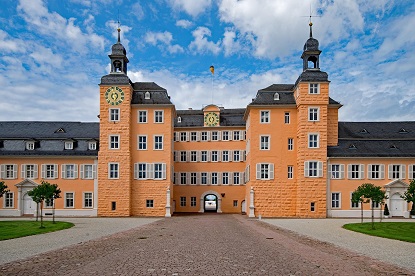
Schwetzingen Palace is an 18th-century baroque summer residence located near Heidelberg, originally built as a moated castle in 1350 and transformed into its current form from 1697 onwards under the Electors Palatine. The palace served as the summer residence for Prince Elector Carl Theodor from 1742 to 1799, during which time it reached its architectural and cultural zenith with the addition of the palace theatre in 1752—Europe's first theatre with galleries and now the oldest surviving example. The complex encompasses over 72 hectares of meticulously preserved gardens that blend French baroque design with later English landscape elements, featuring more than 100 sculptures and exotic architectural follies including a decorative mosque, the Temple of Apollo, and an Italian-style bath house. Today, visitors can explore approximately 30 palace rooms containing original 18th and early 19th-century furnishings, while the palace theatre continues to host performances as part of the annual Schwetzingen Festival, maintaining the site's role as both a significant cultural monument and active venue for the arts. |
|
Ludwigsburg Palace |
|---|

Known as the "Swabian Versailles," Ludwigsburg Palace stands as one of Europe's largest and most impressive original Baroque complexes. This splendid estate comprises 18 buildings containing 452 rooms, reflecting the power and wealth of the dukes and kings of Württemberg who once called it home. The palace complex, with its lavish architecture featuring arches, columns, frescoes, and chandeliers, offers visitors a journey through three centuries of royal history and architectural styles. Surrounded by spectacular gardens on three sides, the entire estate covers 32 hectares (79 acres), making it the largest palatial estate in Germany. The unique blend of Baroque, Rococo, and Neoclassical elements creates an architectural symphony that captivates visitors from around the world. |
|
Freiburg im Breisgau |
|---|

Freiburg im Breisgau, often simply called Freiburg, is a charming city in southwestern Germany, situated on the edge of the Black Forest. As the fourth-largest city in Baden-Württemberg, it boasts a population of about 355,000 in its built-up area. Known for its sunny climate, Freiburg is renowned for its commitment to sustainability and eco-friendly practices. The city's rich history is evident in its well-preserved Old Town, which features the iconic Freiburg Minster, a Gothic masterpiece dating back to the 13th century. Freiburg is also home to one of Germany's oldest universities, founded in 1457, contributing to its vibrant intellectual atmosphere. The city's unique Bächle, small water channels running through the streets, add to its distinctive character. With its picturesque setting, cultural attractions, and proximity to France and Switzerland, Freiburg serves as an excellent base for exploring the region. |
|
Tübingen |
|---|

Tübingen, a charming university town in southwestern Germany, is nestled along the Neckar River in the state of Baden-Württemberg. With a history dating back over 900 years, this picturesque city is renowned for its well-preserved medieval old town, featuring steep steps, narrow lanes, and pointed gabled houses. Home to the prestigious University of Tübingen, founded in 1477, the city boasts a vibrant academic atmosphere with nearly one-third of its 90,000 residents being students. Tübingen offers a blend of cultural attractions, including the imposing Hohentübingen Castle, the Gothic Stiftskirche, and numerous museums showcasing art and archaeology. The town's lively market square, crowned by the 15th-century Town Hall with its ornate astronomical clock, serves as a focal point for local life and events. |
|
Hohenzollern Castle |
|---|

Perched majestically atop Mount Hohenzollern at an elevation of 855 metres, Hohenzollern Castle stands as one of Germany's most impressive and iconic fortresses. This ancestral seat of the Hohenzollern dynasty, who later became Kings of Prussia and German Emperors, offers visitors a fascinating glimpse into German royal history while providing breathtaking panoramic views of the Swabian Alps. The castle's strategic position not only served defensive purposes throughout history but also creates a picturesque silhouette against the sky that has captivated visitors for generations. Emperor William II himself claimed the view from the castle was "truly worth a journey," and indeed, on clear days, visitors can see all the way to the Alps. The golden-hued bricks of this neo-Gothic masterpiece shimmer in the sunlight, creating an almost mystical appearance that seems to belong more in a fairy tale than in reality. Today, the castle remains in the ownership of Prince George Frederick, the current head of the Prussian branch of the Hohenzollern family, and when he visits, the royal family flag flies proudly from the Watch Tower. |
|
Ravensburg |
|---|
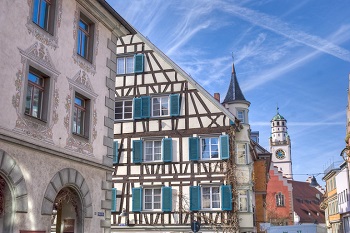
Ravensburg is a city known for its well-preserved medieval town centre. Often called the "City of Towers and Gates," its skyline is defined by numerous historic structures, including the white Mehlsack tower, which offers views across the region, and the Blaserturm, which can be climbed for a closer look at the old town. Historically a Free Imperial City, Ravensburg maintained economic significance for centuries. Today, it is recognised internationally as the home of the puzzle and games company, Ravensburger AG, which was founded here in the 19th century and remains a major local employer. |
|
Konstanz |
|---|

Konstanz, situated on the shores of Lake Constance and bordering Switzerland, offers a unique blend of scenic beauty, vibrant city life, and cultural experiences. The well-preserved old town features medieval buildings and interesting museums, while the lively harbour area provides opportunities to enjoy lake cruises and panoramic views of the Alps. Visitors can explore the university's influence in local cafés and shops, and nearby attractions such as Mainau Island with its botanical gardens add to the appeal. With its combination of natural landscapes, historical architecture, and proximity to both water and mountains, Konstanz is an attractive destination for travellers looking for relaxation as well as exploration. |
|
Meersburg |
|---|

Meersburg (pop. 6,000) is a town situated on the northern shore of Lake Constance (Bodensee in German). he town is renowned for its two contrasting castles: the medieval Burg Meersburg, believed to date from the 7th century and recognised as Germany's oldest inhabited castle, and the baroque Neues Schloss, built between 1712 and 1760 as a former residence of the prince-bishops of Konstanz. The town is divided into an upper town (Oberstadt) and a lower town (Unterstadt), both pedestrianised areas connected by steep streets and stairways, featuring well-preserved medieval architecture including half-timbered houses and cobblestone streets. Meersburg's hillside location is characterised by terraced vineyards that produce local wines, particularly the regional speciality rosé known as "Weissherbst" and pinot noir varieties. The town serves as a gateway to Lake Constance attractions, with regular ferry services connecting to destinations such as Konstanz and the flower island of Mainau, whilst offering panoramic views across the lake towards the German Alps. |
|
Rothenburg ob der Tauber |
|---|

Rothenburg ob der Tauber, meaning "Red fortress above the Tauber", is a beautifully preserved medieval town located in Bavaria, Germany. Perched on a plateau overlooking the Tauber River, this walled city is renowned for its well-preserved medieval old town, which attracts tourists from around the world. Founded in the 12th century and becoming a Free Imperial City in 1274, Rothenburg is one of only four towns in Germany that still have completely intact city walls. The town features cobblestone streets, colourful half-timbered houses, and numerous historical attractions including St. James' Church with its altar by Tilman Riemenschneider, the Medieval Crime Museum, and the town hall with its clock tower. Visitors can walk the 1.5-mile medieval wall that encircles the historic centre, offering splendid views of the town's architecture. Rothenburg is also part of the popular Romantic Road, a scenic route through southern Germany. |
|
Würzburg ※ |
|---|
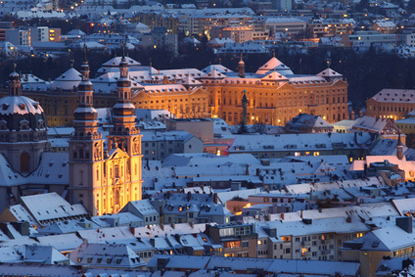
Würzburg is a historic city in northwestern Bavaria, Germany, situated along the Main River about 120 km southeast of Frankfurt. The city, with a population of approximately 126,000, is the capital of Lower Franconia and serves as a major administrative center. Founded by Celts and first mentioned in 704 CE, Würzburg was the seat of a wealthy and powerful Prince-Bishopric until 1801. The city is renowned for its Baroque architecture, particularly the UNESCO World Heritage-listed Würzburg Residence with its Court Gardens, one of the grandest baroque palaces in Europe and a definite highlight of Germany. The cityscape features significant landmarks including the Marienberg Fortress, the 180-meter-long Old Main Bridge, and St. Kilian Cathedral, the fourth largest Romanesque church in Germany. The city is also a center of wine production in the Franconia region, known for its mineral-rich dry white wines, and houses the Julius-Maximilians-University, founded in 1582. |
| Bamberg ※ |
|---|

Bamberg, one of Germany's most beautiful cities, boasts a splendid blend of Romanesque, Gothic, Renaissance and Baroque styles, with the full package of timber-framed houses, stone fortifications and archiepiscopal palaces. The city's remarkably preserved medieval Old Town, a UNESCO World Heritage Site since 1993, features over 1,300 listed buildings and showcases a harmonious blend of Romanesque and Gothic architecture. Built at 262 metres above sea level, this city of 73,300 residents is often called the Franconian Rome due to its religious heritage and hillside setting. The town's layout reflects early medieval urban planning, with religious and secular buildings thoughtfully integrated into the landscape. Key landmarks include the imposing Bamberg Cathedral with its four distinctive towers, the unique Altes Rathaus built on an artificial island, and the picturesque Little Venice district with its historic fishermen's houses along the Regnitz. |
| Schloss Weißenstein |
|---|

Schloss Weißenstein represents one of Germany's finest examples of Baroque architecture, constructed between 1711 and 1719 as the private summer residence of Prince-Bishop Lothar Franz von Schönborn. The palace showcases the collaborative genius of renowned architects Johann Dientzenhofer and Johann Lukas von Hildebrandt, featuring Germany's first grand Baroque staircase that spans three floors in a magnificent display of architectural innovation. Beyond its structural splendour, the castle houses one of Germany's most significant private art collections, containing masterpieces by Rubens, van Dyck, Titian, Dürer, and Rembrandt, alongside works by other European masters. What makes this destination particularly remarkable is its continuous ownership by the Schönborn family for over 300 years, ensuring authentic preservation and furnishing that provides visitors with an unparalleled glimpse into aristocratic life. The palace survived major European conflicts unscathed, maintaining its original Baroque interiors, ornate plasterwork, and period furnishings, whilst the surrounding parkland evolved from formal Baroque gardens into an English landscape design, offering diverse aesthetic experiences within a single visit. |
| Passau |
|---|

Passau is uniquely positioned where three rivers—the Danube, Inn, and Ilz—converge, creating a distinctive peninsula location for the city's baroque old town. The compact historic centre features well-preserved architecture, narrow cobbled streets, and St. Stephen's Cathedral, which houses one of the world's largest church organs with over 17,000 pipes. As a gateway to the Danube valley, Passau serves as a popular departure point for river cruises and provides easy access to cycling and walking routes along the riverbanks. The city combines cultural attractions, including museums and galleries, with practical amenities and a pleasant riverside atmosphere, making it an ideal base for exploring the German-Austrian border region while enjoying both historical sites and natural scenery. |
| Regensburg ※ |
|---|

Regensburg boasts a remarkably well-preserved medieval city centre that serves as one of Germany's finest examples of Gothic and Romanesque architecture. The Bavarian city, designated a UNESCO World Heritage Site, features the impressive 12th-century Stone Bridge spanning the Danube River, the towering Gothic cathedral with its intricate spires, and narrow cobblestone streets lined with original merchant houses and patrician towers. Beyond its architectural significance, Regensburg provides an authentic German experience with traditional beer gardens, local Bavarian cuisine, and a vibrant student atmosphere thanks to its major university. The city's compact size makes it easily walkable, whilst its location along the Danube offers pleasant riverside walks and boat trips, making it an ideal destination for those seeking to explore medieval European urban planning and culture without the crowds found in more famous German cities. |
|
Nuremberg |
|---|

Nuremberg, the second-largest city in Bavaria with 545,000 inhabitants, combines medieval heritage with modern urban life. The city sits on the Pegnitz River and features the Nuremberg Castle, a medieval fortress built around 1140 that dominates the skyline. As the unofficial capital of the Franconia cultural region, Nuremberg forms an urban area with neighboring cities Fürth, Erlangen, and Schwabach, encompassing approximately 3.6 million inhabitants. The city offers 54 different museums, including the Germanic National Museum which houses 1.3 million cultural artifacts. While 90% of the town was destroyed in 1945, many medieval-style areas were carefully rebuilt using the original stones, preserving the city's historical character. Modern Nuremberg features Germany's first driverless subway lines and Bavaria's second-busiest airport, making it both a significant cultural destination and a vital transportation hub. |
| Coburg |
|---|
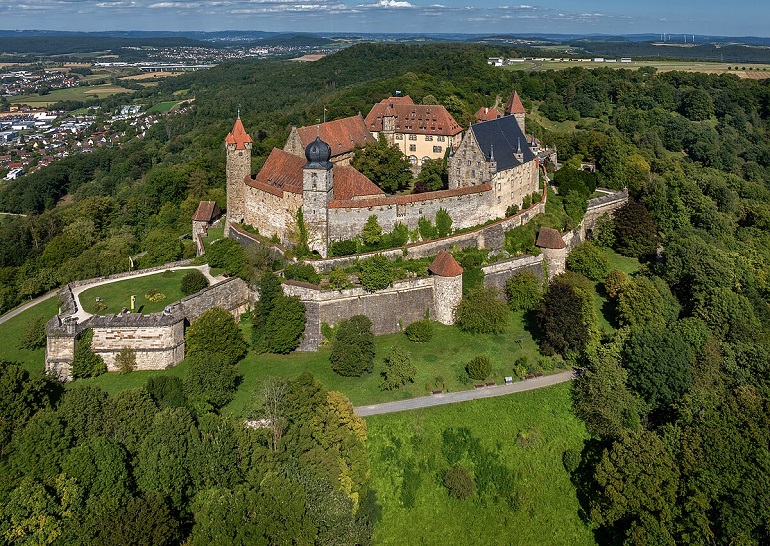
Coburg blends formidable heritage with engaging experiences: the hill-top Veste, once Martin Luther’s wartime refuge and now home to extensive art collections, offers commanding views, while the neo-Gothic Ehrenburg Palace reveals grand state rooms linked to Queen Victoria and the Saxe-Coburg dynasty. Cobblestoned streets lead to a lively market square renowned for pine-cone-grilled Coburger Bratwurst, and each July the town erupts into colour during Europe’s largest samba festival outside Brazil. Together, these contrasts of medieval fortifications, royal elegance, culinary tradition and vibrant modern culture give Coburg a distinctive appeal for curious travellers. |
| Munich |
|---|

Munich, the capital and largest city of Bavaria, is Germany's third-largest city with 1,605,000 inhabitants. Located north of the Alps along the Isar River, the city combines historical significance dating back to 1158 with modern prominence as a global center of science, technology, and tourism. The city features numerous historical landmarks, including the Frauenkirche cathedral, Marienplatz with its Old and New Town Halls, and the Nymphenburg Palace. Munich's cultural landscape encompasses world-famous museums, the historic Hofbräuhaus Brewery, and extensive green spaces like the English Garden26. The city consistently ranks among Germany's most expensive cities and boasts one of the highest standards of living worldwide. |
|
Herrenchiemsee Palace |
|---|

Nestled on Herrenwörth Island in Lake Chiemsee, Herrenchiemsee Palace stands as one of Bavaria's most magnificent royal residences. This luxurious 19th-century palace was commissioned by King Ludwig II, often referred to as the "Fairytale King" or "Moon King," who designed it as a homage to France's Palace of Versailles and King Louis XIV, whom he deeply admired. The palace is often called the "Bavarian Versailles" due to its striking similarities to the French original, though it was never intended to be a perfectly exact replica. Unlike his medieval-themed Neuschwanstein Castle, Herrenchiemsee represents Ludwig's fascination with the Baroque era and absolute monarchy. |
|
Linderhof Palace |
|---|

Nestled in the Bavarian Alps near the village of Ettal, Linderhof Palace stands as a testament to King Ludwig II's artistic vision and extravagant taste. This magnificent rococo-style royal villa is the smallest of Ludwig's three palaces and the only one he lived to see fully completed. Unlike his other grandiose projects, Linderhof has a distinctly private atmosphere, reflecting the king's reclusive nature and his desire for a personal retreat away from the pressures of royal life. |
|
Neuschwanstein Castle |
|---|

Neuschwanstein Castle stands majestically perched on a rugged hill in the foothills of the Bavarian Alps, embodying the romantic ideals of 19th-century architecture and the fantastical vision of King Ludwig II of Bavaria. This iconic structure, with its soaring towers and dramatic silhouette against the Alpine backdrop, has captivated the imagination of visitors from around the world since it was opened to the public shortly after Ludwig's death in 1886. Often referred to as the "fairy-tale castle," Neuschwanstein served as the inspiration for Walt Disney's Sleeping Beauty Castle, cementing its place in popular culture. The castle represents a fascinating blend of Romanesque, Gothic, and Byzantine architectural styles, creating a unique aesthetic that reflects Ludwig's artistic sensibilities and his admiration for medieval legends and Wagnerian operas. As you approach this magnificent structure, you'll be struck by its picturesque setting amidst the lush Bavarian countryside, with panoramic views of the Alpsee Lake, dense forests, and the majestic Alps stretching into the distance. |
|
Berchtesgaden National Park |
|---|

Berchtesgaden National Park, established in 1978, is Germany's only alpine national park, located in the southeasternmost part of Bavaria along the Austrian border. Covering an area of approximately 210 square kilometres, this UNESCO Biosphere Reserve showcases stunning landscapes including the Watzmann mountain (2,713 metres), the third highest mountain massif in Germany, the fjord-like Königssee lake, and the smaller Obersee. The park features diverse habitats comprising 54% forest, 22% rock, 21% open land and 3% water, with approximately 260 kilometres of hiking trails ranging from barrier-free circular walks to challenging high alpine routes. Visitors can observe rich biodiversity including golden eagles, marmots, ibex and rare plant species, particularly in the unique Wimbachtal valley with its constantly moving rocky terrain. The park attracts around 1.6 million visitors annually, with the hiking season typically running from June to October, and swimming is permitted in all lakes within the protected area. |
|

