



| Contents |
|---|

Introduction
Zwickau (pop. 88,000) lies on the Zwickauer Mulde River at the entrance to the western Ore Mountains (Erzgebirge), south of Leipzig. The city has a strong automotive heritage, from August Horch’s 1904 company that later became Audi to contemporary Volkswagen production, with the August Horch Museum showcasing this history. Zwickau is also the birthplace of composer Robert Schumann, and his former home on the Hauptmarkt now serves as a museum and archive. Notable sights include St Mary’s Church, St Catherine’s Church, the Gewandhaus and Osterstein Castle, reflecting a well-preserved historical core.
Interesting Facts about Zwickau
- The city is famed as the birthplace of composer Robert Schumann, whose childhood home is now a dedicated museum.
- Automotive pioneer August Horch founded Horch here in 1904 and, after a dispute, established Audi in 1909—both key roots of the later Auto Union symbolised by four rings.
- Zwickau’s Auto Union legacy included innovative early 1930s front-wheel-drive small cars developed at Audi’s Zwickau works.
- East Germany’s iconic Trabant rolled off Zwickau’s Sachsenring assembly lines from 1958 until the last model left in 1991.
- Volkswagen continues the city’s car-making tradition, with modern production in the Mosel district and a shift to concentrating electric-vehicle production from 2019.
- Medieval roots run deep: Zwickau emerged as a German imperial city in the 12th century and became a royal market by about 1150.
- Reformation history touches the city—Thomas Müntzer preached in Zwickau in 1520–21.
- Notable landmarks include St Mary’s Church, St Catherine’s Church, the Gewandhaus, the 15th-century town hall, and Osterstein Castle.
- Visitors can explore the August Horch Museum and 13th-century Priests’ Houses, reflecting the city’s intertwined cultural and industrial heritage.

History
The region was first settled by the Sorbs, a Slavic people, as early as the 7th century CE. The name Zwickau itself derives from the Sorbian toponym Šwikawa, which is connected to Svarozič, the Slavic sun and fire god. German settlers began arriving in the 10th century, gradually Germanising the native Slavic population. The settlement was first mentioned in historical documents in 1118 as terretorio Zcwickaw, and by 1212 it had received its town charter, developing into a significant trading centre. During the medieval period, Zwickau became a free imperial city from 1290 to 1323, before being granted to the Margraviate of Meissen. The city hosted both Franciscan and Cistercian religious orders during the 13th century, and its importance grew substantially when it passed to the Wettin margraves of Meissen around 1200.
Zwickau's golden age of prosperity arrived with the discovery of precious metals in the surrounding Erzgebirge mountains. Regional mining began in 1316, but the city truly flourished after silver was discovered in nearby Schneeberg in 1470. This silver boom transformed Zwickau into one of Saxony's most important economic and cultural centres during the 15th and 16th centuries. The wealth generated from silver mining funded magnificent Gothic architecture, including St Mary's Church (1451-1536) with its imposing 87-metre spire and 51-tonne bell. The city's prosperity is reflected in its historic Gewandhaus (cloth merchants' hall) from 1522-36, where Schneeberg silver was traded, and numerous other architectural treasures from this period. The Renaissance also brought notable religious figures to Zwickau, including the radical reformer Thomas Müntzer, who preached there in 1520-21, and Martin Luther, who delivered several sermons in the city in 1522 at the council's request. The city also has a tragic historical connection to the Hussite Wars, when Jews were expelled in 1430 following centuries of medieval settlement dating back to the 14th century.
The industrial revolution and modern era brought new chapters to Zwickau's story, built upon its mining heritage. Coal mining began industrially in 1838-39, replacing the earlier silver extraction and driving the city's economy throughout the 19th century. Zwickau became the birthplace of the German automotive industry in 1904 when August Horch established A. Horch & Cie. Motorenwerke AG, which later evolved into the Audi brand. The city also produced the famous East German Trabant cars from 1957 until the last one rolled off the production line on 30 April 1991. During World War II, Zwickau endured significant hardship, including a Nazi show trial of Polish resistance members in 1942 and the operation of a Flossenbürg concentration camp subcamp. The city was liberated by US forces on 17 April 1945, before being handed over to the Soviet Red Army. Today, Zwickau continues its automotive tradition as home to Volkswagen's major electric vehicle production facility, where ID.3, ID.4, and ID.5 models are assembled, marking the city's evolution from medieval trading centre to modern industrial hub.
Main Attractions
The Market Square (Hauptmarkt)
The Hauptmarkt serves as the bustling epicentre of Zwickau, a spacious cobbled square ringed by dignified merchants' houses, cafés and emblematic civic buildings. By day, the square throngs with local life, from open-air stalls offering seasonal produce to spontaneous street performances, while winter brings the warm glow of festively lit Schwibbögen in shop windows, recalling the region's Christmas traditions. The square's irregular contours speak to its medieval lineage, having evolved over centuries to accommodate public ceremonies, fairs and pageantry. Whether one seeks the vibrant rhythm of Saxon market culture or the serenity of a quiet dawn visit, the Hauptmarkt encapsulates Zwickau's enduring communal spirit.
The Town Hall (Rathaus)
The Town Hall, prominently situated on the Hauptmarkt, is famed for its imposing Gothic structure enhanced by a neo-Gothic façade added in 1866–67, with the city's heraldic arms proudly displayed above its grand entrance. After being rebuilt following the 1403 conflagration, the building has borne witness to pivotal moments in Zwickau's political and cultural history, from Reformation sermons—most notably Martin Luther addressing thousands from an upper window—to the civic life under enlightened mayors such as Erasmus Stüler. The interior retains a late Gothic triple-nave chamber, remarkable for its ribbed vaulting, Renaissance doorway and early 17th-century murals, while the adjacent Jakobskapelle offers an intimate glimpse into the town's devotional rites. In the 19th century, the Town Hall also played a role in nurturing musical heritage, hosting Robert Schumann as he honed his craft under the patronage of local dignitaries.
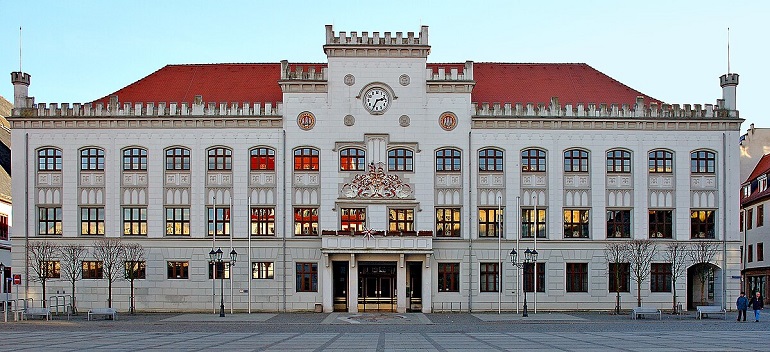
The Gewandhaus Theatre
The Gewandhaus Theatre occupies a corner of the Hauptmarkt, its late Gothic gable still bearing the telltale spectacles of the cloth merchants' guild that once passed judgment on the quality of local fabrics. Constructed between 1522 and 1525 as the guildhouse for the town's clothiers, the ensemble of ornate windows and sculpted details attests to Zwickau's prosperity during the boom of Schneeberg silver trade. In 1823, this majestic hall was repurposed to serve the public as the city's theatre venue, a transformation that has since embedded it in the region's performing arts traditions. Today it continues to host the Plauen-Zwickau ensemble, offering a diverse repertoire of drama, ballet and musical theatre across multiple stages.
Osterstein Palace (Schloss Osterstein)
Schloss Osterstein is a striking landmark whose history spans more than seven centuries. Originally mentioned as "Castrum Czwickaw" in 1292, the castle suffered severe damage during the devastating city fire of 1403 and was subsequently rebuilt into a grand Renaissance residence under Christian I, Elector of Saxony, between 1587 and 1590. Over the centuries, Schloss Osterstein served diverse roles, operating as a stately home for the royal Wettin family, later as a courthouse, and for nearly two centuries as a notorious prison that once held famous individuals such as Karl May and August Bebel. In the twentieth century, parts of the castle were even used as a concentration camp during the Second World War, and its fortunes waned until extensive renovation works in the early 2000s restored its grandeur. Today, while the castle complex now houses a retirement residence, its impressive architecture—blending medieval fortifications and Renaissance elegance—remains accessible via guided tours, allowing visitors to appreciate both its turbulent past and enduring presence as a symbol of Zwickau's heritage.

Johannis Bath (Johannisbad)
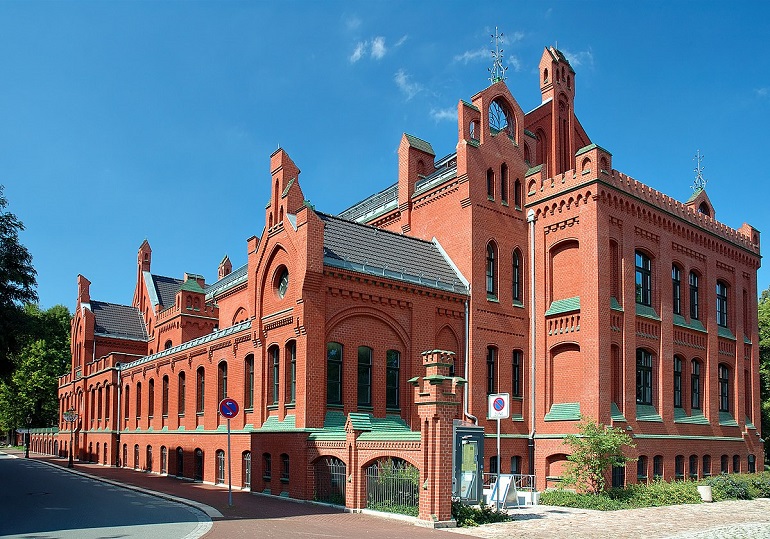
The Johannis Bath is a remarkable example of spa architecture, blending Art Nouveau, neo-Gothic, and oriental design into a single site of relaxation and leisure. Originally built between 1866 and 1869 as a private bath house and orthopaedic hospital by Dr. Schlobig, it was later bequeathed to the city with the condition that it should be preserved and extended for public use. In 1904, following a complete Art Nouveau conversion, it reopened as Zwickau’s principal public bath and held that role for most of the 20th century. Despite closing in 1991 due to dilapidation, the Johannisbad was successfully restored by local initiatives and substantial funding, reopening in 2000. Today, it welcomes guests with state-of-the-art facilities, featuring a multifunctional indoor pool, massage jets, a jacuzzi, a paddling pool, and a variety of saunas and relaxation rooms. Its unique “chamber of snow” lends an exotic touch, while the hall’s original architectural splendour offers a rare historic ambience for swimming, wellness, and social gatherings.
The Cathedral of St Mary (Dom St. Marien)
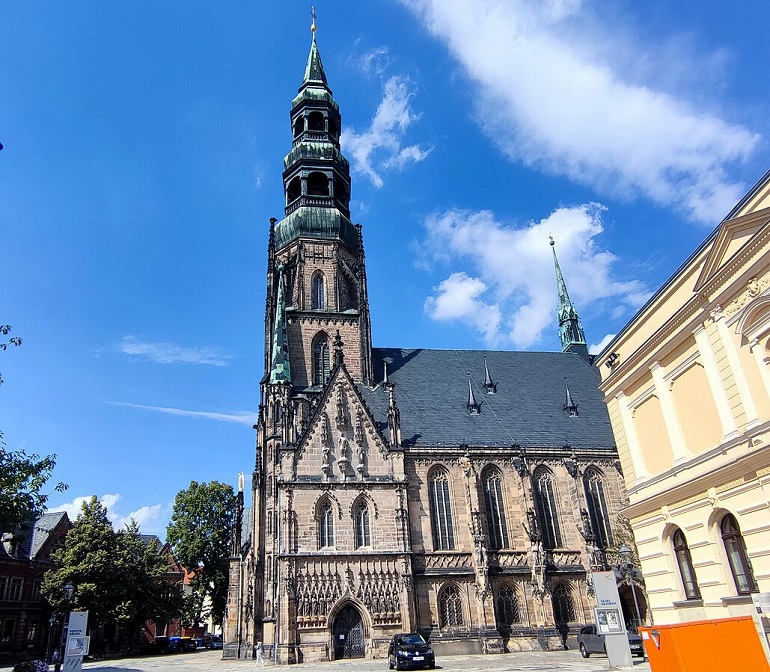
The Cathedral of St Mary stands as the architectural and spiritual heart of Zwickau, representing one of the most significant late Gothic hall churches in Upper Saxony. Originally erected around 1180 as a Romanesque basilica, it underwent a transformation between 1453 and 1565 under master mason Peter Heierliß, expanding into a breathtaking three-nave hall church that harmoniously blends structural ingenuity with artistic flair. The soaring tower, capped in the 1670s by Joachim Marquard's elegant baroque spire, rises to 87 metres, offering a commanding presence over the city's skyline. Inside, visitors encounter an array of art-historical treasures, including the masterful winged altar by Michael Wohlgemuth, the expressive pietà by Peter Breuer, and a host of sculptural and stained-glass adornments that speak to the cathedral's centuries-long legacy as a centre of worship and communal identity.
The Robert Schumann Memorial
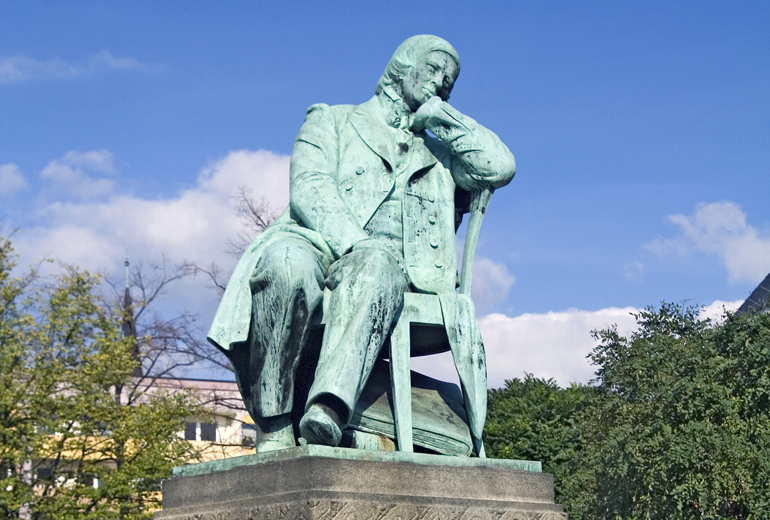
The Robert Schumann Memorial, sculpted as an homage to Zwickau's most celebrated son, stands along the Alter Steinweg, inviting passers-by to reflect upon the composer's early life and musical genius. Erected in a dignified manner, the bronze statue captures Schumann mid-composition, gesturing as if orchestrating the melodies that once echoed through his birthplace. Positioned near what was once his family home, the memorial forms part of a self-guided lyrical trail that weaves through historic streets, connecting key sites of romantic-era inspiration. As a free public monument, it offers both tourists and music enthusiasts an intimate encounter with the legacy of a figure who helped shape 19th-century European music.
The Villa Wolf
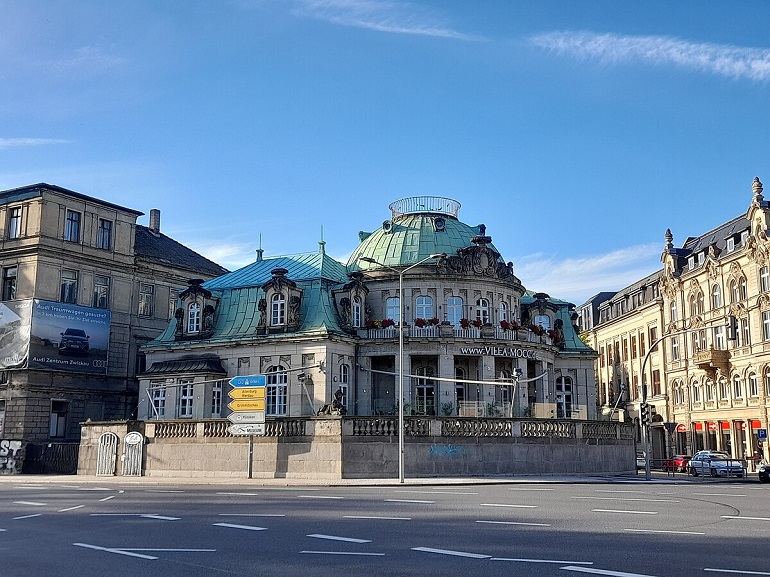
Villa Wolf is a distinctive early 20th-century residence, commissioned by the entrepreneur Carl Wolf and constructed in 1910 on the western edge of the city centre. This elegant house, designed by local architect Johannes Zimmermann, showcases prominent Art Nouveau elements combined with neo-baroque features, making it a notable example of the eclectic architectural styles of its era. Originally serving as the Wolf family's home until 1945, the villa later accommodated commercial uses, including a popular café and event venue known as “Villa Mocc”. Over the decades, the building has undergone various reconstructions while retaining its impressive façade and period charm, and it now regularly hosts public and private functions, standing as a striking testament to Zwickau’s turn-of-the-century prosperity and cultural heritage.
The Old Mint Yard (Alte Münze)
The Old Mint Yard, known locally as the Alte Münze, stands as the oldest extant house on the Hauptmarkt, its origins tracing back to the 13th century when it functioned as the city's medieval mint. Explorations in the vaults have confirmed its coinage heritage, while the external façade preserves an imposing Early Gothic sandstone portal and remnants of a lofty arched window. Stepping inside, visitors can still admire a historical wooden ceiling and the stone niches that once sheltered minting apparatus, anchored by triple wall columns hinting at early Renaissance adaptation. The building's vibrant orange and green façade reflects the palette of its 1926 refurbishment, a colourful echo of Zwickau's mineral wealth.
The Swan Pond Park (Schwanenteichpark)
Schwanenteichpark invites visitors to unwind beside its gentle lake, where swans glide across reflective waters framed by mature linden and chestnut trees. The park's winding paths lead to shaded benches and picnic lawns, providing a restful retreat from the city's bustle, while children delight in the playground equipped with swings and slides. Throughout the warmer months, boat rentals allow families and couples to drift across the pond, enjoying views of the ornamental fountain at its centre. Regularly maintained flowerbeds lend seasonal colour, and a small
Top Museums
Automotive and Technology
August Horch Museum Zwickau
Located on the historic ground where Audi was founded in 1910, the August Horch Museum is a testament to over 120 years of automotive manufacturing in Zwickau. Housed within the former factory walls that once produced Horch, Audi, and later DKW and Trabant vehicles, this technology museum provides a comprehensive look at the region's rich motoring heritage.
Spread across an impressive 6,500 square metres, the museum showcases around 160 large exhibits, including cars, engines, and motorcycles. Visitors can explore the evolution of automobile construction through a vast collection of vehicles and smaller artefacts. The exhibits are presented within brilliantly designed settings, such as a 1920s filling station, which provide a vivid historical context for the classic Horch and Audi models on display. The museum documents the journey from the early innovations of August Horch to the era of Auto Union, the production of the Trabant during the German Democratic Republic, and the factory's modern incarnation under Volkswagen.

Music and Arts
Robert Schumann House
Situated on Zwickau's main market square, the Robert Schumann House is the birthplace of the celebrated Romantic composer Robert Schumann, who was born here on 8 June 1810. Today, this meticulously restored building serves as a museum, research centre, and intimate concert venue, holding what is considered the world's largest collection related to Robert and Clara Schumann.
The museum's permanent exhibition spans eight rooms, each dedicated to a different period of the composer's life. The collection contains a wealth of personal memorabilia, including original furniture like the standing desk where Schumann composed, a lock of his hair, and a chessboard. It also houses an extensive archive of around 4,000 original manuscripts, letters, first editions, and portraits. A highlight is the collection of 19th-century pianos, including one commissioned by Friedrich Wieck for his daughter Clara, on which she made her concert debut. Interactive displays, such as a sound installation called "Dancing Letters," bring Schumann's music and world to life.
Kunstsammlungen Zwickau - Max-Pechstein-Museum
The Kunstsammlungen Zwickau is one of Central Germany's most significant art museums, housed in an impressive 1914 building originally known as the 'König-Albert-Museum'. The museum combines collections of art with natural history exhibits.
A major focus is the Max Pechstein Museum, which holds the world's largest exhibition dedicated to the Expressionist artist and 'Brücke' group member Max Pechstein, who was born in Zwickau. The collection features about 50 of his paintings and drawings. Beyond Pechstein's work, the museum's holdings include everything from late Gothic winged altarpieces to a vast sculpture collection and a mineralogical collection that dates back to the 19th century. The historic Ratsschulbibliothek (Council School Library) is also housed within the building. While the main building is undergoing renovation, exhibitions are temporarily held in the Kunstvereinsgebäude am Domhof.
History and Culture
Priesterhäuser (Priests' Houses)
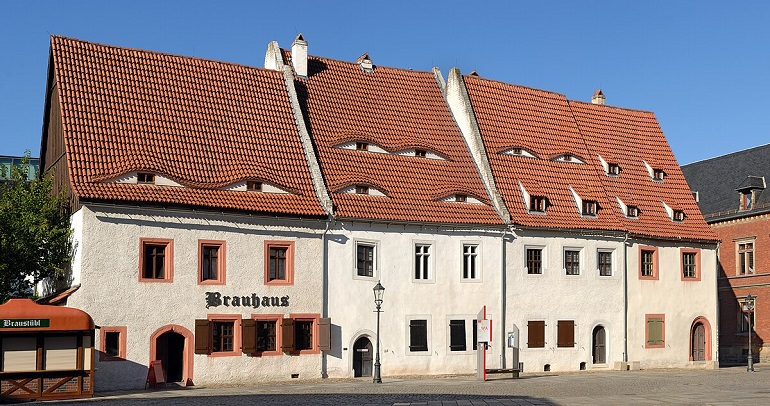
Opposite St. Mary's Cathedral, the Priesterhäuser museum offers a unique window into the daily life of medieval Zwickau. This complex consists of four remarkably well-preserved townhouses, part of an ensemble that dates back to the 13th century, making them some of the oldest surviving residential buildings in Germany.
Faithfully restored to their original style, these late-Gothic houses serve as the city's museum of local history and culture. The authentic interiors, including carefully restored rooms and chambers, allow visitors to experience the living conditions of past generations firsthand. The permanent exhibition is located in the historic buildings, while a modern wing hosts temporary exhibitions on various aspects of Zwickau's history.
Local Cuisine
Zwickau’s food scene is hearty and down-to-earth, shaped by Saxon and Ore Mountain traditions; in rustic taverns and cosy cafés you’ll find East German classics such as Soljanka and Würzfleisch, robust roasts like Sächsischer Sauerbraten, and beloved sweets including Eierschecke and Quarkkeulchen, while winter brings the festive Erzgebirgische Neunerlei and rich Stollen; for a quick bite, try a Fettbemme with gherkins, and pair your meal with a crisp regional beer such as Wernesgrüner or a local schnaps.
Getting There
By train Zwickau (Sachs) Hauptbahnhof is well connected by frequent regional services from Leipzig, Chemnitz and Dresden, with easy changes from Germany’s long-distance ICE/IC network at those hubs; services also reach Zwickau from Hof and Plauen in the Vogtland, and local trains and trams link the station with the city centre.
By coach or bus Long-distance coaches may run to Zwickau or to nearby hubs such as Chemnitz and Leipzig, from where regional buses cover the final leg; within the region, a dense bus network connects surrounding towns, with central stops in the city centre and at the Hauptbahnhof.
By car Zwickau sits just off the A72 motorway between Chemnitz and Hof, with exits signposted Zwickau-Ost and Zwickau-West; from Dresden and the A4, continue via Meerane/Glauchau and follow the B93/B175 towards Zwickau, while the B173 provides direct routes from Chemnitz and Hof into the city centre.