



| Contents |
|---|

Introduction
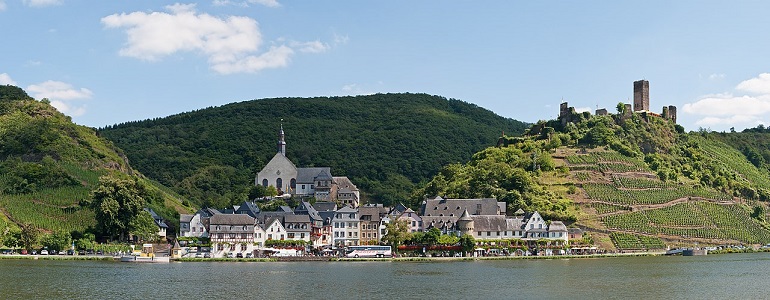
Beilstein (pop. 131) is an idyllic romantic hamlet squeezed between the steep vineyards and the Moselle. Known for its well-preserved medieval architecture, Beilstein features narrow cobblestone streets, half-timbered houses, and the historic Carmelite Monastery. The village is overlooked by the ruins of Metternich Castle, which offers panoramic views of the surrounding vineyards and river. Beilstein’s location in the Moselle Valley makes it a popular stop for those exploring local wine routes and the scenic landscapes of the area.
Interesting Facts about Beilstein
- Beilstein is affectionately known as the "Sleeping Beauty of the Moselle" due to its remarkably well-preserved medieval charm.
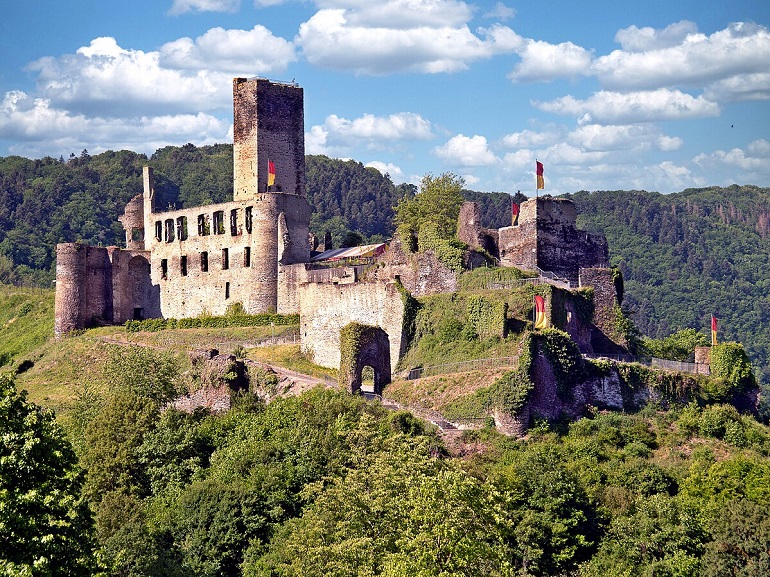
- The ruins of Metternich Castle, originally built in the 12th century, dominate the village skyline and offer magnificent views over the Moselle valley.
- Beilstein was granted its town charter in 1309 by King Henry VII, making it one of the oldest settlements on the Moselle.
- The village’s Baroque Saint Joseph's Monastery Church houses the "Black Madonna," a revered statue of Spanish origin that continues to attract pilgrims.
- A significant Jewish community was established in Beilstein in 1310, and remnants such as the old synagogue and Jewish cemetery remain today.
- The village has been a filming location for several German movies, further enhancing its fairy-tale reputation.
- Beilstein is embraced by steep vineyards famed for their Riesling grapes, reflecting the region’s longstanding wine tradition.
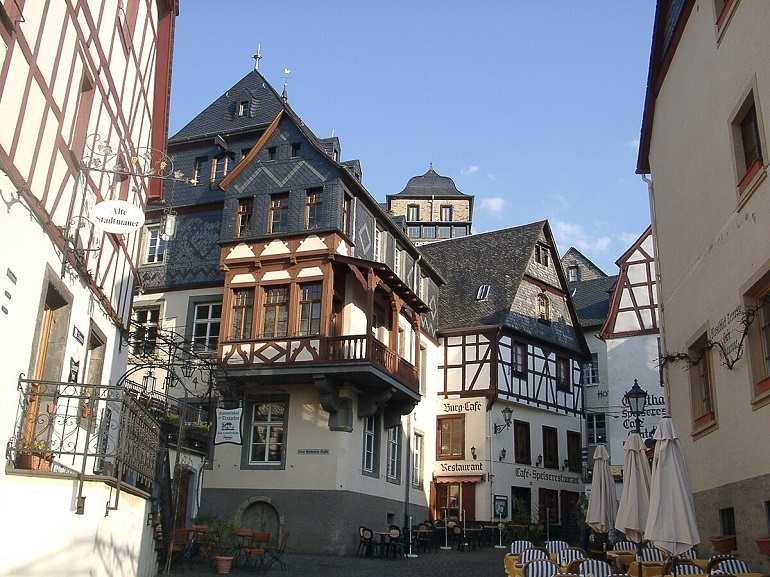
- The old market square, with its half-timbered houses and cobbled streets, is the heart of the village and a picturesque setting for enjoying local wine.
- Each summer, Beilstein hosts the "Fairy-Tale Summer," where the marionette theatre stages performances inspired by Brothers Grimm’s stories.
- Despite its tiny population, Beilstein’s distinctive appearance has given it the nickname “miniature Rothenburg ob der Tauber”.
History
Medieval Origins and Early Development
Beilstein's recorded history begins with Frankish settlement around 800, as evidenced by archaeological finds from Frankish graves. The village's transformation into a significant medieval settlement commenced in 1268 when it became a fief held by the Lords of Braunshorn. Under Johann von Braunshorn's leadership (1299–1346), Beilstein achieved a crucial milestone when King Heinrich VII granted it town privileges in 1309. This same year witnessed the establishment of a Jewish community comprising 10 families, strategically settled to ensure the required minyan for religious worship. The community's importance is underscored by the fact that Heinrich VII approved settlement for 40 citizens and 10 Jewish heads of household, with the Jewish families generating substantial tax revenue including 16 Cologne silver marks in protective fees during the first year alone.
Noble Houses and Religious Foundations
Following the extinction of the Braunshorn family line, ownership of Beilstein passed to the von Winneburg family in 1360. The Electorate of Trier subsequently assumed control in 1488, enfeoffing the Imperial Counts of Metternich with the lordship. During this period, Beilstein's religious landscape was significantly enhanced with the founding of a Carmelite monastery in 1636, which established the village as a pilgrimage destination. The monastery church's foundation stones were laid in 1691, with construction completed in 1783. However, the late 17th century brought devastation when French troops under Louis XIV destroyed the imposing Castle Metternich in 1689 during the Nine Years' War, eliminating what locals called "Die stolze Gemäuer" (The Proud Walling). The 17th and 18th centuries nevertheless shaped Beilstein's architectural character, creating the medieval streetscape that largely survives today.
Modern Transitions and Preservation
The French Revolutionary period marked the end of the Metternich lordship in 1794, followed by the dissolution of the Carmelite monastery in 1803. The Congress of Vienna assigned Beilstein to the Kingdom of Prussia in 1815, beginning a new chapter in its administrative history. Since 1946, the village has formed part of the newly established state of Rhineland-Palatinate. Throughout the 19th and early 20th centuries, Beilstein's Jewish community, which had comprised approximately 30% of the total population in 1818 with 73 residents, gradually declined through emigration. The synagogue held its final service before World War I, and the community officially dissolved in 1920, ending over 600 years of Jewish presence. Today, Beilstein's remarkably preserved medieval architecture and intimate scale have earned it the romantic sobriquet "Sleeping Beauty of the Moselle," making it a treasured destination for visitors seeking authentic historical atmosphere.
Main Attractions
Metternich Castle (Burg Metternich)
Metternich Castle is an imposing ruined fortress perched above Beilstein, offering panoramic views over the Moselle Valley and surrounding vineyards. The castle, originally mentioned in 1268, became the property of the prominent Metternich family in the 17th century. Though much of the site was destroyed by French troops in the late 17th century, visitors can still explore the substantial remains, including the main tower and parts of the outer walls. The castle grounds include a small restaurant and are accessible via a short but steep walk from the village centre.
Historic Village Centre and Market Square
Beilstein’s historic village centre is preserved as a protected monument zone, with medieval street layouts nearly unchanged since the 14th century. The marketplace, established in 1322, acts as the village’s focal point, surrounded by half-timbered houses and historic buildings such as the former Tithe House and parish church. The narrow, winding alleys and cobbled streets offer a tangible sense of medieval life and are perfect for relaxed exploration.
Carmelite Monastery and St Joseph’s Church (Karmeliterkirche St. Josef)
The Carmelite Monastery and its Baroque church, St Joseph’s, are notable for their religious and architectural significance. Constructed in the late 17th and early 18th centuries, the church draws pilgrims due to the revered statue known as the Black Madonna of Beilstein. The church’s striking interior houses historic artworks and a well-preserved organ from 1738. The site stands on a hill above the village, accessible via the characteristic Monastery Steps (Klostertreppe).
Monastery Steps (Klostertreppe)
The Monastery Steps form a prominent stone stairway that links Beilstein’s market square with the Carmelite Monastery and St Joseph’s Church. This architectural feature has become an iconic part of the local landscape and is a popular subject for photography and film. The steps are flanked by traditional buildings and offer varying views both towards the town and up to the monastery.
Vineyards and Wine Cellars
The hillsides around Beilstein are covered with vineyards, some of which date back centuries and produce the region’s renowned Riesling wines. Visitors can stroll amongst the vines or sample local varietals in atmospheric cellars, such as the Zehnthauskeller, a historic wine cellar just off the main square. The area’s winegrowing tradition remains a vital aspect of its identity and economy.
Moselle Riverbank and Promenade
The Moselle River defines Beilstein’s southern boundary, providing scenic views and a tranquil backdrop to the village. The riverbank promenade is ideal for walking and cycling, and it connects Beilstein with neighbouring villages. The river also plays an important role in local viticulture, as the slopes and terraces provide optimal conditions for grape growing.
Former Town Walls and Gates
Remnants of Beilstein’s medieval fortifications, including sections of the old town wall and some gates, are still visible within the village. These structures help define the preserved boundary of the historic core and offer insight into the defensive measures of a riverside settlement during the Middle Ages.
Top Museums
Moselland Museum (Ernst, near Beilstein)
Situated just a short drive from Beilstein in Ernst, the Moselland Museum is an immersive homage to everyday life in the Moselle region during the 1950s and 60s. Spanning four floors, it features authentic displays of village life, including a blacksmith’s shop, winemaker’s residence, and an impressive collection of vintage tractors. Its nostalgic approach makes it especially enjoyable for families and those interested in rural history and culture.
Weinmuseum Schlagkamp-Desoye (Senheim, near Beilstein)
A few minutes upriver, the Weinmuseum Schlagkamp-Desoye in Senheim stands out as one of the world’s largest wine museums, with more than 10,000 exhibits relating to wine production, barrel-making, and viticulture. The museum’s extensive collection includes tools, memorabilia, and artefacts, alongside guided tastings that highlight the region’s winegrowing history and culture. It’s an essential stop for wine enthusiasts and those curious about the Moselle's agricultural legacy.
Local Cuisine
The local restaurants feature traditional German fare with schnitzel being a particular favourite, often served alongside sauerbraten - the region's classic pot roast marinated in vinegar and spices. During spring, visitors should not miss the seasonal spargel (white asparagus) served with hollandaise sauce and new potatoes, while autumn brings fresh mushroom dishes that showcase the area's forested surroundings. The village's proximity to the Moselle ensures excellent local Riesling wines accompany most meals, whilst traditional German comfort foods like currywurst and wurstsalat provide hearty options for hungry travellers. Many restaurants in Beilstein offer terraced dining overlooking the river, allowing guests to pair their meal with stunning views of the valley whilst sampling regional specialities that have been enjoyed here for centuries.
Getting There & Around
By train Although Beilstein itself does not have a railway station, the nearest station is in Cochem, which is well-connected with regular services from Koblenz, Trier and Frankfurt. From Cochem, you can continue your journey to Beilstein by local bus or taxi.
By coach or bus Beilstein can be reached by bus from nearby towns, with line 716 connecting Cochem and Beilstein, stopping at the Beilstein “Fähre” (ferry) bus stop. Services are less frequent outside of school terms and on weekends, so it is advisable to check the timetable in advance via the Verkehrsverbund Rhein-Mosel (VRM).
By car Reaching Beilstein by car is straightforward, as it is located along the scenic B49 road running beside the Moselle River. Parking is available just outside the historic centre, as the heart of the village is largely car-free to preserve its medieval charm.
| Travel destinations in Rhineland-Palatinate | ||||||||||||||
|---|---|---|---|---|---|---|---|---|---|---|---|---|---|---|
|
|
|
|
| ||||||||||
|
|
|
|
| ||||||||||
|
|
| ||||||||||||


