



| Contents |
|---|

Introduction
Eifel National Park, established in 2004, covers an area of approximately 110 square kilometres. Its landscape is characterised by broad-leaved forests, particularly ancient beech woods, alongside reservoirs like the Rur and Urft. It is also designated as an International Dark Sky Park, offering opportunities for stargazing. A network of trails allows visitors to explore the region's natural environment. The region is known for its extensive beech forests, which are being left to develop into a future primeval forest. The park provides a habitat for over 2,170 endangered plant and animal species, including the European wildcat, black stork, and the wall lizard.
Geography and Landscape
Setting and Extent
Eifel National Park lies in the northern Eifel region of western Germany, close to the Belgian border, within North Rhine-Westphalia. It forms part of the wider Rhenish Massif and sits at the interface of low mountain ranges and open basin landscapes, creating a varied relief of ridges, plateaus, and deeply incised valleys. The park encompasses former military training grounds and long-shaped slopes typical of the Eifel, now unified into a continuous protected area with a distinctly rugged character.
Geological Foundations
The park’s foundations are ancient: predominantly Palaeozoic sedimentary rocks—slates, sandstones, and greywackes—deformed during the Variscan orogeny. Over time, erosion carved a landscape of hard rock ridges and narrow troughs, producing the sharp valley profiles seen today. Although the best-known volcanic landforms of the Eifel occur further south (the maars of the Volcanic Eifel), the northern Eifel’s geology still reveals a complex tectonic past, with folded strata, rocky spurs, and blocky outcrops that punctuate forested slopes and stream corridors.
Relief and Landforms
Relief in the park is moderate but expressive, with elevations typically ranging from about 200 to over 600 metres. Expect a mosaic of:
- Long backs of ridges and gently rolling plateaus that feel open and expansive.
- Steep-sided river valleys where tributaries have cut tightly meandering courses through bedrock.
- Spurs and saddles that create a sense of alternating enclosure and reveal, shaping constantly changing viewpoints along trails.
Erosion has produced knickpoints, small cascades, and stepped valley sides. In places, frost weathering and historical land use have left block fields and stony soils near ridge crests, while colluvial pockets accumulate deeper, finer sediments in lower positions.
Rivers, Reservoirs, and Waterscapes
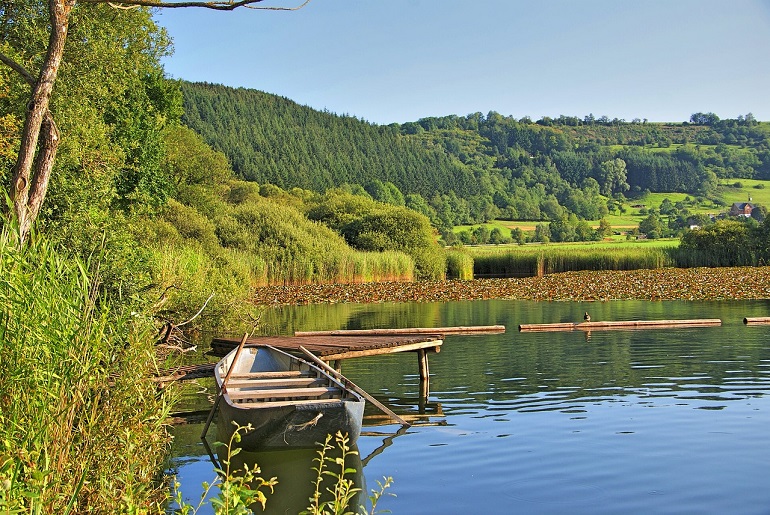
Water defines the park’s core landscapes. The Rur River (often spelled “Roer” downstream) threads through the area, joined by an intricate network of streams that animate the valleys. Large reservoirs—most notably the Rur, Obersee, and Urft—expand the sense of scale, their long, fjord-like arms flooding former valley floors and reflecting surrounding hillsides. Narrow inlets, peninsulas, and bays create a constantly shifting shoreline and intimate coves, while dam vistas open broad panoramas across open water to layered ridges beyond.
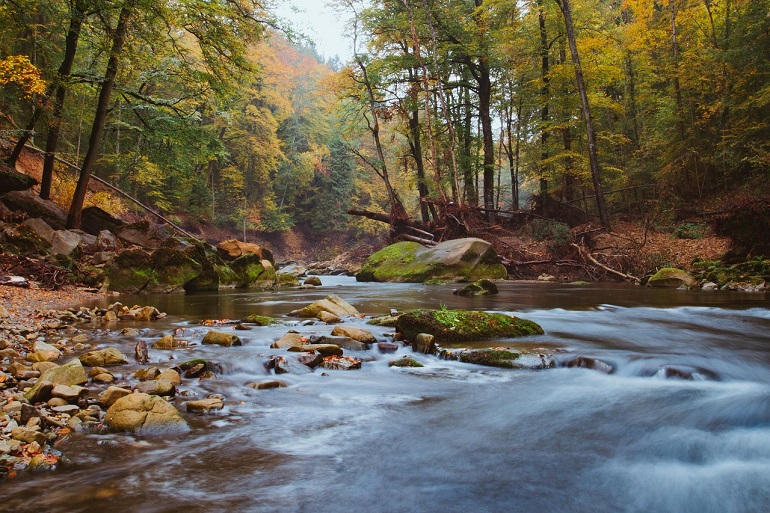
Smaller streams trace sinuous routes through wooded hollows, their channels alternating between riffles and quiet pools. Numerous seepage lines and springs emerge along slope breaks, lending a cool, damp character to many valley bottoms and supporting pockets of mist on still mornings.
Soils and Surface Texture
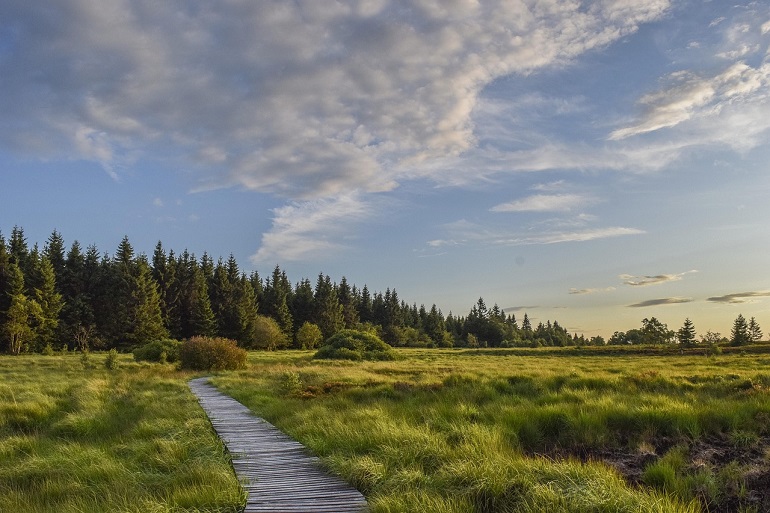
Soils mirror the geology: shallow, stony profiles on ridges and upper slopes, deepening to more developed loams and alluvium in footslopes and valley bottoms. The underfoot feel changes accordingly—from firm, gravelly paths on high ground to softer, humus-rich tracks in lower, shaded sections. On some exposed crests, thin soils support open, heath-like textures underfoot, while in moister hollows, dark, peaty layers can develop.
Human-Shaped Land Patterns
Though fundamentally wild in feel, the park’s patterns bear the imprint of historical land use. Relic field boundaries, terrace edges, and former military tracks appear as faint lines across slopes and plateaus. Scattered dry stone remnants and embankments hint at past cultivation and enclosure. The dam lakes themselves are major engineered features that have become integral to the scenery, introducing broad water vistas not typical of natural low mountain landscapes in Germany.
Viewpoints and Visual Character
The Eifel’s visual drama comes from contrast and layering:
- On high plateaus and ridges, long sightlines stretch across undulating horizons, with water surfaces flashing between folds of land.
- In the valleys, the experience is enclosed and tactile—steep slopes, tight bends, and sudden reveals where a stream or reservoir arm appears around a corner.
- Edge zones—where open slopes meet wooded hollows or water—offer compelling compositions, especially at headlands and dam overlooks.
Light and weather transform the scene, with low cloud brushing ridge crests, reservoirs turning slate-grey under overcast skies, and evening sun slanting across terraces to pick out the stepped relief.
Access and Trail Context
A dense network of waymarked paths threads the park’s main landforms, often following ridge spines for extended views or dropping into valley floors for close encounters with watercourses and rock outcrops. Expect alternating gradients: steady climbs to long, gently rolling tops, then switchback descents toward stream crossings or reservoir edges. Many routes link engineered viewpoints, dam crowns, and natural promontories, making it easy to curate outings that emphasise either expansive panoramas or intimate, sheltered landscapes.
Landscape Themes to Expect
- Water-dominated scenery along reservoir shores and river bends.
- Ridge-and-valley sequences offering rhythmic climbs and descents.
- Rock-led textures where bedrock surfaces and block fields interrupt otherwise smooth slopes.
- Quiet hollows with springs and seeps that add movement and sound to enclosed spaces.
- Historic landscape traces—subtle but legible—that give cultural depth to the natural setting.
Overall, Eifel National Park offers a coherent low mountain landscape where ancient bedrock, incisive rivers, and sculpted reservoirs combine to produce varied, immersive terrain—equally suited to wide-horizon ridge walking and close, atmospheric valley exploration.
Flora and Fauna
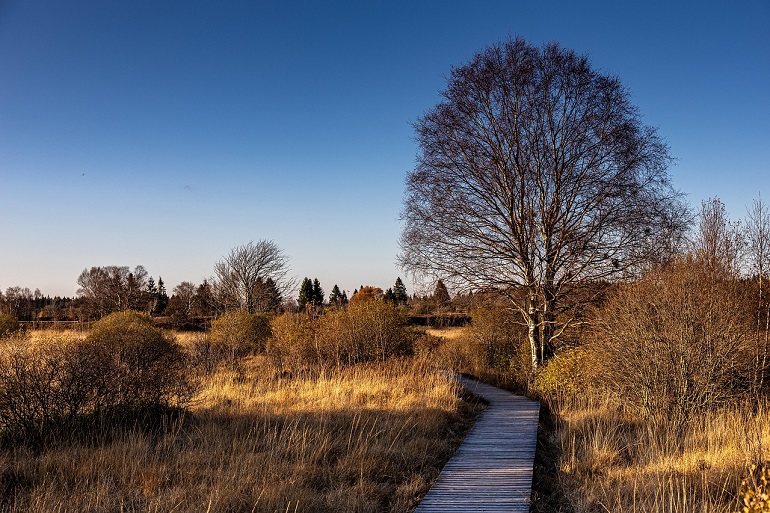
The Eifel National Park serves as a remarkable sanctuary for biodiversity. This protected landscape, characterised by natural deciduous forests, species-rich meadows, rugged rocks, flowing streams, and expansive lakes, provides vital habitats for an extraordinary array of wildlife.
Remarkable Biodiversity
The park boasts an impressive 10,000 different plant and animal species, with researchers continuously adding to this digital species catalogue. What makes this particularly significant is that over 2,000 of these species appear on the Red List, indicating they are endangered or threatened with extinction. The park's diverse habitats—including forests, grassland, bodies of water, rocky outcrops, gorse bushes, bogs, and moorland—each support distinct communities of flora, fauna, and fungi.
Notable Wildlife Species
Mammals
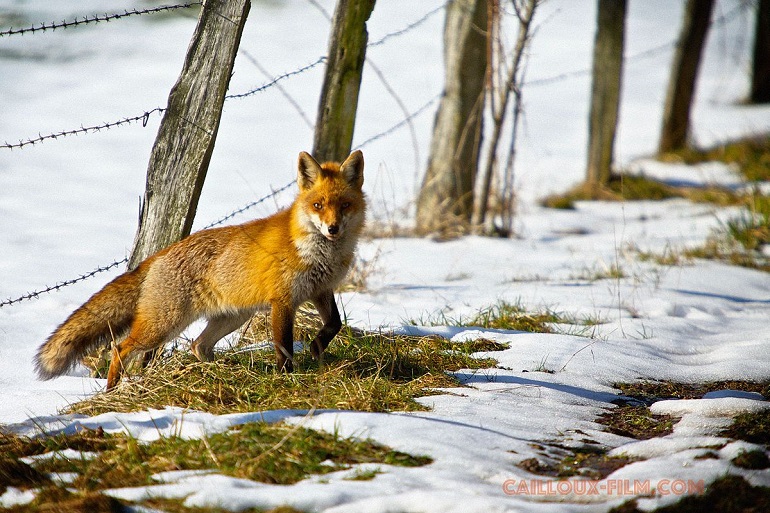
The Eifel National Park provides sanctuary for several remarkable mammalian species. The European wildcat roams freely through the forested areas, whilst red deer, roe deer, and wild boar maintain healthy populations throughout the park. The diverse woodland environments also support foxes, stone martens, and hares.
Avian Life
The park's varied landscapes attract an impressive diversity of birdlife. The black stork, a rare and magnificent species, finds refuge in the protected forests. Raptors soar above the landscape, with red and black kites frequently observed, particularly around the Urft dam. The Eurasian eagle owl inhabits the rocky outcrops, whilst several woodpecker species, including the middle spotted woodpecker, thrive in the mature forest areas.
The park's aquatic environments support grey herons and cormorants, which frequent the numerous lakes, rivers, and streams. These water bodies provide crucial habitat for waterfowl and other aquatic bird species.
Reptiles and Invertebrates
The wall lizard, considered a rarity in North Rhine-Westphalia, has found suitable habitat within the park's rocky areas. The invertebrate fauna is particularly rich, with 1,300 species of beetle alone discovered within the woodlands. This remarkable diversity of insects supports the broader ecosystem, providing food sources for numerous bird species and contributing to pollination services.
Forest Ecosystems and Flora
Beech Woodland Dominance
The park protects ancient wood-rush and beech forests that flourish in the maritime climate. These deciduous woodlands, which once covered the entire Eifel region and much of Central Europe, represent some of the most significant forest habitats in the area. The Kermeter region contains one large contiguous stretch of forest with a particularly high percentage of beech woods.
The forests support diverse plant communities, including woodruff, which releases its distinctive fragrance throughout the woodland floors. The understoreys provide habitat for various fern species and wildflowers that thrive in the dappled light beneath the canopy.
Grassland Communities
The park's grasslands present remarkable botanical diversity, particularly on the Dreiborn Plateau and in the broad river valleys. These habitats include:
- Low-nutrient matgrass and meum athamanticum meadows with their characteristic low-growing vegetation
- Gold and oatgrass meadows featuring taller grasses and richer plant communities
- Wet meadows adorned with bulrushes and brightly coloured flowering shrubs
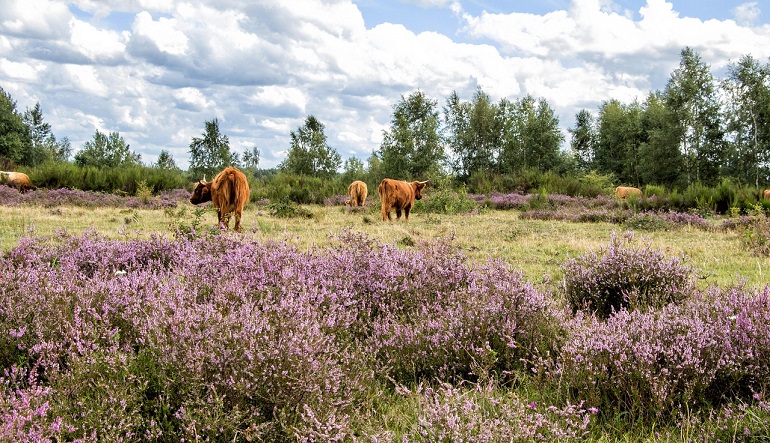
In early summer, golden yellow broom transforms entire hillsides, creating spectacular displays that appear to pour light across the landscape. The southern regions of the park occasionally reveal wild orchids, including the spotted orchid, adding rare botanical treasures to the diverse flora.
Stream and Aquatic Vegetation
The park's numerous watercourses support riparian plant communities and aquatic vegetation. Natural flowing streams maintain healthy ecosystems that support both terrestrial and aquatic plant species. These water systems provide crucial habitat connectivity throughout the park.
Conservation Significance
The Eifel National Park serves as a crucial refuge for species that have become increasingly rare throughout the Eifel region and North Rhine-Westphalia. Many of the park's habitats face threats outside protected areas due to their inability to provide commercial profit for farmers or foresters. The park's designation under European conservation law, including the Fauna Flora Habitat Directive and EU Birds Directive, ensures approximately half the park area receives special protection.
The ongoing natural processes within the park, including the natural succession from planted spruce forests back to native beech woodland, demonstrate the remarkable resilience of these ecosystems when given proper protection. This transition, whilst sometimes dramatic due to bark beetle activity, represents the natural restoration of the region's original forest character.
The Eifel National Park stands as a testament to successful conservation, where forest, water, and wilderness combine to create a living sanctuary for Germany's most precious flora and fauna.
Activities and Attractions
The Eifel National Park offers a remarkable array of activities and attractions for outdoor enthusiasts and nature lovers. As Germany's only national park in the region, it provides an exceptional wilderness experience with its motto "Let nature be nature," where over half the area already operates under natural processes whilst developing towards full wilderness status over the coming decades.
Extensive Hiking Trail Network
The park boasts an impressive 240 kilometres of marked walking trails, all clearly signposted with wooden markers to guide visitors through varied landscapes of dense forests, expansive heathland, scenic valleys, and rushing streams. The trail network accommodates hikers of all abilities, from gentle family-friendly paths to challenging multi-day routes that test even experienced trekkers.
Themed Hiking Circuits
Five distinctive themed hiking circuits provide structured exploration of the park's diverse ecosystems, each offering unique perspectives on the developing wilderness:
- Theme Tour 1 (Scheidbaum): Starting from Nideggen-Schmidt, this comprehensive 16-kilometre circuit showcases the transition zones between managed forest and emerging wilderness areas. The route includes a shorter 10-kilometre option for those preferring a more manageable distance, making it accessible to families whilst still providing substantial immersion in the park's natural beauty.
- Theme Tour 2 (Büdenbach): Beginning at the impressive Schwammenauel dam, this 14.5-kilometre route follows the shores of the Rursee, one of Germany's largest reservoirs. Hikers experience dramatic water views, dense beech forests, and steep valley sides. A 7.5-kilometre shortcut provides flexibility for varying fitness levels whilst maintaining the essential character of the lakeside experience.
- Theme Tour 3 (Finkenauel): This 12.5-kilometre loop departing from Hirschrott near Simmerath-Erkensruhr ventures deep into the park's interior wilderness areas. The trail particularly highlights the natural regeneration processes occurring throughout the national park, with excellent examples of how forest ecosystems develop when left to their own devices.
- Theme Tour 5 (Mariawald): Beginning from the historic Mariawald Abbey car park near Heimbach, this 14.5-kilometre route combines cultural heritage with natural splendour. The trail passes through varied terrain including ancient woodlands and open meadows, with a 7.5-kilometre alternative providing a condensed but equally rewarding experience.
- Theme Tour 7 (Kurhaus Gemünd): The most accessible circuit at 11.5 kilometres, starting from the spa town of Gemünd. This route is particularly well-suited to those seeking a substantial day hike without excessive challenge. A brief 4.5-kilometre option offers a perfect introduction to the park for newcomers or those with limited time.
The Wilderness Trail
For serious hikers seeking the ultimate immersive experience, the Wilderness Trail represents the park's crown jewel. This challenging four-stage journey covers 85 kilometres from Monschau-Höfen in the south to Hürtgenwald-Zerkall in the north, following distinctive wildcat waymarkers throughout its length.
- Stage 1: Monschau-Höfen to Einruhr (approximately 23 kilometres): The journey begins at the atmospheric Monschau-Höfen National Park Gate, immediately plunging hikers into dense woodland. This opening stage features steep ascents through beech forests and panoramic viewpoints overlooking the Rursee valley system.
- Stage 2: Einruhr to Gemünd (approximately 25 kilometres): The longest and most challenging section, traversing the park's central wilderness areas. Hikers encounter roaring streams, ancient forest stands, and the heart of the developing wilderness where human intervention has ceased entirely.
- Stage 3: Gemünd to Heimbach (approximately 19 kilometres): A more moderate stage featuring varied terrain from dense woodlands to open heathland. The route passes near the historic Mariawald Abbey and offers excellent wildlife spotting opportunities.
- Stage 4: Heimbach to Hürtgenwald-Zerkall (approximately 18 kilometres): The final stage showcases the northern boundaries of the park, with dramatic valley views and the satisfaction of completing one of Germany's most demanding wilderness experiences.
Daily stages range between 18 and 25 kilometres, taking adventurers through the park's emerging wilderness areas where nature operates without human interference. Many sections can be shortened if needed, making it adaptable to different fitness levels and time constraints. The trail showcases the park's "wilderness of tomorrow," featuring roaring rivers, fragrant meadows, dense forests, and panoramic vistas that change with the seasons.
Barrier-Free Nature Access
Wilder Kermeter Natural Adventure Area
The Wilder Kermeter provides exceptional accessibility with its 6-kilometre barrier-free hiking network suitable for wheelchairs and pushchairs. This remarkable area demonstrates that wilderness experiences need not exclude those with mobility limitations.
The centrepiece Wilder Weg spans 1.5 kilometres through one of the Eifel's most impressive beech forests, featuring interactive information stations that engage visitors of all ages. Young adventurers particularly enjoy the challenging tree trunk trails that test balance and coordination whilst remaining completely safe.
The route continues to the spectacular Hirschley viewpoint, offering stunning panoramas over the Rursee reservoir system. Despite steeper inclines reaching 8%, the path remains manageable for most visitors, with numerous strategically placed rest areas and benches positioned throughout the network. The entire Kermeter area features comprehensive waymarking and interpretation panels that enhance understanding of forest ecology and wilderness development.
Educational and Cultural Attractions
Eifel National Park Centre at Vogelsang IP
The modern Eifel National Park Centre houses the comprehensive "Wildnis(t)räume" (Wilderness Dreams) exhibition across 2,000 square metres of fully accessible display space. This innovative facility provides interactive nature experiences, illustrative experiments, and engaging presentations about the park's ecological relationships and developing wilderness areas.
The exhibition employs cutting-edge technology to simulate natural processes, allowing visitors to experience seasonal changes, understand predator-prey relationships, and witness the gradual transformation of managed landscapes into true wilderness. Multi-sensory displays engage all age groups, making complex ecological concepts accessible and memorable.
Historic Sites and Cultural Heritage
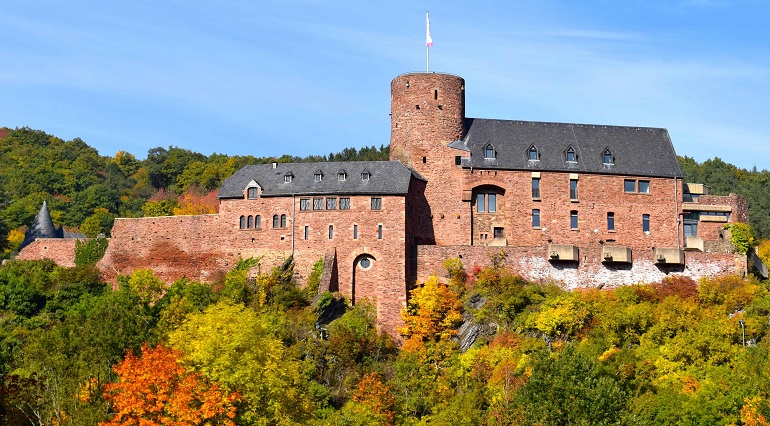
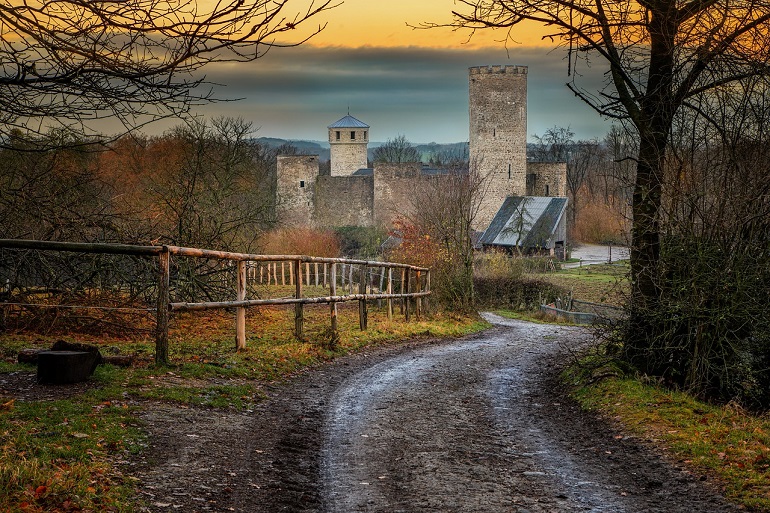
Burg Hengebach perches dramatically on rocks above Heimbach, offering visitors access to one of the Eifel's oldest castles dating from the 11th century. The freely accessible courtyard and tower provide panoramic views across the national park whilst offering insights into medieval life in this strategically important region.
The ruined Mariawald Abbey, whilst no longer active, remains a significant pilgrimage site and cultural landmark. The surrounding trails incorporate this historic religious site into broader natural experiences, demonstrating how human heritage and wilderness development can coexist harmoniously.
Wildpark Schmidt
This extensive 36-hectare nature park showcases native animals in naturalistic habitats that mirror conditions within the broader national park. The well-maintained 5-kilometre walking trail, manageable with pushchairs despite some moderate slopes, allows close encounters with red deer, mouflons, wild boar, and other indigenous species.
Summer falconry displays add spectacular aerial demonstrations, featuring birds of prey native to the Eifel region. These presentations combine entertainment with education, highlighting the crucial role predators play in maintaining ecological balance within wilderness areas.
Water-Based Activities
Rursee Recreation
The impressive Rursee reservoir system provides opportunities for various water-based activities within the national park boundaries. Canoeing and kayaking offer peaceful exploration of the lake's numerous inlets and bays, surrounded by the dense forests of the Kermeter ridge.
Stand-up paddleboarding has become increasingly popular, providing a unique perspective on the landscape whilst offering excellent exercise. The calm waters are ideal for beginners, whilst more experienced paddlers can explore the reservoir's full 28-kilometre length.
Guided Water Tours
Seasonal boat tours operate on the Rursee, providing commentary about the surrounding landscape, wildlife, and the park's conservation objectives. These relaxing excursions suit visitors who prefer less physically demanding ways to experience the aquatic environment.
Ranger-Guided Experiences
The park offers daily guided walks with experienced rangers throughout most of the year, provided free of charge without advance booking required. These expert-led excursions reveal intimate knowledge of local ecosystems, wildlife behaviour patterns, and ongoing conservation efforts.
Specialised themed walks focus on particular aspects such as:
- Wildlife tracking sessions teaching visitors to identify animal signs and understand behaviour patterns
- Forest ecology tours explaining succession processes and wilderness development
- Night walks revealing the park's nocturnal life and acoustic landscapes
- Seasonal phenomenon tours highlighting spring wildflowers, autumn colours, or winter adaptations
Rangers possess extensive local knowledge accumulated through years of fieldwork, making their insights invaluable for understanding the park's developing wilderness character and conservation challenges.
Adventure Activities Beyond Hiking
Via Ferrata Climbing
The region surrounding the national park features Germany's most challenging via ferrata route, offering secured climbing experiences through dramatic rock formations. This activity provides adrenaline-filled adventures whilst maintaining safety standards suitable for intermediate climbers.
Mountain Biking Networks
Whilst core wilderness areas remain restricted to foot traffic, designated cycling routes traverse portions of the national park and connect with extensive regional mountain biking networks. These carefully planned trails minimise environmental impact whilst providing excellent cycling experiences through varied terrain.
Connectivity to Regional Trail Systems
The famous Eifelsteig long-distance trail passes directly through the national park, connecting the historic cities of Aachen and Trier over 313 kilometres. This premium certified route, divided into 15 daily stages of 15-28 kilometres each, showcases the park within the broader Eifel landscape context.
The Eifelsteig has earned German hiking seal certification, meeting 36 stringent criteria including unequivocal marking, natural path surfaces, and routing through exceptional scenic landscapes. Within the national park, the trail reveals the transition from managed forest to developing wilderness, offering hikers a unique perspective on conservation in action.
Partner routes branching from the main Eifelsteig enable detailed exploration of specific landscape types, from highland moors and volcanic remnants to red sandstone formations. These connecting trails create a comprehensive network serving both day hikers and multi-day adventurers.
The national park serves as both a destination in itself and a crucial component of the Eifel's extensive outdoor recreation infrastructure, offering everything from gentle family outings to challenging wilderness adventures that showcase one of Germany's most important conservation success stories. Whether seeking solitude in developing wilderness areas or educational experiences about ecosystem restoration, visitors find unparalleled opportunities to engage with nature whilst contributing to the park's conservation mission through responsible recreation.
Accommodation
Traditional Hotels and Guesthouses
Staying in a traditional hotel or guesthouse is an excellent introduction to the park’s welcoming hospitality. These properties often occupy converted manor houses or half-timbered buildings in picturesque villages on the park’s fringes. Interiors combine rustic wood panelling with modern comforts such as ensuite bathrooms, cosy lounge areas with open fires and regional artworks that reflect Eifel heritage. Guests awaken to hearty breakfasts featuring local cheeses, breads baked in nearby bakeries and preserves made from forest fruits. During the day, reception teams can suggest guided nature walks or borrow bicycles for exploring winding trails. As twilight falls, these hotels often open their in-house bars or restaurants, where simple yet refined dishes showcase seasonal game, river trout or hand-harvested mushrooms.
Self-Catering and Holiday Homes
For those craving independence and flexibility, self-catering accommodations abound throughout the park. From charming cottages nestled in small hamlets to spacious holiday apartments overlooking wooded valleys, these options provide fully equipped kitchens, outdoor terraces and garden spaces. Families appreciate the freedom to cook traditional stews or grill fresh local sausages back at the cottage, while walkers relish the ability to return after a full day on the trails and prepare meals at leisure. These homes often feature multiple bedrooms, making them ideal for groups or generations holidaying together. Many are designed with timber frames and local stone, reflecting the region’s building traditions, and include cosy stoves that ensure warmth in cooler months.
Campsites and Outdoor Experiences
The Eifel offers an immersive camping experience for those who wish to fall asleep to the sound of rustling leaves and awake to dew-kissed meadows. Developed campsites provide pitches with electricity hookups for tents, caravans and motorhomes, whilst more remote sites allow guests to sleep under a canopy of stars. Modern sanitary blocks with accessible facilities ensure a comfortable stay, even for families with young children or guests with additional needs. Many campsites are situated by lakeshores, providing easy access to canoeing, stand-up paddleboarding and seasonal boat excursions. Adventure seekers can choose to stay in themed safari tents or eco-friendly forest huts, which combine canvas walls with simple furnishings and are placed at the edge of woodland glades. Evening barbecues and on-site children’s playgrounds foster community spirit while preserving the park’s tranquil ambience.
Youth Hostels and Budget-Friendly Options
Budget-conscious travellers or large groups often opt for youth hostels that pepper the park’s entry points. These establishments offer both dormitory-style bunk rooms and private twin rooms, all with ensuite or shared bathroom facilities. Communal kitchens, common rooms for board games and viewing terraces make them sociable hubs for hikers, cyclists and school groups. Many hostels operate a bed-and-bike concept, providing secure bicycle storage and repair tools for those exploring on two wheels. Staff organise nature talks, creative workshops or guided excursions, making it easy for solo travellers to integrate and participate in group activities while keeping costs to a minimum.
Farm Stays and Eco-Lodges
An authentic way to experience rural life in the Eifel is through farm stays, where guests immerse themselves in working agricultural settings. Accommodation ranges from renovated barns to timbered farmhouses where families care for livestock such as goats, chickens and donkeys. Morning chores may include collecting fresh eggs or tending to vegetable patches, after which guests can savour organic produce straight from the garden. Some farms serve home-made jams, ciders and spirits distilled on-site, adding an artisanal flavour to the stay. Eco-lodges, often small-scale and owner-run, emphasise sustainable construction materials, rainwater harvesting and solar energy. In many cases, environmental education is woven into the experience through guided walks explaining local ecosystems and biodiversity conservation efforts.
Luxury Retreats and Wellness Escapes
For a more indulgent stay, a handful of luxury retreats and spa properties lie within easy reach of the park boundary. These venues offer elegantly appointed rooms, forest-facing balconies and dedicated wellness facilities, including saunas, steam rooms and massage suites. Spa menus commonly feature treatments using herbal extracts harvested from the park’s clearings, allowing guests to connect with the surrounding nature even during pampering rituals. Hotels in this category often include extensive dining options, where menus change seasonally to incorporate fresh game, fish from local rivers and produce from nearby organic farms. Romantic packages may involve private forest baths or starlit dinners arranged on secluded wooden platforms beside silent streams.
Sustainable and Certified National Park Accommodation
Central to lodging in the Eifel is a growing network of certified National Park hosts, whose proprietors commit to rigorous environmental standards. These include sourcing food from regional suppliers, minimising energy consumption, reducing waste and participating in conservation training courses. Guests are assured that any stay contributes to the preservation of local habitats and species. In return, hosts share insider knowledge on lesser-known walking paths, birdwatching spots and seasonal events such as bat counts or nocturnal wildlife surveys. Staying at one of these certified establishments yields not only a comfortable holiday but also the reassurance of supporting responsible tourism and the long-term health of the Eifel ecosystem.
Gastronomy
Traditional Eifel Cuisine
The gastronomy of the Eifel region is deeply rooted in simple, wholesome ingredients that have sustained local communities for generations. Game meats feature prominently on menus throughout the park, with venison, wild boar, and rabbit prepared in traditional styles that highlight the natural flavours of the forest. These dishes often incorporate local herbs and mushrooms foraged from the very woodlands that visitors explore during their stay.
Potatoes form the cornerstone of many Eifel specialities, prepared in countless variations from simple boiled accompaniments to elaborate gratins. The region's volcanic soil proves particularly suitable for potato cultivation, producing varieties with distinctive textures and flavours that local chefs celebrate in their cooking.
Seasonal Specialities
The changing seasons bring different culinary highlights to the Eifel. During autumn, the landscape transforms into a forager's paradise, with wild mushrooms, berries, and nuts finding their way onto local plates. Traditional preserving methods ensure these seasonal treasures can be enjoyed throughout the year, often appearing in warming stews and hearty soups during the colder months.
Spring and summer herald the arrival of fresh vegetables from local market gardens, whilst the region's rivers and streams provide excellent freshwater fish, particularly trout, which appears on menus prepared simply to showcase its delicate flavour.
Local Beverages
The Eifel's beverage tradition centres around excellent local beers, with several small breweries throughout the region producing distinctive ales and lagers using traditional methods. These complement the hearty local cuisine perfectly and often feature ingredients sourced from the surrounding countryside.
Fruit brandies and schnapps, distilled from locally grown apples, pears, and berries, provide a warming conclusion to meals and represent another proud tradition of the area. Many establishments offer tastings of these artisanal spirits, providing insight into the region's distilling heritage.
Dining Culture
The dining culture in and around the Eifel National Park emphasises conviviality and tradition. Meals are often leisurely affairs, reflecting the unhurried pace of life in this rural region. Local establishments pride themselves on using ingredients sourced from nearby farms and producers, creating a true farm-to-table experience that connects visitors directly with the landscape they're exploring.
Many venues feature traditional Eifel architecture, with timber-framed buildings and cosy interiors that provide the perfect setting for enjoying regional specialities after a day of hiking or cycling through the national park. The emphasis on local sourcing means that menus often change with the seasons, ensuring that each visit offers something new to discover.
Culinary Experiences
Beyond traditional restaurant dining, the Eifel region offers various culinary experiences that allow visitors to engage more deeply with local food culture. Cooking classes focusing on regional specialities provide hands-on learning opportunities, whilst guided foraging walks during appropriate seasons teach visitors about the edible treasures hidden within the national park's boundaries.
Local farmers' markets offer excellent opportunities to sample regional produce and artisanal products, from farmhouse cheeses to cured meats and fresh seasonal vegetables. These markets serve as gathering places for local communities and provide visitors with authentic glimpses into daily life in the Eifel.
Getting There and Around
Getting to Eifel National Park
Eifel National Park in western Germany is readily accessible by public transport as well as by car:
- By Train: The main gateways are the train stations at Kall and Heimbach. From cities such as Cologne, take a regional train (lines RE1 or RE9 towards Aachen) to Düren, and then transfer to a local train to Heimbach. Similar connections are available from Aachen and Bonn, with services branching out to the national park region.
- By Bus: Various bus connections link key towns around the park, including Gemünd, Nideggen, Monschau, and Rurberg. From Kall, shuttle buses run to several locations within the park, including Gemünd and Vogelsang IP. Seasonal bike buses from Aachen (Sundays, May to October) are also available for those bringing bicycles.
- From Further Afield: If travelling from Brussels or Leuven, take a train to Aachen and then continue by either train or regional bus to the park region.
If arriving by car, the A1, A4, and A44 motorways provide direct access, with clear signposting guiding visitors from the motorway exits to the main National Park gates.
Getting Around the National Park
- Public Transport: The Eifel National Park is well-served by a network of buses and trains that link the main park gates, visitor centres, and popular trailheads. Key routes are Kall to Gemünd and Vogelsang (shuttle), Düren to Heimbach (train and bus), and services connecting to Nideggen, Hellenthal, and Simmerath.
- Hiking Buses: Special hiking buses, such as the Eifelsteig Hiking Bus, and the National Park Shuttle, operate between gateways and stages of the Eifelsteig trail during peak hiking seasons. They make linear hiking routes feasible without needing to backtrack.
- On Foot: The park is designed for exploration on foot, with well-marked trails and clear signage. Many routes, including the renowned Wilderness Trail, start or end near a train station or bus stop, making one-way walks convenient.
- Bike Hire and Cycling Buses: Bicycle hire is available at various sites around the park, though availability may not always be directly at train stations. On certain days, the bike bus operates from Aachen, enabling cyclists to reach the park with their bicycles.
- Dial-a-Bus Services: For added flexibility, dial-a-bus services can connect walkers from finishing points of popular long-distance walks (such as the Wilderness Trail) back to their starting points or to public transport hubs, provided these are booked in advance.
- Important Notes: Buses and trains within the region may be free for visitors staying locally who possess a GästeCard, helping to support eco-friendly travel within the park.
Eifel National Park’s integrated public transport options make it easy to explore its woodlands, reservoirs, and wildlife-rich plateaus without requiring a car.

Best Time to Visit
Late Spring: The Sweet Spot for Nature Lovers
May to June represents the ideal window for visiting Eifel National Park. During these months, the weather becomes reliably mild with temperatures ranging from 10°C to 20°C, making it perfect for hiking and outdoor exploration. This period marks the peak of flowering season, when the park's diverse flora bursts into vibrant bloom across the landscape.
The trails are fully accessible after the winter months, and you'll encounter fewer crowds compared to the peak summer season. However, it's wise to pack warm layers as temperature changes can be quite sudden in this region.
Early Autumn: A Spectacular Display
September to October offers another excellent opportunity to explore the park. The weather remains pleasantly mild, and the deciduous forests transform into a stunning tapestry of autumn colours. This shoulder season provides some of the most photogenic conditions of the year, with the changing leaves creating a beautiful backdrop for hiking and wildlife watching.
Early autumn also tends to have the fewest tourists, allowing for a more peaceful and intimate experience with nature.
Summer: Peak Season with Trade-offs
July and August bring consistently warm weather with temperatures reaching up to 25°C, making it the most reliable time for outdoor activities. All facilities and trails are fully operational, and the long daylight hours maximise your exploration time.
However, summer is also the busiest period, with significantly larger crowds. Popular trails and viewpoints can become quite congested, particularly at weekends.
Winter: A Different Kind of Beauty
While December through February presents a more challenging time to visit, winter has its own appeal. The park takes on a serene, frosted beauty, and you'll have the trails largely to yourself. Temperatures can drop to around 0°C or below, and some castle attractions in the broader Eifel region close during winter months.
Winter visits require proper preparation with warm, waterproof clothing and appropriate footwear for potentially icy conditions.
Weather Considerations
The Eifel region is known for its unpredictable weather patterns, with rain being fairly common throughout the year. Regardless of when you visit, it's essential to pack waterproof layers and be prepared for sudden weather changes. The elevated terrain can experience different conditions from the surrounding lowlands.
Year-Round Activities
The park offers activities throughout the year, from guided ranger walks to the barrier-free trails in the Wilder Kermeter area. The visitor centre remains open year-round, providing indoor exhibitions during inclement weather. For stargazing enthusiasts, the park's designation as a Dark Sky Park makes it particularly appealing during the longer winter nights.
The optimal time ultimately depends on your priorities: choose late spring or early autumn for the best balance of weather and fewer crowds, summer for guaranteed warmth and full facility access, or winter for solitude and a unique perspective on the park's natural beauty.
Conservation and Responsible Tourism
A Park in Transformation
The Eifel National Park stands as Germany's most ambitious wilderness restoration project, spanning 110 square kilometres of diverse landscapes in North Rhine-Westphalia. Established in 2004, this "National Park in development" operates under the profound philosophy of "Let nature be nature". The park has thirty years to allow at least three-quarters of its area to return to wilderness, fulfilling international national park criteria.
Conservation at the Heart of the Wilderness
The park's conservation efforts focus on protecting and restoring natural habitats that once dominated Central Europe but have largely disappeared due to human intervention. Over half the park already operates according to natural processes, creating sanctuaries for thousands of endangered animal and plant species. The region now provides safe havens for rare wildlife including black storks, Eurasian eagle owls, European wildcats, middle spotted woodpeckers, and wall lizards.
The park houses an extraordinary 7,100 animal and plant species, with 1,800 classified as endangered on North Rhine-Westphalia's red list. This remarkable biodiversity includes 1,300 species of beetle alone, testament to the recovering ecosystem's complexity.
Natural Restoration in Action
The park demonstrates nature's resilience through its forest transformation. Historical exploitation left the Eifel largely deforested by the early 19th century, with subsequent Prussian reforestation using fast-growing spruce. Today, as nature reclaims these areas, bark beetles naturally eliminate non-native conifers, allowing native beech forests to gradually return. This process, whilst requiring monitoring, represents authentic wilderness restoration in action.
The diverse habitats now include natural deciduous forests, species-rich meadows, impressive rocky outcrops, and flowing streams. Each biotope supports specific flora and fauna, from wet valley meadows to dry elevated plains, creating the varied conditions essential for biodiversity.
Responsible Tourism Principles
The Eifel National Park has earned recognition for sustainable tourism development, receiving the "Sustainable tourism regions" prize in Germany's biodiversity national competition of 2012/2013. Visitors are encouraged to follow clear responsible tourism guidelines that protect the developing wilderness whilst enabling meaningful nature experiences.
Essential visitor guidelines include:
- Leave nature intact – take only observations and memories
- Maintain silence to avoid disturbing wildlife
- Remove all litter and avoid smoking or lighting fires
- Stay on designated paths to minimise habitat disruption
Accessible Conservation Experiences
The park demonstrates that conservation and accessibility need not conflict. The Wilder Kermeter natural adventure area features a 6-kilometre barrier-free hiking network, ensuring families with pushchairs and wheelchair users can experience the wilderness. The Wilderness Trail and interactive information stations educate visitors about conservation whilst minimising environmental impact.
Free ranger-guided walks operate throughout the year, providing expert insights into the park's ecological processes without additional environmental cost. These educational programmes help visitors understand the fascinating process of developing wilderness whilst fostering conservation awareness.
Dark Sky Conservation
The park's commitment extends beyond terrestrial conservation. As an officially recognised Star Park, the Eifel National Park protects natural darkness from light pollution. The "Under the stars - Eifel at Night" initiative won the Nature Park Competition of NRW 2021, demonstrating how responsible tourism can support astronomical conservation.
Sustainable Infrastructure Development
Tourism infrastructure has evolved thoughtfully to balance access with protection. The region offers 240 kilometres of designated paths for hiking and cycling, whilst remote natural campsites provide low-impact accommodation for trekking enthusiasts. The "Hiking world of the future - Eifel loops & Eifel traces" project created 112 sustainable hiking trails designed for demographic accessibility.
Conservation Through Education
The park's approach recognises that effective conservation requires public understanding. Visitor centres, exhibitions like "Dreams of the Wilderness", and the comprehensive ranger programme ensure tourists appreciate the thirty-year wilderness development process. This educational focus transforms visitors into conservation advocates, extending the park's impact far beyond its boundaries.
The Eifel National Park exemplifies how responsible tourism can support rather than compromise conservation goals. By experiencing this living laboratory of wilderness restoration, visitors witness conservation in action whilst contributing to the protection of Central Europe's recovering natural heritage. The park proves that when tourism operates within ecological limits, it becomes a powerful force for environmental protection and education.
Visitor Centres and Educational Facilities
Eifel National Park offers a well-organised network of visitor centres and learning hubs that help travellers understand the park’s landscapes, wildlife, and conservation ethos before heading out on the trails. The main gateway is the Eifel National Park Centre at Vogelsang IP, complemented by a series of “National Park Gates” around the perimeter and dedicated education sites for schools and youth groups.
Eifel National Park Centre (Vogelsang IP)
Set within the historic Vogelsang “International Place”, the Eifel National Park Centre is the park’s flagship indoor experience and a practical starting point for any visit. Its core attraction is the immersive, multilingual exhibition “Wildnis(t)räume” (“Wilderness Dreams”), a fully barrier-free, family-friendly showcase spread over roughly 2,000 m² where visitors can explore biodiversity through interactive stations, tactile models, scents, and soundscapes. Public guided tours of the exhibition are offered on set days and times, and the site includes a visitor information desk, shop, and a restaurant, with expansive views over the Urftsee from the panorama room. The centre provides accessible formats including simple language, sign language, and audio description, and is certified for accessibility under the “Travel for All” scheme. Typical admission details and concessions are published by the park, with free entry for very young children noted in official information.
Practical highlights:
- Location: Vogelsang IP, central within the park and reachable by the Nationalpark-Shuttle from Kall station.
- Focus: Biodiversity, forest ecosystems, aquatic habitats, and wildlife senses, presented through hands-on exhibits for all ages.
- Services: Guided tours, programmes for groups and schools, barrier-free access, shop, and on-site dining.
National Park Gates (Tourist Information Centres)
Distributed around the park edge, the National Park Gates act as satellite visitor centres and ideal trailheads for walks and cycle routes. Gates are located in Schleiden-Gemünd, Simmerath-Rurberg, Monschau-Höfen, Heimbach, and Nideggen, each featuring themed mini-exhibitions, maps, films, and staff who can help with route planning and ranger-guided outings. Facilities typically include barrier-free access, toilets, and small retail areas for maps and souvenirs, with seasonal opening hours published by regional tourism. In Gemünd, for instance, the displays highlight the area’s oak woods and woodpeckers, and the gate serves as the meeting point for a weekly ranger tour; additional ranger tours are run from Rurberg and Heimbach.
Practical highlights:
- Uses: Quick orientation, route advice, and local themes to set the scene for nearby trails.
- Amenities: Accessible entrances and facilities; selected sites offer bike hire (e.g., Pedelecs in Gemünd) and child-friendly areas.
- Hours: Seasonal schedules; check current times before travel.
Educational Facilities and Programmes
The park runs structured environmental education designed for schools and youth groups, aiming to build nature literacy through direct, guided experiences outdoors. Half-day, free ranger-led visits introduce the National Park concept, its habitats, flora, and fauna, while longer stays and project days delve deeper into forest development and ecosystem understanding. Two notable facilities support this work:
- Wilderness Workshop Düttling: A barrier-free outdoor learning area on the park’s eastern side, reserved for registered groups. Programmes include “wilderness days” with rangers and project modules on forest ecosystems, tailored for children with mobility, sensory, or learning needs.
- Natur-Erlebnis-Treff (NEsT) at the Youth Forest Home: A residential learning venue offering week-long, curriculum-aligned nature experiences for school classes (especially Years 3–4 in NRW), with modules adapted to season, weather, and age, and full board on site.
These education offers reinforce social learning, responsibility for nature, and practical engagement with conservation, complementing the interpretive displays found at the Centre and Gates.
Planning Tips
- Start at Vogelsang IP for an in-depth indoor introduction, then choose trails from a nearby Gate suited to interests and mobility needs.
- Build time for a guided tour of “Wilderness Dreams” to enrich understanding before exploring outside.
- Families and school groups can book dedicated programmes; ranger tours from selected Gates provide an accessible, expert-led overview of landscapes and wildlife.
- Check current opening hours, tour times, and any ticketing or concession details ahead of a visit, as these can be seasonal.
This integrated network makes it straightforward to combine learning with outdoor exploration, whether stopping in for route advice at a Gate, immersing in the exhibition at Vogelsang IP, or booking hands-on nature education led by park rangers.