



| Contents |
|---|

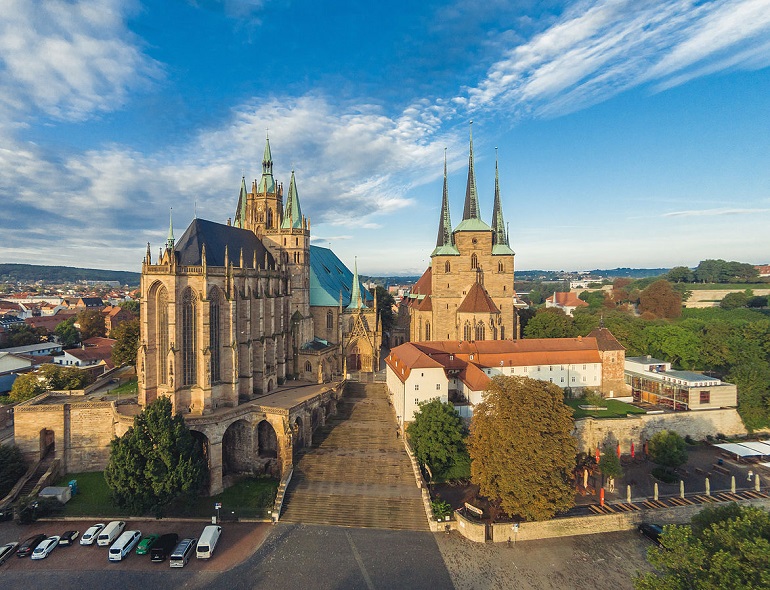
Mariendom and the Severikirche, Erfurt.
Introduction
Erfurt (pop. 216,000), the capital of Thuringia, is a city known for its well-preserved medieval old town. Once called the "Thuringian Rome", the city is home to numerous notable landmarks including the impressive Erfurt Cathedral and St Severus Church, both located on Cathedral Hill. The Krämerbrücke, a medieval bridge lined with half-timbered houses, is one of the city’s most famous sights. Erfurt is also recognised for its significant role during the Reformation, being the site where Martin Luther studied and lived as a monk. The University of Erfurt, dating back to 1379, was the first university in what is now Germany. Closed in 1816, it only re-opened in 1994. The Erfurt Synagogue, built in 1100, is the oldest synagogue building still standing in Europe.
Interesting Facts about Erfurt
- Erfurt is home to the Krämerbrücke, Europe's longest inhabited bridge, lined with houses and shops.
- The city boasts one of the best-preserved medieval old towns in Germany, with winding cobblestone streets and historic squares.
- Erfurt's Old Synagogue is the oldest surviving synagogue in Europe and part of a UNESCO World Heritage Site.
- The majestic Erfurt Cathedral on Cathedral Hill houses the world's largest free-swinging medieval bell, known as the Gloriosa.
- Martin Luther studied at the University of Erfurt and experienced his spiritual awakening at St Augustine’s Monastery.
- Erfurt is famous for its Petersberg Citadel, one of the largest and best-preserved town fortresses in Central Europe.
- The city was a key trading hub in the Middle Ages, particularly known for its woad trade, from which blue dye was produced.
- In 1184, Erfurt was the scene of the notorious “latrine fall,” where floor collapse sent nobles plunging into a latrine below—King Henry VI survived.
- Erfurt’s university, originally founded in 1379, was one of the first in Germany, and re-opened in 1994 after being closed for almost two centuries.
- The public children's TV channel KiKa has its headquarters in Erfurt, making it a vibrant centre for German media.
History
Erfurt was first mentioned in 742 CE when Saint Boniface established a diocese in what was then called "Erphesfurt". The city's name derives from an ancient ford (furt) across the River Gera, with the prefix "Er-" coming from an old German word meaning "dirty", referring to the muddied waters at this crossing point. By 805, Charlemagne had granted the settlement market rights, transforming it into an important military strongpoint and administrative centre on the eastern frontier of the Frankish Empire. The Diocese of Erfurt was established in 741 but was later absorbed into the Diocese of Mainz in 755. During the 10th and 11th centuries, both the Holy Roman Emperor and the Electorate of Mainz held significant privileges in Erfurt, with German kings maintaining an important monastery on Petersberg Hill whilst the Archbishops of Mainz collected taxes from the populace.
The medieval period marked Erfurt's golden age, as it emerged as one of Germany's most prosperous and influential cities. Around 1100, citizens began achieving freedom by paying the annual "Freizins" (liberation tax), marking the first steps towards municipal independence. By 1217, a city council had been founded, followed by the construction of a town hall in 1275. Erfurt's strategic location at the crossroads of two ancient trading routes—the Via Regia and the Nuremberg Geleitstrasse—enabled it to control extensive territories comprising nearly 100 villages and castles at its height. The city became renowned throughout Europe for its woad trade, earning the nickname "the golden fleece of Thuringia" for its plant-based blue dye exports until indigo from the tropics displaced it in the 16th century. Between 1306 and 1481, Erfurt formed the Thuringian City Alliance with Mühlhausen and Nordhausen, and all three cities joined the Hanseatic League in 1430. By the 15th century, Erfurt had reached a population of 20,000, making it one of Germany's largest cities, protected by a second, higher city wall constructed between 1432 and 1446.
Erfurt's intellectual and religious significance grew alongside its commercial prosperity, establishing the University of Erfurt in 1379 as one of Germany's first city-owned universities. The university quickly became a hotspot of Renaissance humanism, attracting scholars such as Ulrich von Hutten and Helius Eobanus Hessus. The city's religious heritage included an extraordinary 90 churches, chapels, monasteries, and convents during its heyday. However, Erfurt also witnessed darker chapters, particularly for its Jewish community, which had been established in the 11th century and became one of Germany's most influential alongside those in Mainz, Worms, and Speyer. Tragically, in 1349 during the Black Death persecutions, over 100 Jews were killed and the remainder driven from the city, though they returned within a year to rebuild their community. The city's political allegiances shifted dramatically over the centuries: it became part of the Electorate of Mainz in 1664, passed to Prussia in 1802, fell under French domination as Napoleon's Principality of Erfurt from 1806-1813 (hosting the famous Congress of Erfurt in 1808), and eventually became the capital of Thuringia in 1991 following German reunification.
Main Attractions
Krämerbrücke
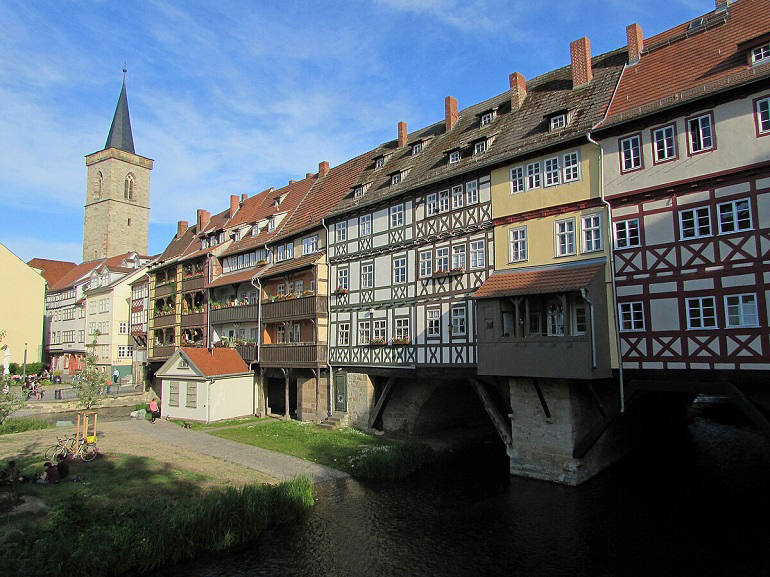
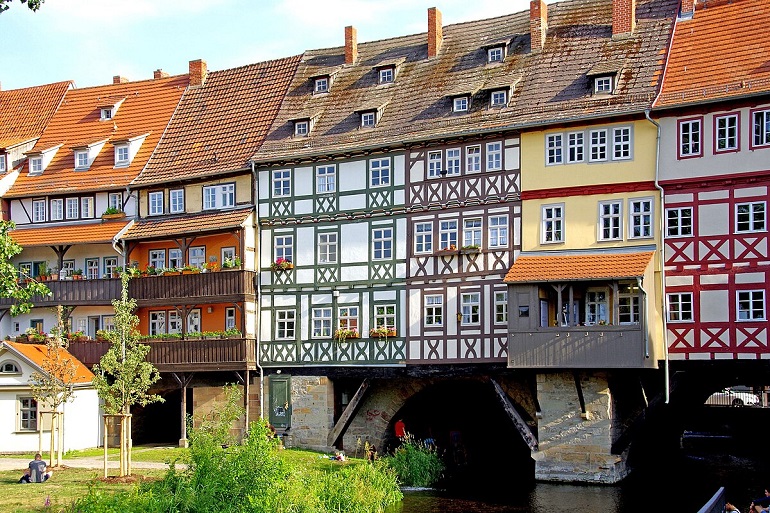
The Krämerbrücke is Erfurt’s most iconic landmark and stands as the longest continuously inhabited bridge in Europe. Originally a wooden structure, it was rebuilt in stone in 1325 following a series of fires. The bridge spans the Breitstrom, a channel of the Gera River, and is lined on both sides with 32 half-timbered houses, creating a unique enclosed street. These buildings were historically occupied by merchants and artisans, a tradition that continues today with a vibrant collection of independent shops selling hand-painted ceramics, Thuringian blue-print fabrics, handmade jewellery, and other crafts. At the eastern end of the bridge stands the Ägidienkirche (St. Giles' Church), from whose tower visitors can gain a rewarding perspective of the bridge and the surrounding Old Town. The bridge is also the centrepiece of the city's largest festival, the Krämerbrückenfest, held annually in June.
Erfurt Old Town (Altstadt)
Erfurt’s Old Town (Altstadt) is one of Germany’s most extensive and well-preserved medieval city centres. Its character is defined by a dense network of cobbled streets and winding alleyways that open onto historic squares like the Fischmarkt and Wenigemarkt. The city's wealth, derived primarily from the medieval woad trade, is reflected in the meticulously restored half-timbered and Renaissance-era patrician houses, such as the Haus zum Roten Ochsen. A walk through the Altstadt offers an immersive historical experience, taking you past significant monuments, traditional pubs, and independent shops. The area between the Krämerbrücke and the cathedral is particularly atmospheric, with small canals from the Gera river flowing alongside the streets, earning Erfurt the nickname "Little Venice".
Domplatz
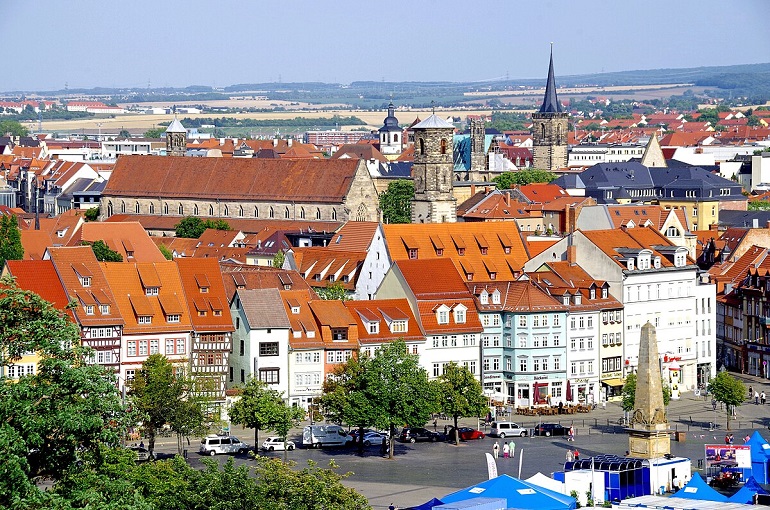
Domplatz, or Cathedral Square, is the historic heart of Erfurt and one of Germany's largest market squares. Its vast open space serves as a central hub for city life and provides a spectacular setting for the architectural ensemble of the Erfurt Cathedral and the adjacent Church of St. Severus (Severikirche), which together form the city's most recognisable landmark. The square itself is home to the Erthal Obelisk and the Minerva Fountain. Throughout the year, Domplatz hosts a wide variety of events, including daily and weekly markets selling local produce. It is most famous as the location for the city's renowned Christmas Market (Weihnachtsmarkt) and the DomStufen-Festspiele, an open-air theatre and opera festival held on the cathedral steps each summer.
Erfurt Cathedral
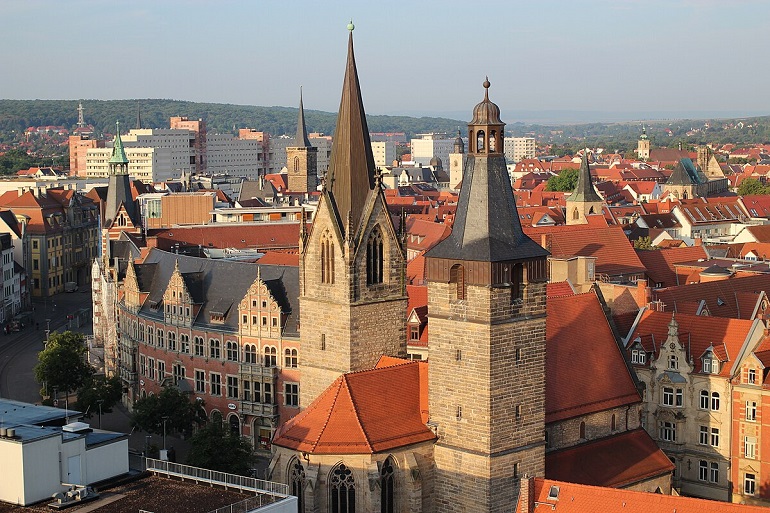
Erfurt Cathedral, or the Cathedral of St. Mary, is a masterpiece of German Gothic architecture that dramatically presides over the Domplatz. Its construction spanned several centuries, resulting in a blend of Romanesque and Gothic styles. The cathedral is reached via a monumental 70-step outdoor staircase, the Domstufen, which adds to its imposing presence. Inside, it houses a remarkable collection of artistic treasures, including a set of thirteen stunning medieval stained-glass windows in the high choir, intricate 14th-century choir stalls, and the 'Wolfram', a unique Romanesque bronze candlestick shaped like a man. The cathedral is also home to the Gloriosa, the world's largest free-swinging medieval bell, cast in 1497, whose resonant tone is reserved for special occasions.
Fischmarkt
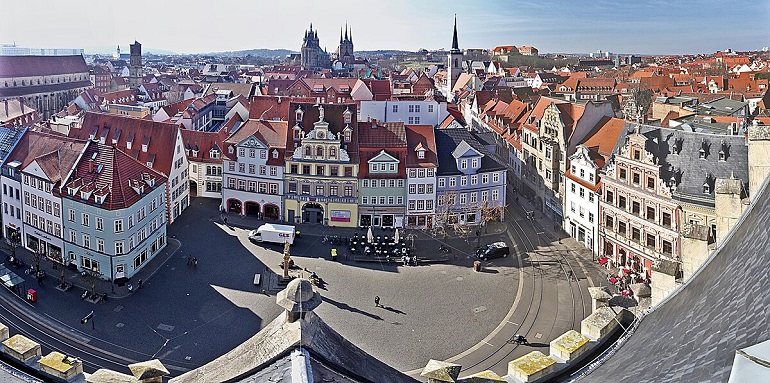
The Fischmarkt is one of the most historically significant squares in Erfurt, centrally located in the Old Town between the Domplatz and the Krämerbrücke. For centuries, it was the city's primary market and commercial heart. The square is framed by an impressive collection of meticulously restored Renaissance-era patrician houses, such as the Haus zum Breiten Herd, with its ornate facade, and the Haus zum Roten Ochsen. Dominating the northern side of the square is the imposing neo-Gothic Town Hall (Rathaus), constructed in the late 19th century. At the centre of the Fischmarkt stands a 16th-century monument depicting a Roman soldier, a figure often identified as the city's Roland statue, which symbolised Erfurt's market rights and civic freedoms.
Augustinerkloster (Augustinian Monastery)
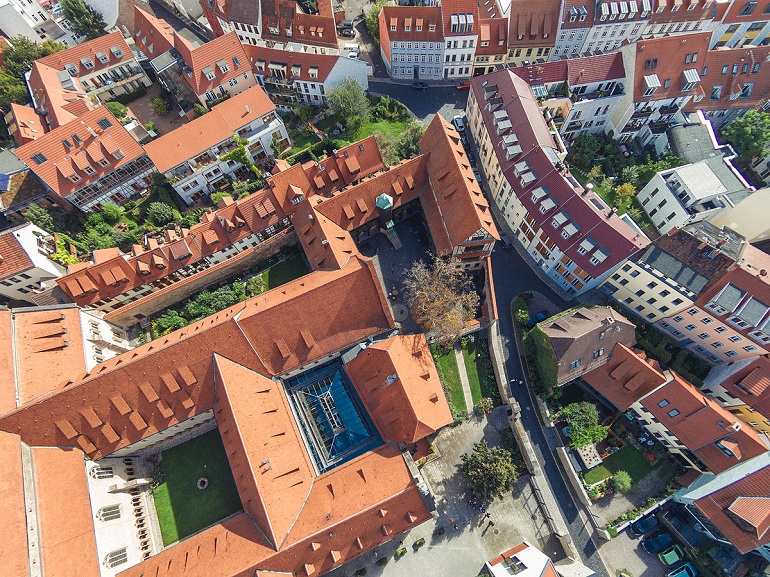
The Augustinian Monastery holds significant historical importance as the place where Martin Luther lived as a monk from 1505 to 1511. Founded in the late 13th century, this well-preserved complex offers a deep insight into monastic life and the origins of the Protestant Reformation. Visitors can tour the site, which includes the monastery church where Luther was ordained, the historic library, the tranquil cloister, and a reconstruction of Luther's cell. The monastery is not just a museum; it remains an active place of worship and serves as an ecumenical conference centre and a pilgrimage site, even offering simple accommodation for visitors seeking a contemplative stay. A permanent exhibition, "Bible-Monastery-Luther", details the history of the site and its most famous resident.
Old Synagogue
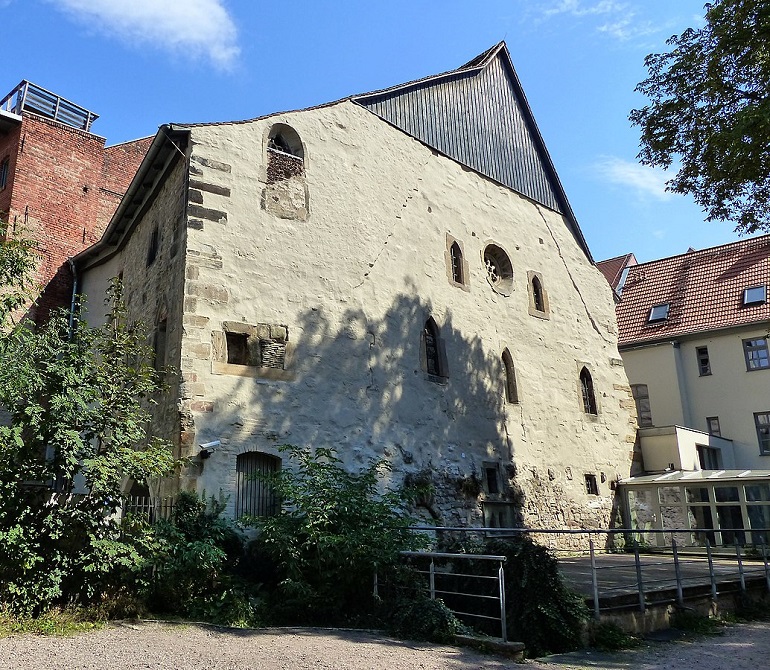
The Old Synagogue is Europe's oldest synagogue preserved up to its roof, with earliest parts dating back to around 1094. Located in the medieval quarter, it reflects the importance of Erfurt's first Jewish community, which thrived from the late 11th to mid-14th centuries. Architecturally, the building combines styles including a Romanesque double-arched window and a Gothic rosette window. After the community was destroyed in the 1349 pogrom, the synagogue was sold and used as a warehouse, a factor that helped protect it from destruction. Rediscovered in the late 1980s, it was restored and opened as a museum in 2009. The museum features the building itself as the main exhibit, the Erfurt Treasure—a hoard of medieval coins, jewellery, and silverwork found buried during the 1349 massacre—and facsimiles of the Erfurt Hebrew Manuscripts. The site, along with the nearby Mikveh and the Stone House, was designated a UNESCO World Heritage site in 2023.
Petersberg Citadel (Zitadelle Petersberg)
The Petersberg Citadel is one of the largest and best-preserved baroque town fortresses in central Europe, strategically positioned on a hill overlooking the Old Town. Originally the site of a Benedictine monastery, the grounds were transformed into a vast military complex in the 17th century. Visitors can freely explore the extensive ramparts, which offer panoramic views across Erfurt’s rooftops. Guided tours provide access to the labyrinthine underground listening passages, or 'horchgänge', designed to detect enemy tunnelling. The former Commandant's House now serves as a visitor centre, and the site also features a restored military bakery and the Romanesque church of St. Peter. The citadel continues to be a central part of city life, hosting various cultural events and festivals throughout the year.
Top Museums
History & Art Museums
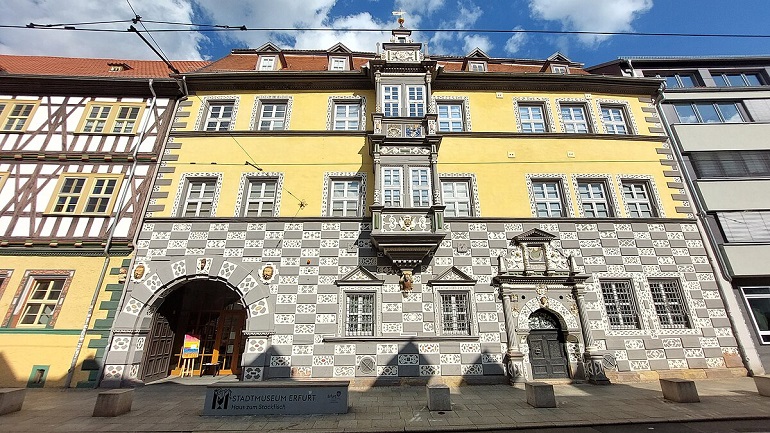
Stadtmuseum Erfurt (Haus zum Stockfisch)
Occupying one of Erfurt’s most ornate Renaissance townhouses, the Stadtmuseum traces the city’s evolution over 1,275 years through engrossing exhibitions on everything from the Middle Ages to the present. The building itself is a historical marvel, and the museum excels at bringing Erfurt’s social, economic, and cultural milestones to life for all ages.
Angermuseum Erfurt
Housed in a splendid Baroque edifice, the Angermuseum is Erfurt’s major art museum, famed for its impressive collection of medieval, Renaissance, and modern art, including a celebrated expressionist mural by Erich Heckel. Its blend of local heritage and fine arts makes it a must-see for art enthusiasts.
DDR-Ausstellung DEUDERA
As the largest DDR-themed museum in Thuringia, this hands-on exhibition provides an authentic look into everyday life in East Germany, displaying over 15,000 original objects across varied topics—from fashion and toys to media, vehicles, and home décor. Its interactive approach invites visitors of all generations to engage with recent history in memorable ways.
Museum Brückenhaus (Krämerbrücke Museum)
Located within the unique Krämerbrücke—Europe’s longest bridge lined with inhabited houses—this museum offers an intimate exploration of the bridge’s history and restoration. The house itself, dating to 1578, is arguably the museum’s highlight, allowing visitors a rare glimpse into a lived-in piece of Erfurt’s architectural heritage.
Science, Nature & Technology Museums
Naturkundemuseum Erfurt (Natural History Museum)
This four-floor museum, symbolised by a monumental 350-year-old oak, showcases the flora, fauna, and geology of Thuringia. With immersive dioramas, extensive entomology collections, and interactive exhibits on biodiversity and environmental stewardship, it’s a delight for families and nature lovers alike.
Deutsches Gartenbaumuseum Erfurt
Set within the historic fortress of Cyriaksburg on the egapark grounds, this unique museum celebrates the art and science of horticulture—from plant cultivation and garden design to the role of gardens in food, medicine, and climate. Its interactive, award-winning displays appeal to a broad audience, from gardening aficionados to families seeking a vibrant, green experience.
Druckereimuseum und Schaudepot im Benary-Speicher
Located in a 19th-century warehouse, this museum provides a hands-on journey through two centuries of printing technology. Visitors can see well-preserved, working presses—even trying some for themselves—and enjoy the Schaudepot, which stores and displays fascinating objects from Erfurt’s museum collections.
Memorials & Educational Sites
Gedenk- und Bildungsstätte Andreasstraße
Housed in the former Stasi remand prison, this centre powerfully documents state oppression and the struggle for freedom in the GDR through gripping exhibitions, survivor testimonies, and original prison cells. It stands as both a place of remembrance and a centre for learning about resistance, repression, and revolution in modern German history.
Erinnerungsort Topf & Söhne – Die Ofenbauer von Auschwitz
This profound memorial explores the role of the Erfurt-based firm Topf & Söhne in architecting the crematoria at Nazi extermination camps. Through archival materials and personal accounts, the museum prompts reflection on the complicity of industry in the Holocaust, making it a vital site for both historical awareness and ethical contemplation.
Local Cuisine
Among the most celebrated local specialities areThüringer Bratwurst, a finely spiced sausage typically grilled over charcoal and served with mustard, andThuringian dumplings (Kloß), usually made from potatoes and enjoyed with rich gravies and red cabbage. Another beloved dish isRinderroulade mit Rotkraut und Kloß, which features beef roulade filled with mustard and onions, accompanied by dumplings and braised red cabbage. Locals also take pride in their bread and bakery traditions, especially sourdough and potato-based loaves, as well as the region’s distinctivePuffbohne (fava bean), which holds a special status as Erfurt’s culinary mascot. For a typical experience, visitors can pair these dishes with a glass of robust local beer or finish with a slice of homemadeWaldstrudel for dessert.
Shopping
Erfurt's shopping scene centres around several key areas, each offering distinct experiences for visitors. The pedestrianised Anger district serves as the city's main shopping hub, featuring the Anger 1 shopping centre with over 60 shops and restaurants housed within elegant 1870s architecture alongside modern retail developments. The historic Krämerbrücke (Merchants' Bridge) presents one of Europe's most unique shopping experiences, with 32 half-timbered buildings housing artisan workshops, galleries, boutiques selling traditional crafts, Thuringian blue-printed fabrics, hand-blown glassware, wood carvings, and antiques. The atmospheric Lange Brücke district near the cathedral offers specialist local boutiques and high-quality products, whilst the nearby Kettenstrasse features traditional handicraft shops and art galleries. For fresh produce and regional specialities, the daily market at Domplatz operates Monday to Saturday from 6:30am to 2pm, selling everything from Thuringian bratwurst and local cheeses to flowers, vegetables, and organic products. Additional shopping centres include Forum 1 near the station and the T.E.C. (Thüringer Einkaufszentrum) on the city's outskirts, both providing comprehensive retail facilities including supermarkets, clothing stores, and dining options.
Nature in and around Erfurt
Erfurt offers an abundance of natural attractions both within the city and in its surrounding countryside. The city itself features over 550 hectares of recreational green spaces and more than 1,000 hectares of forest, with the renowned egapark serving as the crown jewel of Erfurt's natural offerings. This 36-hectare horticultural paradise contains Europe's largest ornamental flower bed, themed gardens including a Japanese garden and rose garden, tropical conservatories, and the Danakil desert and jungle house. Within the city limits, the Steigerwald provides excellent hiking opportunities through mixed forests of beech, oak, and pine trees, featuring well-marked trails that converge at a central "star" junction and offering views over the city. The forest includes the popular Fuchspfad trail, which leads to a large woodland playground and is particularly suitable for families. The Gera River flows through Erfurt, creating beautiful riverfront areas ideal for leisurely strolls, with the restored traditional houses along its banks providing picturesque scenery. Beyond the city boundaries, the Thuringian Forest lies approximately 50 kilometres south of Erfurt, home to the famous 168-kilometre Rennsteig trail, Germany's oldest long-distance hiking path. To the west, the Hainich National Park offers Europe's largest unbroken deciduous forest, featuring a unique 540-metre treetop walkway and UNESCO World Heritage beech forests teeming with rare flora and fauna, including up to 15 species of orchids and the elusive European wildcat.
egapark Erfurt
egapark Erfurt is a premier horticultural park, combining extensive themed gardens with recreational facilities across a 36-hectare site. Originally established for the 1961 GDR National Garden Show, it is celebrated for its magnificent floral displays, including the largest ornamental flowerbed in Europe and an extensive rose garden with thousands of varieties. Key attractions within the park include the Japanese Garden, a tropical glasshouse, and the Wüsten- und Urwaldhaus Danakil, a unique desert and jungle house. The historic Cyriaksburg fortress is integrated into the park, housing the German Horticulture Museum. For families, the park offers Thuringia's largest adventure playground and a park railway, making it a destination for both horticultural enthusiasts and those seeking leisure.
Luisenpark Erfurt
Luisenpark is a tranquil, expansive public park situated in the southern part of the city, offering a picturesque green space designed in the English landscape style. Named after Queen Louise of Prussia, the park follows the gentle curve of the Gera river, with its banks providing scenic walking and cycling paths. The landscape is characterised by wide, open meadows, mature trees that offer ample shade, and well-maintained flower beds. It is a favoured spot for families, featuring several well-equipped playgrounds and plenty of space for picnics and informal games. The park's peaceful atmosphere and natural beauty make it an ideal retreat for jogging, leisurely strolls, or simply relaxing by the river, away from the bustle of the city centre.
City Park (Stadtpark) Erfurt
Erfurt's City Park, located conveniently close to the main railway station (Hauptbahnhof), functions as a vital green lung for the southern city area. This landscaped park was established in the late 19th century and combines formal garden elements with more naturalistic, wooded areas. It features a network of walking trails, ornamental fountains, historic statues, and a central pond that serves as a focal point. The park contains several playgrounds and spacious lawns, making it popular with local residents for daily exercise, dog walking, and relaxation. It also serves as a quiet and accessible venue for community gatherings and small local events, providing a quick and easy escape into nature for those living and working nearby.
Brühler Garten
The Brühler Garten is a charming state park located just west of the city centre, offering a peaceful and beautifully maintained environment for recreation. The park’s layout is influenced by its history, as it was developed on the site of the former Brühl bastion, a part of Erfurt's 17th-century fortifications. This heritage is reflected in its terraced levels and the remnants of old walls. The garden is noted for its diverse collection of mature trees, vibrant perennial and flower beds, a dedicated rose garden, and a small stream that meanders through the grounds. With its large playgrounds, public art installations, and ample seating, Brühler Garten provides a more intimate and serene alternative to the city's larger parks.
Getting There & Around
By train Erfurt is a major hub on Germany’s high-speed railway network, with its centrally located main station (Hauptbahnhof) served by frequent Intercity-Express (ICE) and regional trains. You can reach Erfurt quickly and easily from many German and European cities, with direct services from destinations such as Berlin, Frankfurt, Leipzig, Nuremberg and Munich. The station is within walking distance of the historic old town and well connected to local trams and buses.
By coach or bus Long-distance bus operators, including FlixBus, offer regular routes to Erfurt from various German and international cities, with services arriving at the central bus station close to the main train station. This option is convenient for travellers seeking an economical and flexible journey by road, with onward connections for local transport available upon arrival.
By car Erfurt enjoys excellent road links, located at the intersection of the A4 and A71 motorways, which provide direct access from all directions. The city is easily approached via well-signposted motorway exits, and a modern ring road system guides traffic efficiently around the centre. Ample parking is provided by a network of multi-storey car parks and Park and Ride facilities, making it straightforward for motorists to explore the city.
Best Time to Visit
The optimal time to visit Erfurt in Thuringia is undoubtedly from May through September, when the city experiences its most favourable weather conditions. During these months, temperatures range from a pleasant 15°C to 25°C, providing ideal conditions for exploring the medieval city centre and its magnificent cathedral ensemble. Late spring, particularly May, offers a delightful balance of comfortable temperatures around 18°C and longer daylight hours, whilst the fresh greenery and blooming flowers create a picturesque backdrop for wandering through the cobblestone streets and across the famous Krämerbrücke. Summer months of June through August provide the warmest temperatures and most sunshine, with up to 7.5 hours of daily sunshine in July, though occasional rain showers can occur. Early autumn, especially September, remains an excellent choice with mild temperatures around 19°C during the day and stunning autumn colours beginning to emerge. However, if you're seeking a truly magical experience, the winter Christmas market season from late November through December transforms Erfurt into a festive wonderland, though you'll need to bundle up against the cold temperatures that can drop below freezing.


