| Contents |
|---|

Introduction
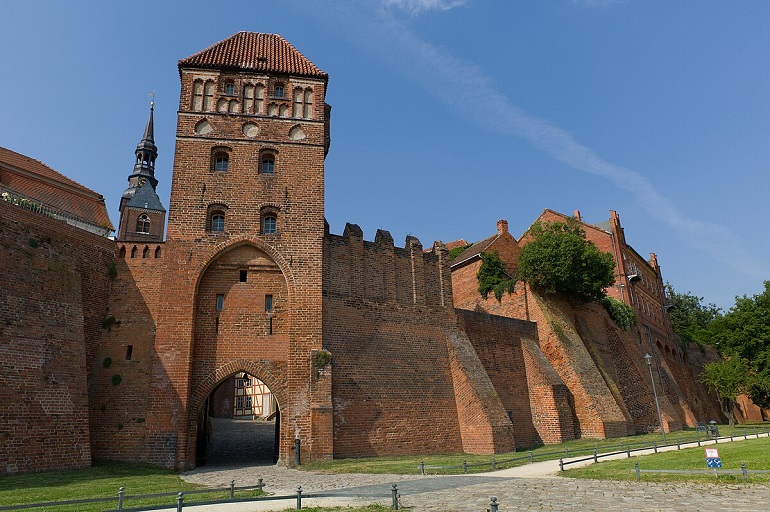
Tangermünde (pop. 10,000) is a walled medieval town at the confluence of the Elbe and the Tanger Rivers. Preferred residence of Emperor Charles IV (1316-1378), then of the Hohenzollern electors of Brandenburg, Tangermünde combines Romanesque and Brick Gothic architecture and timber-framed houses. The integrally preserved 14th-century brick city walls were erected in 1300 and reach a height of 10 to 15 metres.
Interesting Facts about Tangermünde
- It was a preferred residence of Emperor Charles IV in the 14th century and later of the Hohenzollern electors of Brandenburg.
- The town blends Romanesque and Brick Gothic architecture with picturesque timber-framed houses.
- Tangermünde’s brick city walls, integrally preserved, were erected around 1300 and rise roughly 10–15 metres.
- Its skyline is marked by stout towers, historic gates, and the imposing St. Stephan’s Church.
- As a former Hanseatic town, Tangermünde flourished in the 15th century, leaving a legacy of ornate brick buildings.
- Much of its original townscape survived industrialisation and the Second World War, preserving an authentic medieval character.
- The old town hall and castle area house museums that trace the town’s chequered history and castle life.
- The Chapter Tower offers sweeping views over the Elbe floodplains and the red-brick fortifications.
- Tangermünde’s nearly continuous town walls and winding alleys make it one of the best-preserved brick-Gothic ensembles in northern Germany.
History
Medieval Origins and Imperial Favour
Tangermünde's strategic location at the confluence of the Elbe and Tanger Rivers made it a significant settlement in medieval Germany. The town reached its zenith during the 14th century when it became the preferred residence of Emperor Charles IV (1316-1378), one of the most influential Holy Roman Emperors. This imperial connection elevated Tangermünde from a regional trading post to a centre of political power, bringing considerable wealth and prestige to the settlement. The emperor's favour transformed the town into an important administrative hub within the Holy Roman Empire.
Architectural Legacy and Fortifications
The town's prosperity during the medieval period is reflected in its remarkable architectural heritage, which combines Romanesque and Brick Gothic styles alongside traditional timber-framed houses. The most impressive testament to Tangermünde's historical importance is its integrally preserved brick city walls, which were erected in 1300 and remain largely intact today. These formidable fortifications reach heights of 10 to 15 metres, demonstrating the town's strategic military importance and the considerable resources invested in its defence. The walls represent one of the finest examples of medieval German urban fortification.
Hohenzollern Connection and Continued Significance
Following its imperial period, Tangermünde became associated with the powerful Hohenzollern dynasty, serving as a residence for the electors of Brandenburg. This connection to the future Prussian royal family maintained the town's political relevance well beyond the medieval period. The Hohenzollern presence ensured that Tangermünde continued to receive investment and attention, helping to preserve its medieval character whilst adapting to changing political circumstances. Today, this rich historical legacy makes Tangermünde one of Germany's best-preserved medieval towns, offering visitors an authentic glimpse into the country's imperial and princely past.
Main Attractions
Burg Tangermünde (Tangermünde Castle)
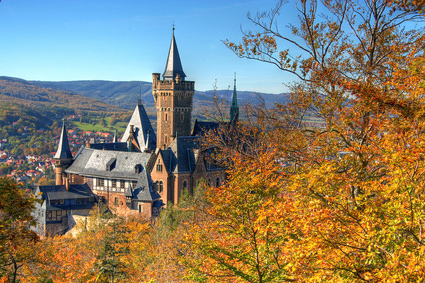
The castle of Tangermünde stands approximately 43 metres above sea level on the banks of the River Elbe. This partially preserved medieval fortress served as the preferred residence of Emperor Charles IV between 1316 and 1378 and later became a seat of the Hohenzollern electors of Brandenburg. The complex remains one of the town’s most significant landmarks, rising from surrounding greenery and offering visitors insight into Tangermünde’s imperial past.

Marktplatz (Market Square)
The market square forms the heart of the old town, surrounded by half-timbered houses, some more than three centuries old. It offers a clear view of the impressive town hall and serves as the community’s focal point, showcasing Tangermünde’s intact medieval layout.
Rathaus (Town Hall)
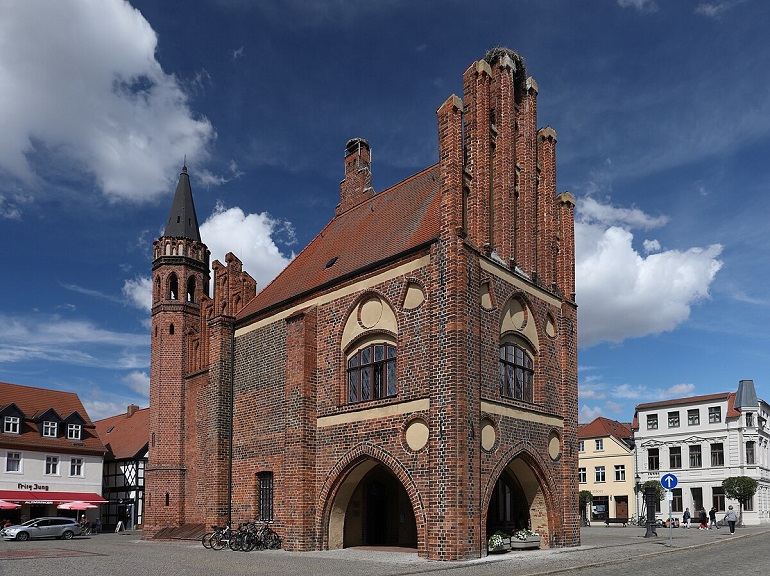
The town hall dominates Tangermünde’s market square with its 24-metre-high late-Gothic structure dating from 1430. Its distinctive façade features imposing gables, spires and buttresses that might initially suggest a church. The richly decorated gable exemplifies medieval civic architecture, and the former council hall can be visited on guided tours when not in use for weddings.
St. Stephanskirche (St Stephen’s Church)
St Stephen’s Church boasts the highest church tower in the Altmark region, rising above Tangermünde’s surviving medieval towers. Inside, visitors find a colourful interior with meticulously restored furnishings. The church houses an early-Baroque organ built by Hamburg master Hans Scherer the Younger, renowned for its historic mid-tone tuning and exceptional sound.
Neustädter Tor (New Town Gate)
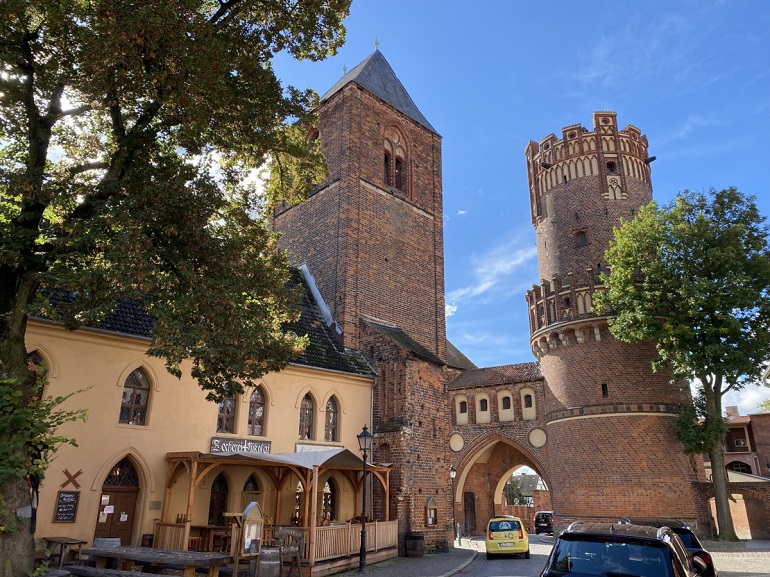
Neustädter Tor is one of three surviving gates that testify to the former wealth of this Hanseatic city. The well-preserved gateway, integrated into the town’s defensive walls, stands as a prime example of medieval military architecture and marks the historical entrance to the old town.
Stadtmauer (City Walls)
Tangermünde’s brick city walls, erected around 1300, reach heights of 10 to 15 metres and still encircle the old town. These fortifications create an authentic medieval atmosphere and constitute one of the finest examples of urban defences in northern Germany.
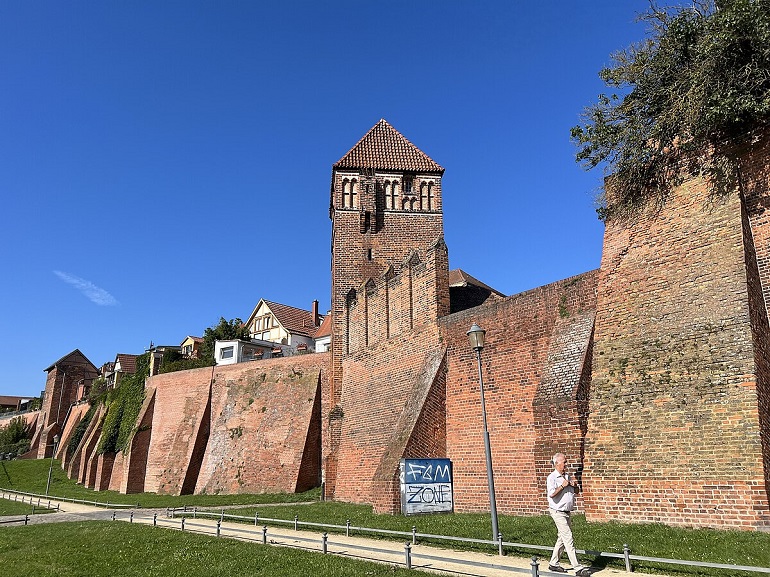
Eulenturm (Owl Tower)
The Eulenturm is one of the remaining medieval towers that once formed part of Tangermünde’s impressive defences. It exemplifies the town’s military heritage and complements the intact walls and gates, underscoring the importance of Tangermünde as a fortified Hanseatic trading centre.

Elbpromenade (Elbe Promenade)
The Elbe Promenade provides a scenic walkway along the riverbank, affording views of the town’s medieval skyline. It highlights Tangermünde’s strategic position at the confluence of the Elbe and Tanger rivers and is ideal for leisurely strolls in a tranquil setting.
Top Museums
Stadtgeschichtliches Museum (Town History Museum)
Located within the magnificent Old Town Hall, one of the finest examples of North German brick Gothic architecture from the 15th century, the Town History Museum occupies the ground floor and basement rooms of this architectural masterpiece. The museum chronicles the tumultuous history of Tangermünde, showcasing the town's development and its particular character shaped by life along the river.
The permanent exhibition covers the town's evolution from prehistoric times through various historical periods, with particular emphasis on the shipping industry and Tangermünde's industrial heritage from the 19th century. One of the museum's most compelling sections focuses on the Great Fire of 1617, a catastrophic event that devastated the town and led to one of the most tragic episodes in Tangermünde's history.
The museum dedicates significant attention to the story of Grete Minde, who became a victim of intrigue, slander, and prejudiced justice. Accused of arson in connection with the 1617 fire, she was executed by burning at the stake on 22nd March 1619. Visitors can examine her actual court proceedings, which reveal the particularly cruel nature of her persecution. A detailed town model demonstrates how Tangermünde appeared around 1640, providing visitors with a vivid understanding of the medieval urban landscape.
Burgmuseum Schloßfreiheit (Castle Museum)
Housed in the town's oldest surviving residential building at Schloßfreiheit 5, the Castle Museum opened in 1998 after the city acquired and extensively renovated this protected former residence. The museum presents its permanent exhibition across four rooms, each dedicated to illuminating the history of Tangermünde Castle.
The museum particularly emphasises the castle's sovereign prominence during the 14th century under Emperor Charles IV, when Tangermünde served as an imperial residence. The exhibition explores the castle's role as the residence of the Margraves and Electors of Brandenburg until the mid-15th century, highlighting its position as the seat of territorial authority.
Local Cuisine
Tangermünde’s cuisine reflects the hearty traditions of the Altmark, with taverns and hotel restaurants emphasising seasonal, regionally sourced fare such as game, river fish and slow-cooked meats. A distinctive local talking point is the playful medieval-themed menus in spots like Exempel Gaststuben, where diners encounter regional curiosities such as solyanka-inspired soups and house creations alongside the town’s cult favourite Kuhschwanzbier (cow’s tail beer), sometimes paired with dishes like Kuhschwanz-Bierfleisch for a robust, malty bite. Classic German comfort plates—goulash soups, farmers’ breakfasts, and potato-forward sides—feature widely in old-town dining rooms, complemented by crisp local lagers and house beers. For something sweet, Saxony-Anhalt’s confectionery heritage appears on dessert cards, notably the Altmark’s celebrated Salzwedeler Baumkuchen, a ringed “tree cake” sliced into small crescents that pairs neatly with afternoon coffee after a stroll on the city walls.
Getting There
By train Tangermünde is best reached by regional train via Stendal, with frequent direct services between Stendal Hbf and Tangermünde taking about 13 minutes and running roughly hourly; from Magdeburg Hbf, travel typically involves one change (usually at Stendal) and takes just over an hour.
By coach or bus Regional PlusBus routes link Tangermünde with nearby hubs: lines 790 and 900 connect through Fischbeck in timed “rendezvous” transfers, with an hourly weekday pattern and every two hours at weekends, while local buses also run between Stendal (Bahnhofstraße) and Tangermünde (Lindenstraße) during the day.
By car Tangermünde sits north of Magdeburg with convenient access from the A2 and A14 motorways; typical approaches are via the B189 toward Stendal and local roads for the final stretch to the historic centre, with straightforward short transfers from Stendal and the wider Saxony-Anhalt road network.
| Travel destinations in Saxony-Anhalt | ||||||||||||||
|---|---|---|---|---|---|---|---|---|---|---|---|---|---|---|
|
|
|
|
| ||||||||||
|
|
|
|
| ||||||||||
|
|
|
| |||||||||||