Introduction
Covering 7,500 ha (75 km²), Hainich National Park occupies much of the triangular area between Eisenach, Mühlhausen, and Bad Langensalza. The national park forms the southern part of the Hainich, the largest contiguous deciduous forest in Germany (roughly 160 km² / 62 sq mi)). Hainich National Park was established on 31 December 1997 as the country's 13th national park and the only one in the state. It conserves one of Germany's largest contiguous deciduous forest landscapes and extensive limestone beech woods, with elevations from about 225–500m and a core wilderness zone where forests are left to develop naturally. The park's central beech forest area of 1,573ha forms part of the UNESCO World Heritage property “Ancient and Primeval Beech Forests of the Carpathians and Other Regions of Europe,” inscribed for its undisturbed beech ecosystems and natural processes. Located between Eisenach, Mühlhausen and Bad Langensalza, the park offers signed walking routes including the 9.5km World Heritage Path, and features a treetop canopy walkway near Thiemsburg operated by the town of Bad Langensalza.
Geography and Landscape
Setting and Topography
Hainich National Park lies in western Thuringia, occupying the southern portion of the Hainich ridge between Eisenach, Mühlhausen and Bad Langensalza. This low mountain chain forms the western rim of the Thuringian Basin, creating a distinct contrast between its gentle, rolling eastern slopes and the markedly steeper, incision-cut western flank that drops towards the Werra valley. Elevations range from roughly 225m in the east to nearly 494m at Alte Berg on the fringe of the park, giving the terrain a softly undulating character rather than alpine drama. The ridge runs broadly north–south for about 30km, with a breadth of 4–8km, offering broad domed summits, shallow saddles and a mosaic of spur-and-valley forms.
Geology and Soils
The Hainich is a classic Muschelkalk (shell-limestone) landscape dating from the Middle Triassic, its bedrock shaping everything from slope profile to hydrology. Weathering of the limestone, combined with historical loess deposits, has produced varied silty, loamy and clayey soils, often with loam accumulations on the surface. Small outcrops of Keuper and earlier Triassic and Permian formations occur locally, but limestone dominates. Karst processes are evident: streams frequently sink into the porous rock, dry valleys are common on the ridge, and powerful springs emerge at the margins, particularly towards the lower-lying east.
Valleys, Edges and Views
The park's flanks are asymmetrical. To the east, slopes grade gently into the agricultural plain of the Thuringian Basin, with wide, open aspects across fields and meadows. To the west, steeper scarps are dissected by narrow transverse and longitudinal valleys, their southern faces often the sharpest. In the northwest, rockier promontories and crags punctuate the skyline. From higher points and clearings, vistas can take in the Werra valley and, on clear days, the broader uplands of central Germany.
Water and Karst Features
Surface water is intermittent on the limestone plateau. Many small streams vanish underground during drier periods, leaving dry gullies and pitted hollows that speak to the karstic underworld. At the foot of the ridge, springs burst forth where impermeable layers force groundwater back to the surface. This hidden circulation grants the park an alternating rhythm of quiet, dry combes and lively springheads around its edges.
Climate and Microclimates
Situated in the transition between oceanic and continental influences, the area experiences moderate rainfall, typically higher on the western ridge due to orographic uplift, and a mean annual temperature in the single digits Celsius. The ridge-and-basin arrangement creates gentle microclimates: cooler, moister pockets on shaded slopes and valley floors; warmer, drier conditions on exposed crests and the eastern lee. The woodland canopy further moderates extremes, keeping summer heat at bay and tempering winds across the plateau.
Trails and Landscape Experience
The park's path network traverses broad-backed hills, quiet dry valleys and the steeper western edges, linking viewpoints, historic routes and former clearings. A canopy walkway near Thiemsburg offers an elevated perspective over the ridge, revealing the layered structure of this limestone highland and the expanse of the surrounding basin. Waymarked routes often follow old forest roads along the spine and then dip into side valleys, giving walkers an intimate sense of the Hainich's softly sculpted relief.
Regional Context
Hainich National Park anchors a broader cultural and natural landscape: a forested upland framed by fertile lowlands, half-timbered villages and small streams threading meadows. Its position on the basin's rim means transitions are immediate and legible—step from ridge to plain in a matter of minutes—and the park's landscapes read as a living cross-section of central German geomorphology: limestone heights, karst hydrology, asymmetric slopes and open basin vistas shaped by deep geological time.

Flora and Fauna
Overview
Hainich National Park in Thuringia protects one of Europe's largest contiguous deciduous woodlands, centred on ancient European beech forests that are part of a transnational UNESCO World Heritage Site recognising Europe's primeval and ancient beech ecosystems. Once a restricted military training area, the park has been left to natural processes for decades, creating a living showcase of wild beech forest dynamics, rich deadwood habitats, and flourishing scrublands.
The Forest: Primeval Beech and Companions
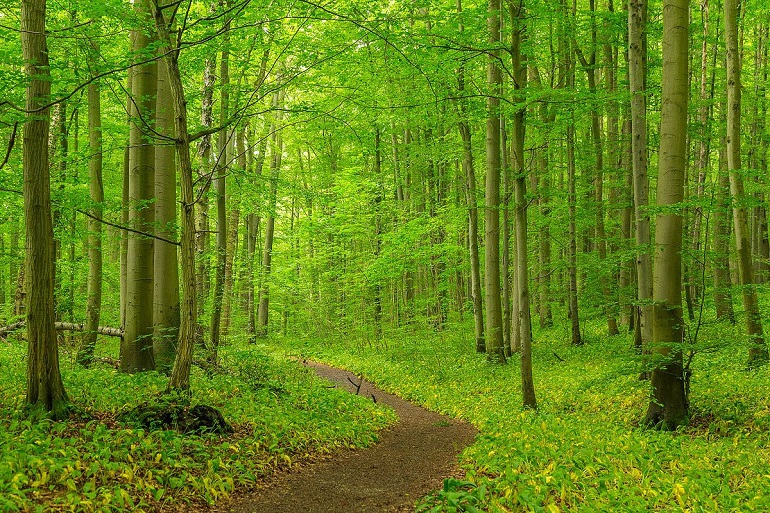
European beech dominates Hainich's forest communities, thriving on nutrient-rich limestone soils alongside more than 30 other deciduous tree species, including ash, hornbeam, lime and maples. In spring, before the beech canopy closes, the forest floor bursts with early bloomers: spring snowflake, hollowroot/corydalis, liverleaf, early dog-violet, wood anemone, buttercup anemone, wild garlic and Turk's cap lily paint sweeping drifts beneath the still-bare branches. By autumn, the park's mix of trees delivers a spectacular blaze of colour along its trails and canopy walkway.
Deadwood is a defining feature here and a cornerstone of the park's ecological health, supporting fungi, bracket fungi, mosses and a remarkable assemblage of insects; in places, the quantities approach those found in true primeval forests. Over 1,600 fungi species have been recorded, with many rare and threatened, underscoring the forest's conservation importance.
Wildflowers, Orchids and Mosses
Botanists and casual walkers alike will notice the park's botanical richness: around 900 plant species have been identified, including extensive spring carpets and notable beech-forest specialists. Hainich is also an orchid hotspot, with 26 species recorded; forest orchids are best looked for along routes such as Sulzrieden and the Naturpfad Thiemsburg, though their presence naturally ebbs and flows as meadows transition to woodland under non-intervention management.
Birds: Woodpecker Country and Open-land Specialists
The beech canopy hums with birdlife that thrives in insect-rich, old-growth conditions and deadwood-rich stands. All seven woodpecker species native to Thuringia occur, including the Middle Spotted Woodpecker, alongside treecreepers, orioles, wood warblers, common buzzards, red kites and ravens. The park's succession scrublands host open-country and edge specialists such as red-backed shrike, great grey shrike, grasshopper warbler and meadow pipit, with winter sightings of hen harrier and rough-legged buzzard on the open areas. The UNESCO beech forest listing highlights Middle Spotted Woodpecker as emblematic of Hainich's habitat quality.
Mammals, Reptiles and Amphibians
Hainich's quiet, contiguous woods are ideal for elusive mammals: European wildcat is a flagship species, complemented by den-using martens and dormice in veteran beech cavities, with raccoons also taking advantage of old trees. The forests support 15 species of bats, including the woodland specialist Bechstein's bat. On thin, shell-lime soils that hold limited water, a surprising 13 amphibian species persist, notably tree frog, crested newt and the tiny yellow-bellied toad that breeds in puddles and old military track ruts—now part of the park's wilder mosaic.
Insects: From Canopy Butterflies to Saproxylic Giants
The canopy and deadwood strata teem with invertebrates, making Hainich a magnet for insect-watching. Endangered butterflies such as the Purple Emperor and the Poplar Admiral patrol the treetops of natural mixed forests. The park is an “eldorado” for saproxylic beetles, with around 500 species recorded, including charismatic large beetles like rose chafers and capricorn beetles; repeated discoveries include species once thought locally extinct, attesting to the forest's continuity and quality.
Seasonal Highlights for Travellers
- Spring: Peak for forest-floor blooms before beech leaf-out—vast swathes of wild garlic and corydalis, plus early anemones and lilies.
- Summer: Canopy life is in full swing; listen for wood warblers and seek butterflies along sunny rides, with shaded trails offering cool refuge.
- Autumn: Outstanding foliage from the park's diverse deciduous mix; fungi are conspicuous on logs and trunks across deadwood-rich stands.
- Winter: Open areas are good for raptors such as hen harrier and rough-legged buzzard, and the structure of ancient beeches is most evident.
Experiencing the Habitat
A 500-metre canopy walkway provides elevated views across the beech crowns and an intimate look at canopy wildlife, while multiple visitor centres and accessible trails interpret the forest's ecology and UNESCO significance. In Hütscheroda, a dedicated facility allows close observation of European wildcats and lynx, complementing the wilder experience on the park's footpaths and cycling routes.
Why It Matters
Hainich's mission is to let nature unfold without interference, allowing a large slice of Central European beech forest to trend back towards a primordial state—a rare opportunity on limestone beech habitats at this scale. Its inscription within the “Ancient and Primeval Beech Forests of the Carpathians and Other Regions of Europe” reflects both the site's biodiversity—orchids, wildcats, specialised beetles, fungi—and its textbook demonstration of natural forest processes in a modern European landscape.
Activities and Attractions
Hainich National Park offers an exceptional array of activities and attractions for nature enthusiasts and adventure seekers. From ancient beech forests to innovative treetop experiences, this UNESCO World Heritage site promises unforgettable encounters with one of Europe's most pristine wilderness areas. Spanning over 7,500 hectares of protected landscape, the park represents the largest coherent deciduous forest area in Germany and serves as a living laboratory for forest ecology and conservation.
The Treetop Walk Experience
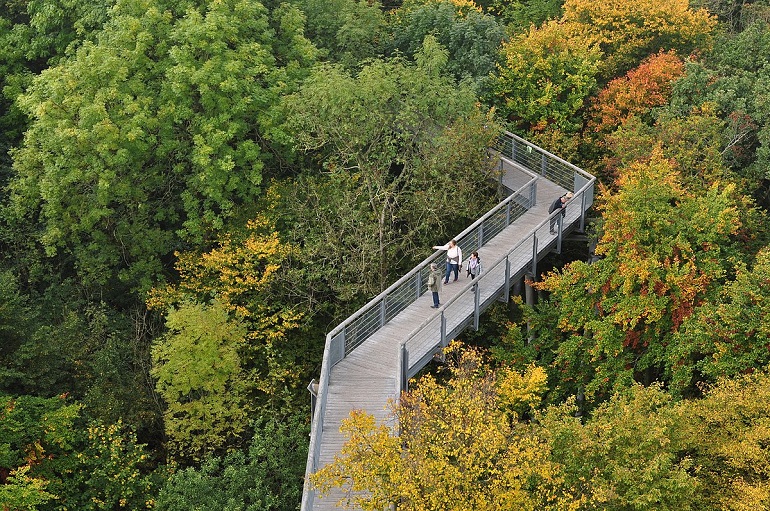
The park's crown jewel is undoubtedly the Canopy Walk (Baumkronenpfad), a 540-metre elevated walkway that carries visitors through the forest canopy at heights of up to 24 metres. This architectural marvel, constructed from sustainable materials, provides a completely new perspective on forest life, allowing visitors to observe the intricate ecosystem that thrives in the forest's upper layers.
The walkway features educational stations along its length, each offering interactive displays about canopy ecosystems, tree biology, and the complex relationships between plants, animals, and fungi that exist high above the forest floor. Information boards explain how different tree species adapt to life at various heights and how the canopy serves as a habitat for specialised creatures.
The experience culminates at a magnificent 44-metre viewing tower that provides panoramic vistas across the ancient beech forest landscape. From this vantage point, visitors can appreciate the vast expanse of uninterrupted forest canopy stretching to the horizon, offering photographic opportunities that capture the true scale of this remarkable wilderness area. On clear days, the view extends far beyond the park boundaries, encompassing the rolling hills of the Thuringian landscape.
The accessible design of the treetop walk ensures that visitors with mobility challenges can enjoy this unique experience, with gentle gradients and rest areas positioned at regular intervals along the route.
Extensive Hiking Trail Network
Hainich National Park boasts an impressive network of 20 signposted circular walking paths covering more than 120 kilometres in total. These meticulously maintained trails cater to various fitness levels and time constraints, with most designed as circular routes that return hikers to their starting point. The trail system has been developed over decades, incorporating feedback from visitors and adapting to changing environmental conditions whilst preserving the integrity of sensitive habitats.
Themed Walking Paths
The park's diverse trail system includes numerous themed paths that offer unique perspectives on the forest ecosystem:
Fairytale Nature Path (Feensteig) spans 3 kilometres through some of the park's most atmospheric forest sections. This enchanting route transforms an ordinary forest walk into a magical journey with 14 interactive stations featuring fairytale texts, mystical forest elements, and artistic installations that blend seamlessly with the natural environment. Each station tells part of a continuing story, encouraging families to complete the entire trail to discover how the tale concludes. The path winds through particularly ancient sections of forest where massive beech trees create cathedral-like spaces beneath their towering canopies.
Adventure Trail Silberborn challenges visitors with a 2.8-kilometre route featuring nine comprehensive experience stations where you can test your knowledge about the national park's natural treasures. Each station presents different aspects of forest ecology through hands-on activities, puzzle-solving challenges, and observation tasks. Interactive elements include tree identification exercises, animal tracking challenges, and ecosystem balance demonstrations that reveal the complex relationships governing forest life.
Germanic Cult Path presents a fascinating cultural dimension, showcasing eight pre-Christian sanctuaries that reveal the area's ancient spiritual significance. Archaeological evidence suggests these sites were used for religious ceremonies over 1,000 years ago, and interpretive panels explain the cultural practices of Germanic tribes who once inhabited this region. Stone circles, ancient oak groves, and elevated ritual sites provide tangible connections to the area's pre-Christian heritage, whilst the surrounding forest demonstrates how nature has reclaimed these sacred spaces.
Path of Encounters (Pfad der Begegnung) offers a 3.2-kilometre barrier-free walking path with specially designed boardwalks and viewing platforms that ensure visitors with mobility challenges can fully experience the park's wonders. This accessible trail takes approximately 2.5 hours to complete and forms part of the WWF's Thuringian Primeval Forest Paths project. Tactile elements, audio stations, and raised planters allow visitors to experience the forest through multiple senses, whilst strategically positioned rest areas provide comfortable spots for extended observation of wildlife and plant communities.
Popular Circular Routes
Several circular walks have become particular favourites amongst visitors, each offering distinct perspectives on the park's diverse ecosystems:
Wildcat Path extends 7 kilometres through prime wildcat habitat, combining dense forest sections with more open areas where these elusive predators hunt for prey. The trail offers excellent opportunities to observe wildcat signs such as scratch marks on trees, scent markings, and hunting trails, though actual sightings require considerable patience and luck. The route can be combined with a visit to the Wildcat Village in Hütscheroda, where visitors can learn about ongoing conservation efforts and observe wildcats in semi-natural enclosures.
Hünenteich Walking Path covers 5.5 kilometres through remarkably diverse habitats, showcasing the park's transition zones between primeval beech forest and recovering agricultural areas. Ancient trees with impressive trunk diameters create microhabitats for specialised species, whilst deadwood structures demonstrate the crucial role that fallen trees play in forest ecosystems. Open clearings allow sunlight to reach the forest floor, creating conditions for wildflowers, shrubs, and young trees that would struggle to survive in the deeper forest's shadowy environment.
Nightingale Path stretches 2.5 kilometres through areas with particularly rich bird populations, offering exceptional opportunities to experience the park's avian symphony. Spring months reveal the greatest diversity of birdsong, with dawn and dusk providing peak activity periods. The trail passes through various forest microhabitats that support different bird species, from ground-nesting species in undergrowth areas to canopy dwellers in the towering beech crowns.
Saugraben Walking Path provides an 11.2-kilometre journey through some of the park's most pristine beech forest sections, offering one of the most immersive wilderness experiences available. This longer trail requires greater commitment but rewards hikers with encounters with ancient forest sections that have remained undisturbed for decades. The route follows natural contours through valleys and across ridges, revealing how topography influences forest composition and structure.
Long-Distance Hiking Options
For more ambitious hikers, the park features sections of several long-distance trails that connect Hainich with broader regional hiking networks:
Rennstieg in Hainich covers approximately 31.6 kilometres, with 8.5 kilometres passing through the primeval forest-like national park. This traditional high trail, first documented in 1448, represents one of Germany's oldest marked hiking routes. The Hainich section showcases some of the most impressive ancient beech stands, with trees reaching heights of over 40 metres and ages exceeding 300 years. Historic boundary stones and traditional waymarkings provide insights into centuries of forest management and territorial divisions.
Waagebalkenweg traverses the park's northern sections, connecting multiple villages whilst maintaining focus on forest experiences. This route demonstrates how traditional settlement patterns adapted to forest landscapes, with historic clearings and ancient field boundaries still visible beneath regenerating forest canopy.
Lutherweg incorporates sections of the park into a pilgrimage route that traces Martin Luther's journeys through Thuringia. Historical markers explain the religious and cultural significance of the region during the Reformation period, whilst the forest setting provides contemplative spaces for modern pilgrims.
Hainichlandweg creates a comprehensive circuit around the entire national park, offering multi-day hiking opportunities for serious trekkers. This 130-kilometre route showcases the broader landscape context of the national park, including traditional villages, agricultural areas, and forest transition zones.

Educational and Interactive Experiences
The park excels in combining recreation with education through various interactive trails and programmes designed to reveal the complexity and beauty of forest ecosystems:
Adventure Trail Brunstal (Erlebnispfad Brunstal) offers a comprehensive nature experience suitable for all ages, featuring nine detailed stations along its 3-kilometre length. Each station focuses on different aspects of forest life, from soil composition and root systems to animal adaptations and seasonal changes. Interactive elements include tree-climbing challenges, animal sound identification games, and ecosystem balance demonstrations that engage visitors in active learning.
Primeval Forest Path provides an authentic glimpse into what Central European upland forests might have looked like before human intervention, showcasing the park's role as a living museum of natural history. Ancient beech specimens, some over 300 years old, demonstrate the impressive dimensions that trees can achieve when left undisturbed. Fallen giants create complex habitat structures that support hundreds of species of insects, fungi, and small mammals.
Research Trail offers insights into ongoing scientific studies within the park, with information stations explaining current research projects on topics such as climate change impacts, biodiversity monitoring, and forest succession patterns. Visitors can observe research equipment in action and learn about the scientific methods used to understand forest ecosystems.
Guided Activities and Special Events
The park's comprehensive events programme includes over 100 annual activities led by national park rangers and volunteer guides. These guided wilderness tours typically last 2-3 hours and offer in-depth insights into forest ecology, wildlife behaviour, and conservation efforts. Expert guides share knowledge gained from years of field experience, revealing hidden aspects of forest life that casual visitors might overlook.
Specialist programmes cater to particular interests:
- Photography workshops teach techniques for capturing forest scenes, wildlife behaviour, and seasonal changes
- Botanical excursions focus on plant identification, forest succession, and rare species conservation
- Mycological tours explore the fascinating world of forest fungi, including rare species and their ecological roles
- Bird-watching expeditions target specific species during migration periods and breeding seasons
- Night walks reveal the forest's nocturnal inhabitants and their unique adaptations
The "MITMACHEN" ("Join In!") programme ensures year-round engagement with seasonal activities that reveal the park's changing character throughout the year. Winter programmes focus on animal tracking in snow, ice formation patterns, and tree identification without leaves. Spring events celebrate wildflower blooming, bird migration, and forest awakening. Summer activities explore canopy life, insect diversity, and peak vegetation growth. Autumn programmes highlight leaf colour changes, seed dispersal, and animal preparation for winter.
Family-oriented events specifically designed for children include treasure hunts, junior ranger programmes, and hands-on environmental education activities that combine fun with learning about conservation principles.
Visitor Centres and Information Points
Several information centres throughout the park provide essential services and educational resources:
National Park Centre Thiemsburg serves as the primary visitor hub, housed in a modern, environmentally sustainable building that demonstrates green architecture principles. The centre features extensive exhibitions on forest ecology, interactive displays about park wildlife, and multimedia presentations that bring the forest's seasonal changes to life. A well-stocked bookshop offers field guides, maps, and educational materials in multiple languages. The centre's café uses locally sourced ingredients and provides space for visitors to plan their park exploration.
Wildcat Village Hütscheroda focuses specifically on the park's most charismatic resident, providing detailed insights into wildcat behaviour, hunting strategies, and conservation challenges. Large outdoor enclosures allow visitors to observe wildcats in semi-natural settings whilst learning about the differences between wildcats and domestic cats. Interactive displays explain tracking techniques and conservation success stories.
Baumkronenzentrum at the Treetop Walk provides comprehensive information about canopy ecosystems, tree biology, and the engineering challenges involved in constructing elevated walkways through living forests. Educational displays explain how different tree species adapt to canopy life and how researchers study these complex ecosystems.
Multiple information points at designated car parks provide detailed maps, current trail conditions, weather updates, and safety information for all walking routes. These facilities include covered notice boards with laminated trail guides, emergency contact information, and QR codes linking to digital trail maps and GPS coordinates.
Seasonal Considerations and Special Features
Each season transforms the park experience, offering distinct attractions and activities:
- Spring brings spectacular wildflower displays in forest clearings, with wood anemones, wild garlic, and primroses creating carpets of colour beneath budding trees. Bird migration reaches peak activity, with over 40 species returning from winter quarters.
- Summer offers the fullest forest experience, with complete leaf canopy creating cool, shaded hiking conditions even during hot weather. Extended daylight hours allow for longer trail exploration and evening wildlife observation.
- Autumn showcases magnificent leaf colour displays as beech trees transition through golden yellows to rich browns. Mushroom season provides excellent opportunities for fungi observation and identification.
- Winter reveals forest structure most clearly, with bare branches exposing bird nests, tree architecture, and underlying topography. Snow conditions create excellent tracking opportunities for observing animal movement patterns.
Accommodation
Geographic Distribution of Accommodation
The accommodation around Hainich National Park is spread across several charming towns and villages. Bad Langensalza serves as the main tourist hub, offering the most comprehensive range of lodging options from spa hotels to family-friendly establishments. Eisenach, famous for its Wartburg Castle, provides excellent hotel facilities approximately 10 kilometres from the park. Mühlhausen offers historic charm with several boutique hotels and guesthouses, whilst smaller villages like Behringen, Kammerforst, and Lauterbach provide more intimate, rural accommodation experiences.
Hotels and Traditional Lodging
The region boasts numerous traditional hotels ranging from family-run establishments to modern spa resorts. Many feature historic architecture, particularly half-timbered buildings dating back centuries, creating an authentic German atmosphere. These accommodations typically offer comfortable rooms with modern amenities, regional cuisine, and excellent breakfast buffets featuring local produce.
Several spa hotels in Bad Langensalza provide wellness facilities including restaurants with panoramic views of the national park. Many establishments pride themselves on serving Thuringian specialities and regional delicacies, often sourced from local suppliers. The hotels generally offer amenities such as free Wi-Fi, private parking, terraces, and gardens, with some featuring traditional restaurants serving hearty country fare.
Guesthouses and Pensions
Charming guesthouses and pensions throughout the region provide intimate accommodation experiences with personal service from local hosts. These smaller establishments often occupy historic buildings and offer excellent value for money. Many feature family-friendly amenities and serve as ideal bases for exploring the national park on foot or by bicycle.
Guest houses typically provide comfortable rooms with private bathrooms, and breakfast is often included. The personal touch of local proprietors means guests frequently receive valuable insider tips about hiking routes, local attractions, and the best spots for wildlife watching within the national park.
Holiday Homes and Self-Catering Options
Self-catering accommodation is abundant, ranging from rustic holiday cottages to modern apartments and chalets. The WaldResort directly at the national park entrance offers specially designed holiday homes for up to four people, featuring wooden furniture and natural colour schemes that complement the forest setting.
Many holiday properties include fully equipped kitchens, private terraces or gardens, and barbecue facilities. Some feature unique accommodations such as tree houses and timber lodges that provide an immersive forest experience. These options are particularly popular with families and longer-stay visitors who prefer the flexibility of self-catering.
Specialised Accommodation
The region offers several unique lodging experiences. The Urwald-Life-Camp near Lauterbach provides adventure accommodation with 145 beds in various room configurations, plus distinctive options including five tree houses accommodating 31 people and five teepees sleeping 35 guests. This youth hostel specialises in environmental education and nature experiences.
For those seeking organic luxury, several properties offer eco-friendly accommodation with regional specialities made from 100% organic produce. Historic manor houses and converted agricultural buildings provide characterful stays that reflect the area's rich heritage.
Camping and Outdoor Accommodation
Camping enthusiasts will find excellent facilities, including the highly-rated campsite at the gateway to Hainich. This terraced site covers 3.5 hectares with panoramic views of the Thuringian Basin and direct access to national park hiking trails. Facilities include modern sanitary blocks, electrical connections, fresh bread service, and bicycle rental.
The campsite accommodates various needs with spaces for tents, caravans, and motorhomes. Additional amenities include washing facilities, barbecue areas, and organised activities. Its location makes it an ideal base for hiking and cycling within the UNESCO World Heritage forest.
Family-Friendly Features
Most accommodation in the region caters excellently to families. Many properties offer connecting rooms, cots, high chairs, and children's play areas. Several establishments feature outdoor playgrounds, petting zoos with farm animals, and organised activities for young guests. The proximity to the national park's educational facilities and nature trails makes the area particularly suitable for family holidays focused on outdoor learning and adventure.
Practical Considerations
The majority of accommodation providers offer free parking, essential for visitors exploring the wider region. Many establishments are bicycle-friendly, providing secure storage and rental services. Wi-Fi is standard in most properties, though some rural locations may have limited connectivity.
Booking in advance is recommended, particularly during peak season and for unique accommodation types such as tree houses. Most properties offer flexible cancellation policies, and many provide packed lunches for day trips into the national park.
Gastronomy
Traditional Thuringian Specialities
The gastronomy scene around Hainich National Park is deeply rooted in Thuringian culinary traditions. Visitors can expect to encounter hearty, solid country fare that reflects the agricultural heritage of this central German region. The local cuisine emphasises seasonal ingredients and time-honoured cooking methods, with many establishments proudly serving dishes that have been passed down through generations.
Regional specialities form the backbone of the dining experience, with establishments offering everything from robust meat dishes to lighter, fitness-conscious options. The area's gastronomic identity is particularly strong during specific seasons, with special offerings during asparagus season, game season, and when fresh fish is available from local waters.
Home-Style Baking and Comfort Food
A charming aspect of dining in the Hainich region is the prevalence of home-style baking. Many local establishments take pride in their selection of cakes and pastries, often prepared using traditional recipes that have been treasured by local families for generations. These sweet treats provide the perfect accompaniment to afternoon tea or coffee after a day exploring the ancient beech forests.
The emphasis on comfort food and hearty portions reflects the area's appeal to hikers and outdoor enthusiasts who work up considerable appetites whilst exploring the national park's extensive network of trails and attractions.
Dining for All Dietary Preferences
The gastronomic offerings around Hainich National Park have evolved to accommodate modern dietary preferences whilst maintaining their traditional roots. Vegetarian-friendly options are readily available at many establishments, ensuring that visitors with varying dietary requirements can enjoy the local cuisine.
The balanced approach to menu planning means that diners can choose from both indulgent, traditional fare and lighter alternatives, making the area suitable for health-conscious travellers as well as those seeking authentic regional flavours.
Seasonal and Local Focus
The dining culture in the Hainich area demonstrates a strong commitment to seasonal cooking. Establishments adjust their menus throughout the year to showcase the best of what each season offers, from spring asparagus to autumn game dishes. This seasonal approach ensures that visitors experience the freshest possible ingredients whilst supporting local producers and traditional farming practices.
The proximity to the national park means that many establishments can offer diners a unique experience of enjoying regional cuisine in settings that complement the natural beauty of the area, whether that's in cosy country inns or establishments that overlook the rolling Thuringian landscape.
Practical Considerations for Visitors
When exploring Hainich National Park, it's worth noting that the area's gastronomy is designed with outdoor enthusiasts in mind. Many dining options are strategically located near popular hiking trails, the famous Treetop Path, and other park attractions, making them convenient stops for refreshment during a day of exploration.
For those planning extended visits to the park, particularly for hiking the longer trails such as the World Heritage Trail or the Saugrabenweg, it's advisable to come prepared with provisions, as the pristine nature of the park means that dining options within the forest itself are limited. However, the surrounding villages and towns offer ample opportunities to experience the region's culinary traditions before or after park visits.
Getting There and Around
Getting There
By Rail
The park benefits from excellent rail connections through Germany's extensive Deutsche Bahn network. Three main railway stations serve as gateways to Hainich:
- Eisenach is the most convenient option for long-distance travellers, with ICE and IC services running every one to two hours from across Germany. The station connects directly to major German cities and international destinations.
- Bad Langensalza and Mühlhausen provide additional access points, both easily reachable via regional services. These stations are particularly useful for visitors approaching from different directions or combining their visit with exploration of the broader Wartburg-Hainich World Heritage region.
From Amsterdam, for example, you can reach the park by rail in approximately nine hours via connections through Arnhem and Duisburg to Eisenach.
By Car
Driving to Hainich National Park is straightforward, with well-signposted hiking car parks throughout the area. The most popular access point is Thiemsburg, located about 10 kilometres west of Bad Langensalza.
- From Bad Langensalza: Drive towards Zimmern, then turn towards Craula.
- From Eisenach: Follow the B84 towards Bad Langensalza, turn towards Craula in Reichenbach, then follow signs to Bad Langensalza.
The Thiemsburg car park sits directly beside the road, with both the famous Canopy Walk and National Park Centre just a few minutes' walk away. For satellite navigation, use coordinates latitude 51.081297° and longitude 10.517646°.
By Air
International visitors typically fly into Frankfurt Airport (FRA), which lies approximately 180 kilometres from the park. From Frankfurt, direct rail connections run to Eisenach, making this the most practical option for overseas travellers.
Getting Around
Public Transport Within the Park
Once you've arrived, an extensive bus network connects the park's key attractions and surrounding villages.
The Hainichbus (line 150) operates daily between Eisenach and Bad Langensalza, providing the main spine of public transport access. This service runs regularly and connects both major railway stations.
The National Park Bus (line 154) serves as a specialist service running between Mühlhausen and the villages on the park's eastern edge, terminating at Thiemsburg. During weekdays, this operates as an on-call service, whilst at weekends it stops at all designated stops without prior booking.
Perhaps most exciting for visitors is the "Wunderbare Wanderbus" (Wonderful Ramblers' Bus), which runs from Easter until 31st October. This seasonal service creates a direct link between Hainich National Park and nearby Wartburg Castle, allowing nature enthusiasts and culture seekers to visit both UNESCO World Heritage sites without requiring a car.
The Cultural Experience Bus (line 160) connects Eisenach with Mühlhausen via villages on the park's western side, offering another transport option for comprehensive exploration.
Special Transport Tickets
Several integrated transport and admission tickets are available, though specific pricing isn't detailed here. The Environmental Ticket includes return journeys from Bad Langensalza or Eisenach plus admission to the famous treetop path. The World Heritage Ticket offers three-day validity and includes transport plus admission to multiple attractions including the National Park Centre, treetop path, Wildcat Village Hütscheroda, and Wartburg Castle.
Cycling
Hainich National Park is exceptional for cyclists, featuring three dedicated cycling routes covering more than 50 kilometres. These routes plunge deep into the primeval forest, offering different difficulty levels:
- A circular family route ideal for leisurely exploration
- Yellow and red routes for more adventurous cyclists, featuring significant elevation changes and steeper sections
The park provides regular bikes and e-bikes for hire, making comfortable day tours accessible to visitors of varying fitness levels. Bike transport is generally possible on trains throughout Germany, making it feasible to bring your own bicycle.
Walking and Hiking
The park offers more than twenty marked hiking trails for those preferring to explore on foot. These range from easy family walks to more challenging routes through the ancient beech forest.
A particular highlight is the MärchenNaturPfad Feensteig (Fairy Tale Path), an easy 1.5-mile trail featuring 14 stations that explore mythical creatures from German folklore.
Key Access Points
Thiemsburg serves as the park's primary gateway, offering the National Park Centre, restaurant facilities, public toilets, and bus connections. The famous Canopy Walk lies just 200 metres from the National Park Centre, making this the most popular starting point for visits.
Wildcat Village Hütscheroda provides another significant access point, particularly for visitors interested in the park's wildlife programmes. This location is accessible directly by public transport and features close-to-nature wildcat enclosures and educational facilities.
The park's transport infrastructure demonstrates Germany's commitment to sustainable tourism through the "Fahrtziel Natur" initiative, a collaboration between major environmental associations and Deutsche Bahn promoting environmentally friendly travel to natural areas. Various taxi companies also offer fixed-rate trips into the national park from Eisenach, Bad Langensalza, and Mühlhausen.
Best Time to Visit
Spring (March to May)
Spring marks an excellent time to witness the forest's awakening, though early March can still be quite chilly with temperatures ranging from -1°C to 8°C. As the season progresses, the beech forest begins to show fresh green foliage, creating a vibrant canopy overhead. The famous Canopy Walk and National Park Centre extend their opening hours from 1st April, operating daily from 10am to 7pm, providing ample time for exploration.
The Wunderbare Wanderbus service begins operating at Easter, connecting the park with nearby Wartburg Castle, making it convenient for visitors to explore both UNESCO World Heritage sites without a car. This is particularly beneficial for those planning a comprehensive cultural and natural heritage tour of the region.
Summer (June to August)
Summer represents the peak season for intensive exploration of the park. With the warmest weather of the year—July temperatures reaching highs of 24°C—this period offers ideal conditions for extended hiking, cycling, and outdoor activities. The extended daylight hours complement the park's longer opening times, allowing visitors to make the most of their day amongst the ancient beech trees.
The forest canopy is at its most lush during these months, providing excellent conditions for the treetop trail experience. Families particularly benefit from summer visits, as all outdoor activities and attractions operate at full capacity, including the various themed trails and educational programmes designed for children.
Autumn (September to November)
Autumn transforms Hainich into a spectacular display of changing colours as the beech leaves turn golden and amber. This season offers some of the most photogenic conditions in the park, with the deciduous forest creating a stunning natural spectacle. The weather remains generally pleasant for outdoor activities through September and October.
The Wunderbare Wanderbus continues to operate until 31st October, maintaining excellent accessibility to the park. However, visitors should note that from 1st November, opening hours are reduced to 10am to 4pm daily, and some auxiliary attractions may have limited schedules.
Winter (December to February)
Winter visits offer a completely different but equally enchanting experience of the primeval forest. The bare branches reveal the forest's structure and architecture, whilst frost and occasional snow create an ethereal atmosphere amongst the ancient trees.
However, winter visitors should be prepared for shorter opening hours and potential weather-related closures. The Canopy Walk may close temporarily during stormy or icy conditions for safety reasons, so it's advisable to check current conditions before travelling. Some facilities operate on reduced schedules, and certain outdoor activities may be limited.
Weather Considerations
The park experiences a temperate climate with January being the coldest month, featuring highs of just 2°C and lows of -4°C. Weather can be changeable, and the forest environment can feel particularly cool and windy, so visitors should dress appropriately regardless of the season.
Planning Your Visit
For the most comprehensive experience with all facilities and transport links operating at full capacity, late spring through early autumn (April to October) represents the optimal visiting window. This period combines favourable weather, extended opening hours, and full accessibility via public transport connections.
Those seeking a quieter, more contemplative experience of the ancient forest might prefer winter visits, though they should be prepared for reduced services and potential weather-related limitations.
Conservation and Responsible Tourism
Conservation Mission: "Natur Natur sein lassen"
The park's conservation philosophy follows the German national park motto "Natur Natur sein lassen" – letting nature be nature. The primary conservation aim focuses on preserving the unique mixed deciduous forests with their biodiversity, dynamics, and the varied flora and fauna of the Hainich. This hands-off approach has allowed over 90 percent of the park's area to remain free from economic use, enabling the forest to return to its roots and develop as true wilderness.
The Hainich represents one of Germany's largest contiguous deciduous forest areas, covering 16,000 hectares, with the 7,500-hectare national park at its heart. The forest's natural development over the past 50 years has created woodlands very close to the original deciduous forests of Central Europe. Dead trees are left to decay naturally, creating habitats for over 500 species of beetles, whilst tree fungi flourish on rotting wood, demonstrating the park's commitment to natural processes.
UNESCO World Heritage Recognition
In 2011, Hainich National Park achieved UNESCO World Heritage status as part of the "Ancient Beech Forests and Primeval Beech Forests of the Carpathians and Other Regions of Europe". This recognition underscores the international importance of preserving these nearly primeval deciduous forests for future generations.
Responsible Tourism Framework
National Park Partners Programme
Hainich National Park has developed an exemplary National Park Partners Programme that sets the standard for responsible tourism in protected areas. Currently involving 18 local entrepreneurs, these certified partners are committed to sustainable tourism development and act as ambassadors for the region.
The programme's participants must meet stringent quality and environmental standards, including:
- Avoiding non-returnable packaging
- Prioritising regional products
- Providing information about environmentally friendly mobility options
- Supporting regional development whilst protecting the environment
These partners range from accommodation providers and restaurants to activity operators, all united in their commitment to the park's conservation philosophy.
Sustainable Transport Options
The park actively promotes sustainable transport through innovative ticketing schemes. The Environmental Ticket allows passengers to travel from Bad Langensalza or Eisenach to the national park, including return journeys and admission to the treetop path. The comprehensive World Heritage Ticket, valid for three days, encompasses travel, admission to multiple attractions including the National Park Centre, treetop path, wildcat village, and Wartburg Castle.
Educational Tourism and Environmental Awareness
Conservation through education forms a cornerstone of the park's approach, following the principle "We only love and protect what we know". The park authority's multifaceted responsibilities include research, environmental education, public relations, and international cooperation.
Visitor Guidelines for Conservation
The park encourages responsible visitor behaviour through clear guidelines:
- Stay on designated paths: Visitors must keep to way-marked walking paths to minimise disturbance to wildlife and vegetation
- Join guided walks: Educational tours provide deeper understanding whilst ensuring minimal environmental impact
- Respect natural processes: Appreciation of the forest's wild character, including fallen trees and natural decay
Sustainable Tourism Attractions
The Canopy Walk Experience
The Baumkronenpfad (treetop path) represents sustainable tourism innovation, offering visitors an elevated perspective of the forest ecosystem. At 540 metres long and reaching heights of over 100 feet, this accessible walkway (suitable for wheelchairs and pushchairs) provides educational insights into forest ecology whilst minimising ground-level impact.
Family-Friendly Conservation Education
The park excels in engaging families through environmental education. Features include:
- Wildkatzenkinderwald (Wikakiwa): A primeval woodland playground that combines recreation with education
- MärchenNaturPfad Feensteig: A 1.5-mile fairy tale path with 14 stations connecting German folklore to forest ecology
- Wildcat Village: Providing close encounters with native lynx and wildcats whilst supporting conservation awareness
Cycling and Low-Impact Activities
Three dedicated cycling routes covering over 50 kilometres allow visitors to explore the forest depths with minimal environmental impact. The park also promotes bird watching, guided nature walks, and horse-drawn carriage rides as sustainable alternatives to motorised transport.
Regional Integration and Cultural Heritage
Hainich National Park demonstrates how conservation can complement cultural heritage tourism. The park's integration with the Wartburg Hainich World Heritage Region showcases sustainable tourism that celebrates both natural and cultural assets. This approach recognises that effective conservation often requires local community support and economic incentives through responsible tourism.
The park's success lies in balancing protection with access, ensuring that future generations can experience Germany's largest primeval forest whilst maintaining its ecological integrity. Through its comprehensive approach to conservation and sustainable tourism, Hainich National Park serves as a model for protected area management in densely populated Europe.
Visitor Centres and Educational Facilities
Hainich National Park pairs ancient beech woodland with engaging, well-run visitor centres that help make sense of this UNESCO World Heritage landscape. Below is a concise guide to the main hubs, what to expect, and how they can enrich a visit.
National Park Center Thiemsburg
The flagship hub at Thiemsburg is the best all-round starting point, combining visitor services, exhibitions and direct access to the famous treetop walk. Inside, interactive displays bring the forest to life for all ages, from films and giant photo panels to hands-on stations, craft corners and experiments; highlights include the immersive “root cave” that reveals the hidden world beneath the forest floor, added to the exhibition in 2016, and a family-focused wilderness play area introduced later to expand the experience. Rangers staff the foyer, selling treetop walk tickets, offering tips, and helping with itineraries across the World Heritage region; media guides support accessible visits for people with hearing or visual impairments and for visitors who prefer to listen rather than read. The centre sits beside the canopy trail and a 44m viewing tower, giving sweeping views over the Thuringian Basin; paths and exhibits are designed with step-free access in mind.
Information Centres around the Park
Five official information centres are dotted around Hainich, each offering maps, leaflets and themed mini-exhibitions tailored to local highlights; friendly ranger advice is available at all except Kammerforst, which provides materials and displays but no on-site staff. These compact centres are ideal for orientation before setting out on circular walks, barrier-free trails, or themed routes such as those near Harsberg and Behringen, and they complement the main Thiemsburg hub with neighbourhood knowledge and seasonal updates.
Hütscheroda Information Centre and Wildcat Village
On the park's edge, Hütscheroda focuses on one of Hainich's emblematic residents: the European wildcat. The Hütscheroda Information Centre features exhibits about the species, the ecological corridors that connect habitats across Germany (the “European Safety Net for the Wildcat”), and context on the UNESCO beech forests, with extended daily opening in the main season and reduced winter hours aligned to weekends and holidays. Just up the trail, the Wildcat Village combines the “Wildcat Barn” interpretation space with an outdoor wildcat enclosure and viewpoints along the Wildcat Trail to “Hainichblick”, making it one of the most engaging wildlife-learning stops for families and photographers. Feeding times and ranger talks provide close-up insights into behaviour and conservation, and the site's seasonal hours track the Thuringian school calendar to accommodate holiday visits.
What to Expect Educationally
- Hands-on learning: Interactive exhibits at Thiemsburg encourage children and adults to explore forest ecology—canopy life, soils, nocturnal species—through touchpoints and experiments, making complex systems accessible and memorable.
- Accessibility: Media guides and barrier-free layouts help visitors with differing needs enjoy the “Root Cave” and World Heritage displays; the canopy walk itself is designed for step-free access to the elevated circuits (note: tower access may involve stairs).
- Ranger-led insight: Rangers stationed at the main centre and several satellites provide route advice, wildlife updates, and recommendations tailored to interests, fitness and time, enhancing safety and experience quality on trails and themed paths.
- Species-specific focus: Hütscheroda's facilities delve into wildcat ecology and landscape connectivity, tying local encounters to broader conservation networks across Europe.
Planning Tips
- Start at Thiemsburg: Pick up tickets, get the day's conditions, and decide whether to begin with the canopy walk or the indoor exhibits, especially useful in changeable weather.
- Use the satellite centres: For walkers beginning near Harsberg, Behringen, or Kammerforst, these smaller hubs supply trail information, local maps and exhibit context close to car parks and trailheads.
- Time Hütscheroda well: Check seasonal hours and aim for feeding or talk times for the most engaging wildcat experience; trails around “Hainichblick” pair well with late-afternoon light for views.
- Combine nature and culture: The centres often highlight links to nearby historic towns such as Bad Langensalza, making it easy to blend woodland exploration with spa gardens and half-timbered streets on the same day.




