



| Contents |
|---|
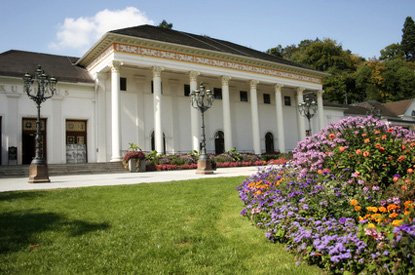
Casino of Baden-Baden.
Introduction
Baden-Baden (pop. 56,000) is the most prestigious of German thermal resorts, an elegant 19th-century town with tree-lined avenues, luxury hotels, trimmed gardens, and of course its famous casino. Queen Victoria, Wilhelm I, Napoleon III, the Vanderbilts, Berlioz, Brahms, and Dostoyevsky all came to take the waters here in its heyday. The thermal town has been recognised as a UNESCO World Heritage Site since 2021 as part of the "Great Spa Towns of Europe". The local thermal springs, which have been utilised since Roman times, emerge from twelve sources at depths of around 2,000 metres with temperatures reaching up to 68°C, producing over 800,000 litres of mineral-rich water daily. Baden-Baden houses two main thermal facilities: the historic Friedrichsbad, combining Roman-Irish bathing traditions since 1877, and the modern Caracalla Spa, offering contemporary wellness experiences. The town's cultural attractions include the Casino Baden-Baden, one of Europe's most traditional gaming establishments housed in the elegant Kurhaus, and the Festspielhaus, Europe's second-largest opera and concert venue. The picturesque Lichtentaler Allee, a tree-lined park along the Oos River, and various museums including the Museum Frieder Burda, contribute to Baden-Baden's reputation as a destination combining wellness, culture, and natural beauty.
Interesting Facts about Baden-Baden
- Baden-Baden was once known as the "summer capital of Europe," attracting aristocrats and high society from across the continent during the 19th century.
- The town's famous thermal springs have been used for over 2,000 years, first by the Romans who named it Aquae Aureliae and built elaborate bathhouses.
- With only about 56,000 inhabitants, Baden-Baden is considered "the smallest cosmopolitan city" in Germany, renowned worldwide despite its compact size.
- The city joined the UNESCO World Heritage List in 2021 as part of the "Great Spa Towns of Europe" for its rich spa tradition and architecture.
- The Friedrichsbad spa features ancient Roman foundations, and visitors can still experience bathing rituals that have barely changed since the 19th century.
- Baden-Baden lies at the edge of the Black Forest, surrounded by vineyards and enjoys more sunny days than almost anywhere else in Germany.
- The ornate Casino Baden-Baden, opened in 1824, is considered one of the most beautiful in the world and has hosted many celebrities and nobles.
- The town is famous for its picturesque park, the Lichtentaler Allee, a 2 km-long avenue lined with historic buildings, flowers, and art museums.
- In the 1800s, literary figures like Dostoyevsky and musicians such as Johannes Brahms sought inspiration and relaxation in Baden-Baden.
- The ruins of the medieval Old Castle (Hohenbaden) overlook the city, and in 1999 Europe’s largest Aeolian harp—in which wind creates music—was installed there.
- For a city of its size, Baden-Baden has an exceptionally high number of cars: over 30,000 vehicles for about 50,000 people.
- After World War II, Baden-Baden served as the main seat of the French military administration in Germany and became a broadcasting hub.
- Visitors can ascend Mount Merkur via funicular railway for sweeping views across the Black Forest and Rhine plain.
- The town continues to blend Belle Époque elegance, modern luxury, and unspoilt natural landscape, offering wellness, culture, and outdoor adventure all in one place.

History
Baden-Baden's history stretches back over two millennia, beginning with its Roman origins as Aquae Aureliae (later known as Aurelia Aquensis), named after Emperor Marcus Aurelius Severus Alexander Augustus. The Romans recognised the therapeutic properties of the natural hot springs and constructed elaborate bathing complexes around the late 1st century CE, including the impressive "Imperial Baths" beneath today's market square. These thermal facilities served the Roman garrison stationed in Strasbourg and attracted visitors from across the empire, including Emperor Caracalla, who visited in the 210s CE to alleviate his arthritic ailments. The Roman settlement featured sophisticated heating systems with hypocausts (underfloor heating) and wall heating using hollow bricks, remnants of which remain remarkably well-preserved today. After the Germanic Alemannic tribes invaded around 260 CE, the city fell into decline and thermal bathing ceased for several centuries.
The medieval period marked Baden-Baden's transformation from ruined Roman settlement to an important administrative centre. By 1112, it had become the seat of the Margraviate of Baden, with Margrave Hermann VI granting the town city rights in 1257. The margraves initially resided in Hohenbaden Castle (the Old Castle), whose ruins still crown the hilltop above the town, before moving to the New Castle in 1479. The Lichtenthal Convent was founded in 1254, adding to the town's religious significance. Around 1500, Baden-Baden boasted twelve bathhouses and nearly 400 bathing cabins, demonstrating the continued importance of its thermal waters. However, the town endured significant hardships during the Thirty Years' War, suffering particularly at French hands who plundered it in 1643. The most devastating blow came in 1689 during the War of the Palatinate Succession when French forces burned Baden-Baden to the ground. Following this destruction, Margrave Louis William relocated the capital to Rastatt in 1706.
The 19th century witnessed Baden-Baden's remarkable renaissance as Europe's most fashionable spa destination, earning it the moniker "summer capital of Europe". This transformation began after dignitaries attending the Second Congress of Rastatt in 1797-98 rediscovered the town's spa potential. Systematic modernisation followed, with Friedrich Weinbrenner redesigning the Promenade House into the magnificent Kurhaus between 1821-24, whilst Heinrich Hübsch constructed the elegant Trinkhalle from 1839-42. The opening of gambling facilities in the former Jesuit college in 1811, later expanded under Jean-Jacques Bénazet from 1838, attracted international aristocracy and cultural luminaries including Queen Victoria, Fyodor Dostoyevsky, and Hector Berlioz. The Franco-Prussian War of 1870-71 and Germany's gambling ban in 1872 forced another reinvention, prompting the construction of grand bathing temples: the Friedrichsbad (1869-77) and the Augustabad (1893). This period established Baden-Baden's enduring reputation for luxury and sophistication, culminating in its recognition as a UNESCO World Heritage Site in 2021 as part of the Great Spa Towns of Europe.
Main Attractions
Thermal Baths and Spas
Rotherma Thermalbad und Saunapark
Rotherma Thermalbad und Saunapark is a modern wellness centre on the outskirts of Baden-Baden offering a variety of sauna experiences alongside indoor and outdoor thermal pools. The facility includes several themed saunas, a heated lagoon, and a series of hydrotherapy pools maintained at temperatures between 30 °C and 34 °C. Visitors can complement their bathing experience with massages and wellness treatments provided by trained therapists. A restaurant on site serves light meals and drinks, and the centre is fully accessible to wheelchair users, providing dedicated parking and restroom facilities. Payment is accepted via credit and debit cards, ensuring a convenient visit for all guests.
Friedrichsbad Baden-Baden
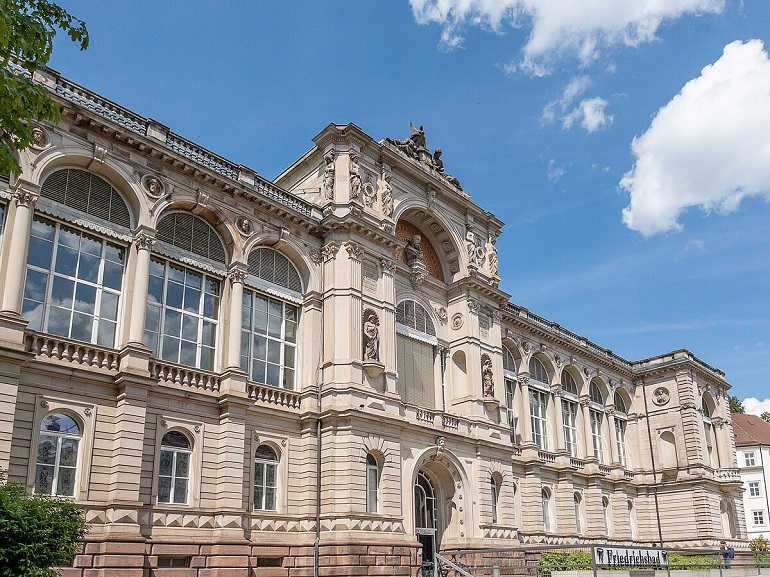
Friedrichsbad Baden-Baden is a traditional 19th-century bathhouse housed in an ornate building that retains much of its original architectural splendour. Following a sequential bathing ritual first established by Roman and Irish monks, patrons progress through warm rooms, cold plunge pools, steam baths, and relaxation areas, culminating in an invigorating shower and whirlpool experience. The bathhouse offers optional massage services for an additional fee, and strict adherence to the bathing protocol ensures an orderly flow through the forty-two stations. Facilities are wheelchair accessible, and payment is accepted by credit or debit card. Visitors should arrive punctually for their allotted time slot, as sessions last up to three hours.
Caracalla Spa
Caracalla Spa lies at the heart of Baden-Baden’s spa district, drawing its thermal water directly from the ancient Roman aquifer. The spa complex features indoor and outdoor pools graded by temperature, a panoramic sauna area, and multiple steam rooms. A pool with a glass roof offers year-round bathing options, while outdoors visitors can enjoy a view of the parkland. Treatment rooms provide facials and body treatments using locally sourced minerals. The spa is accessible to wheelchair users, with adapted facilities and changing rooms, and accepts credit, debit and NFC mobile payments. A café on site serves refreshments to complement a full day of wellness.
Parks and Gardens
Arboretum Baden-Baden
Arboretum Baden-Baden covers over 10 hectares of forested hillside, showcasing a collection of over 150 tree species from around the globe. Laid out in the mid-19th century, the arboretum offers gently graded paths suitable for both casual walkers and more serious hikers, with occasional benches for rest. Educational placards identify each specimen by common and botanical name, and seasonal guided tours provide deeper insight into dendrology. The site admits dogs on leads and features accessible trails for families with children and visitors with limited mobility.
Dahliengarten Baden-Baden
Dahliengarten Baden-Baden lies adjacent to the Lichtentaler Allee, presenting a showcase of over 7,000 dahlia blooms grouped by cultivar and colour scheme. Established in 1963, the garden opens in mid-summer when dahlias reach peak bloom and remains accessible through early autumn. Park benches and shaded pavilions offer seating, while the level pathways ensure ease of access for prams and wheelchairs. The garden permits picnics on designated lawns and provides public restrooms near the main entrance.
Lichtentaler Allee
Lichtentaler Allee is a 2.3-kilometre riverside promenade planted with mature oak and lime trees, dating to the late 18th century. This verdant corridor connects the spa quarter with the old town, passing by park benches, ornamental pavilions and fresco-covered colonnades. Seasonal flower displays, including azaleas and rhododendrons, brighten the walk in spring, while the avenue’s diameter ensures ample shade in summer months. The path accommodates pedestrians, cyclists and wheelchairs, with several access points to cafés and the Trinkhalle arcade.
Wasserkunstanlage Paradies
Wasserkunstanlage Paradies features a 19th-century hydraulic engineering installation set within a small park. Water cascades over sinter terraces before collecting in ornamental pools, demonstrating natural mineral deposition at work. Visitors can trace a short loop path to observe the stepped fountain and learn about its construction in informational panels. Benches line the walkway, and picnic tables are available near the main cascade. The site welcomes dogs on leads and provides adjacent parking.
Rose Society Garden (New Rose Garden)
Rose Society Garden (New Rose Garden) displays more than 2,500 rose specimens across terraced beds, arranged by growth habit and fragrance category. Open from late spring through early autumn, the garden is maintained by the local horticultural society and hosts occasional pruning demonstrations. Accessible paths wind between gravel beds, and seating areas overlook the main fountain. A small kiosk offers light refreshments, and the garden operates free of charge.
Outdoor Experiences
Battertfelsen at Hohenbaden Castle
Battertfelsen at Hohenbaden Castle is a natural rock formation adjacent to the medieval ruins of the Old Castle, standing 399 metres above sea level. The outcrop offers panoramic views over the Black Forest and Rhine Valley and marks the start of several waymarked hiking routes. The path to the summit includes steep stone steps and a narrow ledge, requiring sturdy footwear. Information boards at the summit describe the site’s geology and the castle’s history, while viewing platforms feature safety railings for visitors.
Merkur Funicular Railway
Merkur Funicular Railway ascends from the city centre to the summit of Merkur Mountain, covering 1.5 kilometres with gradients up to 54 percent. The gauge track was inaugurated in 1913 and has operated continuously with modernized carriages carrying up to 80 passengers per vehicle. At the top station, visitors can explore a summit tower offering a bird’s-eye view of the Rhine plain or follow trails through beech forest to view geological formations. The funicular operates daily from early morning to evening, with reduced timetables in winter.
Wildgehege Baden-Baden
Wildgehege Baden-Baden is a wildlife enclosure set within a woodland on the city’s northern edge, home to fallow deer, mouflon sheep and indigenous bird species. A network of boardwalks and gravel paths allows close but safe observation of the animals in semi-natural habitats. Informational panels describe species behaviour and conservation efforts, and feeding stations are available under supervision. The park is open year-round and admits dogs on leads, with picnic benches and playground equipment near the main car park.
Historic and Cultural Sights
Baden-Baden Altstadt
Baden-Baden Altstadt encompasses the medieval core of the town, centred around the 15th-century town hall and the Baroque Stiftskirche. Narrow cobbled streets lead past half-timbered houses, artisan workshops and traditional cafés. The Altstadt also includes the ruins of the New Castle, visible as a raised platform surrounded by gardens. Guided walking tours explain the town’s evolution from a Roman spa settlement to a 19th-century cultural hub. Most streets are paved, with occasional steps; some sections are pedestrianised.
Trinkhalle
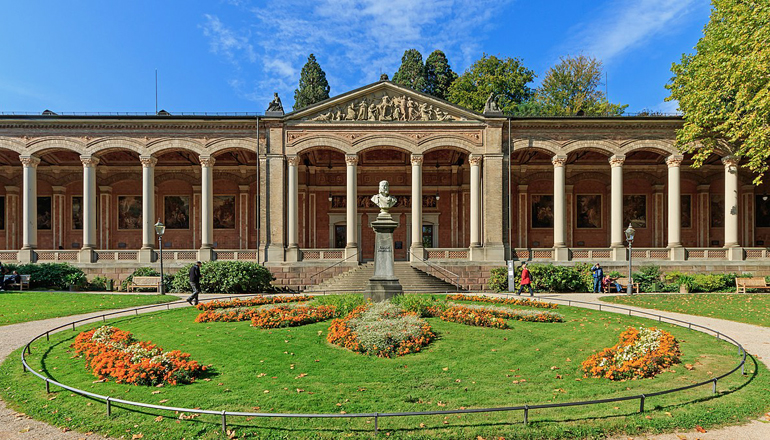
Trinkhalle is an arcade built between 1839 and 1842 as a pump house for spa visitors to sample mineral water from fifteen wells. Its neoclassical façade features frescoed lunettes by Karl Hoffmann depicting local legends, while the interior corridor provides shelter from the elements. Visitors may taste the different mineral springs free of charge and read explanatory plaques about each spring’s composition. The arcade connects the Kurhaus to the castle garden and remains open daily during daylight hours.
Kurhaus Baden-Baden - Events
Kurhaus Baden-Baden - Events is the town’s principal event venue, dating to 1824 and rebuilt in Belle Époque style in 1905. Situated adjacent to the casino, it comprises a large banquet hall, ballroom, and theatre. The Kurhaus hosts classical concerts, balls, and corporate functions throughout the year, and public access to the foyer is free when no events are scheduled. Inside, the grand staircase and chandeliers exemplify turn-of-the-century luxury, while the main hall accommodates up to 1,500 seated guests.
Stourdza Chapel
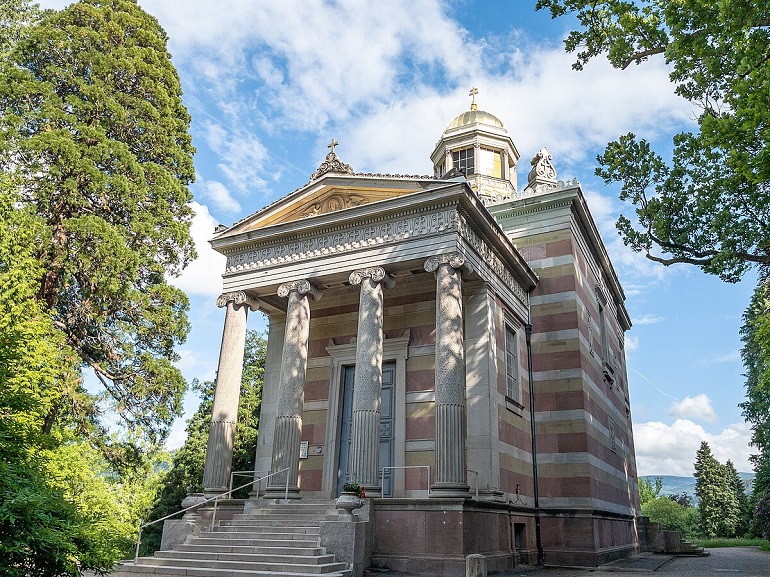
The Stourdza Chapel is a Romanian Orthodox chapel located on the Michaelsberg, constructed between 1863 and 1866. It was commissioned by Prince Michael Stourdza, the former ruler of Moldavia, as a family crypt following the death of his 17-year-old son. Designed by the architect Leo von Klenze in the neoclassical style, the chapel features a facade inspired by Greek churches, with an entrance porch supported by four ionic columns. The building is noted for its once gold-plated dome, which is a miniature version of the dome at St Peter's Basilica in Rome. The interior contains numerous frescoes, sculptures, and icons painted on copper sheets. After extensive repairs, the chapel was reconsecrated in 2002 and now holds Romanian Orthodox services.
Entertainment Venues
Automatenspiel im Casino Baden-Baden
Automatenspiel im Casino Baden-Baden refers to the slot machine area within the Kurhaus complex, where visitors can engage with a range of modern gaming terminals. Open daily from morning to late evening, this section requires casual dress attire and offers a choice of traditional fruit machines and video slots. Machines accept coins and cashless player cards, and staff are available to provide assistance. The room is equipped with accessible gaming stations and restrooms.
The Baden-Baden Casino
The Baden-Baden Casino in its main gaming salon dates from 1824 and is housed in an ornate marble-faced building. Classical table games such as roulette and blackjack operate alongside modern electronic tables. A formal dress code applies during evening hours, with men required to wear jackets, and entry is restricted to those over 21. The casino also features a bar area serving cocktails and non-alcoholic beverages, and its history inspired Dostoyevsky’s short story ‘The Gambler.’

Bernstein Club im Casino Baden-Baden
Bernstein Club im Casino Baden-Baden is a private club located on the casino’s upper floor, offering a more exclusive gaming environment with high-limit tables and personalised service. Membership is available by invitation or application and confers priority seating and access to a dedicated lounge. The club’s interior features Art Deco furnishings and subdued lighting, and a selection of fine wines and spirits is served alongside small plates. Dress code is formal at all times.
Top Museums
Museum Frieder Burda
This striking building, designed by celebrated architect Richard Meier, showcases an impressive collection of modern and contemporary art. Set within the lush Lichtentaler Allee, the museum presents works by key figures such as Gerhard Richter, Pablo Picasso, and Jackson Pollock, among others. The interplay between art and architecture makes it a must-visit for any lover of twentieth and twenty-first-century art.
Staatliche Kunsthalle Baden-Baden
Housed in an elegant neoclassical building from 1909, the State Art Gallery serves as a prominent venue for international contemporary exhibitions. The Kunsthalle offers an ever-changing programme of thought-provoking shows and installations by leading modern artists, ensuring each visit offers something unique. Its airy halls beautifully complement the cutting-edge works on display.
Stadtmuseum Baden-Baden
Located in the picturesque Lichtentaler Allee, the City Museum explores the region’s rich history. Visitors can immerse themselves in exhibits detailing the town’s evolution as a luxurious spa destination, discover local artefacts, and trace the development of Baden-Baden from Roman times to the present day. The museum provides an insightful context to the town’s enduring appeal.
Frida Kahlo Ausstellung / Kunstmuseum Gehrke-Remund
This museum stands apart due to its focus on the life and work of the iconic Mexican artist Frida Kahlo. Through meticulously recreated environments and a variety of artefacts, the exhibition offers a deeply personal exploration of Kahlo’s artistic journey and the stories behind her masterpieces. It is both inspiring and emotive, drawing visitors from across the globe.
Schellhammer Museum
An intimate art museum ideal for those seeking a quieter and more focused experience, the Schellhammer Museum offers curated exhibitions of paintings and other artworks. This venue provides a platform for both established and emerging artists, making every visit a chance to encounter refreshing perspectives.
Muße-Literaturmuseum Baden-Baden
Literature enthusiasts will appreciate this museum, dedicated to the theme of leisure in literature. It offers exhibits tracing the role of 'muße'—a German concept encompassing leisure and contemplation—across literary history and culture.
Brahms House
Music aficionados will find much to love at the Brahms House, the former residence of Johannes Brahms. This museum preserves many rooms as they were in the composer’s time and features exhibits related to his life, work, and enduring legacy within the world of classical music.
TOCCARION – Die unglaubliche Kinder-Musik-Welt
Located in the Festspielhaus, TOCCARION is an interactive music museum designed specifically for children. It offers hands-on exhibits, musical experiments, and engaging experiences that foster creativity and curiosity about the world of sound. This is a vibrant and playful introduction to music for young visitors and families.
Local Cuisine
Local specialities not to miss include Venison Baden-Baden, a tender roasted venison dish accompanied by fruit and juniper berries, and Black Forest trout (Schwarzwaldforelle), renowned for its delicate flavour from the cool waters of the region. Guests can also savour Black Forest ham (Schwarzwälder Schinken), famed for its smoky aroma, or indulge in Flammkuchen, a thin, crisp bread topped with crème fraîche, onions, and bacon, reminiscent of French tarte flambée. For a sweet note, the iconic Black Forest gateau (Schwarzwälder Kirschtorte) combines luscious cherries, chocolate sponge, cream, and a splash of cherry schnapps—a true taste of Baden-Baden on a plate.
Getting There & Around
By train Baden-Baden is well-connected by rail, with its main station served by high-speed ICE, EC, IC, and IR trains running directly from cities such as Frankfurt, Stuttgart, Munich, Basel, Zurich, and Hamburg. Upon arrival at Baden-Baden station, regular local buses and taxis conveniently transport travellers into the city centre and the surrounding area.
By coach or bus There are services operated by long-distance coach providers such as BlaBlaCar Bus and FlixBus, offering travel to Baden-Baden from other German and European cities. While direct long-distance buses to Baden-Baden may be limited, reaching nearby hubs such as Karlsruhe or Strasbourg by coach and continuing by local bus or regional train is a practical option. Regional bus connections are also available from towns like Bühl, Rastatt, and Karlsruhe, ensuring flexible access to Baden-Baden.
By car Baden-Baden is easily accessible for motorists, situated just off the A5 motorway which connects Basel and Frankfurt. Major roads such as the A8 and B3 provide additional routes from cities like Munich, Karlsruhe, and Basel. Clear motorway exits and plentiful parking facilities, including multi-storey car parks and areas for motorhomes, make arriving by car straightforward and comfortable.


