| Contents |
|---|

Introduction
Lauterbach (pop. 2,700) is a small town at the foot of the Vogelsberg Mountains. The main attraction is Schloss Eisenbach, a 15th-century castle located 4 km south of the centre. It has belonged to the same family for nearly 600 years. The town also features the Hohhaus Museum, Tourist-Center Stadtmuehle, and the Ankerturm historic site, making it an appealing destination for those interested in German history and architecture.
Interesting Facts about Lauterbach
- Lauterbach received its municipal rights in 1266, the same year it began constructing its castle and city wall.
- It is famed for Lauterbacher Bier, the oldest brewed beer in all of Hesse, dating back to 1527.
- The Ankerturm is the only remaining tower from Lauterbach's original city fortifications and has even served as a prison.
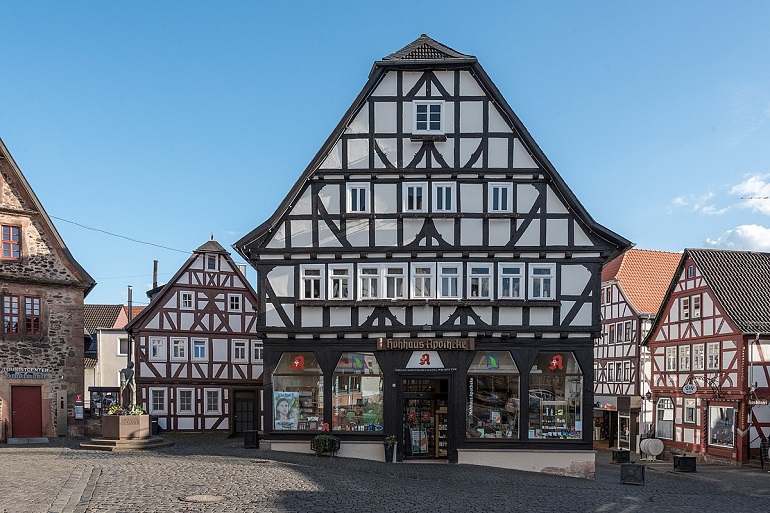
- Lauterbach is celebrated for its picturesque Fachwerk (half-timbered) houses that lend it a fairy-tale charm.
- The local traditional costume, developed around 1800–1820, includes a distinctive halo hat known as the Radhaube, worn by wealthier farming women.
- The town hosted the 23rd Hessentag state festival in 1983, a significant cultural event in Hesse.
- Schloss Eisenbach, a nearby 15th-century castle, has remained in the same family for nearly 600 years.
- Lauterbach sits near the famous Volcano Cycle Track (Vulkanradweg), a scenic route popular with cyclists.
History
Founded between 400 and 800 CE, Lauterbach was first documented in 812 when it was mentioned in a church document from Schlitz. During the Middle Ages, the settlement belonged to the monastery in Fulda before becoming a fief of Count Ziegenhein in the 12th century. The town received its municipal rights in 1266, marking the beginning of its formal urban development. In the same year, construction began on both the castle (Burg) and the city walls, establishing Lauterbach as a fortified medieval settlement. The Ankerturm, which served as both an observation tower and prison, remains the only surviving tower from these original fortifications.
Throughout the medieval period and into the early modern era, ownership of Lauterbach changed hands frequently amongst various noble families. Following the Reformation, the town adopted Lutheranism, reflecting the broader religious transformations of 16th-century Germany. A significant political shift occurred in 1684 when Lauterbach came under the control of the Riedesel zu Eisenbach family through a formal pact. The Riedesels maintained their own small but independent territory until 1806, when the Napoleonic Wars and subsequent Congress of Vienna resulted in Lauterbach becoming part of the Grand Duchy of Hesse. This political reorganisation continued into the 19th century when Lauterbach became the seat of the newly founded Lauterbach district in 1852.
The modern administrative structure of Lauterbach took shape during the 20th century through various municipal reforms. In 1972, local government reorganisation led to the incorporation of ten villages into the town: Allmenrod, Frischborn, Heblos, Maar, Reuters, Rimlos, Rudlos, Sickendorf, Wallenrod, and Wernges. This same year saw the creation of the larger Vogelsberg district, with Lauterbach maintaining its status as the administrative centre. The town has preserved its cultural heritage whilst embracing modernity, hosting the 23rd Hessentag state festival in 1983. Lauterbach's brewing tradition dates back to 1527, making Lauterbacher beer the oldest in Hesse. Today, the town serves as the district capital (Kreisstadt) of the Vogelsbergkreis, continuing its long-standing role as an important administrative and cultural centre in central Germany.
Main Attractions
Schloss Eisenbach
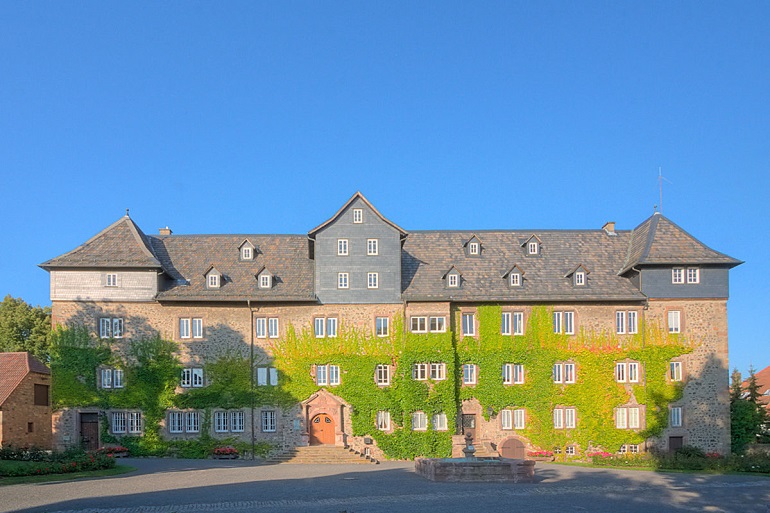
Schloss Eisenbach stands majestically on a basalt rock in the Vogelsberg region of Hesse, first documented in 1217 as a fief of the Eisenbach family. This impressive Renaissance-style castle remains privately owned by the noble family, who still reside within its walls, making interior visits impossible though the exterior and castle grounds remain accessible to visitors. The castle is surrounded by charming old houses and a delightful small park, creating a picturesque countryside setting that makes for a wonderfully atmospheric stop whilst exploring the German countryside. Visitors can stroll through the castle park and chapel, with guided tours available upon request for groups, and ample parking is provided for those arriving by car. The nearby Burg Post restaurant offers dining opportunities, though it may be closed on occasion, and the site provides an excellent base for hiking enthusiasts looking to explore the surrounding Vogelsberg landscape.

Burg Lauterbach
Burg Lauterbach stands as a magnificent medieval fortress that commands the charming Hessian town of Lauterbach from its strategic position on the northern edge. Originally constructed as a defensive fortification to protect the town's most vulnerable approach (whilst the River Lauter provided natural protection to the south), this historic castle evolved over the centuries from a purely military stronghold into an elegant residence. The oldest surviving sections date from the Gothic period, and the castle has played a significant role in local history, hosting numerous notable figures including General Friedrich Adolf Riedesel and the last Russian Tsar, Nicholas II. Today, whilst portions of the castle serve as the administrative seat and archives for the Riedesel zu Eisenbach family alongside private residences, visitors can explore the castle grounds and appreciate its remarkable architecture that beautifully demonstrates the transition from medieval fortress to aristocratic palace. The castle's elevated position offers splendid views across the Vogelsberg landscape, making it an essential stop for anyone exploring this picturesque region of central Germany.
Lichtspielhaus Lauterbach
Lichtspielhaus Lauterbach is a local cinema with a cosy atmosphere, regularly hosting film screenings and occasional live performances. It caters well to families and children, offering a welcoming cultural experience.
Bachtour
The Bachtour is a designated loop trail popular among hikers, joggers, and cyclists, offering serene natural scenery along local streams and through woodland areas. It is family- and dog-friendly, and features routes suitable for children, making it accessible to a wide range of visitors.
Frau Holle-Loch
Frau Holle-Loch is a local legend site set within a natural setting near Lauterbach. While lesser-known, it appeals to visitors interested in folklore and outdoor exploration, adding a cultural dimension to a visit to the region.
Around Lauterbach
Hainigturm
Hainigturm is an observation tower situated on the outskirts of Lauterbach. It provides panoramic views of the surrounding Vogelsberg landscape and is a popular point for walkers and cyclists in the area. The tower is also suitable for families with children.
Burgruine Wartenberg
Located nearby in Wartenberg, the Burgruine Wartenberg is a historical castle ruin that affords visitors a glimpse into regional medieval history. The site features a free parking lot and is suitable for children, making it an accessible excursion from Lauterbach.
Schloss Sickendorf
Schloss Sickendorf is another castle in the Lauterbach area, recognised for its historical architecture and occasional community events such as flea markets. The location is equipped with parking and is considered family-friendly.
Top Museums
Hohhaus Museum
The Hohhaus Museum offers an immersive journey through Lauterbach’s local history and artistry within an elegant 18th-century Baroque palace, originally built for the Riedesel family. Its forty-plus rooms are furnished in styles from the Baroque, Empire, and Biedermeier eras, delighting visitors with original interiors such as a Rococo hall, Chinese wallpapers acquired in 1840, and outstanding craftsmanship displays. Highlights include the extraordinary late Gothic Marian altar dating to around 1480, rich collections of hand-forged locks and weapons, and reconstructed workshops (shoemaker, potter, hatter, and more) that beautifully evoke the trades of bygone days. Extensive displays shed light on rural Vogelsberg life, featuring farmhouses, traditional costumes, cradles, kitchen artefacts, and agricultural tools. The museum is particularly celebrated for contextualising local traditions with authenticity and charm. The atmospheric setting and thoughtful exhibits make it a must-visit for anyone interested in the cultural roots of the Vogelsberg region. Its main limitation is that it is the only museum of its kind in Lauterbach, but its scope and presentation more than compensate for this, making it a core attraction for history enthusiasts.
Local Cuisine
Among the standout specialities, you’ll find Ahle Wurscht, a distinctive air-dried and aged pork sausage with a protected regional designation, often enjoyed alongside fresh bread. Renowned for its succulent flavour, schnitzel—a breaded and pan-fried cutlet—is a staple on local menus, typically accompanied by sauerkraut, a tangy fermented cabbage side. The town is also known for its variety of artisanal sausages, such as the potato bratwurst—a unique variation blending mashed potatoes with spiced pork—and the honey-fennel sausage, reflecting both tradition and creativity in local butchery. To end your meal, many establishments feature hearty breads and cheeses that perfectly encapsulate the warm, welcoming, and authentic taste of Lauterbach’s culinary landscape.
Getting There & Around
By train Lauterbach is well connected to the German rail network, with regular services arriving at Lauterbach (Hess) Nord station. Trains from major cities in Germany link smoothly with regional services, making train travel a convenient and comfortable way to reach the town.
By bus Several regional and long-distance bus routes serve Lauterbach, stopping at the town’s central bus station and connecting with surrounding cities and villages. Bus services provide a flexible alternative to train travel and are often coordinated with train timetables for easy transfers.
By car Lauterbach is accessible by car via well-maintained motorways and regional roads. Drivers can enjoy scenic routes through picturesque countryside, with clear signage and efficient links to nearby major highways ensuring a straightforward journey.