



| Contents |
|---|
Introduction
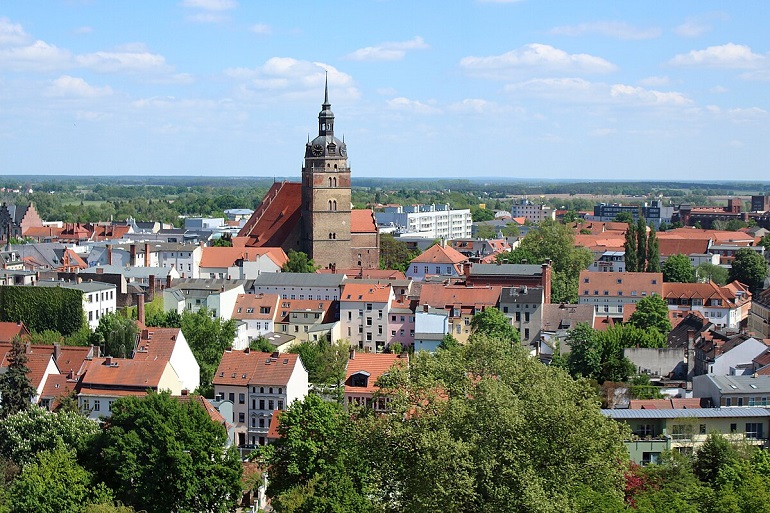
Settled by the Slavs in the 6th century, Brandenburg (pop. 74,000) is the oldest city in the eponymous state. It was the seat of the Margraviate of Brandenburg until the new Hohenzollern rulers moved their court to Berlin in 1417. Ravaged by WWII and mutilated by communist urban planning, the town has been slowly regaining some of its historical charm. There are nevertheless a few interesting landmarks, such as the Brandenburg Cathedral, St. Catherine's Church, and several preserved medieval towers that define its skyline. The town centre is uniquely distributed across three islands and both banks of the river, connected by a series of bridges.
Interesting Facts about Brandenburg an der Havel
- Once the capital of the Margraviate of Brandenburg, the city gave its name to both the historical margraviate and the modern state of Brandenburg.
- The settlement’s oldest core is Cathedral Island (Dominsel), reflecting over 1,000 years of urban history on the River Havel.
- The Bishopric of Brandenburg was founded here as early as 948, marking one of the first Christian institutions east of the Elbe.
- From the 12th to the 18th century, Brandenburg comprised two separate walled towns—Altstadt and Neustadt—later united in 1715.
- The Romanesque-Gothic Cathedral of Saints Peter and Paul was begun in 1165 and still houses notable medieval art, including the 13th-century stained glass and the 1290 Lenten Veil.
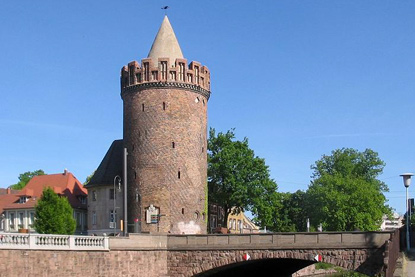
- Large sections of the medieval city walls and gate towers, such as Plauer Torturm and Steintorturm, remain among central Germany’s best-preserved fortifications.
- The city styles itself a “town in the river,” with roughly one fifth of its municipal area covered by water and numerous Havel side arms.
- Brandenburg an der Havel sits at the gateway to Europe’s largest interconnected inland watersports area, with the Havel widening into a 15 km² lake region to the west and the Beetzsee regatta course to the north.
- During industrialisation, the Brennabor works made Brandenburg a noted hub for bicycles, prams, cars, and motorcycles.
- The population peaked around 95,000 in 1988, then declined after reunification as heavy industry contracted.
- The city is the largest in the state of Brandenburg by area, spanning roughly 229 km² and ringed by extensive forests and waters.
- Berlin’s famous Brandenburg Gate ultimately takes its name from Brandenburg an der Havel and its margraviate heritage.
- The Altstädtischer Markt with Town Hall and Roland statue recalls Brandenburg’s era as a Hanseatic trading centre.
- Brandenburg hosted Germany’s federal horticultural show (BUGA) in 2015, underscoring its focus on gardens, culture, and tourism.
History
The town's origins trace back to 929 when the West Slavic fort of Brenna (also known as Branibor, Brennabor, or Brennaburg) was conquered by German King Henry I the Fowler following the Battle of Lenzen. The name itself derives from two Slavic words: "braniti" meaning to protect or defend, and "bor" meaning forest or wood. In 948, the Holy Roman Emperor Otto I established the first bishopric east of the River Elbe on the cathedral island, marking Brandenburg's emergence as a crucial religious and administrative centre. Following a Slavic revolt in 983, the region remained under Slavic control until the middle of the 12th century, ruled by chiefs of the Hevelli tribe until the last chief, Pribislav, died in 1150.
The medieval period witnessed Brandenburg's transformation into a powerful regional capital under the Ascanian Margrave Albert the Bear (Albert I of Brandenburg). After Pribislav's death in 1150, his widow Petrissa enabled Albert to take control of the Brandenburg fort, and by 1157 he had established the Margravate of Brandenburg, making this city the cradle of the eponymous Mark and consequently the heartland of later Prussia. The cathedral's foundation stone was laid in 1165 on the cathedral island and consecrated five years later in Albert's presence. Initially confined to the western bank of the Havel River, the town expanded to the eastern side in 1196, creating three distinct areas: the Old Town (Altstadt), New Town (Neustadt), and the cathedral district. These remained separate entities for centuries until 1715 when the Old and New Towns merged into a single municipality. During 1314-1315, both towns joined the prestigious Hanseatic League, bringing considerable wealth and prosperity that is still reflected in the city's churches, homes, and civic buildings.
The modern era brought both industrial prosperity and devastating tragedy to Brandenburg an der Havel. In the late 19th century, it became a major industrial centre of the German Empire, with steel industries and several bicycle manufacturers including Brennabor, Corona, and Excelsior establishing operations there. However, the city's darkest chapter unfolded during the Nazi period when it became the site of one of Germany's first concentration camps in 1933-34 on Neuendorfer Straße. Even more horrifically, the Brandenburg-Görden Prison was transformed into the Brandenburg Euthanasia Centre, where the Nazis murdered people with mental disabilities, including children, as part of the "Action T4" programme. This facility became one of the first locations where the Nazis experimented with gas chambers, with lessons later applied to mass murders at Auschwitz and other extermination camps. During World War II, the presence of the Arado Aircraft Company factory made Brandenburg a bombing target, resulting in 70% of the city being destroyed by 1945. Following German reunification, the city experienced significant population decline from around 100,000 in 1989 to approximately 75,000 by 2005, primarily due to emigration of young people.
Main Attractions
Altstädtischer Markt (Old Town Market Square)
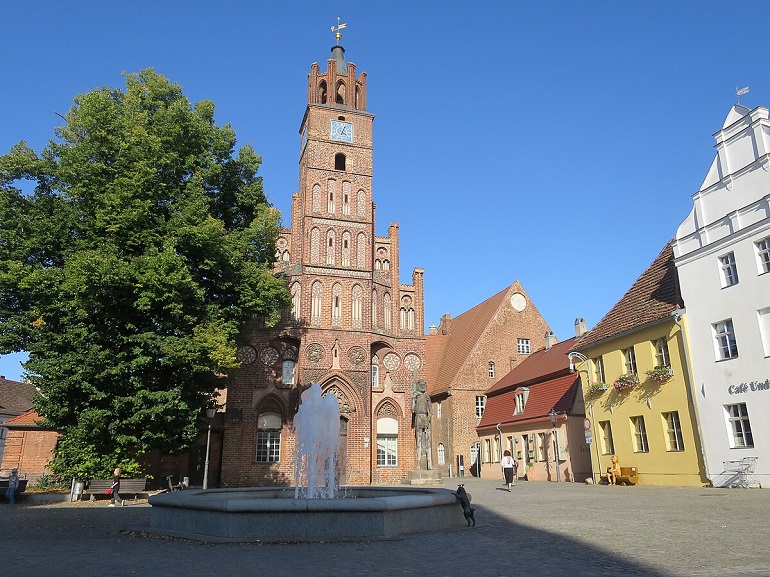
The Altstädtischer Markt serves as the historic heart of Brandenburg's Old Town, a handsome square dominated by the magnificent late-Gothic Old Town Hall, a testament to civic pride built in 1470. Standing guard before it is the impressive sandstone statue of Roland, sculpted in 1474 and soaring over five metres high, a powerful symbol of the town's medieval freedoms and market rights. The square itself, fringed by historic gabled houses, remains a focal point for community life, hosting markets and events that continue a tradition of public assembly stretching back centuries. It is here that one can best appreciate the wealth and confidence of the city during its Hanseatic heyday, with the blend of administrative and commercial architecture encapsulating its historical importance.
Medieval Fortifications
Brandenburger Stadtbefestigung
The Brandenburger Stadtbefestigung wraps the old town in the legacy of medieval defence, its brick curtain walls dating from around 1300 and originally encircling both Altstadt and Neustadt. The surviving sections, punctuated by stout Wiekhäuser—square towers with broad firing platforms—trace the course of conduits that once deluged attackers through moats and drawbridges. Nine gates originally controlled trade and passage; today, visitors can walk alongside the ramparts to appreciate their robust masonry and imagine the clangour of watchmen on patrol. Informational plaques at key junctions elucidate the strategic innovations that safeguarded the city during the tumultuous conflicts of the Holy Roman Empire.
Neustädtischer Mühlentorturm
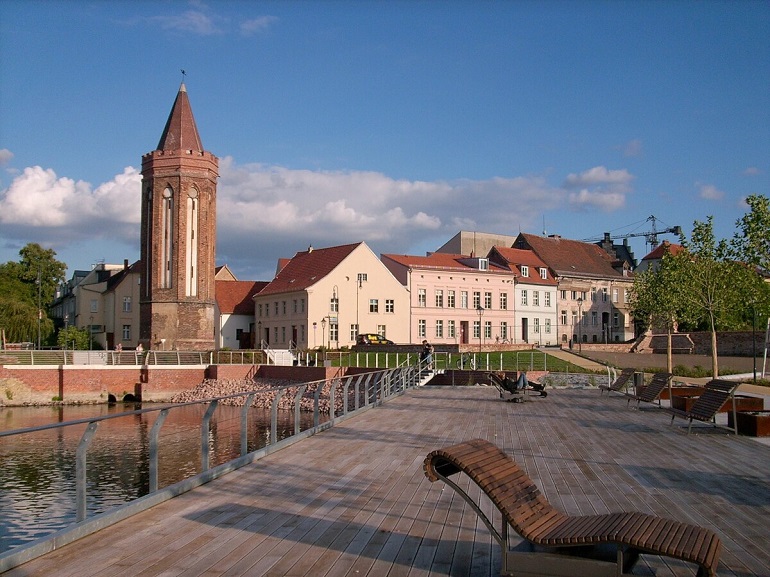
The Neustädtischer Mühlentorturm stands sentinel where the waters of the Havel once powered flour mills, its pointed conical roof and soaring brick walls dating to the early 14th century. This gate tower formed a pivotal checkpoint at the entry of Neustadt, controlling the flow of merchants and grain into the walled enclosure. Inside, one discerns the vestiges of the original portcullis mechanism and the vaulted gun chamber added in later centuries, while narrow staircases lead to the formerly restricted battlements. Today the tower invites exploration of its interior and offers elevated views of the riverbank and the adjoining Stadtbefestigung, framing the relationship between commerce and defence that shaped Brandenburg's rise.
Religious Heritage
Brandenburg Cathedral
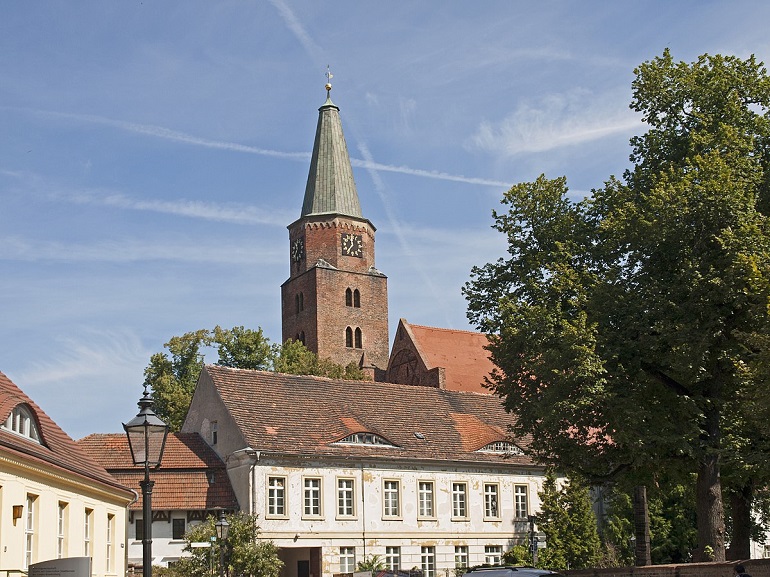
The Brandenburg Cathedral stands majestically on Cathedral Island between the Beetzsee and Havel rivers, marking the birthplace of the Margraviate. Its foundations, laid in 1165, evolved from a Romanesque hall church into a three-aisled Brick Gothic basilica by the 15th century, revealing a seamless transition of styles through soaring vaults and buttressed facades. Inside, the interplay of light through lancet windows illuminates the ornate capitals of the cloister that today houses the cathedral museum, while the soaring nave conveys the spiritual aspirations of medieval worshippers. Visitors can ascend to the platform of the sole surviving west tower to survey the city's red-brick skyline and the expanse of the Havel floodplains. The cathedral's resilience through Slavic uprisings, Reformation iconoclasm and Prussian renovation under Karl Friedrich Schinkel adds layers of historical narrative to its architectural grandeur.
St. Gotthardt
The St. Gotthardt embodies the ecclesiastical history of Brandenburg's Old Town with origins tracing back to 1147, when Premonstratensian canons established a fieldstone church to succeed Slavic shrines. Its Romanesque westwork, with deeply recessed round-arched portals, predates the mid-15th-century brick hall conversion, preserving the sturdy simplicity of its earliest phase. The late-Gothic nave soars above slender columns and houses the cloth-makers' pulpit of 1623, carved in local sandstone and celebrated as a baroque gem, while a cluster of side chapels reveals changing devotional practices over centuries. Climb the fieldstone tower to relish panoramic views of the Havel's meanders and sense the church's pivotal role as both pilgrim destination and civic landmark.
Saint Catherine Church
The Saint Catherine Church offers a quieter but equally poignant glimpse into Brandenburg's medieval piety, first recorded in 1217 and reconstructed in the 1380s as a late-Gothic brick hall. The west façade retains elements of its original quarry-stone base, seamlessly integrated into the soaring nave girded by buttressed walls and crowned by a steeply pitched roof. Internally, the soaring traceried windows and remnants of polychrome murals evoke the spiritual gravity of the Hanseatic era that brought prosperity to the Altstadt. Frequent organ recitals within its resonant acoustics allow visitors to experience the church as a living musical venue, while the adjacent graveyard whispers tales of generations who shaped the city's fortunes.
St. Paul's Monastery (Pauli-Kloster)
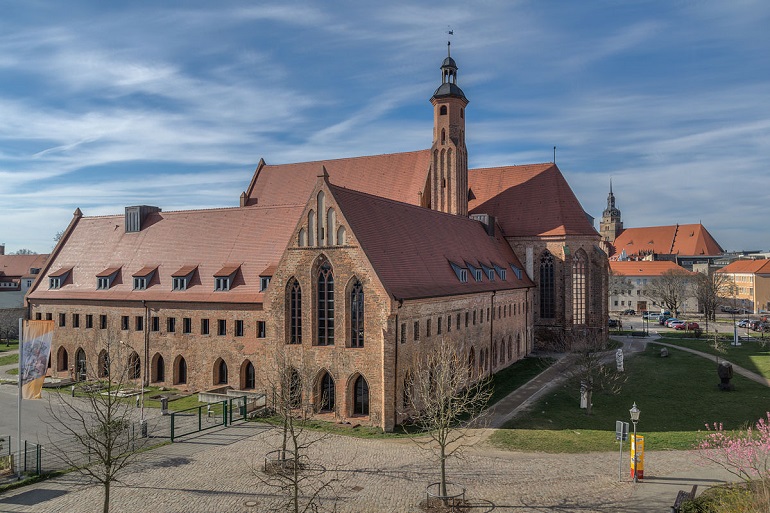
The St. Paul's Monastery is a formidable example of North German Brick Gothic architecture, originally founded in 1286 by the Dominican order. Its serene cloister and the soaring, rib-vaulted church interior reflect the austere piety of the mendicant friars who lived and worshipped here for over 250 years. Following its secularisation during the Reformation, the complex served various functions before being meticulously restored to house the Brandenburg State Archaeological Museum. Today, visitors can wander through the beautifully preserved medieval structure, where the building itself is as much an exhibit as the prehistoric and ancient artefacts it contains, offering a seamless journey through millennia of the region's history.
Urban Green Spaces
Havelgarten
The Havelgarten unfurls along the banks of the River Havel as a verdant promenade, weaving between historical quays and contemporary sculptures. Accessible at any hour, this linear garden offers a continuous ribbon of grass lawns, shaded benches and riverside viewpoints that invite both early-morning joggers and leisurely strollers. Children delight in the informal playgrounds that nestle beside willow-lined paths, while anglers find quiet alcoves for casting lines into the gentle currents. The Havelgarten's seamless blend of urban design and natural riparian habitat renders it a favourite for picnics, outdoor art fairs and community events that celebrate the river's centrality to city life.
Marga-Goren-Gothelf-Platz
The Marga-Goren-Gothelf-Platz occupies a tucked-away corner of the Neustadt, its modest scale belying a welcoming intimacy cherished by locals. Fringed by traditional half-timbered houses and shaded by mature lime trees, the square features mosaic-tiled benches and artfully arranged flowerbeds that honour the memory of the city's artisans. At weekends, a small market stalls set up along its cobbles, offering regional delicacies and handcrafted wares, while an adjacent café spills tables into the square, encouraging quieter exchanges over coffee and strudel. Far from the bustle of the main thoroughfares, this pocket park exemplifies Brandenburg's commitment to preserving communal gathering places.
Marienberg
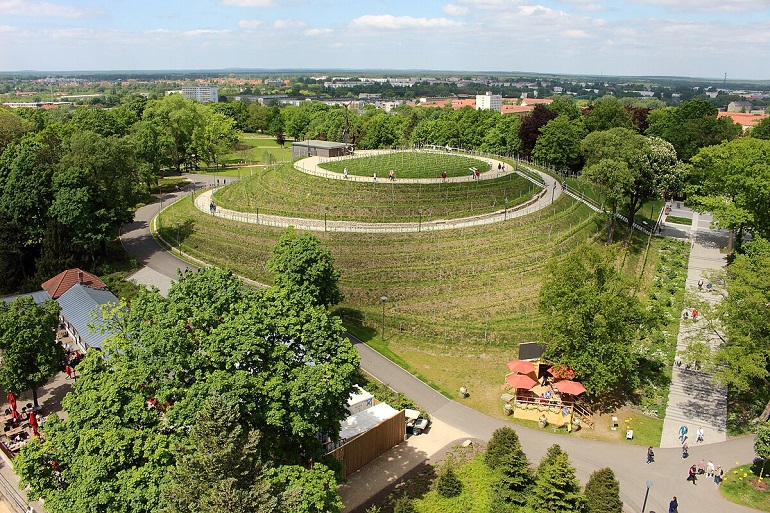
The Marienberg rises as the highest natural elevation in the city, crowned by the Friedenswarte observation tower and encircled by an expansive Bürgerpark. It encompasses thirty hectares of themed gardens, including the historic Staudengarten and the renovated shell grotto, as well as a restored vineyard that recalls the medieval tradition of hillside viticulture. Winding trails lead past open-air stages and a folly-like wine pavilion, while panoramic vistas across the Havel delta reward every ascent. Families cherish the play areas and open meadows for recreation, and the park's layered history, from Slavic moraines to Prussian gardening, resonates through its diverse horticultural designs.
Natural Surroundings
Mittlere Havel
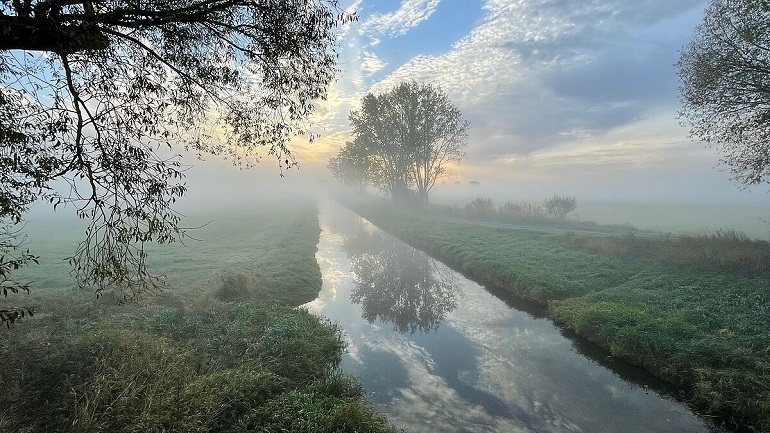
The Mittlere Havel designates the mid-section of the Havel River as it sweeps through the town, its tranquil waters flanked by reed beds and poplar stands that teem with birdlife. This protected stretch is a magnet for canoeists and small-boat enthusiasts, who navigate its gentle current past sleeping barges and centuries-old mill races. Fishing platforms discreetly punctuate the bank, enabling anglers to try for pike and perch under the dappled canopy, while hiking trails parallel the shoreline for those on foot. The outflow of boating, wildlife watching and riverside picnicking coalesces into an immersive experience of Brandenburg's aquatic heritage.
Naturpark Westhavelland
The Naturpark Westhavelland lies a short drive west of the city and unfolds as one of Germany's most pristine wetland preserves, its patchwork of meadows, oxbow lakes and fen woodlands underpinning rare species such as the white-tailed eagle and the corncrake. Signposted cycling routes and bird-watching towers afford panoramic views of the lowland mosaic, while guided nature walks recount centuries-old peat-cutting practices and the park's reclamation for conservation. Seasonal events celebrate the blossoms of pink loosestrife and the migrating cranes that pause along the Havel corridor, inviting visitors to engage with one of Brandenburg's paramount ecological treasures.
Top Museums
Archaeology and Industry
Brandenburg State Archaeology Museum
Housed within the historic walls of the St. Pauli Monastery, the Brandenburg State Archaeology Museum takes visitors on a remarkable journey through 130,000 years of the region's cultural history. Spread across nine exhibition rooms, the permanent collection features around 10,000 artefacts.
Key exhibits chart the evolution of life from the Stone Age through to the modern era. Highlights include some of the state's oldest archaeological finds, such as Stone Age hand axes, one of the world's most ancient textiles—a fishing net from Friesack—and a skull bearing the marks of a successful prehistoric trepanning operation. The Bronze Age is represented by intricate items like a miniature two-wheeled bronze wagon, while the Migration Period is uniquely illustrated by the artificially deformed skull of a young woman, a practice associated with Hunnic customs. The museum also displays evidence of mediaeval religious life, such as pilgrim tokens, and coin hoards from the 16th to 20th centuries that chronicle the economic fluctuations of the Early Modern Age.
Industrial Museum Brandenburg
A testament to the city's more recent past, the Industrial Museum Brandenburg is located on the site of what was once the largest steelworks in the German Democratic Republic (GDR). The centerpiece of the museum is the last surviving Siemens-Martin furnace in Europe, a colossal structure that offers a powerful insight into the steel production of a bygone era.
The museum invites visitors to explore a world of cranes, workshops, locomotives, and historic vehicles, preserving the atmosphere of the former industrial powerhouse. In addition to the steelworks heritage, there is also an exhibition dedicated to the Brennabor company, which was Germany's largest car manufacturer in the 1920s, highlighting another chapter in the city's industrial legacy.
City History and Culture
Stadtmuseum Brandenburg an der Havel (City Museum)
The City Museum is not confined to a single building but is spread across three distinct and historic sites.
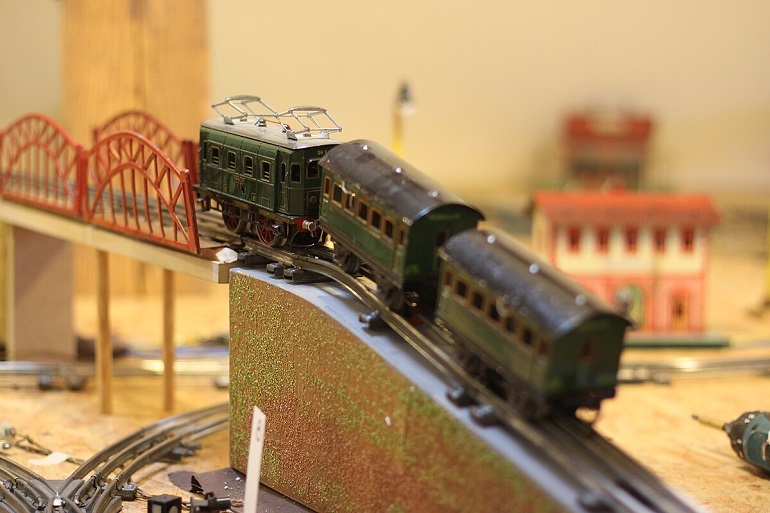
- Frey-Haus: This elegant baroque townhouse serves as the museum's main location. Its exhibitions focus on the city's recent history in the 20th and 21st centuries, exploring events that continue to shape the lives of its residents. A dedicated section in the coach house celebrates the city's more than 100-year-old tradition of toy manufacturing, showcasing tin and Lineol toys famously "Made in Brandenburg an der Havel".
- Museum im Steintorturm: One of the city's four remaining medieval gate towers, the Steintorturm offers a glimpse into the city's historical fortifications. The tower itself has a rich history, having once served as a prison. Today, its four floors house an exhibition on the history of shipping on the Havel River. Inscriptions left by a 17th-century prisoner are still visible on the interior walls, adding a personal layer to its history.
Specialised Collections
Spielzeugmuseum im Havelland (Toy Museum in Havelland)
Located a short distance from the city centre in the old village schoolhouse of Kleßen, the Spielzeugmuseum im Havelland is a delight for all ages. The museum showcases an extraordinary collection of German toys from the past two centuries, reflecting Brandenburg's historical reputation as a "toy town". The exhibition is spread across several themed rooms, featuring everything from model railways, steam engines, and knight's castles to an extensive world of dolls, doll's houses, and miniatures. Interactive play stations make it an engaging experience for families.
Psychiatry Museum
Situated within the expansive parklands of the Asklepios Fachklinikum, a historic hospital complex built in 1911, this specialised museum offers a sobering and important perspective on medical history. The permanent exhibition, "The Görden State Sanatorium 1933 to 1945: Psychiatry under National Socialism," documents the crimes committed against patients during this dark period and commemorates the victims of Nazi psychiatry. A visit provides insight into how mental illness was treated in the 1930s and the profound impact of ideology on medical practice.
Local Cuisine
Local menus often feature Aal grün (pike or eel in a fresh herb sauce) and Spreewälder Gurken, the famous pickled cucumbers from nearby Spreewald. Hearty dishes such as Kartoffelsuppe mit Speck (potato soup with bacon) and Eisbein (pickled pork knuckle) reflect the area’s rustic traditions, while freshwater fish from the Havel, including Zander and Karpfen, are regional staples. To round off a meal, travellers might enjoy a glass of Brandenburger Bier or a warming fruit schnapps, embodying the local way of blending nature’s bounty with centuries-old culinary practice.
Getting There
By train Brandenburg an der Havel is well connected by regional trains from Berlin and Potsdam, with frequent services that make it one of the most convenient travel options, bringing you directly to the town’s central station.
By coach or bus While long-distance coaches may not stop directly in Brandenburg an der Havel, regional buses link the town with neighbouring communities, making it a suitable alternative if travelling from nearby areas not served by train.
By car For those preferring the flexibility of driving, Brandenburg an der Havel can be easily reached via the A2 motorway from Berlin or Magdeburg, with well-signposted exits leading into the town centre.


