



| Contents |
|---|

Friederikenschlösschen, Bad Langensalza.
Introduction
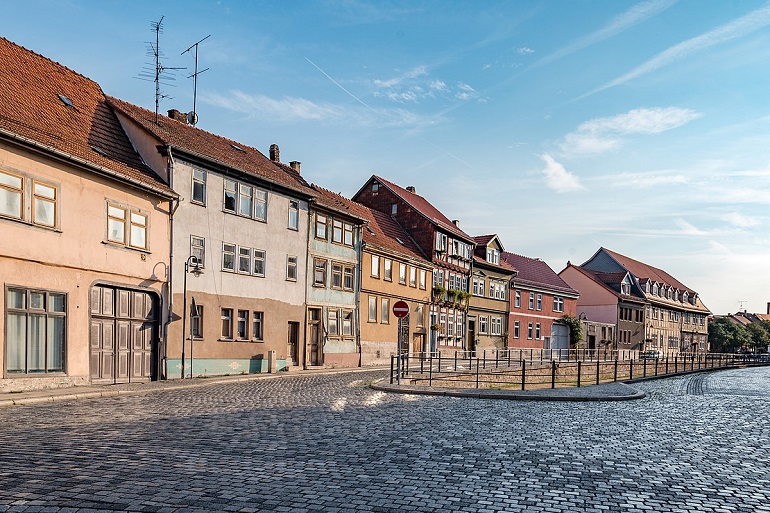
A spa town reputed for its curative sulphur baths, Bad Langensalza (pop. 16,500) will reward visitors with its half-timbered houses, ruined medieval castle, the delightful little Friederikenschlösschen, and several themed gardens, including Japanese and rose gardens. Situated near the Hainich National Park, a UNESCO World Heritage Site, Bad Langensalza also offers visitors opportunities for walking and nature excursions.
Interesting Facts about Bad Langensalza
- The town is famous as the "Rose City" due to its magnificent Rose Garden, featuring over 450 rose varieties, 91 of which were bred locally.
- Bad Langensalza is renowned as one of the most flourishing cities in Europe, having won the "Most blooming town in Europe" award in 2011.
- It is located at the edge of Hainich National Park, a UNESCO World Heritage Site and Germany’s largest deciduous forest.
- The town boasts ten themed parks and gardens, including a celebrated Japanese Garden—one of the few authentic Japanese Gardens in Europe.
- Sulphur and brine springs were discovered here in the 19th and late 20th centuries, making Bad Langensalza a renowned spa town, reflected in its name since 1956.
- The Friederiken Therme spa complex offers therapeutic treatments with mineral-rich waters and direct access via a bathrobe corridor for hotel guests.
- Travertine stone quarried in Bad Langensalza was used for historic buildings such as the Brandenburg Gate in Berlin and the Barcelona Pavilion.
- Seventeen of the town’s medieval towers and one town gate are still preserved, forming part of the extensive historical city wall.
- The town annually hosts an atmospheric Middle Ages Festival, where residents and guests can experience medieval culture, crafts, and cuisine.
History
Medieval Origins and Early Development
Bad Langensalza boasts a distinguished history spanning over a millennium, first appearing in historical records around 932 as a village named "Salzaha". The town's strategic location in the Thuringian Basin made it one of the most historically important settlements in the region. Originally known simply as Langensalza from approximately 1578, the "Bad" (meaning "spa") was added to its name in 1956 to reflect its status as a thermal spa destination. During medieval times, the town achieved considerable prosperity through the lucrative trade in indigo, which it shared exclusively with just four other cities, enabling the wealthy burghers to construct magnificent churches and formidable defensive walls using locally quarried travertine stone. The town's wealth also stemmed from the mining of this distinctive white travertine, which has been extracted here since medieval times and was later used in famous constructions including the Brandenburg Gate and the Barcelona Pavilion. Bad Langensalza served as an early seat of the Teutonic Knights in the 13th century and was fortified with substantial medieval walls featuring 30 watchtowers and seven gates, of which 16 towers, the Lamentation Gate, and the Schwibbogen survive today.
Turbulent Times and Military Significance
Throughout its long history, Bad Langensalza has been the site of numerous significant battles and military encounters. In 1075, the town witnessed Emperor Henry IV's victory over rebelling Saxons and Thuringians. The settlement faced destruction in 1346 during a property dispute between the Landgrave of Thuringia, Frederick II the Severe, and the Archbishop of Mainz. The devastating Thirty Years' War brought particular hardship around 1632, when the town was plundered and damaged by fires. Tragedy struck again in 1711 when fires destroyed large portions of the town, including the complete destruction of the town hall, which was subsequently rebuilt between 1742 and 1752. The Seven Years' War saw further conflict between 1756 and 1763, with the town serving as a battleground in February 1761. Perhaps most notably, Bad Langensalza was the site of the Battle of Langensalza in 1866 during the Austro-Prussian War, where Prussian forces defeated the Hanoverian army in what is remembered as the last time intra-German forces met in combat. The town became part of the Prussian Province of Saxony in 1815 and later endured occupation by American troops on 5 April 1945, before being handed over to the Red Army and becoming part of the German Democratic Republic from 1949 to 1990.
Transformation into a Spa Town
Bad Langensalza's evolution into a renowned spa destination began with the discovery of sulphur springs in 1811, which opened to the public as a curative bath the following year. The town's therapeutic reputation was further enhanced in 1996 with the discovery of salt and mineral water springs, prompting the development of numerous new curative facilities. A new public sulphur bath was constructed in 1928, and today the modern Friederiken Therme attracts visitors from across Europe. The town officially received spa status initially as a sulphur spa, though it took approximately 140 years after the first bath opened before this designation was granted. No other location in Thuringia possesses this unique combination of sulphur springs, brine, and medicinal drinking water. Beyond its therapeutic waters, Bad Langensalza has cultivated an extraordinary reputation for horticulture, earning recognition as "Europe's most flourishing city" through the Europe-wide horticultural competition Entente Florale in 2011. The town now features ten themed parks and gardens arranged like a green belt around the historic centre, including one of Europe's most beautiful rose gardens with over 450 species, a Japanese Garden, and various other botanical attractions that complement its well-preserved medieval architecture characterised by exceptional half-timbered buildings spanning from the 14th to 20th centuries.
Main Attractions
Historic Old Town (Historische Altstadt)
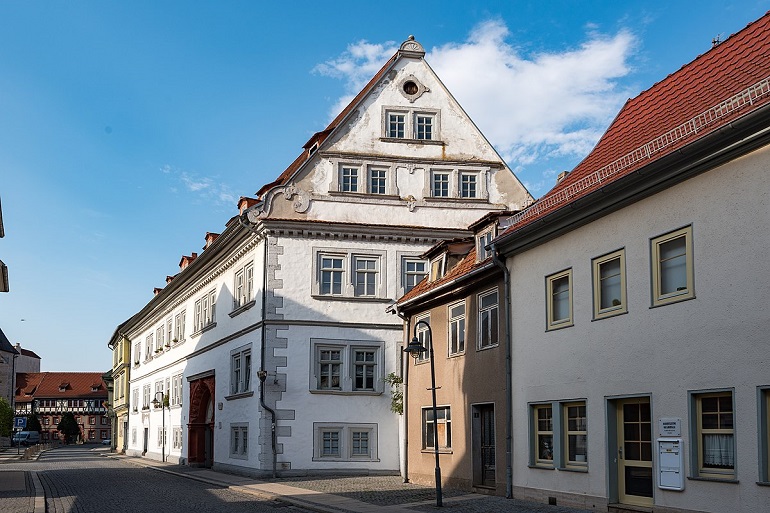
Bad Langensalza's historic old town centres around the car-free Marktstraße, which leads visitors past the distinctive free-standing town hall with its carillon capable of playing more than 16 different melodies. The route concludes at the Marktkirche, notable for having the second-highest church spire in Thuringia. The old town retains significant portions of its medieval fortifications, including 16 watchtowers from the original 30, along with the preserved Lamentation Gate and Schwibbogen from the seven original gates. These defensive structures reflect the town's historical prosperity derived from indigo trading and travertine mining.
Rathaus (Town Hall)
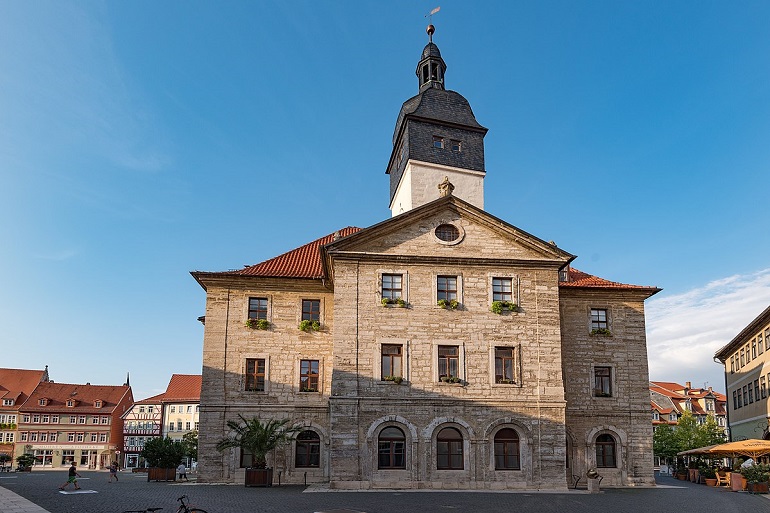
The Rathaus stands in the centre of the historic old town and was rebuilt between 1742 and 1752 after a major fire, incorporating surviving medieval parts of its predecessors, such as a cross-rib vaulted stair tower and large travertine barrel vaults in the cellar. First mentioned in the 13th century, the current baroque structure features a portal on its east side adorned with gilded ornaments, a balcony, and allegorical figures of Fama (Fame) and Justitia (Justice). A distinctive feature is its glockenspiel, which has 32 bells that play one of 16 different melodies daily at 12 p.m. and 6 p.m. During the performance, five 80cm-high figures representing personalities from the town's history appear, including Hermann von Salza and the physician Christoph Wilhelm Hufeland. Today, the building houses the city administration and a municipal gallery that hosts changing art exhibitions.
Töpfermarkt (Pottery Market)
The Töpfermarkt serves as a central venue for the town's annual Mittelalterstadtfest (Medieval Town Festival). During the festival, the square hosts the official opening and closing ceremonies, where performers, musicians, and knights are presented to the public. The space is filled with various attractions, including stages for musical performances, juggling acts, air-artistic shows, and knights' battles. The Töpfermarkt is one of the key locations where visitors can experience the medieval atmosphere, browse market stalls, and watch historical re-enactments that bring the town's history to life.
Friederikenschlösschen
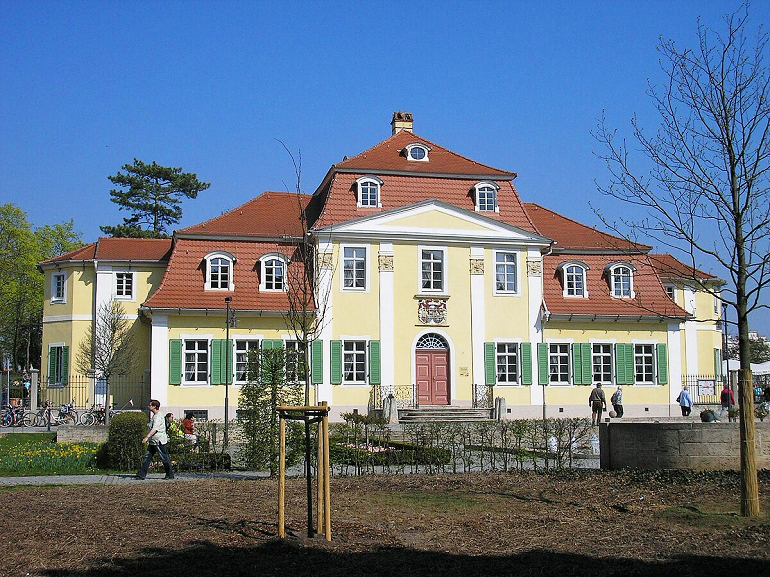
Built in 1751 in the rococo style, the Friederikenschlösschen was commissioned by Friederike von Sachsen-Weißenfels as her widow's residence. This baroque palace demonstrates the architectural tastes of the mid-18th century and represents an important example of rococo design in the region. The duchess not only constructed the residence but also designed the surrounding Schlösschenpark, which forms part of Bad Langensalza's extensive network of themed gardens and parks. The palace and its grounds contribute to the town's reputation as a centre for garden culture and landscape design.
Japanese Garden (Kofuku No Niwa)
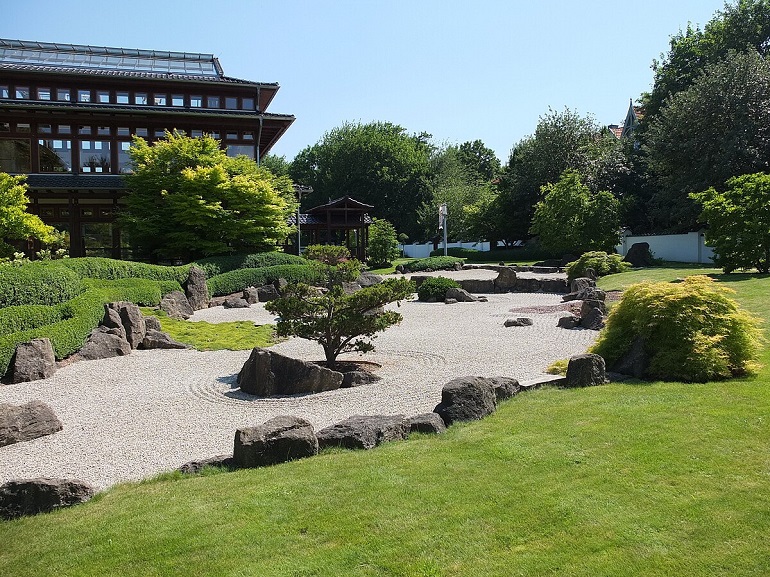
The Japanese Garden in Bad Langensalza represents a meticulously designed traditional landscape that offers visitors an authentic experience of Japanese garden artistry. The garden features gently flowing waterfalls, a contemplative square of sacred trees, and carefully raked gravel patterns that create wave-like formations emanating from dry water features. These decorative elements wind gracefully through the space, creating a tranquil environment for meditation and reflection. The garden hosts traditional Japanese cultural events throughout the year, including the cherry blossom festival Hanami, children's day celebrations known as Kodomo no Hi, and the star festival Tanabata.
Rose Garden (Rosengarten)
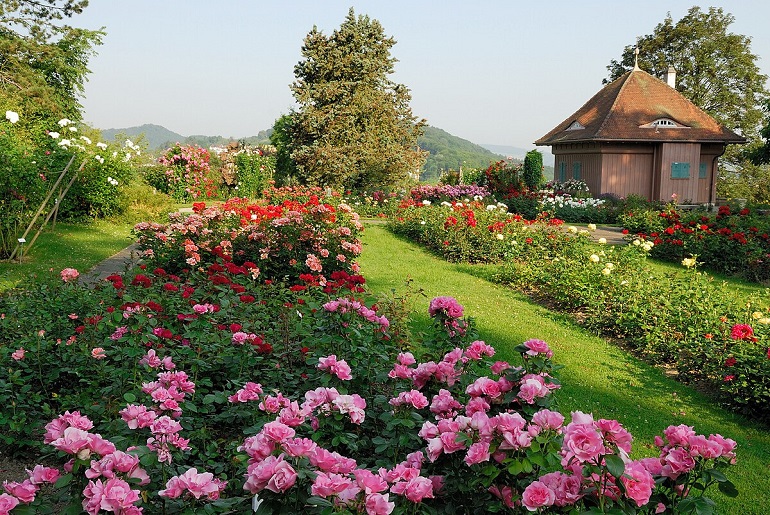
Established on an 18,000-square-metre former factory site, the Rose Garden showcases approximately 450 different rose varieties, making it one of Europe's most comprehensive rose collections. Of particular significance is that 91 of these varieties were specifically bred in Bad Langensalza itself, largely through the work of Anni Berger, Germany's only female rose breeder who resided in the town for many years. The garden reaches its peak blooming period from June through October, when visitors can witness the full spectrum of colours and fragrances from this extensive collection. The site demonstrates both horticultural excellence and the town's historical connection to rose cultivation and breeding.
Arboretum
Situated northwest of the old town, the Arboretum combines botanical education with historical preservation, housing both one of the town's ten themed gardens and remnants of the former city wall. The site provides an atmospheric starting point for exploring Bad Langensalza's garden heritage whilst also preserving important medieval defensive structures. Visitors can observe a diverse collection of trees and plants whilst walking among the historical fortifications that once protected the prosperous trading town. The Arboretum also features the Hanover Monument, which commemorates the historic Battle of Langensalza.
Friederiken Spa (Friederiken Therme)
The Friederiken Spa serves as the town's primary thermal bathing facility, featuring brine-enriched waters maintained at 32 degrees Celsius alongside comprehensive sauna and steam bath facilities. The spa complex offers various therapeutic treatments and massages, whilst a well within the thermal centre provides highly mineralised drinking water for health-promoting spa treatments. The facility represents Bad Langensalza's status as a spa town, capitalising on the natural sulphur springs discovered over 200 years ago and the brine springs found more recently. Adjacent to the spa stands a wellness hotel connected by a bathrobe corridor, allowing guests direct access to the thermal facilities.
Hainich National Park and Baumkronenpfad (Treetop Path)
Located approximately 10 kilometres from Bad Langensalza, the Hainich National Park forms part of the UNESCO World Natural Heritage site and features one of the region's most distinctive attractions, the Baumkronenpfad or treetop path. This 540-metre-long walkway leads visitors through the forest canopy up to 24 metres above ground level, culminating in a 44-metre-high observation tower that provides expansive views over the surrounding landscape. The path offers a unique perspective of the pristine woodland ecosystem, where visitors can observe the forest from above whilst experiencing the UNESCO-protected primeval forest environment. The national park itself encompasses dense deciduous forests where wildcats roam and various orchid species grow undisturbed beneath the tall trees.
Top Museums
Stadtmuseum im Augustinerkloster (City Museum in the Augustinian Monastery)
The Stadtmuseum im Augustinerkloster stands as the crown jewel of Bad Langensalza's museum scene. Housed within the atmospheric ruins of a 13th-century Augustinian hermitage, this museum offers a captivating journey through local history. The Augustinian monastery was founded in 1280 by Günther von Salza and operated until 1539 when it was dissolved during the Reformation.
The museum's highlight is the baroque altar cross by Johann Heinrich Köhler (1669-1736), known as the "Langensalzaer Goldjunge". This exquisite piece sparkles with precious stones, diamonds, gold, and silver, demonstrating the extraordinary craftsmanship and goldsmith artistry of the Baroque period. The exhibition also features musical accompaniments by Georg Neumark (1621-1681) and Johann Christian Kittel (1732-1809), alongside a traditional wooden chamber furnished with period pieces that transport visitors back to the 17th and 18th centuries.
One of the museum's most enchanting features is the church tower from the former monastery, which visitors can climb for panoramic views over the preserved monastery complex and Bad Langensalza's historic town centre. The museum originally opened on 27 June 1900 with an exhibition commemorating the Battle of Langensalza in 1866 and has since evolved into a comprehensive city museum covering diverse historical themes.
The building itself tells a story of religious heritage - Martin Luther visited this very monastery on 29 May 1516, a visit commemorated by a memorial plaque. The preserved ground-floor rooms of the former dormitory in the east wing provide an authentic glimpse into monastic life.
Thüringer Apothekenmuseum im "Haus Rosenthal" (Thuringian Pharmacy Museum)
The Thüringer Apothekenmuseum offers visitors a unique exploration into the fascinating world of historical pharmacy and medical practice. Located in the historic "Haus Rosenthal", this speciality museum provides insight into the evolution of pharmaceutical practices in the Thuringian region. The museum forms part of a combination ticket offering with the City Museum, allowing visitors to explore both institutions and gain a comprehensive understanding of Bad Langensalza's cultural heritage.
Haus Der Spuren (House of Traces)
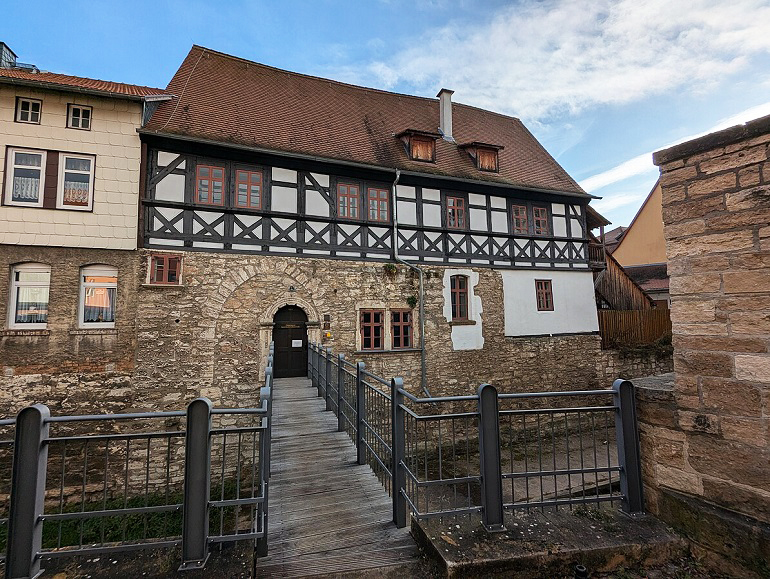
Haus Der Spuren presents another intriguing museum experience in Bad Langensalza. This institution focuses on preserving and presenting traces of local history and culture, though specific details about its collections and exhibitions require further exploration to provide visitors with the most current information about this cultural venue.
Galerie Schloss Dryburg
The Galerie Schloss Dryburg adds an artistic dimension to Bad Langensalza's museum landscape. This gallery space provides a platform for various artistic exhibitions and cultural presentations, contributing to the town's vibrant cultural scene alongside its historical museums.
Galerie im Rathaus Bad Langensalza
Housed within the town hall, the Galerie im Rathaus offers another venue for artistic and cultural exhibitions. This gallery provides a civic space for showcasing local and regional artistic talent whilst taking advantage of the historic setting of Bad Langensalza's town hall.
Local Cuisine
Local restaurants pride themselves on preparing classics such as Thuringian Rostbratwurst and Thuringian Klöße (potato dumplings), which are often served alongside tender meats, rich gravies, and seasonal vegetables. Another favourite is the Schnitzel, a crisp and golden escalope enjoyed by locals and visitors alike. The region boasts an array of cosy beer cellars and bistros where you can sample regional brews, including those from nearby Thuringian breweries. Make sure to round off your meal with a slice of Thuringian Mohnkuchen (poppy seed cake), perfect for an afternoon pause in one of the city’s charming cafés.
Getting There & Around
By train Bad Langensalza is well connected via rail and can be reached from major German cities such as Frankfurt and Berlin by taking a Deutsche Bahn train, often requiring a change at nearby stations like Gotha or Erfurt. Regular regional and ICE train services run daily, making rail travel efficient and comfortable for visitors.
By coach or bus Regional and long-distance bus services are available to Bad Langensalza, with direct routes linking the town to surrounding cities and villages, including Eisenach, Kassel and Mühlhausen. Local providers such as Salza Tours operate modern buses for both city and intercity connections, which are convenient for exploring the Unstrut-Hainich region.
By car Travelling by car offers flexibility and the opportunity to enjoy the picturesque scenery of Thuringia. Bad Langensalza is accessible via well-maintained roads from cities including Erfurt and Gotha, with real-time traffic updates available from navigation apps to ensure a smooth journey through the German countryside.


