



| Contents |
|---|
Introduction
Germany's third oldest city, Augsburg was founded on the orders of Roman Emperor Augustus in 15 BCE. The city developed into an important centre during the Middle Ages and flourished during the Renaissance period, being notably home to wealthy merchant families like the Welser and Fugger, nicknamed the bankers of Europe. In 1555, Peace of Augsburg officially ended the religious struggle between Catholics and Protestants (for a while).
Modern Augsburg retains a wealth of Renaissance and Baroque architecture, such as the Fuggerei, the world's oldest social housing complex still in use, and its role in the trade networks of the Renaissance period. Notable landmarks include the Augsburg Cathedral, the Town Hall with its renowned Golden Hall, and the canals and water management system recognised as a UNESCO World Heritage site.
Interesting Facts about Augsburg
- The city treasures its well-preserved Altstadt (old town), featuring outstanding Renaissance and Rococo architecture.
- Augsburg's Water Management System, with its medieval canals and water towers, was designated a UNESCO World Heritage Site in 2019.
- The Fuggerei in Augsburg is the oldest social housing complex in the world, established in 1516 by the influential Fugger family, and is still inhabited today.
- Leopold Mozart, father of the famed composer Wolfgang Amadeus Mozart, was born in Augsburg, and the city holds an annual German Mozart Festival in his honour.
- Bertolt Brecht, the renowned poet and playwright, was born in Augsburg, and his birthplace functions as a museum.
- Augsburg flourished as a Free Imperial City from 1276 to 1803 and played a significant role in the birth of European banking, thanks to families like the Fuggers and Welsers.
- The landmark Augsburg Confession of 1530, pivotal to the Protestant Reformation, was presented at the city’s Diet.
- More than 500 bridges cross Augsburg’s many canals, making it a city with more bridges than Venice.
- Augsburg was the first German city to win the Entente Florale award for Europe’s greenest and most liveable city in 1997.
- The city suffered heavy damage during the Second World War but was meticulously rebuilt, maintaining much of its historical charm.
- Augsburg is the third-largest city in Bavaria and the capital of the Swabia region, home to about 300,000 residents.
- The impressive Augsburg Town Hall (Rathaus) is considered an outstanding example of secular Renaissance architecture in northern Europe.
- The city was a key point on the Romantic Road, a celebrated tourist route connecting medieval towns across southern Germany.
- The name "Augsburg" is pronounced with an 'ow' as in 'now', not 'aw' as in 'awful', a common mistake among visitors.

History
Founded in 15 BCE by Emperor Augustus as Augusta Vindelicorum, meaning "the Augustan city of the Vindelici," the settlement was established at the strategic confluence of the Alpine rivers Lech and Wertach. By 120 CE, Augsburg had become the administrative capital of the Roman province of Raetia. The city's Roman heritage is evident today in its main thoroughfare, Maximilianstraße, which follows the ancient Roman Via Claudia that led to Verona. After the fall of the Roman Empire, Augsburg faced numerous challenges, being sacked by the Huns in the fifth century, by Charlemagne in 788, and later by Welf I, Duke of Bavaria in the 11th century. Despite these setbacks, the city remained important, becoming the seat of a bishopric by 739 CE.
The medieval and Renaissance periods marked Augsburg's golden age as a Free Imperial City, a status granted on 9 March 1276. This independence from its former overlord, the Prince-Bishop of Augsburg, lasted until 1803 and allowed the city to flourish as a major European trading centre. Augsburg's strategic location at the intersection of vital trade routes to Italy facilitated its prosperity, with the city producing large quantities of woven goods, cloth, and textiles. The 15th and 16th centuries witnessed Augsburg's transformation into a major banking and commercial centre, dominated by two patrician families that became legendary across Europe: the Fuggers and the Welsers. The Fugger family, in particular, left an indelible mark on the city, donating the Fuggerei in 1516 - the world's oldest housing settlement for the poor, which remains in use today. The city's wealth attracted renowned artists, including Hans Holbein the Elder, Hans Holbein the Younger, and Hans Burgkmair the Elder, all natives of Augsburg.
Augsburg's religious and political significance reached its zenith during the Reformation era, hosting pivotal events that shaped European history. In 1530, the Augsburg Confession was presented to Holy Roman Emperor Charles V at the Diet of Augsburg, marking a crucial moment in Protestant history. Twenty-five years later, the Peace of Augsburg in 1555 established legal protections for religious minorities in imperial cities, creating a unique mixed Catholic-Protestant city council that presided over a majority Protestant population. The city's influence extended into the 17th century with the formation of the League of Augsburg in 1686, which opposed the expansionist policies of Louis XIV of France. However, the devastating Thirty Years' War (1618-1648) marked a turning point in Augsburg's fortunes, with the city's population more than halving and its economic power significantly diminished. The final chapter of Augsburg's status as a Free Imperial City ended on 4 March 1806, when it was incorporated into the Kingdom of Bavaria following mediatisation.
Main Attractions
Rathausplatz (Town Hall Square)
Rathausplatz Augsburg is the central cobbled square of the city, framed by historic buildings and lined with restaurants and shops. It serves as the focal point for civic events and markets, and its pedestrianised layout offers unobstructed views of the adjacent Town Hall and Perlachturm. The square’s paving stones follow patterns dating back to the early modern period, and the open space frequently hosts seasonal fairs and cultural performances.
Augsburg Town Hall
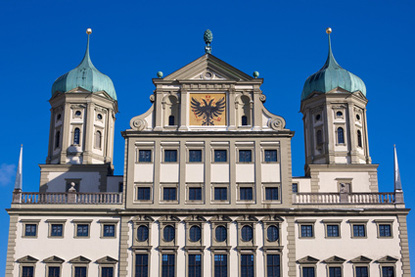
Augsburg Town Hall stands on the eastern side of Rathausplatz and is regarded as one of the finest examples of Renaissance architecture north of the Alps. Designed by Elias Holl and completed in 1620, it was the first building in the world to exceed six storeys and features a façade adorned with the Imperial Eagle and a giant copper pine cone. The building’s exterior stonework exhibits the symmetry and classical proportions inspired by Florentine models.

Perlachturm (Perlach Tower)
Perlachturm towers above the square with its distinctive onion dome, originally constructed as a wooden watchtower in the 10th century. Successive extensions culminated in the present 70-metre height reached by 1616 under the direction of Elias Holl, who added the lantern-shaped spire. Visitors may climb 258 steps to reach the observation platform, offering panoramic views of the old town and the distant Alps.
Augustusbrunnen
Augustusbrunnen dates to the early 1500s and commemorates Emperor Augustus, the city’s founder. Its bronze statue of the emperor stands atop a richly carved stone column, which is encircled by smaller figures symbolising the four seasons. The fountain occupies a central position in Rathausplatz and is protected as a heritage monument.
Other Landmarks
Basilica of St. Ulrich and Afra
Basilica of St. Ulrich and Afra is located at the southern end of Maximilianstraße and exemplifies Gothic architecture with later Baroque elements. Founded on 15th-century foundations, the church features an onion-dome bell tower rising to 305 feet, visible across the city. The interior houses high altars of Renaissance design and ornate stucco work from the 18th century.

Augsburg Cathedral
Augsburg Cathedral combines Romanesque and Gothic architectural styles, with origins dating to the 11th century. The twin square towers fronting the cathedral are crowned by ogee arches, and the nave is illuminated by a series of 12th-century stained-glass windows, considered among the finest in Europe for their vivid colours and intricate biblical scenes.

Neptunbrunnen
Neptunbrunnen is a 16th-century fountain situated near the city centre, distinguished by its central bronze figure of Neptune wielding a trident. The fountain’s sculptural group sits on a stone pedestal surrounded by water basins, and its Renaissance-era ornamentation includes reliefs of maritime motifs representing the Lech and Wertach rivers.
Augsburg Arsenal
Augsburg Arsenal is a former Baroque arsenal built in 1607, now repurposed as an exhibition venue and beer garden. The building’s exterior retains its original sandstone façade, featuring pilasters and arched openings. Its conversion preserves the historic ambience while providing a venue for cultural events and local food and drink.
Parks & Gardens
Zoo Augsburg
Augsburg Zoo, founded in 1937, is set within a 22-hectare park and is home to approximately 1,600 animals from around 300 species. The zoo is organized into several themed areas that replicate natural habitats. The "Africa Panorama" allows visitors to see giraffes, zebras, and white rhinos in a savannah-like setting. The zoo also features a South American House, a dedicated enclosure for big cats like Sumatran tigers and lions, and a reptile house with pythons and lizards. A particular highlight is the walk-in enclosure for ring-tailed lemurs, where the animals can move freely among visitors. The zoo is actively involved in over 20 international breeding programmes for endangered species and supports global wildlife protection initiatives. For younger visitors, there is an adventure playground and a petting zoo with domestic animals. The zoo also offers educational guided tours and hosts seasonal events, such as late-night "Zoo Nights" during the summer.
Augsburg Botanical Garden
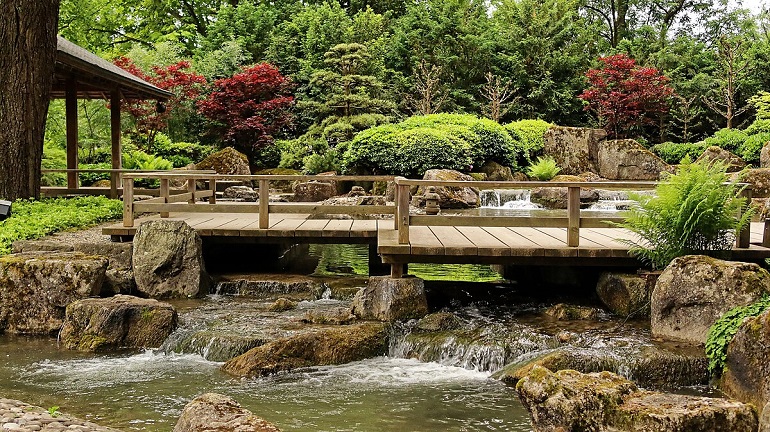
The Augsburg Botanical Garden, established in 1936 as a municipal nursery, spans ten hectares and offers a diverse journey through the world's flora. It showcases over 3,100 species and varieties of plants, including perennials, wild herbs, grasses, and ferns. Among its notable attractions is a large Japanese garden, meticulously planned by landscape architect Yoshikuni Araki, which provides a tranquil oasis with its interplay of stone, water, and plants. Other themed areas include a Roman garden that pays homage to Augsburg's heritage with plants from that era, a medicinal and aromatic plant garden, and a fragrant rose garden with 280 different varieties. A glasshouse provides a home for around 1,200 species of tropical and subtropical plants, such as cacti, succulents, and carnivorous plants, maintaining a warm and humid environment year-round. The garden also hosts various events, from guided tours and lectures on ecology to cultural happenings like concerts and an annual butterfly exhibition.
Hofgarten
Hofgarten adjoins the city centre and is celebrated for its formal layout of flowerbeds, gravel walkways and classical statues. The park’s manicured lawns and shaded benches provide tranquil settings for reading or relaxation, while its historic pathways intersect at a central fountain beneath mature lime trees.
Sheridanpark
Sheridanpark offers a multifunctional green space close to the city centre, equipped with a skateboarding area and courts for basketball and volleyball. The park’s gently sloping lawns are popular for informal hikes and picnics, and its playgrounds feature modern equipment set beneath mature trees providing shade during summer months.
Wittelsbach Park
Wittelsbach Park comprises an extensive lawn area intended for open-air recreation, bordered by mature plane and chestnut trees. The site includes carefully maintained flowerbeds and ornamental hedges, alongside play structures such as slides and swings for children. The park’s flat terrain and wide paths make it suitable for casual sports and family gatherings.
Top Museums
Industry & Technology
Augsburg textile and industry museum (tim)
Set within a former worsted spinning mill, this interactive museum brings the city's textile legacy and Bavaria’s industrial history to life. Its displays trace the journey from raw material to designer fashion, featuring a vast collection of machinery, personal stories from industry workers, and a sample book boasting over a million fabric designs. Engaging for visitors of all ages, tim seamlessly links Augsburg’s economic growth to global trade and technological innovation.
MAN Museum Augsburg
This museum is a tribute to Augsburg's industrial prowess, charting the technological advances of the MAN Group from printing presses and the world’s first diesel engine to trucks and cutting-edge turbines. The impressive collection includes early commercial vehicles and engineering marvels, offering insight into both local and global industrial development, especially attracting technology and engineering enthusiasts.
Augsburg Railway Park (Bahnpark Augsburg)
Occupying a historic railway depot, this dynamic museum brings the golden age of rail travel to life with its ever-expanding collection of classic locomotives from across Europe. From hands-on workshops and jazz events to exploring the Europa Roundhouse filled with historic engines, the park is a haven for railway buffs and families eager for immersive and entertaining learning.
Art & Culture
Augsburger Puppenkiste
Renowned across Germany, this marionette theatre and museum captures over seventy years of puppet artistry. Beyond witnessing enchanting performances, visitors can marvel at an endearing and sometimes quirky menagerie of handcrafted marionettes and stage props, making it a cherished destination for families, nostalgic adults, and anyone keen to experience a living piece of German television and theatre history.
Glaspalast Augsburg (Glass Palace)
This former cotton mill is now a cultural hub, notable for its striking industrial architecture and as home to the H2 Centre for Contemporary Art. The museum hosts a rotating programme of exhibitions featuring international and local artists, offering art enthusiasts a stimulating environment where history and cutting-edge creativity intersect.
Diözesanmuseum St. Afra (Diocesan Museum of St. Afra)
Located beside the cathedral, this museum spans seventeen centuries of ecclesiastical and artistic history, boasting treasures such as medieval textiles, goldsmithery, and the famous Ottonian bronze portal. It’s an essential stop for admirers of sacred art and those interested in Augsburg’s religious and artistic evolution.
History & Religion
Römisches Museum Augsburg (Roman Museum Augsburg)
While awaiting a new permanent venue, this museum’s interim exhibition in the Zeughaus displays a remarkable trove of Roman artefacts, from coins and jewellery to military relics and household items. Its focus on Augusta Vindelicum—the Roman forerunner of Augsburg—immerses visitors in the city's ancient past, making it essential for lovers of archaeology and ancient history.
Das Museum Lutherstiege
Within St. Anna’s Church, this thoughtfully curated museum explores Martin Luther's time in Augsburg and his pivotal role in the Reformation. Its immersive displays, historical artefacts, and multimedia installations give visitors a profound sense of the religious and societal transformations that shaped both the city and wider Europe.
Local Cuisine
Visitors to Augsburg can savour classics such as Weißwurst (white sausage) accompanied by a soft Brezen (pretzel), or try Leberkäse, a tasty meatloaf often enjoyed as a breakfast treat. In traditional beer gardens, you’ll find Wurstsalat (sausage salad) alongside roasted meats and regional cheeses, perfect for pairing with a crisp, locally brewed beer. Don’t miss the iconic Zwetschgendatschi, a plum tart distinctive to Augsburg, offering the perfect sweet finish to a meal. The bustling Stadtmarkt is ideal for sampling these regional delights, ensuring an authentic taste of Augsburg’s culinary heritage.
Getting There & Around
By train Augsburg is well connected by rail, with frequent services operated by Deutsche Bahn. Travellers can enjoy fast and comfortable trains, often with high-speed ICE connections from major cities such as Munich, Stuttgart, and even international cities like Brussels; trains typically arrive at Augsburg Hauptbahnhof, conveniently located near the city centre.
By coach or bus Several coach companies, including FlixBus, run regular services to Augsburg from many European cities. The city's main bus station is easy to access, and coach travel is suitable for those preferring a direct and convenient route, particularly from nearby hubs such as Munich, Stuttgart, or even from further afield like Brussels, Luxembourg, and Antwerp.
By car Augsburg can be reached via the A8 motorway (from Munich or Stuttgart), with clear signage guiding drivers to key destinations in the city. From other directions, the B17 also provides an efficient approach; ample parking and electric vehicle charging are available near central attractions.


