



| Contents |
|---|

Introduction
Braunschweig (pop. 252,000), known in English as Brunswick, is Lower Saxony’s second-largest city. It is a pleasant, if a bit hotchpotch, historic city that played an important role in medieval Germany. The former Hanseatic city is shaped by the legacy of Henry the Lion, whose 12th-century influence endures at Dankwarderode Castle and St Blasii Cathedral. The compact core is encircled by the Oker river, with pedestrian-friendly streets linking key sights, museums such as the Herzog Anton Ulrich Museum, and the historic Magniviertel quarter of timber-framed houses. The ducal palace, entirely rebuilt and rehabilitated as a shopping centre in 2007, is the largest neoclassical palace in Germany.
Interesting Facts about Braunschweig
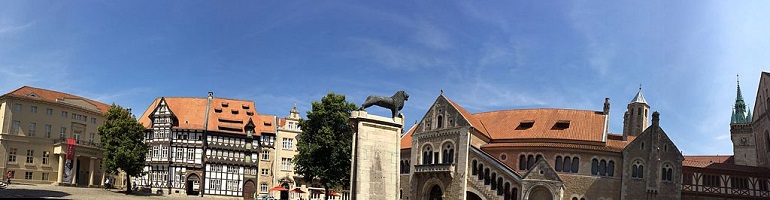
- The city’s emblem is the bronze Brunswick Lion, cast in 1166, which stands on Burgplatz beside the Romanesque cathedral of St Blasius.
- Henry the Lion expanded and chartered the city in the 12th century, shaping it into a leading medieval power.
- Braunschweig was a prominent member of the Hanseatic League in the 13th century.
- The city has exceptionally high research-and-development intensity, ranked the highest R&D expenditure-to-GDP ratio in the EU in 2019.
- TU Braunschweig is among Germany’s oldest technical universities and anchors the city’s strong research profile.
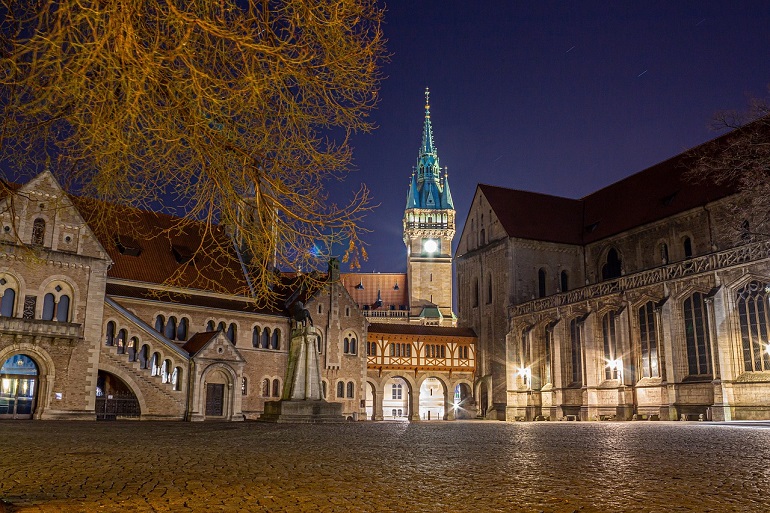
- The Burgplatz ensemble includes the cathedral, Dankwarderode Castle, and historic guild houses, reflecting centuries of civic life.
- Braunschweig served as the capital of the Duchy of Brunswick until 1918 and later became part of Lower Saxony in 1946.
- The Richmond Palace (Schloss Richmond) from the 1760s features an English landscape garden on the Oker riverbanks.
- The city hosts the International Film Festival Braunschweig, regarded as the oldest film festival in Lower Saxony.
- The Magniviertel quarter preserves cobbled lanes and half-timbered charm around the 13th-century Magnikirche.
- The Liberei near Andreaskirche is considered Germany’s oldest surviving freestanding library building.
- Braunschweig Palace’s façade was reconstructed, reopening in 2007 to house a museum, library, and shopping centre.
- St Martin’s, St Catherine’s, St Andrew’s, and St Giles’ churches chart Gothic and Romanesque layers across the old town.
History
Medieval Origins and Rise to Power
Braunschweig's history traces back to the early medieval period, though its exact founding remains shrouded in legend. According to tradition, the city emerged around 861 from the merger of two settlements: one established by Bruno (or Bruno II), a Saxon count, and another near the legendary Count Dankward's castle, known as Dankwarderode. The name 'Brunswik' derives from Bruno's name combined with the Low German word 'wik', meaning a resting place for merchants, highlighting the city's strategic position at a ford across the River Oker. The city was first documented in 1031 as 'Brunesguik'.
Braunschweig's transformation into a major power began in the 12th century when Henry the Lion, Duke of Saxony, chartered and significantly improved the settlement, making it his ducal capital. Henry constructed the impressive Dankwarderode Castle as his residence, built the Romanesque Cathedral of St Blasius, and erected the famous bronze Lion Monument in 1166 as his personal emblem. Under Henry's rule, the city flourished as both a political centre and through his marriage to Matilda, daughter of England's King Henry II, it gained important international connections. Henry's struggle with Emperor Frederick I Barbarossa led to Henry losing his titles as Duke of Saxony and Duke of Bavaria and his being sent into exile. In 1235, as part of the reconciliation between the Hohenstaufen and Welf families, Henry's grandson, Otto the Child, was made a vassal of the emperor and conferred the new title of Duke of Brunswick-Lüneburg. The towns of Lüneburg and Brunswick remained in the overall possession of the House of Welf until 1512 and 1671 respectively.
Hanseatic League and Commercial Prosperity
During the 13th century, Braunschweig became a leading member of the Hanseatic League, establishing itself as one of northern Europe's most significant economic and political centres. The city's merchants engaged in extensive trade networks and formed numerous alliances within the Saxon League of Towns, eventually becoming a suburb of the Saxon quarter of the Hanseatic League in 1494. By 1600, Braunschweig had grown to become Germany's seventh-largest city, its prosperity evidenced by magnificent surviving structures including the 14th-15th century town hall, the Renaissance Gewandhaus (Cloth Merchants' Hall), and numerous medieval churches such as St Martin's, St Katherine's, St Andreas's, and St Aegidien's. The city remained largely autonomous, governed by powerful merchant guilds and citizens rather than its nominal rulers, who were forced to relocate from the city in 1432. This independence lasted until 1671, when Braunschweig finally lost its status as a free Hanseatic city, though representatives had participated in the League's final convention in Lübeck in 1669.
Modern Era and Integration into Lower Saxony
The 18th century marked a cultural renaissance for Braunschweig, with rulers like Charles I establishing the Collegium Carolinum in 1745, which later became the city's Technical University. The Napoleonic Wars brought significant upheaval, as French forces occupied the city from 1806, incorporating it into the Kingdom of Westphalia. Following Napoleon's defeat, Braunschweig was restored as the independent Duchy of Brunswick in 1814, later joining the German Empire in 1871. The city endured popular uprisings in 1830 that forced Duke Charles II into permanent exile, leading to more progressive governance under his brother William VIII. World War II devastated Braunschweig, with a major Allied air raid on 15 October 1944 destroying most of the historic old town, reducing 800 timber-framed houses to merely 100 survivors, though remarkably the cathedral remained standing. After suffering heavy wartime damage, Allied forces captured the city in 1945, and following post-war reconstruction, the former duchy was dissolved and Braunschweig was incorporated into the newly created Land of Lower Saxony in 1946.
Main Attractions
Burgplatz and Brunswick Lion
The historic Burgplatz forms the ceremonial heart of Braunschweig and is home to the city’s emblem, the Brunswick Lion. Cast in bronze in 1166, the statue symbolises the power of Henry the Lion and has long been synonymous with the city’s identity. The square links several major medieval buildings and retains an authentic atmosphere; the original statue is preserved indoors while a faithful replica stands in the square.
Dankwarderode Castle
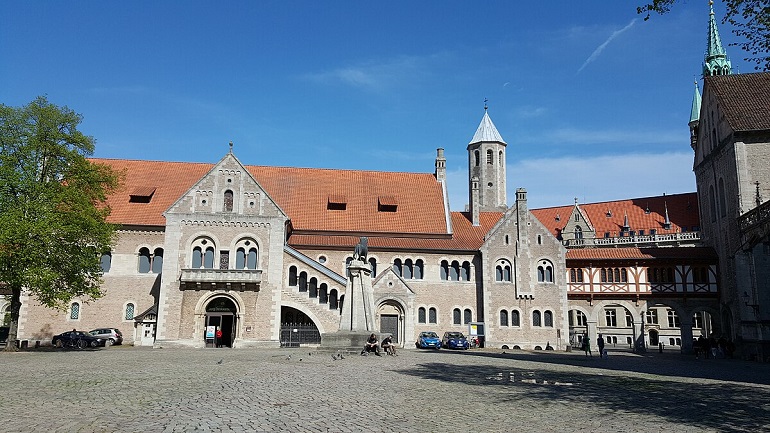
Standing next to the cathedral on Burgplatz, Dankwarderode Castle is a reconstruction of Henry the Lion’s 12th-century palace. Although part of it houses museum collections, its exterior alone illustrates the former might of the Welf dynasty and offers insight into medieval court life. The castle’s commanding position overlooking the square underlines its historic role as the ducal residence.
New Town Hall (Rathaus)
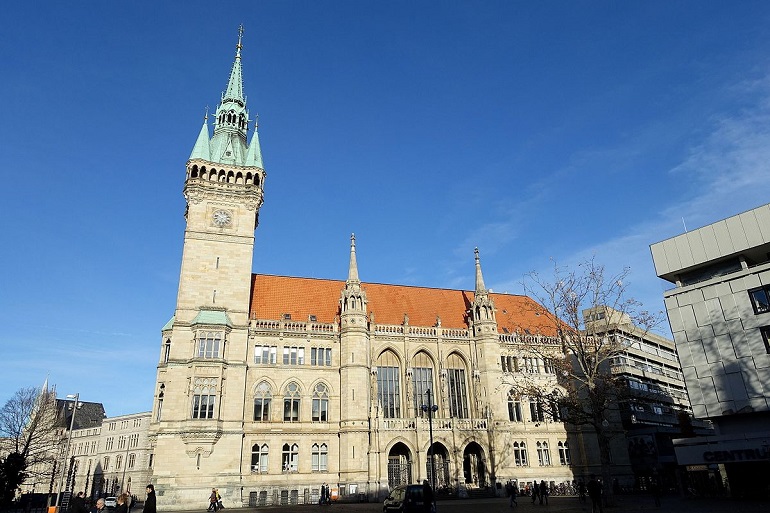
The neo-Gothic New Town Hall, opened in 1900 opposite the cathedral, features an elegant façade and a 61-metre tower. Visitors can ascend 161 steps to a viewing platform for sweeping views over the Old Town. Decorative details such as door handles shaped like Brunswick Lions underline the building’s civic symbolism, and weekday tours provide access to its historic interiors.
Old Town Market Square (Altstadtmarkt)
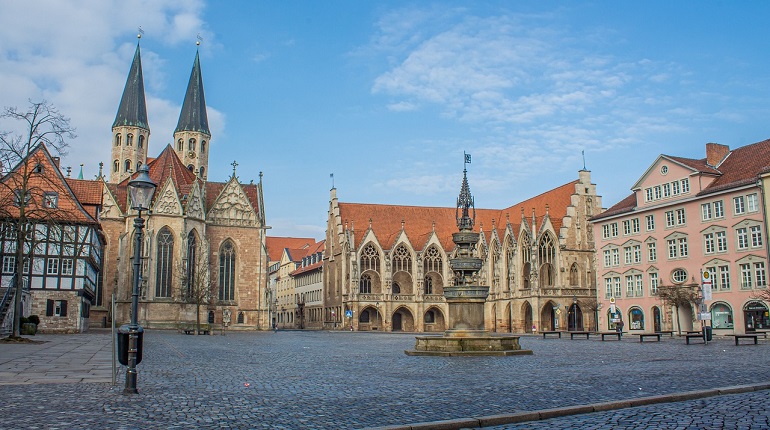
The Old Town Market Square has served as Braunschweig’s commercial hub since the 11th century and showcases outstanding architecture. Its centrepiece is the Gothic Old Town Hall, built between the 13th and 15th centuries, which is particularly striking when illuminated at night. Surrounding the square are St Martin’s Church, the Renaissance Gewandhaus (Cloth Hall) and the 17th-century Stechinelli-Haus, each contributing to the square’s layered history.
Braunschweiger Dom (Brunswick Cathedral)
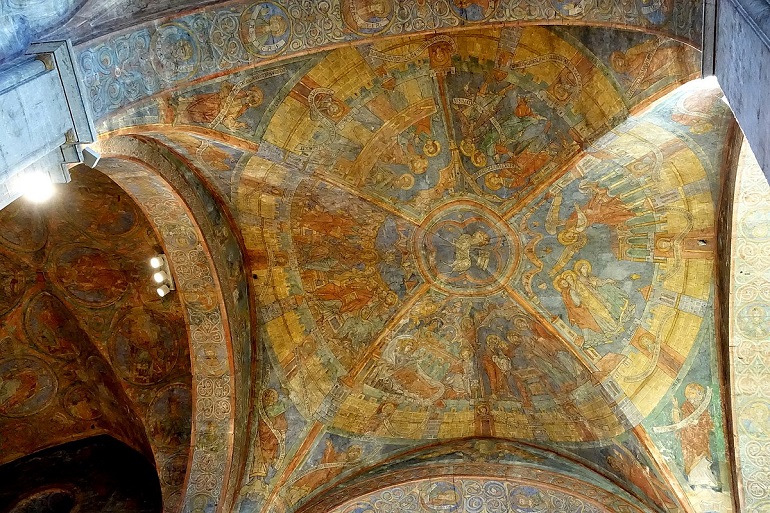
Braunschweig Cathedral is the city’s most significant religious and historical monument, located in the heart of the historic centre. Dating to the 12th century, it contains the ornate tombs of Henry the Lion and his wife Matilda. The cathedral’s twin-tower façade frames an interior rich in Romanesque sculpture, medieval artwork and religious relics, and it remains an active place of worship open to visitors throughout the year.
Magniviertel Quarter
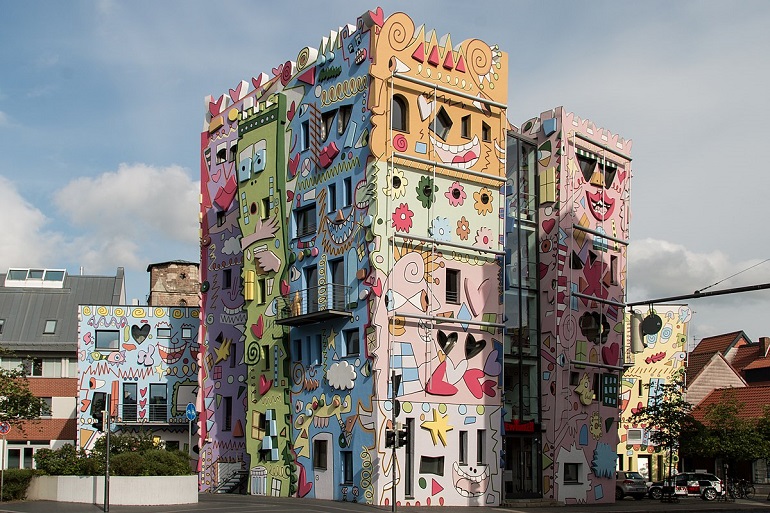
The cobblestoned Magniviertel is one of the city’s most picturesque historic districts, centred on St Magnus’ Church, consecrated in 1031 and the city’s oldest building. The quarter is lined with lovingly restored half-timbered houses that evoke a medieval atmosphere and also features the brightly painted Happy Rizzi House, a pop-art landmark whose vivid façade contrasts boldly with its historic surroundings.
Hagenmarkt
Hagenmarkt is another historic market square, dominated by St Catherine’s Church, founded in the 12th century and noted for an organ that incorporates Baroque pipes from 1623. At its centre stands the Heinrichsbrunnen fountain, erected in 1874 to honour Henry the Lion. The square is framed by well-preserved heritage buildings that reflect its former commercial importance.
Staatstheater Braunschweig
Founded in 1690, the State Theatre is notable as the venue where Goethe’s Faust premiered in the early 19th century. The building combines historical theatre architecture with modern facilities and continues to stage opera, drama, dance and concerts, maintaining its status as a cultural focal point for the city.
Botanical Garden of the University of Braunschweig
Established in 1840 alongside the River Oker, the university’s Botanical Garden houses extensive collections of native and exotic plants. Its Baroque section, complete with a stream, offers a tranquil setting, while the garden as a whole serves both as a research facility and a welcome green retreat for visitors.
Riddagshausen Abbey
In the eastern Riddagshausen district, this former Cistercian monastery was founded in 1145 and dissolved in 1809. The remaining church and gatehouse display characteristic Cistercian architecture and provide insight into monastic life. The abbey adjoins the Riddagshausen Nature Reserve, making it an ideal starting point for walks through the surrounding countryside.
Top Museums
Herzog Anton Ulrich-Museum (HAUM)
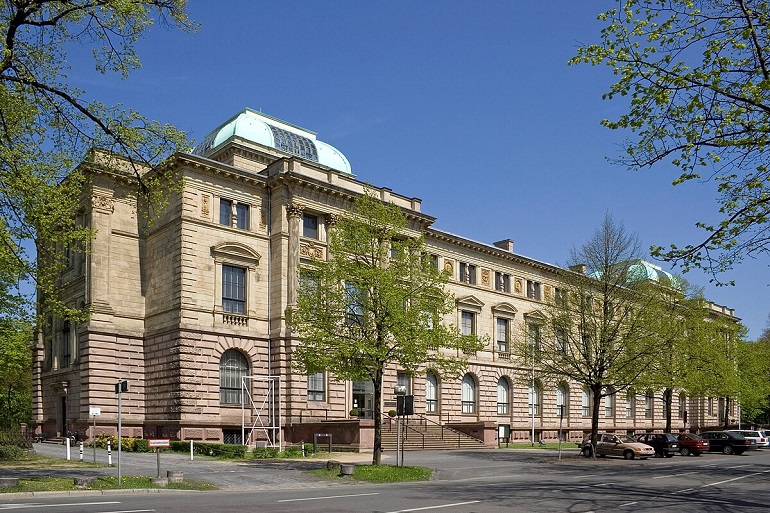
One of Europe’s oldest art museums, HAUM is a treasure-house of Old Masters and refined decorative arts. Expect a considered, quietly magnificent journey from antiquity to the 18th century, anchored by works attributed to Cranach, Rubens, Rembrandt and Vermeer. Gallery spaces are elegant rather than ostentatious, inviting slow looking: portraits that reward attention, Dutch interiors with luminous stillness, and religious tableaux that announce the city’s old ducal ambitions. Beyond painting, HAUM excels in applied arts—from Italian majolica and European porcelain to East Asian objects—revealing the courtly appetite for global luxury. A substantial prints and drawings cabinet broadens the scope for connoisseurs, while rotating displays keep the historic core feeling fresh. The tone is scholarly but welcoming; it’s the city’s grand salon of art history.
Dankwarderode Castle (HAUM’s medieval site)
A short stroll from Burgplatz, this castle space is the atmospheric counterpart to HAUM’s main galleries. Inside, medieval metalwork, sculpture and liturgical treasures sit within spare, vaulted rooms that amplify their gravitas. The famed Braunschweig Lion—emblem of ducal authority—sets the tenor: power, piety and craftsmanship in dialogue. Pieces from the Guelph Treasure and textiles associated with imperial figures evoke a Europe knit together by dynastic marriage, pilgrimage and trade. It’s compact but resonant, ideal for visitors keen on the tactile aura of the Middle Ages rather than encyclopaedic breadth.
Städtisches Museum Braunschweig (Municipal Museum)
This is Braunschweig’s memory palace: a broad cultural-history museum tracing the city’s life from early settlement through merchant prosperity, industrial expansion and 20th-century upheaval to contemporary reinvention. Displays typically move chronologically, weaving material culture—guild artefacts, domestic interiors, posters, photographs—into stories of civic identity and everyday life. The museum’s forte is context: how a Hanseatic trading hub evolved into a centre of engineering and research, and how citizens shaped urban space. While less theatrical than some city museums, it offers depth, coherence and a humane perspective on how cities change. Expect inclusive narratives and well-edited thematic sections on architecture, media, and social movements.
Braunschweigisches Landesmuseum (State Museum of the Brunswick Region)
Dedicated to the wider region’s long arc—from prehistory to the present—this museum explores how landscapes, technologies and communities forged the Brunswick identity. Collections span archaeology, folk culture, trade, craftsmanship, and political history, often spread across multiple sites. The experience is one of breadth and texture: prehistoric finds that anchor the deep past; medieval and early modern artefacts tied to law, religion and markets; and modern objects conveying rural traditions alongside industrial modernity. Where it shines is in connecting micro-histories—tools, clothing, ceremonial pieces—to macro changes across 500,000 years. It’s the museum to choose for a panoramic sense of place beyond the city walls.
Staatliches Naturhistorisches Museum (State Natural History Museum)
Founded in the Enlightenment era, the museum retains the charm of a classical natural history collection while engaging with contemporary science. Expect taxidermy with character, mineral and fossil cases, and dioramas that balance wonder with pedagogy. For families and curious adults alike, highlights often include regional biodiversity, deep time exhibits, and hands-on or media elements that frame nature as both intricate and fragile. The tone is curious and observant rather than sensational, with thoughtful labelling and an emphasis on discovery. It’s a calming counterpoint to art and history—a place to recalibrate the eye from human time to geological and ecological scales.
Local Cuisine
A speciality not to be missed is Braunschweiger Mettwurst, a spiced, spreadable smoked sausage that has been enjoyed for centuries and is often served with fresh bread. Another local favourite is Braunkohl mit Bregenwurst, a winter dish featuring kale stewed with a robust sausage, providing the perfect warming meal on colder days. Those with a sweet tooth should try Braunschweiger Mumme, a malt-based syrup originally brewed as a beer concentrate, now enjoyed in cakes, sauces, or even chocolates. These traditional foods capture the city’s rich history and make for a satisfying introduction to the flavours of Braunschweig.
Getting There
By train Braunschweig is well connected to Germany’s rail network, with regular Intercity and regional services stopping at Braunschweig Hauptbahnhof, making it easy to reach from major cities such as Berlin, Hanover, and Frankfurt.
By coach or bus Long-distance coaches also serve Braunschweig, linking it with numerous German and European destinations via the central bus station near the main railway station, offering a convenient choice for passengers who prefer road travel.
By car The city is easily accessible by motorway, with the A2 connecting it to Berlin and the Ruhr area, and the A39 linking it southwards towards Salzgitter and Wolfsburg, ensuring straightforward access for drivers.


