



| Contents |
|---|
Introduction
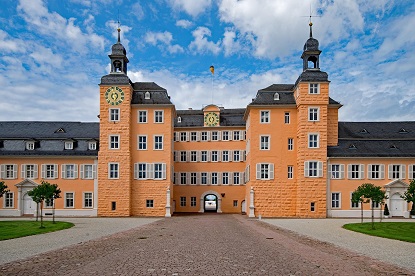
Schwetzingen Palace is an 18th-century baroque summer residence located near Heidelberg, originally built as a moated castle in 1350 and transformed into its current form from 1697 onwards under the Electors Palatine. The palace served as the summer residence for Prince Elector Carl Theodor from 1742 to 1799, during which time it reached its architectural and cultural zenith with the addition of the palace theatre in 1752—Europe's first theatre with galleries and now the oldest surviving example. The complex encompasses over 72 hectares of meticulously preserved gardens that blend French baroque design with later English landscape elements, featuring more than 100 sculptures and exotic architectural follies including a decorative mosque, the Temple of Apollo, and an Italian-style bath house. Today, visitors can explore approximately 30 palace rooms containing original 18th and early 19th-century furnishings, while the palace theatre continues to host performances as part of the annual Schwetzingen Festival, maintaining the site's role as both a significant cultural monument and active venue for the arts.
Interesting Facts about Schwetzingen Palace
- First mentioned in 1350 as a medieval moated fort, Schwetzingen later evolved into an electoral residence after multiple destructions and rebuilds through the Thirty Years’ War and the War of the Palatine Succession.
- Elector Johann Wilhelm began giving the palace its present form from 1697, adding two wings that set the stage for its later prominence as a summer residence.
- The complex reached its zenith under Elector Carl Theodor in the mid-18th century, when he commissioned master designers to create renowned formal and landscape gardens.
- Its celebrated gardens uniquely combine a symmetrical Baroque core with one of Germany’s earliest English-style landscape parks, the Arborium Theodoricum.
- More than 100 sculptures punctuate the grounds, interspersed with whimsical garden buildings that enrich the strollable landscape.
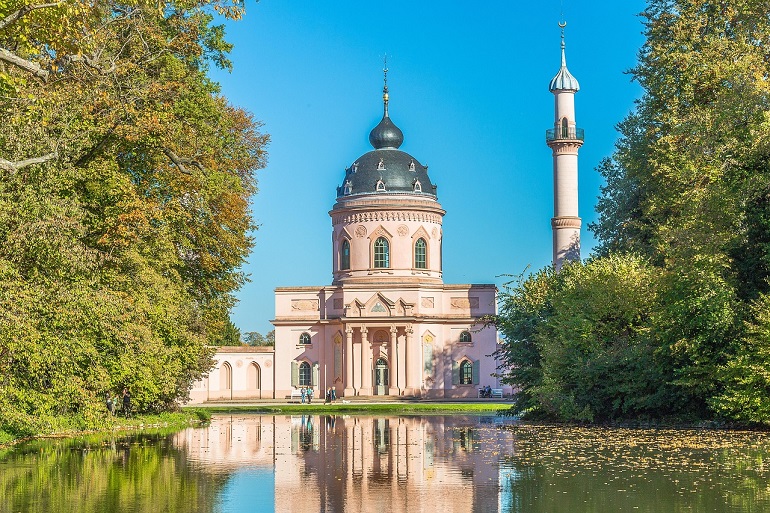
- The Turkish Garden’s mosque, designed by Nicolas de Pigage, is the largest decorative mosque structure in a German garden and served no religious function.
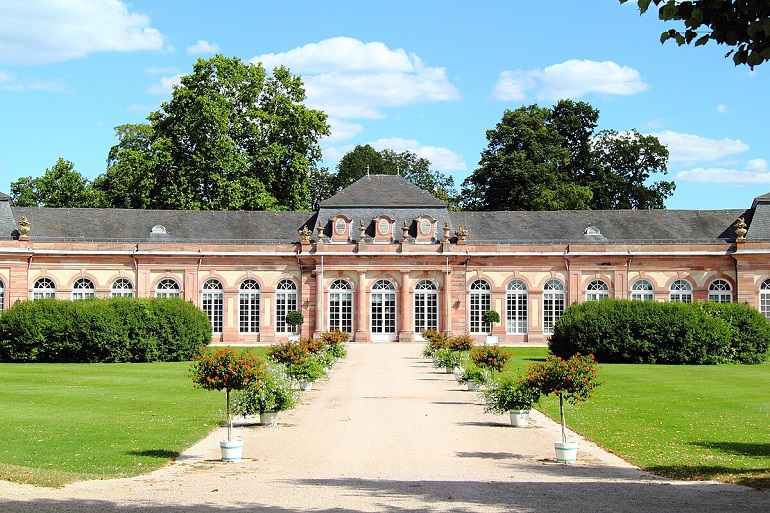
- The palace’s “Zirkel” comprises two semi-circular, one-storey wings flanking the main block—a distinctive layout sometimes likened to a mini Versailles.
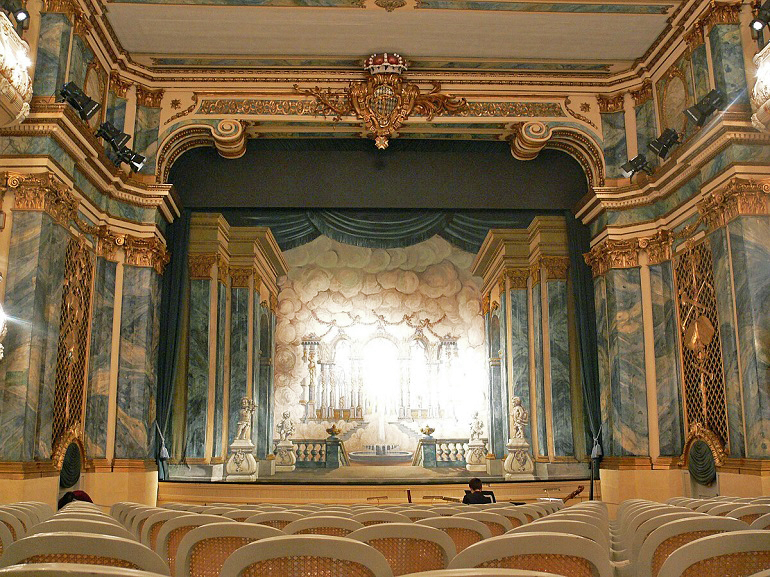
- The palace theatre, opened in 1753 and long famed for its acoustics, is considered the oldest surviving European theatre with tiers but no boxes and remains in use for performances.
- Apollo’s Temple, the Bath House modelled on an Italian villa, and picturesque artificial ruins add classical and romantic flourishes to the garden scenery.
- Water features—springs, cascades, and fountains—thread the Baroque parterre and the later landscape park, creating a continuous soundscape for garden promenades.

History
Origins and Early Development
Schwetzingen Palace traces its origins to 1350, when a small moated castle first occupied the site. This medieval water castle served as a strategic fortification securing the roads between Worms, Ladenburg and Speyer. Initially possessed by the von Schomberg family, it came into the hands of Elector Louis III in 1427. During its early centuries, the castle served multiple purposes including hunting lodge duties for the Heidelberg Electors. The structure faced repeated destruction and rebuilding throughout the 16th century, suffering particular devastation during the Thirty Years' War and later during the War of the Palatine Succession in 1689, when French troops under Louis XIV demolished much of the Palatinate. Despite these setbacks, the foundation remained intact, setting the stage for its eventual transformation.
The Johann Wilhelm Reconstruction
The palace received its current architectural form under the direction of Prince-Elector Johann Wilhelm (1690-1716), who ruled from Düsseldorf. Beginning in 1697, Johann Wilhelm commissioned a complete reconstruction under the supervision of Count Matteo Alberti, who also oversaw Bensberg Castle's construction, and Heidelberg architect Johann Adam Breunig. This reconstruction took place in several stages and significantly expanded the structure by adding two wings, creating a three-wing complex with a forecourt. For Johann Wilhelm, this transformed castle remained primarily a hunting lodge rather than an official summer residence, though an ornate first garden was laid out simultaneously, which would later be retained and embellished by his successor Charles III Philip (1716-1742). The palace's modest scale during this period would later create a striking contrast with the magnificent gardens that would eventually surround it.
The Carl Theodor Golden Age
Schwetzingen Palace reached its zenith under Prince-Elector Carl Theodor (1724-1799), who transformed it from a simple hunting lodge into a luxurious summer residence. From 1742 onwards, Carl Theodor shifted his court from Mannheim Palace to Schwetzingen during the warmer months, establishing it as a centre of cultural and intellectual life. Between 1748 and 1754, two single-storey semi-circular wings called the Zirkelbauten were constructed facing the gardens, creating a unique architectural feature found nowhere else in Europe. The palace theatre, built into the northern wing in 1752, became the first theatre in Europe with galleries and remains in use today. Carl Theodor employed leading landscape architects including Nicolas de Pigage and later Friedrich Ludwig von Sckell to create the magnificent 70-hectare gardens. These gardens combined geometric Baroque design with an later English-style landscape park called the Arboretum Theodoricum, featuring over 100 sculptures and exotic structures including a decorative mosque designed by de Pigage. When Carl Theodor inherited Bavaria and moved to Munich in 1777, Schwetzingen's importance declined, though the gardens were subsequently reworked. After the dissolution of the Electoral Palatinate in 1803, the palace passed to Baden, and since 1919 has served as a museum under the state of Baden-Württemberg.
Description
The Palace Complex and Its Unique Character
Schwetzingen Palace stands as one of Germany's most exquisite examples of baroque summer residence architecture, renowned primarily for the extraordinary harmony and beauty of its gardens rather than the palace building itself. The main palace, whilst modest in scale compared to other German princely residences, presents an elegant baroque façade that reflects its origins as an 18th-century hunting lodge. The structure retains elements of its medieval foundations, including irregular walling from an earlier moated castle, which gives the building its distinctive, slightly asymmetrical layout.
The palace's architectural significance lies not in grandiose scale but in its innovative design philosophy that seamlessly integrates building and landscape. The electoral summer residence was conceived as a unified work of art where architecture serves as a backdrop to the greater theatrical experience of the gardens themselves.
The Revolutionary Zirkel Design
The palace's most distinctive architectural feature is its revolutionary "Zirkel" design – a pair of single-storey, semi-circular wings that extend from either side of the main building. This curved configuration, unique in European palace architecture, creates a theatrical backdrop that seamlessly integrates the palace with its gardens. The concept transforms the traditional palace courtyard into an embrace that welcomes visitors into the garden paradise beyond.
The northern wing houses the renowned Rococo Theatre, whilst the southern wing contains elaborately decorated reception halls with richly plastered ceilings designed by Franz Wilhelm Rabaliatti. These quarter-circle pavilions feature large, round-arched French windows that flood the interiors with natural light and create visual connections between interior and exterior spaces. Each wing is internally divided into five rooms, creating intimate spaces for court entertainment and daily palace life. The rooms served various functions including gaming salons, dining rooms, and private apartments for the Elector's guests.
The Zirkel wings represent a masterpiece of 18th-century spatial design, where the curved form not only creates aesthetic appeal but also serves practical functions – the shape provides optimal acoustics for musical performances and creates microclimates within the courtyards that protect exotic plants from harsh weather.
The Rococo Theatre: Europe's Theatrical Jewel
Within the northern Zirkel wing lies one of Europe's most significant 18th-century theatres. Built by Nicolas de Pigage between 1752 and 1753, this intimate venue accommodates 500 guests in a horseshoe-shaped auditorium with two overhanging galleries and gently sloping stalls that provide exceptional acoustics. The theatre opened on 15 June 1753 with a performance of Ignaz Holzbauer's opera "Il figlio delle selve."
The theatre represents a unique blend of rococo and neoclassical styles, with its original flowery rococo elements enhanced by conservative grey tones added around 1770. As Europe's oldest surviving galleried theatre without boxes, it features remarkable stage machinery that allows the theatre doors to open directly onto the palace gardens, incorporating the outdoor landscape as part of the stage set. This 35-metre-long stage extension creates one of the most extraordinary theatrical experiences in Europe, where nature becomes part of the performance.
The auditorium's original seating arrangement reflected strict court hierarchy – the Elector and his immediate guests enjoyed comfortable chairs in the front row, whilst other courtiers sat on simple wooden benches. Fanfare players, concealed behind gilded lattice work beside the orchestra pit, announced the ruler's arrival. The theatre's acoustics are so refined that whispered conversations on stage can be clearly heard throughout the auditorium.
Historical Performances and Modern Festivals
The theatre has hosted premieres of works by Voltaire, including "L'orphelin de la Chine" in 1755 and "Olimpie" in 1762. The young Mozart family visited in 1763, and the theatre became a showcase for the renowned Mannheimer Hofkapelle. Today, the theatre continues its musical tradition as the principal venue for the Schwetzingen Festival, which since 1952 has commissioned over 35 new operas by contemporary composers including Hans Werner Henze, Wolfgang Rihm, and Georg Friedrich Haas. The autumn Mozart Festival and Winter in Schwetzingen baroque opera series maintain the venue's commitment to both historical authenticity and contemporary innovation.
The Gardens: A Baroque Masterpiece Reimagined
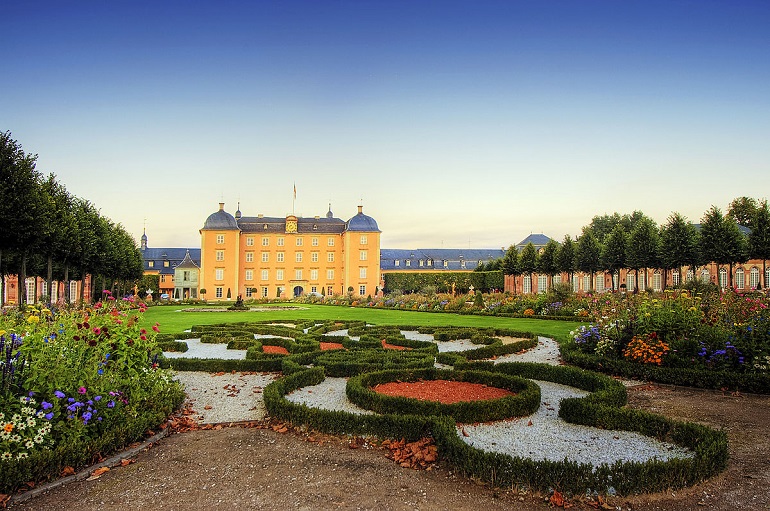
The palace gardens extend across 72 hectares and represent one of Europe's most complete examples of 18th-century garden art. The design masterfully combines strict French formal gardens with later English landscape elements, creating what landscape architects call the "Arborium Theodoricum" – one of Germany's earliest English-style landscape parks. This unique combination allows visitors to experience the evolution of European garden design within a single, coherent space.
The Mathematical Marvel of the Circular Parterre
The garden's crowning glory is its unprecedented circular parterre, centred on the magnificent Arion Fountain featuring the mythical poet riding a dolphin. This mathematical marvel features perfectly symmetrical geometric patterns with eight pairs of flowerbeds of four distinct types: intricate broderies with boxwood scrollwork, rectangular lawn beds with decorative borders, small fountains at diagonal intersections, and bosquets that once served as bowling greens for courtly entertainment.
The circular design is completed by two curved pergola arcades with arched timber latticework that create intimate garden rooms whilst maintaining visual unity. Dutch lime trees, planted in mathematically precise rows, line the geometric axes that radiate from the central fountain, emphasising the garden's baroque grandeur and creating cathedral-like perspectives that draw the eye toward distant garden buildings.
The parterre's design reflects 18th-century fascination with geometry and perspective, incorporating principles of optics and mathematics to create ever-changing views as visitors move through the space. The patterns are designed to be appreciated both at ground level and from the palace's elevated terraces, creating a multi-dimensional viewing experience.
Sophisticated Water Management and Sculpture Programme
Throughout the gardens, over 100 baroque sculptures create an outdoor gallery of mythological and allegorical figures, transforming the landscape into a three-dimensional narrative of classical literature and philosophy. The gardens feature a sophisticated water system powered by historical waterwheels using the Leimbach river, supplying numerous fountains, cascades, and the great lake at the garden's western end.
Copies of sculptures by Peter Anton von Verschaffelt, including the monumental river gods Rhine and Danube, frame the lake's palace-facing shore, whilst the originals are preserved in climate-controlled conditions within the orangery. The sculpture programme follows a carefully planned iconographic scheme that celebrates the virtues of rulership, the harmony of nature, and the triumph of art over chaos.
The water features serve both aesthetic and practical purposes – they provide irrigation for the extensive plantings, create cooling microclimates during summer months, and generate the sound effects that enhance the garden's theatrical atmosphere. The interplay of water, sculpture, and vegetation creates constantly changing light effects throughout the day and seasons.
Exotic Garden Buildings: Architectural Fantasies
The gardens house several extraordinary architectural follies that transport visitors to distant lands and cultures, reflecting the 18th-century fascination with exotic civilisations and religious tolerance:
The Mosque: A Symbol of Enlightened Tolerance
The Mosque stands as the only structure of its kind in a German garden and one of the earliest examples of Islamic-inspired architecture in Europe. Designed by Nicolas de Pigage between 1779 and 1795, this remarkable building combines occidental and oriental architectural elements with unprecedented sophistication. The structure features baroque domes alongside minarets, ogival windows with intricate tracery, and gilded half-moons that gleam against the sky.
The richly decorated interior comprises a central space divided by columns and alcoves, adorned with Arabic and German inscriptions promoting universal virtues such as wisdom, discretion, and religious tolerance. The calligraphy, executed by German craftsmen working from scholarly translations, represents one of the earliest attempts to incorporate Arabic artistic traditions into European decorative arts. The mosque, purely decorative and never used for religious purposes, symbolises the enlightened tolerance of its patron and serves as the centrepiece of the surrounding Turkish Garden with its winding exotic pathways, rare botanical specimens, and contemplative seating areas.
The Temple of Apollo: Neoclassical Perfection
The Temple of Apollo presents a small, circular neoclassical building that houses a statue of the ancient Greek god of light and the arts. This elegant rotunda features a golden dome supported by slender Corinthian columns and serves as a focal point for the surrounding formal gardens. The temple is decorated with golden sun motifs that reflect Apollo's divine associations and create dramatic light effects as the sun moves across the sky.
The temple's positioning within the garden follows careful astronomical calculations – it is aligned to capture the morning sun's first rays, symbolically connecting the god of light with the daily renewal of nature. The surrounding plantings include laurel trees sacred to Apollo, creating a botanically appropriate setting that enhances the building's mythological associations.

Additional Garden Structures
The gardens contain numerous other architectural gems including the Mercury Temple, a smaller circular building dedicated to the messenger of the gods, and the Perspective Building, a cleverly designed structure that uses forced perspective to appear larger and more distant than it actually is. These buildings demonstrate the 18th-century fascination with optical illusions and theatrical effects in garden design.
The Bath House: An 18th-Century Spa Retreat
The Bath House represents one of the garden's most intimate and luxurious features – a private Italian villa-style retreat designed for the Elector's personal relaxation and informal entertaining. This rectangular, single-storey building centres around a beautiful oval foyer adorned with Nicolas Guibal's masterful ceiling fresco "Aurora Casts out the Night," which symbolises the eternal progression of time and the triumph of light over darkness.
The building includes several elaborately furnished private rooms, each serving specific functions within the Elector's daily routine. The study features landscape paintings by Ferdinand Kobell depicting idealised German countryside scenes, whilst chaise longue alcoves provide comfortable spaces for reading and contemplation. The antechambers are decorated with delicate stucco work and contain period furniture that recreates the atmosphere of 18th-century courtly leisure.
The bathroom itself represents a masterpiece of grotto design, combining luxury with theatrical spectacle. The oval marble bathtub, carved from a single block of Carrara marble, is set into the floor and fed by hidden springs that maintain constant water temperature. The walls are decorated with elaborate stucco work incorporating semi-precious stones, shells, and minerals that create a cave-like atmosphere reminiscent of ancient Roman bath houses.
An ingenious heating system using snake-shaped lead pipes concealed within the walls provides radiant heat, whilst a carefully positioned skylight provides natural illumination and ventilation to this subterranean bathing chamber. The overall effect combines the intimacy of a private retreat with the grandeur appropriate to princely leisure.
The Orangery and Botanical Collections
The western portions of the gardens transition into the English landscape style, featuring irregular pathways and naturalistic plantings that contrast beautifully with the geometric formality of the French sections. This transition reflects the changing taste in garden design during the later 18th century, when the rigid formality of baroque gardens gave way to more naturalistic approaches inspired by English landscape gardening.
The orangery, a substantial heated building essential for overwintering exotic plants, reflects the 18th-century fascination with botanical collecting and the cultivation of Mediterranean species in northern climates. The building houses an impressive collection of citrus trees, oleander, pomegranates, and other tender plants that spend the summer months positioned throughout the formal gardens before being moved to winter protection.
The orangery also serves as a sculpture gallery during winter months, displaying the original baroque sculptures that spend the warmer seasons in the outdoor garden settings. This dual function demonstrates the practical considerations that governed 18th-century palace maintenance whilst providing year-round cultural experiences for visitors.
Getting There
By train: The most convenient rail route is to travel to Mannheim Hauptbahnhof first, then take the S9 regional train to Schwetzingen Bahnhof, which runs every 30 minutes and takes approximately 14 minutes. From Schwetzingen station, the palace is just a pleasant 10-minute walk through the town centre.
By bus: Several bus routes serve Schwetzingen directly, including the BRN 710 from Mannheim Hauptbahnhof to Schwetzingen Schloss, which runs hourly and takes about 42 minutes. From Heidelberg, you can take bus BRN 717 from Montpellierbrücke directly to Schwetzingen Schlossplatz in 36 minutes, or bus BRN 713 from Heidelberg Betriebshof to Schwetzingen, which takes approximately 24 minutes and operates hourly.
By car: Schwetzingen is easily accessible via several motorways - from Frankfurt take the A6 towards Heilbronn/Stuttgart and exit at Mannheim-Schwetzingen, from Stuttgart/Heilbronn take the A6 towards Mannheim/Frankfurt and exit at Schwetzingen-Hockenheim, whilst from Basel/Karlsruhe take the A5 towards Heidelberg/Darmstadt and exit at Heidelberg-Schwetzingen. The town offers approximately 1,500 parking spaces and notably has no environmental zone restrictions, so no emissions sticker is required.
Best Time to Visit
The best time to visit Schwetzingen Palace depends on your preferences for seasonal beauty and crowds. Spring is arguably the most spectacular period, particularly from March to April during the cherry blossom season, known locally as "Hanami," when thousands of Japanese ornamental cherry trees burst into magnificent pink blooms that attract up to 15,000 visitors annually. Summer months offer ideal conditions for exploring the baroque gardens in their full glory, with everything in bloom and extended opening hours until 8pm from 30th March to 25th October, though you'll encounter more wedding photography sessions and larger crowds. Autumn provides a delightful alternative with spectacular changing leaves throughout the garden, particularly beyond the Turkish garden area, whilst benefiting from fewer tourists. Even winter visits have their charm, with discounted admission prices and a more peaceful atmosphere, though opening hours are shorter (9am to 5pm) and some areas may be less vibrant. For the optimal balance of beautiful gardens, pleasant weather, and manageable crowds, late spring through early summer offers the most rewarding experience at this UNESCO-candidate baroque palace and its extraordinary 18th-century gardens.