| Contents |
|---|

Introduction
Marburg (pop. 78,000) is a delightful, unspoilt university town squeezed between the picturesque Lahn River and its castle hill. Founded by the Landgrave of Hesse in 1527, the Philipp University is the world's oldest Protestant university. Its historical centre, known as the Altstadt, features steep, cobbled streets and well-preserved half-timbered buildings. Dominating the skyline is the Landgrafenschloss, a medieval castle that offers views across the town and surrounding valley. Another key architectural feature is St. Elizabeth's Church, considered the oldest purely Gothic church in German-speaking areas, which has inspired the design of Cologne Cathedral. The town is also noted for its association with the Brothers Grimm, who studied at the university in the 19th century and collected many of their famous fairy tales in the region.
Interesting Facts about Marburg
- Marburg is home to the world's oldest still-teaching Protestant university, Philipps University, founded in 1527.
- The Brothers Grimm, famed for their fairy tale collections, studied law at the University of Marburg in the early 19th century, influencing their interest in folklore.
- The striking St Elizabeth Church, built in the 13th century, is one of Germany's earliest Gothic-style churches and remains a site of pilgrimage.
- Marburg has over 800 years of architectural history, with narrow cobbled streets and half-timbered buildings giving the old town a fairytale atmosphere.
- The medieval Landgrave Castle, perched above the city, once served as a noble residence and now houses a museum dedicated to local history.
- Marburg’s Old Town retains its historic charm due to limited expansion and reconstruction over the centuries, preserving its Gothic character.
- The city is uniquely accessible for visually impaired visitors, offering Braille maps, guided tours, and even a Planets Educational Trail designed to be enjoyed by the blind.
- Marburg is part of the German Fairy Tale Route, thanks to its connection to the Brothers Grimm and its fairy-tale-like cityscape.
- The Marburg virus, a rare but severe haemorrhagic fever, is named after the city, following an outbreak in local research labs in the 1960s.
- Marburg’s dynamic culture stems from its large student population, giving this small city a lively and international feel.

History
The earliest settlement emerged at the crossroads of important medieval trade routes, with the first mention in written records dated to the early 9th century. By the 10th century, a fortified castle had been constructed, drawing residents and giving rise to a bustling market town. Marburg was granted city rights in 1222, and throughout the Middle Ages, the settlement flourished, becoming a centre for regional trade and craft guilds. Notably, the city managed to preserve its medieval layout and many half-timbered houses, which charm visitors to this day.
A defining chapter in Marburg's history began in the 13th century with the arrival of St. Elizabeth of Hungary, who devoted her later years to charitable works and established a hospital for the sick and poor. The impressive Gothic Elisabethkirche, begun in 1235, remains a major landmark and one of the oldest Gothic churches in Germany. During this era, Marburg became the seat of the Landgraves of Hesse, giving rise to the Landgraviate of Hesse-Marburg—at various times a semi-independent principality within the Holy Roman Empire. The Marburg Castle, with its medieval knights’ hall and chapel, remains a testament to this era of princely power.
The Reformation brought religious and intellectual change to Marburg, culminating in the founding of the Philipps University in 1527—the first Protestant university in Germany. The town hosted the famous Marburg Colloquy in 1529, where leaders Martin Luther and Ulrich Zwingli debated core Protestant doctrines. Marburg reverberated with the political shifts and wars of the following centuries but remained influential as a centre of learning and culture. Its connection to the Brothers Grimm, who studied and collected folktales here, adds a fairy-tale dimension to its appeal. Today, Marburg is celebrated for its well-preserved old town, vibrant university atmosphere, and storied past.
Main Attractions
Marburg Castle (Landgrafenschloss)
Marburg Castle, known as Landgrafenschloss, stands on a hill overlooking the city. It was constructed in the 11th century and provides extensive views of Marburg and the Lahn River valley. The castle is significant in the region's history, including its role in the Protestant Reformation. The grounds surrounding the castle are accessible to visitors for walks and offer panoramic vantage points over the old town.
Schlosspark (Castle Park)
Adjacent to Marburg Castle, Schlosspark is a landscaped park area open to the public. It features paths, flower beds, and seating areas, making it a destination for walks and outdoor gatherings. The park hosts occasional open-air concerts and events, particularly in the summer months.

Town Hall (Rathaus)
The Town Hall, or Rathaus, is located in the heart of the Old Town and is an example of Gothic and Renaissance architecture. Built in the 16th century after the original was destroyed by fire, the building has a notable clock tower with a golden rooster that crows on the hour. It remains in use for administration, but parts are accessible to the public.

Old Town (Oberstadt)
Marburg's Oberstadt, or Old Town, consists of a network of narrow, winding streets lined with half-timbered houses. The district preserves much of its medieval character and is best explored on foot. Numerous shops, cafes, and historic buildings make this area a central point of interest. Seasonal markets and local events are typically held in the squares of the Old Town.
Philipps-Universität Marburg (University of Marburg)
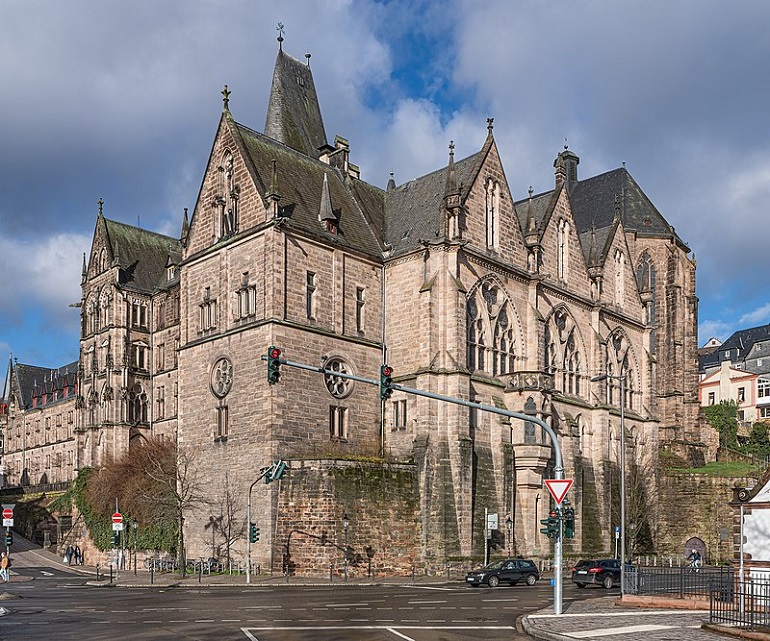
Founded in 1527, this is one of Germany's oldest universities. The main campus buildings reflect a mix of Renaissance, Baroque, and modern architectural styles. The Old University building, in particular, is significant, and the campus features public lectures, exhibitions, and events, tying the university closely to daily local life.
St. Elizabeth's Church (Elisabethkirche)
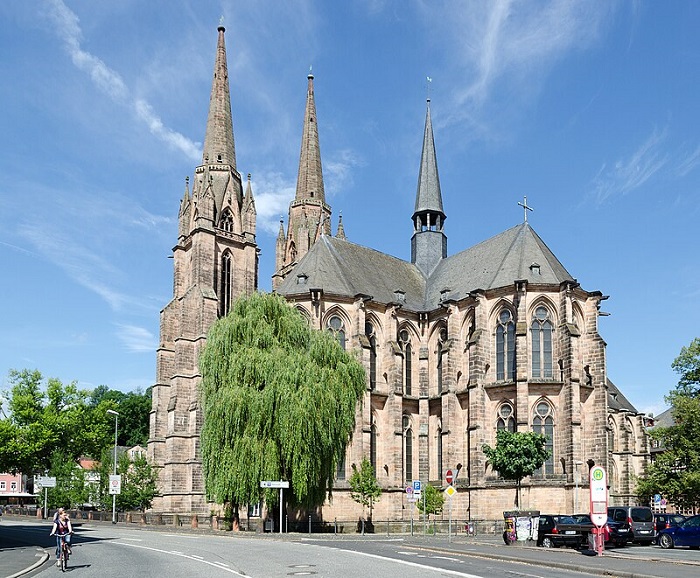
The Elisabethkirche is a prominent Gothic church built between 1235 and 1283, dedicated to St. Elizabeth of Hungary. It is notable for its twin towers and stained-glass windows. The church has played a major role in religious and local history and houses the tomb of St. Elizabeth, which has drawn pilgrims for centuries.
Botanical Garden (Alter Botanischer Garten)
Marburg's Old Botanical Garden, founded in the early 19th century, is home to a wide variety of plant species. The garden covers several hectares and serves both as a research area for the university and as a public park. Visitors can walk among native and exotic plants, and the greenhouses house tropical and medicinal specimens.

Kaiser Wilhelm Tower (Kaiser Wilhelm Turm)
Built between 1887 and 1890, the Kaiser Wilhelm Tower stands at 36 metres on the Lahn hills. Visitors may climb 167 steps to the observation platform, which offers wide-ranging views of Marburg, the castle, and the surrounding countryside. The base of the tower features a café for refreshments.
Lahn River and Embankment
The Lahn River passes through Marburg and provides recreational opportunities such as walking and cycling along its embankments. There are several bridges crossing the river, and the pathways are popular for both locals and tourists seeking a quieter environment within the city.
Top Museums
Landgrafenschloss – Museum für Kulturgeschichte
Marburg’s hill-top castle has guarded the town since the 11ᵗʰ century. Inside, the Museum für Kulturgeschichte leads visitors through vaulted halls, the richly painted 13ᵗʰ-century chapel and the Gothic Fürstensaal. Exhibits span early Germanic archaeology, courtly life under the Landgraves of Hesse and Marburg’s role in the 1529 Reformation colloquy, all framed by models that trace the fortress’s slow transformation from keep to Renaissance residence. The dialogue between artefacts and architecture offers a vivid lesson in how power, faith and scholarship shaped Hesse.
Kunstmuseum Marburg
Opened in 1927 and freshly renovated in 2018, the Kunstmuseum occupies an expressive red-brick landmark designed to unite study, exhibition and public enjoyment of art. Paintings, sculpture and graphics stretch from Renaissance altarpieces to Joseph Beuys multiples, with particular strength in German Modernism (Kirchner, Kollwitz) and post-war international avant-garde donated by collector Hilde Eitel. Rotating displays interweave these holdings with regional works by the Willingshausen artists’ colony, ensuring each visit feels newly curated.
Mineralogical Museum
Temporarily closed for refurbishment, the university’s Mineralogical Museum still shines—literally—through its travelling showcase in the castle’s Waldecker-Saal. Highlights from a 60,000-specimen collection reveal fluorescent crystals, rare meteorites and vivid agates from Brazil, all contextualised by interactive displays that link geological beauty to modern high-tech applications. Once the main building reopens, expect three floors devoted to earth science’s past and future.
1st German Police Oldtimer Museum
On the outskirts, a former barracks shelters the country’s largest array of historic police vehicles. More than 100 exhibits include post-war patrol saloons, water-cannon lorries and a BMW “Barockengel” famous from the 1960s TV series Isar 12. Detailed placards trace design changes driven by social unrest, motorways and cinema. The collection is run by an enthusiast club, so the fleet remains operational—occasionally starring as period props in film productions.
Religionskundliche Sammlung
Founded in 1927 by theologian Rudolf Otto, this university museum examines global faith through over 8,500 ritual objects. Tibetan skull bowls, a West African power figure and a dervish’s embroidered cap sit beside multimedia stations that explore provenance, usage and contemporary debate. Research links to the Religious Studies department guarantee scholarly interpretation without losing the sense of wonder that sacred artefacts can evoke.
Marburger Haus der Romantik
Housed in a 16ᵗʰ-century merchant’s home just off the market square, the museum celebrates writers who studied or socialised in Marburg around 1800—Bettina von Arnim, the Brentanos, the Brothers Grimm and Friedrich Carl von Savigny. A crimson salon furnished with Biedermeier pieces recreates the era’s literary gatherings, while upstairs exhibitions pivot between manuscript facsimiles, engravings and thematic shows such as “Madame de Staël in Germany”. Compact yet atmospheric, the house invites slow reading rather than quick scanning.
Marburger Kunstverein (Kunsthalle)
Contemporary voices find an outlet in the Kunstverein’s 525 m² Kunsthalle on Gerhard-Jahn-Platz. Since 1953 the non-profit association has staged seven exhibitions a year, ranging from regional graduates to international names, and even hosts experimental music evenings. An “Artothek” lends some 800 works to residents, turning the gallery into an art-sharing hub rather than a storehouse. For visitors, it is the place to gauge how Marburg’s young creatives converse with global trends.
Local Cuisine
Marburg’s culinary scene is a delightful fusion of Hessian tradition and student-town vibrancy. Visitors can savour local delicacies such as Ahle Wurst, a slow-cured, air-dried sausage from northern Hesse, and the hearty Handkäs mit Musik, a tangy cheese dish often served with pickled onions, bread, and caraway seeds. For those with a sweet tooth, the region’s Bethmännchen almond marzipan biscuits are a treat not to be missed. Many of the town’s cosy restaurants and taverns also serve classic Hessian dishes like Grüne Soße—a refreshing green herb sauce typically enjoyed with boiled eggs and potatoes—alongside robust local beers and apple wine, allowing travellers to experience an authentic taste of Marburg’s heritage.
Getting There & Around
By train, Marburg is well connected via Germany’s Deutsche Bahn network, with frequent regional and intercity trains arriving at Marburg Hauptbahnhof. Visitors coming from major cities like Frankfurt can reach Marburg in about an hour by direct train, while journeys from neighbouring countries usually require a transfer, often in Frankfurt or Cologne. This mode of travel offers a comfortable and scenic route into the heart of Hesse.
By coach or bus, services operated by companies such as FlixBus link Marburg to regional hubs and other cities, although direct routes can be limited. Coaches and buses typically take longer than trains but provide an alternative for budget-conscious travellers or those preferring direct connections from smaller towns. The main bus station is close to the railway station, making connections convenient.
By car, Marburg is accessible via the A5 and A45 motorways, with clear signage guiding drivers to the city. Driving offers flexibility to explore the surrounding region at your own pace, with parking available near key attractions like the castle and the old town. The drive from Frankfurt to Marburg normally takes around an hour, making it a straightforward option for day trips or longer stays.