



| Contents |
|---|
Introduction
Eisleben (pop. 22,500), officially known as Lutherstadt Eisleben, is a town in the German state of Saxony-Anhalt. It is most famous as the hometown of Martin Luther, the key figure in the Protestant Reformation. The town contains the house where Luther was born in 1483 and the house where he died in 1546, both of which are now UNESCO World Heritage sites. Other significant landmarks associated with him include St. Peter and Paul's Church, where he was baptised, and St. Andrew's Church, where he preached his last sermons. For centuries, the town's economy was also dominated by copper-shale mining, an industry that significantly shaped its development and history.
Interesting Facts about Eisleben
- Eisleben’s official name is Lutherstadt Eisleben because it is both the birthplace and the place of death of the Reformation figure Martin Luther.
- The town’s Luther memorial sites, including the birth house and death house, were inscribed as UNESCO World Heritage in 1996 for their outstanding historical significance.
- First recorded in 994 as the market settlement Islebia, Eisleben gained town status by 1180 and later passed from the Counts of Mansfeld to Saxony in 1780 and to Prussia in 1815.
- Eisleben is divided into Altstadt and Neustadt, the latter established in the 14th century to house miners from the local Mansfeld copper–slate district.
- The house presented as Luther’s birthplace is a memorial rebuilt after a devastating fire in 1689, with archaeological finds confirming the original site beneath it.
- Sts Peter and Paul Church in Eisleben preserves the medieval font in which Martin Luther was baptised, linking the town’s fabric directly to his early life.
- St Andrew’s Church in Eisleben retains an original Luther pulpit, and together with St Anne’s Church forms part of the town’s core Reformation landscape.
- The town sits in the eastern forelands of the Harz and historically anchored the Mansfeld mining economy before diversifying into food, clothing, education and tourism.
- Eisleben’s birth house museum, opened as a memorial in 1693, is cited as Germany’s first museum and is among the oldest in the world.
- As of the 21st century, Eisleben’s population is in the low twenty-thousands and the town lies on the Halle–Kassel railway, underscoring its regional connectivity.
History
Early Origins and Medieval Development
Eisleben was first mentioned in 994 as a market called Islebia, evolving into a recognised town by 1180. Throughout the medieval period, Eisleben remained under the control of the powerful counts of Mansfeld, who governed the region until the 18th century. The town's prosperity during the late Middle Ages stemmed largely from copper mining, with the Mansfeld copper area gaining significant importance on the European market. This wealth from mining is still reflected today in the town's structure and principal monuments. The settlement developed into two distinct areas: the old town (Altstadt) and the new town (Neustadt), with the latter originating as a residential district specifically created for miners in the 14th century.
Political Transitions and Religious Significance
The political landscape of Eisleben underwent several dramatic changes over the centuries. In 1780, the region passed from the counts of Mansfeld to Saxony, marking the end of nearly eight centuries of Mansfeld rule. Following the Napoleonic Wars, the Vienna Congress assigned Eisleben to the Kingdom of Prussia in 1815. The town's most famous claim to fame centres on Martin Luther, the influential Protestant reformer who was born here on 10 November 1483 and baptised the following day in Saints Peter and Paul's Church. Luther's family was among many attracted by the "Call of the Miners" during the copper boom, with his father Hans working as a miner. Remarkably, Luther also died in his hometown on 18 February 1546, making Eisleben unique as both the birthplace and death place of the great reformer.
Modern Era and UNESCO Recognition
The 20th century brought further political upheaval to Eisleben. After World War I, the town became part of the Free State of Prussia within the German Reich. Following World War II in 1947, Eisleben became part of the new state of Saxony-Anhalt within East Germany (the German Democratic Republic), remaining there until German reunification in 1990. Today, the town officially bears the name Lutherstadt Eisleben in honour of its most famous son. The houses where Luther was born and died have been carefully preserved, and Saints Peter and Paul's Church still contains his baptismal font. In recognition of their historical significance, several buildings throughout the city associated with Luther, along with similar locations in Wittenberg, were designated a UNESCO World Heritage site in 1996. The town also houses the restored Cistercian monastery of St Mary of Helfta, which dates back to 1258 and serves as another significant historical attraction.
Main Attractions
Town Centre & Marktplatz (Market Square)
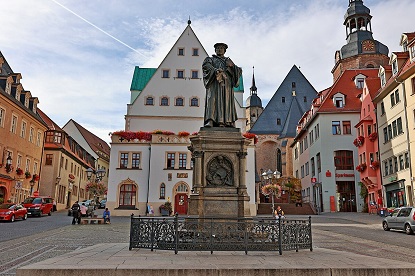
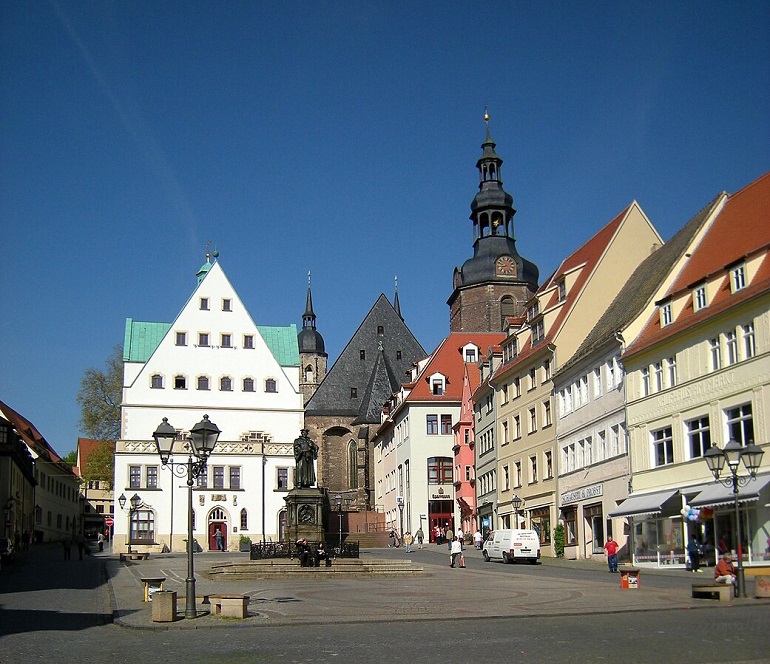
The heart of Eisleben pulses around its market square, where the town hall—a striking example of local civic architecture—stands as a symbol of community and tradition. The square itself is fringed by well-preserved historic buildings, many of which date back centuries, offering a visual journey through the town’s past. This is not merely a place for administrative affairs; it is a lively gathering spot, where weekly markets and seasonal festivals bring together locals and visitors alike. The area is fully accessible, with paved walkways, public restrooms, and ample parking making it easy for everyone to enjoy. Whether you visit for a morning coffee, a stroll among the market stalls, or to witness one of the town’s many public celebrations, the Marktplatz is where Eisleben’s community spirit shines brightest.
Lutherdenkmal (Luther Memorial)
Dominating the town square, the Lutherdenkmal stands as a focal point for both locals and visitors interested in Eisleben’s Reformation heritage. This impressive statue of Martin Luther, the town’s most famous son, is a tribute to his enduring impact on the region and the wider world. The memorial is open at all hours, inviting quiet reflection amid the bustle of the surrounding market. Its central location makes it a natural meeting spot, and the beautifully maintained square around it is ideal for sitting, people-watching, or simply enjoying the ambiance of Eisleben. Information plaques nearby provide context about Luther’s life and the town’s role in religious history, making this a must-see landmark.
St. Andreaskirche (St. Andrew’s Church)
Located on Andreaskirchplatz, St. Andreaskirche is one of Eisleben’s most striking ecclesiastical buildings. The church is renowned as the site where Martin Luther delivered his final sermons, just days before his death in 1546. Its elegant twin spires rise above the town, and the interior’s subdued beauty—marked by simple lines and muted colours—invites quiet reflection.
St. Annen-Kirche (St. Anne’s Church) & Augustinian Hermit Monastery
The St. Annen-Kirche, together with the remains of the adjacent Augustinian Hermit Monastery, offers a glimpse into Eisleben’s monastic traditions and architectural heritage. The church, with its centuries-old stonework and vaulted ceilings, stands in peaceful contrast to the more bustling town centre.
Kloster St. Marien zu Helfta
A short walk or drive from the town centre brings you to Kloster St. Marien zu Helfta, a convent and monastery with a rich history and a reputation as a place of contemplation and learning. Founded in the 13th century, the complex has been beautifully restored and welcomes visitors daily. The extensive gardens, quiet courtyards, and elegant chapel interiors are open to the public, offering a tranquil setting for meditation or exploration. The monastery provides guided tours and cultural events throughout the year.
Luthers Kalte Stelle
This modest but meaningful memorial marks the spot where tradition holds that Martin Luther felt a chill—a premonition of his impending death during his final journey. Set amid quiet residential streets, Luthers Kalte Stelle is a simple, reflective site, open at all hours for those interested in the personal stories that shaped great historical events.
Eislebener Wiesenmarkt
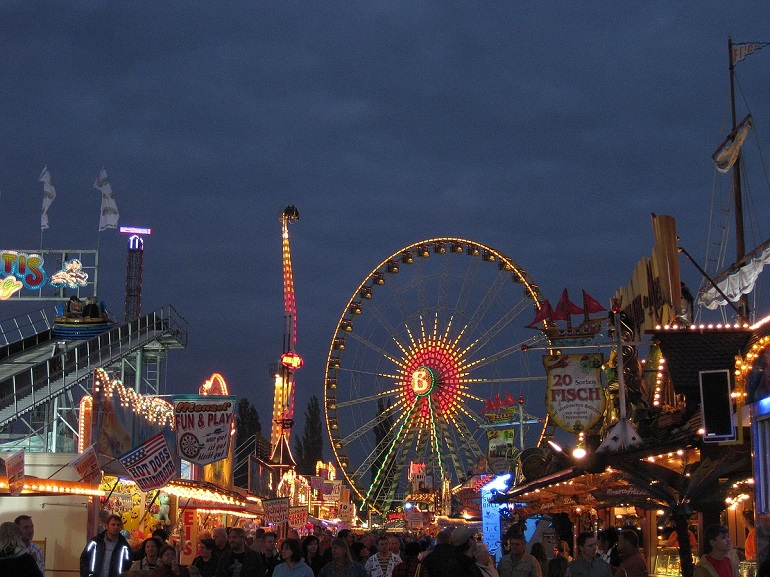
If you find yourself in Eisleben at the right time of year, you’ll have the chance to experience the Eislebener Wiesenmarkt, one of central Germany’s most celebrated open-air fairs. This annual event transforms the town with a carnival atmosphere, featuring amusement rides, games, food stalls serving regional delicacies, and live entertainment. The Wiesenmarkt is a beloved tradition, drawing large crowds for its vibrant music, dance, and spectacular fireworks that light up the evening sky. Families will appreciate the kid-friendly attractions and accessible facilities, while everyone can enjoy the sense of communal festivity. The fairground provides free parking and is fully equipped for visitors with mobility needs, ensuring everyone can join in the fun.
Nearby Attractions
Mansfeld Castle
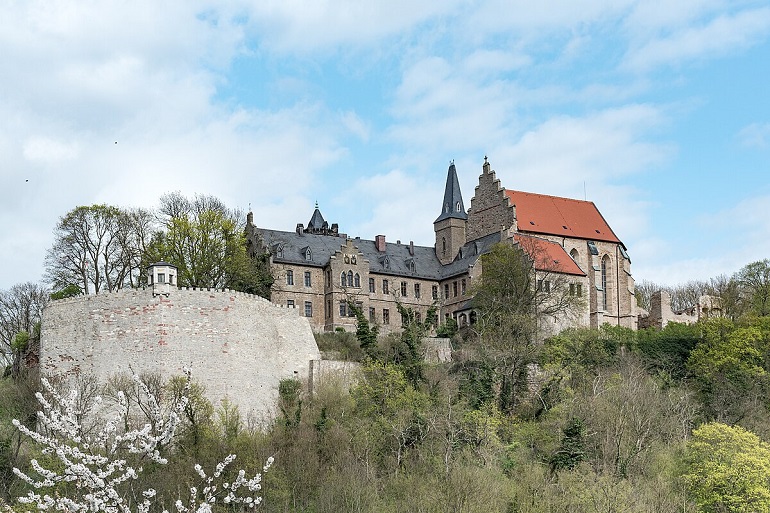
Just outside Eisleben, Mansfeld Castle rises above rolling hills, offering visitors a taste of medieval history and stunning natural scenery. The castle’s impressive facade and well-preserved walls are open to exploration, and guided tours delve into its historical significance and architectural features. The grounds host a variety of activities, from outdoor performances to children’s events, and overnight stays are possible for those seeking a unique experience. The castle is fully accessible, with amenities for families and panoramic views of the surrounding countryside, making it a popular destination for both history enthusiasts and day-trippers.
Süßer See
For a change of pace and a breath of fresh air, visit Süßer See, a scenic lake a short distance from Eisleben. Open all year round, the lake is a favourite spot for swimming, picnicking, and leisurely walks along the shore. A well-maintained path encircles the water, ideal for cycling or jogging, while playgrounds and boat rentals cater to families and adventure-seekers. The area is fully accessible and offers ample parking, picnic areas, and facilities. Süßer See’s peaceful surroundings and diverse birdlife make it a relaxing retreat for nature lovers and a pleasant contrast to the historical sites in the town centre.
Top Museums
Martin Luther's Birthplace
This museum stands on the site where Martin Luther was born in 1483. Though the original house was destroyed in a fire in 1689, a memorial building was erected in its place in 1693 and has served as a public museum for over 300 years. The site was significantly expanded in 2007 with a modern annexe that complements the historic building.
The permanent exhibition, "From Here I Come – Martin Luther and Eisleben," delves into the reformer's origins. It provides a detailed look at his family's background, the social environment of his childhood, and the importance of the local copper slate mining industry that his father was involved in. With over 250 exhibits spread across thirteen rooms, the museum uses archaeological finds and historical artefacts to paint a vivid picture of life in the late Middle Ages.
Martin Luther's Death House
Long considered the site where Martin Luther passed away on 18 February 1546, this building is now a museum dedicated to his final days. After a comprehensive two-year restoration, the museum reopened in 2013 with a new exhibition titled Luthers letzter Weg ("Luther's Last Path"). This exhibition chronicles his final journey, explores his views on life and death, and examines the immediate aftermath of his passing. The collection features approximately 110 artefacts, including period furniture, historical documents, and the original cloth that draped Luther's coffin.
Interestingly, research accompanying the museum's restoration revealed that this was likely not the correct house. A historical error in 1726 misidentified the location, and the actual site of Luther's death is now believed to be at Am Markt 56, which is occupied by the Hotel Graf Mansfeld. Nevertheless, the Death House museum remains a poignant memorial and a centre for understanding the end of Luther's life.
Museum Luthers Elternhaus (in Mansfeld)
Located a short distance from Eisleben in the town of Mansfeld, this museum is dedicated to the formative years of Martin Luther, who lived here from infancy until he was 14. The permanent exhibition, titled "Ich bin ein Mansfeldisch Kind" ("I am a child of Mansfeld"), offers a fascinating glimpse into the reformer's childhood and family life. Through archaeological findings from the site and engaging displays, the museum answers questions about daily routines, from what the family ate to what games children played in the 16th century. The site combines the remains of the original Luther family home with a modern exhibition building, offering a comprehensive look at the world that shaped young Martin.
Local Cuisine
In and around Eisleben, travellers encounter hearty, down-to-earth fare shaped by the Harz and fertile plains, with pork, dairy and seasonal vegetables central to everyday cooking. A favourite for a light bite is the tangy regional cheese, Harzer Käse, often served with bread and pickles. From nearby Halberstadt, Halberstädter Würstchen—slender smoked sausages—remain a much-loved speciality across the state. For something sweet, Salzwedeler Baumkuchen—a traditional layered ‘tree cake’—has long been associated with Saxony-Anhalt and makes a fine souvenir. To drink, Saale-Unstrut wines from Germany’s northernmost traditional wine region pair neatly with local dishes, particularly crisp Müller-Thurgau and Pinot Blanc styles from the cool slopes.
Getting There
By train, Eisleben can be reached by taking services connecting through major hubs such as Halle (Saale) Hauptbahnhof. Trains run regularly from cities like Leipzig or Berlin, with routes typically involving a change at Halle before continuing to Eisleben. The train station in Eisleben is well-equipped and operated by regional train services, making this a convenient and efficient option for travellers.
By coach or bus, although less frequent and generally slower than trains, there are bus connections to Eisleben from surrounding towns and cities, including Halle and Berlin. Buses run at intervals but may take longer due to stops and traffic conditions. This mode can be suitable for those seeking a direct route from nearby locations without train changes.
By car, Eisleben is accessible via a network of regional roads and motorways. Driving offers flexibility and a straightforward journey, especially from nearby cities such as Leipzig or Berlin, with travel times around one to two hours depending on distance. Parking and road conditions are generally good, suitable for visitors who prefer private transport and wish to explore the surrounding Saxony-Anhalt region at their own pace.