



| Contents |
|---|

Introduction
Aptly nicknamed "Golfsburg", Wolfsburg (pop. 130,000) is home to the global headquarters of Volkswagen and the world's largest car factory. The city actually grew around the first VW factory, established in 1938, and originally went by the clumsy appellation of Stadt des KdF-Wagens bei Fallersleben. It was renamed Wolfsburg in 1945 after the local castle.
Needless to say that everything here revolves around the automobile industry. The main sight is the Autostadt, a large automotive-themed park with pavilions, museums and delivery centres sprawling on 25 ha (61 acres). The compact centre includes the contemporary Kunstmuseum Wolfsburg, the striking Phaeno science centre designed by Zaha Hadid, and the Designer Outlets Wolfsburg. Cultural heritage is anchored by Schloss Wolfsburg, a Renaissance water castle with museum spaces and parkland. Leisure areas cluster around the Allerpark with its lake, paths and sports facilities, while football is represented by the Volkswagen Arena, home of VfL Wolfsburg. Districts such as Fallersleben add small-town character with historic streets and local museums.
Interesting Facts about Wolfsburg
- Founded in 1938 as a planned city, Wolfsburg was created to house workers for the then-new Volkswagen plant.
- The city’s identity is closely tied to Volkswagen, whose Wolfsburg plant is among the largest manufacturing complexes in the world.
- Wolfsburg’s modern development features bold architecture, including the phæno science centre designed by Zaha Hadid.
- The Autostadt, a vast automotive-themed park and exhibition complex, is one of Wolfsburg’s signature attractions.
- Despite its young age, the city has historic landmarks such as Wolfsburg Castle, a Renaissance complex with medieval origins.
- Wolfsburg briefly rebranded itself as “Golfsburg” in 2003 to celebrate the launch of a new Volkswagen Golf model.
- VfL Wolfsburg, the city’s football club, has won the German Bundesliga, placing the city on the national sporting map.
- Wolfsburg expanded significantly in 1972 by incorporating numerous surrounding communities, reshaping its size and population.
- The city is known as a showcase of post-war urban planning, reflecting mid-20th-century ideas realised at scale.

History
Wolfsburg stands as one of Germany's most remarkable examples of modern urban planning, having been established on 1st July 1938 as "Stadt des KdF-Wagen bei Fallersleben" (the City of the KdF Car near Fallersleben). The city was purpose-built to house workers producing the Kraft-durch-Freude automobile for the newly constructed Volkswagen factory. Austrian architect Peter Koller designed the original city plan under the supervision of Albert Speer, envisioning a model community integrated within green spaces according to garden city principles. However, the ambitious construction project was largely halted by 1942 due to wartime constraints, leaving only approximately 3,000 properties completed—merely one-tenth of the original plan.
The city's transformation began in earnest following the Second World War when it received its current name "Wolfsburg" on 25th May 1945, after the nearby 13th-century Renaissance castle. The British occupying forces made the crucial decision not to dismantle the Volkswagen factory, instead choosing to continue production of the Beetle automobile. This decision proved pivotal for both the city and Germany's post-war economic recovery, with Volkswagen becoming the engine of the Wirtschaftswunder (economic miracle) and the Beetle serving as its symbol. The factory attracted refugees, displaced persons, and foreign workers—particularly from Italy—who formed the backbone of the workforce and contributed to the city's rapid demographic growth from approximately 25,000 inhabitants in 1950 to over 120,000 by the mid-1970s.
A defining moment in Wolfsburg's development occurred on 1st July 1972 with the Lower Saxony territorial reform, which incorporated 20 surrounding municipalities, including the historic towns of Fallersleben and Vorsfelde, along with 18 villages. This expansion increased the city's area sixfold to 203 square kilometres and elevated its population to over 130,000, granting Wolfsburg the status of Großstadt (major city). The incorporation brought centuries of regional history into the modern city, including significant landmarks such as Fallersleben Castle (completed in 1551), which houses the Hoffmann-von-Fallersleben Museum dedicated to the poet who penned Germany's national anthem, and the medieval Neuhaus Castle from the 14th century.
Main Attractions
Autostadt
Autostadt is a large automotive-themed complex and park covering about 25 ha. It integrates brand pavilions for Volkswagen Group marques, delivery facilities where customers collect new cars, driving experiences including off-road courses, and river tours; its signature features are two 60 m glass car-storage silos connected to the adjacent Volkswagen factory by a 700 m tunnel, and it attracts roughly two million visitors each year.

Wolfsburg Castle (Schloss Wolfsburg)
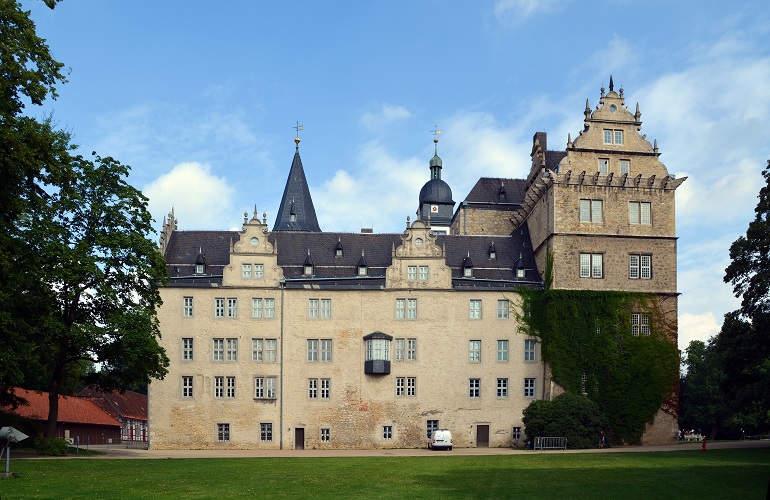
Wolfsburg Castle was first documented in 1302, built by the von Bartensleben family as a fortified water castle with moats and a medieval bergfried tower. Around 1600 it was transformed into a North German Renaissance palace, and in the 18th century it passed to the Counts von der Schulenburg.
Allerpark
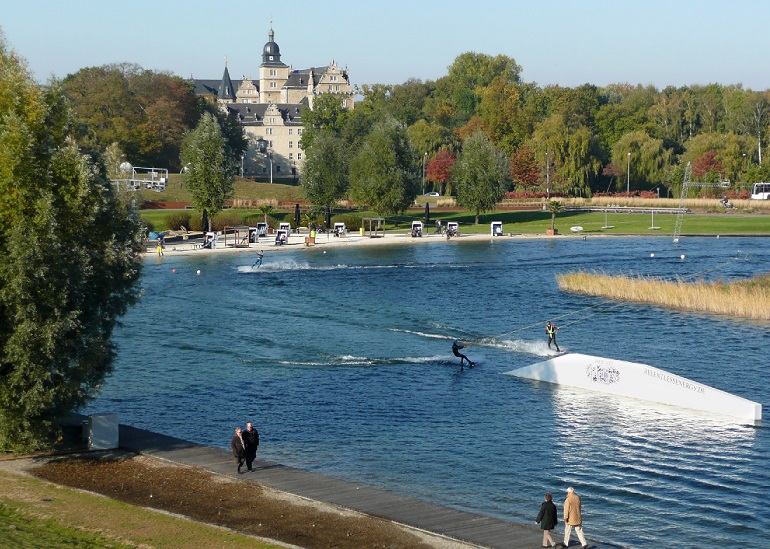
Allerpark is a 130 ha public leisure park centred on the artificial Allersee lake created in 1969. It hosts many of the city’s sports and recreation venues, including Volkswagen Arena, AOK Stadium, BadeLand swimming complex and Eis Arena ice rink, plus beach-volleyball courts, a skatepark and playgrounds, drawing about three million visits per year.
Allersee
The 29 ha Allersee measures roughly 1 230 m by 270 m with a maximum depth of 11 m. It offers a near-1 km sandy beach and a 6 m-wide promenade, has DLRG lifeguard supervision on summer weekends, and was certified in 2009 as Germany’s first “Guarded Beach” inland bathing lake. Local clubs use the lake for regular water-sports training and regattas.
Volkswagen Arena
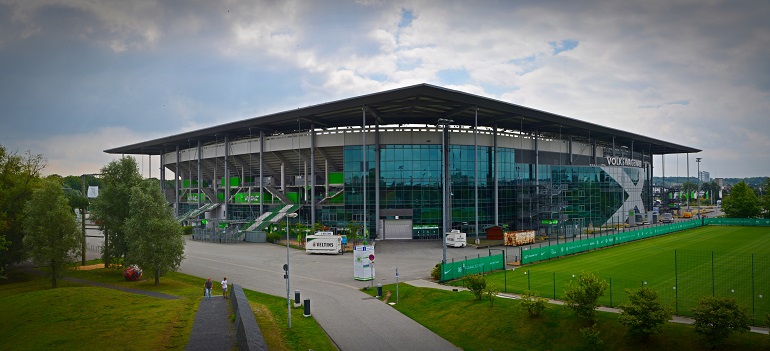
Volkswagen Arena has been home to VfL Wolfsburg since 2002. The stadium holds nearly 29 000 spectators, including 1 434 business seats, 31 VIP lounges and about 100 wheelchair spaces. Built between 2001 and 2002 at a cost of roughly €53 million, it also hosts concerts and other large events.
Planetarium Wolfsburg
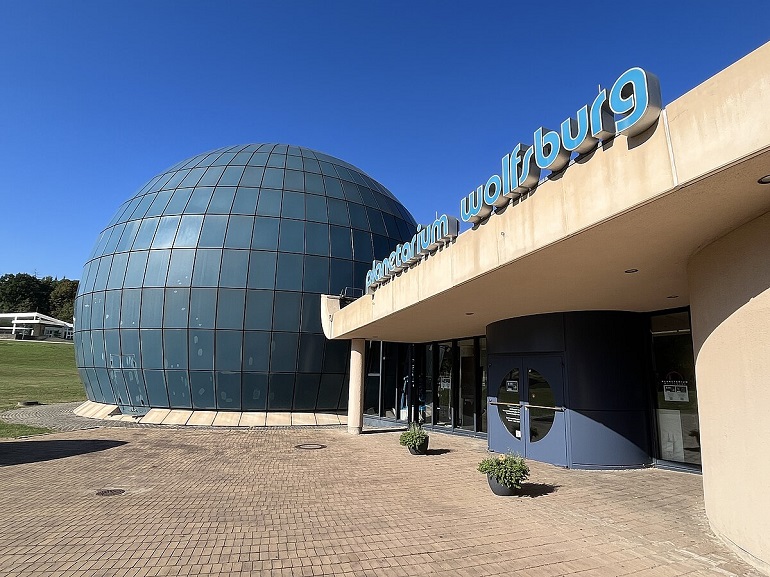
Planetarium Wolfsburg operates a 360-degree dome cinema with regularly changing programmes. It uses Zeiss VELVET LED projection technology installed in 2023 to deliver high-contrast, high-resolution fulldome visuals, and provides barrier-free access with shows tailored to various age groups.
BadeLand Wolfsburg
Situated within Allerpark, BadeLand Wolfsburg is a 22 000 m² indoor aquatic and wellness complex featuring a wave pool, multiple slides, a current channel, a lazy river, children’s water-play areas and a two-storey sauna zone with diverse sauna types and ancillary facilities.
Top Museums
Autostadt
More than a museum in the traditional sense, Autostadt is a vast campus devoted to the culture, history, and future of the automobile. Centred around pavilions for different Volkswagen Group brands, landscaped grounds, and striking architecture, it blends industrial heritage with experiential storytelling. Visitors encounter design showcases, historic vehicles, and immersive installations that explore mobility, sustainability, and engineering. The glass car towers—iconic vertical silos used for vehicle delivery—provide a dramatic emblem of Wolfsburg’s identity and the site’s theatrical approach to automotive presentation.
AutoMuseum Volkswagen (Stiftung AutoMuseum)
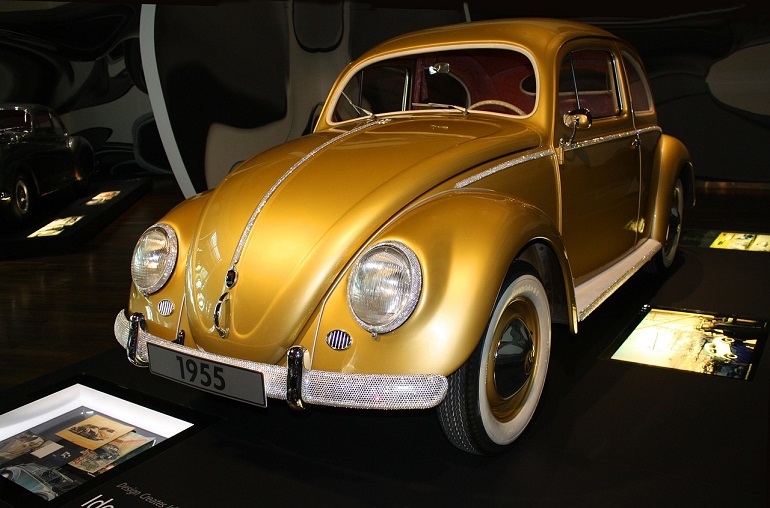
Housed in a former industrial building with purposeful simplicity, the AutoMuseum focuses on the evolution of the Volkswagen marque. Expect a rich sweep from early Beetles and Transporters to Golfs and experimental prototypes, tracing shifts in design, technology, and culture. It often includes one-offs, concept studies, motorsport curiosities, and quirky landmarks of brand lore—perfect for enthusiasts who enjoy close, unvarnished encounters with significant production models and rarities. The atmosphere is intimate and archival, placing engineering detail and historical context centre stage.
phæno Science Centre
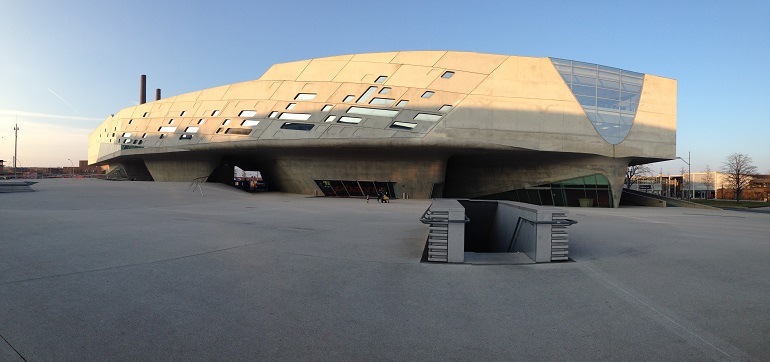
Designed by Zaha Hadid, phæno is an architectural statement—an elevated, sculptural concrete landscape that appears to hover above the ground. Inside, it’s a hands-on universe of scientific phenomena: interactive exhibits invite experimentation with light, motion, sound, electricity, and perception. Rather than a passive collection, phæno functions as an open laboratory for curiosity, equally rewarding for families and the scientifically inclined. Its design and content together make it one of Germany’s most distinctive science museums.
Kunstmuseum Wolfsburg
A prominent venue for modern and contemporary art, the Kunstmuseum Wolfsburg is known for ambitious, thematically curated exhibitions and large-scale installations. The building’s generous hall allows for immersive staging, while its programme engages international artists and ideas, often connecting art to social, urban, and technological themes befitting Wolfsburg’s modern character. Beyond its exhibitions, the museum’s thoughtful architecture and contemplative spaces create a refined setting for encountering contemporary practice.
Stadtmuseum Wolfsburg (City Museum, Schloss Wolfsburg, part of M2K)
Set within the historic ensemble of Schloss Wolfsburg, the city museum charts Wolfsburg’s journey from an agrarian estate to a planned industrial city and on to a modern urban centre. Displays often weave everyday objects, oral histories, and multimedia together, giving texture to life across decades—wartime origins, post-war growth, and the shaping force of the automotive industry. It’s the best place to understand the city’s unique, relatively young history and how it forged its identity.
Städtische Galerie Wolfsburg (at Schloss Wolfsburg)
Complementing the city museum, the municipal gallery presents changing exhibitions of contemporary art with a focus on regional and international dialogues. Its setting in the castle complex creates an elegant contrast between historic architecture and contemporary works. Expect thoughtfully curated shows that are approachable yet conceptually rigorous, often spotlighting new voices alongside established artists.
Hoffmann von Fallersleben Museum
Dedicated to the poet and scholar August Heinrich Hoffmann von Fallersleben—best known for writing the “Deutschlandlied”—this museum explores his life, literary work, and the cultural milieu of the 19th century. It balances biography with broader historical context, offering insight into the political and intellectual currents of the period as well as the enduring legacy of his texts.
Kunstverein Wolfsburg
As an artists’ association and exhibition venue, the Kunstverein champions contemporary art in agile, project-driven formats. Expect experimental shows, emerging positions, and discursive events that keep pace with current practices. Its programming often feels immediate and exploratory, making it a valuable stop for those seeking what’s next in the regional art scene.
Local Cuisine
Visitors to Wolfsburg can enjoy hearty dishes such as Grünkohl mit Bregenwurst, a comforting winter speciality of kale served with smoked sausage, or the ever-popular Spargel (white asparagus), celebrated during springtime with butter or hollandaise sauce. Meat lovers will appreciate Braunkohl und Pinkel, a dish closely tied to northern German culinary heritage, while sweet-toothed travellers can sample Welfenspeise, a layered dessert of creamy vanilla and light egg white foam named after the historic House of Welf. Complementing these regional delights are locally brewed beers and crisp ciders, making Wolfsburg’s dining scene a flavoursome introduction to Lower Saxon gastronomy.
Getting There
By train: Wolfsburg is well connected on Germany’s rail network, with regular high-speed and regional services linking it to major cities such as Berlin, Hanover and Hamburg. The central railway station is conveniently located in the heart of the city, making onward travel to local attractions simple.
By coach or bus: Long-distance coaches and regional buses also serve Wolfsburg, providing a practical alternative for those who prefer a slower journey with scenic views. Services connect with other towns in Lower Saxony and beyond, with stops close to the city centre.
By car: Wolfsburg is easily reached by road, lying directly on the A39 motorway and close to the A2, one of Germany’s major east–west routes. Driving offers flexibility for exploring the surrounding countryside, neighbouring towns and nature parks at your own pace.


