



| Contents |
|---|
Introduction
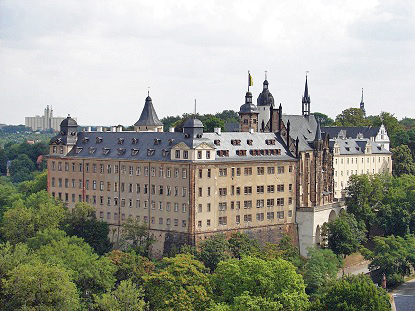
Altenburg Palace, or Residenzschloss Altenburg, stands on a porphyry hill overlooking the town of the same. Originating as medieval castle, it became the ducal residence of Saxe-Altenburg and reflects nearly a millennium of architectural styles, from its Gothic palace church of St George (completed in 1414) to its Baroque state apartments remodelled in the 18th century. Today the palace houses a museum of regional history and the world’s largest playing card collection, celebrating Altenburg’s centuries-old card-making tradition, while its parkland preserves formal gardens spanning Renaissance to modern designs. Visitors can explore grand banqueting halls adorned with ornate stucco and murals, the Trost organ in the castle church, and panoramic views across the Thuringian countryside.
Interesting Facts about Altenburg Palace
- Altenburg Palace stands on a rocky hill and showcases nearly 1,000 years of history, blending medieval, baroque, and romantic architectural styles.
- The palace was the dramatic setting of the legendary Saxon Princes’ Robbery in 1455, a famous event in German history.
- It later became the splendid residence of the Dukes of Saxe-Altenburg and features ornate banqueting halls decorated with elaborate mural and stucco work.
- One of the highlights within the palace is its late Gothic chapel, which houses the famous Trost organ from 1739, renowned among music enthusiasts.
- Altenburg Palace is famed for its playing card museum, reflecting the city’s tradition as a centre of card production, and visitors can explore historic and modern card-making techniques.
- The palace boasts extensive parklands that reflect over 400 years of garden design, from Renaissance to English landscape styles.
- Its Porcelain Cabinet offers a remarkable collection of exquisite East Asian ceramics collected by Bernhard August von Lindenau.
- Altenburg Palace has welcomed numerous emperors and kings of the Holy Roman Empire throughout its long history.
- The grounds host the renowned Lindenau Museum, famous for its Italian Renaissance panel paintings, and the Mauritianum Natural History Museum.
- The palace is perched atop porphyry rock, providing commanding views and a striking silhouette over the historic town of Altenburg.
History
Altenburg Palace traces its origins back to the 10th century. First mentioned in a donation deed issued by Emperor Otto II on 1st August 976, the castle was originally built as an imperial fortification, serving as a so-called Palatinate—essentially a hotel for emperors travelling throughout the Holy Roman Empire. This impressive residence has welcomed approximately ten emperors and kings throughout its storied history, most notably Frederick Barbarossa, who held the Reichstag at the castle six times during the 12th century. The palace gained legendary status in 1455 when it became the setting for the dramatic Saxon Princes' Robbery, as the young sons of Frederick the Gentle, Ernst and Albrecht (aged 14 and 11), were virtually alone in the palace on the night of 7-8 July.
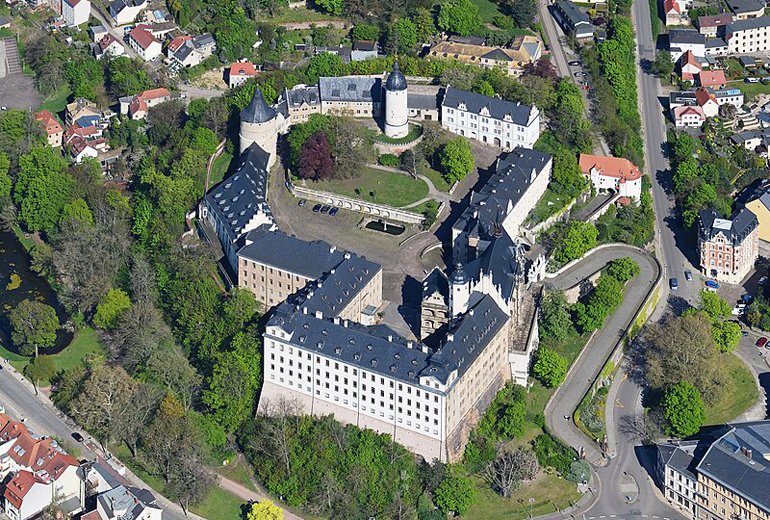
The palace underwent significant transformation over the centuries, evolving from a medieval fortress into a magnificent Baroque residence. Originally constructed as a castle and administrative centre, Altenburg Residential Palace later served as the residence of the Dukes of Saxe-Altenburg. The current splendour of the palace owes primarily to the comprehensive Baroque renovation undertaken in the 18th century, which created magnificent banqueting halls and impressive living rooms adorned with ornate stucco work, murals, and elaborate decorations. The palace complex combines nearly 1,000 years of architectural history, seamlessly blending elements from the Middle Ages through to the Baroque period. One of the palace's most treasured features is its late Gothic palace church, which houses the renowned Trost organ from 1739.
Today's visitors can explore a fascinating array of cultural treasures within the palace walls, including the magnificent banqueting halls and ducal chambers spanning from the 17th to 20th centuries. The palace houses an exceptional collection of art and handicrafts from its princely past, featuring the Porcelain Cabinet with exquisite East Asian exhibits from Bernhard August von Lindenau's collection. Most uniquely, the palace showcases both historical and contemporary playing cards that reflect Altenburg's tradition as a centre of card production, with visitors able to discover traditional printing techniques in the card-making workshop. The extensive palace park, spanning over 400 years of garden design evolution from Renaissance through Baroque to Romantic landscape styling based on English models, features historic elements such as the orangery with its light-flooded garden hall, the tea house, and the former palace garden theatre.
Description
Altenburg Palace unfolds as a ensemble of architectural splendours and lavish interiors, envelop by an elegant park that breathes centuries of garden artistry. Its façades, born of Gothic austerity and Baroque flourishes, present a harmonious dialogue between vertical pinnacles, ornate gables and stately sandstone walls. From the moment one steps into the courtyard, the palace’s layered past reveals itself in carved reliefs, sweeping staircases and rusticated arcades, each recounting a chapter of princely pageantry.
Architectural Highlights
Altenburg Palace marries medieval fortress elements with 18th-century Baroque grace.
- The main façade features balanced symmetry, pilastered bays and a central pediment crowned by a ducal crest.
- Stucco-adorned halls boast high ceilings punctuated by rococo mouldings, frescoed lunettes and chandeliers that scatter soft candlelight over richly patterned parquet floors.
- The Palace Church, set into the eastern wing, reveals slender buttresses and soaring vaulted ceilings; within, the Trost organ of 1739 stands as both visual jewel and a conduit for Baroque sonority.
Interior Treasures
A tour of the state rooms immerses the visitor in courtly elegance:
- The Banqueting Hall dazzles with its pale-blue ceiling plastered in arabesques and gilded motifs, while long gilt mirrors amplify the sense of space.
- In the Porcelain Cabinet, delicate East Asian pieces from Duke Bernhard August’s collection are displayed in glass-fronted alcoves, their fine blues and pinks contrasting with the warm wood panelling.
- The Card Room honours Altenburg’s role in playing-card production, showcasing historical decks and traditional printing tools alongside contemporary designs in glass vitrines.
The Palace Park
Nestled directly beyond the palace walls, the park offers over four centuries of garden styles:
- A formal Renaissance parterre with clipped box hedges and gravel walks leads the eye towards the Baroque orangery, whose tall windows bathe a glass-roofed saloon in light.
- Winding paths usher visitors into a Romantic landscape garden, where ancient oaks guide the way to a secluded tea pavilion and a raised terrace overlooking the town.
- Scattered statuary, a reconstructed garden theatre, and the adjacent Lindenau Museum—home to exquisite Italian panel paintings—extend the experience of artistic refinement into every corner of the grounds.
Getting There
By train The nearest major railway station to Altenburg Palace in Bamberg is Bamberg Hauptbahnhof. From there, you can take regional trains to the station closest to Altenburg, but be aware that there is no direct train to the palace itself. After arriving at Bamberg station, you can either walk to the palace (approximately a 40-minute walk and uphill climb), or connect to local bus routes for part of the journey.
By coach or bus There are no buses that travel directly to Altenburg Palace. However, you can catch several local buses (such as the 901, 908, or 910) from central Bamberg towards the hill. Get off at stops like Laurenziplatz or Hezilostrasse, from where it’s a 15- to 20-minute uphill walk to the castle. Be sure to check schedules, as some routes—like the 910—run as infrequently as once an hour.
By car Travelling by car is the most convenient way to reach Altenburg Palace. There are free public parking spaces near the castle: one close to the entrance and another larger lot a short walk away, with a pleasant 10-minute stroll uphill through the forest to reach the palace. The official address for navigation is Altenburg 1, 96047 Bamberg.
Best Time to Visit
Visit to Altenburg Palace is at its most delightful between late spring and early autumn, when mild temperatures and longer daylight hours combine to showcase both the palace’s Baroque splendour and its gracious gardens at very best. From May to September daytime highs hover between 20 °C and 25 °C, with June and July offering the sunniest skies and blossoming roses, while September brings slightly cooler air and fewer visitors. To avoid the height of the summer crowds, consider an early‐morning weekday visit in June or a late‐afternoon tour in September, when the light softens and you can savour the palace’s historic rooms and terrace views in tranquillity.


