



| Contents |
|---|

Introduction
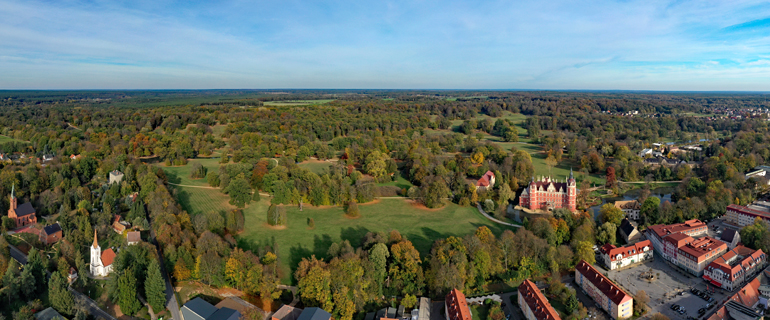
Straddling the German-Polish border along the River Neisse, Muskau Park stands as one of Europe's most magnificent examples of 19th-century landscape architecture and a testament to the visionary genius of Prince Hermann von Pückler-Muskau. This extraordinary 559-hectare UNESCO World Heritage Site, created between 1815 and 1844, exemplifies the English garden movement at its finest, where sweeping parkland, serpentine waterways, and carefully orchestrated vistas blend seamlessly with the natural topography of the region. The prince's revolutionary approach to landscape design—treating the entire park as a single, harmonious composition rather than a collection of separate elements—has created a living masterpiece that transcends national boundaries and continues to inspire visitors with its sublime beauty. Today, this cross-border paradise offers an unparalleled opportunity to experience the romantic ideals of landscape gardening whilst exploring a unique cultural heritage that celebrates both German and Polish traditions in one of Europe's most peaceful and enchanting settings.
Interesting Facts about Muskau Park
- Muskau Park is a UNESCO World Heritage cultural landscape famed for its 19th-century English-style design, inscribed in 2004 as a joint German-Polish site.
- The park uniquely spans the German–Polish border along the Lusatian Neisse, with significant areas on both sides connected by rebuilt pedestrian bridges.
- Covering roughly 830 hectares in total, it is often described as the largest English-style landscaped park in Central Europe.
- Prince Hermann von Pückler-Muskau created the park between 1815 and 1845 as a “painting with plants,” integrating vistas, water features, and the surrounding townscape.
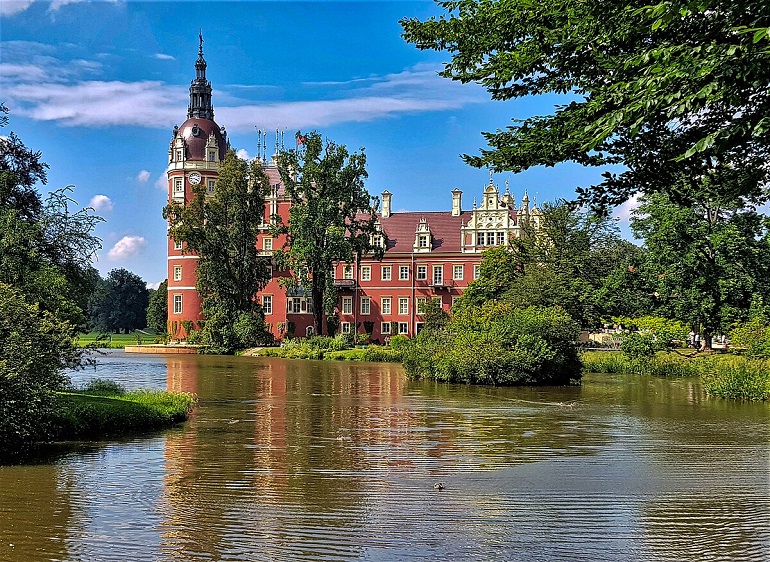
- The park’s composition centres on the New Castle and a network of terraces and viewpoints orchestrating long, picturesque sightlines across the Neisse valley.
- A 2003 reconstruction re-linked the park’s divided halves with a pedestrian bridge, restoring the historic cross-river continuity of Pückler’s design.
- Pückler’s influential “Notes on Landscape Gardening” (1834) distilled principles evident at Muskau and helped shape modern landscape architecture beyond Europe.
- The grounds include features such as the Castle Garden, spa park, orangery, arboretum, and the historically rebuilt English Bridge, adding layers of horticultural and architectural interest.
- On the Polish side, expansive lower park gardens and fields complement the more urbanised German portion around Bad Muskau.
- The park’s buffer zone embraces Bad Muskau and Łęknica to safeguard designed vistas and the broader cultural landscape context.
History
The Aristocratic Vision and Early Development
Muskau Park traces its origins to the early 19th century when Prince Hermann von Pückler-Muskau (1785-1871), a Prussian aristocrat and visionary landscape designer, inherited the estate following his father's death in 1811. The site had historical significance dating back to the 13th century, when a fortress on the River Neisse at Muskau was first mentioned under the rule of Margrave Henry III of Meissen. After extensive studies in England, where he was inspired by English gardening traditions, Pückler announced his ambitious plans to the citizens of Muskau on 1st May 1815, proposing to create a naturalistic park that would "embellish the town with a grand and sumptuous garden". His vision was revolutionary for its time - to create an extensive landscape park that would encompass the entire town "in a way not done before on such a grand scale", integrating nature, culture, technique, and spirit into one harmonious design.
Construction and Remarkable Transformations
The park's construction began in earnest during 1815, coinciding with northeastern Upper Lusatia falling under Prussian rule. Pückler's ambitious project involved extraordinary measures, including the planting of 800,000 trees and 42,000 bushes beginning in spring 1817, the alteration of the River Neisse's course, and the relocation of an entire riverside village that interfered with his park concept. The works encompassed remodelling the Baroque "Old Castle", constructing a Gothic Revival chapel, an English cottage, several bridges, and an orangery designed by Friedrich Ludwig Persius. Pückler also reconstructed the medieval fortress as the "New Castle", which served as the compositional centre with a network of radiating paths and pleasure grounds influenced by the ideas of Humphry Repton, whose son John Adey worked at Muskau from 1822. The prince established an international school of landscape management in Bad Muskau and his wife Lucie von Hardenberg also contributed to the park's development.
Ownership Changes and UNESCO Recognition
Financial difficulties forced Prince Pückler to sell his beloved estate in 1845 due to enormous debts, ending thirty years of his direct involvement in the park's creation. The following year, Prince Frederick of the Netherlands acquired the property and employed Eduard Petzold, Pückler's disciple and renowned landscape gardener, to complete the original design. Upon Frederick's death in 1881, ownership passed to his daughter Princess Marie, who subsequently sold the estates to the Arnim family. The park suffered significant damage during World War II, with both castles and all bridges across the Neisse destroyed, and the Arnim family dispossessed in 1945. Following German reunification, the German portion was transferred from Bad Muskau to the Free State of Saxony in 1992. In a remarkable testament to international cooperation and the park's enduring significance, Muskau Park was inscribed on the UNESCO World Heritage List in July 2004 through a joint German-Polish application, recognising its "utopian" design incorporating native plants and the nearby town, and its profound influence on landscape architecture development.
Description
The Landscape Design
The park epitomises the concept of "painting with plants" – a revolutionary approach that eschewed classical formality in favour of enhancing the natural qualities of the existing landscape. The design philosophy centres on the visual relationship between the central New Castle and a series of topographical focal points, creating a masterfully fashioned network of vistas that unfold as visitors explore the grounds.
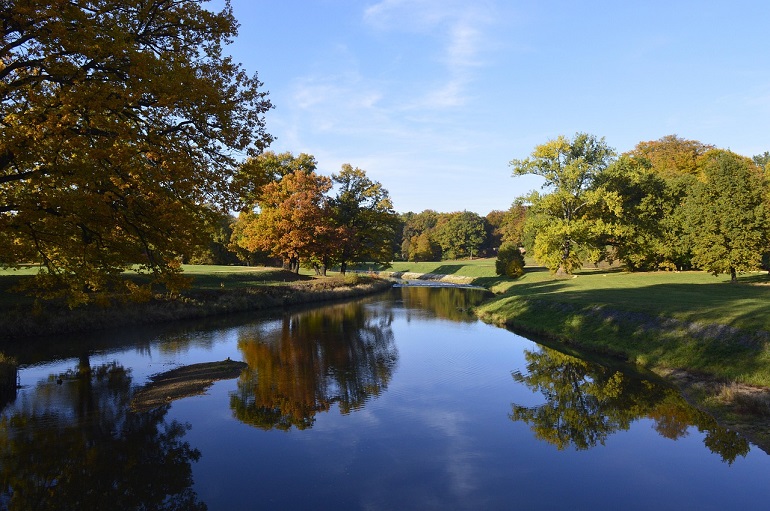
The extensive landscape encompasses diverse terrain including spacious meadow areas, artificial watercourses, small lakes, and dramatically elaborate pathways that guide visitors through ever-changing perspectives. The park's creator deliberately retained the existing topographical situation whilst subordinating architecture to the landscape dimension, creating what has been described as a "sensory space" where people instinctively feel at ease.
The Transnational Character
One of Muskau Park's most distinctive features is its cross-border nature – approximately two-thirds of the park lies in Poland (800 hectares) whilst the remaining third is situated in Germany (200 hectares). The Neisse River, which forms the international boundary, flows naturally through the heart of the park, creating a unique transnational cultural landscape. Four bridges historically connected both sections, though they were destroyed during World War II. The main Double Bridge has since been reconstructed, and the English Bridge's restoration is planned.
Key Areas and Features
Castle Complex and Gardens
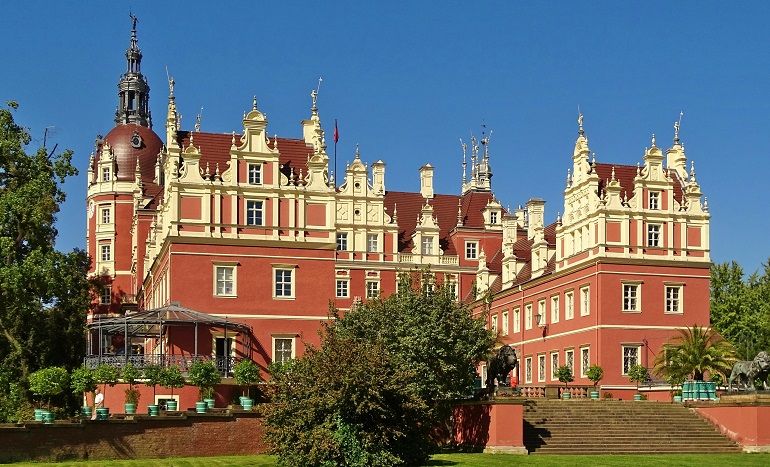
The German section houses the primary architectural elements, including the reconstructed New Castle (Neues Schloss) – an impressive baroque building with neo-Renaissance ornamentation that serves as the park's centrepiece. The Old Castle (Altes Schloss) complements this ensemble, whilst the castle tower provides a spectacular vantage point. From its 35-metre high viewing platform, visitors can survey the entire parkland and surrounding countryside in a magnificent panoramic display.
Immediately surrounding the castles are the meticulously designed Pleasure Grounds – small, imaginative gardens that serve as the transition between the formal castle environs and the expansive park beyond. The complex includes three distinct flower gardens: the palace garden, manor garden, and blue garden, each offering its own unique character and seasonal displays.
The Orangery and Botanical Collections
The park features a significant orangery complex originally constructed from a former brewery, which historically housed an impressive collection of citrus plants and exotic species. Adjacent to this is the Castle Nursery with its kitchen garden, where remarkable horticultural achievements still take place – including the cultivation of pineapples, maintaining a tradition from the prince's original era.
Of particular botanical significance is the extensive arboretum – described as one of the largest collections of tree species in Central Europe. This scientific collection was expanded from 1857 onwards for testing trees, bushes, and shrubs, contributing to the park's role in advancing horticultural knowledge.
Water Features and Bridges
The park's water system represents a triumph of landscape engineering. The artificial watercourse called Hermannsneiße was created as a branch of the natural river, flowing through the Castle Park and expanding into Castle Lake. The system includes numerous smaller lakes and water features that add both visual appeal and practical drainage to the landscape.
The cast-iron Carp Bridge (Karpfenbrücke) provides spectacular views where the artificial waterway flows into Lake Lucie, offering one of the park's most photographed vantage points. Other significant crossings include the Viaduct, Książęcy Bridge, Bridge over the Ravine, and Royal Bridge with its distinctive openwork balustrade.
The Park on Terraces
The Polish section's centrepiece is the Park on Terraces – a partially wooded raised area on the east bank that was considered the heart of the original design. These elevated terraces, some crowned with ancient oaks, overlook the river and provide sweeping views across the wider parkland. Strategic stone benches mark the principal viewing points, allowing visitors to pause and appreciate the carefully orchestrated vistas.
Hill and Mountain Parks
The Hill Park encompasses the western hills running alongside Bad Muskau town, featuring a panoramic path that offers picturesque views of the town houses, castle, and vast parkland. Dense grove plantings screen the adjacent residential areas, creating a seamless integration of urban and natural environments.
The Mountain Park area, shaped by Ice Age geological processes, presents more dramatic terrain with impressive gorges, picturesque ledges, and romantic clearings accessed by narrow, sometimes steep branching paths. This section includes the remnants of the historical spa facilities, including the site of the former Hermannsbad.
Natural Features and Wildlife
The park's natural environment supports diverse wildlife populations, with visitors frequently spotting deer, wild boar, and numerous bird species including herons, ducks, geese, and various passerines. The Eichsee lake in the northern section features romantic shoreline paths leading to secluded spots, complete with a charming small waterfall.
The landscape showcases the region's unique geology as part of the Muskau Arch UNESCO Global Geopark – one of Central Europe's most beautifully shaped compressive moraines. The Neisse River cuts up to 30 metres deep into the terrain, creating varied topography enhanced by post-mining lakes that shimmer in striking colours.
The Castles of Muskau Park
Neues Schloss (New Castle)
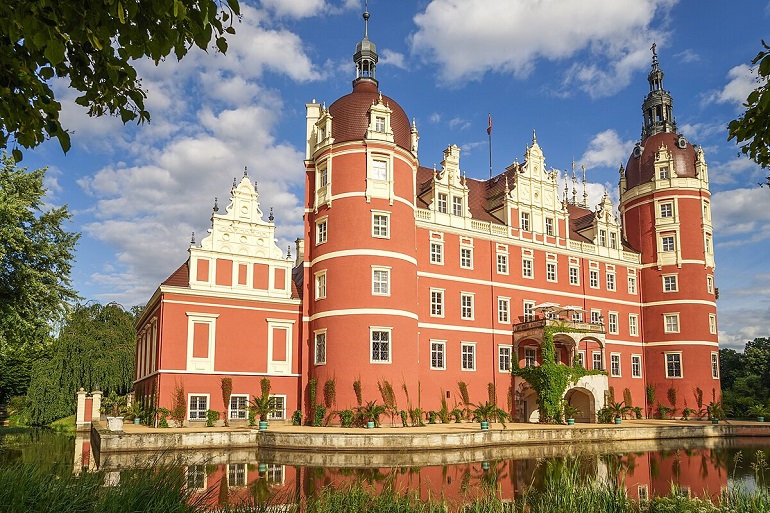
The Neues Schloss serves as the architectural and compositional centrepiece of Muskau Park. This impressive baroque building with neo-Renaissance ornamentation was constructed in the 19th century as Prince Hermann von Pückler-Muskau's reconstruction of a medieval fortress. The design philosophy placed it at the heart of the park with a network of paths radiating outward, creating visual relationships throughout the landscape.
The castle's most dramatic feature is its 35-metre-high tower, which provides a spectacular viewing platform offering panoramic views across the entire parkland and surrounding countryside. Visitors can climb the tower for an unparalleled perspective of Pückler's masterpiece spread out below.
Tragically, the Neues Schloss was destroyed by fire in 1945 and remained in ruins for decades. However, through a painstaking reconstruction project completed in 2013, the castle has been faithfully restored to its former glory. Today, it houses a permanent exhibition devoted to Prince Pückler that offers fascinating insights into the park's eccentric and visionary founder. The castle also contains visitor facilities including tourist information, a gift shop, and a café with a lovely terrace where visitors can rest whilst taking in views of the surrounding gardens.
Altes Schloss (Old Castle)
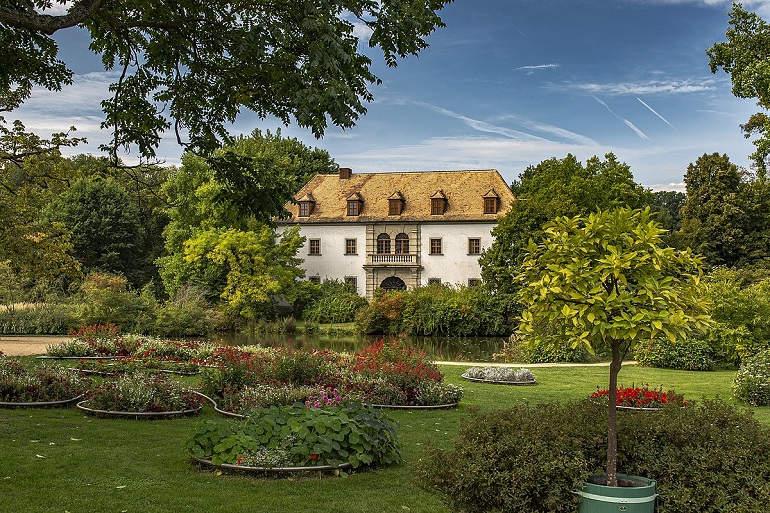
The Altes Schloss complements the New Castle within the overall architectural ensemble. This structure represents the remodelled baroque elements of the original castle complex, having been transformed during Prince Pückler's extensive renovations. The Old Castle forms part of the integrated castle complex that sits majestically alongside Castle Lake (Luciesee), creating one of the park's most photographed and iconic views.
The castle's position within the landscape demonstrates Pückler's philosophy of subordinating architecture to the natural environment whilst still maintaining its importance as a focal point for the park's design.
The Estate Farm Complex (Schlossvorwerk)
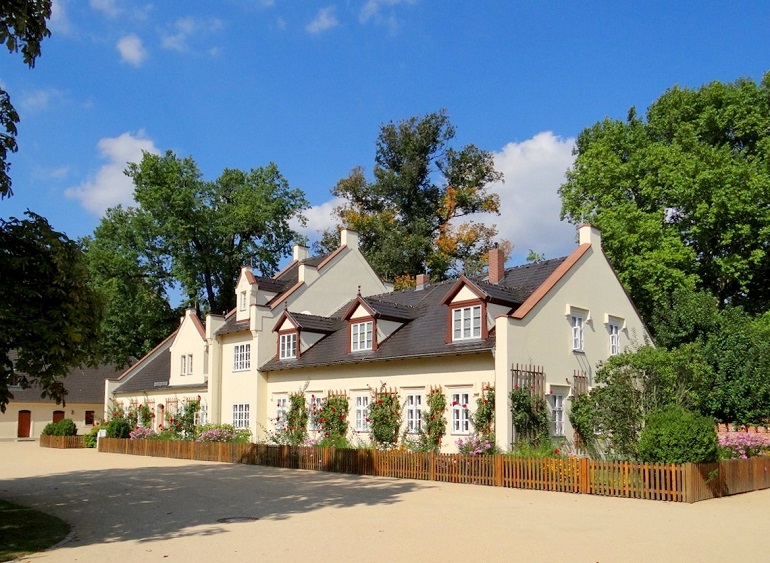
The Estate Farm complex represents the economic heart of the original estate and includes a fascinating collection of buildings from different historical periods. This complex showcases the practical side of estate management whilst maintaining architectural harmony with the overall park design.
Key buildings within this complex include:
The Former Stables (Ehem. Marstall)
The impressive stable buildings reflect the importance of horses in both the practical management of the estate and the recreational activities of the aristocratic residents.
The Former Coach House (Ehem. Remise)
These buildings housed the various carriages and coaches essential for transportation around the extensive estate and to neighbouring properties.
The Former Riding School (Ehem. Reithalle)
This substantial building provided covered facilities for equestrian training and activities, essential for the aristocratic lifestyle of the period.
Residential Buildings
The complex includes various residential buildings that housed estate workers and provided accommodation for visitors and staff.
The Orangery
The Orangery stands as one of the park's most significant horticultural buildings. Originally constructed from a former brewery, this substantial glasshouse complex historically housed an impressive collection of citrus plants and exotic species. The building demonstrates the 19th-century fascination with cultivating tropical and subtropical plants in northern European climates.
The Orangery continues to serve its original purpose whilst also functioning as an administrative centre. It houses the offices of the Fürst-Pückler-Park Bad Muskau Foundation, which manages the German portion of the park. Adjacent to the Orangery is the Castle Nursery with its kitchen garden, where remarkable horticultural achievements continue, including the cultivation of pineapples - maintaining a tradition from Prince Pückler's original era.
The Kavalierhaus (Cavalier House)
The Kavalierhaus provided elegant accommodation for guests and members of the court. This building exemplifies the attention to architectural detail throughout the estate, ensuring that even functional buildings contributed to the overall aesthetic harmony of the park.
Additional Historic Structures
The Gloriette
This ornamental garden pavilion provides a romantic focal point within the pleasure gardens surrounding the castle, offering visitors a place to rest whilst enjoying carefully composed views.
Park Gates and Enclosures
The park gates and boundary walls were designed to create elegant entrances to the estate whilst maintaining the visual connection between the park and the surrounding landscape.
The Gothic Revival Chapel
Built during Prince Pückler's renovations, this small chapel reflects the romantic movement's fascination with medieval architecture and provides a spiritual focal point within the estate.
Bridge Architecture
The Cast-Iron Carp Bridge (Karpfenbrücke)
This elegant structure provides spectacular views where the artificial waterway flows into Lake Lucie and represents fine examples of 19th-century iron work.
The English Bridge
This historic footbridge over the Neisse has been destroyed and reconstructed several times throughout history. The faithful reconstruction completed in 2011 now connects the German and Polish sections of the park, symbolising international cooperation and reconciliation.
The Fuchsia Bridge (Fuchsienbrücke)
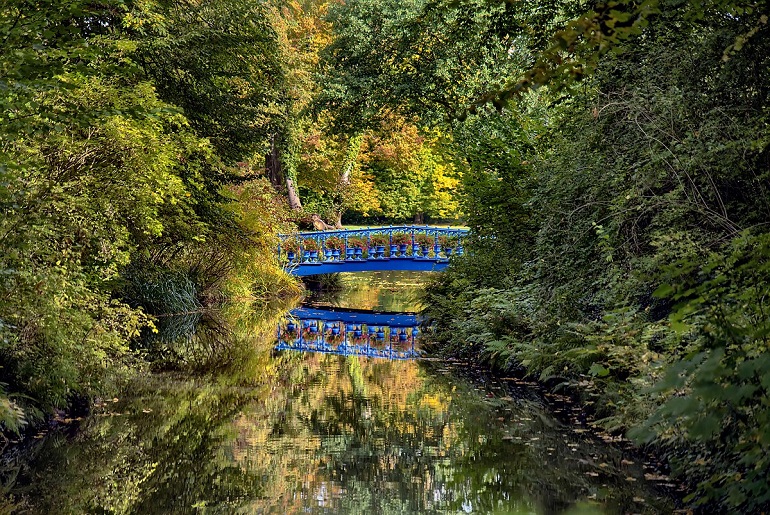
The Fuchsienbrücke is the popular name for the cast-iron bridge located in the park's Blue Garden. Its official name is the Blue Bridge (Blaue Brücke). It was originally built in 1826 and later reconstructed in 1983. The name "Fuchsia Bridge" comes from its characteristic and vibrant fuchsia plantings during the summer months.
Additional Bridges
The park includes numerous other bridges including the Viaduct, Książęcy Bridge, Bridge over the Ravine, and Royal Bridge with its distinctive openwork balustrade, each designed to enhance specific views and provide elegant passage over the park's extensive water features.
Former Spa Buildings
In the Mountain Park area, remnants of the historical spa facilities can still be found, including:
The Former Bath House (Ehem. Badehaus Hermannsbad)
This building served the estate's spa function when therapeutic bathing was fashionable among the aristocracy.
Villa Bellevue and Villa Caroline
These elegant villas provided accommodation for spa guests and demonstrate the high architectural standards maintained throughout the estate.
All these buildings work together to create a comprehensive architectural ensemble that supports and enhances the landscape design, demonstrating Prince Pückler's vision of integrating built and natural environments into a harmonious whole. The careful restoration and maintenance of these structures ensures that visitors today can experience the full scope of this remarkable 19th-century landscape achievement.
Visitor Experience and Activities
Muskau Park offers multiple ways to explore its extensive grounds. Cycling is particularly popular and recommended given the park's vast scale, with approximately 50 kilometres of pathways winding through the landscape. Bike rental facilities are available on-site during the main season (April to October).
For those preferring a more leisurely approach, horse-drawn carriage rides provide an authentic way to experience the park, following the original creator's recommendation for visitors. Guided walking tours are offered regularly, typically lasting 1.5 to 4 hours depending on the route chosen.
The park also connects to several long-distance cycling routes, including the 630-kilometre Oder-Neisse Cycle Path, the 500-kilometre Prince-Pückler Path, and the 260-kilometre Frog Cycle Path through the Upper Lusatian landscape.
Boat excursions along the Neisse River provide yet another perspective on the landscape, with rubber dinghy tours running from the old weir near the orangery to downstream destinations, offering visitors the opportunity to view the garden artistry from the water.
The park represents not merely a tourist destination but a living testament to innovative landscape design – a place where human creativity and natural beauty combine to create an environment of exceptional aesthetic and cultural significance that continues to inspire visitors and landscape architects worldwide.
Getting There
By train Take regional trains to Weißwasser (Oberlausitz) via Cottbus or Görlitz (from Berlin or Dresden, change at one of these hubs), then continue by local bus to Bad Muskau for the park entrances; in season, the heritage Waldeisenbahn Muskau narrow-gauge line links Weißwasser with Bad Muskau, dropping you a short stroll from the grounds.
By coach or bus Long-distance coaches run to Cottbus and Görlitz, where frequent regional buses connect to Bad Muskau (stops such as “Markt” or near Schloss Muskau); if you’re coming from the Polish side, local buses to Łęknica place you within an easy walk of the park gates across the pedestrian bridges.
By car From Dresden or Görlitz, follow the A4 then the B156/B115 to Bad Muskau; from Berlin, take the A13/A15 towards Cottbus and continue on the B115 to the town—Muskau Park is well signposted, with car parks near Schloss Muskau and other entrances on both the German (Bad Muskau, Saxony) and Polish (Łęknica) sides.
Best Time to Visit
The best time to visit Muskau Park is during the warmer months from late spring through early autumn, particularly between May and August, when the weather is most favourable and nature is in full bloom. Summer offers ideal conditions for exploring the UNESCO World Heritage landscape with temperatures ranging from 17°C to 22°C and the longest daylight hours, making it perfect for walking, cycling, and enjoying outdoor activities. The park receives 6-7 hours of sunshine daily during these months, allowing visitors to fully appreciate the mature heritage trees, historic buildings, and picturesque scenery that spans across both the German and Polish sides of the River Neisse. Whilst the park remains open year-round and can be enjoyed in any season, autumn also presents an excellent alternative when the leaves change colour, creating spectacular displays against the carefully designed English landscape garden that has been maturing for over two centuries.