



| Contents |
|---|

Introduction
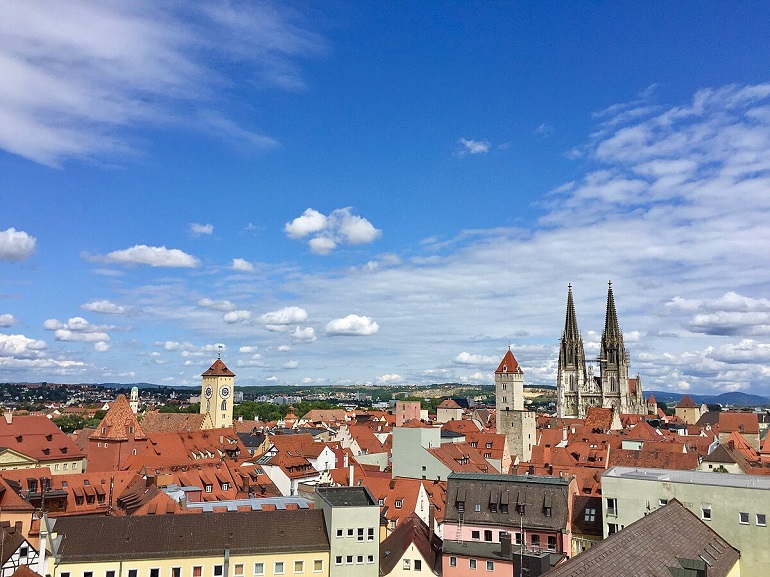
Regensburg (pop. 151,000) is one of Germany’s oldest cities, emerging as a Celtic settlement, followed by a Roman fortress established in 179 CE. It served as Bavaria's first capital in the 11th century and developed as a prosperous medieval city. Mostly spared by Allied bombings in WWII, the very colourful historic centre has over 1500 listed buildings and has been a UNESCO World Heritage Site since 2006. Highlights include the 12th-century Stone Bridge, St Peter’s Cathedral—Bavaria’s only example of French Gothic—and the former Imperial Diet hall. Once a free imperial city and a major trade hub on routes to Italy, Bohemia and beyond, today Regensburg combines its richly preserved historic core with a vibrant student population of around 32,000, two universities and a lively café and beer-garden culture.
Interesting Facts about Regensburg
- Regensburg’s Old Town is a UNESCO World Heritage Site thanks to its remarkably well-preserved medieval architecture.
- The Stone Bridge, built in the 12th century, is one of the oldest surviving bridges in Germany and was a major medieval engineering achievement.
- Regensburg began as a Roman fort called Castra Regina, founded in CE 179, and you can still see remnants like the Porta Praetoria today.
- The city is home to the largest medieval old town north of the Alps, featuring nearly 1,500 historic buildings.
- St. Peter’s Cathedral is a stunning Gothic masterpiece with intricate stained glass windows and one of Bavaria’s most significant churches.
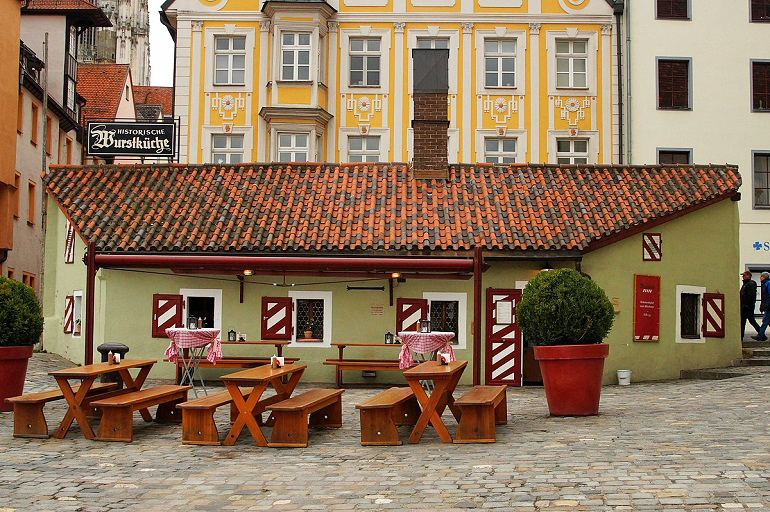
- The Historic Sausage Kitchen (Wurstkuchl) claims to be one of the oldest continuously operating public restaurants in the world, dating back to the 12th century.
- Regensburg was a Free Imperial City in the Holy Roman Empire, with a long history of self-governance and economic prosperity.
- During the Middle Ages, it is said that Regensburg boasted up to 60 towers, a symbol of wealth amongst patrician families, of which about 20 remain today.
- Regensburg has the highest concentration of bars in Germany, with over 500 in the city centre.
- Pope Benedict XVI (Joseph Ratzinger) was a professor at the University of Regensburg and maintained close ties to the city.
- The Reichssaal (Imperial Hall) in the Old Town Hall was an important venue for imperial assemblies during the Holy Roman Empire, notably the Perpetual Diet from 1663 to 1806.
- The city is famous for its Händlmaier mustard, often called the best mustard in the world, with an official shop for tastings.
- Despite the Second World War, Regensburg’s medieval buildings escaped significant damage, preserving its historical character.
- The city sits at the spot where the Danube, Naab, and Regen rivers meet, making it the Danube’s northernmost point.
- Notably, Oskar Schindler lived in Regensburg for a while after World War II before emigrating.
History
Regensburg's remarkable history spans over 2,000 years, beginning with prehistoric Celtic settlements along the Danube River. The oldest Celtic name for the area was Radasbona, which later became the foundation for Roman expansion. Around 90 CE, the Romans established their first military presence with a cohort fort in what is now the Kumpfmühl district. However, the city's true foundation came in 179 CE when Emperor Marcus Aurelius ordered the construction of Castra Regina (fortress by the river Regen), a massive legionary fortress built for the Third Italic Legion. This rectangular stronghold covered 25 hectares and housed approximately 6,000 soldiers, serving as the northernmost major Roman fortification along the Danube. Remnants of this Roman heritage survive today, including the impressive Porta Praetoria (north gate) and sections of the original fortress walls.
The medieval period marked Regensburg's golden age as one of Europe's most prosperous trading centres. From the 6th century onwards, the city became the seat of the Agilolfing dynasty and served as the first capital of Bavaria until the 13th century. In 739, St Boniface re-established the Bishopric of Regensburg, cementing the city's religious importance. The construction of the Stone Bridge between 1135 and 1146 proved transformative, as this architectural marvel opened major international trade routes connecting northern Europe with Venice. By the year 1000, Regensburg's population had grown to 40,000 inhabitants, making it one of the largest cities in the Holy Roman Empire. The city's wealth attracted merchants from as far as Paris, Kiev, and Byzantium, whilst its skilled craftsmen became renowned throughout Europe for their goldwork and fabrics. In 1245, Emperor Friedrich II granted Regensburg the status of a Free Imperial City, allowing it to govern itself with its own mayor and council.
Regensburg's political significance reached its zenith during the early modern period when it became the permanent seat of the Perpetual Imperial Diet from 1663 to 1806. This made the city effectively the co-capital of the Holy Roman Empire, second only to Vienna, attracting diplomats and nobility from across Europe. The city adopted Protestantism in 1542, creating a unique situation where the Protestant city coexisted with Catholic institutions, including the bishopric and three powerful monasteries that held imperial status. Following Napoleon's campaigns, Regensburg lost its imperial status in 1803 and was incorporated into the Principality of Regensburg under Carl von Dalberg. The city suffered significant damage during the Battle of Ratisbon in 1809, when French forces under Napoleon himself fought retreating Austrian troops, resulting in approximately 150 houses being burnt. Finally, in 1810, Regensburg was ceded to the Kingdom of Bavaria, marking the end of its role as an independent imperial city and beginning its integration into modern Germany.
Main Attractions
Old Town (Altstadt)
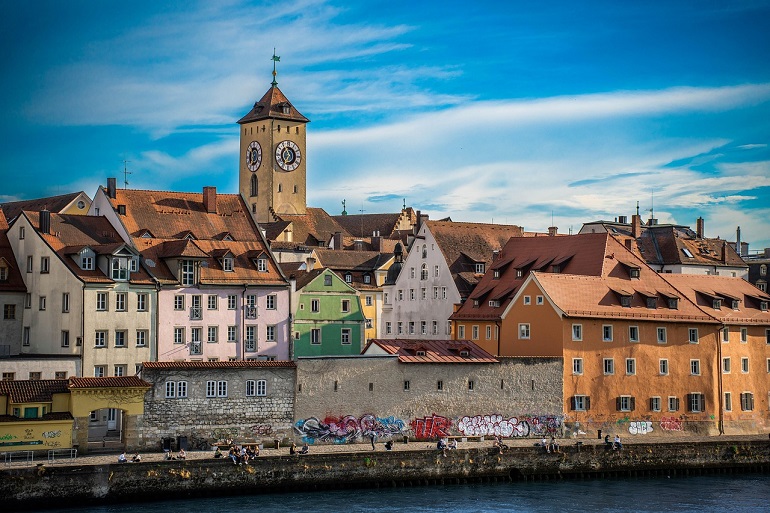
Regensburg's Old Town is a designated UNESCO World Heritage Site, recognised for being an exceptionally well-preserved example of a central European medieval trading centre. Its layout is characterised by a network of narrow, winding streets and historic squares, lined with approximately 1,500 listed buildings. Many of these structures, including numerous patrician houses and towers, date back to the 13th and 14th centuries when the city was a major political and economic power. The area is best explored on foot, and both guided and self-guided tours are available to navigate its historical landscape.
Main Landmarks
Old Stone Bridge (Steinerne Brücke)
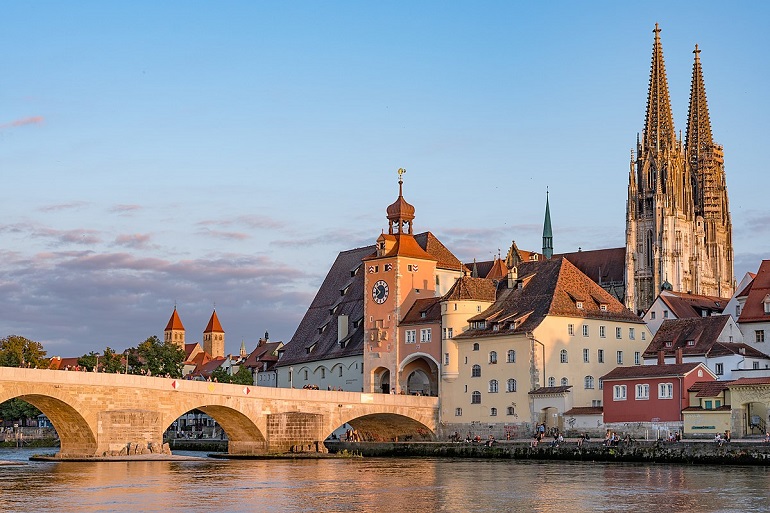
The Old Stone Bridge is a significant feat of 12th-century engineering and was a model for many other bridges built across Europe during the Middle Ages. For centuries, it was the only fortified bridge crossing the Danube between Ulm and Vienna, making it a vital component of international trade routes. Now exclusively for pedestrians, the bridge provides panoramic views of the Danube River and the city's skyline, including the spires of St Peter's Cathedral and the colourful facades of the buildings along the riverbank.
Salzstadel
The Salzstadel is a historic salt warehouse located near the Stone Bridge, playing a key role in Regensburg’s prominence as a medieval trading hub. Dating back to the 17th century, the massive structure was used to store and trade salt, a commodity so valuable that it shaped the city’s economic fortunes. Today, the Salzstadel’s impressive architecture serves as a striking riverside venue for events, exhibitions, and banquets, all while preserving echoes of the city’s mercantile past. Its characteristic high roof and robust stone walls are a reminder of Regensburg’s key position in European trade, and its location by the bridge offers scenic views of the Danube.
St Peter’s Cathedral (Dom St. Peter)
St Peter's Cathedral is the city's most prominent landmark and a principal example of German Gothic architecture. Construction began in the 13th century and was largely completed by the early 16th century, though its distinctive twin spires were not finished until the 1860s. The cathedral is renowned for its vast collection of medieval stained-glass windows, which date from the 14th century, as well as its ornate sculptures and the impressive sense of height within its nave. It is also home to the Regensburger Domspatzen, a world-famous boys' choir.
Old Town Hall (Altes Rathaus)
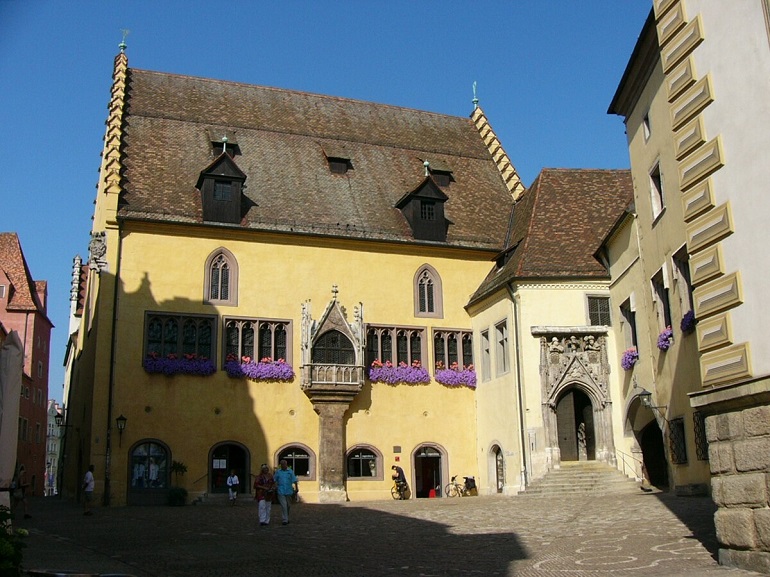
The Old Town Hall is a complex of buildings constructed between the 14th and 18th centuries. It holds major historical importance as the site of the Perpetual Imperial Diet (Reichstag) of the Holy Roman Empire from 1663 to 1806. Guided tours of the building allow access to the original Imperial Hall (Reichssaal), where the assembly met, as well as the medieval courtroom and the well-preserved dungeons and torture chamber, offering insight into the legal and political history of the era.
Main Squares
Haidplatz Square
Haidplatz is one of the largest and most historically significant squares in the Old Town. In medieval times, it served as a venue for jousting tournaments and public gatherings. Today, the square is surrounded by well-preserved historic buildings, including the baroque Thon-Dittmer-Palais and the Ark of the Golden Cross, a former inn. It remains a lively public space, filled with cafés and restaurants whose outdoor seating offers views of the surrounding architecture.
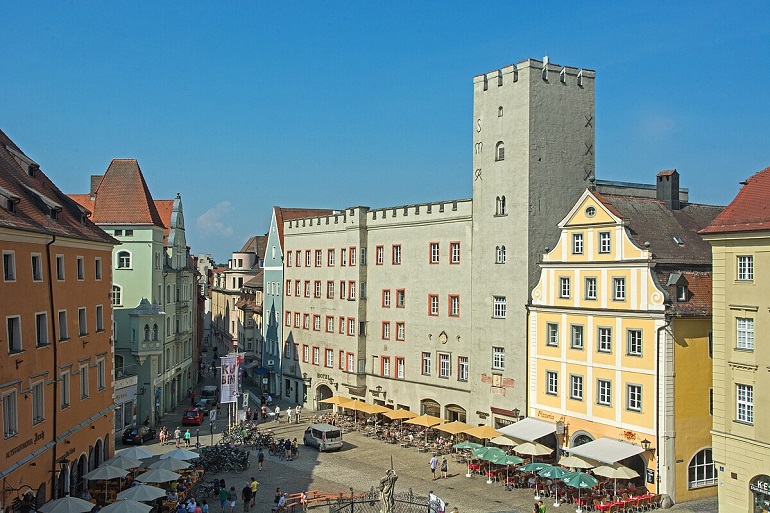
Old Cornmarket (Alter Kornmarkt)
The Old Cornmarket is a historic square that showcases several distinct architectural periods. It is bordered by the Herzogshof, a former ducal residence of the Bavarian dukes, and the Roman Tower, a 2nd-century watchtower from the original Roman settlement. Also on the square is the Alte Kapelle (Old Chapel), a Carolingian church that was later remodelled with a lavish Rococo interior in the 18th century, creating a stark contrast with its relatively plain exterior.
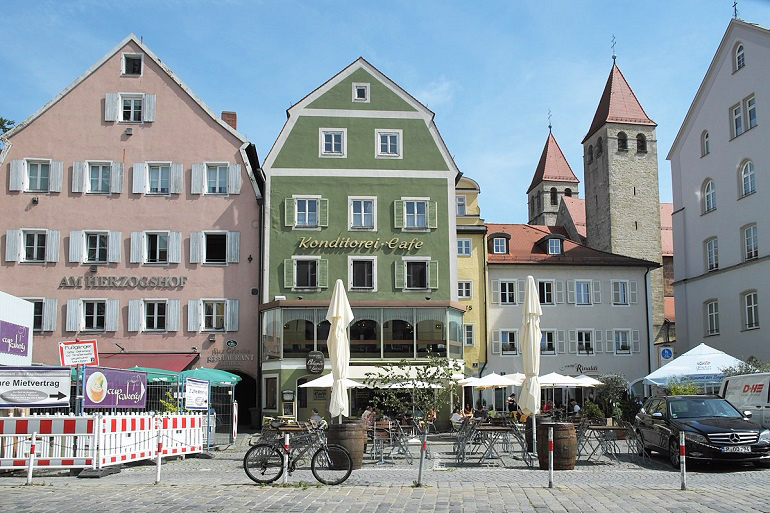
Fischmarkt
The Fischmarkt is one of the oldest market squares in Regensburg and serves as a street-like extension for the medieval market. Paved in 1529 based on Northern Italian models, the square still features the original stone benches from that era. It is surrounded by historic burgher houses, most of which have Gothic cores that were later altered between the 17th and early 19th centuries. Once the site of the city's fish market, this historic square continues to be a central point in the old town, located near other significant landmarks like the Stone Bridge.
Bismarckplatz
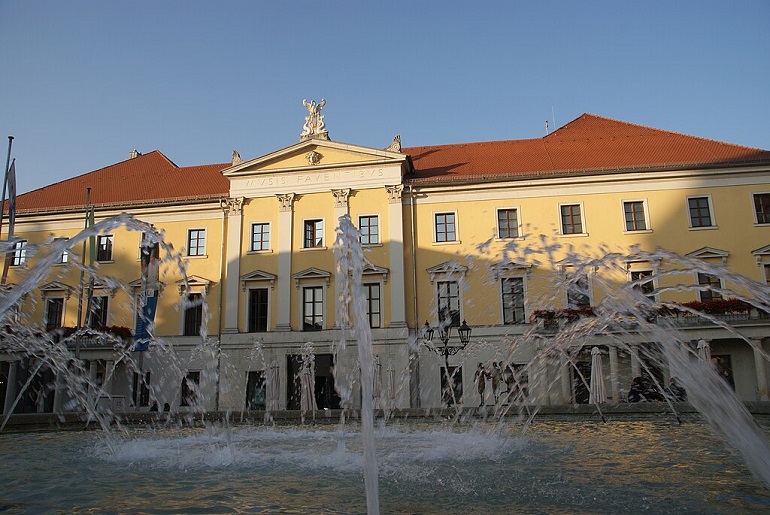
Located in the western part of the Old Town, Bismarckplatz is a grand square designed in the Neoclassical style and named in 1885 for the former Imperial Chancellor Otto von Bismarck. The square is dominated by two impressive buildings commissioned by Prince-Primate Carl von Dalberg in the 19th century: the Regensburg Theater and the Präsidialpalais. Originally a storage area in Roman times, the plaza now offers a high quality of stay with its two large fountains, a weekly market on Saturdays, and surrounding restaurants, making it a pleasant spot to relax and enjoy the city's atmosphere.
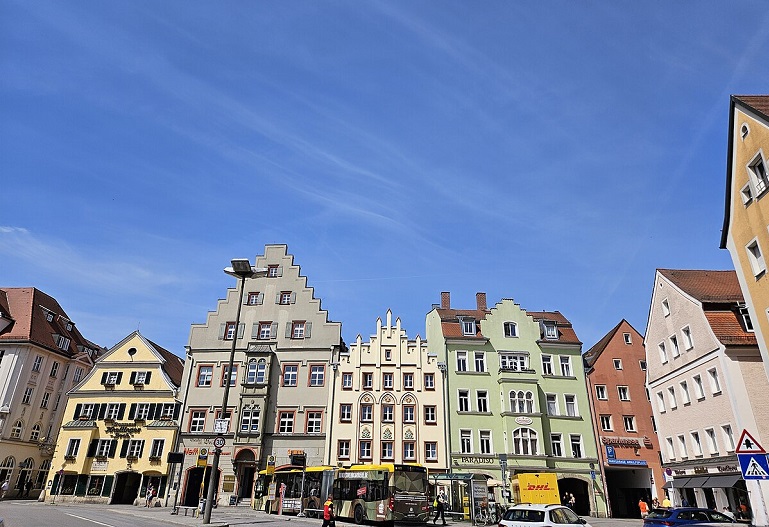
Arnulfsplatz
Arnulfsplatz is a vibrant square situated at the western edge of Regensburg’s historic center. Named after Saint Arnulf, this busy plaza marks an important traffic junction and has long been a central meeting place for both locals and visitors. Its blend of historic buildings with colorful facades, lively cafés, and convenient transport connections make it a lively starting point for exploring the city. Whether you’re hopping off a bus, enjoying outdoor seating at a restaurant, or taking in the urban atmosphere, Arnulfsplatz embodies the friendly, bustling spirit of Regensburg.
City Gates & Towers
Ostentor
The Ostentor (East Gate), built from 1284, is one of Germany's best-preserved Gothic city gate towers. This impressive five-story structure, flanked by two octagonal towers, was erected to protect the eastern part of the city, known as the "Ostenvorstadt". As the main gate on the road from Vienna, it was through the Ostentor that visiting emperors would make their ceremonial entrance into Regensburg. The gate features impressive defensive elements like machicolations (openings for pouring hot liquids on attackers) and slots for the portcullis, which can still be seen today.
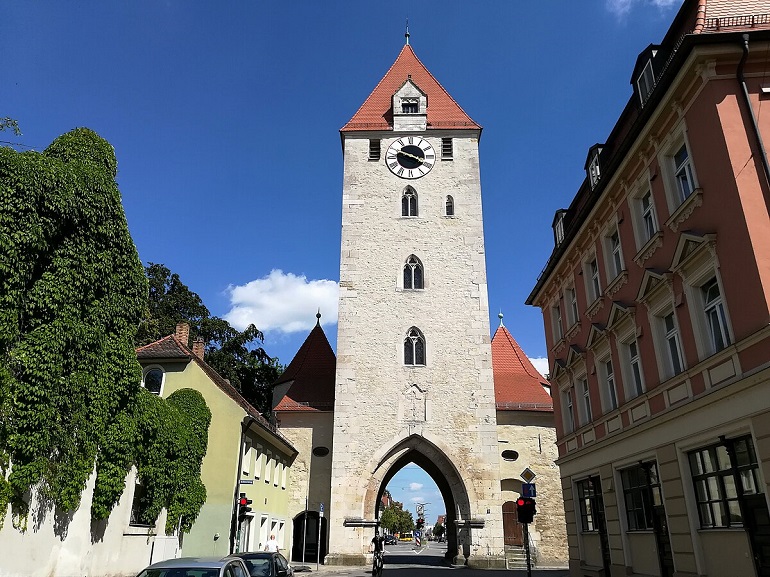
Emmeramer Tor
One of five remaining medieval city gates from fortifications built around 1320, the Emmeramer Tor stands on the southwest side of the Old Town, right next to the immense Schloss Thurn und Taxis. It replaced an older gate and for centuries provided crucial access to the southern countryside. After the city's fortifications were dismantled in the 19th century, the gate became the private property of the Thurn und Taxis family. An elegant, covered walkway was added in 1896 to connect the gate directly to the south wing of the palace, and Princess Margarete von Thurn und Taxis even had an art studio installed in the tower.
Goldener Turm
The Goldener Turm, or Golden Tower, stands as one of Regensburg’s most striking medieval landmarks. Built in the 13th century by wealthy patrician families, it reaches an impressive height of nearly 50 meters, making it one of the tallest residential towers of its era. With its distinctive golden facade and Gothic features, the tower originally served to display the affluence of its owners but also provided residential and commercial space. Located in the heart of Regensburg’s Old Town, the Goldener Turm is a testament to the city’s prosperous mercantile history and architectural ingenuity. Although not open for public tours, it remains an essential stop on a stroll through the old city, offering a glimpse into Regensburg’s past and an unmistakable silhouette against its skyline.
Baumburger Tower (Baumburger Turm)
The Baumburger Tower is a fine example of the medieval patrician towers that characterise Regensburg's skyline. Built in the latter half of the 13th century, these towers were status symbols for wealthy merchant families, inspired by Italian designs. The Baumburger Tower is a seven-storey structure with a distinctive crenellated roofline and is one of the tallest and best-preserved of its kind in the city.
Porta Praetoria
The Porta Praetoria is one of the oldest surviving Roman structures in Germany, dating back to its construction as a gateway in 179 CE. It originally served as the northern entrance to the Roman legionary fortress known as Castra Regina. Although parts of the original gate were integrated into later buildings, including the Bishop's Brewery, significant sections of the arched entrance and flanking towers remain visible and serve as a direct link to Regensburg's Roman past.
Other Historical Buildings
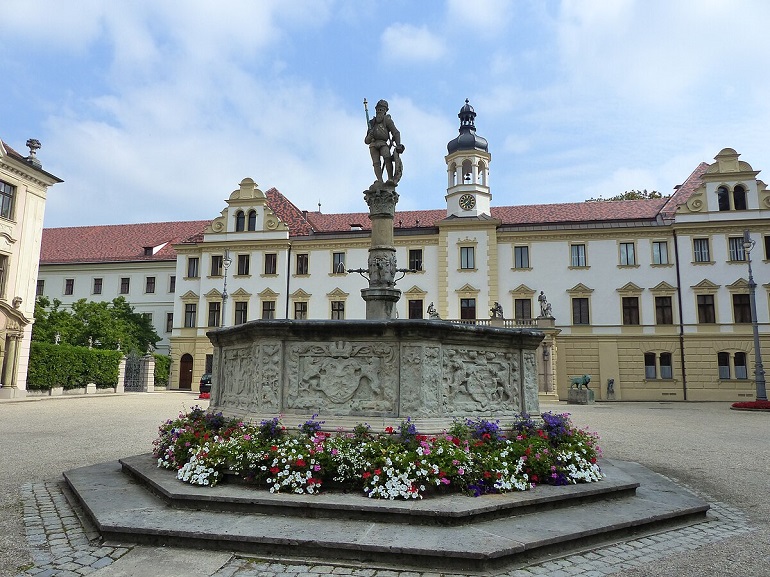
Schloss St. Emmeram, Thurn und Taxis
Schloss St. Emmeram, also known as Schloss Thurn und Taxis, is the palatial residence of the princely Thurn and Taxis family. The vast complex was created through the conversion and expansion of the former Benedictine monastery of St. Emmeram, which the family acquired following the secularization of church properties in the early 19th century. The palace is a blend of the old monastic buildings and 19th-century additions. It gains international recognition each year as the venue for the Thurn und Taxis Castle Festival, which has hosted world-renowned performers like Elton John and Eros Ramazzotti.
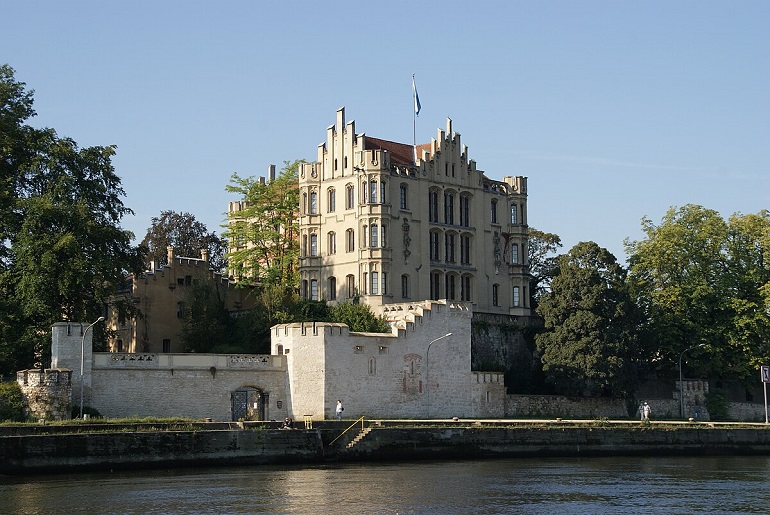
Königliche Villa (Villapark)
The Königliche Villa, or Royal Villa, was constructed on the banks of the Danube between 1854 and 1856 to serve as a summer residence for Bavarian King Maximilian II. Inspired by English royal castles, the architect Ludwig Foltz designed the palace in the English neo-Gothic style. It was built on the grounds of the former Ostenbastei, a part of the city's early modern fortifications. Today, the well-preserved villa is owned by the Bavarian state and houses the Bavarian State Office for Monument Preservation. The adjacent Villapark invites visitors for a stroll with lovely views of the estate.
Trinity Church (Dreieinigkeitskirche)
The Trinity Church is an early 17th-century Protestant church, noted for being one of the first specifically built for a Lutheran congregation in Bavaria. While its interior is an example of relatively austere early baroque design, its main attraction for many visitors is the tower. For a small fee, visitors can climb the tower, which provides one of the most comprehensive panoramic views available of Regensburg's historic Old Town, the Danube River, and the Stone Bridge.
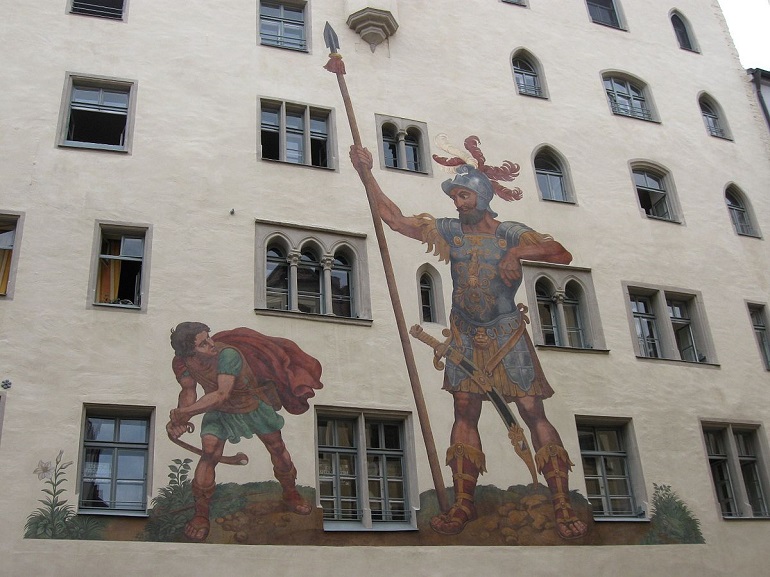
Goliath House (Goliathhaus)
The Goliath House is a prominent historic building in the Old Town, located near the foot of the Old Stone Bridge. It is instantly recognisable due to the large mural that covers its facade. The painting, created in 1573 by the artist Melchior Bocksberger, depicts the biblical story of David and Goliath. This striking piece of public art makes the building a popular landmark for photography and a key point of reference within the city.
Scots Monastery (Schottenkirche St. Jakob)
The Scots Monastery is a Romanesque church founded in the 11th or 12th century by Irish and Scottish Benedictine monks, from whom it gets its name. The church is architecturally significant, but its most famous feature is the north doorway, known as the Schottenportal. This 12th-century portal is covered in elaborate and enigmatic stone carvings of human figures, mythical creatures, and abstract patterns, the precise meaning of which remains a subject of scholarly debate.
Other Attractions
Wurstkuchl (Historic Sausage Kitchen)
The Historic Sausage Kitchen, or Wurstkuchl, is a small restaurant situated immediately adjacent to the Old Stone Bridge. It claims to be the oldest continuously operating public restaurant in the world, having served customers since its establishment in the 12th century, when it first catered to the labourers building the bridge. It maintains a simple, traditional menu, specialising in charcoal-grilled pork sausages served with sauerkraut and mustard.
River Cruises on the Danube
Cruises on the Danube River are a popular way to see Regensburg and its surroundings from a different perspective. Several companies operate from docks near the Old Stone Bridge, offering a range of trips. These include short, 45-minute sightseeing tours that navigate the city's central riverfront, as well as longer excursions that travel upstream or downstream to destinations such as the Walhalla Memorial. The main operating season is typically from April to October.
Top Museums
Historisches Museum (City Museum)
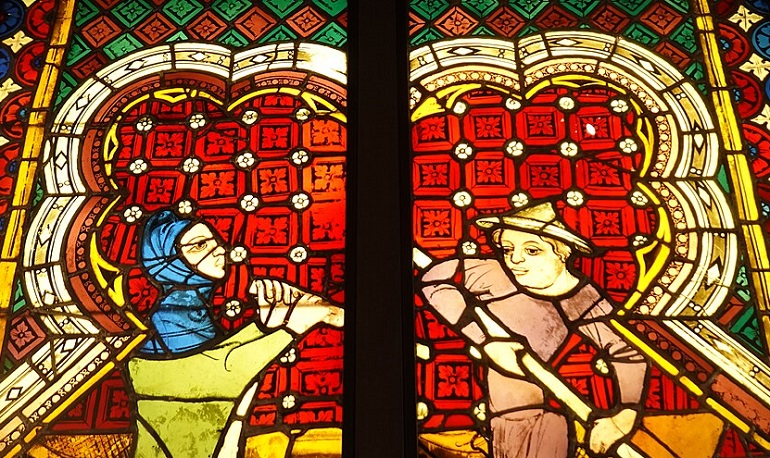
Housed in a former Minorite monastery, the Historisches Museum presents Regensburg’s development from the Stone Age through to the 19th century.
- Prehistory Department: Showcases regional archaeological finds, from a 250,000-year-old hand axe to Neolithic settlements, illustrating early human habitation.
- Roman Regensburg: Recreates Castra Regina with original inscriptions, coins and vivid models that bring the fort’s daily life to life.
- Medieval Cloister: Displayed within the preserved church and cloister, exhibits explore the political, economic and artistic richness of medieval Regensburg.
Haus der Bayerischen Geschichte (House of Bavarian History)
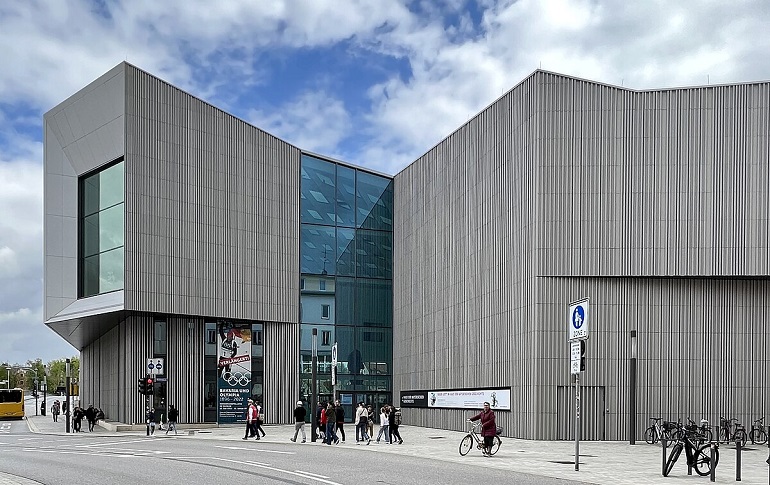
This museum narrates Bavaria’s journey from monarchy to contemporary Free State through personal artefacts and interactive media.
- Generational Galleries: Nine themed sections span from 1800 to the present, using objects such as King Ludwig II’s perfume to evoke personal stories.
- Multimedia Stations: Touchscreens and audio-visual presentations engage visitors with Bavaria’s political, social and cultural transformations.
Naturkundemuseum Ostbayern (Natural History Museum)
Located in the classicist Herzogspalais beside Herzogspark, this museum traces East Bavaria’s geological and ecological development.
- Geological “Lift” Experience: Visitors traverse successive rock strata, soils and minerals, from Jurassic formations to contemporary ecosystems.
- Naturalienkabinett: A reconstructed 1790s cabinet of curiosities features a wooden “library” and interactive displays of living specimens such as bees.
- Outdoor Extensions: A pond and geological trail in the adjacent park extend the museum’s environmental narrative.
Regensburg Museum of Danube Shipping
Situated near the riverbanks, this maritime museum examines inland navigation on the Danube.
- Historical Exhibits: Model vessels, navigational instruments and archival photographs document 200 years of river commerce.
- Engine Room Reconstruction: Visitors can explore a fully restored steam engine from a 19th-century paddle boat, offering tactile insight into navigational technology.
Kepler’s Last Residence & Museum
In the house where Johannes Kepler spent his final years, this intimate museum honours the astronomer’s life and work.
- Original Furnishings: Period furniture and personal belongings recreate Kepler’s study and living quarters.
- Interactive Astronomy: Multimedia installations explain Kepler’s laws of planetary motion, linking historical context to modern science.
Kunstforum Ostdeutsche Galerie (Art Forum East German Gallery)
The region’s premier art museum specialises in works by artists from historic German eastern territories.
- 19th-Century to Contemporary Art: Paintings, sculptures and graphic works illuminate the cultural intersections of Central and Southeastern Europe.
- Thematic Exhibitions: Rotating displays focus on biographical narratives and the interplay of memory, displacement and identity.
Domschatz Museum (Cathedral Treasury)
Adjacent to St Peter’s Cathedral, the Domschatzmuseum houses one of Germany’s finest collections of ecclesiastical art.
- Liturgical Masterpieces: Exquisite reliquaries, chalices and vestments crafted between the 10th and 18th centuries demonstrate medieval goldsmith skill.
- Secular and Sacred: Illuminated manuscripts and altar panels reveal the interplay between religious devotion and artistic innovation.
Brückturm Museum (Bridge Tower)
Perched at the southern end of the 12th-century Stone Bridge, the Brückturm showcases the fortifications that once guarded Regensburg.
- Defensive Architecture: The tower’s interior passages and battlements offer a tangible sense of medieval city defences.
- Panoramic Views: Narrow windows frame the Danube and old town, illustrating the strategic importance of river crossings.
Golf Museum
Housed in medieval cellars, this specialist museum charts the evolution of golf in Europe.
- Historic Equipment: From 17th-century clubs to modern balls, the collection spans 1,200 artefacts that chronicle technological advances and sporting culture.
- Interactive Putting Green: A recreated practice area invites visitors to sample early 20th-century club designs.
Dackelmuseum (Dachshund Museum)
A whimsical celebration of Germany’s beloved dachshund breed, this niche museum offers both humour and canine history.
- Artistic Tributes: Paintings, sculptures and memorabilia pay homage to the dachshund’s role in Bavarian life.
- Breed Development: Exhibits explore selective breeding, hunting usage and the dachshund’s ascent to cultural icon.
Local Cuisine
A highlight for visitors is the iconic Bratwurst served at the historic sausage kitchen, Historische Wurstkuchl, where handmade sausages are grilled over open beechwood fires and paired with tangy sauerkraut and sweet mustard. Another not-to-be-missed delicacy is the famed Regensburger Wurst, a flavourful sausage unique to the city and enjoyed in crusty bread rolls with a generous helping of mustard. Lovers of comfort food will delight in Käsespätzle, a type of cheesy egg noodle, and Schweinshaxe, or roasted pork knuckle, both local favourites. Regional meals are typically accompanied by freshly baked pretzels and complemented by a glass of locally brewed Bavarian beer, making every meal in Regensburg a celebration of Franconian culinary heritage.
Shopping
In Regensburg, retail ranges from two major shopping centres to more than 500 outlets nestled among medieval lanes. The Donau-Einkaufszentrum, opened in the 1960s as Germany’s first large mall, houses around 140 shops, over 30 cafés and restaurants, plus 3 300 free parking spaces. Close to the main station, the Regensburg Arcaden span two levels with 95 stores and a mix of fashion, lifestyle and dining options. Within the UNESCO-listed Old Town, winding streets such as Ludwigstraße, Haidplatz and Kohlenmarkt offer a blend of independent boutiques, traditional craft shops and seasonal markets amidst historic patrician façades, making pedestrian shopping both varied and atmospheric.
Nature in and around Regensburg
Regensburg is surrounded by diverse natural landscapes, most notably the Danube Gorge (Weltenburg Narrows), a 5.5 km stretch where the Danube carves between limestone walls up to 80 m high, forming one of Bavaria’s oldest nature reserves and part of the Natura 2000 network. A short drive or cycle ride brings you to the Altmühl Valley Nature Park, covering nearly 3,000 km² of Jurassic limestone formations, fossil sites and meandering river valleys north of Regensburg. Closer to the city, the Dreifaltigkeitsberg offers a panoramic summit walk through mixed woodland to views over the Danube and Regensburg’s medieval skyline. In the Regental valley near Gibacht lies the Wackelstein, a precariously balanced boulder that can be made to rock with a gentle push, while just beyond the Reichenbach monastery the Pfaffenstein ridge rewards hikers with moss-covered rock faces and forest paths leading to a summit cross and sweeping vistas. These attractions combine to make Regensburg a gateway to some of Bavaria’s most striking natural scenery.
Herzogspark
Herzogspark is a public park located along the banks of the Danube, with origins tracing back to the 13th century. It combines formal garden design with elements of the city's history. The park includes a small botanical garden, a Renaissance garden, and a medieval tower known as the Prebrunnturm. Visitors can also see preserved sections of the old town wall, which have been incorporated into the park's landscape, offering a tranquil space with historical points of interest.
Getting There & Around
By train Regensburg is excellently connected to the European rail network, with direct services from major German cities like Munich and Nuremberg, as well as international links from cities such as Brussels and Prague. Fast InterCity and regional trains arrive at the central station, Regensburg Hauptbahnhof, making rail travel one of the most convenient and popular options for visitors.
By coach or bus Numerous long-distance coaches, including services from FlixBus and BlaBlaCar Bus, connect Regensburg with many German and neighbouring European cities. Buses typically arrive at the central bus station, which is conveniently located near the main railway station, providing an easy and comfortable journey into the city centre.
By car Regensburg sits at the intersection of two major motorways, the A3 and A93, offering excellent access for drivers coming from across Germany and neighbouring countries. Motorways run directly from cities such as Munich, Nuremberg, and Frankfurt, with well-maintained roads and clear signage that make the drive straightforward and enjoyable.
Best Time to Visit
The ideal time to visit Regensburg is during late spring and early autumn, specifically from May to June and September to early October. At this time, the weather is pleasantly mild, with fewer tourists than in the peak summer months, making it easier to explore the city’s UNESCO-listed Old Town, vibrant markets, and scenic riverside promenades. Visitors can enjoy open-air cafés, lively local festivals, and relaxed sightseeing without the summer crowds, allowing for a more authentic and comfortable experience in this historic Bavarian city.


