



| Contents |
|---|

Introduction
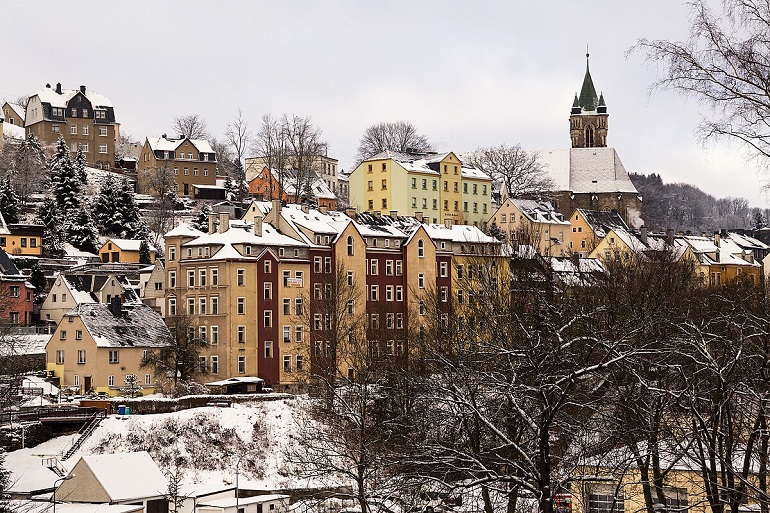
Annaberg-Buchholz (pop. 19,000) is a town situated in the Erzgebirge, or Ore Mountains. Its origins and historical wealth are rooted in the extensive silver mining that began with significant deposits discovered in the late 15th century. Founded in 1496 and combined in 1945 from the neighbouring towns of Annaberg and Buchholz, it developed as a planned mining settlement and later became associated with lace-making led by Barbara Uthmann. Notable sights include the late Gothic St Anne’s Church, the Frohnauer Hammer historic hammer mill, the Adam-Ries-Museum, and the Manufaktur der Träume dedicated to Ore Mountains folk art. The Annaberg-Frohnau mining landscape forms part of the transboundary Erzgebirge/Krušnohoří Mining Region inscribed on the UNESCO World Heritage List in 2019. Today the town has roughly 18,800 residents and a historic centre with museums and visitor mines that present its mining heritage.
Interesting Facts about Annaberg-Buchholz
- Annaberg-Buchholz is a historic Ore Mountains town formed in 1945 by merging the silver-mining settlements of Annaberg (1497) and Buchholz (1501).
- The town sits high in the Erzgebirge near the Czech border and serves as the capital of the Erzgebirgskreis district.
- Its prosperity began with rich 15th-century silver finds, which spurred rapid growth and cultural flowering.
- The late-Gothic St Anne’s Church (St.-Annen-Kirche) is the town’s emblem and the largest true Late Gothic hall church in Saxony.
- St Anne’s was laid out soon after the town’s founding (foundation stone in 1499) and became Lutheran in 1539.
- Master arithmetician Adam Ries lived and worked here; his former house now hosts the Adam-Ries-Museum dedicated to his life and works.
- With mining decline in the 16th century, pillow-lace making was introduced in 1561 and became a principal industry.
- The Frohnauer Hammer complex nearby preserves industrial heritage, reflecting centuries of regional metalworking.
- After the Second World War, Soviet-led uranium mining drove another phase of urban growth.
- Historic landmarks include the Gothic St Anne’s and the Baroque Bergkirche, which survived major 17th–18th-century fires.
- The Ore Mountain Museum recalls the town’s mining past and includes a visitor-accessible demonstration mine.
- Annaberger Kät, held annually after Pentecost, is regarded as the region’s largest folk festival.
- The town maintains lace-making traditions with technical training still present today.
History
The history of Annaberg-Buchholz begins with the early settlement of the heavily forested upper Ore Mountains by Franconian farmers during the 12th and 13th centuries. Several small settlements that would later become part of the modern town—including Frohnau, Geyersdorf, and Kleinrückerswalde—were first documented in 1397. However, the town's remarkable rise began in 1491 when rich silver deposits were discovered in the region. This discovery transformed the area from a sparsely populated wilderness into one of the most important mining centres in Germany. Under the patronage of George, Duke of Saxony, and Barbara Jagiellon, Annaberg was officially founded in 1496, with Buchholz following in 1501. By the early 16th century, Annaberg had become one of the largest towns in Germany with an estimated 8,000 inhabitants, making it the second largest town in Saxony at the time.
The silver mining boom brought extraordinary wealth and cultural prosperity to the region throughout the 16th century. The landmark St. Anne's Church, a magnificent late Gothic hall church, was built between 1499 and 1525 with its foundation stone laid just three years after the town's founding. The church became a regional pilgrimage destination after Barbara Jagiellon donated a relic of Saint Anne. Three prominent architects—Konrad Pflüger, Peter Ullrich, and Jacob Haylmann—created this architectural masterpiece, with Haylmann introducing Bohemian influences from his work on Prague Castle. The church houses the famous "Annaberg altar," donated by the miners' guild in 1521, featuring panel paintings from Lucas Cranach's studio and detailed depictions of 16th-century mining operations. The town also attracted the renowned mathematician Adam Ries, who published one of the first widely available arithmetic texts and established an arithmetic school that still operates as a museum today.
As silver mining declined in the 16th century, Annaberg-Buchholz successfully transitioned to other industries, particularly textiles and lace-making. Barbara Uthmann, an entrepreneurial widow, introduced braid and lace-making to the town in 1561, providing employment for many miners' wives. The craft was further developed in the 1590s by Belgian refugees fleeing Spanish persecution in the Low Countries. The industry flourished in the 19th century when both towns were connected by railway to Chemnitz and to each other, with specialised schools for lace-making established in both settlements. The population grew significantly during this period, with Annaberg having 11,693 residents in the 1870s, rising to 16,811 by 1905, whilst Buchholz had 9,307 inhabitants. The two separate towns of Annaberg and Buchholz were officially merged in 1945 to form the modern town of Annaberg-Buchholz. From 1952 to 1990, the town was part of the Bezirk Karl-Marx-Stadt during the East German period, and experienced another mining boom when Soviet organisations began extracting uranium after World War II.
Main Attractions
Historic Civic Spaces
Market Square (Marktplatz)
The Market Square forms the bustling heart of the town and is renowned for its lively atmosphere and architectural harmony. Surrounded by a harmonious blend of Renaissance and Baroque facades, the square is dominated by the imposing silhouette of St. Anne's Church, which serves as a visual anchor for both locals and visitors. At its centre stands the Barbara Uthmann Fountain, a tribute to the pioneering businesswoman whose efforts in promoting lace-making contributed to the town's prosperity. Lined with cafés, shops, and historic merchant houses, the Marktplatz often transforms into a vibrant gathering place for festivals and the renowned annual Christmas Market, filling the open space with regional handicrafts and culinary delights. The square's layout recalls its medieval origins, with streets radiating outwards, inviting exploration of Annaberg-Buchholz's picturesque old town.
Town Hall (Rathaus)
Towering over the Marktplatz, the historic town hall was rebuilt after several fires over the centuries. It showcases elements of both Renaissance and Baroque design, its sandstone facade embellished with decorative gables and the town's coat of arms. The town hall has long served as the centre of local government, with its council chamber once hosting discussions that shaped the town's response to the booms and busts of mining, the flourishing lace trade, and political changes across Saxony. Today, the building continues to house municipal offices and occasionally opens selected rooms for guided tours, allowing guests to admire antique furnishings and period artwork. It stands not only as a functional institution, but also as a symbol of Annaberg-Buchholz's enduring spirit and self-governance.

Religious Heritage
St. Anne's Church (Annenkirche)
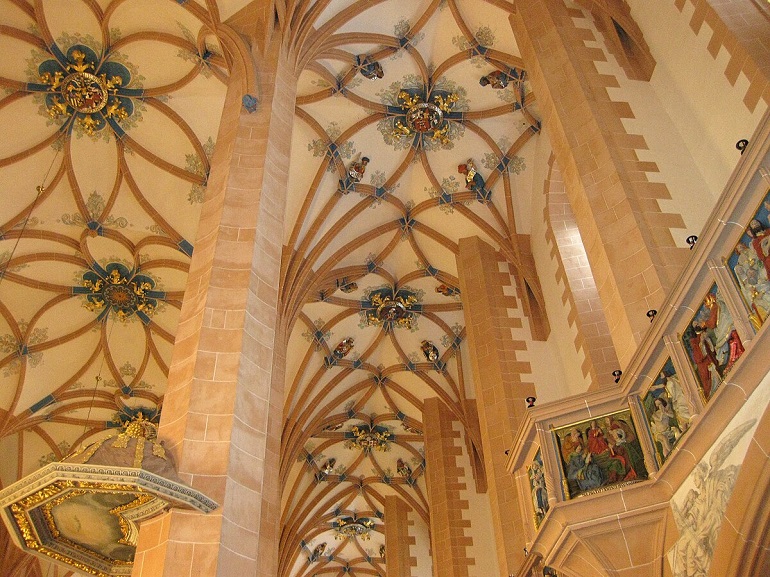
The St. Anne's Church stands as a testament to the economic boom wrought by the silver rush of the late 15th century, its hall church design marrying the soaring verticality of the Gothic with early Renaissance nuances. Completed in 1525, its interior still dazzles with the looping ribbed vaults introduced by Jakob Heilmann and the sculpted reliefs by Franz Maidburg that line the gallery balustrades. The main altar, crafted by Adolf and Hans Daucher in Augsburg, narrates the genealogy of Christ through the Tree of Jesse motif hewn from limestone and marble. Visitors can also admire the intricate carvings on the 'Schöne Pforte' portal and lose themselves in the harmonic resonance of the 4,583-pipe organ that fills the nave. A careful restoration between 1973 and 1998 has returned the church's furnishings to their original 16th-century splendour, offering a vivid encounter with Central European art-historical achievement.
Bergkirche St. Marien
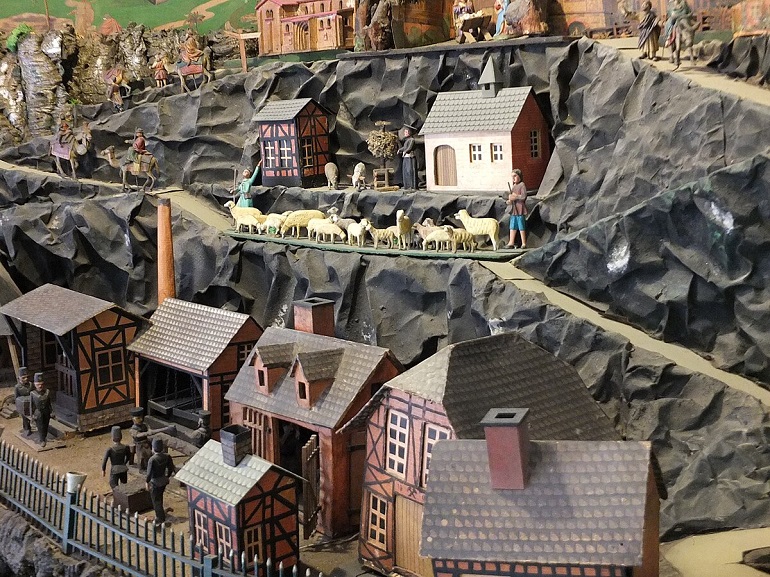
Perched on the north-west side of the Marktplatz, the Bergkirche St. Marien offers a vivid glimpse into the spiritual life of the region's miners, its construction financed by the 'Büchsenpfennige' contributions of the Annaberg bergknappschaft. Between 1502 and 1511, these miners erected the church for their own devotions, and despite fire damage over subsequent centuries, its current Baroque façade of 1736 conceals the slender Gothic pillars and star-shaped vaults within. During Christmas, the church hosts the 'Annaberger Krippenweg', a regional nativity trail that symbolises the union of mining heritage and faith through life-sized carved figures. After standing silent for years, the reinstatement of its bronze bell in 1996 renewed its voice in the town's soundscape. Today, the Bergkirche remains open year-round, welcoming visitors to explore its understated interior and to attend annual mountain-church services held by local mining brotherhoods.
Industrial Heritage
Exhibition Mine Markus Röhling Stolln
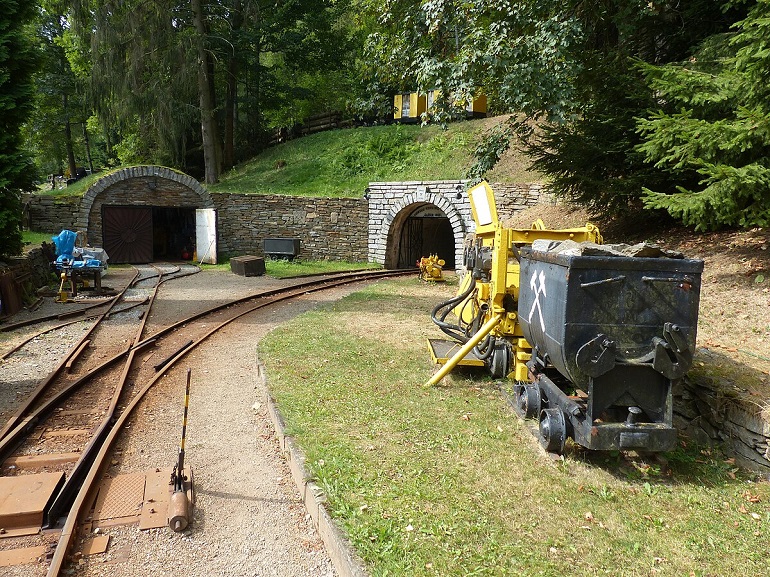
The Exhibition Mine Markus Röhling Stolln plunges visitors into five centuries of subterranean endeavour, beginning with a 600-metre journey aboard the narrow-gauge Grubenbahn into the heart of the Erzgebirge. As the train emerges into the 9-metre-high wooden wheel hall, travellers encounter original silver and cobalt mining exhibits dating from the 1730s, alongside displays of uranium extraction by the Soviet-led SAG Wismut after 1945. Knowledgeable guides illuminate the evolution of mining technology, from manual drills to mechanical winches, and demonstrate the replica wooden waterwheel that once powered drainage systems. The stable 8–10 °C tunnel environment makes for a surprisingly comfortable tour, even as the flicker of lantern-style lights evokes the miners' bygone realities. Concluding at the souvenir shop, visitors can take home handcrafted mementoes that honour the region's enduring spirit of geological exploration.
Outdoor Attractions
Wildtiergehege am Pöhlberg
Tucked away at the foot of the Pöhlberg, the Wildtiergehege am Pöhlberg offers a serene encounter with the fauna of the Upper Ore Mountains within a 1.3-hectare woodland enclosure. Here, red deer and fallow deer roam under the canopy of ancient oaks, while in adjacent pens, unmistakable residents such as European wildcats, stone martens and Eurasian pygmy owls can be observed at close quarters. Families delight in the petting area, home to miniature pigs, ponies and goats, which invites respectful interaction and is particularly popular with younger visitors. Meticulously maintained pathways ensure ease of access for all, and strategically placed benches encourage mindful appreciation of the forest
Top Museums
Frohnauer Hammer
The Frohnauer Hammer complex stands as one of Germany’s most significant monuments to early industrial craftsmanship and the mining tradition of the Erzgebirge. Originally constructed as a timber-framed corn mill in the 15th century, the site was adapted in the late 1400s into a mint instrumental in the region’s silver boom, and later became a thriving iron hammer forge that supplied the local mining industry with essential tools and implements. Today, the complex is preserved as a museum, where visitors can witness demonstrations of centuries-old hammer mill technology powered by water wheels, learn about Ore Mountain folk art in the adjacent gallery, and appreciate the intricate forged artefacts produced by generations of blacksmiths. The site’s baroque mansion and ancillary buildings further enrich the experience, offering insights into the lives and traditions of its skilled craftsmen. As part of the Mining Cultural Landscape Erzgebirge/Krušnohoří World Heritage Site, the Frohnauer Hammer is a compelling destination for those wanting to explore Saxony’s industrial heritage at its source.

Ore Mountain Museum (Erzgebirgsmuseum)
Situated opposite St. Anne's Church in a historic building, the Ore Mountain Museum is the town's primary cultural institution. The exhibits provide a comprehensive overview of the region's history, with a strong focus on the silver mining that brought prosperity to Annaberg. The museum also showcases an extensive collection of local folk art, including the intricate woodcarvings and delicate bobbin lace for which the Ore Mountains are famous. A highlight of the collection is a work by Lucas Cranach the Younger. Visitors can also descend into the "Im Gößner" visitor mine directly from the museum, offering a tangible connection to the lives of 16th-century miners.
Exhibition Mine Markus Röhling Stolln
For a deeper dive into the region's mining past, the Markus Röhling Stolln offers a guided tour that takes visitors 500 metres underground on a mine railway. The tour provides a journey through 500 years of mining history, from early silver and cobalt extraction to the uranium mining conducted by the Soviet Wismut corporation after World War II. A key attraction is the impressive reconstructed nine-metre-high water wheel, a testament to the engineering prowess of the time.
Besucherbergwerk Dorotheastollen
This visitor mine offers another opportunity to explore the subterranean world of the Ore Mountains. The Dorotheastollen was part of the "Himmlisch Heer" mine, which was one of the richest in the Annaberg district in the 16th century. Visitors can take guided tours, including a boat trip, through the historic tunnels to see evidence of silver, cobalt, copper, and uranium mining.
Factory of Dreams (Manufaktur der Träume)
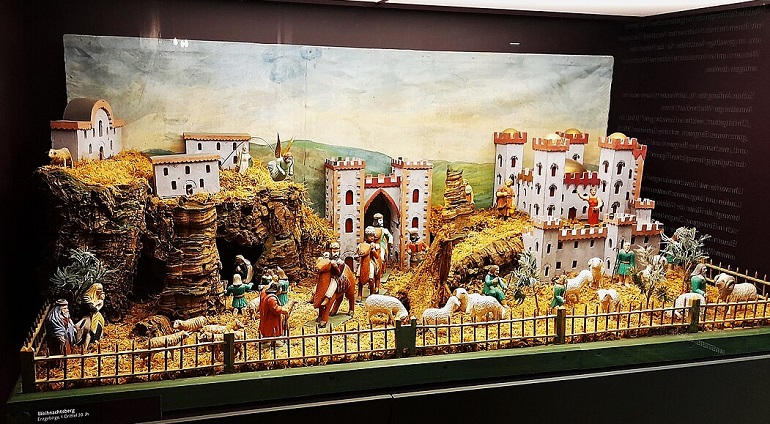
This museum is a whimsical celebration of the region's toy-making and folk art traditions. The "Factory of Dreams" houses an enchanting collection of over 1,500 handcrafted items from both the Saxon and Bohemian regions of the Ore Mountains. The displays feature a delightful array of traditional wooden toys, including nutcrackers, Christmas pyramids, and detailed miniatures. Interactive exhibits and workshops make it an especially engaging experience for families and anyone with an appreciation for fine craftsmanship.
Adam Ries Museum
Dedicated to the life and work of the influential 16th-century German mathematician Adam Ries, this museum is located in the house where he lived and worked. The exhibits explore his significant contributions to the field of arithmetic and his role in making mathematics accessible to the general public. The museum displays original manuscripts, early calculating books, and historical measuring instruments. Interactive stations allow visitors to try their hand at historical calculation methods, making for a fun and educational experience.
Museums in the Surrounding Area
Räuchermann Museum
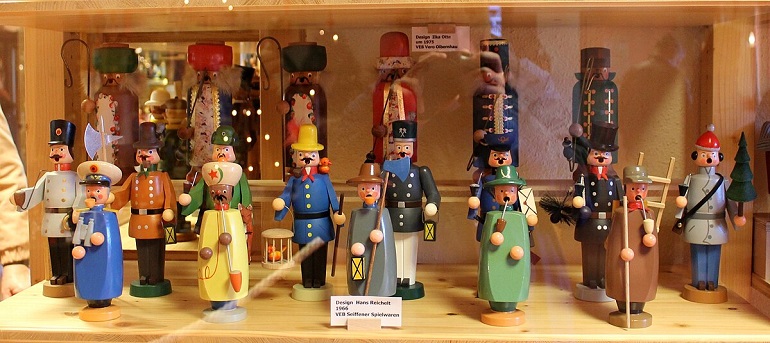
Located in the nearby village of Cranzahl, this museum is the first and only one in Germany dedicated to the "Räuchermann" or "smoking man," a traditional incense burner and a classic example of Ore Mountain folk art. The museum, housed in a former dye works, displays over 2,000 different smoking figures from the 20th and 21st centuries, showcasing the creativity and variety of this beloved local craft.
Heimatmuseum Mauersberg
This local history museum in the village of Mauersberg is dedicated to the lives and work of the brothers Rudolf and Erhard Mauersberger, two of the 20th century's most prominent church musicians. The exhibition on the ground floor features personal items and models of churches, including a detailed 15-square-metre model of Mauersberg as it looked in 1926, created by Rudolf himself. The upper floor hosts temporary exhibitions by regional artists.
Modellbahnland Erzgebirge
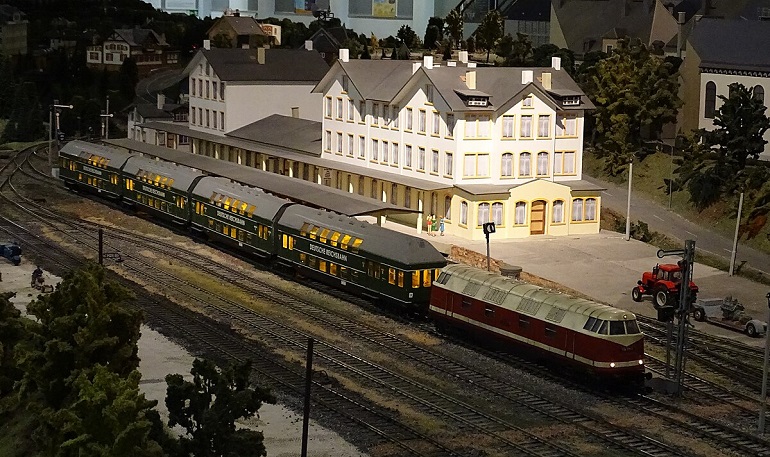
Situated in Schönfeld, this attraction is home to the largest Gauge 1 model railway layout in Europe. It features a detailed and accurate replica of the Upper Ore Mountains around Annaberg-Buchholz as it appeared in the 1980s. With over 30 computer-controlled trains running on 660 metres of track, the 770-square-metre exhibition is a delight for railway enthusiasts and families alike. The display includes 450 buildings, 40,000 trees, and a day-to-night cycle that adds to the charm.
Local Cuisine
Annaberg-Buchholz, set amid Saxony’s Ore Mountains, serves hearty mountain fare shaped by mining traditions, with potatoes, smoked pork, game and forest mushrooms at its core; local menus often feature Buttermilchgetzen (a crisp, oven-baked potato-and-buttermilk slice, often with bacon), sweet-savoured Quarkkeulchen (curd-and-potato fritters with a hint of cinnamon), the festive Erzgebirgisches Neunerlei (the symbolic “nine dishes” eaten on Christmas Eve), and beloved cakes such as Eierschecke and Stollen, best enjoyed with a glass of local beer or a herbal liqueur after a day exploring the town’s cosy cafés and Christmas market.
Getting There
By train Annaberg-Buchholz is well connected by regional rail: travel to Chemnitz (from Dresden, Leipzig and beyond) and change to the Erzgebirgsbahn towards Annaberg-Buchholz/Cranzahl, which serves several stops in town (Unterer Bahnhof, Mitte and Süd); alternatively, change at Flöha for the scenic Zschopau Valley route; services run throughout the day and offer an easy, reliable way into the Ore Mountains.
By coach or bus Long-distance coaches serve Chemnitz and Dresden; from either hub, continue by regional train or switch to regional buses into the Erzgebirge, with direct services to Annaberg-Buchholz and neighbouring towns from Chemnitz’s central bus stops; local buses also link Annaberg-Buchholz with Oberwiesenthal, Marienberg and Schwarzenberg, which is handy if you’re touring the area.
By car Approach via the A4 or A72 motorways to Chemnitz, then follow the B95 south towards the Ore Mountains—Annaberg-Buchholz is signposted along this route and lies at the junction with the B101; from the Czech Republic you can enter via the Vejprty/Bärenstein crossing; roads are winding and, in winter, can be snowy, so check conditions and allow extra time.