



| Contents |
|---|
Introduction
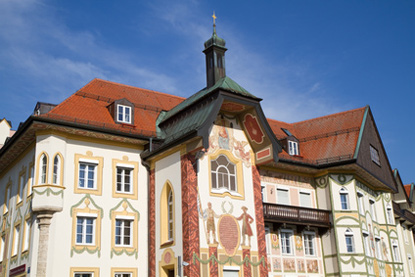
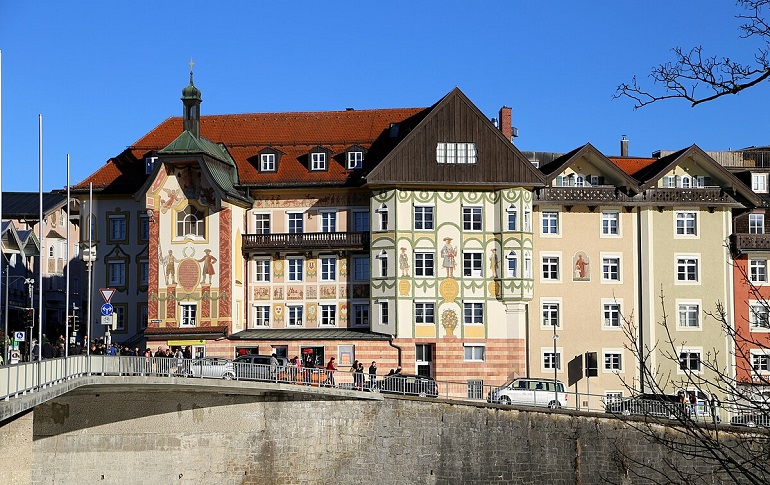
Bad Tölz (pop. 19,500) is a beguiling spa town with frescoed façades and an Alpine atmosphere situated on the eastern bank of the turquoise-blue Isar River. A favourite playground for Munich residents both in summer and winter, the area offers good rafting down the Isar River, hiking and skiing on the Blomberg mountain, and above all the swimming, water games and relaxation at the Alpamare centre - including Europe's longest waterslides. Renowned since the late 19th century for its iodine-rich thermal and moor baths, it retains a historic Old Town of baroque-style façades adorned with intricate Lüftlmalerei frescoes along the pedestrian Marktstraße.
Interesting Facts about Bad Tölz
- Bad Tölz is a renowned spa town in Bavaria whose iodine-rich springs earned it the "Bad" (spa) title in 1899.
- The town sits on the banks of the Isar River, offering spectacular views of the Alps and charming riverside promenades.
- Its well-preserved medieval old town features colourful buildings, cobblestone streets, and traditional Bavarian architecture.
- Bad Tölz became prosperous in the Middle Ages due to its position as a trading centre for salt and other goods transported along the Isar.
- The Stadtpfarrkirche, built in 1466, showcases classic late-Gothic German architectural style and remains a significant local landmark.
- A distinctive annual Saint Leonard festival takes place every 6 November, reflecting the town’s historic role as a pilgrimage site.
- Bad Tölz was once home to 22 breweries and was an important centre for artistic cabinet-making in the 18th century.
- The town was influential during World War II, hosting both a Nazi officer training school and, later, a US Army base until 1991.
- Bad Tölz is the setting of the popular German television series Der Bulle von Tölz.
- The town is famously home to the Tölzer Knabenchor, a world-renowned boys’ choir.
- For many years, Bad Tölz featured Alpamare, Europe’s first indoor water park, which was a major attraction until its closure in 2015.
- Visitors enjoy the mild, stimulating Alpine climate, which historically attracted writers such as Thomas Mann.
- Its lively Marktstraße and Salzstraße remember the prosperity of salt traders, as celebrated by historic merchant houses now housing shops and cafés.
History
Archaeological finds indicate the presence of early settlers from the Hallstatt culture and evidence of Roman influence. The settlement is first mentioned as "Tolnze" near the end of the 12th century, with the castle constructed by Hainricus de Tolnze designed to control the river and overland trade routes. Bad Tölz developed significantly after being granted official market rights in 1331 by Louis IV, making it a key commercial hub for salt and lumber transported along the Isar.
The town suffered several setbacks during the Middle Ages, including a catastrophic fire in 1453 that destroyed much of the market street, church, and original castle. Thanks to Duke Albrecht III, Bad Tölz was rebuilt in stone and saw the construction of a new palace. The region endured turmoil through both the Thirty Years’ War and religious conflicts, but began to flourish anew in the 18th century, developing a reputation for brewing—at one time hosting 22 breweries—and for its artistic cabinet-making. A pivotal change occurred mid-19th century with the discovery of healing iodine springs, propelling Bad Tölz’s evolution into a spa and cure town. It officially gained the "Bad" (bath/spa) prefix in 1899, symbolising its transformation into a renowned health resort.
The 20th century brought both new challenges and roles for Bad Tölz. During the Second World War, an officer training school was established for the SS near the town, and a subcamp of the Dachau concentration camp operated locally. After the war, the former SS school became a US Army base until 1991. In more recent times, Bad Tölz has maintained its status as a beloved spa destination, famed for its picturesque medieval centre, Baroque architecture along Marktstrasse, and scenic Alpine views. Notable attractions have included the Stadtpfarrkirche church dating to 1466 and the innovative Alpamare, Europe’s first indoor water park, which operated until 2015.
Main Attractions
Kurpark Bad Tölz
Kurpark Bad Tölz is a well-maintained public park known for its tranquil environment and natural scenery, providing walking paths, green spaces, and areas for rest. It's accessible for people with limited mobility and is also suitable for families and dog walkers, making it an inclusive outdoor spot for relaxation and light hikes.
Blombergbahn Bad Tölz
Blombergbahn is a year-round destination featuring a double chair lift that brings visitors up Blomberg Mountain. The area offers extensive hiking trails, a summer toboggan run, and ski slopes during winter, as well as a mountain beer garden, making it a popular spot for adventurers and families alike.
Kalvarienbergkirche (Hl. Kreuz)
The Kalvarienbergkirche, or Holy Cross Church, is a significant Catholic church situated on a hill overlooking Bad Tölz. Besides its religious importance, the church is known for its panoramic views across the city and the Alps, drawing visitors interested in both local heritage and scenic vistas.
SCHWIMMBADTÖLZ
SCHWIMMBADTÖLZ is the town's indoor swimming and sauna complex, offering multiple pools, including facilities with diving boards and friendly staff. The venue is accessible for those with mobility needs, making it a reliable recreational choice in any weather.
Dachshöhlen
Dachshöhlen is a scenic hiking area located near Wackersberg, notable for its accessible out-and-back walking trails and suitability for families, children, and dog owners. The paths give visitors an opportunity to experience the local countryside and natural rock formations.
Kurhaus Bad Tölz
Kurhaus Bad Tölz is a historic building serving as an event, concert, and function venue, centrally located on Ludwigstraße. The Kurhaus grounds offer landscaped areas and public amenities, hosting a variety of local events and cultural performances throughout the year.
Top Museums
Tölzer Stadtmuseum
The Tölzer Stadtmuseum is an essential stop for anyone interested in the town’s rich and multi-faceted history. Housed in an architecturally impressive heritage building, the museum’s three floors are thoughtfully arranged into 38 thematic rooms. The exhibits cover everything from prehistoric settlement to skilled trades like glassmaking and clockmaking, the regional raft trade, and the booming brewing tradition that once defined the local economy. There’s a floor dedicated to local nobility and bourgeoisie, including a gem of the collection—the 18th-century golden gala-portechaisse, a rare baroque sedan chair. Art and sacred objects, marionette theatres, and multimedia presentations on 20th-century history round out the experience. The museum offers an in-depth, tactile encounter with the area’s culture, enhanced by hands-on displays and a family-friendly approach. Its only drawback is that, whilst broad, its focus remains tightly on Bad Tölz and its immediate region, so visitors seeking a wider Bavarian narrative should calibrate their expectations.
Bulle von Tölz Museum
The Bulle von Tölz Museum will delight fans of German television and pop culture—or simply those curious about the intersection of fiction and real place. Entirely dedicated to the much-loved TV police series 'Der Bulle von Tölz,' this museum is a playful, immersive celebration of the show’s characters, actors, settings, and behind-the-scenes lore. Visitors can browse original props and scripts, discover the series’ filming locations around town, and enjoy interactive displays, including the opportunity to sit at the detective’s desk for a keepsake photograph. Its central focus on a television show makes it a singular and rather niche destination, but even casual visitors may find it unexpectedly entertaining as a window onto Bavaria’s recent pop-cultural boom and Bad Tölz’s TV fame. The museum also hosts live performances, adding to its appeal for devoted fans. The main limitation is its specialised appeal; those unfamiliar with the series may find some of the references less compelling.
Walchenseekraftwerk (Walchensee Power Plant)
While not located directly in central Bad Tölz, the Walchenseekraftwerk is a highlight for those with an interest in engineering, the environment, or modern Bavarian history. This pioneering hydroelectric power plant, completed in the 1920s, has played a crucial role in the development of the region and the electrification of Bavaria. The informative visitor centre features comprehensive displays explaining the plant's innovative technology, the harnessing of natural resources, and the social debates it provoked in its time. Guided tours allow guests to descend into the turbine halls and experience first-hand the scale of this engineering marvel. Its difference from the other Bad Tölz museums lies in its technical and natural history focus rather than cultural or pop history. It is ideal for those seeking a break from traditional museum fare or travelling with older children and teens. The main drawback is the short trip required to reach it from Bad Tölz itself.
Local Cuisine
Bad Tölz's cosy inns and lively beer gardens serve up hearty Bavarian classics such as Schweinshaxe (crispy roasted pork knuckle), Weißwurst (tender white sausage made of veal and pork, best enjoyed with sweet mustard and a fresh pretzel), and Käsespätzle (cheesy egg noodles topped with golden fried onions). Also popular are Obatzda, a creamy Camembert cheese spread, and freshly baked Apfelstrudel, the perfect sweet finish to a meal. Bavarian meals in Bad Tölz are often accompanied by locally brewed beer or regional wines, all savoured in a warm and inviting alpine atmosphere that truly captures the spirit of the region.
Getting There & Around
By train Bad Tölz is easily reached from Munich by direct regional trains departing from München Hauptbahnhof, with frequent services throughout the day and a journey time of just under an hour. The route is scenic and comfortable, making rail travel a popular and convenient option.
By coach or bus Several regional and intercity buses connect Munich and surrounding towns to Bad Tölz, with stops at central locations such as Jahnstraße or Zob Isarkai. Bus routes operate regularly and offer flexibility for those travelling from various parts of Bavaria.
By car Travellers can reach Bad Tölz by car via the A95 motorway from Munich, followed by the B472 and B13 roads, with the drive typically taking around 45 minutes under normal traffic conditions. The roads are well maintained and the journey offers picturesque views of the Bavarian countryside.


