



| Contents |
|---|

Introduction
Located on the Baltic Sea coast between the islands of Rügen and Usedom, Greifswald (pop. 59,000) is a charming university town and historic Hanseatic port that was spared destruction in WWII. Established in 1456, the University of Greifswald is the fourth oldest in Germany, and one in four of the town's residents is a student. The town's history is marked by its membership in the Hanseatic League and a long period of Swedish rule, legacies visible in the extensive Brick Gothic architecture of its historic old town.
Interesting Facts about Greifswald
- Greifswald is both a Hanseatic port on the River Ryck and a university town on the Baltic coast of northeastern Germany.
- The city grew from the 12th-century Cistercian Eldena Abbey, whose romantic ruins were later immortalised by painter Caspar David Friedrich, born in Greifswald.
- The University of Greifswald, founded on 17 October 1456, is among Germany’s oldest universities and historically drew many students from Scandinavia and northern Europe.
- Greifswald’s skyline is defined by three Brick Gothic churches—St. Nikolai, St. Marien and St. Jacobi—dating largely from the 13th and 14th centuries.
- After surpassing Stralsund in 2021, Greifswald became the largest city in the Pomeranian part of Mecklenburg-Vorpommern.
- The city houses the Pomeranian State Museum and is closely associated with German Romanticism through Friedrich’s depictions of Eldena Abbey.
- A modern storm-surge barrier on the Ryck (Rycksperrwerk) protects Greifswald from Baltic Sea high tides and surges.
- The university’s Botanical Garden, established in 1793, is among the older scientific gardens of its kind and still features historic glasshouses.
- Greifswald’s economy and research profile expanded after German reunification, notably in biotechnology and life sciences.
- The nearby Lubmin area connects to the Nord Stream 1 gas pipeline, and the city is known in science circles for the Wendelstein 7-X fusion project.

History
The history of Greifswald begins with Danish Cistercian monks who founded Eldena Abbey at the mouth of the River Ryck in 1199. Originally, the area was unsettled woodland marking the border between the Danish Principality of Rügen and the Pomeranian County of Gützkow, both under Danish control at the time. The site was granted to the monks by Rugian Prince Jaromar I and included a natural salt evaporation pond crossed by an important trade route. The settlement was named Gryp(he)swold(e), meaning "Griffin's Forest" in Low German, supposedly after a mighty griffin living in a tree on what became the city's oldest street, the Schuhagen. The town developed according to a rectangular street scheme with church and market sites reserved in central positions, attracting primarily German settlers during the Ostsiedlung, though people from other nations and local Wends also came.
Greifswald received its market rights in 1241 from both Rugian prince Wizlaw I and Pomeranian duke Wartislaw III, followed by a town charter under Lübeck law in 1250. The salt trade helped establish Eldena Abbey as an influential religious centre whilst Greifswald became a renowned market town. By the late 13th century, steady population growth led to Greifswald becoming one of the earliest members of the Hanseatic League, significantly boosting its trade and wealth. The city's independence grew after 1296, when citizens no longer needed to serve in the Pomeranian army and dukes ceased residing there. In 1456, Mayor Heinrich Rubenow established the University of Greifswald, one of the world's oldest universities and amongst the first in Germany. During the Reformation, Eldena Abbey was secularised, its possessions falling to the Pomeranian dukes whilst its Gothic brick buildings were dismantled for local construction projects. The abbey eventually lost its separate status and was absorbed into Greifswald proper.
The Thirty Years' War brought devastating consequences as Greifswald was occupied by Catholic Imperial forces from 1627 to 1631, then by Swedish Protestant forces following the Treaty of Stettin. King Gustavus Adolphus of Sweden personally supervised the siege in June 1631, and upon the city's surrender, the university paid homage to him for liberation from Catholic forces. After the war's conclusion in 1648, Greifswald became part of Swedish Pomerania, remaining under Swedish rule until 1815. This period proved turbulent as the population had shrunk by two-thirds by 1630 due to starvation, leaving many buildings vacant and decaying. Brandenburg troops bombarded the city twice, in 1659 and 1678, with cannonballs from the second attack still visible in St Mary's Church walls today. During the Great Northern War, Russian Tsar Peter the Great allied with George I of Great Britain in the Treaty of Greifswald whilst besieging nearby Stralsund. Devastating fires in 1713 and 1736 destroyed numerous houses and the City Hall, though Swedish tax exemptions for rebuilding remained in force until 1824. In 1763, the Greifswald Botanic Garden was established. Swedish rule ended in 1815 when the region became part of the Kingdom of Prussia as the Province of Pomerania, later joining Germany in 1871.
Main Attractions
Marktplatz Greifswald
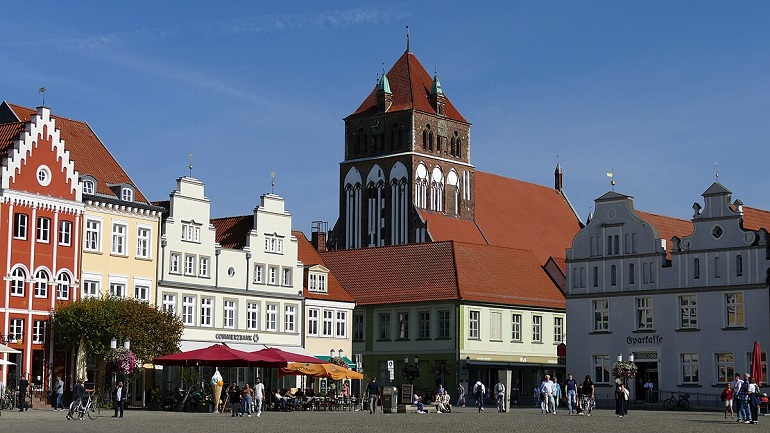
The Marktplatz is the historic core of Greifswald, bordered by restored gabled merchant houses and the Gothic-style Town Hall that reflects the Hanseatic city’s trading heritage. The square functions as the principal venue for markets and civic events and serves as a central orientation point for exploring the Altstadt. Architectural details include brick Gothic elements typical of the Baltic region, with façades reflecting different periods of reconstruction. The square connects directly to key streets leading to the cathedral quarter and the harbour, making it a practical starting place for walking tours.

St. Marien-Kirche
St. Marien-Kirche, or St. Mary’s Church, is an imposing brick Gothic church located in the heart of Greifswald’s old town. Characterised by its tall spire and ornate façades, the church dates back to the 13th century and has served as a major religious centre for the community. Its interior features vaulted ceilings, medieval furnishings, and notable artworks, while the exterior is marked by intricate brickwork typical of North German ecclesiastical architecture. The church remains active, hosting regular worship services as well as concerts and cultural events that are open to the public.
Rubenowplatz
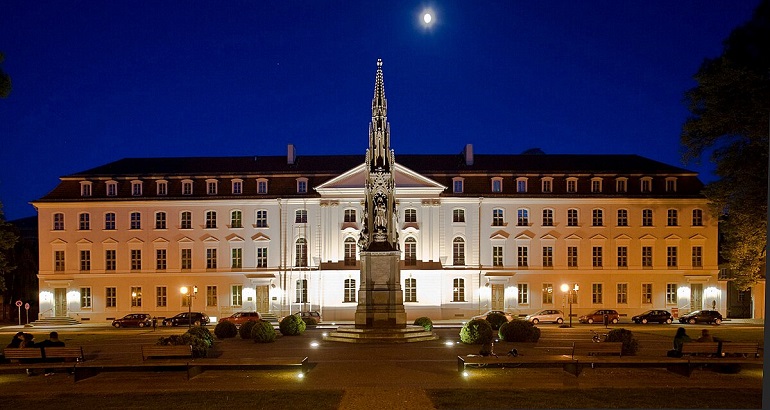
Rubenowplatz is a central public square in Greifswald, named after Gottlieb Rubenow, the founder of the University of Greifswald. The square is surrounded by significant university buildings, including the historic main building, and is often used as a meeting point for students and residents alike. With its landscaped gardens, mature trees, and prominent statues, Rubenowplatz offers a peaceful setting for relaxation and informal events. The square plays a central role during university ceremonies and local festivities, highlighting its importance within the academic and civic life of the city.
Wallanlagen mit Stadtmauer
The Wallanlagen with remains of the city wall form a green belt encircling parts of the historic centre, preserving sections of Greifswald’s medieval fortifications. Walking paths trace the former defensive lines, offering an easy route to view surviving wall fragments, ditches and landscaped embankments. The area functions both as an urban park and a heritage corridor, connecting to other historic structures including towers and gates. The terrain is flat and suitable for short strolls, with multiple access points from adjacent streets.
Fangenturm
The Fangenturm, known as the former prison tower, is a preserved defensive-judicial structure associated with Greifswald’s historical town fortifications. Its exterior provides a tangible reference to medieval urban security and legal practices, with masonry reflecting functional construction rather than decorative brickwork. The tower is principally appreciated from outside as part of a broader circuit of historic features, and it is commonly included in walking routes that also examine the remaining wall sections and gate sites. Interpretive context is often provided on local heritage boards in the vicinity.
Bockwindmühle Eldena
The Bockwindmühle Eldena is a traditional post mill near the Eldena district, representing historic wind-powered milling technology characteristic of northern Germany. Its form, with the entire body rotating on a central post to face the wind, illustrates a practical engineering solution used before the spread of tower mills. The setting allows observation of the mill’s external structure and mechanisms such as the sails and tailpole arrangement, offering clear educational value when combined with a visit to Eldena Abbey. The site is accessible for exterior viewing at all times, with the surrounding area suitable for short walks.
Leuchtturm Greifswalder Oie
The lighthouse on Greifswalder Oie stands on a protected island in the Baltic Sea and is typically reached by organised boat excursions from the mainland. As a historical navigation aid, it marks a significant point in regional maritime routes and offers vantage points over the surrounding nature reserve. Access is controlled due to conservation measures and sea conditions, so planning is necessary and capacity is limited. Visits focus on the exterior setting and the island’s coastal landscape, with emphasis on maritime history and local seabird habitats.
Eldena Abbey (Klosterruine Eldena)
Eldena Abbey comprises the brick ruins of a Cistercian monastery founded at the turn of the 13th century, set within a landscaped park in the Eldena district. The surviving walls, arches and window tracery exemplify North German Brick Gothic and provide insight into monastic architecture and regional religious history. The site is accessible at all hours, making it convenient for early morning or evening visits, and paths around the ruins allow close viewing of structural details. The backdrop of mature trees and lawns supports quiet walks, and the location is often included in routes linking Eldena with the nearby beaches of the Greifswald Bodden.

Natural Attractions
University of Greifswald Botanical Garden and Greenhouses
The University’s Botanical Garden and Greenhouses maintain curated outdoor beds and climate-controlled collections for research, conservation and public education. The grounds feature labelled plantings arranged by geography and theme, while the greenhouses display tropical and subtropical species not suited to the regional climate. Visitor infrastructure includes accessible paths and restrooms, and weekend afternoon openings supplement weekday hours. The site is frequently used for guided walks and university teaching, but remains straightforward to navigate independently with on-site information signage.
Arboretum (University of Greifswald)
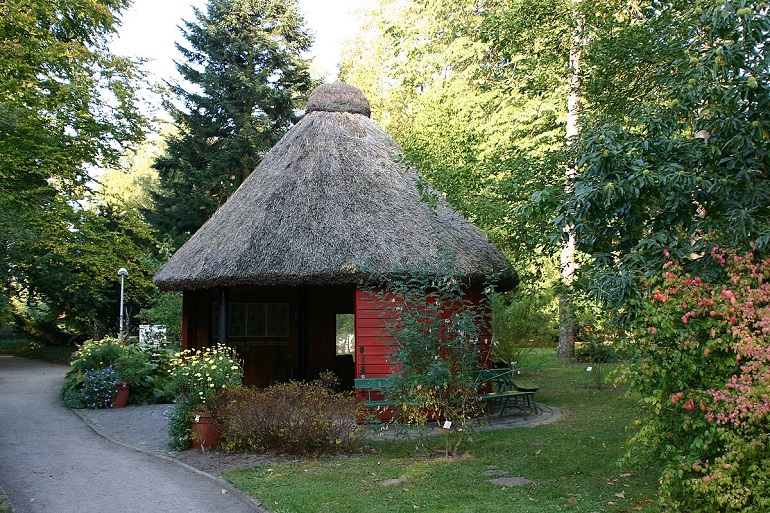
The Arboretum is an open-air tree collection managed by the University, comprising diverse species arranged for study and public interpretation. It includes walking paths, informational placards, and recreation features such as a playground and simple slides. The design supports quiet, unhurried visits focusing on tree identification, seasonal changes and habitat structure. The site complements the Botanical Garden by focusing on woody plants and larger specimens in an outdoor setting with extended daylight access in warmer months.
Animal Park Greifswald (Tierpark Greifswald)
Animal Park Greifswald is a compact zoo-oriented park featuring a collection of over 400 animals, with an emphasis on domestic and familiar species as well as small exotics suited to the local climate. The grounds include a swan pond, animal enclosures designed for viewing at close range, and multiple play areas for children. Seating and shaded zones support longer visits, and the site regularly accommodates children’s birthdays and educational activities. Paths are generally level, and facilities such as restrooms and on-site services are geared towards family use.
Elisen Park
Elisen Park is a large, modern shopping centre situated on the southern approaches to Greifswald, offering everyday retail, a supermarket and several fast-food options in one complex. It provides extensive free parking, accessible facilities and a broad range of payment methods, making it a convenient stop for supplies during longer stays. While primarily commercial, it is relevant to travellers for practical needs, particularly on arrival or departure days. The centre’s long weekday and Saturday hours accommodate varied itineraries.
Naturerlebnispark Gristow
Naturerlebnispark Gristow, located a short drive west of Greifswald in Mesekenhagen, combines open meadows, ponds and wooded sections with marked walking paths suited to casual hikes. Facilities include picnic tables, a playground, and restrooms, and dogs are permitted on leads. The park’s layout supports family-friendly visits, with gentle terrain and clear signage. Seasonal changes are notable for birdlife and flowering meadows, and the space is frequently used for informal outdoor gatherings and children’s activities.
Top Museums
Pommersches Landesmuseum (Pomeranian State Museum)
The Pomeranian State Museum stands as the region's premier cultural institution, presenting an impressive 14,000-year chronicle of Pomeranian culture and history within a striking architectural ensemble. The museum building itself is a remarkable fusion of Gothic, neoclassical, and contemporary architecture, creating an imposing backdrop for the extensive collections housed within.
The museum's elegant and airy galleries showcase diverse exhibits that span millennia, offering visitors comprehensive insights into the cultural heritage of Pomerania. Particularly noteworthy are the museum's Caspar David Friedrich collections, celebrating the renowned Romantic painter's connection to the region. The institution has recently undergone significant modernisation, including the installation of energy-efficient LED lighting throughout the exhibition spaces and complimentary Wi-Fi access for visitors.
The museum actively engages in cross-border cultural collaboration, partnering with the National Museum in Szczecin to present the shared history and culture of the greater Pomeranian region from complementary perspectives. Through various projects, including the "Allee der Kulturen" initiative, the museum works to strengthen cultural bonds across the German-Polish border whilst making the region's heritage accessible to contemporary audiences.

Museum Harbour Greifswald
The Museum Harbour Greifswald offers an entirely different but equally compelling cultural experience, serving as a living maritime museum along the waterfront. This unique institution operates as a functioning harbour where historic sailing vessels and traditional watercraft are preserved, restored, and displayed as floating exhibits accessible to the public year-round.
The museum's mission extends beyond static preservation, focusing on maintaining these vessels as active, sailing demonstrations of Pomeranian coastal maritime heritage. Visitors can witness traditional seamanship in action and observe the ongoing restoration work that keeps these historic vessels seaworthy. The harbour particularly emphasises the cultural significance of sailing ships and watercraft that were characteristic of the Pomeranian coast's maritime traditions.
An important aspect of the Museum Harbour's work involves engaging young people in traditional maritime skills, offering opportunities for youth to participate in the maintenance and operation of historic sailing vessels whilst learning traditional seamanship techniques. This hands-on approach ensures that maritime knowledge and skills are passed to future generations.

Caspar David Friedrich Center
Located at the very site where the renowned Romantic painter was born, the Caspar David Friedrich Center provides an intimate exploration of one of Germany's most celebrated artists. Housed within a protected architectural ensemble of extraordinary quality, the centre occupies a building complex that forms a cohesive historic environment in Greifswald's medieval city centre, surrounded by St. Nikolai Cathedral, the university's main building, and the St. Spiritus complex.
The centre operates across multiple levels, each dedicated to different aspects of Friedrich's life and legacy. The basement offers fascinating insights into the traditional crafts of soap-making and candle-making that Friedrich's family practised for generations, providing context for the artist's background. The ground floor focuses on illustrating the artist's body of work, whilst the first floor houses a gallery space that hosts four rotating annual exhibitions of contemporary art that engage with Friedrich's artistic legacy.
Established through the initiative of the Caspar David Friedrich Society, founded in 1998, the centre serves as the primary information hub for understanding the artist's life, work, and influence. The society's mission encompasses supporting research into Friedrich's work and its broader cultural contexts, bringing together scholars, art enthusiasts, and those interested in the artist's continuing relevance.
Neue Greifengalerie
The Neue Greifengalerie complements Greifswald's museum landscape by focusing specifically on contemporary artistic expression. As both an art gallery and museum, this institution provides a platform for modern artistic works and offers visitors exposure to current trends in visual arts.
The gallery serves an important role in Greifswald's cultural ecosystem by bridging historical artistic heritage with contemporary creative expression, ensuring that the city's cultural offerings encompass both its rich past and its dynamic present.
Local Cuisine
Among the highlights are Fischbrötchen, freshly baked rolls filled with herring or other local fish, a favourite snack by the harbour. Hearty dishes such as Grünkohl mit Pinkel (kale with smoked sausage) and Kloppschinken (cured ham) showcase the region’s rustic character, while Labskaus, a salty sailors’ stew of corned beef, potatoes, and beetroot, pays homage to seafaring traditions. For something sweeter, visitors can delight in Sanddorn desserts, made from the bright orange sea buckthorn berries abundant along the coast, whose tangy flavour is often found in cakes, jams, and liqueurs. Together, these specialities create a memorable culinary journey through Mecklenburg-Vorpommern’s cultural and coastal heritage.
Getting There
By train, Greifswald is well connected on regional routes, with direct services from cities such as Stralsund, Rostock, and Berlin, making it an easy and comfortable option.
By coach or bus, long-distance services connect Greifswald with larger German cities, often stopping at central bus stations, while regional buses provide links to the surrounding towns and villages.
By car, the city is accessible via the A20 motorway, which runs between Lübeck and Szczecin, with nearby exits leading directly towards Greifswald, making it a convenient choice for travellers who prefer flexibility and scenic routes.


