


Introduction
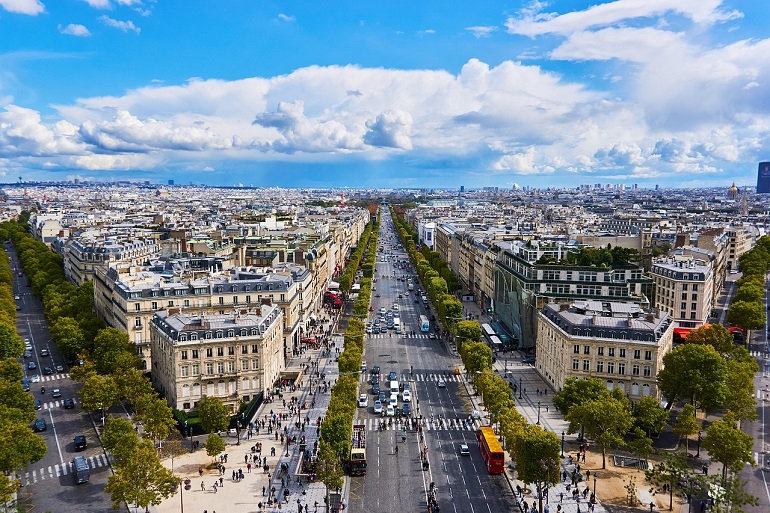
Possibly the world's most famous shopping street, the Champs-Élysées is a wide avenue lined with horse-chestnut trees running for 1.9 km from Place de la Concorde to the Arc de Triomphe. Often referred to as "the world's most beautiful avenue," this historic thoroughfare is divided into two distinct sections: the lower section features gardens, museums, and cultural venues, whilst the upper section is renowned for its luxury boutiques, department stores, cinemas, and cafés. The avenue serves as the traditional route for major French celebrations, including the annual Bastille Day military parade and the final stage of the Tour de France cycling race. Originally conceived in the 17th century as an extension of the Tuileries Garden, the Champs-Élysées has evolved into one of Paris's most significant commercial and tourist destinations, attracting millions of visitors annually who come to shop, dine, and experience one of the city's most iconic streets.
Interesting Facts about the Champs-Élysées
- The Champs-Élysées stretches about 1.9 km between Place de la Concorde and the Arc de Triomphe, making it one of Paris’s grandest axes.
- Its name means “Elysian Fields,” a reference to the resting place of heroes in Greek mythology.
- The avenue is famed for theatres, cafés and luxury boutiques, and is often called the “most beautiful avenue in the world.”
- It hosts the annual Bastille Day military parade, a centrepiece of France’s national celebrations.
- Since 1975, the final stage of the Tour de France has finished along the Champs-Élysées’s cobbles.
- The lower section passes the Jardin des Champs-Élysées, home to the Petit Palais and Grand Palais.
- Measuring roughly 70 metres wide, the boulevard is renowned for its spacious, tree-lined vistas.
- The avenue forms part of Paris’s historic east–west “Axe historique,” aligning major monuments across the city.
- Place Charles de Gaulle at the western end features the Arc de Triomphe, beneath which lies the Tomb of the Unknown Soldier.
- The Champs-Élysées has long served as the site of major historic parades and jubilant public gatherings.
History
The Champs-Élysées, today recognised as one of the world's most famous boulevards, began its life in the 17th century as mere marshland and vegetable fields on the outskirts of Paris. Originally commissioned by Queen Marie de Medici in the early 17th century, who wished to create an avenue of trees beyond her beloved Tuileries Garden, the transformation truly commenced under Louis XIV. In 1667, the Sun King tasked the renowned landscape architect André Le Nôtre with extending the Tuileries Gardens westward, creating what was initially called the "Grand Cours" or "Grand Promenade". Le Nôtre designed a wide promenade lined with double rows of elm trees on either side and formal flowerbeds, stretching from the palace to the modern Rond Point. Despite its grand conception, the avenue remained a muddy path cutting through woods and swampland that Parisians avoided after dark.
The avenue underwent several expansions and refinements throughout the 18th century, gradually earning its iconic name. In 1709, it was christened "Avenues des Champs-Elysées," meaning "Elysian Fields" in reference to the paradise where Greek gods and heroes dwelt after death according to mythology. The boulevard was extended beyond the Rond-Point to the modern Place Charles de Gaulle in 1710, and again in 1774 by the Marquis de Marigny as far as the present-day Porte Maillot. During the French Revolution, the avenue became a popular gathering place for Parisians, particularly after public executions at the nearby Place de la Révolution (now Place de la Concorde), when citizens would retreat to the inns and restaurants that had begun appearing along the boulevard. By 1828, the Champs-Élysées was officially declared civic property of Paris, prompting the city council to commission fountains, gas lamps, and cleared footpaths to enhance its appeal.
The avenue truly achieved its legendary status during the 19th century under Napoleon I and the subsequent architectural transformations. Napoleon chose the Champs-Élysées to host a magnificent banquet for 10,000 people in 1807 to celebrate his diplomatic victory at Tilsit. The completion of the Arc de Triomphe in 1836, commissioned by Napoleon to commemorate his military victories, provided the avenue with its crowning western terminus and established its full majesty. In the 1840s, architect Jacques Ignace Hittorff undertook a comprehensive redesign, installing some 1,200 gas lanterns and transforming the boulevard into a symbol of the City of Light. During the Second Empire under Napoleon III, garden architect Adolphe Alphand converted the eastern gardens into English-style landscaping, whilst the western section became increasingly commercial, with luxury shops, restaurants, cafés, theatres, and circuses establishing themselves along the 70-metre-wide, 1,910-metre-long avenue. By the late 19th century, the Champs-Élysées had evolved from humble agricultural fields into the epicentre of Parisian elegance and the prestigious gathering place for high society that continues to attract millions of visitors annually.
Description
The Champs-Élysées stands as a symbol of Parisian urban splendour, blending grandeur, sophistication, and lively energy. Measuring approximately 1.9 kilometres in length, this iconic boulevard forms a majestic axis through the heart of Paris, linking two architectural masterpieces: the imposing Arc de Triomphe to the west and the historic Place de la Concorde to the east. Its sheer breadth and uniform rows of leafy plane trees create an impression of spaciousness that is rare among European city avenues, establishing the Champs-Élysées as a key focal point both for Parisians and for visitors from around the world.
A Scene of Constant Activity
From morning to dusk, the avenue hums with activity. Cyclists weave their way along designated lanes, while joggers pass beneath the sheltering trees. The wide pavements accommodate scores of locals commuting on foot, stylish shoppers laden with designer bags, and tourists pausing to snap photographs against the emblematic backdrop of ornate buildings and stylish window displays.
Cafés and brasseries dot the avenue, their outdoor terraces spilling out onto the pavement and providing comfortable seating for people of all ages. On a fine afternoon, these terraces become lively gathering spots, where one can observe Parisian daily life unfold. Plates of delicate pastries, glasses of wine, and cups of rich espresso appear atop white-clothed tables, tended by waiters in crisp attire. Many spaces are adorned with classic striped awnings and wrought iron railings, adding touches of traditional charm.
A Destination for Shopping and Luxury
The Champs-Élysées is renowned worldwide for its collection of flagship boutiques, global luxury brands, and department stores. Among the avenue’s treasures are cutting-edge designer outlets, opulent jewellery shops, and specialist beauty counters. The famed window displays are a spectacle unto themselves, evolving to reflect the latest trends in fashion, art, and culture.
Beyond fashion, the avenue hosts electronics showrooms, gourmet delicatessens, and grand department stores. At festive times of year, such as the Christmas season, the street’s shops and façades are adorned with dazzling decorations, drawing large crowds eager to enjoy Paris’s celebratory spirit.

Cultural and Leisure Pursuits
Cultural enthusiasts will find much to occupy them along the avenue. Historic cinemas, such as Le Lido and Gaumont, screen everything from French premières to Hollywood blockbusters. Theatres and cabaret venues present musical performances and classic revues, while several galleries offer revolving displays of contemporary art, photography, and sculpture.
Street performers and musicians add a layer of vibrancy to the walk, creating fleeting moments of delight as violinists, jazz bands, and living statues entertain passers-by near intersections and small plazas. Occasionally, open-air art installations and seasonal events—such as book fairs or food festivals—infuse the avenue with additional colour and vitality.
Architectural Grandeur and Urban Greenery
The architecture of the Champs-Élysées presents a fascinating mix of classic and modern styles. Grand stone façades with intricate carvings stand alongside gleaming contemporary buildings covered in glass. Architectural details reveal themselves as you stroll, from ornate balconies to sculpted reliefs and gold-leaf embellishments. The avenue’s landscaping is kept immaculate, with clipped lawns, decorative flowerbeds, and lines of neatly pruned trees marking its length.
Along the central promenade, benches and shaded areas invite respite from the busy thoroughfare. Fountains and statues, set back from the rush of traffic, create tranquil pockets where one can pause to reflect or simply bask in the ambiance.

Culinary Delights
The Champs-Élysées offers an impressive array of restaurants and eateries to suit every palate. Patrons can sample classic French cuisine within lavishly appointed dining rooms or enjoy casual bites at contemporary cafés. Pâtisseries tempt with handmade macarons and glossy chocolates, while gourmet shops provide artisan breads, regional cheeses, and fine wines.
Many of the avenue’s top establishments feature elegantly dressed staff and gourmet menus highlighting seasonal produce and traditional recipes. Whether seeking a long, elegant lunch, a quick coffee, or an indulgent dessert, visitors find ample options to satisfy every culinary desire.
Nightlife and Atmosphere After Dark
As evening descends, the Champs-Élysées transforms into a vibrant corridor of nightlife. Façades and shop windows are illuminated, the avenue buzzing with the energy of late diners, theatre-goers, and night revellers. Bars and cocktail lounges open onto the street, their interiors alive with conversation and laughter.
Night-time brings out a different side to the boulevard—one that is more intimate, more electric. The lines of street lamps cast a warm, inviting glow, and the silhouette of the Arc de Triomphe is sharply defined against the night sky. The lively rhythm of traffic flows beside the peaceful pedestrian zone, highlighting the dynamic contrasts that make the Champs-Élysées so compelling.
A Living Symbol of Paris
The Champs-Élysées remains, above all, a living expression of Paris’s spirit. It combines elegance and exuberance, luxury and accessibility, tradition and innovation. Whether explored at a gentle stroll or at the height of a holiday celebration, the avenue offers endless opportunities to experience the best of Parisian life—a place where each moment, each view, and each encounter contributes to the city’s timeless appeal.