


| Contents |
|---|
Introduction
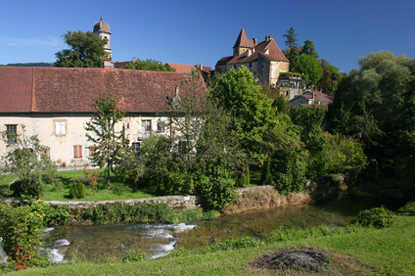
Sitting amidst the rolling vineyards, the charming village of Arbois (pop. 3,500) is considered the wine capital of the Jura. Its wines were already reknowned in Roman times.
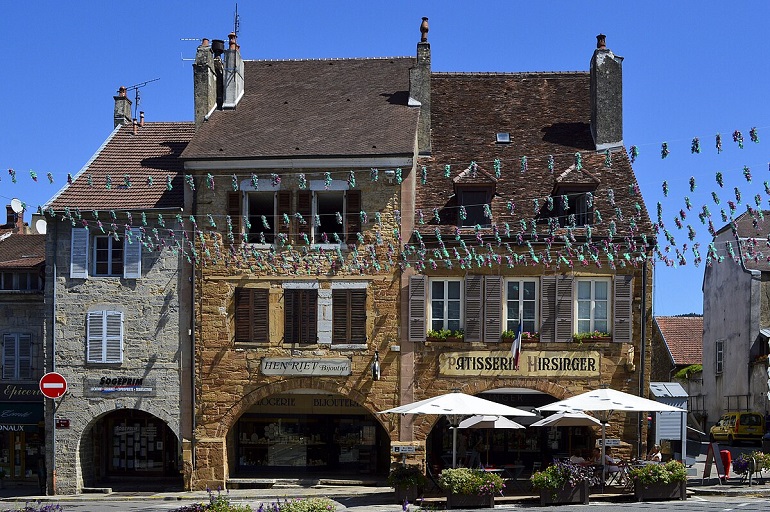
Arbois (pop. 3,500) is a charming town nestled in the Jura region, officially designated as a Town of Character and recognised as the wine capital of the Jura. The town is distinguished by its ochre-coloured stone buildings that create a warm, golden appearance, while the River Cuisance flows through its centre, bordered by traditional winegrower's houses and heritage sites. Arbois boasts significant historical architecture including the 12th-century Church of Saint-Just, the 13th-century Tour Gloriette tower from the original city walls, and Château Pécauld which houses the Musée de la Vigne et du Vin. The town holds particular significance as the childhood home of Louis Pasteur from 1827 to 1839, with his preserved house now serving as a museum. Surrounded by rolling vineyards that have produced renowned wines since Roman times, Arbois serves as both a centre for Jura wine production and a gateway to the region's natural attractions, including nearby waterfalls and hiking trails. The town has earned the 'place of remarkable taste' quality label for its culinary traditions and wine-food pairing establishments.
Interesting Facts about Arbois
- Arbois is the Jura’s historic wine capital, celebrated for distinctive styles like Vin Jaune and Vin de Paille made from local grapes such as Savagnin, Poulsard and Trousseau.
- The town’s appellation, Arbois AOC, was among France’s very first controlled designations created in 1936, underscoring its long‑standing vinous pedigree.
- Louis Pasteur maintained a family home in Arbois, where he conducted pioneering experiments on wine fermentation that helped lay the foundations of modern oenology.
- The River Cuisance threads through Arbois, lending charm to its arcaded central square and old streets lined with ochre‑toned houses.
- Arbois wines were famed in Roman times and later sustained sieges in the Burgundian era, with remnants of medieval ramparts and towers still visible today.
- The commune’s coat of arms features a pelican “in her piety” with the motto “Sic his quos diligo,” reflecting a deep civic identity tied to care and devotion.
- Nearby Pupillin, often labelled Arbois‑Pupillin, is renowned for high‑quality Poulsard grown on limestone‑rich, south‑facing slopes.
- The vineyards benefit from a continental climate at higher elevations, where late harvests can extend into October to capture optimal ripeness.
- Arbois produces a significant share of Jura reds as well as characterful whites, alongside sparkling Crémant and the fortified Macvin du Jura.
- Château Pécauld, once part of the town’s defences, now hosts a small museum dedicated to the region’s winegrowing heritage.
History
The origins of Arbois stretch back to ancient times, with its wines celebrated even by the Romans who recognised the quality of this fertile land—indeed, the town's name derives from the Celtic word meaning "fertile earth". Until 1260, Arbois existed as an unfortified villa, but the growing importance of the settlement led to its enclosure within protective ramparts during the following decade. A formidable castle was constructed in 1270, establishing Arbois as a strategic stronghold within the Duchy of Burgundy. The town's defensive capabilities were further reinforced by the Gloriette Tower, built in the 13th century as part of ramparts that extended some 1,200 metres around the settlement.
Arbois endured a turbulent medieval and early modern period, suffering through seven major sieges that tested its fortifications and the resolve of its inhabitants. The town was sacked by Charles I of Amboise in 1479 whilst he served as governor of the County of Burgundy under Louis XI, and later demonstrated remarkable resilience by holding out for three weeks against Henry IV's overwhelming force of 25,000 troops. However, the town's military significance came to an end when Louis XIV conquered Franche-Comté and ordered the dismantling of Arbois's castle in 1678, leaving only fragments of walls, three round towers, and the distinctive square Gloriette Tower as reminders of its defensive past. The town's rebellious spirit persisted into the 19th century when it joined the Lyon revolt against the government on 13th April 1834, prompting authorities to dispatch grenadiers, cavalry, and artillery to restore order.
The modern era brought both recognition and liberation to Arbois, culminating in its establishment as one of France's premier wine regions and its designation as a "town of art and history". In May 1936, Arbois achieved the prestigious distinction of becoming one of the six first Appellation d'Origine Contrôlée (AOC) regions in France, cementing its reputation as the cradle of Jura wines and covering 13 communes surrounding the town. The town's connection to scientific advancement was solidified through Louis Pasteur, who maintained his only personally-owned house here along with his private laboratory, now preserved as a museum in its original 18th-century state. During World War II, Arbois was liberated in September 1944 by the U.S. 36th Infantry Division as Allied forces advanced up the Rhône towards Besançon and the Moselle.
Main Attractions
Château Pécauld
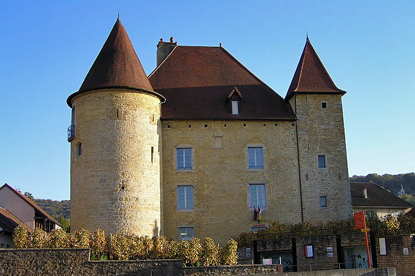
Château Pécauld is a fortified ensemble dating to the thirteenth century that once formed part of Arbois’s medieval defences, its round tower and stout walls recalling the town’s strategic past. Later remodelled as a noble residence, it stands amid small demonstration vines that evoke the deep-rooted wine culture of the Jura and make a fitting prelude to exploring the cellars and courtyards. Today it serves as a graceful landmark and cultural venue, where the interplay of stonework, cobbles, and surrounding greenery creates a quietly atmospheric setting for a reflective stroll between tastings and riverside walks.
Gloriette Tower and Medieval Fortifications
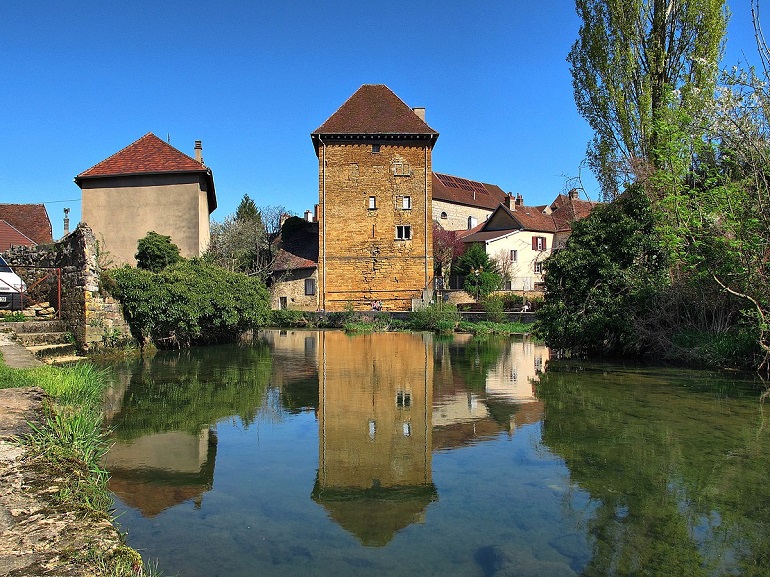
Scattered around the heart of Arbois are the atmospheric vestiges of its medieval walls, most famously embodied in the square Gloriette Tower. Once a sentinel guarding the town’s perimeter, today the tower stands as a picturesque relic, evocative of the town’s storied past. The stonework and arrow-slit windows still hint at the days when Arbois was a fortified refuge. Wandering the nearby alleys, travellers discover more towers and turreted corners cradling secret courtyards and shaded gardens, each whispering tales from centuries ago.
Église Saint-Just d’Arbois
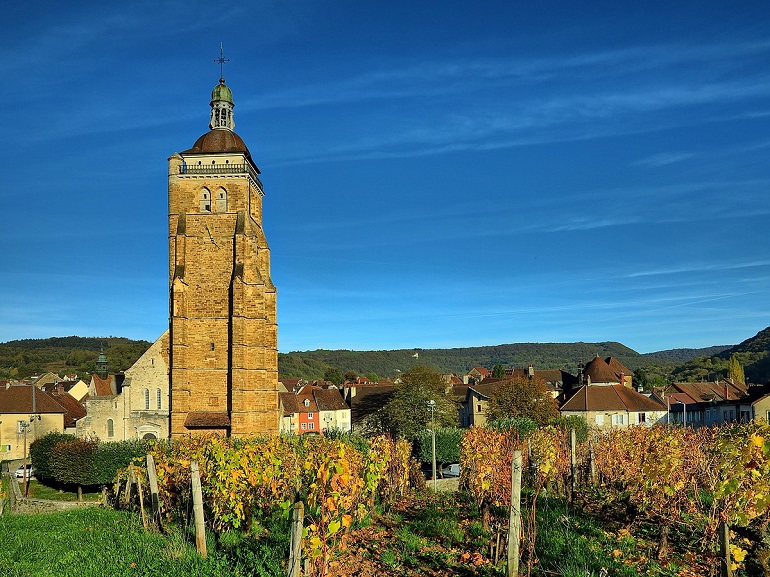
Presiding over the town with dignity, the Church of Saint-Just is a twelfth-century masterpiece showcasing Romanesque and Gothic architecture. Its towering bell tower is an iconic feature of the skyline, and those who ascend the 44-metre clock tower are rewarded with panoramic views of the patchwork vineyards and tiled rooftops that stretch across the surrounding countryside. The church’s nave, adorned with beautiful stained-glass windows, fills with colourful light, highlighting the historic statues and intricate wooden pulpit. Beyond its architectural wonder, Église Saint-Just stands as a vibrant centre of local culture, hosting concerts and gatherings that reinforce its role in Arbois’s communal life.
Pont des Capucins
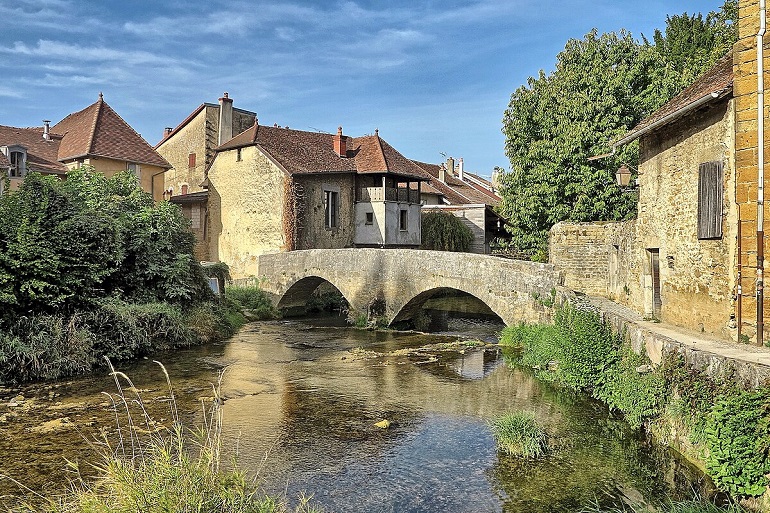
The Pont des Capucins elegantly straddles the river Cuisance at the heart of Arbois, offering one of the town's most romantic vistas. This historic stone bridge, surrounded by colour-washed houses with riverside balconies, invites visitors to pause and observe the sparkling river and gently swaying willows. It is an idyllic setting for a stroll or a quiet moment, particularly enchanting at sunset as golden light bathes the old stones and reflects on the tranquil water below. The bridge forms a natural gateway between the bustling centre and Arbois’s peaceful riverside paths.
Place de la Liberté
The pulsating core of the town, Place de la Liberté is a spacious and lively square framed by arcaded houses, elegant façades, and welcoming terraces. The focal Fountain of Lions brings a sense of movement to the scene, drawing in both locals and travellers to enjoy a refreshing break or sample regional delicacies at nearby cafés. On market days, the square comes alive with artisanal products, delicately scented cheeses, fresh produce, and the laughter of vendors. Architectural highlights such as the town hall and grand mansions add to its character, making the square a perfect place to absorb the rhythm of Jura life.
Winegrowers’ Houses and Vineyards
Arbois is the proud capital of Jura wines, and its streets are flanked by stately vigneron houses and ancient stone wine cellars. Many producers, such as Domaine Tissot and Domaine de la Pinte, welcome guests for tastings, illuminating the unique terroir of the Jura region with pours of Vin Jaune, Savagnin, and Trousseau. Visitors can learn about each stage of winemaking, from harvest to barrel ageing, and experience the warmth of Jura hospitality in the atmospheric environs of centuries-old cellars. Strolling through neighbouring vineyards reveals an undulating sea of vines, best appreciated along marked trails or during the annual grape harvest festival.
Cascade des Tufs and Reculée des Planches
Just outside Arbois lies one of the Jura’s most magical natural sites: the Cascade des Tufs, a magnificent waterfall where pure water gushes from mossy travertine rock and cascades into tranquil pools beneath a verdant canopy. The surrounding nature reserve, the Reculée des Planches, forms a dramatic limestone gorge filled with lush vegetation and hidden caves. Trails weave through the woodland, ideal for walkers, photographers, and birdwatchers who relish both the musical sound of running water and the serenity of Jura’s wild landscape.
The River Cuisance Walks
Following the river Cuisance as it meanders through the lower town is a joy for all who appreciate gentle natural beauty. Wooden footbridges, flower-festooned gardens, and quiet banks shaded by willows create an atmosphere of utter tranquillity. Along the route, visitors can catch glimpses of wildlife, enjoy the reflection of historic buildings in the water, and pause at hidden benches ideal for picnics or contemplation. This riverside walk encapsulates the simple pleasures of Arbois, offering ever-shifting perspectives with every season.
Top Museums
A Legacy of Science and Family
Maison de Louis Pasteur
The Maison de Louis Pasteur is far more than a static museum—it is a living tribute to intellect, curiosity, and family life. Pasteur, the legendary chemist who changed the course of modern science, returned to Arbois repeatedly throughout his life, transforming his father’s humble tannery into his cherished residence, which he affectionately termed his “Château de la Cuisance”. The building radiates atmosphere: the billiards room, intimate bedrooms, and welcoming salons remain exactly as they were during Pasteur’s days, creating the uncanny sensation that the scientist might return at any moment.
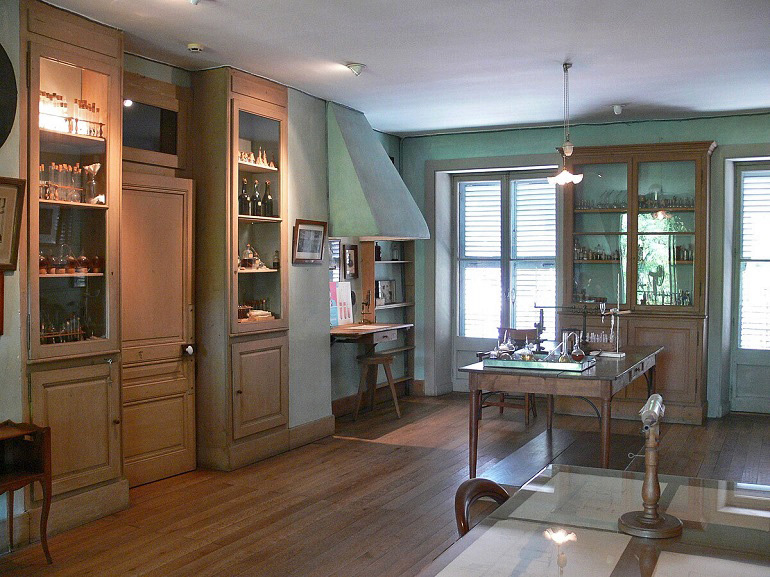
Central to the experience is Pasteur’s personal laboratory, preserved in meticulous detail. Here, tangible reminders of the scientific revolution abound—the authentic apparatus with which he studied fermentation, his own manuscripts, and glassware still viscerally linked to his epoch-making discoveries such as pasteurisation. This was the very room where he unravelled the mystery of spontaneous generation and conducted crucial research on vine diseases, inspired by the surrounding Jura vineyards. The museum enhances its authentic presentation with digital visitor guides, offering immersive storytelling in several languages and the voices of Pasteur’s circle, turning a trip through these rooms into a distinctly personal encounter with history.
Notably, the museum is listed as a Historic Monument and bears the prestigious “Maisons des Illustres” label, marking it not just as a site of scientific significance but as a locus of cultural memory. Special guided tours, theatrical performances, and temporary exhibitions periodically refresh the experience, ensuring every visit offers new insights into Pasteur’s genius and private world.
The Heart of Jura Winemaking
Musée de la Vigne et du Vin du Jura
Situated within the historic Château Pécauld, the Musée de la Vigne et du Vin du Jura is a singular institution dedicated to the heritage of Jura winemaking—a tradition stretching back centuries and deeply woven into the local identity. Outside, demonstration vineyards provide a living archive of regional grape varieties, making the changing seasons and the manual labour of growers palpable to visitors.
Inside the château’s ancient stone walls, the galleries unfold the entire lifecycle of winemaking. Visitors move through atmospheric spaces lined with antique presses, intricate cooper’s tools, and barrels redolent with the scent of wood and wine. Displays vividly depict the daily toil and festive rituals that punctuate rural life—such as the famed Fête du Biou, which brings the community together each September for wine blessing and celebration. Historical vignettes and artefacts reveal how winegrowers faced challenges like the devastating phylloxera blight, adapting their practices in the face of existential threats.
Interactive exhibits and multilingual panels make the museum accessible and engaging, explaining technical processes from vine grafting to fermentation, and linking Pasteur’s scientific breakthroughs to everyday winemaking. Regular temporary exhibitions focus on a variety of topics—from the folklore surrounding Jura wine to the work of contemporary producers—ensuring repeat visitors always discover new facets of this living tradition.
A Haven for Art and Elegance
Musée d’Art – Hôtel Sarret de Grozon
The Musée d’Art – Hôtel Sarret de Grozon is renowned for its harmonious blend of architecture and art. Housed in a splendid classic residence, it evokes both the grandeur and intimacy of 18th and 19th-century bourgeois life. The museum's interior is filled with period furnishings, rare decorative objects, and paintings that sketch the cultural aspirations and artistic evolution of the Jura region.
Collections range from religious sculptures and delicate porcelain to striking regional paintings and frescoes. Each gallery is laid out with careful attention to atmosphere, creating a progression from airy formal rooms to secluded cabinets showcasing private collections. Changing thematic displays ensure the museum remains a dynamic part of Arbois’s cultural landscape, often featuring regional artists or works that explore the intersection of art and local history.
Celebrating Local Crafts and Industry
Maison de l’Abeille et Écomusée du Carton
Rounding out the cultural offerings of Arbois are the Maison de l’Abeille and the Écomusée du Carton. The Maison de l’Abeille provides an engrossing introduction to beekeeping traditions, exploring how apiculture has shaped local agriculture and ecology. Displays are interactive, featuring historic hives, beekeeping attire, and explanations of the role bees play in pollination and biodiversity. The museum also explains the craft of honey production, allowing guests to witness the processes of harvesting and processing honey, and to understand contemporary environmental threats to bee populations.
The Écomusée du Carton tells the story of paper and cardboard manufacturing, once a thriving industry in the Jura. Visitors can inspect operational machines, handle finished products, and learn how papermaking evolved from artisanal roots to modern mass production. This museum also explores themes of sustainability and local industry, highlighting how old crafts shape the area’s identity today.
Local Cuisine
Arbois is a gourmand’s haven where the fertile Jura terroir shines on the plate, pairing aromatic Vin Jaune with nutty shards of Comté and smoky slices of Morteau sausage in convivial apéro platters. Menus in the town’s bistros often centre on succulent poulet au vin jaune et morilles, the free-range chicken bathed in a saffron-hued sauce studded with earthy morels, while bubbling croûtes au Morbier showcase the creamy, blue-veined cheese melting over crusty bread. For dessert, locals favour a slice of gâteau de ménage washed down with sweet, raisiny Vin de Paille, capturing the region’s talent for turning grapes into liquid gold. Every mouthful is tied to centuries-old know-how, reflecting the intimate bond between Arbois’ vineyards, dairy pastures and forested hills.
Getting There
By train Arbois is most efficiently reached via France’s high-speed network: take a TGV to Dole or Besançon, then change to the regional TER line that threads through the vineyard-lined valleys and deposits you at Arbois station, a short stroll from the old town.
By coach or bus Regional coaches operated by Bourgogne-Franche-Comté link Arbois with Dole, Besançon and Lons-le-Saunier; journeys are slightly longer than the train but handy if you’re starting from smaller Jura villages that lack rail connections.
By car Motoring offers the greatest flexibility: the A36 and A39 motorways skirt the Jura, and from either you can cut onto the scenic D469 or D5, winding past limestone cliffs and vine-covered slopes before descending into Arbois’s compact centre, where several car parks fringe the circular boulevard.
| Travel destinations in Franche-Comté | ||||||||||||||
|---|---|---|---|---|---|---|---|---|---|---|---|---|---|---|
|
|
|
|
| ||||||||||
|
|
|
| |||||||||||


