


| Contents |
|---|
Introduction
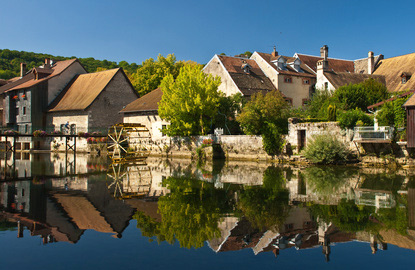
Situated in the Loue valley within the first plateau of the Jura Mountains, Ornans (pop. 4,500) is known as the "Little Venice of Franche-Comté". The town is characterised by its historic houses that overhang the River Loue, connected by two 17th-century stone bridges, and features twelve listed or classified historic monuments, including the 16th-century Church of Saint-Laurent with its Romanesque bell tower and the 15th-century former town hall known as the Hôtel de Grospian. Ornans was the birthplace of realist painter Gustave Courbet, whose former home now houses a museum dedicated to his works. The town offers various outdoor activities such as hiking, climbing, cycling, and water sports on the Loue, with the Roche du Mont providing panoramic views over the town and surrounding forested landscape.
Interesting Facts about Ornans
- Often called the Little Venice of Franche-Comté, Ornans lines the River Loue with picturesque “hanging” houses whose façades dip to the water.
- The town is the birthplace of Gustave Courbet, whose monumental painting A Burial at Ornans transformed everyday local life into art on the scale of history painting.
- Ornans hosts the Musée Courbet, where the artist’s life and legacy are anchored in the very landscapes and streets that inspired his realism.
- Pierre Vernier, the 17th-century inventor of the vernier scale used in precision measurement, was born in Ornans.
- Cardinal Antoine Perrenot de Granvelle, a powerful statesman under Emperor Charles V and a key figure of the Counter-Reformation, first saw the light in Ornans.
- The Loue valley around Ornans is prized for kayaking, trout fishing, and limestone cliffs that attract hikers and climbers.
- From the Belvédère du Château, sweeping views reveal how the Loue shaped Ornans’s historic plan and riverside mansions.
- Courbet’s A Burial at Ornans shocked Parisian critics by depicting a provincial funeral at heroic scale, challenging academic convention.
- The town’s bridges and riverside arcades have long inspired painters and photographers seeking reflections and changing Jura light.
- Ornans sits on the first plateau of the Jura Mountains, pairing cultural heritage with quick access to caves, gorges, and verdant trails.

History
Ornans traces its origins to medieval times, with its strategic location in the Loue valley making it an important settlement in the first plateau of the Jura Mountains. The town's defensive significance was established when Charles the Bold constructed a castle on the rocky outcrop overlooking the settlement during the 15th century, serving as a crucial lookout point to monitor the vital "salt road" trade route. The oldest surviving structure from this period is the Chapel of Saint Georges, dating from 1289, which remains today surrounded by the ruins of the medieval fortress. During the 17th century, as part of Louis XIV's second conquest of Franche-Comté, the royal forces systematically destroyed the castle, leaving only the chapel and scattered stone ruins that local inhabitants later repurposed to build small houses on the hillside.
The town flourished during the Renaissance period, becoming the birthplace of several figures who would achieve international prominence. Nicolas Perrenot de Granvelle (1484-1550) was born in Ornans and rose to become Chancellor of the Empire under Charles V, serving as a trusted advisor from the time the emperor was elected at just 19 years of age. His son, Cardinal Antoine Perrenot de Granvelle (1517-1586), was born in the family residence known as l'Hôtel de Granvelle (now 67 and 77 Rue Pierre Vernier) and became the main minister responsible for Imperial foreign policy over several decades, playing a pivotal role as one of the architects of the Counter-Reformation. The mathematician and instrument maker Pierre Vernier (1580-1637) was also native to Ornans, and during the 16th century, he managed the castle where he developed his "Quadrant nouveau," which included the application that became the renowned Vernier calliper scale beloved by mechanics and toolmakers.
Ornans developed its distinctive architectural character through centuries of careful planning around the meandering Loue River, with charming houses built directly over the water earning the town its enduring nickname as the "Little Venice of Franche-Comté". The Ancien Bailliage d'Ornans, constructed in 1740 by architect Jean Querret, served as the administrative centre before becoming the Town Hall in 1825, representing the town's civic importance. The local church contains remarkable 17th-century furniture crafted by the sculptor Jean Gauthier d'Ornans, as well as the tomb of Pierre Perrenot, who died in 1537. In the 19th century, Ornans achieved international cultural recognition as the birthplace of realist painter Gustave Courbet (1819-1877), whose masterpiece "A Burial at Ornans" depicted actual townspeople attending a funeral and revolutionised French art by presenting ordinary provincial life on a grand scale typically reserved for historical and religious subjects.
Main Attractions
Loue River and Stilted Houses
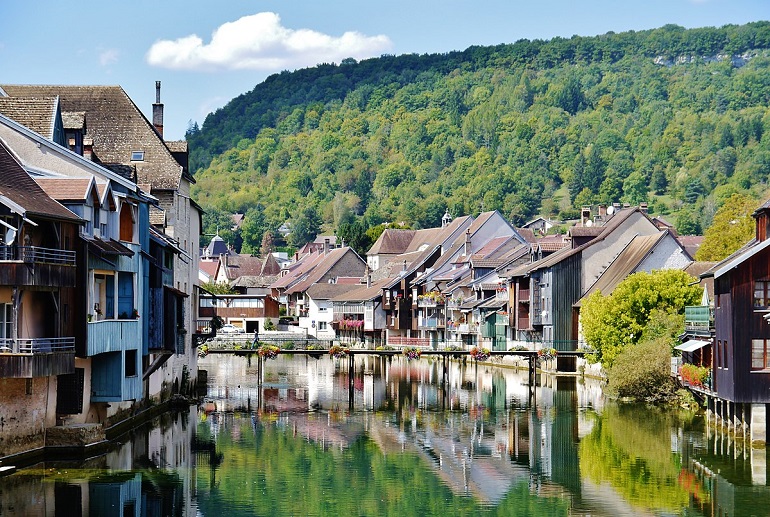
The Loue River carves its way through Ornans, forming the living heart of the town. Here, centuries-old houses on stilts perch above the shimmering waters, their facades reflected like a painting in the river below. These dwellings, some dating back to medieval times, speak of a long tradition in adapting to the river’s rhythms—spring floods continually shaped both the architecture and the daily lives of residents. Strolling along the cobbled riverside or crossing the Grand Pont brings views reminiscent of Venice, with balconies dripping in flowers and footbridges joining both banks. The river is still used by locals for practical purposes, including keeping wine cool and as a gathering place—adding to the tangible sense of community.
Grand Pont d'Ornans
The Grand Pont, a 17th-century stone bridge, is a defining landmark that elegantly connects both sides of Ornans. Its solid arches create a timeless backdrop for the “Little Venice” panorama. From the bridge, the best photographic angles reveal rows of stilted houses, bustling riverside life, and the lively reflections on the Loue below. The bridge is a beloved meeting place for inhabitants, where people pause to take in the scenery, admire floral displays, and enjoy the gentle sound of rushing water. It is also a key point for exploring further into the historic heart of the town.
Church of Saint-Laurent
The Church of Saint-Laurent is an architectural highlight that towers gracefully over Ornans’ rooftops. With foundations rooted in the 12th century, the building showcases Romanesque origins in its lower sections and includes later additions such as an ornate dome and lantern from the 18th century. Inside, visitors find beautifully carved 17th-century furniture and significant regional memorials, including the tomb of Pierre Perrenot. The church was central in local history, and its bell tower is visible from nearly every vantage point in the town, marking it as a spiritual and geographical focus.
Château d'Ornans (Castle Ruins and Lookout)
Rising above the town is the site of the former Château d'Ornans, a strategic stronghold during the Middle Ages and a prime lookout onto the Loue Valley. Although little remains of the castle apart from the atmospheric Saint Georges chapel and fragments of wall shrouded in vegetation, the hilltop position offers panoramic views. From here, the valley unfolds in a lush expanse of meadows, forests, and winding rivers, much as it was depicted by the famed painter Gustave Courbet. The climb is rewarded with tranquility and a profound sense of Ornans’ layered history.
Via Ferrata de la Roche du Mont
For those seeking adventure, the Via Ferrata de la Roche du Mont is an exhilarating route carved into cliffs overlooking Ornans. This secured pathway lets participants traverse dramatic rock formations using cables and ladders, offering unparalleled views of the valley and town far below. The climb is accessible to both novices and experienced climbers, and is a showcase for the area’s natural grandeur, combining the excitement of physical activity with the region’s scenic beauty.
The Source of the Loue
A short journey from Ornans, the Source of the Loue emerges from a dramatic cave at the base of limestone cliffs, surrounded by rich, green forest. This spectacular resurgence, where water bursts from underground into open air, has inspired painters, poets, and scientists alike. In the 19th century, the source powered mills, forges, and even an early hydroelectric plant—giving rise to local industry and settlement. The site is accessible via a gentle walk, allowing visitors to trace the footsteps of Gustave Courbet and witness the magical interplay of geology, water, and light. This natural wonder remains one of the most visited and photographed spots in the Doubs and is closely tied to regional identity.
Panoramic Viewpoints and Belvédères
Ornans boasts several panoramic viewpoints, the most famous of which is from the ruins of the old château. Others, such as the Roche du Mont and Rocher d’Ully, offer breath-taking vistas across the Loue Valley and the cluster of rooftops below. These lookouts are reached by well-marked trails and are beloved by walkers, photographers, and artists seeking an elevated perspective on the landscape. The light continually shifts across the valley, ensuring every visit provides a unique and memorable view.
Outdoor Pursuits and Riverside Walks
Ornans is also celebrated for its outdoor activities. Canoeing or kayaking down the Loue allows for close encounters with kingfishers, wildflowers, and dramatic cliffs. Numerous hiking and cycling trails wind through forests and meadows, suitable for all abilities and offering plenty of spots for picnics or peaceful contemplation. Riverside footpaths, especially those following the “Courbet Trail,” lead past many sites featured in the artist’s works, inviting visitors to immerse themselves in scenery that bridges art and nature.
Top Museums
An Artistic Pilgrimage
Musée Gustave Courbet
Housed in the birthplace of Gustave Courbet, the museum comprises three interconnected historic buildings—the Hôtel Hébert, Maison Borel, and Hôtel Champereux—blending restored period features with contemporary architecture, such as glass walkways providing scenic vistas over the Loue river and the rocky cliffs that define Ornans. Inside, the museum’s layout traces a chronological and thematic progression through Courbet's life and work.
Permanent Collection Highlights
The permanent collection canvasses the full spectrum of Courbet’s creative journey, with some 60 pieces by the master himself set amid nearly 400 artworks, letters, photographs, and archives. Visitors encounter:
- Early paintings such as Le Pont de Nahin (1837), capturing Courbet’s formative years among Ornans landscapes.
- Works evoking his social milieu, such as Portrait d’Urbain Cuénot (1846) and Portrait de Lydie Joliclerc (1869).
- Animal scenes and hunting motifs, including Le Veau (1873) and Le Renard pris au piège (1860), which reflect his affection for rural life.
- Iconic local landscapes like Le Chêne de Flagey (1864) and La Loue à la Scey-en-Varais (1865), showcasing the natural beauty that fuelled Courbet’s realism.
- Seascapes with a dedicated room, offering atmospheric depictions of the power and subtlety Courbet found in nature.
- Major canvases that revolutionised art, such as Les casseurs de pierres and Un enterrement à Ornans, expressing the social and political vigour underlying his realism.
- Works from Courbet’s time in Paris, involvement with the Commune (Autoportrait à Sainte-Pélagie, c. 1872), and his Swiss exile (Château de Chillon, 1874), each period marked by changing political context.
Supporting the central themes, the museum includes sculptures, intimate drawings, personal letters, and photographic portraits, fostering a nuanced understanding of Courbet’s techniques and influences. Several works are on loan from national museums, resulting in a vibrant rotation of masterpieces and special exhibitions that keep the collection fresh.
Friends, Circle, and the Wider Realist Movement
In addition to Courbet, the museum celebrates key figures from his circle, such as Max Claudet, Cherubino Patà, Antonin Fanart, and Émile Isenbart. There are also satirical caricatures, press illustrations, and tangible artefacts illuminating Courbet’s public image and self-promotion in the volatile artistic climate of 19th-century France.
Innovation, Accessibility, and Community
The museum provides modern multimedia guides with scientific and historical context, audio descriptions, sign language accessibility, and multilingual support for visitors—a testament to Ornans’ engagement with inclusivity and new technologies.
The setting—both intimate and visually dramatic—coupled with community-run exhibitions and the restored workshops and studio of Courbet, ensures the museum is not only a tribute but also a living hub for artistic discovery.
The Spirit of Everyday Life
Musée du Costume et des Traditions Comtoises
Established within the atmospheric Chapelle de la Visitation, this museum resurrects rural life in Ornans across the late 19th and early 20th centuries. Over 200 mannequins, clothed in authentic regional costumes, are arranged in vivid tableaux capturing family celebrations, village weddings, local trades, childhood games, and leisurely bourgeois pursuits.
Immersive Displays and Educational Initiatives
- Scenes authentically recreate interiors, kitchens, artisan workshops, and festive events, transporting visitors into the daily rhythms and rituals of Franche-Comté’s past.
- The museum showcases hand-crafted textiles, intricate bonnets, lacework, and ceremonial attire, illustrating the refined artistry and communal pride of years gone by.
- Engaging thematic exhibitions, often curated by local volunteers and historians, invite in-depth exploration of customs, craftsmanship, and social history while fostering learning experiences for children.
Architectural Heritage
The 17th-century monastic chapel, restored in the 19th century, imparts a tangible sense of antiquity to the collection. Its dramatic vaulted ceilings and historic statuary blend seamlessly with the rich heritage of the displays, mirroring the solemnity and celebration of the region’s traditions.
Community, Volunteering, and Events
Driven by local enthusiasts, the museum is a centre for research, storytelling, and seasonal festivities, highlighting the living nature of regional identity.
Local Cuisine
Ornans tempts visitors with a hearty Franche-Comté larder: menus often begin with truite de la Loue, delivered fresh from the town’s crystalline river and pan-fried with beurre noisette; platters groan under the nutty depth of Comté and the silky spreadability of cancoillotte; and charcuterie lovers gravitate toward smoky saucisse de Morteau or its garlicky cousin saucisse de Montbéliard. Restaurants slow-braise pork in local Vin Jaune, fold potatoes into melting Morbier, and finish meals with a shot of kirsch-laced clafoutis aux griottes. Paired with a glass of lightly oxidative Jura white, the cuisine mirrors Ornans’s pastoral surroundings—unpretentious, flavoursome, and rooted in centuries-old farmhouse traditions.
Getting There
By train Ornans is most easily reached via the regional service from Besançon-Viotte, where frequent TER trains connect with mainline TGV arrivals from Paris and Lyon; after a scenic 30-minute ride to the small station at Saône, regular buses make the short hop south into the town.
By coach or bus Long-distance coaches from major French cities generally stop in Besançon, where regional bus line 702 operates throughout the day, threading its way through the Loue valley and setting you down within walking distance of the riverside centre.
By car Drivers can follow the A36 autoroute to exit 3 (Besançon-St Claude), then skirt southeast on the D67, a winding yet straightforward road that hugs the Loue and delivers sweeping views before depositing you at Ornans in around 25 minutes.
| Travel destinations in Franche-Comté | ||||||||||||||
|---|---|---|---|---|---|---|---|---|---|---|---|---|---|---|
|
|
|
|
| ||||||||||
|
|
|
| |||||||||||


