


| Contents |
|---|
Introduction
Tréguier (pop. 2,500) is a historic town founded in the 6th century by the Welsh monk Tugdual who established a monastery in the area. The town served as the ancient capital of the Trégor region and became an important episcopal seat in 848 when Nominoë, King of Brittany, established it as the centre of a bishopric stretching from Morlaix to Lézardrieux. Despite being destroyed by Vikings in the 9th century and subsequently rebuilt, Tréguier developed into a significant religious and intellectual centre during the medieval period, culminating in the construction of its Gothic cathedral between 1339 and 1435. The town gained particular renown as the birthplace of Saint Yves (1253-1303), the patron saint of lawyers, whose canonisation in 1347 made Tréguier an important pilgrimage destination that attracted notable figures including Anne of Brittany and François I. Today, Tréguier maintains its ecclesiastical heritage whilst serving as a Petite Cité de Caractère of Brittany, and is also celebrated as the birthplace of the philosopher and biblical scholar Ernest Renan (1823-1892).
Interesting Facts about Tréguier
- Tréguier is a petite Breton port town on the River Jaudy in Côtes‑d’Armor, historically the capital of the Trégor province.
- The town is famed as the birthplace of Saint Yves (Ivo of Kermartin), the patron saint of lawyers, whose legacy is honoured each May with the Pardon of Saint Yves.
- Its Gothic Saint‑Tugdual Cathedral boasts an unusual trio of towers over the transept and a graceful 15th‑century cloister.
- Tréguier forms one of the seven stages of the Tro Breizh pilgrimage linking towns of Brittany’s founding saints.
- Philosopher and historian Ernest Renan was born here, and his childhood home is preserved as a museum.
- The Breton name for Tréguier is Landreger, reflecting the area’s strong Celtic linguistic heritage.
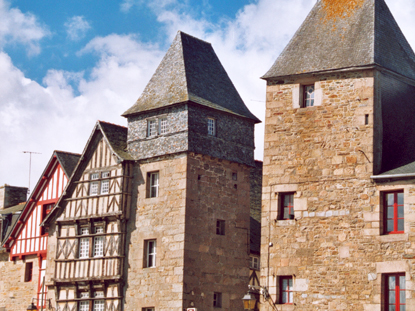
- Medieval half‑timbered houses and cobbled lanes cluster around squares such as Place du Martray, giving the town a storybook feel.
- A striking war memorial, the Pleureuse de Tréguier (“Weeping Woman”), commemorates local soldiers with poignant simplicity.
- The confluence that forms the Tréguier River lies about nine kilometres from the Channel, giving the harbour a sheltered, picturesque setting.
- Tréguier once hosted a World War I seaplane base, briefly operating in late 1918.

History
The origins of Tréguier trace back to the 6th century when Saint Tudwal (also known as Tugdual), a Welsh monk fleeing Anglo-Saxon persecution, established a monastery in the Trécor Valley around 535. Originally called Lan Trécor, this monastic settlement would grow to become one of Brittany's most significant ecclesiastical centres. In 848, Nominoé, King of Brittany, transformed the abbey into a secular bishopric, establishing Tréguier as the capital of the historic region of Trégor and creating a diocese that stretched from Morlaix to Lézardrieux. The town's strategic importance was further enhanced by its position as a thriving medieval port, facilitating trade and cultural exchanges between Brittany and other parts of Europe.
The medieval period brought both prosperity and devastation to Tréguier. The town was completely destroyed by Viking raids in the 9th century, forcing the bishop to flee and relocate Saint Tudwal's relics to Chartres for safety, leaving the episcopal seat vacant for 90 years. The invaders were eventually expelled by Alan II, Duke of Brittany, and the bishopric was formally re-established in 950. Bishop Gratias encouraged the construction of a new Romanesque cathedral around 970, dedicated to Saint Tudwal, of which only the north transept tower (mysteriously known as the "Hastings" tower) and some internal columns survive today. Construction of the current Gothic cathedral began in 1339 under Bishop Richard de Poirier, though work was repeatedly interrupted by the War of Breton Succession (1341-1365), during which English forces occupied the cathedral and used it as part of their garrison whilst remarkably leaving Saint Yves' tomb untouched.
Tréguier achieved formal city status in 1412, marking its transition from a purely ecclesiastical settlement to a recognised urban centre. The cathedral's construction resumed after the Treaty of Guérande ended the Breton succession conflict, with the nave and side-aisles completed between 1363 and 1371 under Bishop Begaignon, and further work continuing under Bishop Morelli between 1385 and 1400. The town's intellectual heritage was established early, becoming the third locality in Brittany to practice typographic art, with two incunabula printed locally. Throughout its history, Tréguier has maintained its significance as a centre of learning and spirituality, serving as one of the seven stages of the traditional Breton pilgrimage route known as the Tro Breiz, and earning recognition as the birthplace of Saint Yves, the patron saint of lawyers.
Main Attractions
Cathédrale Saint-Tugdual
The magnificent Saint-Tugdual Cathedral stands as Tréguier's crowning jewel and ranks amongst Brittany's most spectacular religious edifices. Constructed between the 11th and 15th centuries, this architectural masterpiece seamlessly blends Romanesque and Gothic styles, built from pink granite, grey stone, and local schist. The cathedral's most distinctive feature is its trio of towers above the transept, each representing a different architectural period and style. The soaring 18th-century spire reaches over 60 metres in height, decorated with intricate stone lacework featuring playing card motifs—reputedly a reference to the lottery finances that Louis XVI used to fund its construction. Inside, visitors can marvel at the remarkable tomb of Saint Yves, Brittany's patron saint and the patron saint of lawyers, whose legacy is celebrated annually during the vibrant Pardon of Saint Yves festival each May.
Gothic Cloister
Adjacent to the cathedral lies one of Brittany's most complete surviving medieval cloisters, dating from the 15th century. This Gothic masterpiece features 46 elegant arcades supported by flying buttresses of stone, crowned by a magnificent wooden vault. The cloister provides a tranquil haven where visitors can appreciate the intricate stonework and peaceful atmosphere that has remained largely unchanged for over five centuries. The harmonious proportions and delicate architectural details make this cloister a standout example of late medieval ecclesiastical architecture in northwestern France. During summer months, the space occasionally hosts cultural events and concerts, adding a contemporary dimension to this historic setting.
Historic Timber-Framed Houses
Tréguier's old town centre showcases an exceptional collection of 57 timber-framed houses that tell the story of the town's prosperous maritime past. These 15th and 16th-century colombage buildings, concentrated particularly along Rue Colvestre, Rue des Perdreries, and Rue Ernest Renan, display the characteristic overhanging upper storeys that provided shelter to the lower levels. The house at number 14 Place du Martray, influenced by the Italian Renaissance school, stands out as the only building in Tréguier to feature carved sablières and represents a unique architectural fusion. These merchants' and shipowners' houses, with their distinctive granite and timber construction, create a remarkably well-preserved medieval streetscape that transports visitors back to Tréguier's golden age as a thriving commercial port.
Place du Martray
The heart of historic Tréguier centres around Place du Martray, an enchanting medieval square that perfectly encapsulates the town's architectural heritage. This charming cobbled plaza, situated on elevated ground next to the cathedral, serves as the focal point for exploring the old quarter and provides an ideal vantage point for appreciating the surrounding timber-framed buildings. The square maintains its authentic medieval character with its irregular layout and mixture of architectural styles spanning several centuries. Cafés and local businesses around the square offer perfect spots for visitors to pause and soak in the atmosphere whilst admiring the harmonious blend of Gothic stonework and traditional Breton timber construction that defines Tréguier's unique character.
Monument to Ernest Renan
Facing the cathedral on Place du Martray stands the striking bronze statue of Ernest Renan, Tréguier's most famous son and one of France's most influential 19th-century philosophers and writers. Created by sculptor Jean Boucher and inaugurated in 1903, the monument depicts the seated figure of Renan accompanied by Pallas Athena, goddess of wisdom and free thought, a reference to his famous work "Prière sur l'Acropole". The statue's installation proved highly controversial at the time, sparking heated debates between secular and religious factions that reflected the broader cultural tensions of early 20th-century France. Today, the monument serves as a focal point for understanding Tréguier's intellectual heritage and its connection to the broader currents of French philosophical thought.
Calvaire de la Protestation
Standing prominently in the Parc de la Baronnais near the port, the Calvaire de la Protestation represents a fascinating piece of Tréguier's cultural and religious history. Erected in 1904 as a Catholic response to the controversial installation of Ernest Renan's statue, this impressive stone calvary was crafted by the renowned Yves Hernot workshop of Lannion using local Kersanton stone. The monument features a central crucifixion scene surrounded by five statues representing Saint Tugdual (Tréguier's founder), Saint George, Saint Maurice, Saint Joan of Arc, and Saint Louis. The calvary's creation reflects the passionate religious and political divisions of early 20th-century Brittany, whilst its exceptional craftsmanship demonstrates the continued vitality of traditional Breton stone carving during this period.
Chapelle des Paulines
The elegant Chapelle des Paulines, dating from around 1760, represents an important chapter in Tréguier's social and educational history. Originally built for the Pauline Sisters who arrived in 1699 to care for the sick, assist the poor, and educate young girls, this simple yet graceful chapel became a vital spiritual and educational centre for the community. After the religious orders were expelled during the French Revolution, the building fell into disrepair before being restored in the 20th century to serve as a girls' school, maintaining continuity with the sisters' original educational mission. Today, the beautifully restored chapel functions as a vibrant cultural space hosting concerts, exhibitions, and various community events, successfully blending heritage preservation with contemporary cultural programming.
Gardens of Kerdalo
Just outside Tréguier in nearby Trédarzec, the enchanting Gardens of Kerdalo offer visitors an extraordinary botanical experience created over four decades by Prince Peter Wolkonsky. This remarkable 18-hectare garden, inspired by both Italian and English landscaping traditions whilst remaining distinctly Breton in character, unfolds as a series of intimate outdoor rooms nestled in a sheltered valley. The garden houses one of France's most harmonious and diverse botanical collections, featuring rare species from around the world, some of which exist in only a few specimens globally. Wolkonsky's passion for botany, which began in his childhood when he secretly explored the Tsar's kitchen gardens, has created a magical and fragile world that continues to inspire and enchant visitors with its romantic blend of botanical expertise and artistic vision.
Riverfront and Port Area
Tréguier's picturesque riverfront along the Jaudy River provides a delightful contrast to the medieval town centre, offering peaceful riverside walks and scenic vistas. The modern pleasure port, with its five pontoons accommodating numerous leisure craft, occupies the site of what was once a thriving commercial harbour that facilitated trade throughout the medieval period and beyond. Two ancient shipowners' towers still stand sentinel facing the marina, serving as tangible reminders of the port's former commercial importance when Tréguier was a significant trading hub. The riverside paths offer particularly enchanting views at sunset, whilst the Saint François footbridge provides an excellent vantage point for photography and quiet contemplation of the town's relationship with its river.
Parc Anjela Duval
This expansive 22,000-square-metre park, located on the former site of the Sisters of Christ, provides a contemporary green space dedicated to culture and relaxation within Tréguier's historic fabric. Designed with environmental consciousness, the park welcomes both human visitors and local wildlife, featuring extensive meadowlands, fruit trees, and a rainwater-fed pond that supports insects and amphibians. The thoughtfully planned landscape includes picnic areas, children's play zones, and quiet spots for contemplation, making it an ideal destination for families and nature enthusiasts alike. Named after Anjela Duval, a celebrated Breton poet, the park serves as a living tribute to Brittany's cultural heritage whilst providing essential green space for both residents and visitors to enjoy outdoor activities and connect with nature.
Top Museums
Literary and Historical Museums
Maison d'Ernest Renan
At the heart of Tréguier’s literary history is the birthplace of the influential 19th-century writer, philosopher, and historian, Ernest Renan. Now a national monument, his house stands as a beautifully preserved example of a 17th-century timber-framed Breton residence. The museum offers an intimate glimpse into the world of the author, preserving the atmosphere of his life and work. Visitors can explore rooms that reflect the domestic life of the period, filled with furniture and objects that belonged to Renan and his family. The house not only commemorates the man but also serves as a time capsule of bourgeois life in historic Brittany. Temporary exhibitions are also held, often exploring themes related to Renan’s travels and intellectual pursuits.
Art Galleries and Contemporary Spaces
Anne Shoulder André Atelier-Galerie
Situated on the central Place du Martray, this is the working studio and gallery of artist Anne-Paule André. A graduate of the École Supérieure des Arts Modernes, she showcases her work here and also offers courses in various painting and drawing techniques, making it an active centre for artistic creation.
Galerie du Pont
This gallery and antique shop offers a diverse collection of curiosities and art. It specialises in a wide range of paintings, including Orientalist works, portraits, and still lifes, alongside old linens and other unique objects.
ODE sculpture
This space is dedicated to the art of sculpture, serving as both a gallery and the working studio of a local sculptor.
Local Cuisine
The town’s markets overflow with mussels, oysters and langoustines, often served simply to accentuate their natural taste. Among the region’s most beloved dishes, galettes de blé noir—buckwheat pancakes filled with local ham, cheese or eggs—offer a deliciously hearty meal, while kouign-amann, a caramelised pastry layered with butter and sugar, provides a sweet, decadent treat. No meal is complete without a glass of crisp Breton cider, making dining in Tréguier a truly authentic experience.
Getting There
By train The nearest railway station to Tréguier is in Lannion, from where regular regional TER services link to Guingamp on the main Paris–Brest line; upon arrival, a quick change to the local BreizhGo coach completes the short onward journey to the riverside town.
By coach BreizhGo bus routes weave through the Côtes-d’Armor, and the line connecting Lannion, Tréguier and Paimpol offers the most straightforward public-transport option, setting you down just a few minutes’ stroll from the cathedral-fronted central square.
By car Motorists can follow the N12 dual carriageway west from Rennes, exit at Guingamp and continue along the scenic D787 and D6, enjoying glimpses of rolling bocage and tidal inlets before crossing the Jaudy River into Tréguier’s medieval heart.