


| Contents |
|---|
Introduction
Sarlat-la-Canéda (pop. 8,500) is a perfectly preserved medieval town in the Périgord Noir region of the Dordogne department, renowned for having the highest density of historic monuments in France with over 250 protected buildings. The town developed around a large Benedictine abbey from the 11th century and flourished through the 16th-18th centuries before falling into decline until restoration efforts began in the 1960s under the Malraux law. Sarlat's historic centre features honey-coloured stone buildings, Renaissance mansions, cobblestone streets, and vibrant squares including the central Place de la Liberté, creating an authentic medieval atmosphere that has made it a popular filming location. The town serves as both a standalone destination for exploring medieval architecture and as an ideal base for discovering the broader Dordogne Valley with its châteaux, prehistoric caves, and picturesque villages, whilst also offering renowned local markets on Wednesdays and Saturdays featuring regional specialities such as truffles, foie gras, and walnuts.
Interesting Facts about Sarlat-la-Canéda
- Sarlat-la-Canéda is one of France’s most impeccably preserved medieval towns, famed for its honey-coloured limestone and lauze slate roofs that give the centre a timeless glow.
- The town developed around a powerful Benedictine abbey of Carolingian origin, later giving rise to the Cathedral of Saint-Sacerdos.
- Sarlat and neighbouring La Canéda were merged in 1965, which is why the full, official name reads Sarlat-la-Canéda.
- Much of Sarlat’s architectural revival stems from André Malraux’s heritage law and restorations in the 1960s, which safeguarded its historic core.
- The historic centre includes dozens of protected monuments and is largely car-free, enhancing its medieval market-town ambience.
- Place de la Liberté anchors the old town with fine townhouses and medieval arcades, while the former church of Sainte-Marie now houses an indoor market.
- A glass panoramic lift inside the bell tower of Sainte-Marie offers a 360-degree sweep over Sarlat’s rooftops and surrounding countryside.
- The Place du Marché aux Oies recalls the town’s traditional goose market, commemorated by a life-size sculpture of three bronze geese.
- Sarlat is a gastronomic hotspot celebrated for truffles, foie gras and duck specialities, showcased in lively weekly markets.
- Locals often claim Sarlat has one of the highest densities of historic monuments in Europe, underscoring the compact richness of its old streets.
- The town sits in the heart of Périgord Noir, a region named for its dark oak forests and fertile soils.
- Lanternes des Morts—mysterious “lanterns of the dead”—are among Sarlat’s curiosities, echoing funerary traditions in western France.
- Sarlat’s stone façades and timber-fronted mansions span medieval through Renaissance styles, reflecting its prosperity from the 15th to 16th centuries.
- The centre’s preservation has earned it a place on France’s Tentative List for future UNESCO World Heritage nomination.
- All roads seem to lead to the small but resonant Saint-Sacerdos Cathedral, spiritual heart of the town’s winding lanes.

History
Sarlat-la-Canéda boasts a rich history stretching back to Gallo-Roman times, though its significance truly began with the establishment of a Benedictine monastery around 820-840 by monks from Calabre abbey who transported the relics of Saint Sacerdos, the bishop of Limoges. The monastery flourished under the reigns of Pepin le Bref and Charlemagne, transforming Sarlat into a prosperous city by the end of the eighth century. In 937, the abbey came under the rule of Cluny before placing itself under the direct authority of the Pope in 1153. The town's religious significance was further elevated in 1318 when Pope John XXII created the diocese of Sarlat, transforming the abbey church into a cathedral dedicated to Saint Sacerdos and bringing the population to 6,000 inhabitants. Saint Bernard's legendary visit in 1147, returning from the crusades, saw him perform the miracle of the healing loaves, commemorated today by the curious Lanterne des Morts tower behind the cathedral.
The medieval period witnessed Sarlat's emergence as an important political, judicial, and commercial centre. By the 12th century, citizens had sworn loyalty to King Louis VIII, and in 1229, the signing of the Book of Peace granted the townspeople political independence, allowing them to govern through their consuls. Sarlat's strategic position on the route to Santiago de Compostela enhanced its commercial importance from the 13th century. However, the Hundred Years' War brought significant challenges when the Treaty of Brétigny in 1360 delivered the entire Périgord region to Edward III of England for a decade, though this period paradoxically brought stability and prosperity during which the first stone of Sainte-Marie Church was laid in 1365. The town courageously resisted English forces and served as a rallying point for soldiers, protected by nearby castles such as Beynac and Castelnaud. In 1370, Constable Bertrand du Guesclin led a successful rebellion against English authority in the name of King Charles V.
The Renaissance and early modern periods shaped much of Sarlat's architectural character that visitors admire today. Following the devastation of warfare and fire that destroyed the original wooden buildings around 1450, the town was rebuilt entirely in stone between 1450-1500, creating the remarkably uniform architectural ensemble that survives today. The Wars of Religion brought new trials when Protestant leader Geoffroy de Vivans captured Sarlat by surprise on 21 February 1574 - the first time in its history the town had fallen - pillaging it for three months and destroying the relics of Saint Sacerdos. Though Catholics retook the city in May 1574, the Viscount of Turenne attempted another siege in 1587 with 6,000 troops and four cannons, yet the town's 500 defenders successfully resisted for 14 days. The final major historical upheaval occurred in 1652 during La Fronde rebellion when Marsin's forces besieged and pillaged Sarlat for three months. The town's preservation as one of France's most beautiful medieval cities owes much to the Malraux Law of 1962, championed by Culture Minister André Malraux (a former Périgord resistance member), which funded extensive restoration of historic buildings and saved many from demolition. The merger of Sarlat and La Canéda in March 1965 created the modern commune of Sarlat-la-Canéda.
Main Attractions
Vieux Sarlat (Old Town)
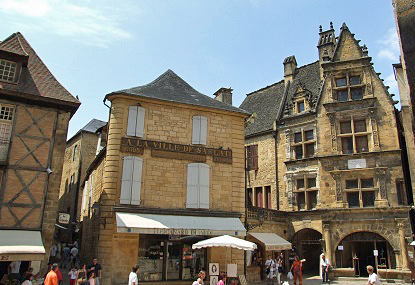
The beating heart of Sarlat-la-Canéda is its spectacular Old Town, a maze of cobbled lanes, ochre-coloured stone mansions, and flower-bedecked squares that feel as if they have leapt straight from the pages of a storybook. Wandering here is an experience in itself, revealing exquisitely preserved Gothic and Renaissance façades and lively squares like Place de la Liberté, the setting for market days, open-air cafés, and impromptu street performances.

Sarlat Market and Place de la Liberté
Held twice a week in the heart of the Old Town, the Sarlat Market is a feast for the senses and an unmissable local tradition. Stalls overflowing with fresh walnuts, foie gras, cheeses, honey, truffles, and vibrant seasonal produce line the Place de la Liberté, drawing crowds of locals and visitors alike for both shopping and people-watching. The surrounding architecture and jovial atmosphere make this more than just a market—it is a cornerstone of Sarlat’s social life.

Cathedral of Saint-Sacerdos
Dominating the skyline at Place du Peyrou, the Cathedral of Saint-Sacerdos dates back to the 12th century and blends an array of architectural styles from Romanesque to Gothic. Highlights include its soaring bell tower, atmospheric nave, and historic organ. The cathedral is free to visit outside of service times and is a peaceful spot to appreciate both Sarlat’s religious and artistic heritage.
Sainte-Marie Church and Panoramic Elevator
Sainte-Marie Church is a remarkable example of adaptive architecture—once a Gothic parish church, it was transformed by acclaimed architect Jean Nouvel into Sarlat’s covered market. Beyond its gourmet offerings, its most exciting feature is the glass panoramic lift that rises to the top of the former bell tower. From here, visitors can enjoy truly breathtaking 360-degree views over the town’s roofs and ancient streets—a must-do for photographers and sightseers alike.
Lantern of the Dead (La Lanterne des Morts)
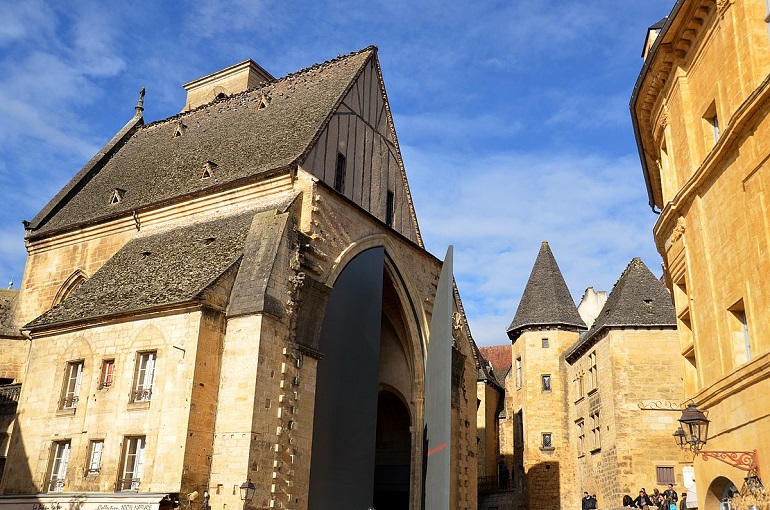
One of Sarlat’s quirkiest monuments, the Lantern of the Dead is a small, rocket-shaped stone tower dating to the 12th century. Its original purpose has been lost to time, yet it remains evocative, shrouded in local legend and standing as a unique testament to Sarlat’s medieval history. It can be found tucked behind the Cathedral, providing a tranquil spot for contemplation.

Maison de La Boétie
Situated opposite the Cathedral, this Renaissance mansion is the birthplace of the Renaissance writer and philosopher Étienne de La Boétie. Its honey-coloured stone façade, ornate windows, and historical resonance make it an architectural gem, even admired only from the exterior.
Place du Marché aux Oies and Local Statues
Sarlat is dotted with delightful public sculptures, most famously the bronze statues of three geese at Place du Marché aux Oies, celebrating the region’s gastronomic heritage. The whimsical Le Badaud statue, depicting a thoughtful onlooker on Place de la Liberté, is another charming touch.
Château de Puymartin
Located just outside the centre of Sarlat, the Château de Puymartin is a 13th-century castle steeped in legend and brimming with historic charm. Visitors are invited to explore the elegant rooms, imposing towers, and pretty grounds; the château is also famed for its tales of the ‘White Lady’ ghost, adding an air of mystery to every visit.

Top Museums
Architectural and Historical Museums
Manoir de Gisson
The Manoir de Gisson is an architectural jewel that embodies the grandeur of Sarlat’s Renaissance aristocracy. Its honey-coloured stonework, mullioned windows, and turreted silhouette stand sentinel over the market square, beckoning visitors into a world of antique splendour. Inside, the rooms are beautifully preserved with authentic period furnishings: ornate tapestries, gilded mirrors, and stately chests evoke the refined lifestyle of the nobility. The interiors offer sweeping vistas from balconies, lending dramatic views of the medieval town and its bustling streets below. The famed Cabinet of Curiosities displays a fascinating array of rare and peculiar objects, from scientific instruments to exotic treasures, revealing the intellectual passions of Renaissance collectors. Visitors ascend spiralling stone staircases, moving through intimate chambers and grand salons, each meticulously staged to recreate 16th-century domestic life and local history.

Musée de Sarlat et du Périgord Noir
This museum stands as a cultural centrepiece, offering an extensive overview of local history and heritage from prehistoric times to the present. Housed in a stunning 18th-century mansion, its displays range from archaeological finds, Gallo-Roman relics, and medieval artefacts to vibrant contemporary art and local crafts. Thematic temporary exhibitions delve into topics like winemaking and the French Revolution’s impact on the region, while permanent exhibits showcase prehistoric tools, ornate weaponry, and documents chronicling Sarlat’s evolution. The museum’s breadth and depth make it an essential stop for anyone wishing to grasp the full richness of the Périgord Noir.
Maison de La Boétie
Maison de La Boétie marks the birthplace of Étienne de La Boétie, the seminal philosopher and writer who helped shape French intellectual thought. The museum not only explores his works and influence but also situates him within Sarlat’s vibrant history. Manuscripts, portraits, and thematic rooms illuminate La Boétie’s philosophical legacy and his connection to other Renaissance thinkers, enriching a visit with the spirit of humanist enquiry.
Specialised and Thematic Museums
Musée de la Truffe
Housed in a historic monument at the heart of the town, the Musée de la Truffe celebrates the cultural and gastronomic legacy of the Périgord black truffle. As guests step inside, they are transported into the world of this prized delicacy through interactive exhibits, multimedia presentations, and sensory workshops. The museum deftly blends tradition and modernity, telling the story of truffle harvesting, regional terroir, and the subtle art of truffle hunting with trained dogs. Visitors can explore audiovisual displays that recreate the truffle’s journey from oak forests to the gourmet kitchens of Périgord. There are hands-on activities for all ages, including themed workshops for adults and children, while specialist guides lead tastings that showcase the distinctive aromas and flavours that have defined local cuisine for centuries.
Musée du Mecanic Art
The Musée du Mecanic Art introduces a unique perspective to Sarlat’s museum scene, blending art nouveau, street art, and motor history in one dynamic space. Situated in the medieval heart of Sarlat, the museum showcases works that celebrate technological innovation—lithographs, digigraphies, posters, and photographs chart the exploits of pioneers in automobiles, aviation, motorcycles, and boats. The museum also hosts temporary exhibitions, making it a living homage to mechanical art and progress. Whether admiring historic racing memorabilia or contemporary graphic design, visitors explore the interplay between creative vision and engineering mastery.
Artistic and Creative Spaces
Gorodka
Gorodka stands apart as a “village of singular art” conceived by Pierre Shasmoukine, where surrealism and environmentalism meet in the Dordogne woodland. Its whimsical installations and galleries burst with creativity—treehouses encrusted in mosaics, sculptures of recycled materials, and vibrant nocturnal art walks combine in a continuously evolving tableau. The site is both exhibition and artist’s playground, encouraging visitors to interact, discover, and even participate in workshops. Gorodka’s fusion of nature and art invites reflection, delight, and a sense of playful engagement, setting it apart from traditional museum experiences in Sarlat and the broader Périgord.
Artisanal Studios and Galleries
Beyond the formal museums, Sarlat hosts numerous ateliers and art studios such as Gareth Kirkland’s photography space and the Atelier D’Art Jules Andrieu. These establishments invite guests to meet local artists, witness traditional crafts in action, and purchase unique works. Many galleries are nestled amid winding lanes and medieval arcades, creating intimate, ever-changing spaces that mirror the creative pulse of Sarlat.
Local Cuisine
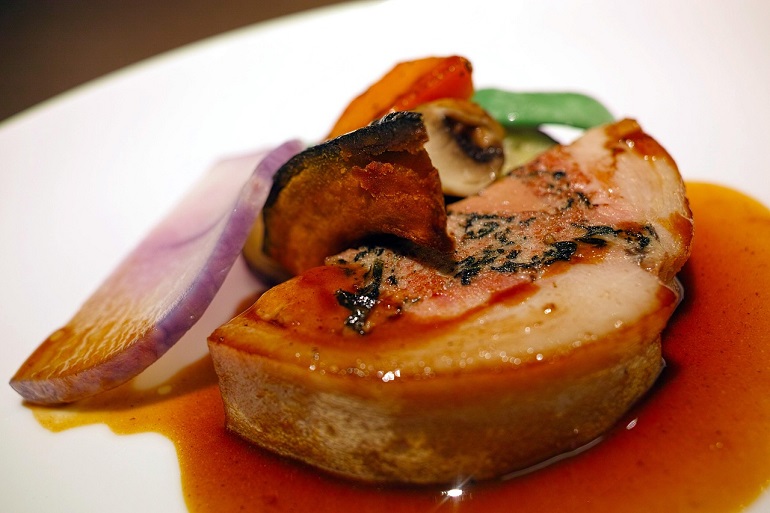
Sarlat-la-Canéda is renowned for its rich and hearty local cuisine, offering a true taste of the Dordogne’s rural traditions. The town’s markets and restaurants brim with duck confit, foie gras, and magret de canard, all hallmarks of the region’s gastronomy. Black truffles are a sought-after delicacy here, perfuming seasonal dishes with their earthy aroma, while walnuts appear in everything from savoury salads to sweet desserts. Visitors will also encounter Sarladaise potatoes, thinly sliced and cooked in duck fat with garlic and parsley, as well as rustic country breads and cheeses that round out a meal in this famously epicurean corner of France.
Getting There
By train Sarlat’s modest station is linked to the French rail network via frequent TER services from Libourne and Bordeaux, both of which connect seamlessly with high-speed TGVs from Paris Montparnasse; alternatively, Intercités trains from Paris Austerlitz reach Souillac, where timed regional buses cover the last leg to Sarlat.
By coach Long-distance operators run direct or one-change routes from major hubs such as Paris Bercy, Brive-la-Gaillarde and Bergerac, with most services setting down at Place Pasteur or the railway station; these coaches are handy if you are already touring south-west France and wish to avoid multiple train changes.
By car Driving offers the greatest flexibility: the A20 from Paris or Toulouse, the A10/A89 from Paris via Poitiers and Périgueux, and the A89 from Bordeaux funnel into well-signed D-roads for the final scenic approach, allowing you to pair Sarlat with nearby Dordogne villages at your own pace.