


| Contents |
|---|

Introduction
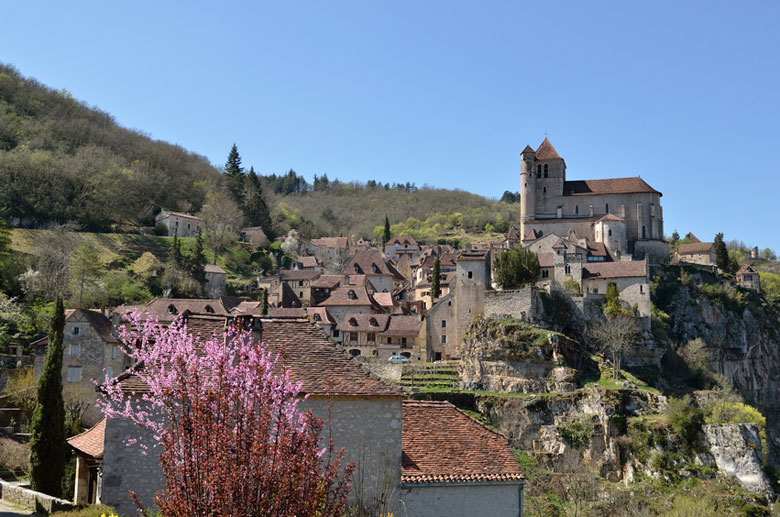
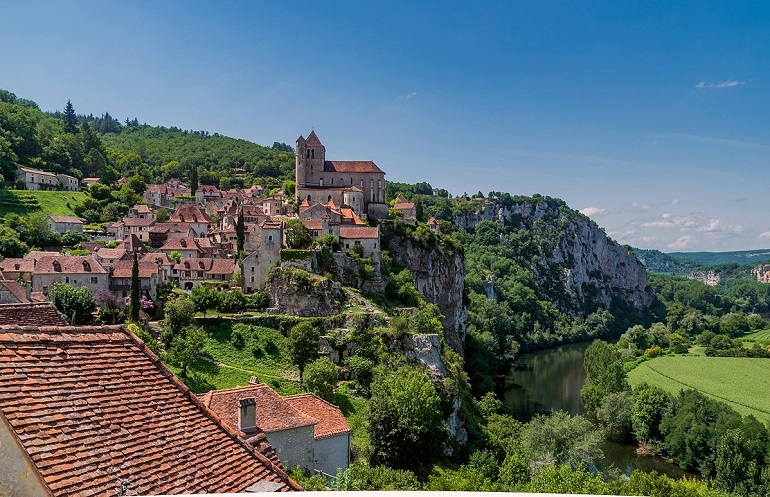
Beautifully set at the fringe of a 150m cliff above the River Lot, Saint-Cirq-Lapopie (pop. 200) unequivocally deserves its listings among the most beautiful villages of France. With its cream-coloured stones and rusty terracotta tiles is so full of charm it is easy to see why it gets so crowded in summer, as the village draws around half a million visitors annually. The settlement dates back to Gallo-Roman times and developed as the main seat of one of four viscounties of Quercy during the Middle Ages, controlled by three feudal dynasties—the Lapopies, Gourdons, and Cardaillacs—who built multiple castles and fortifications on the strategic clifftop position. The village centre comprises narrow cobbled streets lined with well preserved stone and half-timbered houses dating from the 12th to 16th centuries, thirteen of which are listed as historical monuments, whilst the ruins of three medieval castles and a 15th-century fortified Gothic church dominate the summit. Saint-Cirq-Lapopie has long attracted artists, most notably André Breton, the founder of Surrealism, who made it his home in the 1950s and famously declared "I stopped wanting to be elsewhere".
Saint-Cirq was located on the medieval Via Podiensis, one of France's four pilgrimage routes to Santiago de Compostela, running from Le Puy-en-Velay to the Basque country. It is now part of the Causses du Quercy Regional Nature Park.
Interesting Facts about Saint-Cirq-Lapopie
- Perched about 100 metres above a dramatic bend of the River Lot, Saint-Cirq-Lapopie commands cliff-edge views that have captivated travellers for generations.
- The village is officially classified among the “Most Beautiful Villages of France,” a distinction that reflects its exceptional preservation and setting.
- Saint-Cirq-Lapopie was voted the French public’s favourite village in a nationwide poll, boosting its fame far beyond the Lot Valley.
- Cobbled lanes wind between half-timbered and stone houses dating largely from the 13th to 16th centuries, giving the village a richly medieval feel.
- The stronghold here once anchored one of the four viscounties of historic Quercy, underlining its strategic importance in the Middle Ages.
- Surrealist leader André Breton fell in love with Saint-Cirq-Lapopie, spending summers here and helping inspire its enduring artistic reputation.
- The village church, with Gothic lines and remains of earlier Romanesque decoration, crowns the rocky spur and dominates the ensemble.
- Ancient trades once organised the streets—hide merchants on Rue de la Pélissaria and metalworkers on Rue Payrolerie—echoed today by artisan workshops.
- The Ganil towpath carved into the cliff in the 1840s recalls the heyday of river navigation, when locks, dams and mills animated the Lot.
- Remains of multiple medieval castles and towers still punctuate the heights, hinting at the fortress complex that once guarded the valley.
- With terraced gardens peering over the water and perfectly pitched brown-tiled roofs, the village’s silhouette at sunset is unmistakably romantic.
- Saint-Cirq-Lapopie’s location on a route linked to the Way of St James helped channel pilgrims, trade and ideas through its gates for centuries.
- Artists continue to animate the village, with galleries, residencies and small museums tucked behind arcades and timbered façades.
- The cliff-top belvederes provide sweeping panoramas of orchards, meanders and limestone cliffs that define the Lot’s pastoral character.
- Medieval fortified gates once controlled entry to the settlement, a reminder of the turbulent histories that shaped this cliff-side community.
History
The origins of Saint-Cirq-Lapopie can be traced back to the Gallo-Roman period, though the village truly flourished during the Middle Ages when it became one of the most strategically important settlements in the Quercy region. According to Christian legend, the village owes its name to Saint Cyr, whose relics were believed to have been brought from Asia Minor by Saint Amadour. Construction of the fortress began in the 10th century when the Duke of Aquitaine built a castle on the dramatic cliff overlooking the River Lot, establishing it as the main seat of one of the four viscountcies that comprised Quercy. The settlement was subsequently shared between three powerful feudal dynasties - the Lapopies, the Gourdons, and the Cardaillacs - who constructed castles and fortified houses that dominated the village and gave Saint-Cirq-Lapopie its distinctive medieval character that endures today.
During its medieval heyday, Saint-Cirq-Lapopie served as a vital regional centre and an important waystation on the pilgrimage route to Santiago de Compostela. The fortress's strategic position 100 metres above the river proved its worth during numerous conflicts, successfully defending against attacks from Richard the Lionheart, English forces during the Hundred Years' War, and various other adversaries. The village below the castle walls bustled with commercial activity, its streets filled with artisan workshops including coppersmiths, tanners, leatherworkers, and the renowned roubinetaïres - skilled wood-turners who crafted boxwood taps for wine barrels, a specialty that became synonymous with the region. The beautiful stone and colombage half-timbered houses that line the steep winding streets today date from this prosperous period between the 12th and 16th centuries, with thirteen buildings now listed in France's historical register.
The village's fortunes changed dramatically in 1471 when King Louis XI ordered the fortress destroyed, fearing it might fall into enemy hands. Although the castle was later rebuilt under Charles VIII through compensation to the local lord Raymond de Cardailac, it met its final destruction in 1580 during the French Wars of Religion when Catholic forces emerged victorious over the Protestant refugees who had sought sanctuary there. However, the post-conflict period ushered in a new era of prosperity as the village's economy flourished around the wine and wood industries, aided by the construction of arterial locks and canals on the Lot River in the 17th century. Flat-bottomed boats called garbarres transported local produce, tobacco, and wine to Cahors and Bordeaux, whilst the powerful guild of woodturners continued to thrive well into the modern era. The 20th century brought artistic renaissance to Saint-Cirq-Lapopie when painters and writers, most notably Surrealist founder André Breton, discovered its timeless beauty and made it their home, with Breton famously declaring upon first seeing the village: "I stopped wanting to be elsewhere".
Main Attractions
The Medieval Village and Panoramic Views
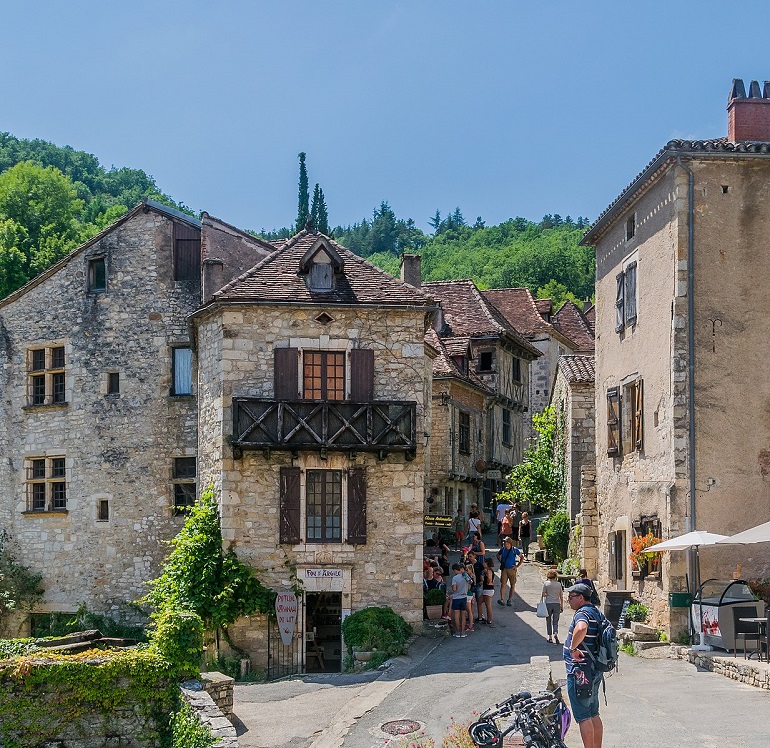
The heart of Saint-Cirq-Lapopie is its stunning medieval core, a labyrinth of narrow lanes lined with stone and half-timbered houses dating from the twelfth to the fifteenth centuries. Many of these buildings have preserved their traditional details—steeply pitched roofs, wooden corbels, and flower-boxed window sills—that evoke the village’s prosperous past as a centre for crafts and commerce. As visitors wander these charming streets, they are rewarded with sweeping vistas from terraced gardens or strategic viewpoints, where the entire Lot Valley unfurls in a dramatic panorama.
The Ruins of the Fort and Castle
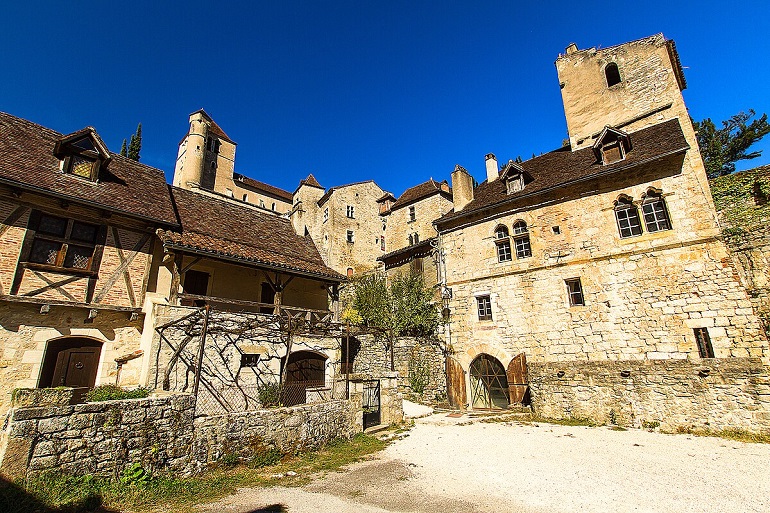
Overlooking the village and river, the remnants of the once formidable fortress offer a tangible link to Saint-Cirq-Lapopie’s strategic importance in medieval times. Originally constructed for defence, the ruined fort and ramparts now serve as striking viewpoints, with pathways leading up the rocky escarpment. From these heights, one can see the extraordinary landscape that made the village such a vital stronghold, as well as appreciate the striking juxtaposition of wild natural cliffs and the red-tiled roofs below.
The Church of Saint-Cirq-Lapopie
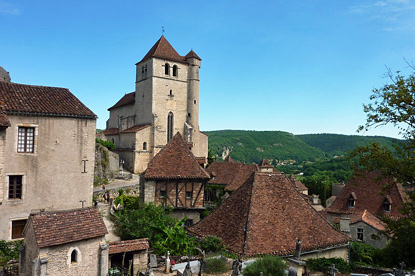
Dominating the village from its lofty mid-cliff position, the fortified Gothic church is a major architectural landmark. Dating to the fifteenth century and boasting elements of much older structure, the church features beautiful Romanesque carvings, remnants of medieval murals, and an imposing bell tower. It stands as a powerful symbol of the village’s enduring spiritual and historic inheritance, inviting both contemplation and admiration with its atmospheric interior and sweeping exterior viewpoints.
The Chemin de Halage (Towpath)
Carved out of the limestone cliffs along the Lot River, the Chemin de Halage is a remarkable riverside towpath once used by horses pulling barges. Today, it is celebrated as one of the region’s most scenic walks, featuring artistic bas-relief sculptures etched into the cliff face and shaded by overhanging rocks. Traversing this picturesque path affords visitors a tranquil, immersive experience of the valley, with river views and opportunities to pause at old locks, watermills, and peaceful harbours.
Les ânes de Lapopie: Donkey Trekking
For a distinctive and family-friendly way to explore the countryside, Les ânes de Lapopie offers donkey-led hiking adventures along scenic trails. This charming activity is especially well-suited to younger visitors and invites guests to experience the local landscape at a gentle pace, accompanied by these docile and engaging animals. The routes encompass wildflower meadows, woodland paths, and glimpses of the village from rural vantage points.
The Village Artisans and Boutiques
Throughout the year, the village is enlivened by a vibrant community of artists, craftspeople, and boutique shop-owners who bring colour and creativity to its historic heart. Many workshops and galleries operate from centuries-old buildings, continuing the artisanal legacy of Saint-Cirq-Lapopie. Exploring these shops reveals a wealth of local products—from traditional Quercy crafts and ceramics to fine regional foods and artworks inspired by the valley’s magical light.
Bouziès and River Activities
Just below the village, the riverside hamlet of Bouziès is a tranquil base for river cruises and outdoor pursuits, such as canoeing and boat trips along the Lot. The ancient quayside is lined with barges and offers further opportunities for riverside strolls, while the towpath provides a memorable connection back toward the village via the dramatic cliffside path. Bouziès is also known for its unique rock-carved dwellings and makes an excellent starting point for exploring the wider Lot valley.
The Falaises du Lot et du Célé
Near Saint-Cirq-Lapopie, the sheer limestone cliffs known as the Falaises du Lot et du Célé offer excellent hiking and birdwatching, as well as exceptional viewpoints and geological features. These cliffs accentuate the region’s wild beauty, with trails leading through unspoilt landscapes of remarkable biodiversity and panoramic perspectives on the valley below.
Lively Village Life and Seasonal Activities
Saint-Cirq-Lapopie’s charm is enhanced by its vibrant seasonal life, including markets, local festivals, open-air concerts, and pop-up food stalls. Visitors may sample regional delicacies, enjoy shaded terraces in the arcaded squares, or join in the convivial atmosphere that makes the village a hub for both locals and travellers alike.
Top Museums
Musée Rignault
Musée Rignault occupies a splendid 15th-century merchant’s house, gifted by the collector Joseph Rignault to ensure the preservation of its contents and the cultural spirit of Saint-Cirq-Lapopie. The museum serves as a time capsule, its rooms curated to recreate the ambiance favoured by Rignault—who was a painter and collector with a deep affection for the village. Visitors will encounter an eclectic collection that features fine artworks, antique furniture, religious artefacts and exotic objects, spanning several stylistic families: the Middle Ages and Renaissance, African and Oceanic art, and Asian works. These items reflect not only local heritage but also broader artistic trends, inspired by the wave of universal expositions and the fascination of modern artists with “primitive” arts.
Each gallery is themed: the first rooms display African sculptures, the bedrooms evoke Eastern sensibilities, and the dining halls showcase religious carvings and ceremonial pieces. The museum’s gardens are especially remarkable, blending art and nature across a series of terraced lawns overlooking the valley—a tranquil retreat favoured by Rignault and later used for sculpture displays and artistic events. Temporary exhibitions often bring in acclaimed artists from across France and beyond, breathing new life into the museum and keeping its dynamic link with the creative community.
Saint-Cirq-Lapopie itself has long been an artistic haven, attracting luminaries such as Henri Martin, Pierre Daura, Toyen, André Breton, and Benjamin Péret. The Musée Rignault is a focal point for this creative spirit, often hosting thematic exhibitions that celebrate the local artistic lineage and the broader tradition of resident-collectors who made the village a centre of cultural exchange.
SAVEURS ET SAFRAN Musée - Producteurs
The SAVEURS ET SAFRAN Musée - Producteurs is a unique museum, devoted to the history and production of saffron—a crop central to the Lot region’s heritage. The museum is part exhibition space, part producers’ collective. Its displays guide visitors through the story of saffron’s cultivation: from ancient farming methods and the delicate art of harvesting crocus flowers, to the modern revival led by local farmers. Through a combination of historical artefacts and hands-on workshops, guests can experience not only the agricultural process but also the spice's culinary versatility.
Tastings and demonstrations are integral to the visit, offering a sensory insight into saffron’s role in local cuisine. The museum supports ongoing research and education on sustainable farming and ingredient provenance, linking tradition with contemporary concerns. Its displays celebrate both the agricultural ingenuity and the evolving identity of rural Saint-Cirq-Lapopie.
Local Cuisine
Saint-Cirq-Lapopie’s cuisine is a celebration of the Lot region’s rustic traditions, with inviting village restaurants serving dishes grounded in local produce and age-old recipes. Specialities such as foie gras, cassoulet with confit de canard, and tripous (a savoury tripe dish) reflect the deep rural roots of Quercy, while omelette with truffles and duck in several forms highlight the area’s prized delicacies. One must not miss the famous dessert, Lou Pastis Quercynois, a feather-light, spiralled apple cake scented with plum brandy, traditionally prepared for family gatherings. Across sunlit terraces and historic dining rooms, generous platters of cheeses, walnut tarts, and hearty charcuterie bring the flavours of the countryside to every table, promising an authentic taste of southwestern France.
Getting There
By train Take a regional TER service to Cahors from major hubs such as Toulouse or Brive-la-Gaillarde; from Cahors station, local buses and taxis complete the short, winding journey up to the hilltop village.
By coach or bus Seasonal regional buses link Cahors and Saint-Cirq-Lapopie, with extra departures in summer; these services are slower than driving but allow you to admire the Lot Valley without the stress of narrow roads.
By car Follow the A20 motorway to exit 57 (Cahors-Sud), then wind east along the D811 and D42 through vineyards and limestone cliffs until the signposted turn-off climbs to Saint-Cirq-Lapopie’s cliff-edge car parks, noting that village access is restricted to pedestrians.
| Travel destinations in Midi-Pyrénées | ||||||||||||||
|---|---|---|---|---|---|---|---|---|---|---|---|---|---|---|
|
|
|
|
| ||||||||||
|
|
|
|
| ||||||||||
|
|
| ||||||||||||


