


| Contents |
|---|
Introduction
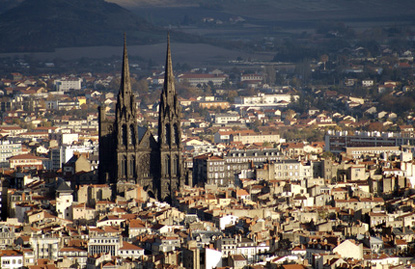
Clermont-Ferrand, located in the heart of France's Auvergne region, is a city steeped in history and surrounded by natural beauty. With a population of 147,751 as of 2022, it is the 22nd most populous commune in France. The city is renowned for its distinctive black lava stone Gothic cathedral, the Cathédrale Notre-Dame-de-l'Assomption, which dominates the skyline. Clermont-Ferrand boasts a rich cultural heritage, evident in landmarks such as the Romanesque Basilica of Notre-Dame-du-Port, a UNESCO World Heritage site. The city is also known for its industrial significance, being the headquarters of Michelin, one of the world's largest tyre manufacturers. With over 40,000 students, Clermont-Ferrand is a vibrant university town and the first French city to join UNESCO's Learning City Network. Situated at the foot of the Chaîne des Puys, a chain of dormant volcanoes including the iconic Puy de Dôme, the city offers visitors a unique blend of urban exploration and outdoor adventures.
Interesting Facts about Clermont-Ferrand
- Clermont-Ferrand is uniquely surrounded by the Chaîne des Puys, a UNESCO World Heritage site comprising 80 dormant volcanoes.
- The Cathédrale Notre-Dame-de-l'Assomption, made entirely of black volcanic stone, dominates the city's skyline with its striking Gothic architecture.
- Known as "France's Liverpool," the city boasts over 800 artistic groups and hosts numerous music, theatre, and film festivals.
- Clermont-Ferrand is home to Michelin's global headquarters, the iconic tyre company founded here over a century ago.
- The Puy-de-Dôme, an extinct volcano near the city, offers breathtaking panoramic views and is a popular hiking destination.
- The Place de Jaude, the city's central square, features a statue of Vercingetorix by Frédéric Bartholdi, who also sculpted the Statue of Liberty.
- Clermont-Ferrand hosts the Festival du Court Métrage, one of the world's most prestigious short film festivals.
- The Musée d'Art Roger-Quilliot showcases art spanning from the Middle Ages to contemporary times across six levels.
- The city's volcanic heritage influences its architecture, with many buildings constructed from local basalt stone.
- Clermont-Ferrand was the site of the Council of Clermont in 1095, where Pope Urban II launched the First Crusade.

History
Originally known as Augustonemetum, the city was founded in the 1st century BCE near Nemossos, the ancient capital of the Arverni tribe. By the 2nd century CE, it had grown into a thriving settlement with an estimated population of 15,000 to 30,000 inhabitants. The city's fortunes waxed and waned over the centuries, surviving invasions by Visigoths, Franks, and Vikings, before emerging as an important centre in medieval France.
The city's prominence peaked in the 11th century when it hosted the Council of Clermont in 1095, where Pope Urban II called for the First Crusade. This event solidified Clermont-Ferrand's place in European history. The 13th century saw the beginning of construction on the city's iconic Gothic cathedral, built from distinctive black lava stone. In 1630, the towns of Clermont and Montferrand were officially united, forming the city we know today as Clermont-Ferrand.
In the modern era, Clermont-Ferrand has continued to play a significant role in French history and culture. The city briefly served as the capital of France for one day in June 1940, during the tumultuous early days of World War II. Today, Clermont-Ferrand is renowned for its international short film festival and as the birthplace of the global tyre company Michelin. With its blend of ancient heritage and modern innovation, the city offers visitors a unique glimpse into the heart of French history and culture.
Main Attractions
Cathédrale Notre-Dame-de-l'Assomption
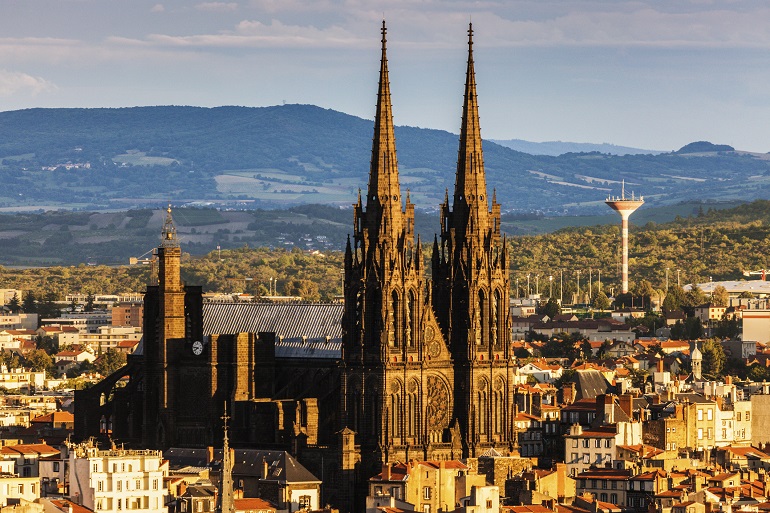
The Cathédrale Notre-Dame-de-l'Assomption is the city's most imposing landmark, visible from almost every part of town. Its striking jet-black façade is carved from local volcanic rock, creating a unique appearance that distinguishes it from other European cathedrals. The interior features towering stained-glass windows that filter in vibrant hues of light. The cathedral is open daily and free to enter, with extended hours on Sundays. Visitors can explore the nave, chapels, and climb to the top for panoramic views of the city.
The cathedral's history dates back to the 13th century, although it was completed much later. Its construction reflects the city's wealth and influence during the medieval period. The exterior's dark volcanic stone gives the cathedral a somber yet majestic appearance, while the interior reveals intricate stone carvings and beautiful stained glass. Guided tours are available for those interested in learning more about its history and architectural details.
Basilique Notre-Dame-du-Port
A UNESCO World Heritage site, the Basilique Notre-Dame-du-Port is a 12th-century Romanesque basilica that contrasts with the Gothic cathedral. It features a pale-cream exterior and a barrel-arched front, showcasing the architectural styles of the time. The basilica is open daily, with guided tours available at specific times. Visitors can admire its simple yet elegant design, which reflects the early Christian architectural traditions.
The basilica has played a significant role in the city's history, serving as a major pilgrimage site. Its interior contains several relics and artworks, including frescoes and sculptures. The building's design is notable for its simplicity and harmony, reflecting the Romanesque style's emphasis on clean lines and minimal ornamentation. The basilica's tranquil atmosphere makes it a peaceful retreat from the bustling city.
Place de Jaude
Place de Jaude is the central square of Clermont-Ferrand, offering a vibrant and lively atmosphere. It features an impressive statue of Vercingetorix, designed by Auguste Bartholdi, who also created the Statue of Liberty. The square is surrounded by notable buildings, including the Municipal Opera and Galeries Lafayette. During the day, it's a hub for shopping and dining, while evenings bring a lively atmosphere with street performers and cafes.
The square hosts various events throughout the year, including festivals and markets. Visitors can enjoy al fresco dining at one of the many cafes or restaurants lining the square. The statue of Vercingetorix is a focal point, symbolizing French resistance and history. The surrounding buildings add to the square's charm, with a mix of modern and historical architecture.
Place de la Victoire
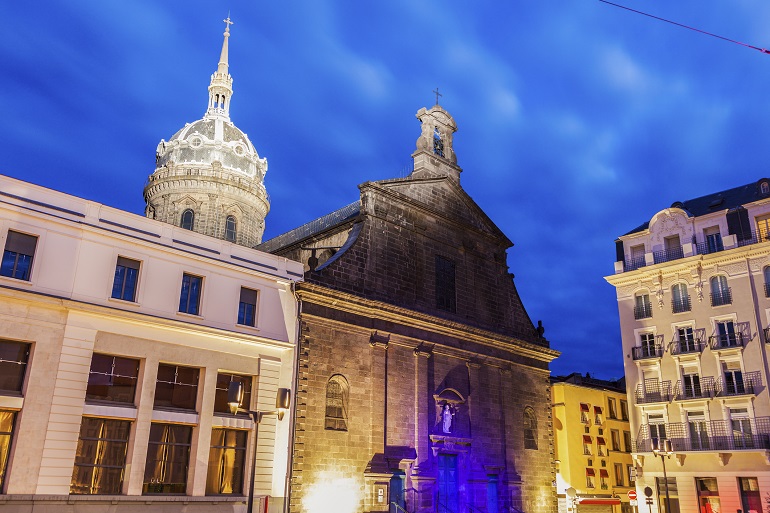
Place de la Victoire is a tree-lined square that offers excellent views of the cathedral, particularly at night when illuminated. It's fringed with cafes and bars, perfect for al fresco dining or enjoying a coffee while taking in the sights. The square is quieter than Place de Jaude, providing a more relaxed atmosphere for those looking to unwind.
The square's central location makes it an ideal spot to explore the city's historic center. Visitors can stroll through the nearby streets to discover more of Clermont-Ferrand's architectural heritage. The views of the cathedral at night are particularly stunning, with the building's façade lit up against the dark sky.
Montferrand District
The Montferrand District is one of the best historically preserved towns in France, forming part of Clermont-Ferrand. It offers a glimpse into the city's medieval past, with narrow streets and ancient buildings. Visitors can explore the district's historic architecture, visit local shops, and enjoy traditional cuisine at one of the many restaurants.
Montferrand's history dates back to the Middle Ages, and its preservation has made it a unique cultural and historical site. The district hosts various festivals and events throughout the year, celebrating its heritage and traditions. Visitors can immerse themselves in the local culture by exploring its streets, visiting historical sites, and interacting with the community.

Top Museums
Art Museums
Roger Quilliot Art Museum
Housed in a former 17th-century Ursuline convent, this museum showcases an impressive collection of fine arts spanning from the Middle Ages to the 20th century. The building itself is a marvel of architectural transformation, featuring a central atrium designed by Peter Rice with a striking glass roof. Visitors can explore over 1,500 works of art, including paintings, sculptures, furniture, and objets d'art. The museum's collection highlights the evolution of art through the centuries, with notable works from French and European artists.
Bargoin Museum
Located in a neoclassical building in the heart of the city, the Bargoin Museum offers two distinct departments. The archaeology section traces the history of the Arverni people from prehistoric to Gallo-Roman times, providing insights into the region's ancient past. The textile arts department houses a unique collection of non-European textiles dating from the 18th to 21st centuries, offering a glimpse into global cultural diversity. This blend of ancient history and international textiles makes the Bargoin Museum a fascinating destination for those interested in both archaeology and textile art.
Science and Natural History Museums
Henri-Lecoq Museum
Situated in a private mansion, this museum presents the region's natural heritage through its extensive collections. Visitors can discover the history of science through prestigious objects and samples from the work of renowned scientists such as Pascal, Lavoisier, and Pasteur. The museum's collections encompass botany, geology, mineralogy, palaeontology, zoology, and the history of science and techniques. The Henri-Lecoq Museum is particularly notable for its historical scientific instruments and its role in preserving the scientific legacy of the region.
Sports Museums
ASM Experience
A unique attraction in France and possibly Europe, ASM Experience offers an immersive rugby experience. This interactive museum is dedicated to rugby enthusiasts and features regularly updated exhibits that delve into the history and culture of the sport. Visitors can engage with interactive displays and learn about the achievements of the ASM Clermont Auvergne rugby team. The ASM Experience is a must-visit for sports fans and those interested in the local culture.
Contemporary Art Museums
Fonds Régional d'Art Contemporain (FRAC) Auvergne
Created in the 1980s, the FRAC Auvergne focuses on contemporary art. It has built a significant collection of high-quality contemporary works, showcasing the diversity and innovation of modern art. The FRAC regularly hosts temporary exhibitions, providing a dynamic platform for artists to showcase their latest creations. This makes it an exciting destination for art enthusiasts looking to explore the latest trends in contemporary art.
Photography Museums
Hôtel Fontfreyde - Centre Photographique
This museum specialises in photography, offering visitors a chance to explore various photographic exhibitions and collections. The Hôtel Fontfreyde is known for its diverse programming, which includes both local and international photographers. It serves as a hub for photography enthusiasts, providing insights into the art form and its evolution over time. The centre also hosts workshops and events, making it a vibrant cultural hub in Clermont-Ferrand.
Local Cuisine
Clermont-Ferrand's culinary scene is deeply rooted in the hearty traditions of Auvergne, offering a delightful array of flavoursome dishes that showcase the region's rich agricultural heritage. Visitors can savour iconic specialties such as truffade, a comforting blend of thinly sliced potatoes and fresh Cantal cheese, often served alongside succulent cuts of meat. Another must-try is aligot, a creamy concoction of mashed potatoes and melted cheese that stretches impressively when served. The city's menus also feature potée auvergnate, a warming stew brimming with pork and vegetables, and choux farci, cabbage leaves stuffed with tender pulled pork. Cheese enthusiasts will relish the opportunity to sample local varieties like Saint-Nectaire and Fourme d'Ambert. For those with a sweet tooth, the pompe aux pommes, a delectable apple tart spiced with cinnamon, provides a fitting end to any meal. These authentic dishes, paired with the region's Côtes d'Auvergne wines, offer a true taste of Clermont-Ferrand's gastronomic prowess.
Shopping
The city centre features several pedestrian streets, including Rue Saint-Esprit and Rue du Port, lined with diverse boutiques. Place de Jaude, the main square, is home to Centre Jaude, a modern shopping complex housing over 130 shops, cafes, and cinemas. For fresh produce and local specialities, visitors can explore numerous markets held throughout the week, such as the covered market at Halle Gourmande Saint-Pierre, open daily except Sundays. The city also offers larger commercial centres like La Galerie - Saint-Jean, featuring 76 shops and services. Those seeking unique local products can browse the farmers' markets and artisanal shops scattered across the city, particularly in the historic Montferrand district.
Nature in and around Clermont-Ferrand
The city is situated within the Parc Naturel Régional des Volcans d'Auvergne, which features the UNESCO World Heritage site Chaîne des Puys, a chain of over 80 dormant volcanoes. The highest peak, Puy de Dôme, can be accessed via a panoramic train, providing stunning views of the volcanic landscape. Nature enthusiasts can explore the Chaudefour Valley, a National Nature Reserve known for its glacial features, waterfalls, and diverse flora and fauna. For those seeking water-based activities, the Allier River and the lake in Cournon offer opportunities for fishing, canoeing, and kayaking. Within the city, the Jardin Lecoq provides a peaceful green space with flower beds, ponds, and centuries-old trees. Additionally, the Espace Naturel in Cébazat offers a unique environment for bird watching and nature observation.
Jardin Lecoq
The Jardin Lecoq is a 5-hectare garden featuring remarkable trees, a large pond, and a rose garden. It offers picnic lawns, playgrounds, a carousel, and a bar and restaurant. This park is a popular spot for families and those seeking a peaceful escape from the city. Visitors can enjoy leisurely walks, picnics, or simply relax in the gardens.
The garden's diverse plant life includes several species of trees and flowers, making it a haven for nature lovers. The pond is home to ducks and other wildlife, adding to the park's charm. During summer, the garden hosts events and concerts, enhancing its appeal as a community space.
Montjuzet Park
Montjuzet Park is the largest park in Clermont-Ferrand at 26 hectares, offering panoramic views of the city. It includes prairies, Mediterranean gardens, playgrounds, and two monumental contemporary sculptures. The park is designed to provide a variety of landscapes and activities, making it suitable for both relaxation and recreation.
Visitors can explore the park's diverse flora, which includes Mediterranean plants and trees. The playgrounds and picnic areas make it an ideal spot for families. The contemporary sculptures add a touch of modernity to the park's natural beauty. Montjuzet Park is also a popular spot for jogging and cycling due to its expansive trails.
Bargoin Park
Bargoin Park boasts hundred-year-old trees, including sequoias, cedars of Lebanon, and ginkgo bilobas. A notable feature is a 250-year-old maple tree with a 7-metre circumference. The park's diverse tree species create a unique and picturesque environment. It is a popular spot for nature walks and picnics.
The park's tranquil atmosphere makes it a perfect retreat for those seeking peace in the heart of the city. The variety of tree species provides a fascinating glimpse into the region's botanical heritage. Visitors can enjoy leisurely strolls or simply sit beneath the shade of these ancient trees.
Getting There & Around
Clermont-Ferrand offers a comprehensive public transport network that makes getting around the city a breeze. The modern tram system, operated by T2C, is the backbone of the network with a single line serving 34 stations across 16 km. Complementing the tram are 26 bus routes that cover areas not reached by the tram. For eco-friendly travel, the C.Vélo bike-sharing scheme provides self-service stations throughout the city. If you're arriving by air, the Clermont-Ferrand Auvergne Airport is just 6 km east of the city centre and is connected by bus line 20. For regional travel, the city's train station offers connections to various destinations. When exploring the city centre, many attractions are within walking distance, making it easy to navigate on foot. Whether you're a student, tourist, or resident, Clermont-Ferrand's diverse transport options ensure convenient mobility throughout the city.
Best Time to Visit
The best time to visit Clermont-Ferrand is from May to September, when the weather is generally pleasant and sunny. These months offer mild temperatures, ideal for exploring the city and its surroundings, including the nearby volcanoes and lavender fields. The peak tourist season is in July, August, and September, with numerous festivals and cultural events that bring the city to life. However, if you prefer fewer crowds, May and June are excellent alternatives, offering beautiful landscapes and more moderate temperatures. For those who enjoy winter sports, visiting from December to February can be a great option, with nearby ski resorts like Super Besse and MontDore providing ample opportunities for skiing. Overall, the choice of when to visit depends on your personal preferences, whether you prefer the vibrancy of summer or the tranquility of winter.