


| Contents |
|---|
Introduction
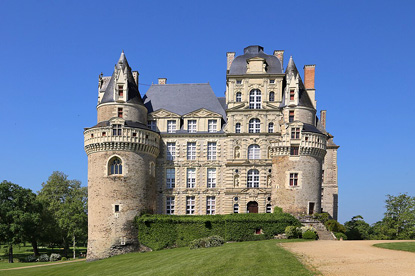
Rising majestically from the heart of the Loire Valley, the Château de Brissac stands as one of France's most extraordinary architectural marvels, earning its nickname as the "Green Giant of the Loire Valley" through its distinctive emerald roofs and impressive seven-storey height. This remarkable fortress-palace, which has remained in the same ducal family for over five centuries, presents visitors with a captivating blend of medieval grandeur and Renaissance elegance, its towers and turrets creating a fairy-tale silhouette against the Anjou countryside. Beyond its striking exterior, the château reveals sumptuous interiors adorned with period furnishings, magnificent tapestries, and ornate gilded ceilings, whilst the meticulously maintained gardens provide a serene backdrop for leisurely strolls. The estate's rich history is further enhanced by intriguing legends, including tales of the mysterious "Green Lady" who is said to roam the château's corridors, adding an element of mystique to this already enchanting destination that continues to serve as both a family residence and a window into France's aristocratic heritage.
Interesting Facts about Château de Brissac
- Often called the “Giant of the Loire,” Château de Brissac is reputedly the tallest château in France, rising seven storeys above its landscaped park.
- The site began as an 11th-century fortress of the Counts of Anjou before later noble owners transformed it into a grand residence.
- Its striking Baroque façade dates largely from early 17th-century rebuilding funded after the Wars of Religion.
- The château has over 200 rooms, including an intimate 19th-century private theatre created for a duchess passionate about performing.
- Brissac remains lived-in by the Cossé-Brissac family, whose head bears the title Duke of Brissac.
- A famous resident legend tells of the Green Lady, said to haunt the tower room where she met a violent end.
- Louis XIII and Marie de’ Medici negotiated a fragile truce here in 1620 during a turbulent mother-and-son power struggle.
- Ransacked in the French Revolution, the château underwent major 19th-century restoration by the ducal family.
- Two round medieval towers still flank the grand front, a quirky reminder of unfinished plans that left the façade asymmetrical.
- Set near Angers, the estate pairs opulent interiors with a vast park of paths, water features and vineyards producing local wines.
History
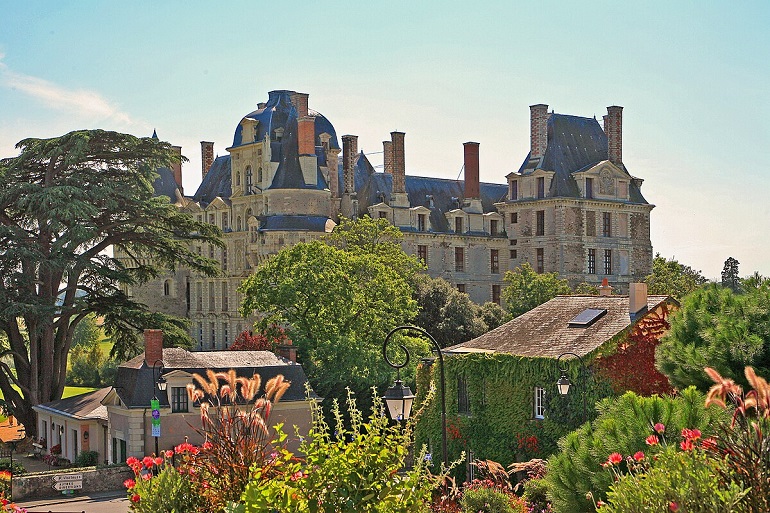
The origins of Château de Brissac stretch back to the 11th century when the Counts of Anjou, notably the formidable Fulk Nerra, established a fortified castle on this strategic site overlooking the Aubance River. Following King Philip II of France's victory over the English, the property was granted to Guillaume des Roches. The château witnessed numerous battles throughout the medieval period, including a notable confrontation in 1068 between two feudal lords, Geoffrey le Barbu and Fulk le Réchin. The castle changed hands multiple times through prominent families including the Rouaults, Chemillés, des Roches, and La Haye-Passavants before being acquired by Pierre de Brézé in 1434. This wealthy chief minister to King Charles VII undertook a major reconstruction in 1455, creating the fortress whose two distinctive asymmetrical towers still dominate the eastern façade today.
The château's transformation from medieval fortress to Renaissance palace began with René de Cossé's purchase of the seigneurie on 26 May 1502. A gentleman from Angers, René quickly established himself as a capable courtier, serving as chamberlain to Charles VIII and later earning favour with Louis XII after advocating for the imprisoned Duke of Orléans. His strategic marriage to Charlotte Gouffier de Boisy, whose mother was a Montmorency, elevated the family's status considerably. The Cossé family's loyalty to the crown proved invaluable during the French Wars of Religion when Charles II de Cossé backed Henri of Navarre against the Catholic League. Though the château suffered severe damage and faced demolition, Henri's gratitude upon becoming King Henri IV proved transformative - he granted Charles the title Duke of Brissac, returned the property, and provided funds for reconstruction in 1611.
The magnificent structure visitors see today emerged from this early 17th-century reconstruction, directed by architects Jacques Dangluze and Corbineau from 1606 onwards. Rising seven storeys to 48 metres in height, the château earned its distinction as the tallest castle in France, with its Baroque façade featuring elaborate sculptures and the five classical architectural orders. However, Charles II's death in 1621 left the ambitious project incomplete, creating the striking juxtaposition of a new castle partially built within an old one partially destroyed. The château weathered the French Revolution's turmoil, being ransacked in 1792 before lying abandoned until restoration began in 1844 under subsequent Dukes of Brissac. Remarkably, the property has remained in the same family for over 520 years, with the current 14th Duke of Brissac, Charles-André de Cossé-Brissac, continuing the tradition of maintaining this architectural masterpiece whilst opening it to public tours and cultural events.
Description
Exterior Architecture
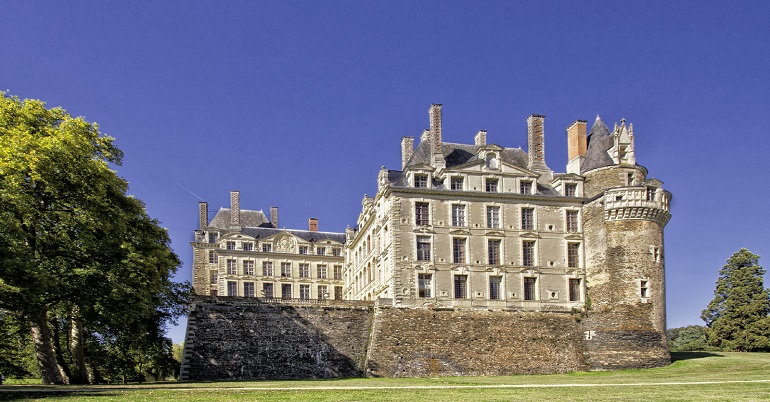
The Château de Brissac's exterior is a dramatic architectural fusion that creates one of the Loire Valley's most striking silhouettes. Rising to an imposing height of 52 metres across seven storeys, the château presents an asymmetrical façade that tells the story of its complex construction history.
The Eastern Façade
The main eastern façade showcases the château's most distinctive feature: an extraordinary architectural mismatch that somehow creates perfect harmony. Two massive round medieval towers from 1455 flank a magnificent Baroque central pavilion built in the 17th century. These towers, constructed by Pierre de Brézé, were originally intended for demolition during the château's reconstruction following the Wars of Religion. However, the death of Charles II de Cossé in 1621 halted the project, preserving these austere medieval sentinels alongside their flamboyant neighbour.
The central Baroque pavilion, designed by architect Jacques Corbineau, represents pure 17th-century theatrical grandeur. Originally conceived as part of a symmetrical three-pavilion design, only the central section was completed, creating the château's charmingly off-centre entrance. The pavilion's façade explodes with baroque ornamentation: carved stone niches shelter sculptured figures, interrupted pediments crown elaborate windows, and decorative dormers pierce the steep slate roof. Every surface seems alive with carved detail, from heraldic devices to mythological creatures that proclaim the owner's wealth and artistic sophistication.
Northern and Western Aspects
The northern façade presents the château's most austere face, where the building's full seven-storey height becomes most apparent as it rises sheer from the banks of the River Aubance. Here, the medieval fortress origins show most clearly, with thick stone walls punctuated by regular rows of windows that march upward in military precision. This side of the château emphasises functionality over decoration, creating a dramatic contrast with the ornate eastern entrance.
The western and southern façades offer more restrained elegance, broken by the Terrace of Bonnivet that provides visual relief from the building's overwhelming scale. These sides feature more conventional Renaissance proportions, with regularly spaced windows in pale tufa limestone that catch and reflect the Loire Valley's gentle light.
Architectural Details
The château's roofscape is equally dramatic, with steep slate roofs punctuated by elaborate dormer windows, tall brick chimneys, and decorative finials. The contrast between the round medieval towers' conical roofs and the baroque pavilion's complex roofline creates a skyline that seems to grow organically from the Loire landscape.
Wrought-iron gates provide the formal entrance, their elaborate scrollwork echoing the baroque sensibilities of the main façade. These gates frame views of the château's imposing bulk whilst maintaining the sense of aristocratic exclusivity that has characterised the property for centuries.
The overall effect is of a building that shouldn't work architecturally but somehow creates one of France's most memorable châteaux—a testament to the happy accidents that can occur when grand plans meet historical interruption, resulting in architecture that's more fascinating than any single stylistic approach could have achieved.
The Interior
Chambers and State Rooms
Stepping through the wrought-iron gates, visitors enter a chequer-tiled hall dominated by an elaborate coat of arms and a sweeping staircase fashioned from monolithic stone slabs. The main stairway itself is a marvel of engineering—each step carved from a single massive stone, testament to the château's medieval foundations.
The Grand Salon serves as the château's ceremonial centrepiece, where gilded coffers cover the entire ceiling in intricate patterns. Every panel gleams with gold leaf, whilst mirrors positioned between tall mullioned windows amplify the natural light and create infinite reflections. Eighteenth-century furniture in the Louis XVI style fills the room, including original tapestried chairs and marble-topped consoles that have entertained European royalty.
The 32-metre-long Gallery once accommodated banquets for 200 guests beneath its spectacular painted ceiling. This vast reception hall features 110 individual ceiling paintings depicting mythological scenes, classical allegories and pastoral vignettes. Portraits of the Cossé-Brissac lineage line the walls between soaring windows, whilst crystal chandeliers suspended from elaborate ceiling mounts cast pools of light across polished parquet floors. The room's scale becomes apparent when one considers that entire orchestras once performed here for grand occasions.
Adjacent to the gallery, the Dining Room conceals one of the château's most charming secrets: a petite orchestra stand painted to resemble marble. This ingenious creation by Jeanne Say, the 19th-century Marquise who transformed much of the château's interior, allowed musicians to serenade diners from behind what appeared to be decorative panels. The room retains its original mahogany dining table and matching chairs, capable of seating 24 guests beneath portraits of distinguished ancestors.
The Hunting Room transports visitors to a bygone era of aristocratic leisure. Late 16th-century Brussels tapestries cover the walls, each panel meticulously woven to depict different hunting practices and their quarry—stags, boars, and birds rendered in extraordinary detail. Antique hunting horns, crossbows and other implements of the chase complement the textile display, whilst painted ceiling beams bear heraldic devices that speak to centuries of noble tradition.
Royal Chambers and Private Apartments
The King's Bedroom, where Louis XIII once reconciled with his mother Marie de Médicis, remains exactly as it appeared during that historic encounter. The room centres on a magnificent four-poster bed draped in crimson silk, its canopy supported by carved columns topped with gilt pineapples—symbols of hospitality. Flemish tapestries depicting biblical scenes cover three walls, whilst the fourth opens through tall casements onto the château's gardens. A writing desk inlaid with mother-of-pearl and rare woods sits beneath a portrait of the Sun King himself.
The notorious Green Room draws visitors seeking encounters with the château's most famous resident ghost, Charlotte de Brézé, the "Green Lady." This chamber features another sumptuous four-poster bed, this one in sage-coloured silk, surrounded by period furniture including a magnificent armoire whose doors conceal a secret passage. The room's most intriguing feature is a concealed staircase behind the fireplace, accessible through a hidden door that legend claims the ghost uses for her nocturnal wanderings.
The Mortemart Room honours Anne de Mortemart, who became Duchess of Uzès. Rich burgundy silk wall coverings provide a dramatic backdrop for portraits of the duchess and her contemporaries, whilst a marble fireplace dominates one wall beneath an elaborate overmantel mirror. The room's windows offer spectacular views over the park's rose gardens, making it one of the château's most sought-after guest chambers.

Cultural and Spiritual Spaces
The Library houses over 12,000 leather-bound volumes arranged on carved walnut shelves that reach from floor to ceiling. First editions of works by Molière, Racine and Voltaire sit alongside illuminated manuscripts, scientific treatises and historical chronicles. Reading tables positioned beneath tall windows invite contemplation, whilst a spiral staircase provides access to upper galleries lined with geographical atlases and botanical studies. The collection spans eight centuries and represents one of France's finest private libraries.
The Chapel, reached through a vaulted stone corridor, glows with light filtered through 17th-century stained-glass windows. An intricately carved altarpiece dominates the sanctuary, its gilded panels depicting scenes from the life of Christ. Original wooden pews face the altar across a checkerboard marble floor, whilst baroque wall paintings create an atmosphere of sacred intimacy. The chapel continues to host family ceremonies and occasional concerts that take advantage of the space's remarkable acoustics.
The château's crown jewel is undoubtedly its Belle Époque Theatre, created in 1890 by the music-loving Marquise Jeanne Say. This 200-seat auditorium spans two floors, with red velvet boxes, gilt balconies and a painted proscenium that wouldn't look out of place in a Parisian opera house. The stage, though compact, has hosted performances by celebrated artists, whilst the adjacent foyer—complete with mirrors and crystal chandeliers—provided an elegant space for interval socialising. The theatre continues to present operatic soirées and chamber concerts that echo through the château's ancient walls.
Service Areas and Wine Cellars
Below stairs, the Medieval Kitchens retain their monumental stone hearth, large enough to roast entire deer for medieval banquets. Copper pots, earthenware vessels and iron implements hang from hooks driven into massive oak beams, whilst a well in the corner provided fresh water without venturing outside during sieges. These kitchens now serve as a tearoom where visitors can sample Loire specialities beneath vaulted ceilings blackened by centuries of smoke.

The Wine Cellars extend deep beneath the château through a network of vaulted stone passages. Oak barrels line the walls, some containing the estate's own AOC rosé and sparkling wines, whilst others age prestigious vintages from across the Loire Valley. The cellars maintain a constant temperature ideal for wine storage, and tastings are conducted in atmospheric chambers where limestone walls weep with moisture and the air carries hints of vanilla and spice from nearby barrels.
A boutique housed in the former Coach House stocks estate wines, local honey and château-branded linens, whilst several opulent Guest Chambers in the private wing offer overnight accommodation complete with four-poster beds, period furniture and panoramic park views for those seeking the ultimate aristocratic experience.
Park
The residence sits in the heart of a 70-hectare landscaped park threaded by five sign-posted walks. Grand avenues lined with cedars give way to a rose garden, a small maze, mirrored ponds and wooded glades where herons patrol the banks of the Aubance river. On warm days the lawns make an inviting spot for picnics, and benches positioned beneath ancient oaks provide panoramic views of the château's lofty silhouette.
Practical information
Practical visits are by guided tour, and the vertical scale means a fair amount of stair-climbing—something to bear in mind for anyone with limited mobility. A boutique in the former coach house stocks estate wines, honey and branded linen, while a tearoom in the old kitchens serves Loire specialities beneath a monumental stone hearth. For a truly immersive stay, several opulent chambres d'hôtes—complete with four-poster beds and park views—are available inside the private wing.
Getting There
By train The nearest rail stop is Angers-Saint-Laud, a major hub on high-speed and regional lines; from Paris-Montparnasse the TGV brings you to Angers in around 90 minutes, where taxis and local buses cover the final 20 kilometres south-east to Brissac-Quincé.
By coach or bus Regional Aléop coaches link Angers with Brissac-Quincé several times daily, while local bus route 7 departs from Angers centre and drops passengers a short stroll from the château gates, making public transport the simplest direct option once in the area.
By car Drivers can leave the A87 motorway at exit 23 (direction Brissac-Quincé) and follow the D748 for roughly 15 minutes through rolling vineyards; ample signposted parking awaits beside the château’s main entrance.
Best Time to Visit
Spring and early summer are the prime months to visit Château de Brissac, when the landscaped park is lush, roses are in bloom and long daylight suits unhurried strolls. Early autumn (September–October) is equally appealing, with golden vineyards, mild temperatures and generally thinner crowds. High summer offers a lively ambiance and extended days, though heat and busier periods are more likely. Winter brings a serene, interior‑focused experience with reduced opening, suiting those prioritising quiet over gardens; checking seasonal schedules in advance is advisable. For softer light and a calmer atmosphere, mornings or late afternoons are the most rewarding times of day.