


| Contents |
|---|
Introduction
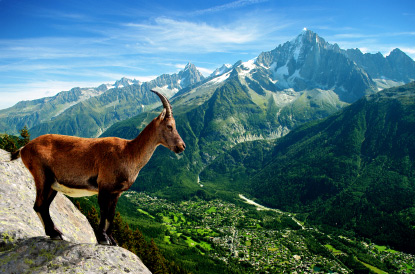
At 4,810 m (15,782 ft) the Mont Blanc is Europe's highest mountain. Lying at the Franco-Italian border, the French side is accessible from Chamonix, the French capital of Alpinism and a world-class mountaineering centre.
It was also in Chamonix that the first Winter Olympics were held in 1924, and the Mont Blanc slopes are the most challenging in Europe for skiers and climbers.
Part of the Mont Blanc massif, the Aiguille du Midi (3,842 m) is famous for having the highest vertical ascent cable car in the world, a 2,800 m climb in 20 minutes.
On the northern slopes of the massif is the Mer de Glace, the longest glacier in France (7 km).
Mont Blanc, standing at 4,807 metres, is the highest peak in the Alps and Western Europe, straddling the border between France and Italy with a small portion extending into Switzerland. The massif encompasses a dramatic landscape of snow-capped peaks, glaciers, and alpine valleys, anchored by the resort towns of Chamonix on the French side and Courmayeur in Italy's Aosta Valley. This iconic mountain has been drawing climbers, skiers, and outdoor enthusiasts since the 18th century, offering year-round activities from challenging mountaineering routes and glacier skiing to scenic cable car rides and hiking trails that traverse three countries. The region features numerous peaks exceeding 4,000 metres, extensive glacier systems including the famous Mer de Glace, and well-developed infrastructure that makes both extreme adventure and casual mountain tourism accessible to visitors of varying experience levels.

Activities and Attractions
Mont Blanc is a premier destination for outdoor enthusiasts, offering an exceptional range of activities and attractions dominated by its world-class hiking trails. The dramatic alpine scenery, with vast glaciers, glistening lakes, and dramatic passes, provides the perfect backdrop for exploration on foot or for other mountain pursuits in every season.
Hiking Trails
The Mont Blanc massif is criss-crossed by a remarkable network of hiking trails, ranging from gentle walks suitable for families to epic long-distance treks for seasoned hikers. The celebrated Tour du Mont Blanc is one of Europe's most iconic long-distance hikes, encircling the massif with nearly 170 km of trails that traverse France, Italy, and Switzerland. This circular trek takes walkers through seven stunning valleys and over numerous mountain passes, crossing 71 glaciers and more than 400 peaks. The route can be completed over multiple days, with overnight stays in traditional mountain huts or comfortable inns, offering a full immersion into the mountain atmosphere.
Classic Day Hikes
Plan de l'Aiguille to Montenvers offers one of the most accessible yet rewarding experiences in the massif. This 6.5 km loop hike features a modest ascent and descent, making it suitable for most fitness levels. The trail showcases changing landscapes from pine forests to rocky slopes, with stunning vistas of the Aiguilles de Chamonix and the famous Mer de Glace. Hikers can choose to walk the entire route or use the Aiguille du Midi cable car to reduce the initial climb, with the option to descend via the historic Montenvers rack railway.
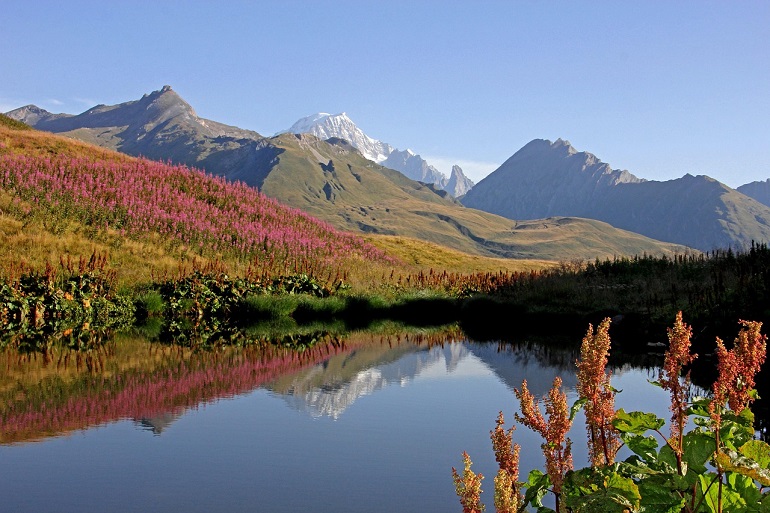
Lac Blanc stands as one of the most photographed locations in the Alps, renowned for its crystal-clear waters reflecting the towering Mont Blanc massif. This 6.6 km round-trip hike involves a 540 m elevation gain and includes some challenging sections with ladders fixed to the rock face. Set within the Aiguilles Rouges nature reserve, the trail rewards hikers with balcony views over the Chamonix valley and opportunities to spot ibex and hear marmots. The hike can begin either from the Col des Montets for a more challenging approach or from the Flégère cable car station to reduce the walking distance.
La Jonction presents a more demanding adventure for experienced hikers, featuring a 1,155 m elevation gain over 10.2 km. This classic route leads to the spectacular viewpoint where the Bossons and Taconnaz glaciers meet, offering unparalleled views of seracs, crevasses, and the Aiguille du Midi. The trail requires careful timing as it can be dangerous in snowy conditions and includes steep sections equipped with chains.
Intermediate Mountain Hikes
Aiguillette des Houches provides an excellent introduction to more serious mountain hiking, with a 937 m elevation gain over 9.7 km in a loop format. This trail explores the Carlaveyron nature reserve and delivers magnificent panoramic views encompassing the Mont Blanc range, Aiguilles Rouges massif, and Fiz range. The route passes through varied terrain including mountain pastures and the charming chalets of Chailloux.
Refuge Albert 1er offers families their first taste of high-altitude hiking, despite its challenging 1,248 m elevation gain. This 10.4 km loop provides access to one of the few high mountain refuges suitable for families, positioned above the Tour glacier. The trail includes a short aerial passage equipped with safety ramps, making it unsuitable for those with vertigo.
Chalets de la Loriaz presents a gentler mountain experience with a 722 m ascent over 11 km. Starting from the hamlet of Le Buet near Argentière, this family-friendly loop leads through charming mountain pastures to traditional alpine chalets. The descent through cool forests provides welcome relief during hot summer days.
International Alpine Adventures
Refuge Bonatti on the Italian side showcases one of the Tour du Mont Blanc's most spectacular stages. This 11.5 km loop with 992 m elevation gain begins at Pra Sec near Courmayeur and offers breathtaking ridge-top views. The remote location of the refuge creates a genuine wilderness experience, accessible only on foot.
Lac Combal provides what many consider one of the most beautiful hikes in the Alps. This relatively easy 7 km round trip with 390 m elevation gain leads through the peaceful Val Veny under the impressive Miage glacier. The wild Combal lake, now partly covered by vegetation, and the grey waters of Miage lake filled with ice blocks create an otherworldly landscape.
Mont Chétif delivers spectacular views of the Italian side of Mont Blanc through an 11 km hike with 1,170 m elevation gain. The trail provides close-up views of the Brenva glacier and impressive peaks like the Grandes Jorasses. An alternative via ferrata route, the bicentenary trail created in 1986, offers a more challenging experience with cables and metal steps.
Fenêtre d'Arpette on the Swiss side provides constant views of the Trient glacier during a 9.5 km hike with 1,040 m elevation gain. This route features educational panels about local history and leads to a spectacular rocky pass at 2,665 metres.
Cable Cars and Mountain Railways
The Mont Blanc region boasts an exceptional network of cable cars and mountain railways that provide access to high-altitude adventures and spectacular viewpoints. The legendary Aiguille du Midi cable car transports visitors to 3,842 metres, offering unrivalled panoramic views of the Mont Blanc massif and surrounding peaks. At the summit, the "Step into the Void" glass platform provides a thrilling experience suspended over the glacial landscape.
The Panoramic Mont Blanc gondola extends the aerial adventure with a 50-minute journey above the glaciers from Aiguille du Midi to Pointe Helbronner in Italy. This cross-border experience allows visitors to witness crevasses and seracs from above while observing mountaineers on glacier treks below. The journey requires a passport and operates seasonally from early summer through September.
The historic Montenvers rack railway, dating from 1908, provides charming access to the Mer de Glace, France's largest glacier. This cogwheel train climbs 900 metres to deliver visitors to the glacier's edge, where ice caves can be explored and the Crystal Museum showcases the region's geological treasures.
Via Ferrata Adventures
The Mont Blanc region offers several via ferrata routes that combine hiking with secured climbing experiences. The Via des Evettes, built near the Flégère ski area, features two distinct sections accessible via cable car. The first section provides a traditional via ferrata experience with metal steps, ladders, and suspended bridges over a 200-metre vertical gain. The second section, Via Corda, introduces easy grade 4 climbing with fixed ropes.
The challenging Parc Thermal via ferrata in Saint-Gervais runs through the dramatic Bonnant gorges. This advanced route features sections rated from upper fairly difficult to upper very difficult, incorporating six special structures including Nepalese footbridges, beam crossings, and monkey bridges. The route requires proper equipment and is recommended only for experienced climbers.
Glacier Exploration
Glacier hiking provides an extraordinary introduction to high-altitude mountaineering in the Mont Blanc massif. The Mer de Glace offers guided glacier experiences where participants learn to use crampons and ice axes while exploring crevasses and seracs safely. These excursions typically begin with the Montenvers train and provide comprehensive instruction in glacier travel techniques.
The Argentière glacier serves as another excellent venue for glacier exploration, accessible via the Grands Montets cable car system. Guided tours introduce visitors to the dynamics of glacial movement while showcasing the dramatic ice formations and deep blue crevasses that characterise these ancient ice rivers.
High-Altitude Adventures
Beyond traditional hiking, Mont Blanc attracts adventurers seeking the ultimate mountain experience through mountaineering ascents. The classic route to Mont Blanc's summit begins at the Nid d'Aigle, accessible via the Mont Blanc tramway, providing mountaineers with their starting point for Western Europe's highest peak. The Elisabetta Soldini hut serves as the base for the Italian normal route, accessed via the spectacular Lac Combal hike.
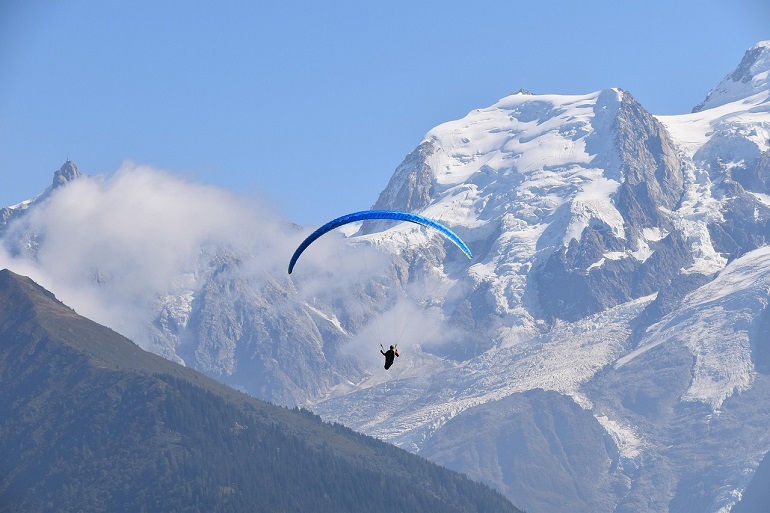
Paragliding launches from various high-altitude points provide aerial perspectives of the massif, with tandem flights available for those seeking the thrill of flight without extensive training. The region's thermals and dramatic topography create ideal conditions for both beginners and experienced pilots.
Winter and Year-Round Activities
The Mont Blanc region transforms into a winter wonderland, offering activities beyond traditional alpine skiing. Ski touring attracts adventurous skiers to virgin terrain on peaks like Mont Blanc du Tacul, combining climbing skills with spectacular descents. Snowshoeing provides gentler winter exploration, allowing access to snow-covered trails and frosted alpine scenery.
Sled dog adventures recreate polar expedition experiences in the snowy landscapes of the massif. Teams of enthusiastic huskies pull visitors through winter wonderlands, providing insight into traditional Arctic transportation methods.
Scenic and Cultural Attractions
The Chamonix valley serves as the cultural heart of the Mont Blanc region, blending mountaineering heritage with modern alpine lifestyle. Historic sites include centuries-old refuges, traditional Savoyard villages, and alpine chapels that dot the landscape. The region's mountaineering museum preserves the legacy of early alpine exploration, while local markets showcase regional specialities and crafts.
Hot air balloon flights offer peaceful aerial exploration, particularly magical at sunrise or sunset when the peaks glow with alpenglow. Microlight flights provide more intimate aerial experiences, allowing closer inspection of glacial formations and mountain architecture.
Whether seeking gentle valley walks, challenging mountain ascents, or adrenaline-fuelled adventures, Mont Blanc's diverse offerings ensure unforgettable experiences amidst some of Europe's most spectacular alpine scenery.
Getting There and Around
Getting to Mont Blanc
The most common access point for Mont Blanc is the town of Chamonix in France, situated at the mountain’s foot. The nearest major airport is in Geneva, Switzerland, which is about one and a half hours from Chamonix by direct shuttle, coach, or train. Other convenient airports include Lyon, Milan, and Zurich, each connected by railway or bus services. For visitors coming from Paris, there is a high-speed TGV train to Annecy or Bellegarde, followed by onward local trains or buses to Chamonix. Many travellers also opt for shared or private transfers from airports directly to their accommodation, especially when arriving with hiking equipment or in groups. From the Italian side, the town of Courmayeur provides access, connected by bus services and the Mont Blanc tunnel (subject to periodic closures for maintenance).
Public Transport in the Mont Blanc Region
Once in the Chamonix-Mont-Blanc valley, the area is well-served by an integrated public transport network. The Mont Blanc Express train runs hourly between Saint-Gervais and Martigny (Switzerland), stopping at all the main villages across the valley and providing a scenic and relaxing way to travel. An extensive bus network connects Chamonix with neighbouring towns including Les Houches, Servoz, Argentière, and Vallorcine, with frequent services along the valley floor, especially during peak seasons.
Visitors staying in local accommodation are eligible for a guest card, which typically allows use of local buses and trains free of charge within the valley. The local bus system, Chamonix Mobilité, links major sites, cable cars, and valley settlements, and is especially useful for accessing trailheads and cable car stations.
Cable Cars and Chairlifts
Several cable cars and chairlifts operate throughout the year, providing access to panoramic viewpoints and starting points for popular hikes. Notable routes include the Aiguille du Midi cable car from Chamonix, which climbs to over 3,800 metres, and the Bellevue cable car from Les Houches, granting access to the Tramway du Mont Blanc, a historic mountain railway which ascends partway into the Mont Blanc massif. Cable cars and funiculars are invaluable for hikers, climbers, and skiers seeking to reach high-altitude sites or to shorten or adjust their route.
Getting Around While Trekking
For walkers following the Tour du Mont Blanc or other hiking trails, public transport can be used to shorten or skip certain sections, reach accommodation options off the main path, or avoid inclement weather. Buses, trains, and cable cars are available at various points along popular trails, and some routes (such as Courmayeur to Chamonix) are connected by valley buses and the Mont Blanc tunnel, though the tunnel can be subject to scheduled closures.
Practical Notes
Private vehicles are not usually necessary for getting around, and are discouraged due to limited parking and local environmental policies. Non-motorised options such as bicycles are popular, with much of the valley being suitable for cycling, especially in the summer months. Using public transit helps preserve the pristine landscape of Mont Blanc while providing an efficient, stress-free travel experience.
In summary, Mont Blanc is easily reached by air, rail, and bus, with Chamonix acting as the main gateway. Once in the region, reliable bus and train networks, cable cars, and guest benefits make moving around both easy and environmentally friendly.

Best Time to Visit
The best time to visit Mont Blanc is from mid-June through mid-September, when the mountain trails are clear of snow and mountain huts are fully operational. This summer window offers the most reliable weather conditions and safest hiking conditions for both the famous Tour du Mont Blanc trek and general mountain exploration.
Peak Season: July and August
July and August represent the prime visiting period for Mont Blanc, offering the warmest temperatures, longest daylight hours, and most stable weather conditions. During these months, all trails are clear, mountain refuges operate at full capacity, and the alpine environment is at its most accessible. However, these advantages come with significant crowds, particularly from mid-July to mid-August when the region sees its heaviest visitor numbers. Accommodation fills quickly and prices reach their peak during this period.
Early Season: Mid-June to Early July
June offers an excellent alternative for those seeking fewer crowds whilst still enjoying favourable conditions. From mid-June onwards, most mountain huts open their doors and the alpine flora reaches peak bloom, creating spectacular wildflower displays across the mountainsides. The longer daylight hours of early summer provide ample hiking time, though visitors should be prepared for possible snow patches on higher passes, particularly early in the season. This period requires checking current trail conditions, as some high-altitude routes may still require additional equipment such as crampons.
Late Season: Late August to Mid-September
September presents perhaps the most appealing compromise between good weather and manageable crowds. After mid-August, visitor numbers drop significantly whilst hiking conditions remain excellent through mid-September. The weather stays generally stable with warm days, though daylight hours begin to shorten. This period offers a more peaceful mountain experience with golden autumn colours beginning to appear in the lower valleys.
What to Avoid
Winter months from December through February are not suitable for general mountain activities due to extreme cold, with temperatures dropping as low as -11°C, heavy snowfall, and dangerous climbing conditions. Spring months can be unpredictable, with May still presenting challenges from melting snow and unstable trail conditions.
The ideal timing ultimately depends on your priorities: choose July-August for guaranteed access and warmest weather despite crowds, June for wildflowers and fewer people with possible snow encounters, or September for peaceful trails with reliable conditions but shorter days.