


| Contents |
|---|

Introduction
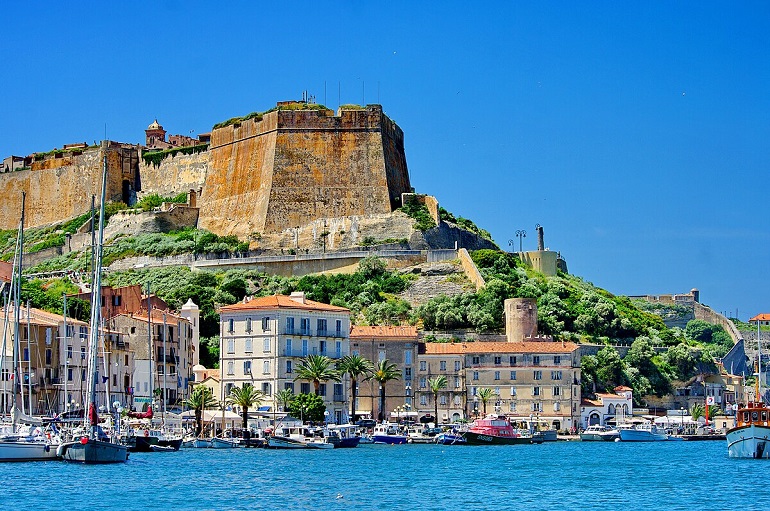
Bonifacio (pop. 3,300) is a medieval fortress town situated at the southernmost tip of Corsica, perched dramatically on white limestone cliffs overlooking the Mediterranean Sea just 12 kilometres from Sardinia. Founded in 830 CE, it is Corsica's oldest town and has been recognised as a City of Art and History since 2019. The settlement comprises a historic citadel containing the Old Town with its narrow cobbled streets, medieval monuments, and ancient churches, whilst below lies a modern marina nestled within a fjord-like inlet protected by 70-metre-high rocky walls. The town's unique position on Corsica's only limestone plateau, combined with centuries of Genoese influence, gives Bonifacio a distinctly Italian atmosphere, complete with its own dialect based on Ligurian Italian. The dramatic cliffs, carved and sculpted by wind and waves over millennia, create a spectacular natural harbour that has served as both a strategic defensive position and a gateway to the nearby Lavezzi Islands nature reserve.
Interesting Facts about Bonifacio
- Bonifacio perches on sheer white limestone cliffs that appear to float above the sea, giving the town a dramatic, otherworldly skyline.
- Founded in 828 by Count Boniface of Tuscany, the cliff-top citadel still shapes the medieval character of the old town.
- The town’s dialect preserves Ligurian roots from Genoese settlers, a legacy of centuries under Genoa’s rule.
- Bonifacio guards the narrow strait between Corsica and Sardinia, making it one of the Mediterranean’s most strategic natural gateways.
- The iconic “Staircase of the King of Aragon” is a precipitous stairway carved into the cliff face, steeped in legend and breathtaking views.
- Prehistoric remains, including the “Lady of Bonifacio,” attest to human presence here more than six millennia ago.
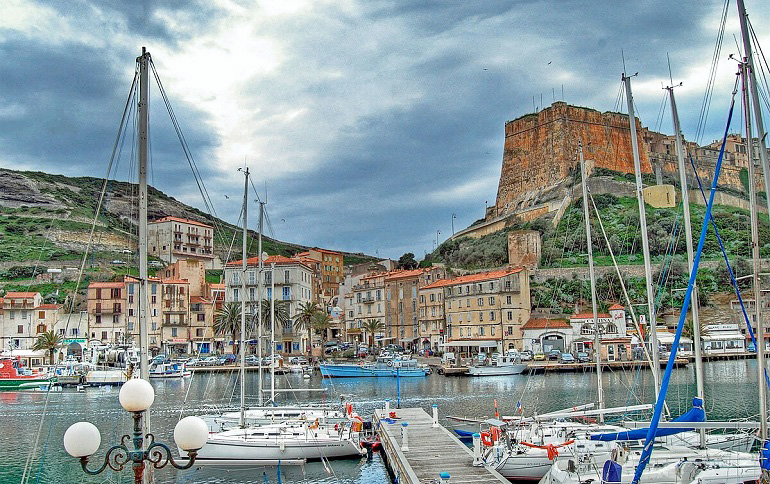
- The upper town and the harbour quarter form a striking double setting, with lanes and ramparts above and a sheltered marina below.
- Sea erosion undercuts the chalk-white cliffs, leaving houses seemingly suspended over translucent turquoise water.
- The Bouches de Bonifacio Nature Reserve protects rich marine life and coastal landscapes along more than 100 kilometres of shoreline.
- Bonifacio’s sieges are the stuff of legend, including a five-month Aragonese blockade that locals famously resisted with cunning and grit.
History
Bonifacio was founded around 828 CE by Count Bonifacio of Tuscany as a strategic fortress to protect the outer boundaries of Tuscany. The site itself had been inhabited since Roman times, but the establishment of the castle marked the birth of the town. The castle's round tower, Il Torrione, is one of the few remaining structures from this early period. Over centuries, Bonifacio became a key military stronghold owing to its dramatically perched citadel atop limestone cliffs that rise sharply above the Mediterranean.
In the 12th century, Bonifacio came under the control of the Republic of Pisa before being captured by the Genoese. Following the Genoese conquest, native inhabitants were massacred and replaced with Ligurian families who were granted tax exemptions and customs privileges to encourage settlement. This led to a distinctive Ligurian-influenced dialect still spoken today. The Genoese fortified Bonifacio extensively, constructing ramparts and military bastions that made it one of the most formidable fortresses in the Mediterranean. The town endured several sieges, including a memorable five-month siege by the King of Aragon in 1420 and another brutal siege in 1554 by the combined forces of the French and the Turkish pirate Dragut, which ended in pillage and massacre.
Bonifacio remained under Genoese dominion until the late 18th century when Corsica was ceded to France through the Treaty of Versailles in 1768. The French period saw the removal of the privileges that had sustained Bonifacio's commercial importance, leading to economic decline as merchants moved elsewhere. However, in recent times, Bonifacio has experienced a revival through tourism and preservation efforts that celebrate its complex history. The medieval citadel and the extensive fortifications, which were used as a military base until the 20th century, stand today as poignant reminders of its heritage as a resilient maritime fortress.

Main Attractions
The Citadel and Old Town
The medieval Citadel of Bonifacio, perched some 70 metres above the sea upon dazzling white limestone cliffs, forms the soul of the town. Entering through the 16th-century Genoa Gate, visitors are greeted by a fortified maze of narrow cobbled streets that twist between houses clinging to the cliff edge, their white facades seamlessly blending with the rocks below. The ancient ramparts offer unrivalled views over the blue Mediterranean, the terracotta rooftops, and even the distant coast of Sardinia. Wandering this quarter, every turn reveals picturesque squares, imposing archways, and characterful stairways—an evocative journey through centuries of Corsican history.
Escalier du Roi d’Aragon (King of Aragon’s Staircase)
One of Bonifacio’s most extraordinary features is the King of Aragon’s Staircase, a vertiginous stone staircase of 187 steps chiseled directly into the cliff face. Accessible from the citadel’s southern side, the staircase allegedly dates to 1420 and legend holds that it was built overnight by conquering troops. Today, descending the steep steps—sometimes slick with sea spray—provides not only an adrenaline rush but also breathtaking views along the sheer cliff walls and far out to the open sea. The base offers a unique perspective both up to the citadel and across the tranquil waters lapping the shore.
Bastion de l’Étendard
Prominently positioned near the main entrance of the citadel, the Bastion de l’Étendard stands as Bonifacio’s most impressive stronghold. Originally built for heavy artillery, its massive stone walls protected the town from repeated sieges. The structure provides access to the ramparts, where panoramic walkways let visitors gaze over yacht-studded harbours, the old town’s jumble, and sunlit cliffs. Its formidable exterior, set against endless blue, is an iconic emblem of Bonifacio’s resilience and strategic importance.
Marine Cemetery
At the edge of the peninsula lies the Marine Cemetery, remarkable for both its solemn tranquillity and its privileged position above the restless Mediterranean. Beyond its picturesque white tombs and elaborate mausoleums, the site rewards contemplative visitors with commanding views over sheer cliffs and the crashing waves far below. Few cemeteries are as dramatically sited, and the air of peace and contemplation adds to Bonifacio’s romantic, untamed character.
Capo Pertusato and Cliff Path
For those wishing to explore Bonifacio’s natural wonders, the walk to Capo Pertusato is a must. This well-marked trail begins at the old town and skirts a magnificent series of limestone bluffs and wild Mediterranean scrub. Along the way, walkers will glimpse the dramatic “Grain de Sable” rock—a boulder seemingly afloat at the foot of the cliffs—and, finally, the lighthouse perched upon Corsica’s southernmost tip. With every step, the panoramas become more awe-inspiring, making the walk a highlight for photographers and nature lovers alike.

The Port and Marina
Bonifacio’s marina sits snugly below the citadel’s towering cliffs in a fjord-like natural harbour. The lively waterfront is lined with restaurants, cafés, and boutiques, all bustling with the energy of fishermen and yacht crews. From here, visitors can watch the sun slide across the cliff face, embark on boat tours, or simply delight in the interplay of ancient stone and maritime activity—an atmosphere unique to this southern Corsican enclave.
Lavezzi Islands
A quick boat ride brings travellers to the Lavezzi Islands, a pristine archipelago protected as a nature reserve and celebrated for its swimming, snorkelling, and wild coastal scenery. The islands’ sculpted granite outcrops, translucent waters, and secluded coves feel utterly untouched by time. Visiting the islands is not only an encounter with exceptional natural beauty but also a peaceful escape from the bustle of Bonifacio itself.
Beaches: Petit Spérone and Rondinara
Bonifacio’s beaches are legendary for their untouched charm. Petit Spérone is a small, crescent-shaped bay reached by foot, famous for its powdered white sand and crystalline shallows—a hidden idyll for those willing to seek it out. Rondinara Beach, with its harmonious arc and calm waters embraced by natural hills, is among the most beautiful in Corsica, ideal for swimming and sunbathing amid tranquil scenery.
Top Museums
Bastion de l’Étendard Museum
The Bastion de l’Étendard is the architectural soul of Bonifacio—an immense stone sentinel standing watch at the heart of the citadel. Built during the Genoese occupation, the structure boasts thick, honey-coloured walls, dramatic arches, and vast vaulted basements. The museum within the bastion is more than just a collection of relics—it is a historical odyssey. Visitors descend into subterranean galleries that evoke the charged atmosphere of centuries past. Inside, well-curated exhibitions chart Bonifacio’s evolution from fortified outpost to sophisticated port town. One finds medieval weaponry, original documents, cartographic depictions tracing the Genoese presence, and vivid dioramas illustrating the daily life of defenders and townsfolk. Audio guides and interpretive panels allow for a self-paced exploration, with each exhibit bringing to life the defensive challenges and victories that shaped the city. Emerging from the dark passages, visitors are rewarded with vertiginous views of the cliffs and turquoise waters below—underscoring the bastion’s strategic significance.
Archaeological Heritage and “La Dame de Bonifacio”
Though Bonifacio itself does not possess a large stand-alone archaeological museum, its legacy is deeply intertwined with ancient finds displayed regionally—most famously “La Dame de Bonifacio,” a prehistoric skeleton discovered in a coastal cave and displayed at the Musée de l’Alta Rocca in Levie, not far from town. This 9,000-year-old burial provides a tangible connection to Corsica’s earliest inhabitants. The museum also showcases Neolithic tools, pottery, and artefacts illustrating the evolution of human settlement in southern Corsica, inviting reflection on life long before medieval ramparts rose.
Artistic Life: Contemporary Galleries and Exhibitions
Bonifacio’s creative pulse can be felt in its contemporary galleries and rotating art exhibitions. Small spaces like De Renava and Galerie Whynot foster dialogue between tradition and modernity, displaying works by Corsican and international artists. Media range from abstract paintings evoking the tumult of the Mediterranean to playful sculptures and photographic explorations of island life. These galleries, though intimate, stand as cultural beacons, fostering experimentation and ensuring that Bonifacio is as much a city of the future as the past.
Maritime Memory and Shipwrecks
Bonifacio’s intimate connection to the tumultuous Straits is memorialised in displays and commemorative plaques relating to shipwrecks such as La Sémillante. These tell of tragedy and bravery, with small exhibitions (and sometimes annual ceremonies) at waterfront locations detailing navigational artefacts, maps, and the dramatic circumstances of maritime disaster, hallmarks of Corsica’s ever-present relationship with the sea.
Local Cuisine
Basking in the Mediterranean sun, Bonifacio’s cuisine blends sea and maquis, tempting diners with langoustines grilled over wood, oursins (sea urchins) eaten raw with a squeeze of lemon, and generous servings of aubergines à la bonifacienne, where stuffed aubergines are perfumed with wild herbs and crowned with brocciu, the island’s creamy sheep’s cheese; rustic slices of figatellu and other Corsican charcuterie accompany crusty bread, while local white wines and myrtle liqueur round out meals enjoyed against the backdrop of soaring limestone cliffs.
Getting There
By train Bonifacio has no rail station, so the simplest rail route is to take the mainland TGV to Marseille or Nice, continue by regional train to Toulon, then board a ferry to Corsica’s port of Bastia, Ajaccio or Porto-Vecchio; from there, buses run to Bonifacio’s marina and citadel.
By coach or bus Corsica’s Via Corsica network links Bonifacio with Ajaccio, Bastia and Figari Airport: direct services run twice daily from Figari (15 minutes) and, with one change at Porto-Vecchio, from Ajaccio and Bastia (about five hours), stopping beside the lower town quays.
By car Driving offers maximum freedom: the N196 from Ajaccio and the T10 coastal highway from Bastia both merge near Porto-Vecchio before winding south to Bonifacio; the final kilometres descend dramatically towards the limestone cliffs, with ample parking near the ferry terminal and at P2 La Carbona.