


| Contents |
|---|

Introduction
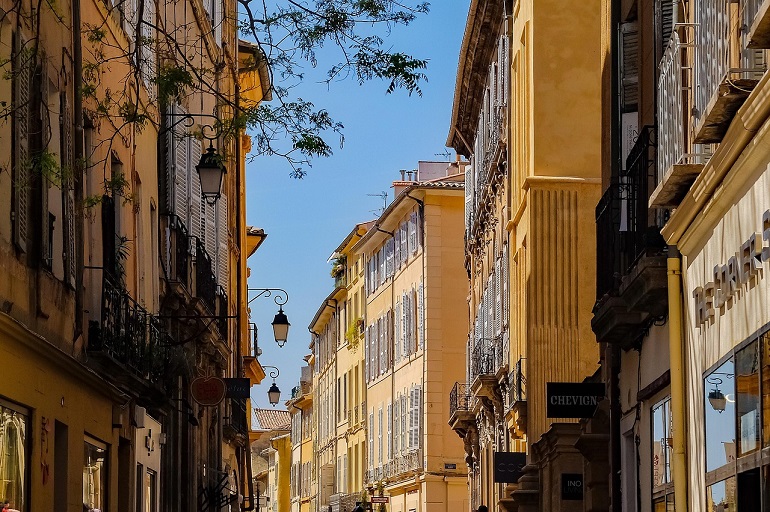
Aix-en-Provence (pop. 150,000) is an elegant city with over 2,000 years of history, originally founded by the Romans in 123 BCE who named it after natural springs they discovered. The former capital of Provence sits between the Rhône River and the foothills of the Southern Alps, protected by Montagne Sainte-Victoire, and features a well-preserved historic centre characterised by golden sandstone buildings, tree-lined boulevards, and over 250 fountains that have become the city's emblem. The city combines Roman archaeological remains with medieval and 18th-century architecture, whilst its famous son Paul Cézanne immortalised the surrounding Provençal landscape in his paintings, leaving a significant artistic legacy that includes his preserved studio and walking trail through the city. Today, Aix-en-Provence maintains its reputation as a cultural centre with prestigious music festivals, renowned conservatoire, vibrant markets, outdoor cafés, and boutique shopping along its cobblestone streets and sun-drenched squares.
Interesting Facts about Aix-en-Provence
- Nicknamed the “City of a Thousand Fountains,” Aix-en-Provence is famed for its elegant water features from mossy springs to grand monuments along the Cours Mirabeau.
- Founded by the Romans in 123 BCE as Aquae Sextiae, the city grew around thermal springs that still inspire its spa culture today.
- Paul Cézanne was born and raised in Aix-en-Provence, and the nearby Montagne Sainte-Victoire became one of his most iconic subjects.
- The Festival d’Aix-en-Provence is among Europe’s leading opera festivals, drawing world-class performers to intimate Provençal venues each summer.
- Aix-Marseille University traces its origins to 1409, placing it among the oldest universities in France.
- The stately, plane-shaded Cours Mirabeau epitomises Aix’s boulevard culture, lined with historic mansions and café terraces.
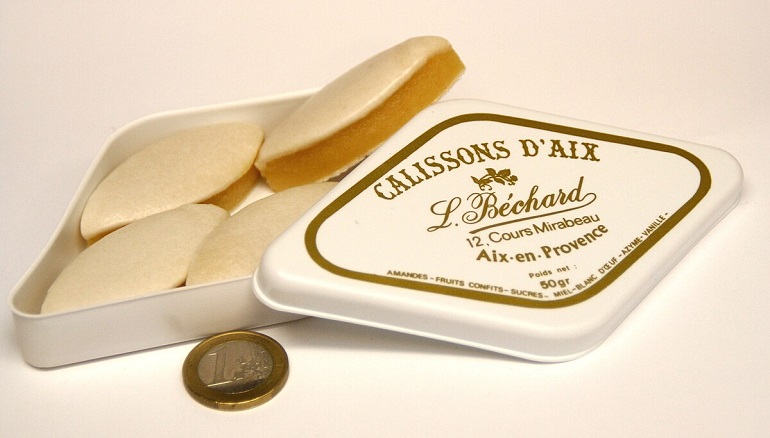
- Calissons d’Aix, almond-melon diamond-shaped sweets often scented with orange blossom, are the city’s signature delicacy.
- The graceful Quartier Mazarin showcases seventeenth-century townhouses and ornamental fountains commissioned by Archbishop Michel Mazarin.
- The Musée Granet holds treasures from antiquity to modernity, including works tied to Cézanne and the Provençal school.
- The Cathédrale Saint-Sauveur weaves Roman, Romanesque, Gothic and Baroque layers, mirroring the city’s long, stratified history.
- The monumental Rotonde fountain, crowned by allegorical figures, anchors one end of the Cours Mirabeau as a beloved city landmark.
- Local markets brim with Provençal colour—lavender, olives, soaps and textiles—spilling through old-town squares most mornings.
- Victor Vasarely’s bold optical-art legacy lives on at the Fondation Vasarely, a striking hexagonal complex on the city’s edge.
- Aix once served as the capital of historic Provence, shaping its reputation for learning, law and refined urban living.
- Warm, dry mistral-cleansed light and nearby vineyards make Aix a magnet for artists, students and bon-vivants alike.
History
Aix-en-Provence began life in 122 BCE when the Roman consul Gaius Sextius Calvinus founded the settlement of Aquae Sextiae beside thermal springs prized for their healing qualities. The town quickly became the first Roman colony in Transalpine Gaul, protected by ramparts and supplied by an extensive network of aqueducts that channelled water to public baths, fountains, and villas. In 102 BCE the plains just west of the settlement witnessed the decisive Battle of Aquae Sextiae, where the Roman general Gaius Marius defeated the Teutones and Ambrones, securing Rome’s control of southern Gaul and sealing the young colony’s strategic importance.
During late antiquity, Aquae Sextiae evolved into the Christian episcopal seat of Aquis Sextiis, gaining its first bishop in the 5th century and erecting a cathedral on the remains of a Roman forum. After the fall of the Western Empire, the town suffered Visigothic and later Saracen raids, yet its hot springs and fertile hinterland sustained continued habitation. By the 12th century, agorae and Roman baths had given way to Romanesque churches and narrow medieval streets, while the Counts of Provence relocated their residence from Arles to Aix, transforming it into the capital of the Provençal county. This courtly presence fostered a blossoming of troubadour poetry and saw the creation of the famed Cours Mirabeau, originally the town’s defensive ditch, later a tree-shaded promenade.
Aix’s golden age arrived in the 15th century under King René of Anjou, the last independent Count of Provence, who sponsored art, music, and architecture, leaving legacies such as the Gothic Archbishop’s Palace and the Tour de l’Horloge. After Provence’s annexation to the French crown in 1481, Aix retained its status as regional capital, housing the Parlement de Provence, whose magistrates commissioned elegant hôtels particuliers that still line the Mazarin Quarter. The city weathered the French Revolution with minimal destruction, expanded with Neo-Classical boulevards in the 19th century, and later gained renown as the birthplace of painter Paul Cézanne, whose depictions of Montagne Sainte-Victoire cemented Aix’s place in modern art history.
Main Attractions
Hotel de Ville Square
Place de l’Hôtel de Ville is a historic epicentre, anchored by the 17th-century Italian-style town hall and adjacent Tour de l’Horloge, a belfry with an astronomical clock dating to 1661. The square is a hub for flower markets and hosts open-air cafés beneath shady trees, its atmosphere changing from vibrant commerce in the morning to relaxed sociability in the evening.

Fontaine de la Rotonde
The magnificent Fontaine de la Rotonde stands as Aix-en-Provence's most iconic landmark, dominating the Place du Général de Gaulle at the western entrance to the city centre. Built in 1860, this elaborate fountain serves as a spectacular gateway to the historic quarter, featuring three bronze statues that crown its ornate structure. The trio of figures represents Justice, Agriculture, and Art—symbolic pillars of Provençal society that reflect the region's values and heritage. The fountain's impressive scale and intricate design make it a natural gathering point for both locals and visitors, whilst its central location provides an ideal starting point for exploring the city's pedestrian-friendly streets.

Cours Mirabeau
The tree-lined Cours Mirabeau forms the beating heart of Aix-en-Provence, stretching majestically from the Fontaine de la Rotonde towards the historic quarter. This grand boulevard, shaded by enormous plane trees, exemplifies the elegance of 17th and 18th-century French urban planning. The famous Fontaine Du Roi René graces this prestigious avenue, paying homage to the beloved 15th-century ruler who transformed Aix into a cultural capital. Lined with historic mansions, bustling cafés, and boutique shops, the Cours Mirabeau maintains its reputation as one of France's most beautiful avenues, where the art of Provençal living unfolds daily beneath its leafy canopy.

Cathédrale Saint-Sauveur
The Cathédrale Saint-Sauveur represents a fascinating architectural journey through nearly a millennium of French ecclesiastical history. This remarkable cathedral showcases a unique blend of Romanesque, Gothic, and Baroque elements, having been built and rebuilt over successive centuries. Visitors can explore its medieval baptistry, one of the oldest Christian monuments in France, alongside its serene Romanesque cloisters that offer a peaceful retreat from the bustling streets. The cathedral's greatest treasure is its magnificent 1400s triptych, a masterpiece of religious art that draws art enthusiasts from across Europe. The building's diverse architectural styles create a captivating dialogue between different eras of French craftsmanship.

Place des Quatre-Dauphins
The charming Place des Quatre-Dauphins captures the intimate scale and refined aesthetic that characterises Aix-en-Provence's urban design. This small roundabout centres around a delightful obelisk fountain adorned with four dolphins that playfully spout water into the surrounding basin. Created in the 17th century, the fountain reflects the Provençal love affair with water features that both beautify public spaces and provide respite from the Mediterranean heat. The square's intimate proportions and elegant fountain make it a favourite spot for photographers and a perfect example of how French urban planners integrated art into everyday civic life.
Place des Cardeurs
The lively Place des Cardeurs pulses with energy throughout the day and well into the evening, serving as one of Aix-en-Provence's most vibrant social hubs. This sloping square, centred around an attractive fountain, is encircled by bars and restaurants that extend their terraces into the public space, creating a seamless blend of indoor and outdoor dining. The square's animated atmosphere reaches its peak during the warmer months when locals and visitors alike gather for aperitifs and long meals under the Provençal sky. The medieval character of the surrounding buildings, combined with the contemporary buzz of café culture, perfectly encapsulates the timeless appeal of southern French urban life.

Parc Jourdan
Parc Jourdan offers a verdant escape in the heart of the city, renowned for its expansive lawns and dramatic water features that create a sense of tranquillity amidst urban surroundings. The park's well-maintained grounds provide an ideal setting for picnics, leisurely strolls, or simply relaxing beneath the shade of mature trees. Families particularly appreciate the park's playground facilities and open spaces that allow children to play freely whilst parents enjoy the peaceful atmosphere. The park's collection of statues adds an artistic dimension to the natural beauty, whilst its central location makes it easily accessible from the historic quarter and shopping districts.
Place d’Albertas
Place d’Albertas, one of Aix’s most elegant squares, is a testament to 18th-century Baroque style. Ordered by the powerful d’Albertas family, the square was designed to mimic the grandeur of Parisian royal squares and today boasts harmonious architecture with a signature mid-1800s fountain at its centre. The surrounding rococo façades add sophistication and form a dramatic backdrop, making this spot quintessential for photos and a tranquil pause in the midst of the city’s bustle.
Quartier Mazarin
The Quartier Mazarin, created in the 17th century for the city’s aristocracy, features straight, Italianate streets lined with grand mansions and private courtyards. At the district’s heart lies Place des Quatre Dauphins, graced with a Baroque fountain featuring four dolphins spouting water. The neighbourhood’s serene atmosphere and architectural refinement invite leisurely walks and evoke a sense of Aix’s classical past. Rue d’Italie, running through Mazarin, is a haven for food enthusiasts, with its upscale boutiques and gourmet shops.
Place Richelme
Place Richelme is celebrated for its daily food market, the oldest in Aix and a feast for the senses. Locals and visitors shop for fresh produce, cheeses, honey, and artisanal goods, all under the shade of centuries-old trees. This square’s market has operated since the 14th century and provides a lively, authentic snapshot of Provencal life. The square is also home to the distinctive Boar Fountain, a bronze piece inspired by Florence’s “Il Porcellino,” offering a iconic meeting place after market hours.
Place des Prêcheurs and Place de Verdun (Place Comtales)
Once the theatre of city gatherings and public events, Place des Prêcheurs and the adjoining Place de Verdun have been united as Place Comtales. These squares host major food and artisan markets and are surrounded by historic buildings including the Palais de Justice and the 14th-century Madeleine Church, closely associated with Paul Cézanne. At the centre is the stately Prêcheurs Fountain—an obelisk adorned with lions and medallions commemorating Aix’s founders and royalty—making it a highlight for architecture lovers.
Place des Augustins
As Aix’s nightlife hub, Place des Augustins delights with lively bars, cafés, and a social evening atmosphere. Its central fountain incorporates an authentic Roman column from local ruins, blending ancient heritage with modern conviviality.
Place des Trois Ormeaux
A tranquil gem, Place des Trois Ormeaux evokes the quaintness of old Aix. Named after the three elms once planted there (now traditional plane trees), it is home to a simple early 1600s fountain and offers a peaceful retreat away from the busier squares.
Monument Joseph Sec
The Monument Joseph Sec represents one of Aix-en-Provence's more intriguing historical landmarks, standing as a testament to 18th-century civic pride and artistic achievement. This monument honours a local benefactor whose contributions to the city's development earned him lasting recognition through this permanent memorial. The structure's architectural details reflect the neoclassical style that was popular during the period of its construction, whilst its prominent location ensures that it continues to serve as both a historical marker and an urban focal point. The monument's accessibility and 24-hour viewing availability make it an easy addition to any walking tour of the city's historical sites.
Parks & Gardens
Promenade de la Torse
The Promenade de la Torse transforms the banks of a modest river into a delightful linear park that showcases the natural beauty of the Provençal landscape. This green corridor provides excellent opportunities for walking, jogging, and cycling, whilst its shaded pathways offer welcome relief during the summer months. The promenade becomes particularly spectacular during autumn when the deciduous trees burst into brilliant colours, creating a stunning natural canopy overhead. The area's sporting facilities and picnic spots make it popular with active families, whilst the gentle hiking trails appeal to those seeking a more contemplative connection with nature.
Promenade de l'Arc
The Promenade de l'Arc extends along another of Aix-en-Provence's waterways, offering visitors a chance to experience the city's commitment to preserving green spaces within urban development. This park combines recreational facilities with natural beauty, featuring playground equipment, picnic tables, and well-maintained walking paths that follow the course of the Arc River. The promenade's design thoughtfully balances active recreation with passive enjoyment, providing spaces for children to play alongside quiet areas where visitors can appreciate the Mediterranean flora. The park's accessibility features ensure that people of all abilities can enjoy its offerings, whilst its dog-friendly policies make it a favourite destination for pet owners.
Parc Gilbert Vilers
Parc Gilbert Vilers stands out as one of Aix-en-Provence's most family-friendly destinations, remaining open 24 hours a day to accommodate visitors at all times. The park's comprehensive facilities include modern playground equipment with slides and swings, making it an ideal destination for families with children of various ages. Its generous parking provision and wheelchair accessibility ensure that all visitors can comfortably enjoy the space, whilst the availability of public restrooms adds to its practical appeal. The park's design prioritises safety and convenience whilst maintaining the natural beauty that characterises Aix-en-Provence's approach to urban green spaces.
Jardins de la Bastide de Romégas
Located slightly outside the city centre, the Jardins de la Bastide de Romégas offer a more intimate garden experience that showcases traditional Provençal landscaping techniques. These gardens provide a peaceful retreat where visitors can explore carefully designed planted areas that reflect the region's horticultural heritage. The site's hiking opportunities allow for longer explorations of the surrounding countryside, whilst its more secluded location ensures a quieter, more contemplative experience than the city centre parks. The gardens operate on a more limited schedule than municipal parks, creating an exclusive atmosphere that appeals to serious garden enthusiasts and those seeking respite from tourist crowds.
Montagne Sainte-Victoire
Rising to the east, Montagne Sainte-Victoire is the iconic limestone ridge immortalised by Cézanne. With its 250 kilometres of marked trails, the mountain offers hiking, panoramic viewpoints, and opportunities for observing indigenous flora and fauna. Visitors are drawn by the stunning vistas, religious sites such as the Saint-Ser Hermitage, and the sense of connection to Provence’s renowned artists and landscapes.
Top Museums
Grand Art Museums
Musée Granet
The Musée Granet is one of France's most prestigious museums, housing nearly 750 paintings, sculptures, and archaeological artefacts that span from antiquity to the 21st century. Situated in the historical Priory of Saint-Jean-de-Malte, the galleries offer a vast panorama of artistic creation.
The permanent collection is particularly strong in 19th-century French painting, featuring works by the museum's namesake, François Marius Granet, and a monumental masterpiece by Jean-Dominique Ingres, Jupiter and Thetis. The museum holds a special place for Paul Cézanne, a native of Aix, showcasing nine of his oil paintings that trace his artistic evolution. Visitors can also admire an authentic self-portrait by Rembrandt and pieces by Anthony van Dyck.
A significant highlight is the Granet XXe, an annex housed in the beautifully restored 17th-century Chapel of the White Penitents. This space is dedicated to the Jean Planque Collection, a remarkable assembly of modern art with works by Monet, Van Gogh, Degas, Renoir, Picasso, Braque, Klee, and Dubuffet. A further exceptional donation from Philippe Meyer enriched the museum with modern and contemporary sculptures and paintings, including several pieces by Alberto Giacometti.
Art Residences & Historical Houses
Hôtel de Caumont – Centre d’Art
Located in the elegant Mazarin Quarter, the Hôtel de Caumont is a magnificent 18th-century private mansion that has been exquisitely restored and transformed into a vibrant art centre. Designed by the royal architect Robert de Cotte, it stands as a rare example of an urban residence built "between courtyard and garden," allowing the public to experience the aristocratic lifestyle of the era.
The centre hosts two major temporary exhibitions each year, dedicated to great masters of art history, from the Renaissance to contemporary figures. Visitors can explore sumptuously decorated period rooms, featuring rococo styling, intricate wood panelling, and other original details. A daily screening of a film on Cézanne's life in Aix adds another layer to the cultural experience. The beautifully manicured formal gardens and refined tea room offer a tranquil haven in the heart of the city.

Artist’s Atelier
Atelier de Cézanne (Cézanne's Studio)
For a deeply personal encounter with the father of modern art, a visit to the Atelier de Cézanne on Les Lauves hill is essential. This is the studio that Paul Cézanne had built for himself in 1901 and where he worked daily during the last years of his life. It was here that he created dozens of masterpieces, including his final Bathers series.
The studio has been preserved to appear as if the artist has just stepped out, offering an immersive glimpse into his creative world. The space is filled with his personal objects: paintbrushes, palettes, the familiar vases and apples from his still lifes, and his signature hat and coat. The large windows, designed by Cézanne himself, flood the room with the distinctive Provençal light that he so masterfully captured on canvas. Saved from demolition by the efforts of writers and artists, this studio is now a poignant shrine for art lovers.

Textile Arts
Musée des Tapisseries
Housed within the former Archbishop's Palace—a grand building that serves as a backdrop for the prestigious Aix-en-Provence International Opera Festival—the Musée des Tapisseries presents a rich collection of 17th and 18th-century tapestries.
The core of the collection features three remarkable series: The Grotesques, a whimsical set inspired by the decorative style of Jean Bérain; The Story of Don Quixote, a narrative series based on the paintings of Charles-Natoire; and The Russian Games, which depict pastoral scenes based on designs by Jean-Baptiste Leprince. In addition, the museum showcases fine furniture and has expanded its collection to include performing arts, with costumes, set models, and other artefacts from the history of the Opera Festival.
Local Heritage
Musée du Vieil Aix
To delve into the heart of local Provençal culture, the Musée du Vieil Aix is an unmissable destination. Located in a splendid 17th-century mansion, the museum is dedicated to the history and traditions of Aix-en-Provence.
Its diverse collection brings the city's past to life through a fascinating array of objects. Visitors can admire traditional Provençal costumes, intricate faience pottery, and locally made furniture. The museum is particularly renowned for its collection of santons, small, hand-painted terracotta figurines used in nativity scenes, and articulated wooden puppets that were once paraded through the streets during the Fête-Dieu (Corpus Christi) processions. These exhibits offer a charming and intimate look at the everyday life, craftsmanship, and festive traditions that have shaped the city's identity.
Modern & Contemporary Art
Fondation Vasarely
A stark contrast to the city's historical architecture, the Fondation Vasarely is a futuristic landmark dedicated to the work of Victor Vasarely, the master of Op Art. Designed by the artist himself and inaugurated in 1976, the building is a work of art in its own right, consisting of sixteen hexagonal modules with facades in black and white anodised aluminium plates.
Inside, seven of these cells house 42 monumental floor-to-ceiling installations that immerse the viewer in Vasarely's world of optical illusions and geometric abstraction. The artist’s goal was to create a "polychromatic city of happiness," integrating art into architecture to beautify modern life. The foundation not only preserves Vasarely's legacy but also hosts temporary exhibitions and cultural events where art and science converge.
Fine & Decorative Arts
Pavillon de Vendôme
The Pavillon de Vendôme is an exquisite example of 17th-century classical architecture, originally built as a lavish "folly" for the Duke of Vendôme to conduct his love affair. The façade is framed by two impressive baroque atlantes, allegories of dawn and dusk, while the interior boasts a beautiful double spiral staircase and ornate gypsum sculptures.
Bequeathed to the city in 1906, the pavilion now serves as a museum displaying works of art from the 17th to the early 21st century, with a notable collection of graphic arts, portrait paintings, and Provençal furniture. The building is set within a perfectly restored French formal garden, now a public park, offering a peaceful retreat from the bustling city streets.

Culinary Heritage
Musée du Calisson
A visit to Aix would be incomplete without celebrating its most famous delicacy. The Musée du Calisson, located at the Confiserie du Roy René factory just outside the city, offers a delightful journey into the history of the calisson.
Set amidst almond trees, the museum traces the story of this iconic almond-shaped sweet. Visitors can follow the production process, from the harvesting of almonds to the traditional confectionary techniques. Interactive displays and historical artefacts explain the legend and legacy of the calisson. The tour concludes with a tasting, providing a sweet end to a fascinating cultural and culinary experience.
Natural Sciences
Natural History Museum
For those interested in the region's natural environment, the Natural History Museum of Aix-en-Provence offers collections in geology, palaeontology, and botany. It is particularly noted for its holdings of dinosaur eggs and fossils discovered in the local area, providing insight into Provence's prehistoric past. The museum’s relaxed and educational ambiance makes it especially popular with families and those keen on the natural sciences.
Local Cuisine
The cuisine of Aix-en-Provence captures the sun-soaked flavours of the Mediterranean and Provençal terroir, blending aromatic herbs, olive oil, and garden-fresh produce in a range of traditional dishes. Visitors can savour calissons, a delicate almond-shaped confection made from ground almonds and candied melon, and enjoy pistou soup, rich with summer vegetables and a fragrant basil-garlic sauce. The region’s tables also feature aïoli, a robust garlic mayonnaise often served with fresh fish and vegetables, and tapenade, a savoury olive and caper spread relished with crusty bread. Meals are typically accompanied by vibrant local wines and punctuated by the subtle sweetness of nougat or fruit-laden pastries.
Getting There
Aix-en-Provence is easy to reach in south‑east France, with Marseille Provence Airport around 25 minutes away and the Aix‑en‑Provence TGV high‑speed station about 15 minutes from the centre, both connected to town by regular shuttle services to the main bus station. From Paris, direct TGVs take roughly three hours to Aix TGV, with a simple onward bus link into the city for a smooth door‑to‑door journey. Travellers from the UK can take Eurostar to Paris and transfer at Gare de Lyon for TGV services to Provence, with convenient seasonal direct trains to nearby Avignon enabling straightforward onward connections to Aix. By car, the city sits at the crossroads of major autoroutes, notably the A7 and A8, which makes approaches from Marseille, Lyon, the Côte d’Azur and Italy straightforward. It is also possible to arrive via the port of Marseille about 40 minutes away, then continue by road or bus to Aix.