


| Contents |
|---|
Introduction
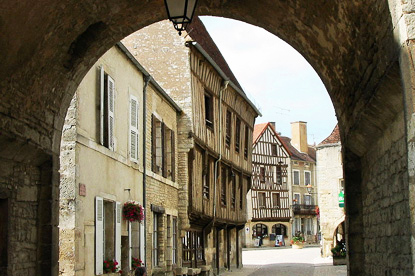
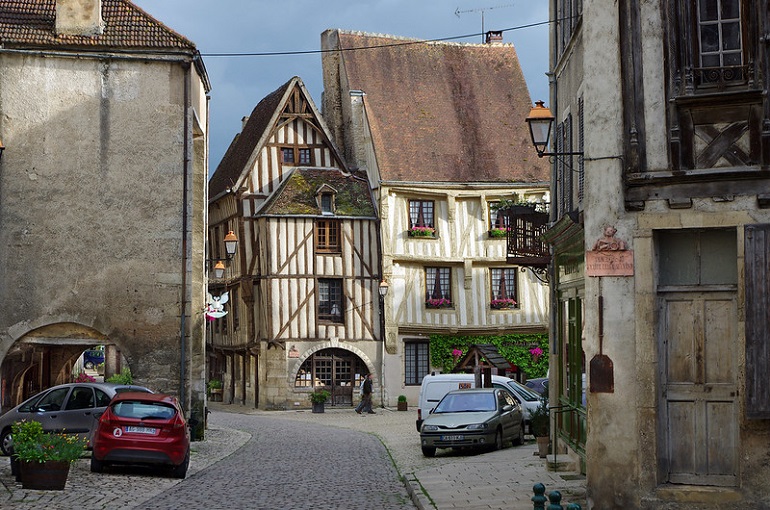
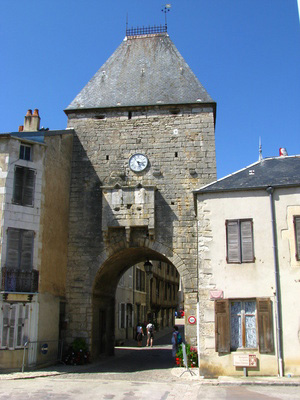
Noyers-sur-Serein (pop. 700), or simply Noyers, is a medieval village fortified with ramparts and brimming with quaint, skewed, half-timbered houses, recognised as one of France's Most Beautiful Villages. The village features 78 classified historic monuments, predominantly dating from the 15th century, including half-timbered houses built on archways, cobbled streets, and small squares surrounded by loops of the River Serein. Originally founded before the Roman conquest, possibly by a Gallic king, Noyers became the seat of the powerful Miles family around the 12th century and was home to one of Burgundy's mightiest castles until its destruction by King Henry IV in 1599. The settlement historically thrived on wine and grain trade, with numerous vineyards, walnut and cherry trees covering the surrounding hills, and supported a significant population of winegrowers and craftsmen including coopers, wheelwrights, and blacksmiths well into the 20th century. Today, the village maintains its agricultural heritage whilst serving as a tourist destination, hosting annual truffle fairs in November and featuring restaurants, art galleries, and a museum within its pedestrianised medieval centre.
Interesting Facts about Noyers-sur-Serein
- Noyers-sur-Serein is officially listed among the Plus Beaux Villages de France for its remarkably preserved medieval fabric.
- The village curves within a loop of the River Serein, with remnants of ramparts and towers still tracing its defensive outline.
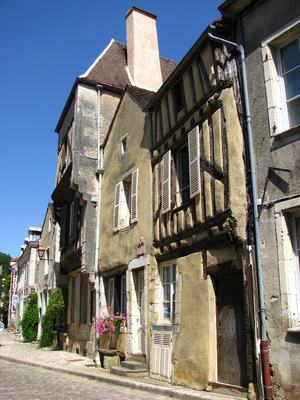
- Noyers retains dozens of timber-framed houses and cobbled lanes, giving it an authentically late-medieval streetscape.
- A formidable castle once crowned Saint-Georges hill above the town, famed in Burgundy before being dismantled after the Wars of Religion.
- The settlement’s origins are linked in local tradition to pre-Roman Gaul, with a possible early name of “Lucida.”
- In the 12th and 13th centuries, Noyers rose under powerful lords, resisting sieges and later passing to the Dukes of Burgundy.
- The Prince of Condé made Noyers a Huguenot stronghold during the 16th-century Wars of Religion, leading to its eventual capitulation.
- The town’s deep historical slumber helped preserve its medieval character, now a major draw for cultural tourism.
- Noyers hosts popular November truffle fairs, attracting buyers from across France to its arcaded squares.
- Its atmospheric lanes have appeared on screen, including a Duran Duran music video filmed within the old walls.
History
Ancient Origins and Medieval Rise
The origins of Noyers-sur-Serein stretch back over two millennia to the time before Roman conquest. The settlement was founded either by the king of the Sequani Gaul tribe or by a contemporary of Julius Caesar named Lucidorius, who reportedly gave the city its original name, Lucida. Around and after the 12th century, the village became the seat of the powerful Miles family, transforming into one of Burgundy's most significant strongholds. At the end of the twelfth century, Hugues de Noyers, bishop of Auxerre, constructed what was described as "one of the most famous castles of France". This formidable fortress proved its worth in 1217 when it successfully withstood a siege by Blanche of Navarre's troops, cementing Noyers' reputation as an impregnable stronghold. The village flourished as an important trading post, with wine and grain commerce bringing considerable prosperity to the region, whilst the surrounding hills were covered with vineyards, walnut trees, and cherry orchards.
Turbulent Times and Destruction
In 1419, marking the end of the Miles dynasty, Noyers became the property of the powerful Dukes of Burgundy. The Prince of Condé later became Count of Noyers and transformed the city into a Protestant stronghold during the tumultuous Wars of Religion. Following his involvement in the failed Amboise conspiracy in 1568, the Prince sought refuge within Noyers' protective walls. However, this association with the Huguenot cause proved disastrous for the medieval city when Catherine de Médicis' Catholic forces besieged the town. The garrison ultimately surrendered, and the Protestant inhabitants were expelled. The final blow came in 1599 when King Henry IV ordered the complete dismantling of the once-mighty castle, effectively ending Noyers' role as a major political and military centre. This destruction marked the beginning of a long period of decline and obscurity that would last over a century.
Revival and Modern Recognition
Noyers began its revival in 1710 when the Duke of Luynes married the last descendant of the Condé family, bringing new life to the dormant settlement. Throughout the 18th and 19th centuries, the village maintained its agricultural character, with local craftsmen including cartwrights, harness-makers, coopers, farriers, and shoemakers serving the community. By 1861, the village supported 128 vine-growers and 25 tillage farmers, though these numbers would decline significantly by the beginning of the 20th century. The village's medieval obscurity proved to be its salvation, as it retained much of its original architecture and character whilst other settlements modernised beyond recognition. Today, Noyers-sur-Serein is officially recognised as one of Les Plus Beaux Villages de France (The Most Beautiful Villages of France), boasting an impressive 78 registered national monuments within its small boundaries. The village gained modern cultural recognition in December 1983 when the British band Duran Duran filmed their music video for "New Moon On Monday" within its historic walls, and it continues to serve as a living museum of medieval French architecture for visitors from around the world.
Main Attractions
Village Médiéval
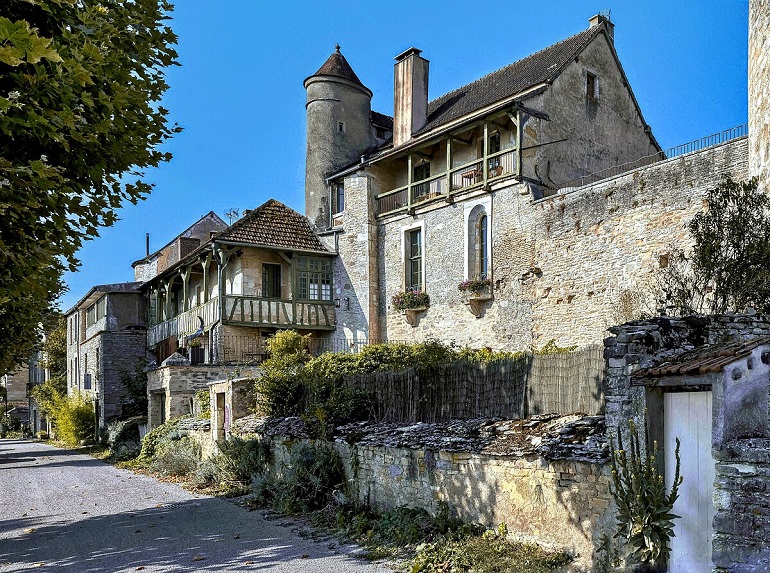
Entering Noyers-sur-Serein, visitors are greeted by the intact medieval fortifications, including nineteen of the original twenty-three gates and towers, which mark the authentic boundaries of the old town. Within, narrow cobbled streets meander past traditional half-timbered houses, sculpted stone archways, and Renaissance residencies, all meticulously preserved and lending a cinematic atmosphere. The town’s compact scale means every alley reveals centuries-old façades, decorative capitals, and finely carved wooden features. These streets, often used as film sets, evoke a timeless ambience, making an unhurried walk the quintessential way to appreciate Noyers-sur-Serein’s status as one of France’s most beautiful villages.
Market Squares and Artisan Workshops
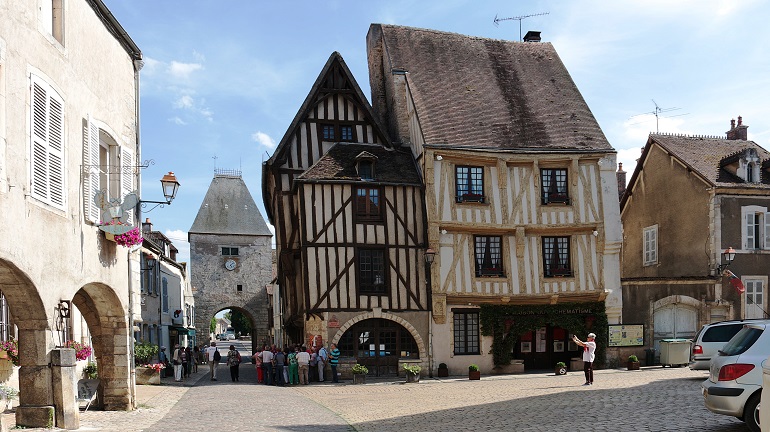
Noyers’ central squares, such as Place du Marché-au-Blé and Place de la Petite-Étape-aux-Vins, are surrounded by elegant houses and revived by the bustle of weekly markets, notably every Wednesday morning. These lively marketplaces offer regional produce, Burgundian wines, and local specialties. The village’s artisan tradition flourishes in small boutiques selling porcelain, leather, antiques, and artworks. Window-shopping amongst these craft studios delivers insight into the area’s creative spirit and heritage.
Church of Notre-Dame
Just outside the medieval core, the Church of Notre-Dame commands attention with its imposing 15th-century square tower adorned with striking gargoyles. Its somewhat peripheral position, yet still within the fortifications, is unusual for medieval towns, suggesting shifts in the village’s historical layout. Inside, the solemn beauty of centuries-old stonework and stained glass windows provides a quiet, reflective retreat and a testament to the town’s enduring faith.
River Serein Walks and Lavoir
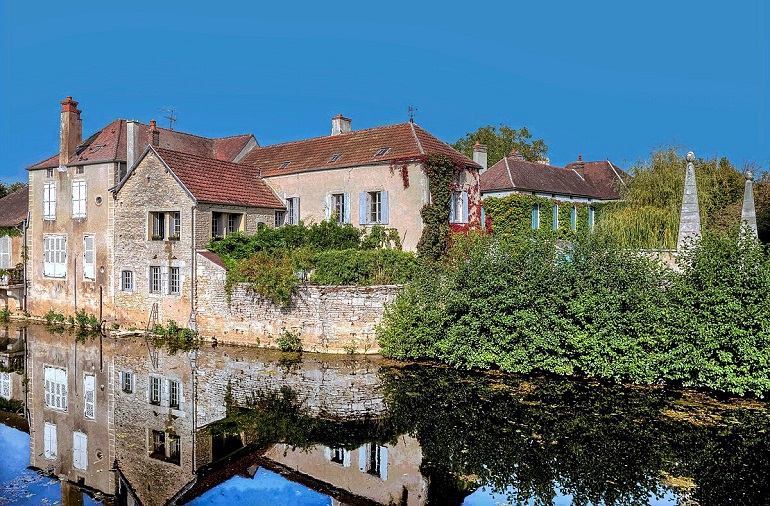
Noyers nestles into a picturesque loop of the River Serein, where peaceful banks and stone bridges invite visitors to amble along willow-lined paths. The 19th-century lavoir, or communal washing place, stands at the water’s edge, providing charming photo opportunities and a tangible link to former village life. Walking these banks gives a fresh perspective of the town’s fortifications, half-timbered houses poised above the ramparts, and the gentle rural landscape beyond, making it an ideal way to savour the village’s tranquil setting.
Château de Noyers-sur-Serein Ruins
High above the village on a wooded ridge lie the atmospheric ruins of the Château de Noyers, once one of Burgundy’s prime fortresses. Though the castle was demolished in the sixteenth century, thoughtfully marked walking routes through its grounds offer plenty: informative panels detailing its turbulent past, glimpses of the original stonework, and sweeping views back over the village’s ramparts and rooftops. Whether following the hilltop circuit or exploring the old castle gardens, the experience melds nature, history, and legend—including tales of wolves and ducal intrigue—offering a tranquil, reflective outing in the shade of ancient trees.
Top Museums
Naïve and Folk Art
Musée des Arts Naïfs et Populaires
Steeped in an ambience of rustic sophistication, the Musée des Arts Naïfs et Populaires occupies a multi-storey medieval building whose nooks and corridors evoke the sense of a private collection in a noble’s townhouse. The museum’s raison d’être is to showcase naïve art—works produced by self-taught creators untethered by academic constraint. The result is an exuberant kaleidoscope of colour, humour, whimsy, and frequently, a touching sense of sincerity. Paintings burst from the walls in brilliant hues, full of animals, country scenes, fantastical houses, and folkloric characters, all rendered with a child-like innocence.
The breadth of the collection is arresting: visitors encounter not only regional French and Burgundian pieces, but also naïve objects from as far afield as Latin America and the Far East. Sculptures, woodcarvings, dolls, ex-votos (votive offerings), and handmade toys are displayed alongside unusual agricultural tools and everyday folk objects, each with its story and symbolism. Noteworthy is the De Bresse “cabinet of curiosities”, an eclectic array brimming with curios, archaeological finds from the village and castle, and ritual paraphernalia, which deepens the sense of serendipity and wonder.
A core highlight is the museum’s collection inspired by the renowned 20th-century French naïve artist Yankel, whose works provide both a regional and international context for the movement. Temporary exhibitions frequently refresh the displays, ensuring there is always something new to discover on return visits, from thematic explorations of rural life to global perspectives on folk creativity.
Local Crafts and Antiques
Maison de la Toison d’Or
The Maison de la Toison d’Or immerses guests in the world of regional arts and antiques, functioning both as a micro-gallery and a living emporium of local craftsmanship. Housed within a timbered house with period architectural features, the interior is layered with centuries of local history, as evidenced by the patina of the wooden beams and the lovingly curated displays.
Visitors can handle and inspect ceramics, glassware, vintage textiles, and centuries-old tools—all sourced from the prosperous Burgundy-Yonne region. Explorers of history will find pleasure in the chance to acquire a unique handmade souvenir, often from artisans still working in neighbouring villages. The experience feels more akin to stepping into a collector’s home than a conventional shop, with knowledgeable owners on hand to share the provenance and stories lurking behind each item.
Galerie des Arcades Antiquités
The Galerie des Arcades Antiquités seamlessly melds the sophistication of an art salon with the inviting intimacy of a village gallery. Situated near Noyers-sur-Serein’s iconic stone arcades, the gallery’s setting is a nod to the architectural splendour cherished throughout the region. Its changing collection, ranging from paintings and sculpture to antique furniture and objets d’art, is curated for historical interest and aesthetic charm. The gallery also participates in touring exhibitions and village art festivals, drawing collectors and aficionados from across Burgundy and beyond. The proprietors pride themselves on their selection and are eager to introduce visitors to pieces that tell the story not just of Noyers, but of past and present artisans throughout France.
Additional Insights
- The Musée des Arts Naïfs et Populaires is especially popular among families and school groups for its accessible, playful exhibitions.
- Local guides often provide storytelling tours, connecting the artefacts on display with legends and accounts of Noyers’ storied past.
- Seasonal exhibitions routinely feature partnerships with artists-in-residence, further embedding the museums in the creative pulse of the village.
Local Cuisine
Noyers-sur-Serein dishes up rustic flavours that mirror the surrounding terroir: expect earthy escargots simmered in garlicky parsley butter, œufs en meurette bathed in a silken red-wine sauce, and slabs of jambon persillé where herb-flecked ham jelly melts on the tongue. Local bistros champion boeuf bourguignon, slow-braised in Pinot Noir until fork-tender, while wood-fired bakeries turn out crisp pain d’épices whose honeyed warmth pairs perfectly with the village’s fruity blackcurrant liqueur, crème de cassis. Complete any meal with nutty Soumaintrain cheese, its washed rind ripened in the cool river cellars, and a glass of velvety Chablis from the vineyards just over the hill.
Getting There
By train, visitors can travel to Noyers-sur-Serein by first taking a train to Tonnerre station, which is approximately 20 kilometres away, or to the Montbard TGV station, 35 kilometres from the village; from Tonnerre, the regional bus service (line L807) runs directly to Noyers-sur-Serein, making the connection straightforward.
By coach or bus, several regional services link Noyers-sur-Serein to neighbouring towns, most notably the L807 route between Tonnerre and Avallon, with convenient stops such as Serein-Place Mairie right in the village centre.
By car, Noyers-sur-Serein is easily reached via the A6 motorway between Paris and Lyon: exit at Nitry (junction 21), then follow the D956 for about 11 kilometres; the drive is roughly 200 kilometres from Paris and 270 kilometres from Lyon, and parking is available close to the medieval centre, though the approach includes some narrow streets.


