France Guide  |
|---|
|
| | Top French Cities |
|---|
|
| | French Regions |
|---|
|
| | Photos |
|---|
|
| | Europe Guide |
|---|
|
| | Travel Tools |
|---|
|
|
|
|
Lower Normandy Travel Guide
 Mont Saint Michel, Lower Normandy. Mont Saint Michel, Lower Normandy.
Introduction

Lower Normandy (Basse-Normandie in French) is one of France's 27 administrative regions and is the western half of historical Normandy. It was created in 1984 from the division of Normandy in two regions. With 1.4 million inhabitants, it is the least populated region in western France after Limousin. Covering 17,589 km² (6,791 sq mi), it is slightly larger than the US state of Connecticut.
Lower Normandy is renowned for its green pastures, dairy farming, Camembert cheese, apple cider and Calvados brandy. The local cuisine makes use of fresh fish and seafood (mussels, scallops, oysters), voluptuous cream sauces and soft cheeses. Apple desserts (tarts, cakes) also feature prominently.
Travel highlights include the iconic Mont Saint-Michel, the most visited attraction in France outside the Parisian region, and the Bayeux Tapestry, an extraordinary piece of medieval embroidery depicting the Norman conquest of England. Although Rouen, in Upper Normandy, was the historical capital of the Duchy of Normandy, William the Conqueror was born at Falaise Castle, and is interred at the imposing Caen Cathedral, both in Lower Normandy.
In the mid-19th century, Emperor Napoleon III turned Deauville and Trouville into seaside resorts for the international upper class. They have since become a sort of Norman Riviera, complete with marinas, a racecourse, a Grand Casino, plenty of luxury hotels, and an international film festival.
On 6 June 1944, the beaches of Lower Normandy became the theatre of the largest amphibious military operations ever carried out. An army of over 150,000 American, British and Canadian troops landed on an 80 km (50-mile) stretch of coast between Cherbourg and Caen to regain control of Nazi-occupied Europe. Nearly 70 years later, the D-Day beaches of Utah, Omaha, Gold, Juno, and Sword still attract large number of visitors, especially from the former Allied countries.
Famous people from Upper Normandy include (chronologically): the poet François de Malherbe, the gourmet food producer Auguste Fauchon, the writer André Breton, the fashion designer Christian Dior, the actor Jean Marais, and the TV presenter Michel Drucker.
History
Lower Normandy emerged as a distinct region through a complex medieval history shaped by Viking invasions, Norman conquests, and centuries of Anglo-French conflicts. The territory that would become Basse-Normandie was first settled by Romans, who established prosperous city-states including Vieux-la-Romaine near Caen, before being conquered by the Franks in the 5th century. The region's defining character began to take shape in the 9th century when Viking raids devastated the Frankish territories, leading to the establishment of the Duchy of Normandy in 911 when the Viking leader Rollo negotiated the Treaty of Saint-Clair-sur-Epte with Charles the Simple. Rollo was granted control over the lower Seine Valley in exchange for defending it against further Viking incursions, transforming from a raider into a ruler and establishing the Norman dynasty that would profoundly influence European history. Much of Lower Normandy's territory was incorporated into this growing duchy throughout the 10th century, as Rollo's descendants expanded their control and adopted Christianity whilst maintaining elements of Norse governance.
The region reached its zenith of power and influence in 1066 when William the Bastard, Duke of Normandy and Rollo's great-great-grandson, conquered England to become William the Conqueror. This victory created the Anglo-Norman realm that lasted until 1204, during which Lower Normandy formed part of the vast Angevin Empire stretching from Scotland to the Pyrenees under Henry II and his successors. However, this golden age ended when Philip Augustus of France successfully conquered Normandy in 1204, bringing the duchy under direct French control after centuries of English rule. The victory of Tinchebray in 1106 had briefly given Normandy to the Plantagenets, but the French reconquest marked the beginning of prolonged struggles for control of the region. During the Hundred Years' War, Lower Normandy became a primary battleground as the English repeatedly attempted to reclaim their former territories, with devastating consequences for the local population. The English reoccupied much of Normandy in the early 15th century, conducting brutal chevauchées that left Caen sacked and the countryside devastated, before the French finally regained permanent control in 1450 following their victory at the Battle of Formigny.
Lower Normandy's most defining moment in modern history came during World War II when it became the focal point of Operation Overlord, the Allied invasion that would liberate Nazi-occupied Europe. On 6 June 1944, the beaches of Calvados witnessed the D-Day landings as 156,115 Allied troops stormed ashore on Utah, Omaha, Gold, Juno, and Sword beaches under heavy German fire. The Battle of Normandy that followed proved far more prolonged than anticipated, lasting nearly three months and involving over two million soldiers—twice the combined population of Calvados and Manche. Major Norman towns including Caen, Bayeux, Saint-Lô, and Cherbourg endured severe fighting and bombing, with Caen not falling until 21 July despite being a primary D-Day objective. The civilian population suffered enormously, with many seeking shelter in cellars and quarries whilst their towns were systematically destroyed by Allied bombing campaigns designed to disrupt German communications. The liberation process was gradual, with Bayeux becoming the first major town freed on 7 June 1944, whilst the complete liberation of Manche did not occur until 15 August, Orne until 21 August, and Calvados until 25 August when Honfleur was finally freed.
Cuisine
The cuisine of Lower Normandy is distinguished by its rich dairy products, abundant orchards, and proximity to the sea, resulting in a variety of regional specialities. Local cheeses such as Camembert, Pont-l’Évêque, Livarot, and Neufchâtel are renowned, with Camembert being especially celebrated for its creamy texture and distinctive flavour. Dairy delights extend to fresh milk, butter, and cream; Isigny cream and butter hold AOP status (Protected Designation of Origin) and are valued for quality and subtle hazelnut notes.
Seafood features prominently in Lower Normandy’s gastronomy thanks to its lengthy coastline and productive fishing areas. Mussels, oysters, scallops, and lobsters are central to many dishes, with La Manche producing almost a third of France’s mussels. Classic recipes include Granville scallops with Isigny cream, Cotentin lobsters, and platters of mixed shellfish such as oysters and whelks, all typically enjoyed with a glass of local cider.
Norman cooks make excellent use of apples, which appear in sweet and savoury recipes alongside the region’s famed beverages, cider and Calvados. Local dishes like tripes à la mode de Caen (a slow-cooked beef tripe preparation), Andouille de Vire sausage, and agneau de pré-salé (salt-meadow lamb) showcase the robust regional meats and inventive use of apples and cream. Desserts such as Tarte Normande, featuring apples and almond custard spiked with Calvados, and Teurgoule, a spiced rice pudding, round out the distinctive and hearty Lower Normandy culinary repertoire.
Attractions
Département de la Manche
| Mont Saint-Michel ※ |
|---|

 A spectacular tidal island crowned by a magnificent medieval abbey rising dramatically from vast sandflats. It transforms throughout the day as tides surge around its base, making it one of France's most iconic sights. Mont-Saint-Michel is France's most visited attraction outside Paris. |
| Avranches |
|---|

 A historic episcopal town perched on an escarpment overlooking Mont Saint-Michel Bay, Avranches boasts medieval ramparts, magnificent botanical gardens with panoramic views, and the renowned Scriptorial museum housing one of the largest collections of medieval illuminated manuscripts in France. |
| Coutances |
|---|

Historic market town perched on a rocky promontory, crowned by its magnificent 13th-century Gothic cathedral. Famous for its botanic gardens, fine museums, and Jazz sous les Pommiers festival. Rich heritage as former bishopric with charming town houses. |
| Granville |
|---|

Charming walled port town perched on rocky promontory commanding spectacular sea views. Medieval Upper Town features cobblestone streets, ramparts, and Christian Dior Museum. Bustling fishing harbour, carnival traditions, and gateway to magical Chausey Islands. |
| Pirou Castle |
|---|
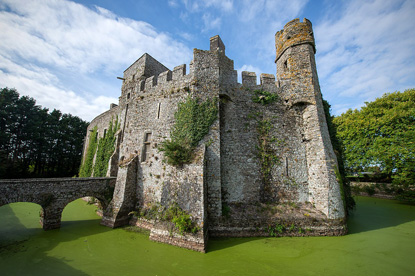
12th-century fortress built on an artificial island, surrounded by moats and defended by five fortified gates. Features medieval ramparts, chapel, embroidery depicting Norman conquests, and a scenic walkway with panoramic views. |
| Utah Beach |
|---|
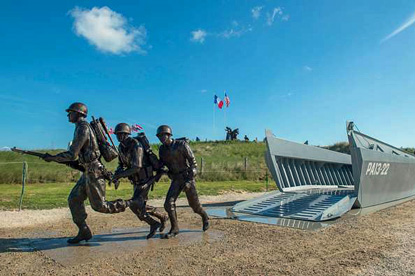
 The westernmost D-Day landing site where American forces of the 4th Infantry Division stormed ashore on 6 June 1944. Featuring a museum built on the original landing site, memorials, and wide sandy beaches where visitors can walk in the footsteps of Allied liberators whilst exploring remnants of German Atlantic Wall fortifications. |
Other attractions
Barneville-Carteret
 Gratot Castle (ruins)
Hambye Abbey (ruins)
Département du Calvados
| Deauville-Trouville |
|---|

 Twin seaside resorts separated only by the River Touques, renowned for their elegant Belle Époque architecture, sandy beaches, and glamorous atmosphere. Deauville offers chic sophistication with its famous boardwalk and casino, whilst Trouville charms with artistic flair and authentic fishing port heritage. |
| Bayeux |
|---|

 Medieval market town renowned for its magnificent 11th-century cathedral and world-famous UNESCO-listed tapestry depicting the Norman Conquest of 1066. First liberated town in 1944, it serves as an ideal base for exploring the D-Day beaches just kilometres away. |
| Château de Balleroy |
|---|
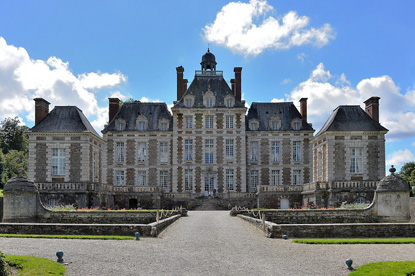
Exquisite 17th-century château designed by François Mansart, featuring innovative architecture that inspired Versailles. Showcases intact Louis XIII design with brick, schist and Caen stone, richly furnished rooms, one of France's first suspended staircases, formal gardens, and a museum dedicated to ballooning history. |
| Caen |
|---|
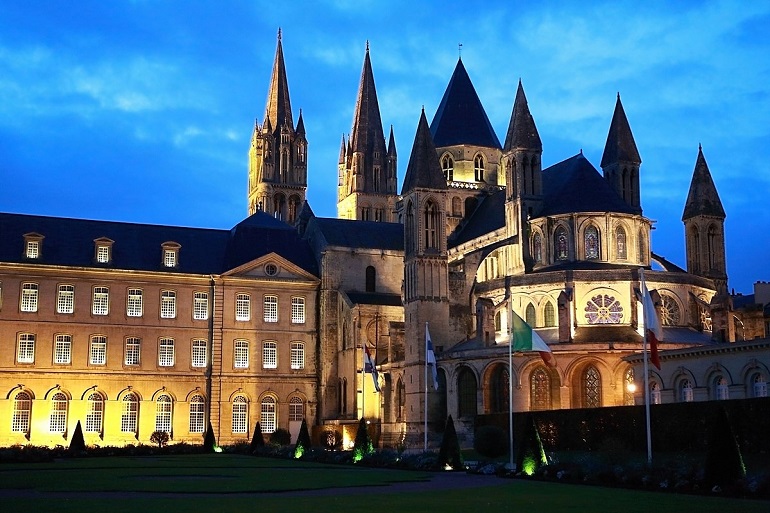
William the Conqueror's historic capital blends medieval grandeur with vibrant university life. Home to imposing castle ruins, magnificent twin abbeys, and the poignant Memorial museum, this lively city offers rich heritage, excellent dining, and easy access to D-Day beaches. |
| Cabourg |
|---|
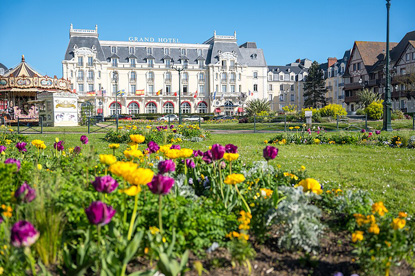
 Elegant Belle Époque seaside resort renowned for its 4km fine sandy beach and Europe's longest pedestrian promenade. Famous for its association with Marcel Proust, grand casino, and romantic atmosphere. Features stunning period villas and vibrant cultural scene. |
| Dives-sur-Mer |
|---|
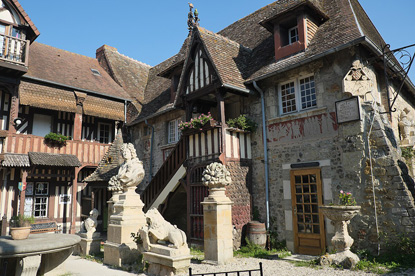
Historic coastal town where William the Conqueror's fleet departed for England in 1066. Boasts remarkable medieval market halls, picturesque half-timbered houses in the Village of Art, 11th-century Notre-Dame Church, and Port Guillaume marina with direct access to Cabourg beach. |
| Creully Castle |
|---|
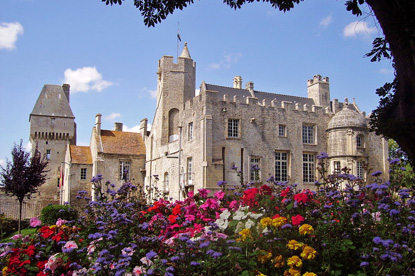
Medieval Creully Castle spans centuries from the 11th to 15th, featuring fine vaulted rooms, a 14th-century square tower, and 15th-century octagonal watchtower. During WWII, the BBC broadcast D-Day news from its tower. Today it houses the Radio Museum and hosts events and guided tours. |
| Château de Fontaine-Henry |
|---|

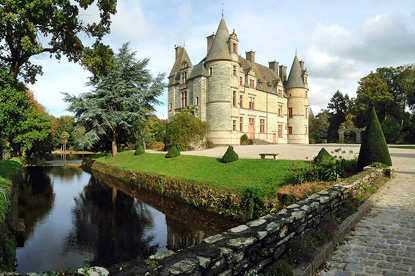
This Renaissance gem boasts France's highest castle roofs at 16 metres, showcasing exquisite "stone filigree" facades blending Louis XII and Renaissance styles. Owned by one family for over 800 years, it houses remarkable period furniture and paintings. |
| Honfleur |
|---|

A picturesque medieval port town with a stunning 17th-century harbour lined by colourful half-timbered houses. Famous as the birthplace of Impressionism, Honfleur's cobbled streets, art galleries, and seafood restaurants create an enchanting atmosphere. |
| Falaise Castle |
|---|
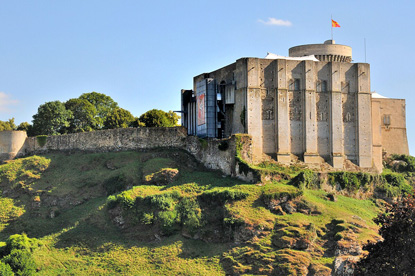
Birthplace of William the Conqueror around 1028, this imposing 12th-century fortress boasts three magnificent keeps perched on a rocky crag. The Anglo-Norman stronghold features immersive medieval displays and virtual reconstructions revealing the splendour of ducal court life. |
| Château de Vendeuvre |
|---|
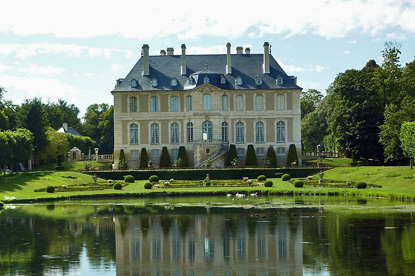
An exquisite 18th-century country house designed by Jacques-François Blondel, featuring original period interiors and furnishings that survived the French Revolution. Renowned for its world-class collection of miniature furniture and elegant French formal gardens. |
Other attractions
Bricquebec Castle (ruins)
 Regnéville Castle (ruins)
D-Day Sites
| Arromanches-les-Bains |
|---|

Historic seaside resort renowned for the remains of the artificial Mulberry Harbour, where 2.5 million Allied troops landed via Port Winston during WWII. Features golden sandy beaches, D-Day Museum, and atmospheric 360° cinema with stunning cliff walks. |
| Juno Beach |
|---|
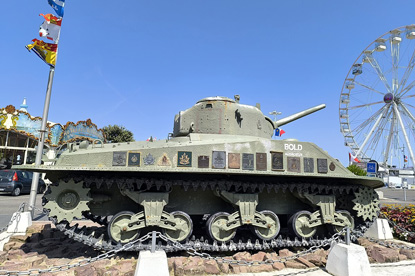
One of five D-Day landing beaches, Juno was liberated by the 3rd Canadian Infantry Division on 6 June 1944. This historic coastline from Courseulles to Saint-Aubin features the poignant Juno Beach Centre, original German bunkers, and remnants of beach defences—a powerful testament to Canadian wartime sacrifice. |
| Omaha Beach |
|---|
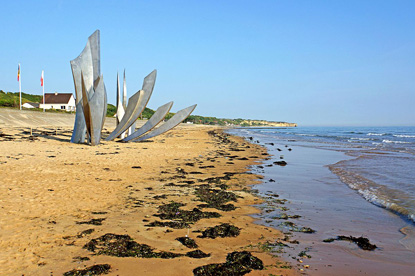
Site of the bloodiest D-Day landing on 6 June 1944, where American forces faced fierce German resistance. This historic beach stretches between Vierville-sur-Mer and Colleville-sur-Mer, commemorated by the American Cemetery and numerous memorials. |
| Longues-sur-Mer |
|---|
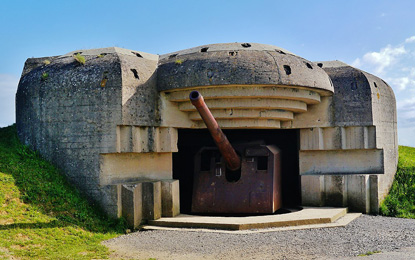
Historic coastal village renowned for its remarkably preserved German WWII battery featuring original artillery guns and bunkers, offering dramatic cliff-top views over the Channel. Home to a beautiful 12th-century Benedictine abbey. |
Département de l'Orne
| Alençon |
|---|
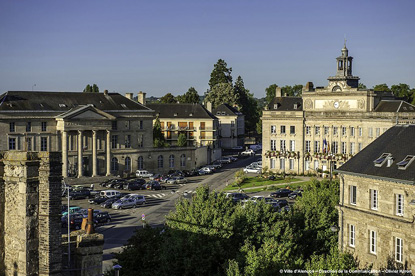
Historic ducal capital renowned for its UNESCO-protected needlepoint lace. Features the impressive Château des Ducs with its medieval towers, Basilique Notre-Dame, and well-preserved Saint-Léonard quarter. The Musée des Beaux-Arts et de la Dentelle showcases the intricate lacemaking tradition still practised by skilled artisans today. |
| Bagnoles-de-l'Orne |
|---|
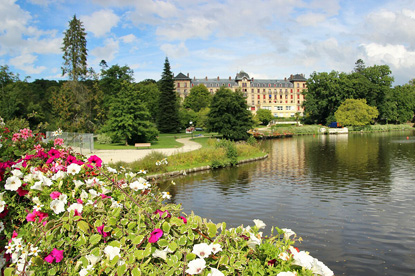
France's only spa town nestled beside a tranquil lake in the Andaines Forest. Renowned for Belle Époque architecture, thermal springs, elegant casino, and Art Deco heritage within the Normandie-Maine Regional Natural Park. |
| Château de Carrouges |
|---|

A magnificent 14th-century château uniquely blending fortress and residence, featuring striking red brick and granite architecture. Originally a Hundred Years' War stronghold, now showcases Renaissance gatehouse, medieval keep with machicolations, grand apartments, and preserved interiors spanning centuries. |
| Domfront |
|---|
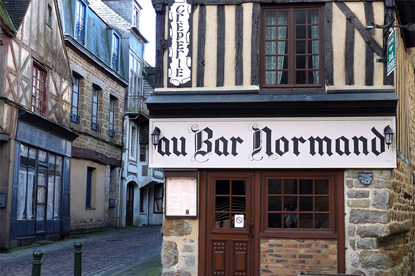
Perched on a rocky promontory, this enchanting medieval town features impressive 12th-century castle ruins, charming half-timbered houses lining cobbled streets, and the beautiful Romanesque church of Notre-Dame-sur-l'Eau. Rich in Anglo-Norman heritage with royal connections. |
| Château de Sassy |
|---|
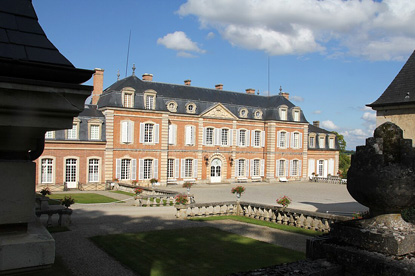
Beautiful 18th-century stone and brick château famous for Chancellor Pasquier's library and stunning formal French gardens with Italian terraces. Boasts elegant period interiors, fine tapestries, historic chapel, and remains an inhabited family residence on an 800-hectare estate. |
| Château d'Ô |
|---|
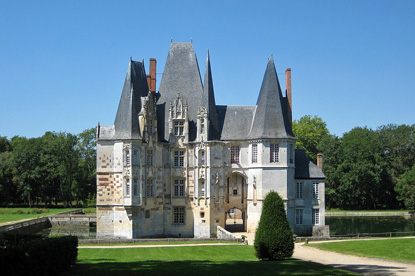
A captivating fairytale castle built on an islet surrounded by a water-filled moat. This Gothic and Renaissance château features exquisite trompe-l'oeil murals, a magnificent mirrored gallery, and enchanting grounds with an orangery. |
| Argentan |
|---|
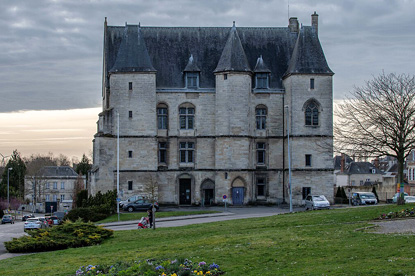
Historic market town overlooking the Orne, renowned for its exquisite point d'Argentan lacework tradition and equestrian heritage. Explore medieval Château des Ducs, Gothic Saint-Germain church, and Benedictine abbey where nuns preserve ancient lacemaking skills. |
| Château de Médavy |
|---|
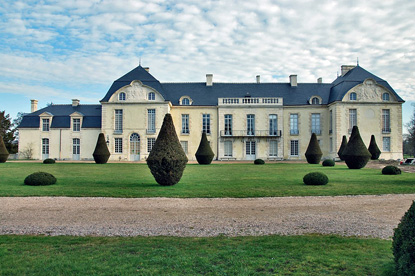
Elegant 18th-century residence renowned for its classical architecture and rich collections. Set amid scenic gardens, it features lavish salons, restored historic towers, and exhibits including rare atlases and model boats, offering a refined glimpse into noble heritage. |
Other attractions
Flers Castle
La Perrière
|


 : Local interest
 : Moderately interesting
 : Outstanding place
 : Must-see in the country
 : Top cities in Europe