


| Contents |
|---|
Introduction
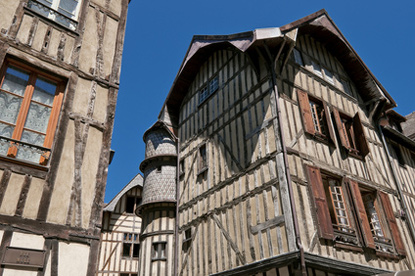
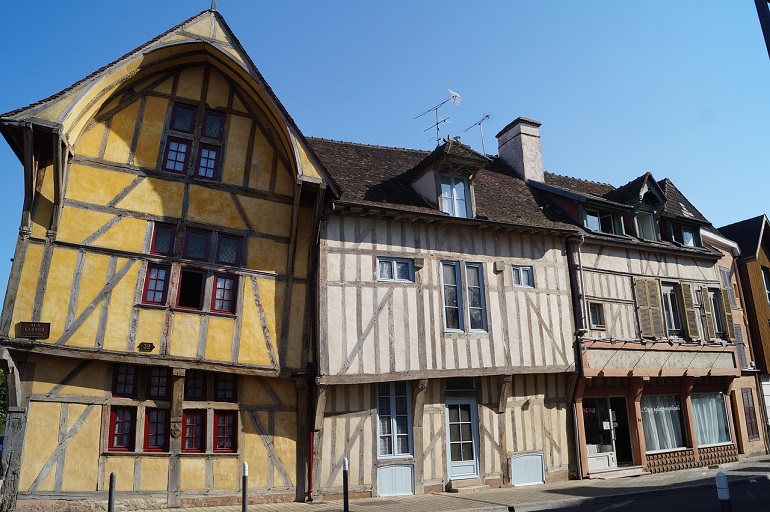
Troyes (pronounced 'Trwa'; pop. 62,000), the historic capital of the Champagne region, is a remarkably well-preserved medieval city located on the Seine River, 150 km southeast of Paris. Founded by the Roman emperor Augustus as the capital of the Gallic Tricasses tribe, Troyes rose to prominence during the Middle Ages as the seat of the powerful Counts of Champagne, who established the renowned international fairs that brought exceptional prosperity to the city. The town's distinctive historic centre, characteristically shaped like a champagne cork, features an extraordinary collection of colourful half-timbered houses dating primarily from the 16th century, when the city was rebuilt following a devastating fire that destroyed 1,000 houses in 1524. Troyes is celebrated for its exceptional Gothic architecture, including the magnificent Cathédrale Saint-Pierre-et-Saint-Paul and numerous historic churches adorned with centuries-old stained glass windows, whilst the city also holds significance as the birthplace of the renowned 11th-century rabbi Rashi and as the namesake of the troy weight standard for precious metals that was developed here during its medieval trading heyday.
The local clothing industry has produced such household brand names as Lacoste, founded by René Lacoste in 1933, and the kids wear Petit Bateau, founded by Pierre Valton in 1893.
Interesting Facts about Troyes
- Troyes was the historical capital of Champagne and gave its name to the troy weight used for precious metals.
- The city’s mediaeval core is famed for its half-timbered houses, many dating from the 16th century and carefully preserved.
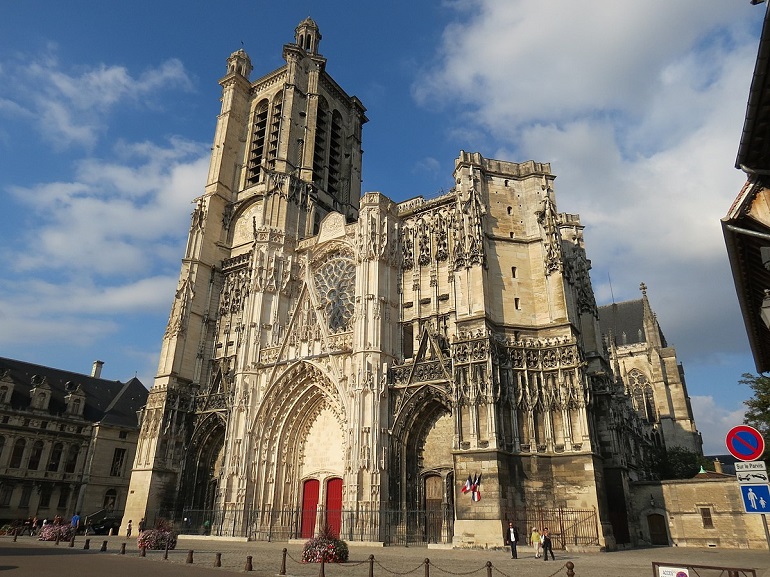
- Saint-Pierre-et-Saint-Paul Cathedral in Troyes is notable for its asymmetry, as its planned second tower was never built.
- Henry V of England married Catherine of Valois in Troyes in 1420, shortly after the Treaty of Troyes recognised him as heir to the French throne.
- Troyes’s old town is famously shaped like a champagne cork, a nod to its Champagne heritage.
- In the early modern period the city became a major centre for hosiery and knitwear manufacturing.
- The Roman name of Troyes was Augustobona Tricassium, reflecting its origins as a hub on the Via Agrippa.
- The city and the wider Aube area are celebrated for exceptional stained glass, with masterpieces spread across numerous churches.
- Pope Urban IV, a native of Troyes and the son of a shoemaker, is associated with the bold Gothic church of Saint-Urbain.
- Today Troyes is known as a European capital of factory outlets, drawing shoppers to its brand centres.
History
Troyes was founded by the Romans as Augustobona Tricassium and was located on the Via Agrippa, the main road linking Reims to Lyon.
In 451, the area was the scene of the Battle of the Catalaunian Plains, in which a coalition led by the Roman general Flavius Aëtius and the Visigothic king Theodoric I stopped the progression of the Huns led by Attila.
In medieval times, two synods were held at Troyes. The first one in 867 proclaimed that no bishop could be disposed without reference to the Holy See. The second, more important one, in 1129 recognized and confirmed the Order of the Knights Templar.
Medieval literature, and particularly Arthurian tales of knights in search of the Holy Grail, owe a lot to the local poet Chrétien de Troyes (1135-1183), who served at the court of his patroness Marie of France, Countess of Champagne from 1160 to 1172. His better known works include Yvain, the Knight of the Lion, Lancelot, the Knight of the Cart, and Perceval, the Story of the Grail.
From the 13th century, the Champagne fairs, an annual cycle of trading fairs, were held by the Counts of Champagne in the main towns of the region. Troyes' prominent position secured it two fairs per year. It is during those market fairs that the Troy weight (troy ounces and troy pounds) emerged as units of mass. They spread to England and later the rest of the English-speaking world, where are still used today, customarily for precious metals, gemstones, and black powder.
England's relationship with Troyes doesn't end there. In 1420, in the aftermath of the Battle of Agincourt, Henry V of England married Catherine of Valois (daughter of Charles VI of France) at Troyes Cathedral. The ensuing Treaty of Troyes acknowledged Henry V as the heir to the throne of France. This would have important repurcussions in the French psyche. Four years later, Joan of Arc experienced her first vision at the age of 12. In 1429, she would take the leadership of the French army at the siege of Orléans, then set about to recover French control over the Champagne region in order to get Charles VII crowned in Reims.
Main Attractions
The Historic Heart of Troyes

Wandering through the old town of Troyes is like stepping back in time. The city centre, shaped like a champagne cork, is a delightful labyrinth of cobbled streets lined with meticulously restored, half-timbered houses from the 16th century. These colourful buildings, with their overhanging upper storeys, create a unique and incredibly photogenic townscape. One of the most iconic spots is the Ruelle des Chats (Alley of Cats), a narrow lane where the houses lean so closely together their rooftops almost touch. Exploring these atmospheric streets reveals charming courtyards, hidden passageways, and the vibrant daily life of the city, offering a truly immersive medieval experience.
Cathédrale Saint-Pierre-et-Saint-Paul de Troyes
The Cathédrale Saint-Pierre-et-Saint-Paul is an imposing masterpiece of Gothic architecture, a project that spanned several centuries from the 13th to the 17th. Its grand facade and towering structure command attention, but the true treasure lies within. The cathedral is renowned for its extraordinary collection of stained-glass windows, which bathe the interior in a kaleidoscope of coloured light, narrating biblical stories across 1,500 square metres of glass. Visitors can spend hours admiring the intricate details of these luminous artworks, which have miraculously survived centuries of turmoil. The sheer scale of the nave and the elegance of the choir make it a quintessential example of French Gothic design and a spiritual centrepiece of the city.
Basilique Saint-Urbain
Considered by many to be a jewel of High Gothic architecture, the Basilique Saint-Urbain was commissioned in the 13th century by Pope Urban IV, who was born in Troyes. Despite its relatively small size compared to the main cathedral, its design is one of remarkable lightness and sophistication. The building is celebrated for its vast expanses of stained glass set within a delicate stone framework, creating an interior that is exceptionally bright and airy. The exterior is just as impressive, with its intricate gables and elegant sculptures. This basilica represents a pinnacle of architectural innovation for its time, embodying a perfect harmony between structure and light that continues to inspire awe.
Maison Rachi de Troyes
The Maison Rachi is a significant cultural and historical landmark dedicated to the influential 11th-century Jewish scholar, Rashi, who lived and taught in Troyes. This site serves as a cultural centre and offers a fascinating insight into the life and work of one of Judaism's most important biblical commentators, whose writings profoundly influenced both Jewish and Christian thought. While the original medieval synagogue is no longer standing, the centre offers exhibitions and presentations that bring this important heritage to life. It stands as a testament to the rich intellectual and religious history of Troyes during the Middle Ages.
Parc des Moulins
For a peaceful retreat from the bustling historic centre, the Parc des Moulins offers a large expanse of greenery and nature. Situated on the site of the city's old milling industry, this park provides a tranquil setting for a leisurely stroll or a family picnic. A series of canals and streams weave through the landscape, paying homage to the area's past, while well-maintained paths are perfect for walking, jogging, or cycling. With its wide-open lawns, playgrounds for children, and abundant wildlife, the park is a favourite spot for locals and visitors seeking relaxation and a breath of fresh air just a short distance from the city's architectural wonders.
Top Museums
Main Art and History Museums
Museum of Fine Arts and Archeology (Musée Saint-Loup)
Nestled within the walls of the former Saint-Loup Abbey, a building with roots in the early Middle Ages, this museum is the city's oldest and most comprehensive. Its origins trace back to the French Revolution, when art and artefacts were confiscated from religious institutions and aristocratic residences. The collection grew substantially over the centuries through generous donations and state deposits.
The museum offers a sweeping panorama of European art and regional history, with distinct sections that merit exploration:
- Painting Collections: The galleries showcase a prestigious collection of paintings from the 14th to the 19th century. A significant portion comes from the confiscated collection of Philibert Orry, Louis XV's Controller General of Finances, featuring works by renowned artists like Charles-Joseph Natoire, François Boucher, and Hubert Robert. Other highlights include pieces by Bellotto and Philippe de Champaigne, alongside deposits from the Louvre Museum by masters such as Giorgio Vasari and Charles Le Brun.
- Archaeology: The archaeology department provides a fascinating glimpse into the region's ancient past. Its centrepiece is the Treasure of Pouan, a collection of spectacular grave goods, including jewellery and weapons, discovered in the tomb of a 5th-century Germanic warrior. Another prized possession is the Apollo of Vaupoisson, a masterful Gallo-Roman bronze statue that stands as a testament to the area's classical heritage.
- Medieval Sculpture and Local Art: The museum has a particularly strong collection of medieval sculpture from the Troyes school. It also features works by local artists, most notably the celebrated sculptor François Girardon, who was born in Troyes.
Modern Art Museum (Musée d'Art Moderne)
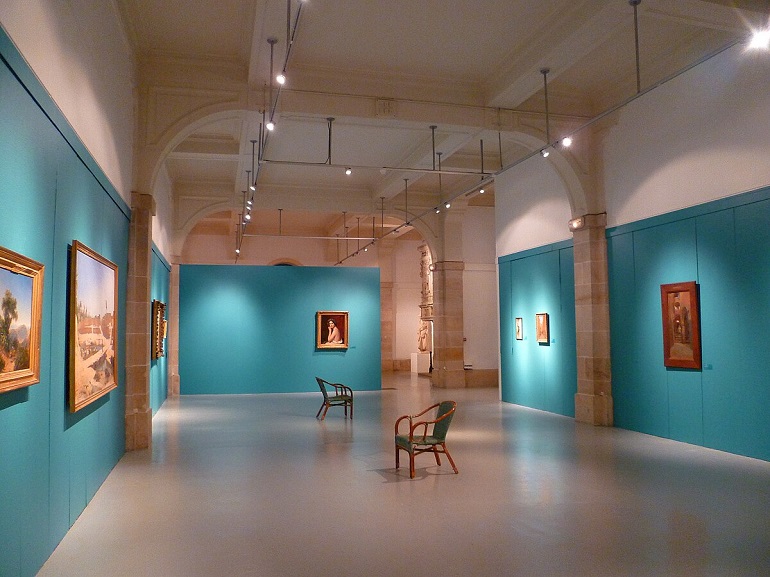
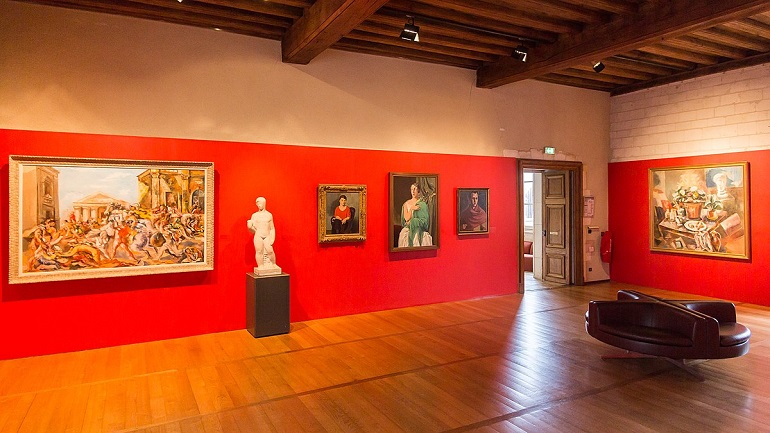
Housed in the splendidly renovated former bishop's palace, the Modern Art Museum is a jewel of Troyes. Its collection is founded upon one of the most significant private donations ever made to the French state: the vast personal collection of local industrialists Pierre and Denise Lévy.
The museum provides an exceptional survey of modern art, primarily from 1850 to 1960:
- Fauvism and Expressionism: The collection is especially renowned for its outstanding assembly of Fauvist works, with a particular focus on André Derain, who is represented with an entire room dedicated to his art. You will find vibrant canvases by Henri Matisse, Maurice de Vlaminck, and other key figures of the movement.
- Masterpieces of Modernism: The galleries are filled with works by a roll-call of modern masters, including Gustave Courbet, Edgar Degas, Amedeo Modigliani, and Georges Seurat. This allows visitors to trace the evolution from Realism and Impressionism through to Cubism and beyond.
- Decorative Arts: A special highlight is the room devoted to the glass creations of Maurice Marinot, a friend of the Lévy family, whose work pushed the boundaries between craft and fine art. The collection showcases his innovative techniques and artistic vision.
Museums of Craftsmanship and Industry
Maison de l’Outil et de la Pensée Ouvrière (House of Tools and Worker's Thought)
Truly unique in its scope, this museum is an ode to the beauty and ingenuity of manual craftsmanship. Set within the magnificent Renaissance-era Hôtel de Mauroy, it presents an astonishing collection of over 12,000 hand tools from the 17th to the 19th centuries.
The tools are meticulously arranged in 65 elegant display cases, creating a "Louvre for the working man". The displays are organised according to the material the tools were designed to work:
- Wood, Iron, and Stone: Explore the specialised tools of carpenters, cabinetmakers, blacksmiths, and stonemasons, each object a testament to skill and purpose.
- Leather and Earth: Discover the implements used by leatherworkers, cobblers, and potters.
More than just a technical display, the museum is a philosophical journey into the world of skilled labour, celebrating the intelligence, dignity, and creativity inherent in the trades that built our world.
The Museums of Hôtel de Vauluisant
This rare 16th-century stone mansion, with its elegant turret, hosts two distinct museums that tell the story of Troyes' industrial and artistic identity.
- Musée de la Maille - mode et industrie (Hosiery and Knitwear Museum): Troyes was the undisputed capital of the French hosiery industry, and this museum charts that defining history. The collection features an impressive array of machinery, from early 18th-century wooden knitting frames to the sophisticated machines that powered the industry's "golden age" in the 19th and 20th centuries. Alongside the technology, you can admire the evolution of fashion through its collection of stockings, socks, and swimwear, illustrating the interplay between technical innovation and style.
- Musée d'Art Champenois du 16e siècle (Museum of 16th-Century Champagne Art): This section of the museum focuses on the artistic flourishing of the Champagne region during the Renaissance, showcasing paintings and sculptures from this vibrant period.
Specialised Museums
Apothicairerie de l'Hôtel-Dieu-le-Comte (Apothecary of the Hôtel-Dieu)
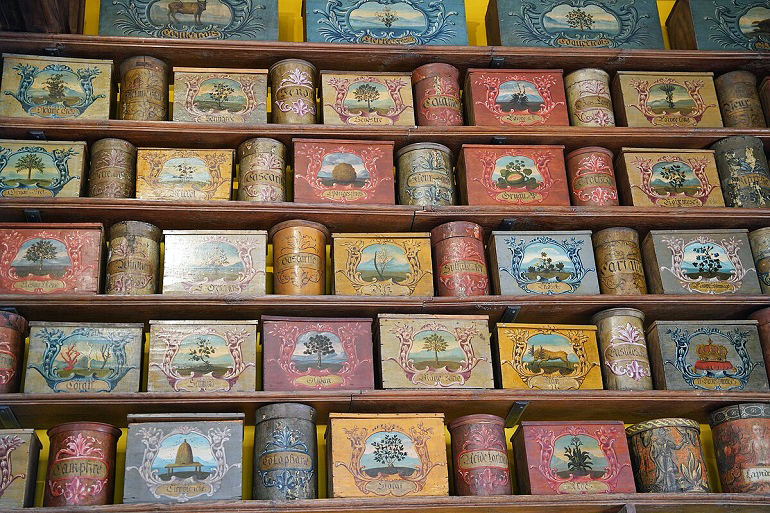
Step back in time at one of France's most beautiful and well-preserved historic apothecaries. Located within the 18th-century Hôtel-Dieu-le-Comte, this museum offers a captivating look at the history of medicine and pharmacy.
The collection is remarkable for its completeness and artistry:
- A rare collection of 319 painted wooden medicine boxes, unique in France.
- An extensive array of faience (tin-glazed earthenware), including ornate Italian and Spanish albarelli (drug jars) and over 300 locally-made Nevers-style pots.
- The laboratory and display room are presented much as they would have been in the 18th century, offering an authentic atmosphere. The space also includes a modern, interactive area for children to learn about the plants, minerals, and animals used in historic remedies.
Adjacent to the apothecary, the Hôtel-Dieu-le-Comte also houses the Cité du Vitrail, a centre dedicated to the art of stained glass, another craft for which Troyes and the Aube region are famous.
Local Cuisine
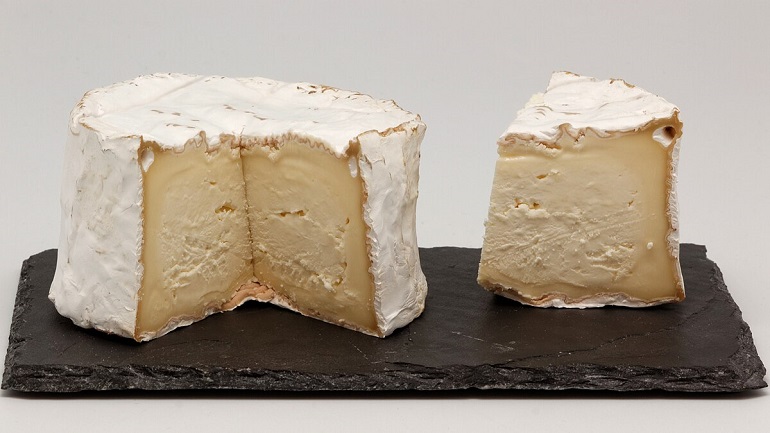
Troyes boasts a culinary tradition distinguished by a handful of unique local specialities. Visitors are encouraged to sample the renowned andouillette de Troyes, a traditional sausage made from pork, finely chopped and seasoned with pepper and spices, prized for its robust flavour and distinctive aroma. Another gastronomic gem is chaource, a creamy cow’s milk cheese with a delicate, slightly tangy taste that pairs perfectly with freshly baked bread from local boulangeries. The region’s sweet tooth is well satisfied with pralines de Troyes, rose-pink sugared almonds often enjoyed with a cup of coffee. Of course, no meal in Troyes is truly complete without a glass of world-famous Champagne, sourced from the surrounding vineyards that define the city’s rural charm.
Getting There
By train Regular SNCF TER and occasional Intercités services run from Paris Gare de l’Est to Troyes in around an hour and a half, with onward connections from Dijon, Mulhouse and other eastern cities, depositing travellers a short stroll from the medieval centre.
By coach Long-distance coaches leave Paris Bercy-Seine, Charles-de-Gaulle Airport and other major hubs, stopping at the Gare Routière on the edge of the old town; regional buses also link Troyes with Reims, Auxerre and smaller Champagne villages, making this a flexible option for those with time to spare.
By car Driving is straightforward via the A5 motorway from Paris or Burgundy, or the A26 from Reims, with well-signed exits guiding you to the city’s ring road and ample parking near the historic core, allowing you to combine the journey with detours through vineyard-dotted countryside.
| Travel destinations in Champagne-Ardenne | |||||||||||
|---|---|---|---|---|---|---|---|---|---|---|---|
|
|
|
| ||||||||
|
|
| |||||||||


