


| Contents |
|---|
Introduction
Located in southwestern France on the Garonne River, Bordeaux (pop. 260,000; urban 1 million; metro 1.4 million) is a major port city and the capital of the Nouvelle-Aquitaine region. The city is renowned as the world's wine capital, producing approximately 900 million bottles annually from its 120,000 hectares of vineyards. Beyond its viticultural fame, Bordeaux boasts 362 historic monuments, making it second only to Paris in terms of protected buildings in France. The city's historic center, known as the "Port of the Moon," has been designated as a UNESCO World Heritage Site, featuring notable landmarks such as the Saint-André Cathedral, the Grand-Théâtre, and the Place de la Bourse. As a hub for business and education, Bordeaux hosts international congresses, houses major aeronautics and space sector companies, and supports a university population of over 130,000 students.
Interesting Facts about Bordeaux
- Bordeaux is renowned as the world's most famous wine region, with 80% of its land dedicated to wine production, over 960 million bottles produced annually and hosting more than 6,000 wineries.
- The city boasts 362 historic monuments, making it the second city in France with the most listed monuments after Paris.
- The Miroir d'eau in Bordeaux is the world's largest reflecting pool, covering 3,450 square metres and offering a stunning mirror effect.
- Place des Quinconces in Bordeaux is the largest city square in Europe, spanning 25.6 hectares.
- Rue Sainte-Catherine is one of the longest pedestrian shopping streets in Europe, stretching 1.2 kilometres.
- Bordeaux's wine industry dates back to Roman times, with significant growth during the Middle Ages due to its strategic trade routes.
- Bordeaux is home to Vinexpo, one of the largest exhibitions for wine and spirits professionals from all over the world.
- The city's historic centre, known as the “Port of the Moon”, is a UNESCO World Heritage Site, famed for its 18th-century architecture.
- The name “Bordeaux” comes from its geographical position “beside the waters,” near the Garonne and Dordogne rivers.
- Bordeaux played a key role during the French Revolution as a hub for political thinkers and revolutionary ideas.
- Canelé, a caramelised pastry with a custardy centre, is a beloved local treat and culinary symbol of the city.
- Some Bordeaux vines have survived for over two centuries, producing complex and highly prized wines to this day.
- The official Bordeaux wine designation (AOC) ensures strict quality and authenticity, regulated by specific geographical boundaries and permitted grape varieties.
- Saint Emilion, a neighbouring wine region within Bordeaux, is itself a UNESCO World Heritage Site due to its ancient vineyards and monolithic church.
- Bordeaux won the Europe Prize in 1957 for its notable efforts in promoting the European ideal and unity.
- The city serves as a centre for university research, boasting more than 130,000 students and hosting one of only two megajoule lasers in the world.
- Mollat in Bordeaux is the largest independent bookstore in France with over 2,500 m² and 300,000 different books.
History
The history of Bordeaux is a fascinating tale of conquests, alliances, and prosperity that spans over two millennia. The city began as Burdigala around 300 BCE when it was settled by the Celtic tribe known as the Bituriges Vivisci, who were already trading wine that they produced themselves. The Romans arrived around 60 BCE, transforming Burdigala into the capital of the Aquitania region and an important commercial centre for tin and lead trade. During the Roman period, impressive structures such as an amphitheatre and the monument Les Piliers de Tutelle were constructed. However, the city's stability was repeatedly shattered by invasions - the Vandals sacked it in 276 CE and again in 409, followed by the Visigoths in 414 and the Franks in 498. The troubles continued through the medieval period with Arabian invasions around 732 and Viking raids that began around 844, with the Vikings burning and slaughtering the population in 848.
Bordeaux's golden age began in the 12th century following a pivotal marriage that would shape its destiny for three centuries. In 1152, Eleanor, Duchess of Aquitaine, married Henry II Plantagenet, who became King of England, bringing Bordeaux under English rule and creating the vast Angevin Empire that stretched from the Pyrenees to Ireland. The English granted the city remarkable freedoms - mayors were elected from 1235, and a thriving wine trade developed with English ports that became the main source of income for the locals. During this period, significant architectural achievements included the construction of the belfry (Grosse Cloche) and the cathedral of St-André in 1227. The city briefly became the capital of an independent state between 1362-1372 under Edward, the Black Prince, whose son Richard (later King Richard II) was born in Bordeaux. This English period ended decisively in 1453 at the Battle of Castillon, when King Charles VII of France won his final victory over England, ending the Hundred Years War and returning Bordeaux to French control.
The 18th century marked Bordeaux's most prosperous era, often called its golden age. The city became France's busiest port and the second busiest port in the world after London, thriving on what was known as the "triangular trade" - slaves from Africa to the West Indies, sugar and coffee back to Bordeaux, then arms and wines back to Africa. The Port of the Moon supplied the majority of Europe with coffee, cocoa, sugar, cotton and indigo. This immense wealth funded a massive urban transformation under the guidance of the Marquis de Tourny, with approximately 5,000 buildings constructed during this period, including the magnificent structures along the quays that still define the city's riverfront today. Notably, architectural gems such as the Place de la Bourse were completed in 1775, the Palais Rohan in 1778, and the Grand Théâtre de Bordeaux was inaugurated in 1780. The city's medieval walls were demolished and replaced with ornate buildings and majestic squares, though remarkably, the first bridge across the Garonne (the Pont de Pierre) was only completed during Napoleon's time. However, this prosperity came at a dark cost, as Bordeaux was also a major slave trading centre, with local shipowners deporting 150,000 Africans in approximately 500 expeditions.
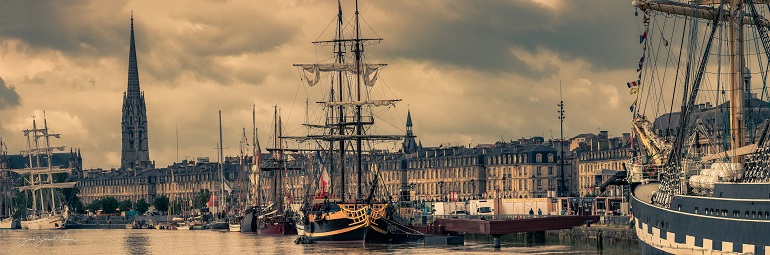
Sailboats on the quays of the Garonne river during the 'Fête le fleuve' in the city port, Bordeaux
Main Attractions
Place de la Bourse
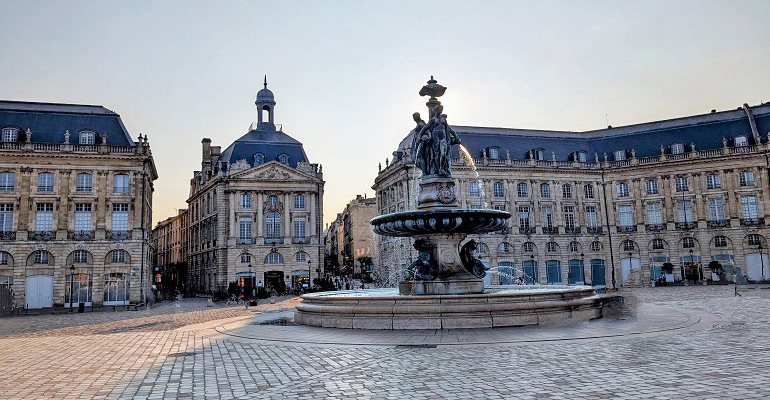
Place de la Bourse is Bordeaux’s iconic central square, a masterpiece of 18th-century classical architecture designed by Ange-Jacques Gabriel, an architect for King Louis XV. Completed over two decades, it was originally conceived to serve as a grand setting for a statue of the king and to break down the city's medieval walls, opening Bordeaux to the Garonne River. It is bordered by two symmetrical buildings: the former Hôtel des Fermes (which housed customs services) and the Palais de la Bourse (home to the Chamber of Commerce). The square’s centrepiece is the Fountain of the Three Graces, which replaced the statue of the king after the French Revolution. This location provides a dramatic example of French urban planning and is a focal point for public life. The mascarons, over 30 unique decorative stone faces that adorn the arches, represent mythological figures and add a distinctive artistic detail.
Miroir d’Eau
Directly opposite the Place de la Bourse lies the Miroir d’Eau, the world’s largest reflecting pool, covering an area of 3,450 square metres. Designed by landscape artist Michel Corajoud and completed in 2006, this modern landmark is crafted from granite slabs covered by a thin, 2cm-deep layer of water. It operates on a programmed cycle, alternating between a shallow pool that creates a flawless reflection of the 18th-century façades, and a dense mist that envelops the area in fog. This interplay of water and light makes it one of Bordeaux's most photographed sites. The Miroir d'Eau has become a highly successful public space, particularly popular during the summer months when children and adults use it to cool down and play. It is a defining feature of the renovated quayside.
La Garonne River Promenade
The riverside promenade along the left bank of the Garonne is a central and vibrant public space in Bordeaux. The result of a major urban regeneration project, this vast, landscaped area stretches for 4.5km between the historic Pont de Pierre and the modern Pont Chaban-Delmas. It invites leisurely walks, running, and cycling, offering uninterrupted views of the river and the city's UNESCO-listed 18th-century waterfront façades. The promenade is divided into different zones, featuring expansive lawns, gardens, playgrounds, skate parks, and numerous open-air cafés and restaurants. It passes directly by key attractions such as the Miroir d’Eau and the Chartrons Market, and serves as the primary setting for festivals, sporting events, and markets throughout the year.
Place des Quinconces
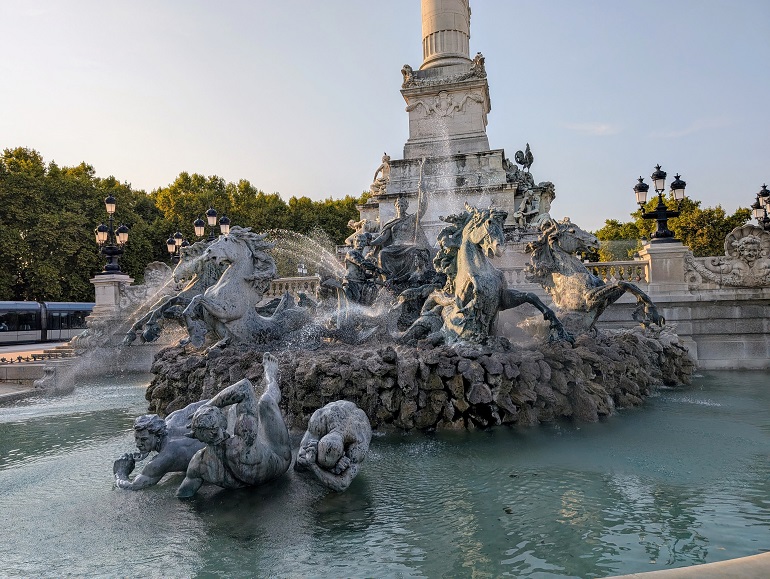
Place des Quinconces is the largest square in France and one of the largest in Europe, covering 12 hectares in central Bordeaux. Created in the early 19th century on the site of the demolished Château Trompette fortress, the square features an esplanade that slopes gently towards the Garonne River. Its name derives from the quincunx pattern in which trees were originally planted—an arrangement of five units with four in a square and one in the centre. The square is dominated by the imposing Monument aux Girondins, erected between 1894 and 1902 to commemorate the republican deputies who were victims of the Terror during the French Revolution. Two rostral columns dedicated to commerce and navigation stand at the river end, reflecting Bordeaux's maritime heritage. The square regularly hosts major events including the twice-yearly "foire aux plaisirs" funfair, a tradition dating from 1854, along with concerts, circuses, and markets.
Grosse Cloche
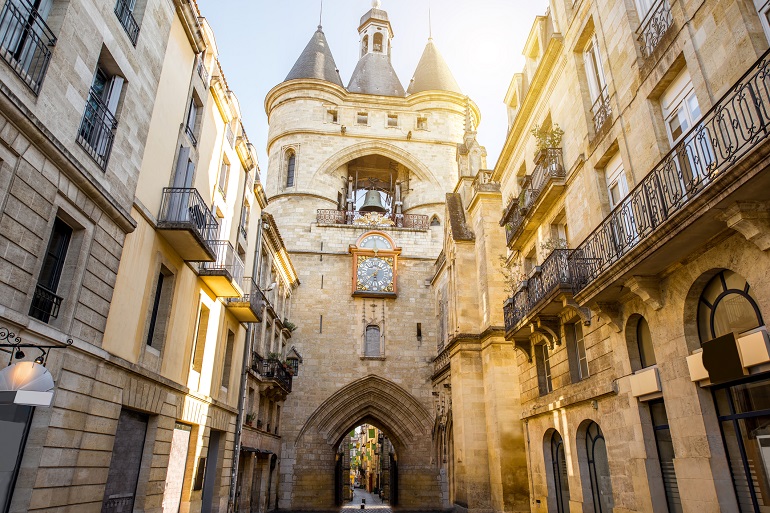
The Grosse Cloche (Great Bell) is one of Bordeaux's most beloved monuments and a rare remnant of its medieval past. This imposing bell tower, with its distinctive twin conical spires and a central gilded leopard weather vane, was the belfry of the old Town Hall in the 15th century. It formed part of the city's defensive system, and the gate beneath it was a primary entrance into the fortified merchant district. The structure also served as a prison for minor offenders. The enormous bell itself, named Armande-Louise, weighs nearly 8,000 kilograms and was cast in 1775. It is rung only on six special civic occasions each year, including Bastille Day (14th July) and VE Day (8th May).
Porte Cailhau
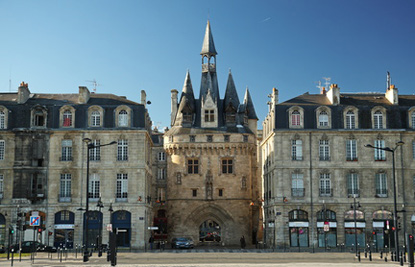
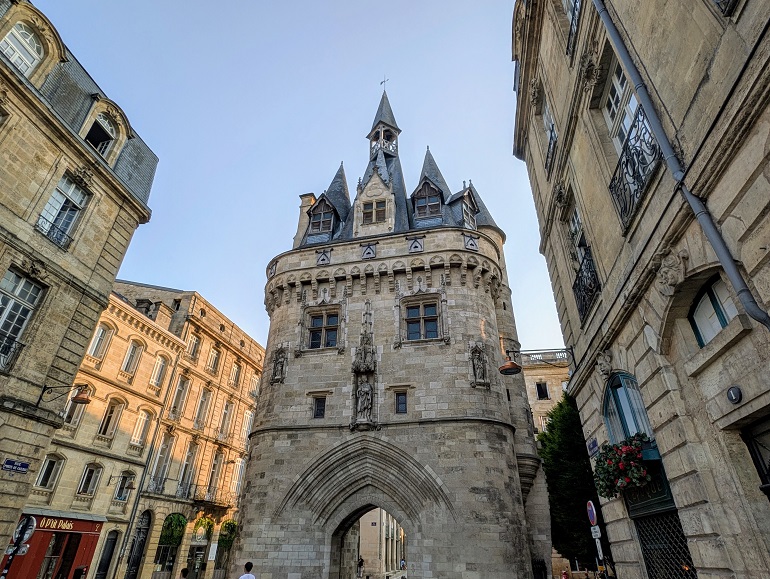
The Porte Cailhau is a magnificent medieval gateway that stands between the river and Place du Palais. Built in 1495, it functioned as both a defensive gate in the city's 14th-century ramparts and a triumphal arch, commemorating King Charles VIII's victory at the Battle of Fornovo. Its design, with its conical turrets and steeply pitched slate roof, resembles a fairytale castle. The gate's name likely derives from the word for pebbles (*cailloux*), which were unloaded on the quayside here to ballast ships. Visitors can enter the monument to see an exhibition on the tools and materials used to build the city, and to access the upper floors for fine views over the Pont de Pierre and the Garonne river.
Grand Théâtre de Bordeaux
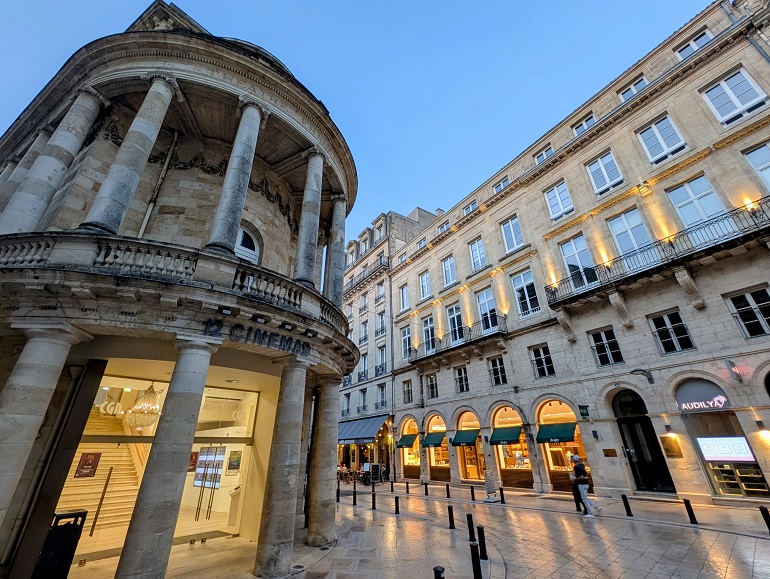
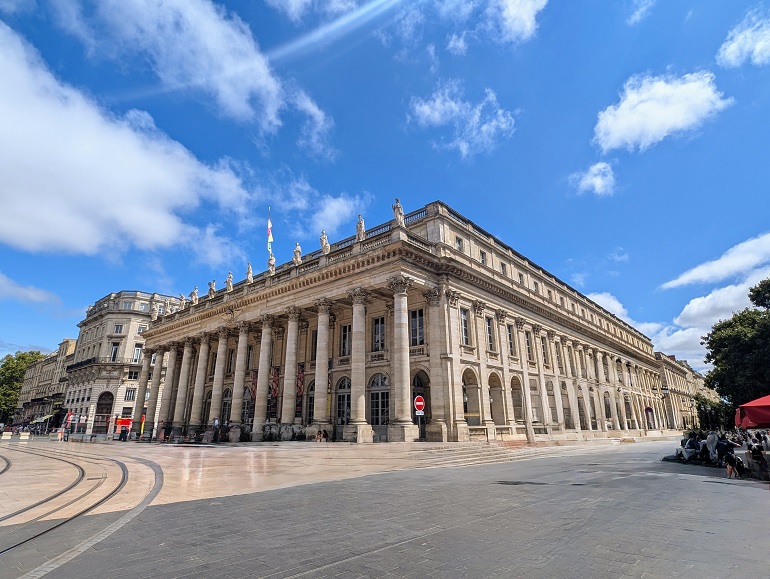
Located on the Place de la Comédie, the Grand Théâtre is a neoclassical architectural jewel built between 1773 and 1780 by the architect Victor Louis. Its exterior is defined by a portico of 12 colossal Corinthian columns, topped with statues representing the nine Muses and the goddesses Juno, Venus, and Minerva. Renowned for its exceptional acoustics and opulent interior, the theatre's grand staircase served as the inspiration for Charles Garnier's design for the Paris Opéra. Inside, the auditorium features a magnificent chandelier and a blue, white, and gold colour scheme characteristic of the era. Today, it is the home of both the Opéra National de Bordeaux and the Ballet National de Bordeaux, functioning as one of France’s premier venues for opera, dance, and classical music concerts.
Jardin Public
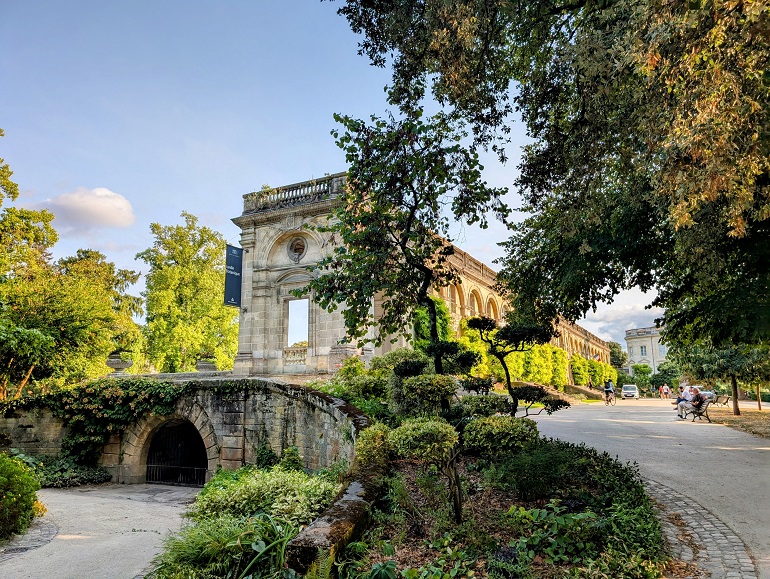
Covering 11 hectares in the city centre, the Jardin Public is Bordeaux’s most prominent green space. It was created in the 18th century as a formal French-style garden but was later redesigned in the 19th century into the more fashionable English landscape style, which it retains today. The park contains expansive lawns perfect for picnics, a large lake with ducks and swans, an old arboretum with remarkable trees, and a historic puppet theatre, the Guignol Guérin. It is also home to a botanical garden which showcases a collection of plants native to the Aquitaine region. A popular location for relaxation and recreation among both residents and visitors, the park provides a tranquil escape from the bustling city. The city's Natural History Museum is also located within the park's grounds.
Rue Sainte-Catherine
Rue Sainte-Catherine is a 1.2km-long pedestrian shopping street running north-south through the heart of Bordeaux, connecting Place de la Comédie to Place de la Victoire. As the longest pedestrian shopping street in Europe, this entirely pedestrianised thoroughfare has been car-free since 1984. Built on the former Roman cardo maximus of ancient Burdigala, the street features over 250 shops including major national brands like Galeries Lafayette, Fnac, Apple Store, and Decathlon. The street was completely renovated between 2000 and 2003 according to designs by Jean-Michel Wilmotte. At its centre lies Place Saint-Projet, a restored crossroads dating from 1977 that was once the site of a cemetery since 1392. The northern end of the street provides access to the historic Galerie Bordelaise, a 19th-century shopping gallery.
Cathédrale Saint-André and Pey-Berland Tower
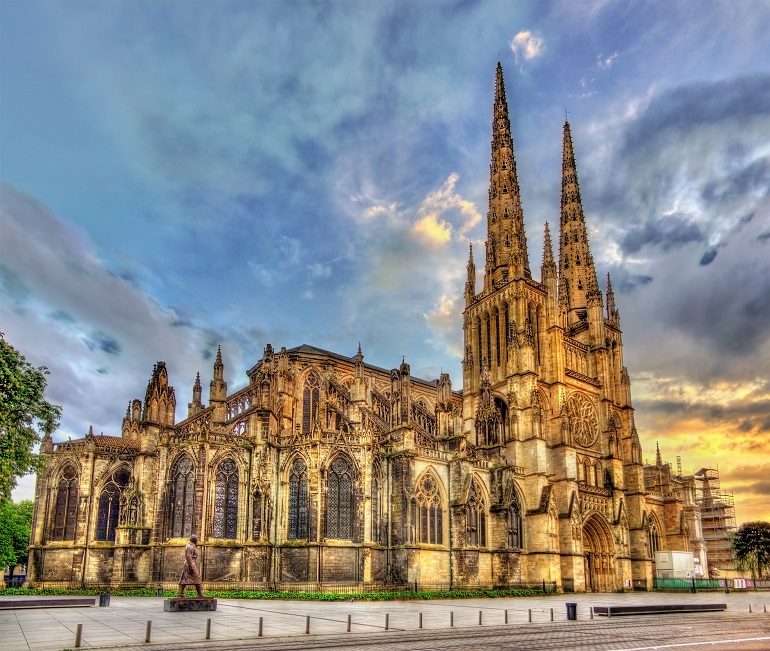
Cathédrale Saint-André is Bordeaux’s principal place of worship, a grand Gothic cathedral consecrated in 1096. It holds significant historical importance, notably as the venue for the marriage of Eleanor of Aquitaine to the future King Louis VII of France in 1137. The cathedral's exterior is remarkable for its Royal Gate, featuring intricate sculptures of the Last Judgement, and its impressive flying buttresses. Standing separately from the main building is the 66-metre-high Pey-Berland Tower, a flamboyant Gothic bell tower built in the 15th century. It was constructed apart from the cathedral because the marshy ground could not support the weight of the bells within the main structure. A climb of its 230 steps is rewarded with panoramic views over the city. The tower is crowned with a gilded statue of Our Lady of Aquitaine.
Palais Gallien
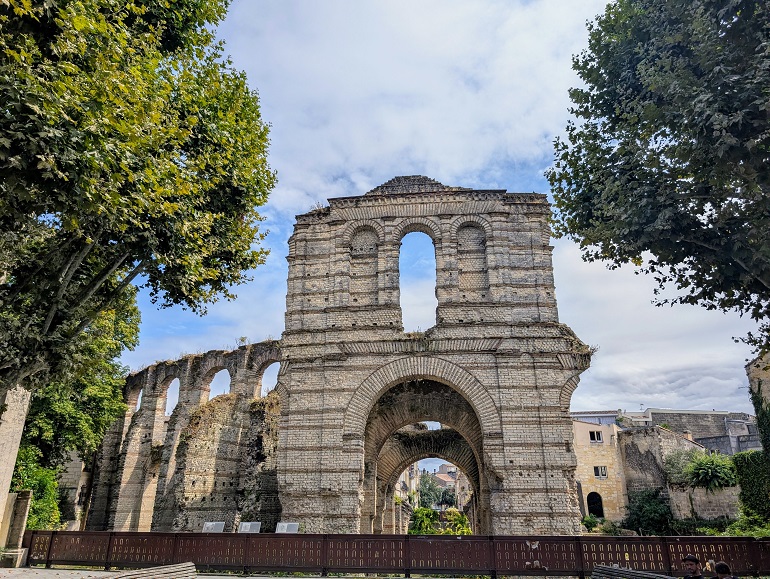
The Palais Gallien is Bordeaux's oldest surviving monument, comprising the ruins of a 2nd-century Roman amphitheatre from ancient Burdigala erected by Emperor Gallienus. This imposing Gallo-Roman structure was the largest of its kind in the region, built of stone and marble to accommodate gladiatorial contests and public spectacles. During the 17th century, the abandoned colosseum became a disreputable refuge before serving as a public quarry during the French Revolution. Much of the original structure was demolished in the 19th century to make way for residential development, with the remaining ruins classified and protected from 1840. Today, the surviving arcades and monumental gate are integrated into the urban landscape, surrounded by 18th and 19th-century houses. The site has been converted into an unusual green space, offering guided tours that illuminate the Roman origins of Bordeaux and provide different viewing angles from the surrounding streets.
Pont de Pierre
Commissioned by Napoleon Bonaparte and completed in 1822, the Pont de Pierre (Stone Bridge) was the first bridge to span the Garonne River in Bordeaux. Despite its name, it is mostly made of bricks. Its construction was a significant engineering feat at the time due to the river’s strong currents. The bridge features 17 arches, a number often said to correspond to the letters in "Napoléon Bonaparte". Each of its pillars is adorned with a white medallion decorated with the city's coat of arms and Napoleon’s initial. For over 140 years, it was the only bridge connecting the historic left bank city centre with the right bank's La Bastide district, playing a vital role in the city's development and trade. Today, it remains a key thoroughfare, accommodating pedestrians, cyclists, and the city's tramway system, and offering classic views of the waterfront.
Chartrons District and Market
The Chartrons district, located north of the city centre, was historically the home of foreign wine merchants, particularly from Britain, Ireland, and the Netherlands. This legacy is visible today in the grand 18th and 19th-century merchants' houses and former warehouses (*chais*) that line the streets, such as the famous Rue Notre-Dame. The area has since transformed into one of Bordeaux's trendiest neighbourhoods, known for its antique shops, art galleries, independent boutiques, and bistros. Every Sunday morning, the quayside hosts the Marché des Quais, a bustling outdoor market. Here, locals and visitors gather to buy fresh produce, local cheeses, and seafood, with many stalls offering fresh oysters and local white wine to be enjoyed on the spot, creating a lively, communal atmosphere right by the river.
Top Museums
Wine and Maritime Heritage
La Cité du Vin
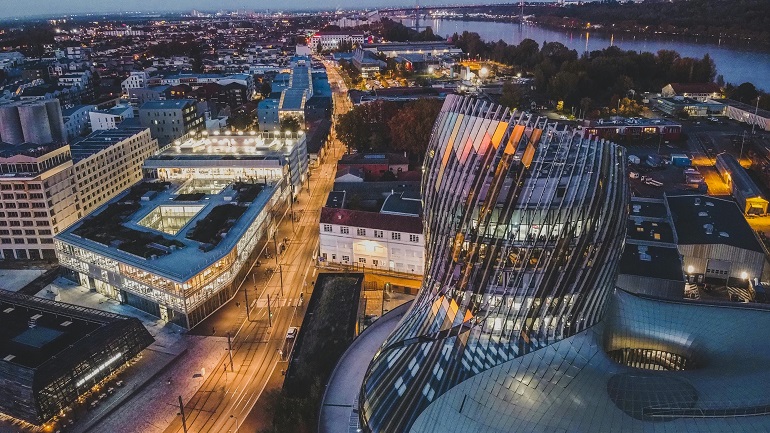
This next-generation wine museum in the Bacalan district features striking contemporary architecture that has become an iconic landmark of modern Bordeaux. The Cité du Vin offers a multitude of interactive experiences through its immersive, self-paced sensory tours.
Visitors embark on a journey through time and space, exploring wine culture from around the world through various thematic approaches. The experience culminates at the "Belvedere" panoramic bar at the top of this beacon of wine tourism, offering spectacular views over the city.
Musée du Vin et du Négoce (Wine and Trade Museum)
This intimate museum provides insight into how a typical négociant's house operated in centuries past. The ground floor served for wine storage and meetings with winemakers and customers, whilst the upper floor housed the family residence.
Through its exhibits, visitors learn about the evolution of winemaking in Bordeaux over three centuries, including historical techniques, equipment, storage methods, and shipping practices. The museum delves into fascinating details such as the first use of bottles for wine ageing and the development of wine labelling. The visit concludes with an informative wine-tasting session featuring explanations of Bordeaux's different appellations.
Art Museums
Musée des Beaux-Arts (Fine Arts Museum)
Housed in an elegant neoclassical building from 1801, the Fine Arts Museum is one of France's oldest museums and a cornerstone of Bordeaux's cultural institutions. Located in the beautiful gardens near the City Hall, this museum has undergone extensive renovation to better exhibit its impressive collection and welcome a broader public.
The museum boasts a comprehensive collection of over 6,000 paintings, 600 sculptures, and 3,000 drawings spanning from the 16th to the 20th century. Visitors can explore European art through chronologically arranged galleries, featuring works by renowned masters including Pérugin, Rubens, Van Dyck, Chardin, Delacroix, and Matisse. The collection also highlights significant Bordeaux artists such as Odilon Redon and Albert Marquet.
A particular highlight is Pierre Lacour's magnificent painting depicting Bordeaux's bustling commercial port in the early 19th century, showcasing the city's importance as one of Europe's major trading centres. The museum regularly hosts temporary exhibitions alongside concerts and cultural events.
CAPC - Museum of Contemporary Art
The CAPC occupies a remarkable 19th-century warehouse in the fashionable Chartrons district, originally used to store commodities traded along the river. This impressive industrial building was saved from demolition and transformed into an innovative contemporary art space in 1984.
The museum's permanent collection includes nearly 300 works of art, focusing on modern and contemporary pieces from the 1960s to present day. The warehouse's soaring ceilings and exposed stone walls create a unique atmosphere for large-scale installations and thought-provoking displays. Regular temporary exhibitions explore various themes in contemporary art history, making each visit a fresh experience.
Musée des Arts Décoratifs et du Design (Museum of Decorative Arts and Design)
Located within the stunning 18th-century Hôtel de Lalande, this museum is part of UNESCO's World Heritage Sites in Bordeaux. The mansion itself, built by Pierre-Raymond de Lalande, a counsellor of the Parliament of Bordeaux, serves as an architectural masterpiece.
The museum showcases an extensive collection of furniture, porcelain, and decorative objects from the 17th, 18th, and 19th centuries. Through the museum's courtyard, visitors can access former stables that now house rotating temporary exhibitions, which often attract many locals and are frequently worth the visit alone.
Musée Mer Marine
The Mer Marine Museum explores Bordeaux's age-old connections with maritime trade and seafaring. This museum uncovers the historical importance of the port city and its relationship with the sea, providing context for understanding Bordeaux's development as a major commercial centre.
History and Culture
Musée d'Aquitaine
The Museum of Aquitaine ranks as one of the largest historical museums outside Paris, serving as a reference point for French heritage. This comprehensive institution spans two floors, covering the region's history from prehistoric times to the present day.
The ground floor focuses on archaeological findings, including tools from the Stone and Bronze Ages, alongside an extensive collection from the Gallo-Roman period featuring ancient statues and remnants of the original city walls that surrounded Bordeaux from the 3rd to 18th centuries.
The upper floor examines the 18th century and modern era, with significant attention to the port's importance and Bordeaux's role in the Atlantic slave trade. The exhibition concludes with inspiring videos showcasing the city's remarkable transformation in recent decades.
Musée National des Douanes (National Customs Museum)
Housed in the magnificent Hôtel des Fermes du Roi on Place de la Bourse, directly opposite the famous Water Mirror, this specialised museum chronicles the history of French customs administration. In the 18th century, this very building served as the regional headquarters for customs, collecting taxes for the king.
The museum presents the evolution of customs administration from ancient to modern times through paintings, uniforms, maps, and musical instruments, offering visitors insight into one of France's oldest administrative institutions and the various challenges it has faced.
Science and Nature
Cap Sciences
Cap Sciences combines entertainment with education, designed for curious minds and science enthusiasts. This interactive science and technology centre makes complex concepts accessible to all ages through various engaging activities.
The facility serves both as an interactive discovery space and an events centre hosting conferences and exhibitions. Whether exploring biodiversity or technological developments, Cap Sciences provides memorable experiences for families and friends seeking to understand our world better.
Muséum d'Histoire Naturelle (Natural History Museum)
After extensive renovations, the Natural History Museum reopened in March 2019 with one of France's largest collections, featuring more than a million specimens. Created in 1971, the museum now boasts a modern design alongside its incredible collection.
A notable new addition is the "Early Years Museum" specifically designed for children under six years old. The museum provides engaging insights into biodiversity and environmental issues, making it both educational and entertaining for families.
Contemporary Experiences
Bassins des Lumières
The Bassins des Lumières represents the world's largest digital arts centre, housed in a former submarine base. This innovative venue presents monumental immersive digital exhibitions dedicated to major artists, offering visitors a unique way to experience art through cutting-edge technology.
Institut Culturel Bernard Magrez
This cultural institute provides another dimension to Bordeaux's museum landscape, though specific details about its collections and exhibitions would require further exploration.
Planning Your Museum Journey
Bordeaux's museums are conveniently located throughout the city centre and easily accessible on foot. Many museums offer free admission on the first Sunday of each month (excluding July and August), making it an excellent opportunity for budget-conscious visitors. For those planning extensive museum visits, the Bordeaux CityPass provides access to 20 museums and monuments alongside other city attractions.
From prehistoric archaeology to contemporary digital art, Bordeaux's museums collectively tell the story of a city that has been shaped by trade, wine, art, and innovation throughout the centuries. Each institution offers its own unique perspective on the cultural richness that makes Bordeaux far more than just a wine destination.
Local Cuisine
Bordeaux's culinary heritage beautifully reflects its geographical location and historical influences, offering a delightful mix of land and sea delicacies. The city's most celebrated dish is the entrecôte à la Bordelaise, a perfectly seared rib-eye steak served with a rich sauce made from local red wine, shallots, and bone marrow. Seafood features prominently in the local cuisine, with Arcachon oysters being a particular highlight, whilst the region's signature sweet treat is the canelé, a small caramelised pastry with a soft custard centre and rum-infused exterior. The area is also renowned for its Pauillac lamb, raised primarily on mother's milk for exceptional tenderness, and the unique lamprey à la Bordelaise, a traditional fish stew made with local red wine. These regional specialities are often complemented by locally foraged cèpes mushrooms and the prized white asparagus from Blaye, creating a diverse and sophisticated cuisine that pairs perfectly with the region's world-famous wines.
Shopping
The city's shopping heart beats along Rue Sainte-Catherine, Europe's longest pedestrian shopping street, whilst the elegant Triangle d'Or district houses luxury boutiques and high-end fashion retailers. For those seeking unique finds, the charming Rue Notre-Dame in the Chartrons district boasts antique dealers, art galleries and independent artisanal shops, creating a bohemian atmosphere reminiscent of Montmartre. The city also caters to food enthusiasts with several vibrant markets, including the renowned Marché des Capucins, where visitors can sample local delicacies and regional specialities. The shopping landscape extends from traditional department stores and international brands to intimate boutiques selling ethical wares, making Bordeaux a premier destination for retail therapy.
Nature in and around Bordeaux
Bordeaux offers a wealth of stunning natural attractions, with its magnificent parks and gardens serving as verdant oases throughout the city. The largest green area is the Parc Bordelais, spanning 28 hectares with its enchanting mix of century-old trees, an English-style river, and a delightful animal park housing rare local species. The historic Jardin Public, created in the 18th century, spreads across 11 hectares in the city centre, featuring a picturesque pond with waterfowl and extensive green spaces perfect for picnicking. Beyond the city limits, visitors can explore the remarkable Ecosite of Bourgailh, which boasts the region's largest tropical greenhouse, extensive walking trails, and diverse ecological attractions. Nature enthusiasts will also appreciate the Saucats-La Brède geological reserve, located just 20 kilometres south of Bordeaux, where one can discover fascinating fossils dating back over 20 million years. For those seeking coastal nature, the Médoc Regional Natural Park stretches from Bordeaux to the Pointe de Grave, bordered by both the Gironde Estuary and the Atlantic Ocean.
Getting To & Around Bordeaux
Getting There
By train, Bordeaux is well connected to major cities such as Paris, Brussels, and Lille via the high-speed TGV network. Travelling by train is comfortable and efficient, with journey times from Paris taking just over three hours. Most visitors transfer at Paris Montparnasse station, or opt for direct TGV routes from Lille. Advance reservations are recommended, especially during busy periods.
By coach, several long-distance operators such as FlixBus provide direct services to Bordeaux, calling at central stations like Bordeaux Saint Jean. The journey from cities such as Brussels takes over eleven hours, making it a convenient option for budget travellers or those coming from locations not served by frequent train links.
By car, Bordeaux is accessible via France’s excellent motorway network, with the A10 connecting from Paris and the A62 from Toulouse. Driving offers the freedom to stop along picturesque regions such as the Loire Valley or at cities like Tours and Rouen en route. Parking in the city centre can be limited, so visitors may wish to use park-and-ride facilities or rely on local public transport upon arrival.
Getting Around
Bordeaux boasts an extensive and modern public transport network operated by Transports Bordeaux Métropole (TBM). The city's efficient system includes four tramway lines (A, B, C, and D) that run from 5:00 to midnight on weekdays, with extended service until 1:00 on weekends. The trams connect seamlessly with more than 70 bus routes, eight night bus services, and river shuttles (Bat³) that cross the Garonne. Single journey tickets cost £1.70, whilst a 24-hour pass is available for £5.50, offering unlimited travel across all modes of transport. For added convenience, passengers can purchase tickets through the TBM mobile application, which also provides real-time travel information and journey planning. The network is particularly tourist-friendly, with comprehensive coverage of major attractions, and the trams' unique ground-power system in the historic centre helps preserve the city's architectural beauty.
Best Time to Visit
The optimal time to visit Bordeaux is during the shoulder seasons of late spring (May to early June) or early autumn (September to October), when the weather is pleasantly mild and tourist crowds are manageable. During these periods, temperatures range from 10°C to 18°C in spring and remain comfortable through early autumn, providing ideal conditions for exploring the city and surrounding vineyards. September to early October is particularly appealing as it coincides with the grape harvest season, when the vineyards display stunning autumn colours and visitors can experience the vendange (grape harvest) in full swing. These months also offer reduced accommodation rates compared to the peak summer season, whilst still maintaining perfect conditions for outdoor activities, wine tasting, and cultural exploration. It's worth noting that August is best avoided, as many restaurants and businesses close for summer holidays.